The next 10 years: Technology, AI, Climate Change, and Urban Development
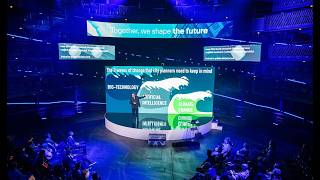
Gerd explores what the next decade holds for technology, AI, climate change, and cities. He examines how AI and synthetic biology will reshape society, what a good future actually means, and the cultural shifts millennials are driving.
Chapters
I call it the good future as a theme in my work. Because good is not just about financial success or prosperity. If you are my age, good means successful, hard working, prosperity, growth. If you are the age of my son who is 35, Prosperity is also good. Right. But you also think of people, the planet, the purpose. And we're in the middle of this huge shift in what actually good is defined and how we can define good on a global level. We will have 10 billion people. So this is a key question. What is good? You know, what does a good city look like? What does a good real estate development strategy look like? All of that is changing because of what we see around us. How can I brighten your day today? Okay, yeah. So I'm going to show you a selfie of what I look like and then I'd like you to try to see what emotions I'm feeling based on how I'm looking. Sounds like a fun challenge.
Go ahead and show me that selfie and I'll put my emotional detective hat on.
Okay, so here's me. So what kind of emotions do you think I'm feeling? Hmm. It seems like I'm looking at a picture of a wooden surface. This is ChatGPT. You can speak to ChatGPT. And I think it's actually Scarlett Johansson, right? Pretty close. Is this good or is it heaven or is it hell? If you can speak to a machine, the machine can speak to you. The machine can pretend to be another human. We can eventually marry the machine like in the movie Her. Is that good or bad? Is technology going to help us in that future or where is it going? It's helping me a lot. You know, before any engagement that I do now, I go to ChatGPT. I ask questions about the future of Prague. This is quite obviously the future of Prague. And you can see how good the machine is. It has half finished cars broken down sidewalks, cars going backwards. You know, minor details. Right. This is how good the machine is today. But basically this was done by a graphic artist. But it's also very interesting when you see the future vision of what cities look like a little bit. Reminds me of that movie with Tom Cruise, what's it called, Deterrence or something? Basically you have this idea of having parts having green sustainability and of course being very rich to have those kind of places. Just two days ago, Elon Musk came up with a big event about his Robo taxi. He calls this the Robovan, but he says Robovan, I don't know why. Robovan, right? Where's the Robovan. Okay, there it is. That he showed to the world. And of course, in true Elon Musk fashion, it was fake. So the people driving the robot were actually remote controlling it. It wasn't driving itself. I guess that's how you do a safe D. And then we have many places like Saudi Arabia that are dreaming of the future of cities in the wildest possible way. This is what you have to do when you're in Saudi Arabia. But the imagination of cities is truly like Hollywood. I think they hired some Hollywood people to design this new place called Magna with the most imaginative title straight out from Star Trek. So very interesting what happens here. We have more serious projects like Tolusa in the US by a bunch of billionaires who are building a city in California from scratch. I mean, mind boggling plans for that future. We have of course, all of the collage around the world. We have a new way of thinking of how we're going to work with Apple Vision Pro. If you can ever try it, you should. It's pretty mind boggling. If you're a developer, you can dive into the future and pretend the city is already built around you. It's only €4,000 to buy this, but I mean, it's really been an experience to try Apple Vision Pro. If you want to think about the future, I think it's quite clear where we are going. And then Again, I use ChatGPT to ask about the good future. It shows me this as the good future. I'm like, okay, obviously you're a robot. And talking about a robot, we do have our special friend here, Mr. Zuckerberg, and he says this about the future. He says the Metaverse, the virtual reality place that he's building. That's why the company is now called Meta. It's about a time when immersive digital worlds become the primary way we live our lives. To what I would say, I'm not sure what you've been doing, but there are some people who prefer real life, not the digital life. And if that is true, you're out of a job. We just need digital cities there and digital partners and digital sex. Sorry, all of those things. I call it the Metapurverse because it's kind of like really? Are you serious? I think for working, it could be great. If I'm a judge or a lawyer or a doctor, a policeman, I can look at the data like Minority Report, great. But for other reasons, I'm not so sure. So it's safe to say this is our key challenge. The future is not like the past and the present. In Europe, we love the past. I'm from Germany, where we prefer the past, maybe the present, over the future, because the future is uncertain and it can't be perfect yet. In Switzerland, where I live, the future is a risk, so we don't want to talk about it. But I'm here to tell you that the future is unlikely to be like the present. Every single industry is completely changing to be completely different than the present. The music industry doesn't sell records anymore. Very soon. The pharma industry doesn't sell pills, it sells digital therapeutics. Cars have become software. So if you think that your business is going to stay here and just be faster, you're mistaken. And a lot of the change, of course, for this kind of paradigm comes from the outside. It doesn't come from the people in the business. Who changed the music industry? Apple, Spotify, bunch of other companies. Who's changing the pharma industry? Not Pfizer and Roche, but Genentech, companies like that, which is now owned by Roche, of course. But basically this is what's happening all around us. The future is not an extension of the present. So if you're here building a development, a real estate development that's going to be on the market in 10 years, you have to think about the future. You have to try to imagine what people want then rather than what they want now. Like ownership. People my age want to own things. My son doesn't even want to own a car. The other one wants to desperately own a house. It's just a cultural thing, but it's changing completely. And of course, our world is also exponentially changing. You can see this here. If you take 30 steps in a linear way, 1, 2, 3, 4, 5, you go across the room, you take 30 steps. Exponential. You go around the world. And we're now in an exponential world. The next 10 years will bring more change than the previous 100 years. I don't know if you're ready for that. We're talking about things that used to be science fiction becoming science fact. I mean, this device here now has 20 things on it that used to be somewhere else. The bank, the dating, the music, the films, of course, the phone. Everything is in here. Now that used to be science fiction. Remember that Star Trek communicator? So that is what we're up against. Or with. So I want to talk about the imminent kind of paradigm changes that are happening as we move here. The most important one is really the three waves of change. And the first one is climate change. Climate change, fortunately, is something that we can solve. We have the tech, we have the science, we kind of have the money. We need about 9 trillion a year to solve this. But like Covid, when there's an emergency, we find the money and we are having emergency. Now. We thought there was going to be emergency in 2040, but it's gearing up much quicker. Climate refugees, if it goes on like it does now, 2 to 3% global warming. You talk about 100 million climate refugees all coming to Prague. No, just kidding. But they will all come to Europe from the places that you can't live anymore. Two degrees warmer in India means you die outside. You just die if you don't have access to air conditioning. So this is all happening around us. The next one, of course, is thinking machines, artificial intelligence, which are an extension of computing to where computers are no longer stupid. Think of it like that. It doesn't mean that they are intelligent like us. That's actually a very bad word because we have not really defined human intelligence yet. It's very hard to describe. Some people have emotional intelligence and social intelligence and kinesthetic intelligence. The body. Computers have one kind of intelligence, logic. If you looked at the world only in logic, how much of the real world would you see? Today? People are saying where computer Systems can realize 5 to 10% of the real world, 5 to 10%, and eventually it will be 20 or 30. But of course, they're only seeing facts and figures. So this is really important to keep in mind. As we see this, the last one is synthetic biology. So in construction, for example, this is huge. We're talking about recyclable concrete, about new materials that can be brought up and down, printed on demand. All that stuff has been discussed for 30 years. But it's finally happening. So now you can have sustainable airline fuel, which is less than 1%, but we're developing it. You can have artificial meat grown in a lab. I mean, all, again, sounds like science fiction, but it's happening. So we have to keep that in mind, what's happening here. And we have to keep in mind that these are the people who are bringing the change. It's not people like me. I try, but it's the millennials, people between 25 and 40. Some of them in this room, they're taken over from people. My generation, they're inheriting the money, they are inheriting the politics. And this will be a big deal because these people were in bad shape in Covid and afterwards locked up. Now they're coming out. So in the next few years, we're going to see a lot of that taken over. Women coming into leadership positions much more than ever before. The millennials coming in, tackling that wave. And you can see the charts here as the money is shifting. The millennials are getting into the money, which means they're getting into the power. So a lot of millennials would never, ever invest in oil and gas companies. In fact, many people that are studying now at university, if they see the oil company recruiting at the university, they complain because for them, the oil and gas business is a crime zone. I mean, this is completely different than my generation. We kind of ignored it because it was doing other things that we liked. Millennials also will like a different way of living. I don't know whether this is going to be an interesting way of living, but you got to have a nice boat to live there, I suppose. But the paradigms are changing. Number one, we go away from the obsession with economy making money to obsession with having a planet. And of course, they're not contradictory necessarily. It's a question of objective, which way we go. Energy is going from carbon to clean in the next decade. So there's many things that many cities are doing. For example, in Beijing, you can't register a regular motorcycle. It has to be electric. Because in China, you can do anything because the state just describes it. And then it happens. We're much harder to do here. The other paradigm is happening in the culture. We're going from this sort of boomer centric, my generation to millennial centric. And millennials are already like Gen Z global citizens. They may be Czech people or German people, but they think of themselves as being part of a global thing, and the world is kind of at their picking. And so work is also shifting. We're going from physical work to digital world. So if you're working in the office, you already are digital. In the future, we could be anywhere. The only reason we go to work is to actually see people, not to see more computers. And so the digital work thing is really exploding. It has, of course, to do with what happened in Covid, but now we're in this change phase. Look at this like an iceberg, where we're going up this curve today, where all the old stuff is going away and the new stuff isn't here. So millennials, dramatic geopolitical changes, technological disruption, economic paradigms, climate change, emergency, all at the same time. So what that means for us, Crisis, confusion, challenges, bizarre behavior. Like the vote in Germany the other day. So of course, people, when they are fearing for their future, they vote for simple people. Simple answer, simple question, simple solution. All wrong. But find out later. And this is what we see on a global level. We see this change paradigm really, in a very, really big way, changing absolutely everything. By 2030, we're going to switch to this new economics. It has been described by the guy who just won the Nobel Prize for economics. Forget his name, the MIT guy. In a different way, basically, we're switching to a new paradigm of words about the four people, planet, purpose and prosperity, not just prosperity. If we pursue the course of just prosperity, we're going to be finished by 2050. Not just with climate change, because we're going to start using machines for jobs that humans do. And when we have machines with an IQ of 5,000, we become the second intelligent species, which basically means it's finished. And we do that all because it makes money. So we're going to think about things a little bit differently. And I think this is a major trend that we're seeing around the world, this mega challenge from economy to climate. You can see in this statistic here what we have achieved, mostly my generation, the last 25 years, we had this industrial economy starting here, invention of the steam engine and boom. Pollution, up, temperature up, just up, up and up. In the last 25 years, we've added 50% of global emissions in 25 years. Imagine if we go another 25 years, we're going to add 5,000% in emissions. I mean, that obviously would not be survivable. So this whole paradigm is now coming down to one thing, what we have to do. Because we cannot envision a future to where we don't grow. I mean, think about a future like degrowth, right? The concept degrowth means no children, no travel, no fun, certain kind of foods, vegetarianism, basically, for everybody. It means reducing everything we do to keep the emissions down. What we need to do instead. And of course we have to have some degrowth, like cruise ships. We don't need cruise ships, but we have to be able to decouple the growth, the white line from the emissions. That's the key. Build more houses, have more transportation, fly, but differently. That's where all the money should be going. Of course, there are some instances where we can't keep growing, clearly. But what the Club of rome said in 1972, we're going to have overpopulation, 20 billion people. No, it's the opposite now. Greece is shrinking because there's no people having kids. Many countries in Europe are shrinking, only Old people are left and all the new kids are in Africa. That part of it is growing like crazy. So that's basically what's happening as we look in this direction. This kind of idea of decoupling the growth from carbon, it can be done. It takes a lot of resources, but we know how to do. Takes a lot of experimenting. And pretty soon this will be the standard truck. It's hard to imagine. It's like, try to imagine Spotify 20 years ago. People were like, well, I actually started a company like Spotify 20 years ago. It didn't work because it was too early. So if you're in the car business today, you've got to envision what the next generation will look like. So let me introduce you to the three Revolutions and exponential technologies and a few other things. First, of course, is the digital revolution. And this isn't new. It's been going on for 15 years, but it's still going on. Digital transformation, digitizing everything. Digitizing construction, one of the worst businesses in the world for taking advantage of digital tools. Construction, mining, all of those traditional businesses. Now it's picking up like crazy. So digitizing is mostly AI now. And the second wave is the sustainability revolution. So that means that everything we do will be subject to gauging how good it is for the world. For going green. The last one is the hardest. The purpose revolution. People asking for something different. A different bottom line goes with the waves I showed earlier. But basically the bottom line is, if we look at this, science fiction is becoming science fact. In technology, you want to upload your brain to the Internet, keep it around for later. You can do that today. It's complicated, but in 10 years, you can do it. You can today freeze your body, called cryonics, cost €100,000. You can freeze your body and wake it up in 30 years when there's a better world. In fact, people are doing that. Over 100,000 people have done that with their kids that died. I mean, think about that for a second. So that's true science fiction. But we're getting to a point where it's hard to say what is science fiction. My Swiss colleague Bertrand Picard flew around the world in a solar plane twice. And everybody said, if you do this, you die. It can't be done. It's becoming possible. The stock market paradigm is changing. Because now I say sustainable. Is the new profitable. Because when you are sustainable, people will buy from you more. They'll appreciate what you do. It's a whole different ball game now. That will take a Few more years to play out. But the last one is the most shocking one. As I said earlier, business as usual is dead or dying. If you can still do business as usual, consider yourself lucky. But eventually it will end. So the car companies are now heavily into shifting to electric vehicles. But the story is not an easy story. There's lots and lots of details there. The companies that start from zero, like Tesla, they can do that much easier because they have no history, they have no things that they have to think about. So as we go into this future with cities, it is what I call big blue, not IBM technology. Big green and big purple. Purple is the color of humanity in Indian sagas. So those are the three paradigms that we have to think about. How do we transform digitally? How do we go sustainable 100%? And what do we do with humans? What are cities for? Cities used to be for work. What happens when work is done by the machines for the most part, and we just kind of supervise them? What if knowledge work is done by machines? What if we don't have to work like we used to, 12 hours a day and be in a city? Those are all paradigms that are being questioned right now. And I think really it's this kind of holistic worldview that we need. If you're in development today, you have to think holistically, which means those three things, you have to think circular and you have to think of human benefits, and then you have to think about prosperity. So obviously that's a tall order because now you have to expand the view and you have to do it 10 years ahead. I mean, 10 years ahead today, exponentially. We're talking about five or six times up the ladder. 4, 8, 16, 32, it's leaping. In 10 years, the world will be 200 times as different as today. So these game changers are absolutely everywhere. Cloud computing, human machine interfaces, synthetic biology, quantum computing, all that stuff you hear about all the time. And that's not even half of it. Much of it has been around. We thought about 3D printing like 25 years ago, but now it's finally happening. Now in countries like China and in the US, people are 3D printing entire villages. They're pretty ugly, but will improve. So it's actually happening. Construction. You can 3D print a wall, you don't have to actually pour it with concrete. And it's still too expensive, but the price will come down. So the key question there is, it could be heaven or it could be hell. It could be hell if we use technology to look at Everybody, all the time, and then to figure out how to make things better. So in China, for example, you're constantly being filmed and there's a social credit scoring system and all that stuff. We probably wouldn't want that just to be more efficient. That seems like a tall order, but we have to think about this. Then there are six things that are happening on top of all of that, which is, of course, artificial intelligence, genetic engineering, synthetic biology, quantum computing, nuclear fusion, and geoengineering. So the companies or the countries that lead in one of those, they kind of lead the world. If you're a leader in AI, which is currently the US and China, you have a lot of power. If you're the leader in AI and quantum computing and maybe genetic engineering, of course, they can also be used as weapons. Let's not forget people do that. AI has been used as a weapon just recently to automatically kill people upon recognition, without human supervision. That's hardly the kind of progress that we would envision, obviously, but this is happening on a global scale. So synthetic biology involves things that we can do with engineering that used to be in nature. And these materials are becoming substitutes for what we used before, like wood or concrete or things like that. Right. So we have 3D printing, of course, we have meat being printed in the lab. Lots of investments here. And it looks disgusting. But the idea of growing meat in a lab and then eating it. But I did taste it the other day. I couldn't tell the difference to like a regular hamburger or a sausage. A steak. Yes. So Bill Gates has invested in here. He says this meat is going to be one tenth of the price of regular meat in 10 years. That's how we feed the world. We can have one big skyscraper making cultured meat for the whole city. Protein. These things are happening left and right. And so we have to think about how that could all change the way that we do things. So let's talk about artificial intelligence. What could that do for your business? What could it do for cities, for construction in the near future? First, we're moving into a world where most of our thinking is now not good old industry automation. People talk about Industry 4.0. I talk about Industry 5.0, which is an industry run by AI. So every process from sales to R and D to research, to building to filing, to complaining to all of those things. We can get machines to help us as long as we don't ask them to make a judgment. They're very bad with judgments. But for example, what I use a lot in my research, I Used to read all these books and PDFs to learn things. Now I upload an 800 page PDF to Google LM Notebook. So a great app from Google. I upload 800 pages of this crazy blockchain PDF and then I ask Google Notebook questions about the document. And it makes a perfect summary for me. One page and then I can still decide to read it. So if you're a lawyer today doing a big real estate deal, you upload, if you can of course, keep it secure, upload 100 documents about real estate things, and then you query the machine for overlaps and then you come up with ideas. You can't really rely on it to be totally accurate, but it's definitely good input. It makes you faster, makes you more efficient. All that stuff is happening here. So there's a saying for Marc Andreessen, software is eating the world from like 15 years ago. And now AI is eating software. Well, AI is kind of software. AI is a science really. But everything we know about software is becoming intelligent. Now, whether it's Salesforce or SAP or you name it, becoming intelligent. So recognizing patterns, understanding context. One thing that AI will not do for the foreseeable future is reasoning. Reasoning. Think about that for a second. To reason about something, you have to be able to make a judgment and you have to say, that's not important for now, or this is not true, or you doubt this and you feel about that. That's hard for machines. Reasoning. That's why I don't think we should build machines that can do reasoning. It strikes me as kind of a failure from the beginning. But AI is now a general purpose technology, GPT, which means AI is like the printing press, like electricity, like the Internet, like cloud computing, general purpose. If you find a company today that's not using the cloud, that's a very rare example. Ten years ago, people talking about the cloud being insecure, but everybody is in the cloud now. It's a fact of life. So using intelligent machines becomes a fact of life as we go there. It's a very simple description. I mentioned earlier, this idea of this four pieces like cognification, understanding things, human augmentation, making us faster, like Google Notebook, virtualization, like spatial computing, Vision Pro and automation. But let's make no mistake, the top level of automating what humans used to do is very difficult. There's lots of reasons for this. For example, automating, driving, not really working. It's kind of working, but we don't see it in many places except for San Francisco, where everybody hates Those cars. But these things are going to be great. Helps. I mean, if you're an architect, you can get faster results. You can augment your own, for example, language translation, those are powerful tools. AI is a huge boost for city planning, for development, for architects, for policymakers. And these are all the pieces of these things I talked about cognification, augmentation, virtualization and finally automation. So we should look in this direction and say, let's not worry too much about Ex Machina and Black Mirror and all the things you know about AI and what OpenAI wants to do and so on and so on, because on a day to day basis, this is just smart software. And the other thing is that to do this you need good data. All AI projects start with good data. If you have lousy data about your projects, you get a lousy result on the AI. So it all starts there. Having really good data, I think is the starting point in so many ways. So you can look at this in a very simple way and say, really what AI is, we stick the old business into what I call the cognifier and out comes the new business. Smart farming, smart agriculture, smart retailing, maybe even smart government, who knows? There's a chance for that, I suppose. So there we can say, okay, if we achieve that, we already achieve 80% of what we can achieve because we can avoid waste, pollution, reduce energy. That's even without switching the energy, just the energy we use today. We could make very big leaps here. And so we have this world where that's basically becoming all part of every business model. To cognify, to understand, to augment. So we have to keep in mind when we do things like this in technology, that the decided effect of success is not technology, it's culture. In Silicon Valley they always say culture eats technology for breakfast. So what you build, nobody likes, or you build for the wrong people, or it turns out you just didn't know any better or you're completely off the mark in terms of migration patterns or whatever it is. These are cultural. Culture is an alive thing. It's like a dish, like cooking. So that's important to remember. The other thing that's important to remember is that societies are driven by technology, but defined by humanity. Nobody's going to buy from you anything just because you have better technology. They buy from you because what you stand for, what you mean, what the overall product offering is and how it all fits together, we're going to go to again. Apple Vision Pro is a great example. This is an app called Zillow. You guys probably know Zillow, it's a real estate app that you can look at houses, prices. It's very popular in the US and this Zillow app is using the Apple glasses, where you can zoom into the house and take a look with your glasses on as if you were actually in the house, like this. So it's very powerful stuff. This is a great way, of course, of building things as well, not just reviewing things. You can go inside, you can take a tour, and then you end up inside the house, all in HD quality, panoramic window. So when you think about this as a tool of understanding what goes on there, it's powerful stuff. And eventually this device will not be like what Apple looks at it today. At this price point, it will be completely different. So an architect in 2030 will be like Tom Cruise and Minority Report. Hopefully not looking like this, like this Apple thing with all giant headsets. So we don't see each other anymore, but in a different way. So there's predictions about AI agents helping us do our work, like Siri, but actually good. So Siri is kind of funky. We use it for fun or Alexa, but this would be something that's 100 times or 1000 times as intelligent. So basically, Thomson Reuters is a legal company that does legal technology that says every professional will have their own AI agent that you can send off to do things like investigate this, bring me these facts, talk to so and so, book my dinner, whatever, find my girlfriend, just book dinner, all those kind of things. And I played this already before, so I'll skip that. So here we're clearly going to see this emerging as sort of virtual assistants. And then the question is autonomous robots performing tasks. For us, that could also be a little bit scary because you don't really know whether you can trust them. But this is like Google Maps. All of you use Google Maps. Do you trust Google Maps? Well, the answer is sometimes. I mean, if you use Google Maps here in Prague, you would probably look at them and say, no, no, no, this can't be true. It's stupid. You ignore Google Maps. If you go to London and take a taxi, a regular taxi, not those Uber taxis. You take a regular taxi, you talk to the taxi driver, he's using Google Maps. He never looks at it, ever. Just using it as a backdrop, you know, because he knows or she knows. And so AI is kind of like this. We use it as a tool and then sometimes we ignore it. We ask questions, we do different things. So that's an important point on our.
25Th year anniversary we believe Agent AI. AgentIC AI is the most important technology in the enterprise and in the business world. In contrast to chatbots and copilots where they simply assist you, we now have AI agents that can work with you and take action on your behalf. They have much deeper understanding of language, they have reasoning capabilities, they can adapt based on experience.
This is the futurist for Salesforce. And Salesforce is of course a sales organization. So there we can use AI to do things because the facts are pretty clear cut. It's about offerings, it's about matching, it's about marketing, it's about creating material. It's pretty straightforward. But it's about more cultural things or ethical things. It's much more complicated. So anything that's a commodity we're going to give to the machines. So if your job is mostly commodity, you are in trouble. But the good news is most of us, at least in this room, you are knowledge workers. Basically you don't work in construction. And if you work in construction, that's also quite good. Because it's very hard for a machine to be a carpenter. It's maybe not that hard for a person to be a carpenter, even though that's probably also true. But for a robot to be a good carpenter, it's very complicated because of the movements and the understanding and the context. It's not like driving a vehicle around a race course. So this idea of robots and computers helping us like this, I mean there are various cooking robots you can buy. They run from €50,000 to a million euros for a cooking robot. But then your daughter can relax while they robot is cooking. But how realistic is that? Is it just sort of a thing that we're looking at? And the statistics show us that the humanoid robots, robots that are like humans, their cost is going like this. Humanoid robot means you can tell the robot do XYZ and the robot knows how to do it. Construction, mining, that's going to happen. But only those jobs that are clearly predictable, that are clearly isolated from thinking. We should remember what's happening with self driving cars. This is science fiction. Well, wishful thinking. I mean even the other day I was in San Francisco, I took one of those cars and the car kind of drives like a snail, like most Americans do. But it's just part of the environment. I mean this would never work in Prague or in Florence or never mind Beirut. So would have an accident every four seconds. So this is useful, but is it a good destination or do we really need automation like this to go into the future. This is the main thing about our work. Machines will do the routines. The monkey work. All of us do monkey work. Commodity work, call it. So you're sitting at the desk, and you got to match the income with the outcome, and you got to check on the bills, and you got to look at the tax rate and whatever. And now you can do that by speaking to your wristwatch. That's interesting. It's efficiency. But life isn't made out of efficiency. This is just one thing that we're concerned about. We are concerned about creativity, how we create things. So I always say the end of routine is a huge change, but it's not the end of work. It's the end of certain tasks. So, for example, if your job is mostly routine, like a call center, you can say the call center. 20 million people work there worldwide. When the machine understands language in all variations, it understands the tone of voice. It does. Yeah. Two years call center automation. So if the airport is closed for snow, the call center can rebook 4,000 tickets in 14 minutes for free, more or less. It's there already. So we're going to see those scenarios happening, I think, as a matter of course, and see what's happening in the long run here. This whole idea of machines doing what humans used to do. So you have code generation, reading comprehension, handwriting, common sense. Look what's happening to all of the human skills. Okay, now, this is not as scary as it looks, because the machines can do individual skills, like they can pass the bar exam in the US A machine can pass the exam to be a lawyer, in which case I would say there's probably something wrong with the exam, not that the machine is so successful. All these things are very impressive. But in the end, there's still like 90% missing, which is consciousness, judgment, understanding, not just logic. So this is quite impressive. It's actually not really true because we know language recognition is not 100%, especially not in Czech or Swiss, German, for that matter. But the bottom line is this. If you work like a robot, a robot will take your job. It's not new. It's just more brutal, more darwinistic. That is not a big deal for your country or for my country or for Europe, because we don't have that many people working like robots. But when you look at other countries like India, Brazil, China, Africa, people doing cheap labor, they're going to be replaced by machines. And then we have to think about what that means, because the taxi driver in Prague will not become a graphic designer next week just because we Give them an AI. So there are lots of social change issues. There's lots of things we need to avoid to think of people like machines. And then we can discover new work. I mean, 100 years ago, about 94% of Europe, people in Europe were working in agriculture. You know what the number is today? Less than 2%. Where did all those people go? Well, in the process of industrialization, they moved to other jobs. And now we still have people going into agriculture, but we are finding a way forward to combine those two. So the bottom line is also that machine intelligence is not the same as human intelligence. And we always confuse this because we have this really cute helper and looks very human. But in the end, this is a box with wires. A large language model goes to a database, retrieves the right patterns and the meaning, and brings it out in a sentence. That's what it does. It has no idea what it's saying. Understanding, context, common regard, that's not part of it. So as we go here, we can safely say that this kind of intelligence would sort of be our future. To actually be better with this. If you have kids, you got to think about that. Your kids should learn to be a better human rather than a better machine. When I went to college, I went to music school and a bunch of other things, but we essentially were taught to be efficient, to memorize. That part is completely over now because machines can do that for us now. We have to be creative, we have to be understanding. We have to understand the client. In your business, that is absolutely crucial because the bottom line really is this. Machines don't think, they don't have hunches. They don't understand, they don't imagine, and they certainly don't care because they don't exist. So think about what makes businesses work, or deals work for that matter. That's because of all of this. The rest is just augmentation. So if the machine can supply us with 5 to 10% of reality to make us better in deal making, that's great. As long as we can keep this, we don't get lazy and we let the machine decide what the future is. So the kind of idea of an artificial intelligence becoming superhuman, so very important to see. And take a look at the pyramid of work. We used to be in this pyramid, which is starting with intelligence and, and data and so on. And now the pyramid is moving up. This is our pyramid now. This is your pyramid. If you're a knowledge worker. Deeper knowledge, quiet knowledge, tacit knowledge, understanding, wisdom, purpose. That's why we're going to be successful. Everything else, the machines will understand how to have knowledge. Yeah, machine knowledge. So we need to go above this and that's what we have to teach our kids and ourselves at universities and in training. Because we may very well see a future where machines do all of the routine work that may be five years away or 10 years away, maybe 20 years. Unlikely. More like five years is more accurate. But here are some new jobs that are going to emerge from this. We will have sustainability leaders, climate resilience experts, data driven visionaries, interdisciplinary collaborators, social impact designers. These are all new jobs, don't exist today. Well, they kind of do in some ways. Just like social media. Fifteen years ago we didn't have any jobs in social media. Now there's 22 million people working in social media. So these are all new jobs I think that we're going to see that will get us to be more employed. So let's look at some of the challenges and then I'll wrap up and we'll take some questions. So number one challenge, you know, in this world, that's the world of machines. We don't fit in because humans aren't machines. At least I don't believe that we are machines. There are arguments to say that we are machines. I would take too long to discuss that. Right. But machines don't have ethics, values, feelings, emotions, existence, consciousness, none of that. It doesn't matter for machines. If I asked the machine to solve climate change, whatever AI, I would ask, you know, ChatGPT 500, I don't know, I would ask it. It would say eliminate all humans. That's the answer. That's not very convenient for us. So basically we have to. If we want to use machines, we also have to have an ethical framework that controls them, like the EU AI act that says, okay, you can do this, but you can't do that like we do with nuclear weapons. You can build a reactor for power, but you can't make a weapon. It's the same technology that's used for both. And of course, the biggest problem is that technology is exponential. There's no limit to how much technology can learn. We're organic and nature is cyclical. So how do we deal with that? I think it means that we have to make that our tool, not our boss. Technology is a great tool, but a terrible ruler. So we need to figure out how we keep that one from happening, how we actually keep our value as an organic being. And clearly as we go into that future, we're going to see situations like this to where we are kind of like superhuman because we have all this digital assistance. Like if you're on supply chain, that's the future. We're going to get every possible information. Look at Minority Report again. Pull out all the data. If you're a judge, a doctor, a policeman, this would be, of course, a dream come true. You could work 100 times as fast if you trust what's happening. But it may also lead us to a future like the movie Her. You've seen the movie. People fall in love with their computer. I mean, people are in love with their computer now. It's called the mobile phone. We have more relationships with the screen than we have with people. I think eventually that turns into what's called loneliness. So you have these relationships, but they're not real. This is why social media is such a problem. And now the loneliness is becoming an epidemic. The World Health Organization says this is the most serious cause of death right after cancer. So what's happening here? Clearly we have to keep in mind and come up with a couple suggestions. The other thing that's happening today is that artificial intelligence and technology, social media, can basically be seen as kind of shooting at the truth or destroying what we can believe in because everything looks like it's either wrong or right. And we can't tell. This is why democracy is having such a hard time right now, because we can't believe what we see and we stop trusting each other because of that. So that becomes a real deal when we're looking at AI that's telling us things. So the answer to that is do not let AI tell you things all the time. Find your own sources, read books, look at qualified journalism. Don't watch TikTok all the time and watch all the stuff that TikTok tells you how the real world looks like. Do you know how many 12 year old girls have fallen prey to the Instagram mania? This is truly an epidemic where people are browsing on Instagram and saying, oh no, I'm not as good looking as all of those Instagram influencers. So bottom line, when we build cities, it's this. There's more to human life than technology. We're going to use technology to make life better, to be more efficient, to save energy, to be creative. But what do we do in a city? We connect, we see other humans. At least in Europe, this is what we do. I don't know what you would do in Neom. Maybe that would be plenty if you were in that city. And we want to avoid this kind of scenario where we are on this tunnel of technology, and then behind the tunnel is a dark cloud that sucks us into sort of a container of data. And then in the end, this is what we are. So I think that when we think about that, we have to think about what kind of action do we take? Which way does it go? And clearly, if we move into that scenario of the future, we have to go back to what I said in the beginning, the three revolutions. That's where you should put your money. Technology to be better and faster and more reliable and more foresight, sustainability to go with where everything is going. If you're not sustainable in 2030, people will hate you. Well, that's already true. Now it doesn't matter what the cost is, because it's going to be a lot more costly if you don't. I mean, it's clear this is the way things are going. It's like digitization of content. If you don't digitize, then you won't be there. And the last part to actually pick up on the agenda of Millennials, Purpose, People, Planet. So some action items and bottom lines. The first one I talk about a lot. The future cannot be predicted. But all of you have to somewhat understand the future. So how do you do that? Well, you have to develop a hunch. Like Jeff Bezos from Amazon says that most of his major decisions are based on hunches, on observations. He started the Kindle, the Amazon Kindle, based on his observation that people want to read books on electronic devices. He spent $3 billion on an idea that was unproven. So we have to have intuition and hunches about the future and ask ourselves where it could be going. And great saying here from my fellow futurist Barbara Hubbard. The future exists first in imagination, then in will, and then in reality. Don't look for the future to exist in reality. It never has and it never will. If you're looking for the future in reality, you want the future to be proven. That won't work. Then you end up with the German car companies and they find out what the future is, but it isn't theirs. It's a tough pill to swallow. Then you have to catch up. It's a tough lesson. The third one, the future is created by optimists. No matter how things are going badly in terms of politics or wars and all these things, we have to believe that we can do something interesting and good, because otherwise we become pessimists, which means you definitely will not be successful. Have you ever seen a successful pessimist and to that, many people talk about utopia and dystopia. I talk about Protopia, which is the gradual approach to a better future. So not believing in doom, not believing in other things. But another important lesson I learned over the years as I worked with thousands of clients. Your mindset contains your future. If your mindset is open to change, understanding what's happening, if you're catching up on things, if you're in the flow of things about the future, you will find a good response. Otherwise, your mindset always says, yes, but favorite sentence in Germany. And the mindset says, no, no, no, we can't do that. It will never work. Because you're not open for a possible solution. Spend 45 minutes per day in the future. I'm not talking about watching Netflix here. I'm talking about reading, talking about reading great sources. I mean, the Wall Street Journal, for example, has great stories in the future. They're called the future of Everything. It's really a great tool to use and to just kind of get clued in to what's happening. When you do that, I guarantee you in a year or two, you will be ahead of 90% of everybody else, because you already know what's going to happen just from your research and observations. In my last book, I said, the most important thing about the future is that we should embrace technology but not become technology. When you go too far with technology, you get addicted to technology. You remove yourself, you get lazy. You're a commodity. You know what happens to commodities, right? They get very cheap, eventually free. So stay human, stay creative. Finally, a saying from Buckminster Fuller, famous designer futurist, who says, we are to be architects of the future, not its victims. So we build what we want, we don't build what we don't want. But we have to find out what we want first so we can build the right thing. I want to thank you very much for your time and I'm open for questions and feedback now if you have any objections. No, just kidding. Thank you very much.
What a great future talk. Thank you so much, Gerd. And maybe Thomas, do you have any questions?
Wonderful, wonderful presentation, Gerd. Thank you very much. Lot of new facts, in fact, a lot of ideas. But one question. Is there any protection against the misuse of the AI when you presented it here? Because there are a lot of potentials with AI. Of course, there might be also a misuse of AI. Is there anything like that?
You know, it's like anything in technology. You know, if you have a hammer, you can build a house, you can Go next door, kill your neighbor. A hammer is technology. We don't regulate hammers. But AI is a very powerful technology where we have to say some of it needs to be regulated, like at a certain capability, like face recognition, for example. It would not be good if you went to a party and then I have these glasses that can see your Facebook and LinkedIn profile and I can find out who you are because of that AI, those things are clearly not a good idea. So with technology it's always going to be like this. There are some use cases that are strange that we ignore and other ones that are kind of criminal or dehumanizing that we have to regulate. So the government has to be pretty wise on not inhibiting progress, but at the same time not open the door. For example, cybersecurity. I mean today it's a fact. For example, with fake news, you can make fake news with a video with me in it and you wouldn't know it's not me. And there's almost no way to get anybody responsible for this. But if you make fake money, you go to jail for 20 years. So we're gonna need some new rules, we need new social contracts. But generally speaking, I think we should be open to the positive side and learn how to use it and not freak out about this. Most of those scenarios that are really dark, they're Hollywood based scenarios and we're not anywhere close to that for the time being.
We have many questions on Slido, so I will choose some. Clara Sobotkova asks, are we losing humanity's role as a shaper of history? Shall we ban or slow down the AI development?
Yeah, we could use that if we give it too much authority. It's one of those cases I think, where if we don't use technology then we fall behind and we get outmoded and somebody else will bypass us. If we use it too much, then we lose things. So I think it's like any drug or so we are basically too much of a good thing can be a very bad thing. So you smoke too much, you drink too much, you eat too much, you die. You have too much information and too much technology, you die because your brain just goes crazy. And this is what happened on social media. So there is obesity, you know, being really overweight, you die. And there's digital obesity. You take in too much, you know, information, you constantly, you die. So we have to learn how to deal with this huge power that we have. And we need some help to create some rules for that power. For example, cybersecurity which is becoming the primary way of war. Its war is being replaced by digital entities. So, yeah, and it's moving very quickly. So there are lots of challenges there. But we should not forget the good part of things.
The next question, next question.
How do you see the people change relationship with technology? Will the change coming in years or what the challenges will bring to the daily lives?
You know, I think we will probably have some really bad things happening first before we change that. This is really how humans act. So when we have a stock market breakdown because of AI, we're going to think of some rules for the stock market for AI. Hopefully we don't have big disasters like a nuclear bomb for that to happen. But I think we need to see things being in a difficult place before we take action. It would be nice if we could take action before that, but it strikes me as quite difficult. So I think the chair of the FSC in the US said it's very likely we're going to see a global meltdown of financial markets because of AI. And then we just have to figure out rules that will prevent it. This is why we need collaboration on this level. This is why governments have to think about, for example, what happens with those jobs that are routine jobs when machines can do them. On the other hand, of course, then there's probably a huge amount of new jobs that we don't even know. So you don't want to block those from coming just because you're worried about the old ones.
Okay, the next question. How will AI redefine our understanding of intelligence, both human and artificial, and reshape the boundaries between them?
Yeah, I think it's really quite simple. I think a machine intelligence is an alien intelligence. You know, alien. Alien in the sense of not us. Yeah. A machine is an out some. It's a binary intelligence. It doesn't exist. It's not conscious, it doesn't have feelings, it doesn't have a body. So basically what that means is intelligence is an intelligence on its own. And we always thought that would happen with aliens, but now it's the machine. And so there's a question of control, there's a question of trust. There's a lot of fear about this. But our intelligence is what we have to cultivate. And that does not always include science and technology. Our own intelligence has many pieces that we have to cultivate in education. So I'd much rather have a kid that can build a sandcastle than a kid that can program. Best to have both, of course.
More from GHION.AI


O processo de reconhecer limites, mesmo quando a vida parece exigir sempre mais.





Depois de tantas histórias, aprendizados e pausas necessárias, o @interior_iza está de volta



