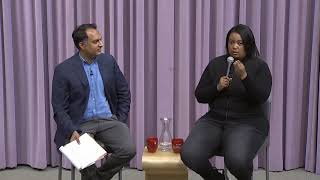
In this monologue, the speaker argues that the pervasive underestimation of founders and professionals from diverse, under‑represented backgrounds is not a liability but a strategic advantage. He critiques the common framing of diversity and inclusion (D&I) as an HR or charitable issue, insisting it is a competitive threat to incumbents. He cites the rapid $100 million fundraising by an esports CEO as evidence that underestimated talent can surface unexpectedly. The speaker highlights how women’s multitasking abilities are often overlooked, and points out that everyone—regardless of race, gender, or ability—carries hidden strengths that are misjudged. A personal anecdote about assuming a white man in a wheelchair had an easier life illustrates how privilege assumptions can be misleading. The overall message is a call to “wake up” to these blind spots, suggesting that those who recognize and leverage underestimation will gain wealth and influence faster.
Chapters
I always have to kind of laugh because, I mean, look at this room. Look at the room. You can't tell me that the only people in this room are the white— only people in this room who can start great companies that are profitable are the few white guys that are here, right? Even the white guys in here can't say that. It doesn't make any sense, right? So it's— there's this still to this day, there's this whole thing of as soon as you say D&I, diversity inclusion, underrepresented, even underestimated, which we've coined, people start, they immediately go to, that is either an HR problem, or that is a charity problem, or that is a down-and-out, poor-you problem, instead of, that's your problem now because that's your biggest competition coming for you. And coming for you without any of this baggage of what they think they're expected to be. And so you're seeing it now. You're seeing that's a, there's a reason Delane, the esports CEO, just raised about $100 million for his company out of nowhere. You didn't see him coming. We did. We saw him. We saw him years ago. There's a reason that these things are happening because we don't sit around. If you're a woman, you know this already. You know that you're a master multitasker. And sometimes you'll be sitting, and I'm talking to the ladies right now, you'll be sitting with the guy and he'll say something that he did and how difficult it was, and you'll just be like, man, I did that before noon, before I even got here. You know what I mean? And it's like, So everybody in this room, even straight white men, have something that they're underestimated about. Because everybody, everybody, no matter how good of a person they are, pre-judges. So when you walk into a room, or you're in a room, and someone's judging you, like, I'll give you a quick example, because I think it's important to think about privilege in all cases. So I can have this whole conversation, say all this, and I can say, and white guys did this and this and that, and then we can all get up to leave, and I can notice that one of the white men that I was talking about is in a wheelchair, and I made the assumption that he had it easier than I did because he's white. You know, so there's— it's everywhere, and I just think people are still sleeping, and that's better for me. It's gonna make me even more wealthy faster, but they need to wake up.