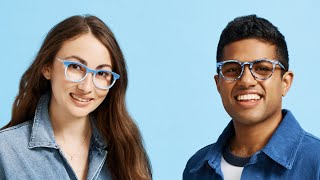
This content was created by GHION.AI . This content was uploaded by GHION.AI . This is a YouTube interview/talk titled "The Rewarding Risk of ‘Shark Tank’ - Sophia Edelstein and Nathan Kondamuri (Pair Eyewear)" (created 2024-03-13). Sophia Edelstein (with co-founder Nathan Kondamuri referenced) describes their Shark Tank experience, the audition/airing process, and how the appearance jumpstarted rapid growth. She discusses growth-marketing tactics and risky bets to scale a startup, an anecdotal watch party just before NYC COVID shutdown, early licensing deals (Marvel and the NBA), a customer-driven pivot from kids' frames to adults' frames, rapid iteration (low-fidelity landing page and ads as proof of concept), investor reactions, and that the business is now ~90% adult customers.
Chapters
Shark Tank was an awesome experience. For those that don't know, Shark Tank's a TV reality show where they pick entrepreneurs who have companies to pitch to a panel of celebrity investors like Mark Cuban, um, and pitch for, for funding in your business. Um, it's a really fun show. Uh, we encourage everyone to go watch it if you haven't seen our episode. It was really fun. Um, it's back when, you know, as Emily said, we were really focused on kids. That was the focus of the pitch back then. And we decided to go on Shark Tank because at time we were family and kid focused, and we realized that if you want to grow a company, a fast-paced startup trajectory and go from 0 to 100 overnight, you need to do things that are more risky to help accelerate growth. Normal businesses don't grow 160% year over year. It's just, it's not natural. So in order to do the unnatural, you need to find virality, you need to have growth marketing tactics that allow you to grow at an unprecedented rate, and you need to do kind of risky things like Shark Tank. So for us, we realized that Shark Tank was this amazing opportunity where if aired, we'd be able to, you know, be on the TV screens of, you know, families all across America overnight and be able to tell our story kind of directly from ourselves to, to these families and get in front of them. So with Shark Tank, we got reached out to actually by a producer. I think they must have maybe read about the company in an article. And from there you begin an audition process. There's no guarantee ever that you're actually going to air. Even when you film, there's no guarantee. Which is definitely stressful, but you kind of just have to trust and do your best to create entertaining TV because that's what's most likely going to air. But it's a really fun process and a great experience. So we ended up airing. We found out we were going to air only a week before we aired. So it was like a, you know, mad dash to get the website ready, make sure, you know, nothing was going to crash. We ended up having a watch party, which was Very funny because it was the last weekend, you know, it was 4 years from today, it was the last weekend before New York City, we're based in New York, completely shut down because of COVID So at the time, I remember we had, you know, 100 people, friends and family, early investors in a room together. We were handing out Purell and we thought that was going to be fine. We were all going to be okay. Luckily, no one ended up getting COVID from the viewing party, but it's really funny to look back and it really jumpstarted kind of the rapid growth that we then, you know, continued to see throughout the next 4 years. And some of the ways that it really helped is we actually, it was really helpful actually in gaining our first licensing partnerships. So it created trust not just with consumers who were seeing the brand, but also with licensing partners. And it allowed us partially to sign what became our first licensing deal, which was Marvel and then the NBA. Those were our first two partners. And then after that, you know, we really created this well-oiled machine of signing on other licensors and also very much a strategy of, you know, if you're not on the Pear marketplace, you're kind of missing out on this revenue opportunity. So when we spoke to DC Comics, their only, their only con was, you know, I can't believe you, you talked to Marvel first. So, you know, that really, you know, all of that really happened because of Shark Tank and then of course sales and because of Shark Tank, we actually started seeing this really interesting behavior where adult customers started purchasing our kids frames. We were perplexed at first. We were like, these are for kids. Why are these adults buying it? But we understood after doing interviews that they loved the concept and they wanted it as well, and they wanted it so badly they were willing to buy a child's pair of glasses, not knowing if it would fit. And at the time, our investors, they were very focused on us staying within kids. But once we saw this behavior, Nathan and I kind of went against their wishes and we were like, we have to lean into this, right? Like, this is customer demand. We're seeing customer need and we're solving a customer problem with adults. So we created a landing page on our website. We found models in New York City essentially overnight. We brought them into the office. We did a photoshoot of them wearing the largest children's frames that we had, and we started running ads for adults. And overnight the business exploded. Of course, we, we showed these metrics to our investors, you know, 2 weeks later and they were like, Oh my God, we always knew this would work for adults. Like, this is incredible. But that was kind of just one example of, you know, as founders, you have to take risky bets. You have to iterate incredibly fast, right? Like that landing page, when we look back, like I would laugh at it today. Like it was horrible. The ads were so bad and nothing was high fidelity, but it was a proof of concept and one that we could do incredibly quickly to get learnings that would then give us enough confidence to invest more money into something. And today, you know, as Nathan mentioned, we're 90% adults.