The Zen of Entrepreneurship [Entire Talk]
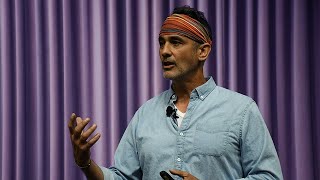
This content was created by GHION.AI . This content was uploaded by GHION.AI . This is a YouTube video titled "The Zen of Entrepreneurship [Entire Talk]" created on May 15, 2019. It features a monologue-style talk discussing the concept of Zentrepreneurship, which combines entrepreneurship with mindfulness and sustainability. The speaker explores topics such as quantum mechanics, human consciousness, and the need for a paradigm shift in society to address global challenges like climate change and economic inequality. The talk encourages individuals to live without regrets, expand their consciousness, and take action to create a better future.
Chapters
Who you are defines how you build.
Who knows what a Zentrepreneur is or think they know? All right, we're going to talk a little bit about what a Zentrepreneur is in today's discussion. I want to open up with a little bit of a monologue here and let you know that we're society and humanity's at a really interesting cusp or precipice of it's clear that we're not on a path of sustainability. And we're going to go in one of either two directions, either down the path of, as Dr. Richard Leakey wrote in his book The Sixth Extinction, or we're going to completely reinvent every paradigm and move the world in an entirely new direction. Big paradigm shift. So we're going to talk about some really, really big concepts today. I'm not going to get too deep. We're going to share a little bit about quantum mechanics, its impact on human consciousness, what that means to entrepreneurship, what Zentrepreneurship is all about. So it's going to be a pretty exciting talk. I'm going to try and condense things into sort of a model and a framework that I hope everyone can understand and follow me in. So let me expand a little bit more on my career because I do think it has a lot of context for today's talk. And I've always considered myself a restless soul. How many restless souls do we have out there? Yeah. So always striving, altruistic, wanting better, better humanity, better myself, striving for goals. And this career story, I think, matches what the restless soul finds this entrepreneur. So a little bit of background. I started out with a very Catholic heavy upbringing, and there were some really good lessons that I learned there. Probably the most principled one was really all about a higher power and caring about others. Having said that, the downside of that was I being a restless spirit. Really rejected the dogma of organized religion and the Catholic faith in particular, talked about this concept of original sin. And I was had a really hard time thinking that if there is a greater being who's probably loving and compassionate, how could he have this concept of original sin? So that set me off into thinking about religion and spirituality in a much broader context. And that sort of started me on that path. In seventh grade, I had a teacher, Mrs. Finnegan. And I think what was happening is I was probably falling into a little bit of trouble and probably hanging around with the wrong kinds of kids and wanting to be cool and do what they did. And she pulled me aside and said, hey, I have a book for you. It's called the Nonconformist. And, and it was a really interesting set point in my life which said, hey, you don't have to follow everyone else. It's not about being cool. It's finding who you are, who you're meant to be and what your journey was. And it's interesting that at 57 years old, I haven't forgotten that book and what that did for my life. So the Zentrepreneur lesson there, and I'm going to talk a lot about this during my talk today, it's really all about creating your own path. It's easy to follow in someone else's path. Society is heavily, heavily geared towards what I call a status quo set of structures that benefit very few. The machine of capitalism, the social issues that we're tackling, all of that just trickles up to the top 1%. There's something really wrong with that structure. If you continue to follow down that path, you're just going to be a cog in that large machine. College was a period of questioning everything. Most of you. I think I see a lot of young faces out there in college. It's a really amazing time in your life. Those that have gone to college probably have very fond memories of that experience in there. So without going into the decadent gory details, the lesson that I walked away with that making compromise or composing of this sort of ZLEV Zentrepreneur philosophy was this concept of really thinking differently and thinking about who I am, where I want to go, and not just like, oh, I have to take this computer science class, I've got to hang out with these people. I wrestled in college and really started to gain this concept of becoming more consciously aware of thinking differently. And then started my career in a technical track. I moved into product management. The inside joke that I say, what do they do with the mediocre programmers? They make them product managers. But the Z lesson there was really all about. Steve Jobs talks about this. It's a little bit of a cliche, but it really is all about finding your own passion. Lots of times you may not know what it is today, you may not know what it is tomorrow, but are you on that path? Are you searching for that? Because once you find that the world completely changes for you then had the opportunity to do something really extraordinary. I'd never been an entrepreneur. I was running a billion dollar software business and I became very disenchanted with the corporate strategy and then myself in a Kindred spirit left to start a company and we had the vision to be the world's largest web development company. This was back in 1995. I'd never run a professional services company. I'd never been an entrepreneur. I never raised a penny. And four years later we created a company of 5,000 employees operating in 17 countries around the world. We were serving half the Fortune 500 doing the most amazing state of the art web development work at that time. We were going through this entire transition from an industrial revolution to a digital economy and had a successful IPO at the end of 1997. And it was perhaps one of the most amazing learning experiences of my time. What I learned at that lesson was really more about what not to do. What you find is that the one thing that you can never get back in your life is time. If you smash your car and get a new car, if you get a hole in your genes, you can get new genes or most people like the holy genes now today, so you don't even have to do that. But most material things are all replaceable in life. Time is not replaceable in life. And starting to think that through. No matter how much work is done in human longevity, this body that you inherit right now today has a beginning and a middle and an end. And the time that you have is incredibly precious. Not to get into a morbid conversation, but the focus here should be am I using my time wisely? Am I spending on things that I really enjoy? Am I growing as a human being? Am I contributing to society? That started the framework of having a million things to do with a startup got me really more focused on life with what's really important, what shouldn't I be doing? Because you can't do everything and you want to focus on those things that's going to make the mark that you want on society and create the kind of person that you want to create. At 10 change started an incubator. That was the vogue thing to do at that time back in 1999. And it was there where had some of my first pretty big failures and had the opportunity to learn a really great lesson in humility and what that was all about. And part of I think the challenge here in Silicon Valley is that wealth does some interesting things, especially early on in your life and when you never had that. And if I were honest with myself, it would be pretty self absorbed, I would say really lacking in self awareness and also just really focus on being fairly selfish and with a really high ego. Oh my God. I started this company. I've created all this wealth for myself and it took that opportunity to go and actually experience some failures, raise some money for a startup, have that fail, have to sit down and tell your employees that the company can no longer be a growing concern. Having that call with your investors, that I'm sorry, I'm not going to be able to return any of your money. And that was a really hard self reflection moment in my life. It was a seminal, pivotal moment in my life about the importance of humility and why you should always carry that with you no matter where you're at. The ups and the downs through life is having this humble quality about yourself. And then had the opportunity to join a non profit board of directors in 2007 with the famous Dr. Richard Leakey. And he's quite an extraordinary individual. Discovered the Lucy fossil and he wrote a book called the Sixth Extinction. And he really opened up my eyes to climate change. And unfortunately everything that he's predicted is coming true. Deforestation, dead zones in our ocean, I mean the list goes on and on. I'm going to talk more about that. But that was another seminal set point in my life and really opened up my eyes to. We're really on an unsustainable path right now and it really is, it's unconscionable to sit here and know what problems that we're creating that we don't even understand one order of magnitude how large this is going to be. And leaving this for future generations to come. That's a hard pill to swallow. It really, really is. And the fact that we're allowing the power structure of a status quo society drive that agenda. Why aren't we fixing that? I was talking to Matt just about Puerto Rico. Why is that place still effed up? It's crazy. These are really easy problems to solve. Then I decided to continuously stretch my boundaries. I was kind of retired for a while. I never golfed. I started, I was a terrible golfer. Being a type A person, I started taking lessons, ended up getting three holes in one which was pretty cool. I started surfing, got to go to Indonesia, some very exotic surf places. I think I'm pretty good. But against a pro surfer, Jarl sitting over here, probably not that good. And it was an amazing time. And then being the person that likes to be out front in the edge, living as far on the edge as I possibly can. I decided at 46 years old that cage fighting sounds like a cool thing. I trained with Frank Shamrock, a four time UFC world champion. Did a number of cage fights and he pulled me aside and said, hey, you know, seem like a bright guy. You're 46 years old, there's really no career in here, and seems like you're doing a lot of this just for vanity. And when I stepped back and thought about that, and he said, oh, by the way, one of two things could probably happen in here. Either you kind of mess somebody up and you put them in a hospital, or you get put in the hospital. How's that making any sense? And I said, yeah, you're right on that. So you can train. It's incredible, the metaphors of meditation and learning to train in mma. So that was quite the lesson. And what the story of this is. Have anyone read any of Roman philosophy experts? Seneca and then Osho wrote a book on fear. And when we get to that point in life, when we transition, that transition becomes a lot easier. If you've lived your life with no regrets, what I mean by that is that I've made a ton of mistakes. I'm going to still make mistakes. I'm a human. But of course I would do things differently if I had the chance. Looking backwards, you don't have that ability. As far as I know, no one's created a time machine where I can go back in time, but I really don't have any regrets. Everything I do in life, I try and push that on. But the more you spend out in front of your skis and the more you spend pushing the boundary, putting yourself in really uncomfortable situations where the failure rate's really high or it's really difficult to do the easy things, to take the easy path, that's what creates richness in life, and that's what really resonated with me. And then finally onto executive position at SolarCity Tool. Had another failed startup in my resume, Tesla and now Autodesk. That's opening up an entirely new chapter of what I want to talk to you about today, which is Zentrepreneur life. Being a guy that was a former engineer, I love charts. Pretty easy, like to create a set of a structure. But the way I want to frame this conversation today is to think about your reality, your world, where you're going in life on three dimensions. One of those is this aspect called consciousness. It's what's going on in your brain right now that no one knows what that is. The X axis is this concept called wisdom. Wisdom is comprised of knowledge that I gain and then convert that into wisdom. And then the third dimension is how I take those elements, how I put that to Action. Where am I going in my life? What kind of person do I want to be? What kind of mark do I want to leave behind? And starting to think those through at a really deep philosophical level. So what I'd like everyone to do for a moment is please close your eyes and take a big, deep breath in. All the way. Feel it all the way into your stomach. Let me hear, then let it out. Just relax and stay here with me for a minute. Now, I want you to go back in time, and I want you to think about one of your childhood places that you lived and grew up. And I want you to picture the home. See the staircase that was there. Picture the front door, the yard. And I want you to open the door. And I want you to walk into that home and see the kitchen and the living room. Maybe your mom and dad or brother or sister. Then I want you to walk down the hall into your bedroom. I want you to see what color was on the wall, the bedspread that you remember. Maybe you had a desk in your room. Now I want you to lay down in your bed. Now I want you to open up your eyes. My guess is that was a really vivid memory in your brain. That's probably a long time ago. No one knows where those memories exist. No one. Science is more. Perhaps the greatest mystery of life is human consciousness. Where those memories exist, there's no Dropbox. There's no hard drive on your brain. Where does that exist? Is it really just between the ears? Is there something bigger? Where does that exist? No one knows. So let's talk a little bit about that. So I've been spending a lot of time, what I call the perfect trifecta. Now I'll make a confession. I absolutely hated philosophy in high school, Hated it in college. I also hated physics. It's too linear for me, too much math. But recently I have been spending an interesting amount of my time learning about this exotic physics called quantum mechanics, which is really below kind of the subatomic level. And there's some really cool terms in here. And I won't try and lay out a deep technical conversation, but this concept of things that can be both particles and wave at the same time. So there's one theory around what's called superposition, where a particle can be actually two places at one time. Schrodinger's cat. There's another concept called entangled particles, where these particles could be vast distances apart from. And one, it's affected and it affects something so far away. What are they connected by? Dark matter Dark energy. And then another interesting concept called the superstring theory, which is a definition to try and focus on the aspect of particles and waves and energy and how that all coexists in the universe. And I wanted to read something from a philosopher and physicist that I've been a fan of and following on YouTube for quite some time, John Hagelin, who's a world renowned physicist and leader of the Transcendental Meditation movement. And he talks about that fourth area there, which is called the unified field theory. So unified field theory as the fountainhead of nature's intelligence, an ocean of pure existence and universal intelligence, it's dynamic, it's boiling with energy. He goes on to make a case of how pure human consciousness is one in the same with human consciousness. Taking the outwardly directed mind, typically focused on the five senses, turning that attention powerfully from within to experience deeper and deeper levels of consciousness, slipping beyond all that thought and experiencing in just pure being, pure consciousness, unbounded awareness, where the vibrational tones of the unified field and pure consciousness are one and the same. These are really crazy, far out, exotic areas of study and a study of field going on. Is your consciousness connected to a unified field? It's fascinating. And I take that a little bit step further. I should actually mention one more other interesting experience. So in the 80s, John is the head of David Lynch's Transcendental Meditation organization, has about 44 million followers today. And he brought several hundred of his followers to Washington D.C. when it was the murder capital of the world. They had a Transcendental meditation session and then they actually measured the level of murder after that. And it went down, it stayed down permanently after that. He set up another coalition of several hundred others. They went to Lebanon in the 80s when there was brutal, violent civil war going on. They had the same session and they actually measured the level of violence. It had dropped and it had been reduced systemically over time. So what this ties into is that your brain's got some really interesting matter, about 100 billion neurons and they are pulsing with electrochemical activity. And those manifest themselves in certain brain waves. So we'll start with sort of the easiest one, which is the beta waves, and they're oscillating at X amount per second. And that's normally how you are in a standard day. You're in class studying, you're at work, you're doing a lot of things. There's not a lot of time for you to sort of think outside of like, oh, I've got to write this paper, I've got to study for this test. I've got this assignment I have to do at work. I've got to create this marketing plan. You're typically running at what order? Called beta waves. Not a lot of time to think about new ideas, not a lot of time to be creative because your brain's really focused and cycling at that beta level. Then there's alpha waves. This is when, okay, I've done a bunch of studying, I take a little bit of a break and then my brain gets to relax a little bit. The frequency starts to slow down and get to catch my breath a little bit and relax. That's an alpha state. Then there's theta waves. And this happens when you are in the state of a much more deeper relaxed state. Lots of times around meditation, being out with nature, being focused, being present. And that's where a lot of ideas and creativity exist. When you can get your brain in that data state, sometimes you might feel you're driving and all of a sudden five minutes have gone by. You don't even remember driving. But some ideas pop into your head. That's the theta brainwave that's working. You're in the shower, just relaxing, feeling the water on your body in a theta weight. Some of the best ideas happen when you're in the shower, right? And then delta is typically when you are completely deep asleep. You're not dreaming. On average, dreams happen about 90 minute cycles called REM sleep. But then the delta, you can't have any brain activity because you'd be dead. But you're in a very, very deep sleep. Now the more interesting brainwave activity really comes from this gamma state. And when you're able to get into this deeper state of meditation or deeper consciousness is when the truliest magic begins to occur. We're actually super relaxed. But your brain is operating at this gamma level, exploding with energy, exploding with new ideas, and where the most interesting things begin to happen. So I wanted to give you a little bit of a play on why this whole consciousness dimension is so important and how it's going to play in Zentrepreneur life. So I opened up my talk today telling you that there's a fork in the road. The term I like to use, it's a Greek word called kairos, which means a unique moment in time. We're at that moment right now. Path A is what I call the zombie path. This is where we just continue to do what we're doing with the planet, with our economic structure. And if you start to think about that, there was actually a famous neuroscientist that spoke here at Stanford many years ago, David Eagleman. And he cited this research that was done that when you're two or three years old is when your brain is the most creative and the most active, the most neuroplasticity. And because of Darwin principles, when you don't use begins to atrophy. And in 100% of the cases, by the time, 50 years later, when you're 52 or 53, you have half the neuroplasticity that you had when you were 2 or 3 years old. And you might hear Jeff Bezos talk about when he tries to get into creative mode. He puts himself in his six year old kind of mindset and trying to really focus on how do I get back all this magic creativity that I once had in my youth. And if any of you spent any time around young children, they have no boundaries. Matt's got a seven year old. My guess is that his ideas are probably so out of this world and so creative because they haven't been forced into this structure, this zombie structure where you do the same thing day in and day out. You meet with the same people day in and day out. You do the same things day in and day out. And that electrochemical network just keeps getting deeper and deeper and deeper. The grooves just get deeper and deeper. And what's the end result of that? We've got some of the most hugest economic income diversity problems that we haven't seen since the Great Depression. It's hard for me to sit here and look at the status quo path and go, everything's going to be all right. Because I don't believe that everything is going to be all right if we stay on that current course and speed. So we've got massive, what I call, we need a modern set of new paradigm shifts across the entire board from a planetary sustainability standpoint. Economy, social ethics, laws, government. And I want to talk a little about where you're spending your time and how I think you should be spending your time. So I've got a few more stats for you. Let's talk about the planet, an area near and dear to my heart. So I spent a bunch of time at SolarCity and at Tesla. Deforestation. We've lost 46% of our trees and nearly 100,000 acres are cut down every single day. Our waters. Each year, 1.2 trillion gallons of untreated sewage, stormwater and industrial waste are dumped into our US waters. The Great Garbage patch in the Pacific Ocean. It's Twice the size of Texas at an atmospheric level, we have over 405 parts per million of CO2 in our atmosphere. Now, remember back in the 90s, we talked about there's going to be massive havoc if we actually get over 400 parts per million. We're now at 405. And the most stunning figure. And what Dr. Richard Leakey really talked about was biodiversity. And how many plants and animals are being extinct is at an epic level. Humans have destroyed 83% of all mammals and half the plants since the dawn of civilization. It would take 5 to 7 million years for the natural world to recover. A million species now face extinction within decades. Our rate of destruction tens to hundreds of times higher than the average over the past 10 million years. 10 million years. How's that sustainable? Population growth continues to expand. Globalization continues at an epic rate. Our biodiversity is being reduced at alarming rates. And the power structure of what I call the zombie or the status quo continues to chug along Wall Street. And you have investments in stocks. I guarantee you the billionaires are out way before any kind of market crash. Who ends up picking up the tab on that? You do. Mainstream America does. Economy. We have a massive income inequality problem. Here you can look going back to 1963 and now fast forward into 2016 and you can see a pretty disparate chart here. And as I said earlier in my talk, this disparity hasn't existed since the Great Depression. And I'm not here touting socialism. I actually don't believe in any of those labels. I don't believe in conservatism. I don't believe in liberalism. I believe in being you and being me and being human beings and focusing on how we change the world together and tackle things without being divided and labeled this or that. Because I do think that there are some aspects of what we have that are good and great and, and can move forward in the 21st century. And certainly a lot of challenges that we have that need to be addressed. And I had one other stat, which was consumer debt has risen to $4 trillion from a mere couple hundred billion just 50 years ago. So in addition to this, the problem's exaggerated because now we've got massive consumer debt. Some of the social issues that we have in front of us are rapid population growth. Maybe we'll top out. Maybe. I think 20, 50, 10 billion is the current prediction. We'll see if that happens. Growing inequality, a real problem with aging population, rising health care costs, global and religious conflicts, poverty that still exists today, which seems crazy in the 21st century, with the wealth that society has created, that people are dying because they can't have clean drinking water and can't have a roof over their head and can't get a basic meal every day. And certainly at the energy level, the fact that we still drill, baby, drill. It's nothing short of disgusting when these people that are working in a coal mine could literally go and work and putting solar up. There's so many new alternatives, so much more innovation where we could solve these problems. Ethics laws in government. Is there an ethical company out there? Look what these companies do with your data. They're just focused on a couple things. Growth. They don't care how they get there. Wall street pushes them to grow and they're focused on their balance sheet. What does my balance sheet look at, what my income statement look like and my metrics versus what are we doing to society? How do we tackle some of the challenges that we have? Criminal justice reform, huge area gerrymandering, the fact that undercuts and undermines our democratic systems. And I would ask, does the government work? Just yesterday or the other day, President Trump's former chief of staff, John Kelly, has taken a board position for a venture capital firm in Washington, D.C. that is heading up the largest child migration center. Is that a good use of capital? These are our leaders. And lastly, the most important resource that you have that I talked about at the beginning of this presentation, that's your time. That's all you have. At the end of the day, where are you spending it? Well, the zombie people are spending it. Well, most people, a third of it is sleeping on average, 47 hours a week. So sleeping and working, that's basically two thirds of your life are gone right there. So that means that at the time you're not sleeping or working should be really focused on activities and things that you're passionate about, excited about things that you can do to really change the world. The kind of mark that you want to leave on society. We spend 24 hours a week online, Instagram, Snapchat, five hours a day consuming media. Good Lord, what's happened to journalism today and the garbage you get from all of the 24, seven cable news networks? What's left of your time? So where am I going with all of this? What I'll call is the beginning of a conversation around some of these amazing challenges that we have and how to overcome them. I will say that aside from painting, probably a really bleak, depressing picture, I've never been more optimistic in my life than I am Today, having had the chance now at my ninth year teaching here at Stanford, and the Zentrepreneur life philosophy, a lot of it was born here at Stanford University because when I get to interact with the most amazing students in the world, it's a window into the future. How you think about the world, the kind of people that you want to become, the things that are important to you, where you want to focus your time and energy. And I will be so bold as to say that is the most advanced human consciousness generation of all time, of all history. And where this really rang true for me was during the horrific Parkland Land shooting. And to literally see 16 to 17 year old high school kids go on CNN and be so articulate about gun issue unlike any politician who's sitting in their office gerrymandering. And where did that come from? Where does your intellect come from? I have to think that the Internet, its pros and cons, have a lot to do with bringing incredible knowledge to you, incredible insights to you, maybe some of the upbringing that you've had, but you're thinking about the world like no other generation. It's incredibly refreshing to see and it gives me extraordinary hope that this movement, this opportunity that we have is going to be extraordinary, perhaps the greatest creative movement in the history of humanity. That's how excited I am and how optimistic I am on the future. The challenge that I have together is that how do we literally reinvent every paradigm? Instead of sitting back and allowing a structure and system to benefit few, we just have to reverse the pyramid. Not that hard, there's a bunch of smart people in this room. But it's a great opportunity that how do we basically completely reinvent the paradigm across the board? How do we shift our thinking? I'm going to introduce this concept called Zentrepreneur life set of principles that again begin that conversation. As I said earlier, if I could leave you with one message, it's this concept of living with absolutely no regrets. I'm not saying be completely reckless, your parents probably wouldn't be too happy about that. But do things you've never done, meet people you've never met, travel when you can create much broader open networks. The world is literally yours. You have infinite power, you have infinite creativity, you're just not using it and would invite you to join a movement with me. So instead of reading off the 21 principles, which as I said has largely been generated through the Stanford student body, that I've had the opportunity to interact with, it also is a reflection of looking at how some of the brightest entrepreneurs of all time have led their companies, what goes on in their consciousness. So it's this blend and then the third leg to the stool would be your brand of spirituality. Mine happens to be around Zen Buddhism. I believe in that, but I've got deep Christian background. I think all religions have a lot to offer, but there is this part of spirituality element that also is blended into this concept. So let me have the video tell the story.
Earth Home. For decades, mankind has achieved wonders on this planet. We've terraformed the land, built cities in the desert and islands out of sand. Yet at the same time, our forests are burning, glaciers melting and lakes drying up. Our lives have been threatened by our very own creation. But we are the next generation. We can change our trajectory and course, correct what's been done by past generations to create a better future. Centrepreneur Life is a philosophy to spark change. It offers a roadmap to tapping into your infinite creative power through the following 21 principles. Believe in something greater than yourself. Live in gratitude. Strive to make the world a better place. Believe in infinite possibilities. Be transparent. Be kind. Give more. Lead by example. Be bright. Share positivity.
Have fun.
Faith that you will succeed no matter the circumstances. Be present. Continually strive for personal growth. Spend time in nature. Listen. Live in pursuit of perfecting your craft. Have a dedication to defining your own path. Build open networks. Make your own opportunities. Fuel your mind, body and spirit with healthy nutrients. Know the real prize is the journey. Don't take life too seriously. Laugh, sing and dance more. Be willing to explore your edges.
We choose to go to the moon. We choose to go to the moon in this decade and do the other things. Not because they are easy, but because they are hard.
Yesterday, we terraformed the land, built cities in the desert and islands out of sand. Tomorrow, well, we have a better plan.
Okay, so I don't have all the answers. There are people on this planet way, way smarter than me. What I do want to do, though, is begin a conversation. I want to find some kindred spirits. I want to find some difference makers that want to completely reinvent our planet, completely reinvent these broken paradigms that we have. It's a huge, audacious goal. And as morbid as the picture might sound, where there are big challenges, that's where big opportunities exist. And it's an amazing time to be alive right now. It's an amazing time to be who you are, where you're at in this lifetime, and you truly have the power to really do anything that you Set your mind to. And as a matter of fact, one of those principles about infinite possibilities and seeing no boundaries. It reminds me of the times when I had the opportunity to be in a meeting with Elon Musk and there were virtually no boundaries in his thinking. None whatsoever. Who would have thought that you could have built a company that would go and completely reinvent the automotive industry and build a company that could completely reinvent the energy paradigm? That's all possible. And that's just the start. That's just the tip of the iceberg. I guarantee you there's hundreds of millions of Elon Musk out there, probably several sitting in this room right here today. Just need the courage and the conviction to take that step forward. And ultimately, as I said earlier, we're mortal. And all you have left when you leave this planet and this human body is what you've done. You don't leave with your car, you don't leave with your house. You don't leave with the clothes on your back. And I would challenge you all to think about what kind of indelible mark do you want to leave at this moment in time? So, the zombie path. I call that the path of many. That's the easy path. That's the path that everyone goes on. I would challenge you all to three things. Imagine what others can't. You all have the power. There's not one person in this room that doesn't have infinite creative power and capability. You have to put yourself on the right path and believe that you can do it and find, search for these amazing opportunities that exist out there that will enlighten your world, that will bring a whole new level of consciousness to your being and where you are and where you're going, your disposition on life and what your version of reality is. Secondly, do what others won't. Take on the hard things. That's where the magic of life is. That's where the spirit of life is. It's easy to take the easy job. It's easy to be lazy. The hard, difficult challenge is do the other things that others don't. And lastly, lead like others. Others don't. And what an amazing institution here. And a group of people that have this incredible intellect and this opportunity in life that virtually anyone and everyone that wants to be a leader can truly be a leader going forward. So let me finish up since I'm gonna come back to a little bit of my programmer mind here with a fancy little chart, and hopefully my talk today gave you a little bit more context for what these dimensions are. All about. And I would challenge you all to expand your human consciousness. There's infinite ways that you can do that. Might start with meditation, might start with meeting new people. Think about that brain wave chart that I showed and how to get more out of the beta mode, which nothing good happens there other than health issues and problems. When you're stressed out, worried about this or worried about that, that's just the reality that you're creating for yourself. And we all have challenges in life. Absolutely do. Some are more challenging than others. But you can choose to let that dominate your life. You can choose to let that impact your reality, or you can shift your mind to an entirely different mode. And I would coach you all into really moving forward and expand your human consciousness, because that's where all the magic, that's where all the creativity lies, right? Secondly, would also encourage you to increase your knowledge and wisdom. How do you do that? Well, how are you spending your time? Action. Are you meeting new people? What new things are you doing every day, every week or every month? Could be simple things like playing guitar, taking up an art and craft, making some jewelry. To thinking about some of the bigger problems and challenges that we have in life. But really focus on versus Snapchat, social media, LinkedIn, same thing. Day in and day out. You're just in a groove. You're going nowhere in life. Think bigger, think broader, because there are no boundaries. The only boundaries you have are what you are thinking physically imposing on yourself. It's all mindset at the end of the day. So I want you all to expand in the wisdom category. And lastly, as you think about those two dimensions, where are you going to spend your actions? It's almost like body, mind, spirit. Are you going to be going through the same motions? Get some trips that are planned, some new people that you can meet, some new people that you can have coffee with. Because again, the only restrictions, the only boundaries are the ones that you've all placed on yourself. There are none. I'd love for you to think about some of the concepts I laid out today. Some a little bit technical in the area of quantum mechanics. But the point that I was really trying to make was actually a really interesting link happening now between science and human consciousness and spirituality, where it exists, where it's all going, this infinite power that you can tap into. And what's amazing is that I'll bet you don't know the Milky Way galaxy today is traveling at over 1 million miles an hour through the universe. And we're sitting here, right here at Stanford University. Just think about the concept of that for a moment. So this is what inspires me, future generations to come. That's what drives me to do the things that I do to be so gifted, have an incredible opportunity here to teach at Stanford University, to give back, to give more than you take. And I do care about future generations to come. It does bother me that I could be doing more to solve some challenges, maintain biodiversity, some of the planetary issues that we have, social issues that we have. I think everyone has an ethical and moral responsibility to create a planet, leave a planet that's better than what you inherited. And as I said today, I could never be more excited. I believe that the opportunity is nothing like I've ever seen in my lifetime. And the future is completely yours. The possibilities are absolutely infinite. Any questions? Comments? Yes. Yeah, take one or two, folks. How do we know what we are going to do when we better than. How do we know what. How do we know what we are going to do with not creating new problems? Ah. How do we know what we're going to do without creating new problems? Well, here's what I'm going to tell you. You are absolutely going to create some new problems with what you do, no matter what. But what I would tell you is that the slight problems, if you're pure of heart and focused on doing the right thing, that will end up correcting itself. And what I mean by that is. So let me give you an example. I watched this movie about the Eagles documentary and when Glenn Frey was living upstairs at Jackson Brown, and when Jackson Brown started to write a song, he literally would practice the same verse over and over again. It was driving Glenn Frey crazy. He didn't know how to write music and he kept practicing and practicing and playing. And the first iterations of it were absolutely terrible. Created a lot of mistakes. Over time, it got better and better. And that's what he said to himself. Ah, it's elbow grease and it's working really hard. So I would rather, you know, in business, right. What's the worst thing you can do? It's not make a decision at all. The most important, even if it's wrong, it's like you get the best data that you can, you think things through the problem that you're trying to solve. And at that point, like, everyone's going to make mistakes and you'll probably end up creating some collateral damage along the way, but what you end up doing and solving is going to pale in comparison to potentially some of the collateral damage that you've caused so that's my philosophy on that. Any other questions? Yes.
What recommendations do you have for entrepreneurs about how to build different incentive structures or what KPIs to build in that don't perpetuate the same paradigms.
Yeah. Wow. A different set of structure for different KPIs on building businesses that I assume are more ethically moral. God, that's a really great question. So I'm sitting here in Silicon Valley and without completely pissing off the entire venture capital community, but I think that we'll have roughly $180 billion going into venture capital, new innovation, and literally occupied by several hundred venture capitalists. That model is completely wrong and broken because they're literally for one reason. I don't blame them for that. But they have limited partners, they raise that money and then they have to deliver really great returns on that. And I have lots of ideas on what I think a new model would look like. And again, it all has to start with sort of flipping the paradigm. So if we continue to work through the same structure, you're going to get the same behavior which is like, grow, grow, grow, grow, grow. Burn your people out. Burn your people out. You're disposable. I need growth. I need my balance sheet to look this way in these KPIs. So I think B corporations is a really good start in that direction about having a set of looking at your supply chain. Is it ethically sourced where the material's coming from? Is there no slave labor coming with that? I have a bunch of other. But that to me is in the right direction. And I think it is all about sort of a conscious awakening and then how do we reinvent the traditional venture capital? I think it's hard to try and superimpose what we need to do on that. I think it's all about creating a new paradigm. Yeah. Is there a trivial moment in your life that you may be a venturepreneur? I look at your LinkedIn, it looks like the first few stations in your career were kind of ordinary. So I've been surfing too much. I got a bunch of water on my mat. What was that question? So you talked a lot about Zentrepreneur, but you checked out your LinkedIn profile and the first couple of stops maybe were more. I'm going to go with the word traditional. Yep. Yeah, that's a great question. I actually talked to my class about that concept. So if you'd asked me nine years ago, hey, Professor Corey, give me some tips on my career, I would have given you a Boilerplate answer. Go work for a large company that's the market leader in their category. Go learn. And then if you end up creating a really good idea, have some unique insight, then that's the right time to go do your own thing. I actually think it's the exact opposite of that. But what I would say is that there isn't a one size fits all. So where I've gotten is that I would absolutely do things differently. I would not go through the traditional route that I went through. I think that was sort of me being conservative, me being just sort of focused on my career. Okay, what's the next promotion for me? What's the next raise for me? And being methodical and being a zombie and just following that tried and true path. So what I would say that. I'm not saying being an entrepreneur is for everybody, but I do think that there are massive opportunities to get involved in many different ways versus. And you know what, at the end of the day, if that is what you're feeling right now of the traditional path, that's awesome. I don't begrudge that at all. What you should do, what I would encourage you all, is to make sure, like, are you getting all the data in to think about that decision? That's the right way to think about that problem. Because then at the end of the day, you have the sixth sense that exists inside you, right? And you have this somatic intelligent system. You're not telling yourself to breathe. You're not, you're not telling your heart to beat. There's a natural intelligence that is inside your body and there's this thing called a gut, a gut feeling. Something that's in your heart, something that you feel, right? And that's part of consciousness, doesn't exist anywhere. You all have that capability. You know when something's right for you. And I would just encourage you to like, don't doubt that. Go with your heart. Even if it turns out where, eh, maybe not the right thing. I'm kind of, kind of facing a similar situation right now. I'm at peace with my decision and where I'm going on that. And I just don't have any regrets. I want to put myself out there more. So what I would say is like, learn from what I did and stand on my shoulders and think about a broader opportunity for yourself. Make sense? All right, one more question. Last question. If we got one, would you go into. One of the tenants was about building open networks. Could you give us some tips on how? Yeah. So, okay, Open networks again Thinking about that paradigm that I talked about where we do the same things day in and out. So what does current structures drive towards? So LinkedIn, it's set up that you really just connect with people that you already know or you worked with. And I know myself, like whenever I've reached out. Sometimes if you reach out to connect with people that don't know you, if you get too many no's, I don't know that person, LinkedIn will actually warn you. And then after, if you keep doing, will lock you out of your account for a certain period of time. What is social media setup? Oh, you hang around with these types of people, you have these types of political views, you buy these types of products, you're in the same swim lane, Twitter, all of that stuff. So where creativity comes from is having more expansive data points. So if you're literally in the same swim lane and hang out with the same people with the same views, you're not going to expand. So the concept of an open network, which is an area that I'm thinking about, of how do we drive more mentorship into the world, especially for young people, Because I think that's one of the ingredients and one of the opportunities that we have. And that's almost like, what would it be like if you had your own personal board of directors that could help you think about your life and it could be a domain that you're interested, robotics, AI, whatever that might be, but other individuals that you never would have thought of connecting with and can bring an entirely new perspective from anywhere around the globe. What we found is actually there was a study done, that Forbes magazine article, I can get it for you. But scientific data actually shows that the more open networks that you have, not only the more successful you are in life, but the happier you are in life, the more fulfilled that you feel in life. So the concept of that open network is that we've got to step outside of these current structures and systems that literally keep plunking you in the same swim lane, you got to get into a whole bunch of swim lanes.
More from GHION.AI


O processo de reconhecer limites, mesmo quando a vida parece exigir sempre mais.





Depois de tantas histórias, aprendizados e pausas necessárias, o @interior_iza está de volta



