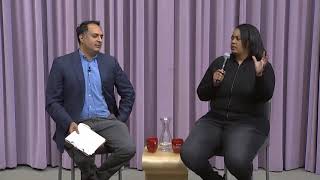
Arlan Hamilton describes three years of rejection before securing her first investment check for her fund. She details the financial struggles and barriers underrepresented founders face in venture capital.
Chapters
Can you walk us through how many emails you had to send and how many meetings you had to have and other hustles to get to your first check in the fund and how big that first check was?
Yeah, so approximately three years of no's. So nothing. At least half of that, if not more, without a permanent resident. And in a lot of cases just really not knowing where I was going to sleep that night. And a lot of cases not having, having like one meal understood. Like actually, I'll break for a second to tell you that I went to a course here at Stanford in this same hallway, like around the corner for two weeks. That kind of is where I met my first lp Susan. And it was a lot of millionaires. Susan Kimberlyn Susan Kimberly. I say her name every time. It was a lot of millionaires in this course because it was like how you spend your money better sort of thing. And I was the only one that I know of who was like broke, broke. And so I would. They didn't. No one knew this in the class, but I would like figure out how to put together like a $19 or $9. What are the taxes? So I could go to Taco Bell down the street when I got back to where I was staying and have like my dinner. And that was 2015. So that was like just a few months before I got my first check from Susan. So it had been months and years of that. And I probably, I don't know the exact number, but I, when I was on, I was featured on Gimlet's startup podcast series last year and they recorded me for months before it came out. And they had me just go back and do all this crazy vetting of, or you know, diligence on me for, for me to say, did you really do that thing that you said you did in four months ago on tape? So I'd have to go find the proof, the evidence in an email, which thankfully I still had because I, I have these emails. So I was able to look and like just in searching for a word or a phrase, I was like, oh my God. Like I talk about how much I, how much out outreach I did, but my goodness, seeing them just back to, I mean, I'm talking hundreds of emails, but maybe more than that, maybe in the thousands over those three years.
And how many no's do you think before your first yes?
Hundreds.
Hundreds. And how big was that first yes after three years and hundreds of no's and approximately $50,000.
$50,000 in a, in a world where, which was Amazing. And I will always be grateful to Susan for that because no one was doing anything. But this is in a world where I had to compete with people at millions out the gate.
And can you walk me through what that's like to. So you. I can't fathom this. And I want to just make this really clear for people. So you would. You're going to these meetings, you're pitching these people. You're going to the Stanford class to hobnob with the millionaires. And you don't know it's hobnobbing.
That's a good word for and then.
And where are you. Where are you waking up? Where are you going to sleep? How are you dealing with the bifurcation of that world? Are you pretending you're one thing and then.
Or absolutely not.
Okay, so can you walk us through just what it's like?
Okay. It was different at different times. So I started out in Pearland, Texas, near part of Houston. And parallel when I first started learning about VC and the disparities in capital between white men and everyone else getting capital from venture capital, I was in parallel. I was in an apartment with my mom. I had my bedroom, I had a blow up bed and I had a whiteboard that I was teaching myself about cap tables on and reading Brad Feldman books. And we got kicked out of that because we couldn't pay the rent. So then we moved into a Comfort Inn and we shared a room and every night or every morning we'd figure out how to pay for the next, for the next night. And sometimes we go down and talk to the owner and he would see us coming and he'd be like. And we'd be like, hey, man. Hey, you looking good, man. How you doing? Yeah, can we get like a week? Just, you know. And we just ended up, I mean, for like two years. It was the address to my driver's license because we lived there and we just made our way. And my mom would go out and get a gig and I would get. She's in her 60s at that time. I would go out and get a gig. I was trying to get a car so I could work for Uber because it was the early years of that. Couldn't get a car, all of that. And then couldn't afford that anymore. Moved to Pflugerville in Austin, north of Austin, because I wanted to be closer to, to startups. If I couldn't be in Silicon Valley, I wanted to at least be closer in Texas to startup world at that time. And it wasn't at that time so prevalent in Houston, and got a kind of a lifeline in the form of a small personal loan from Sam Altman, which is a whole nother story. And that helped us have an Airbnb for a few months. And like, because he understood. But while I was at the Airbnb is when I got the word that I was going to be able to come here for this 500 Startups program that you all have. And I didn't have any money. And it cost a lot of money. Even though I was getting a scholarship, it costs a lot of money. So made my way here and I had about 10 days worth of Airbnb. And in fact, there's a guy here who had his own company that, like, was venture funded. And I was staying at his place in East Palo Alto and I couldn't pay him at the end of it. And like, he let me, like there's these people that have kind of gone back to and thanked because he let me stay for a few days. But I was in these classes. So to answer your question about what was I portraying myself as, I was never ashamed of any of this. I was actually proud that I was surviving. But I wasn't going to put my whole sad sack story to anybody. That wasn't important. I tried that a couple of times and I'm like, wait a minute, that's not really what this is about. Because what this is about is getting more funding to underrepresented founders. It's about me seeing a great deal flow. It's about a fund that needs to exist.