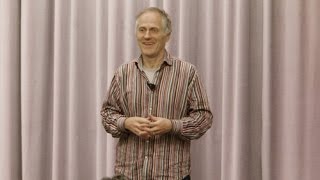
Tim O'Reilly argues businesses must create more value than they capture. He cites Jack Dorsey's Square, which empowered merchants excluded from credit cards, and compares it to Jean Valjean in Les Misérables. O'Reilly calls shareholder-first doctrine a "big lie" and points to Etsy, Airbnb, and Kickstarter as companies that thrive by building ecosystems.
Chapters
But I want to return a little bit to Square for my next lesson, which is a slogan that we've used a lot at O'Reilly. Create more value than you capture. Think about when Jack first started Square. He had a social mission in mind. He wanted to enable a class of small merchant who he felt was disadvantaged, who couldn't take credit cards. He wanted to enable anybody to exchange money in a new way. He was thinking hard about how do you actually make the economy work better? That's a big, interesting question and one that I think we miss a lot. We have a lot of startups that all they're really thinking about is how do I get a startup that will get funded and get me to an exit. And maybe you think, well, I have an interesting problem. But this is the kind of thing. My sense was that Jack wanted to solve that problem whether it turned into a big business or not. He just thought it was really, really interesting to solve. But there's also this sort of sense of trying to enable an economy that feels really important. And there's this quote that I love from Les Miserables and it's sort of wonderful. How many people saw the movie, okay.
I've seen the play, whatever.
How many people read the book?
Even better.
The book is absolutely wonderful, probably my favorite novel of all time.
But.
The story, for those of you.
Who don't know, is the guy who was a prisoner for many years, he was in prison for stealing a loaf of bread. Like so many people in our prison system, he's kind of. He's ruined by this. He becomes sort of a criminal. He gets out, he can't get a job because he's branded as a criminal. He ends up stealing some candlesticks from a church. That takes him in. And the abbe there, instead of turning him into the police, when the police come around, he says, oh no, I.
Gave them to him.
And so Jean Valjean becomes. He sort of feels like he's has an obligation to do good after this.
And he goes and he becomes a businessman. And he creates this wonderful, this factory where he builds this wonderful business. And this is the line that I love so much. He makes the entire region prosperous. So there was no pocket so obscure that it had not a little money in it, no dwelling so lowly that there was not some little joy within it. And here's this key point. Father Madeleine, he's living under a pseudonym because he was an escaped con. So Father Madeleine made his fortune, but simple man of business did not seem as though that were his chief care. He appeared to be thinking much of others and little of himself. Now, you think about how many people in business that you could say that of. There are not that many. And that's something really wrong with that. And I think it really started with this idea, which came out in the 80s, that the only obligation was of a business is to make money for its shareholders. We've seen where that has taken us.
To a situation where the Wall street.
Banks can think it's perfectly legitimate to.
Screw over the entire economy as long.
As it fattens their profits. This is not okay. It's the big lie of modern business. You have an obligation, if you're in business, to create value. And that's one of the lines that I use all the time, is that we should create more value than we capture. But this idea that Jack had, that he wanted to build something that helped the economy, that helped the small business, and you see this in Etsy, you see it in Airbnb. They want to figure out how to make an economy. They want other people to succeed as a result of this. You see it in Kickstarter, obviously. So these are really important lessons. If you're creating an ecosystem, if you're creating value for other people, you. Your business will succeed.