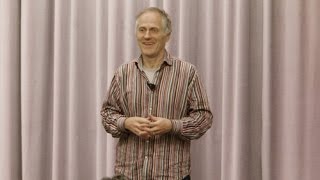
Tim O'Reilly talks about building his company from tech writing into publishing and conferences, and why understanding what customers actually need matters more than what you think they want.
Chapters
My initial business plan was interesting work for interesting people, and it was no more than that. What we did originally was a tech writing consulting company, but I started getting asked to write manuals for the same kinds of products. And so I started retaining the rights. These are things like, oh, wow, you want a FORTRAN manual? We've already got one, we'll sell it to you. And then that turned into the publishing company, because we realized that we were originally selling directly to companies. So we'd license. Effectively, we're a documentation company. We say, okay, you can pay us $25,000 and have it in six weeks instead of $50,000 and have it in six months. But then we realized that people were more excited to actually buy individual copies. And the big turning point in our business was Sun Microsystems had turned us down on a $25,000 license fee for our X Window System XLIB programming books. And then a year later, they bought a million dollars worth of printed copies of the same books. And we went, oh, okay, wait. But again, when we really thought about that, it actually made sense because when we sold them a source license, they had to go manufacture tens of thousands of copies of these things. And this is in the day when you'd print out. Companies would print out their manuals on a dot matrix printer and put it in a binder, and it cost them the same amount of money as buying the individual copies from us. So it was actually not as crazy as it looked. So again, getting a little deeper, I think, into your customer's problems is a really important part of understanding the business. We launched our conference business. It was really actually because of a Microsoft ad campaign, I think was in 1997, when they were promoting a technology called ActiveX and they actually had television commercials. And Andrew Shulman, who was an author who was working for me at the time, had done a lot of books about Microsoft technologies, said that in this particular ad campaign, all of the sort of activate the Internet things that they were demonstrating in the ad were done with Perl, except for this one little animated taxicab, which was the ActiveX control. And I was sort of a little. I was sort of pissed off about that. And I dec. And this came at the same time as the book buyer at Borders had told me that programming Perl had been one of the top 100 books in any category at Borders the preceding year. So I went, whoa, nobody's talking about Perl, so I'm going to do that. And I launched my Perl conference, really just to promote Perl. I Go. Nobody's not getting any respect. It turned into a really good business. So then we launched the Open Source Convention and then went from there to realize that organizing conferences was a great way to help promote the technologies and ideas we cared about. Somewhere along the line we realized, wow, we could invest in some of these things. So we launched our venture firm. So we just kind of. There was probably a big turning point for me was around 2,000, I think. I read the book Built to Last by Collins and Champi. And I remember we talked about great companies having big, hairy, audacious goals. And I sat there and thought, what ties everything that I do together? And what I wrote down was changing the world by spreading the knowledge of innovators. And that helped us realize that we weren't just a publishing company, that we really were about finding interesting people, finding interesting ideas and amplifying them. And it drives everything from the businesses that we're in to the marketing that we do. And we're always looking for those ideas and those transformations. By the way, a book that I would recommend, it's an ebook that I read recently that is really helpful in this regard, is by Michael Schrag called who do youo Want yout Customers To Become? It's really worth thinking about. He makes the point that really great companies have an idea about transforming the lives of their customers. The examples he give, for example, Henry Ford didn't just invent the assembly line, he invented the driver. He invented the weekend so people would have time to go drive cars. There were all these ways that he thought about changing people. And you think about how the iPhone isn't just a piece of technology. The smartphone has changed who we are. Google changed who we are. Google didn't just create a search engine. They created a population of people who take for granted that they can find anything they need to know. And that's a really, really powerful idea.