Tina Wells: Consumers and Brands in the Digital Age [Entire Talk]
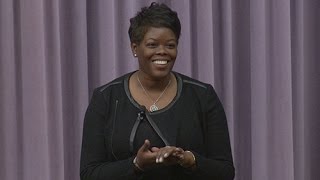
Tina Wells, founder of Buzz Marketing Group, discusses consumer behavior and trend spotting in the digital age. She covers how technology shapes marketing, ethical considerations in the industry, and her work with the UN Foundation's Global Entrepreneurs Council.
Chapters
Well, thank you everyone for welcoming me. I feel a bit jet lagged, so I said no PowerPoint today. I wanted to have a conversation and we've spent some time talking about this class and about what you're learning and about the center. And so I'm really excited to be here. I'm really excited to talk about how I started my company. It's been 18 years now, so. So it feels like a very long time. And I think it's also because it's been a really long time. So I want to talk about how I started. I started my company back in 1996, and so it feels very ancient. The world was really different. The tools I had available to me to do that and to start are very different than what I think young entrepreneurs have today. And so I want to talk a bit about how I started and focus on the work we do at the agency and then what we do now. And I hope to save kind of some significant time to have Q and A and to engage with you and answer your questions. So let me start off with how I started Buzz. So I never ever thought I'd be an entrepreneur. In 1996. That was not a word that was really kind of known to me. I always thought I'd be a beauty editor. So I was very focused on fashion and beauty, and I wanted to be an editor at Product, primarily a teen girl magazine, kind of like 17. And so at 16, I applied for a job with a newspaper for girls out of New York City called the New Girl Times. And at the Times, I primarily wrote product reviews focused on. My first column ever was for a company called High Intensity that made very cool jewelry. And I found during that process of reviews that when I would submit the column back to whoever gave me product, they would always say, if I keep sending you product, will you tell me what you think? And at 16, I thought that was the coolest thing ever, that there were tons of companies who would send me products if I just told them what I thought. And so I thought that was the gig. I didn't think it was a way to make money. It was something I became really passionate about. And even at 34, I still am so passionate about trends, about new things, whether it's reading about a new destination and cunning ass traveler. And it's something that still fuels me today, the idea that there's so many new products to try, so little time. Back in 96, I remember a lot of PR type people were my quote unquote clients. And I started getting phone calls Like, I have a friend, she works on this brand. You'd be really cool to talk to. And I didn't really understand what the conversation would be. I was literally a suburban teenage girl. I should, I guess, go back and say, I'm the oldest of six children. And so the eight of us, I was kind of the odd kid doing this interesting thing. And since all of my siblings have really interesting careers and do really interesting things. But at the time, it was something very different, very new. And so my parents were like, why is ups? Why are UPS synthetics here every day? So no one really got what was going on. I didn't really get what was going on, but it was happening really quickly. And so by the time I was 17, I had about 40 clients. And again, I use that wor very loosely because I hadn't yet had that moment where I realized I could make money doing what I was doing. And so I started to recruit my friends and say, if I give you guys some of these products, can we all review them and I'll tally our scores and I'll send this little report back to our client? And so that worked for a while. And then my friends would say, well, I have a cousin in Texas, and she would love to be one of your trend spotters. And again, think about the time we're talking about. I said, well, how would I communicate with her? I had just gotten an AOL email address at 16. So the idea of technology and connectivity wasn't something that was yet really relevant, I think, at that time. And the way to communicate, the way our network communicates today, didn't really make sense at that time. It continued pretty small until I got to college. And as a freshman in college, I had two really important things that happened at the same time. First, I took my Intro to Business course at Hood College. I went to a women's school, Hood College in Frederick, Maryland, and I took an Intro to Business with the head of the department. And at the same time, I was working on one of these reports for a fashion company. And my client at the time called, and she said, I'm going to tell you something really important. I just received your report. I reviewed it with my team, and yours is 10 times better than. Than a report we paid $25,000 for. You have a business, it's called market research. And that's all I'm going to tell you. Go figure it out. And so during office hours, I went into Dr. Joseph's office. I said, here's what I've been doing for the last two and a half years. What do you think? And she took some time and kind of just stared at me for a while. And then she said, I want you to take an independent study with me next semester, and let's see if we can't make this a real business. And so I was really fortunate at that time to. I always tell Dr. Jost, I got beat up for 13 weeks in a row into creating a business and marketing plan, but I still use those plans today. And I was really fortunate because when I was in college at that time, So I think 97 to probably spring of 98, it was right around that dot com boom. And so when Dr. Joess and I talked, she said, I don't want you to get caught up in what at that point seemed to be kind of a trend. So I want you to build a business that's a solid business. And if there's a digital component, that's great, but you've got to build a solid business. And there, I mean, to help you understand what was happening at this time in the Internet, there were websites like kpasa.com that were raising $50 million and then went bust a couple months later. So it was very different than, I think, kind of the builder movement that's happening now. And a little bit I'll get into some of the trends we're studying. And so I understood, okay, I need to build a solid business. And I was really fortunate that when I needed to understand statistics, I could go and talk to a professor. And if I needed to understand how psychology and sociology played into my business, there were people that were available for me to talk to. So, of course, I'm a big advocate about building businesses while you're in school. I think that I always say my education definitely worked for me, and it was really important for me to actively be a student and also build this business. I worked with Dr. Jost and realized, okay, I have services now. I can make money. And started working really hard at recruiting clients. And by the end of my college career, I was working with Verizon Wireless. I remember spring of my senior year doing a research project for them and I flying to California and back to school for class. And I spent my junior year instead of studying abroad, I studied away, lived and worked in Chicago, which I really found to be kind of the mecca for marketing. And so at 22, I'd had a lot of experience at this point, six years of running this business, and I still thought maybe this was just a really interesting hobby. You know, I Didn't actually think this was going to be my career for as long it's been my career. And so I still remember the conversation with my advisor when I said, oh, I just watched Legally Blonde. I was just talking about this last week at another conference and thought I should go to law school. I don't know people who like fashion and beauty go to law school. I don't know. I remember him just saying, yes, you could go to law school because you're a very good student. And not knowing that this is what I wanted to do. And I had been getting some media, and I thought that the media was focused on my story of being this interesting girl, doing this interesting thing. And even at that age, 21, I didn't think that was the way to build a business so focused on one person, one story. And I also didn't think it was the right story. I didn't think it was the right message. Because at some point you have to grow up and you have to be respected as a research company or whatever it is that we were becoming. Not there's this cool girl that does this cool stuff with product. I felt like there was a timeline on that. And so I said to my advisor, we really spent quite a bit of time, different sessions, talking about, should I go to law school? Should I do vastly different things? Should I go into the field and just apply for a job? And I remember my girlfriend, senior year, reading this book on quarter life crisis. And it was really funny. They were like, oh, you of course don't need to read this book. I'm like, I've probably had the biggest crisis here of everybody. But I decided, I said to my advisor at the time, I said, here's what I'm going to do. I think that now, when I graduated, it was spring 2002, and illegal downloading had become a major issue, or it was becoming kind of a thing. It was the Sean Fanning movement. And there was a thing. During the spring of my senior year, I spoke at a music industry conference. It was a very interesting conference because there were three other presenters from really, really big research institutions. And they were saying things to the audience, who you can imagine were people who were quite concerned about illegal downloading. And they were saying things like, it's not going to be an issue. Only 17% of people illegally download music. And then I get up, you know, this senior in college who has a research panel, and at that time, she'd back up and say, our Network grew to 9,000 people solely because Cosmo Girl magazine wrote two sentences about what I was doing. And I got 15,000 applications from people all over the world who wanted to be buzzbotters. And so we really created this great network. And we had done research and found of the 500 people we surveyed, that 99% of them had illegally downloaded music within the last 30 days. And so, obviously, we were presenting two very, very different sets of data. And so I kind of was disheartened. I was cut out of an article on Billboard, and I thought, okay, well, that is what it is. Back to that conversation. Dr. Weinberg. I said, you know what I want to do? I want to. I've always wanted to be a liaison between consumers and people who target them. And at the time, it was teens. And then as I grew older, as young adults, and now I'm 34. So we used to say consumers and people who market to them. I said, I want to talk about things that other people don't want to talk about. And. And I don't have any skin in the game to necessarily need to go one direction or prove one thing. I'm really curious to why consumers do what they do and what their interests are. And so presenting that research was to say, you might be right. Maybe only 17% of people illegally download music. I just have a belief that the 99% that are in this demographic I'm dealing with have a really huge impact. And obviously, we know now that that did have an incredible impact on that business. I think still today, it is impacting the music business and how that business is shap. And so that's always my example of the power of millennials and the power of consumers when they decide that something is or is not working for them. And so I decided I was going to try that out for a year. I opened an office in New York City, and I worked there. I lived in South Jersey, and I still live in South Jersey today. And so did that for three or four years. And I guess the most interesting thing that happened during that time was was I was featured in a cover story for O magazine. And so at 25, having that Oprah stamp of approval of my career was huge. I didn't think it would be. Not that I didn't think the Oprah brand was huge. I just didn't think anybody cared about a kid who was doing research in New Jersey. I just didn't think that was a story that would resonate with people. And obviously, if you're lucky enough to be touched by the Oprah brand, it does turn to gold if you're doing something good. And so it was great for us. And I still remember clients coming into the office with my actual page from the magazine, kind of like, we saw this, and so that was great for our agency. And I think we kind of again, other profiles and 30 under 30 and all kinds of awards, which for me, and I think you understand if you're an entrepreneur, you have to be fascinated by your work and passionate about it. And the other stuff is just stuff that happens. It's not something you pause. And I think my mom, I realized, recently, has a clip book of all of my different media. But for me, it was just another day. It's another day that I get to do something that I love. And so we continued to grow the network, continue with our research. And then the economy took a turn, which was interesting because what happened is our business really diversified. So we got into influencer marketing again by accident. I had a client call and say, the girls I talked to about Beauty were having some issues launching a product at Sephora. Do you think we could engage them? An influencer? This was probably about 2007, so I don't think it was right around the time Buzz Agent was coming along. And I thought, I don't know that we're. That I've always really wanted that lane of consumers being able to openly and honestly express their opinions to brands. And that was a really and still is a very core value of our company and very important to me. So that means if I have to say something that's not great, that that has to be okay. And that also is a big reason why I don't have a team of 50, 60, 70 people. Because sometimes I do have to make decisions that I think are a little more ethically driven for our business. And so at that time, I wasn't sure it would work. And we tried Influencer and it worked really, really well. And so we incorporated that into our services. And so when the economy took a turn, it was a lot of traditional things that were getting cut and people reinvesting into the type of work we do. And so we have, over the last 18 years, worked with 135 companies. And I guess some highlights for me would be at companies like American Eagle Outfitters, Sony Music, Dell, Microsoft. And so we've gotten to touch some really big brands. And I've learned so much from our clients. And. And I would say personally, for me, one of the more fun accomplishments. A lot of people talk about my business book, but not so much about my children's series So I write a series for 7 to 12 year old girls. It's published by HarperCollins Children's Books. It's called Mackenzie Blue. And it's really focused on a girl that I think is kind of like a modern Ramona. And I've written five books in the series. We've sold for 200,000 copies. So it's a really fun. I feel like it's my fun passion project. I'm working on another series right now. It's all about a girl who can't tell a lie and what happens in middle school. And so writing and creating MacKenzie and creating a character that is really beloved by girls has been an interesting experience for me, especially as a researcher, because through Mackenzie, through her life, I get to see girls react to her and really get to understand what's going on in the life of a 12 year old girl. And that was something really interesting, I guess. As a final comment before I open up to your questions, Two years ago I was elected to the United Nations Foundation's Global Entrepreneurs Council. And so we are charged with bringing innovative ideas to the un. And if I weren't working for myself, I would absolutely love to work for the un. And so it's been a really incredible experience. That's why I'm actually in San Francisco now. I have a board meeting. So our last. And so it's just been an unbelievable experience for me for the last two years. And earlier this year I got to spend some time in Uganda. I got to visit a refugee settlement and meet entrepreneurs. And when I think about what entrepreneurship means to me now at 34, a bit more established in kind of what your opportunity is. When I started out, there were not a lot of tools and there weren't a lot of people that could help other people rationalize what I was doing. You guys live in a world where everybody knows who Mark Zuckerberg is, everybody knows what it means to be an entrepreneur, and everybody understands the upside. When I was doing it, I was that girl doing that weird thing and people were saying to my parents, your daughter's so smart, why isn't she a lawyer or a doctor? They just didn't get it. And so I am now members of many different associations that didn't exist when I started. And so I think that the entrepreneurship, entrepreneurial spirit, and especially what I got to see in Uganda has really made me an even bigger champion of entrepreneurship. Seeing innovation that can drive and create business opportunities in Uganda and meeting female entrepreneurs who are creating an amazing life for their children that are Able to send their children to private schools just because they're entrepreneurs and they have simple businesses selling soap, having farms is something that was really interesting to see. And so I guess at this point I would love to open up for questions and we can talk about my work, we can talk about trends that I'm seeing. Whatever is interesting to you. I know for a second you touched.
On almost like an ethical quandary in.
Your business from time to time.
I was wondering if you could just elaborate on that.
Sure, sure. He's talking about really the ethics involved in what I do every day. And I think that marketing, marketing is an interesting area when you talk about that. Right. It's the images that we create, the messages that we send. I think that there was a time where I talked to my clients about kind of a one way funnel where we push things out to consumers. And imagine when I was a teenager, I'll use myself as an example. I feel like Gap dictated my whole life. It's like when their fall campaign came out, that's who I was, that's when, what I was going to be. And if I wanted a really specific shoe, there was no online shopping. I went to a mall. That dictated what I had access to. And that was that if I was a suburban Jersey girl, this is what I could have access to. And I'm sure we remember those times where our friends would travel to the west coast and we'd get something there that we couldn't get at home. And so I think it created this funnel where marketers could project onto consumers what was cool. And there have been documentaries. I think there was a particular one I saw called the Merchants of Cool, where Sprite actually said, we project onto you the image of who we want you to be. And that for me is definitely a bit of an ethical dilemma. And I think I was coming about in a time where technology has created this interesting democracy where consumers can, I feel, have the power and can dictate things to brands. Gap changed its logo. Consumers didn't like it, they changed it back to the old one. That would never happen, in my opinion, 20 years ago. I think your ability to shop online and to make those types of decisions totally changes the playing field. It's not a dictatorship anymore. If I don't like this, I won't do it. If I don't want to buy a car, I can use Uber. Now if I want to be a conscious consumer, there are ways I can do that. And so I think that for me, I've always erred on the side of just working with brands that I really like and brands whose products I am passionate about. And it's hard because there are some for me, can I say I was so passionate about Dell, I may not have. The products I got to work on were amazing products for people who need people PCs. But what I was really passionate about was Michael Dell's entrepreneurial spirit and that he is really a true entrepreneur who is fascinated by new things and creating new things. And so that for me, was someone I could get behind. And I think that in general, I would tell you, 90% of the people I've worked with have really wanted to connect with this consumer. And the people who wanted to dictate to them weren't people that would work with my system anyway. Because the consumer and that research and data, we have a process we call Connect brand impact, understand. And the first step in that process is bringing in the voice of the consumer. So you can imagine if you're a marketer that you already have your plans and you just want me to verify what you're saying. We probably wouldn't be the best match. So I think that earlier in my career it was something that probably came up a lot more where now I feel like it's the reverse where brands are understanding that you dictate what's going to happen and they're just trying to figure out where they fit. What methods do you use? Or like, where do you look to spot trends and what trends are going on today? Where do I look? Where do I spot trends? I was at Starbucks today and I was sitting next to very interesting Millennial having a conversation about her job at Salesforce and her co workers. And I wish I could have taped that conversation. I was fascinated by how quick it was happening and what she was talking about. And so I travel quite a bit, I travel outside the US quite a bit. But I don't believe that great trends are started in New York and la. I think that especially today, trends come from all over the place. And I am really fascinated by people. And I think that to think that you can go to one place and one source and get everything you need is. Is very antiquated. There was a time when people would produce a trend report and send it out and say to everybody, these are the colors of the season. And I think again, going back to the technology piece consumers, it's so fascinating to me think about when fashion blogging became a thing. So think about a magazine like Lucky that when you open Lucky today, I feel like fashion bloggers Drive that book where years ago it was editors dictating to us what was cool and what was edgy. And now we look at really cool people, and those are who I think Olivia Palermo probably tells more people what's cool than a fashion editor. And so it's interesting to see that power play where now it's like we all have to work together. And so for me, commuting is a great time. If I'm in an airport, I can always tell when a trend is massed based on my time in the airport. I'll give you an example. Two Uggs and Toms. When you get on a plane and everybody walking past you, no matter what age, is engaged with a certain type of brand, that's when you can start to see mass influence. And there are times where I remember seeing two people at an airport with toms, and then I remember every other person having a pair of toms. And so I'm always looking at that moment, that breaker moment, when something is really becoming mass. We had a trend a couple years ago we called massclusivity, which is the idea that everybody wants mass products that are customized for them, kind of driven by ipod. So I don't think that trends come from just one place or just one person because at the end of the day, my clients want volume. And so we're right now creating something called the Millennial Brand Index, where we're ranking brands in many different categories. And I'm talk to someone who is going to be part of a judging panel for this project. And she said to me, you're talking about all these companies that are really interesting. Of course, the ones I like, like Warby Parker. I love Warby Parker. She said, what I want to know is if the girl in Kansas loves Warby Parker. And I think that is a great question because we sometimes can become a little obsessed with what's happening on the coast and we don't realize it's a huge company company, huge country, with so many different opinions. And so I try to not let one idea dictate when I think something's cool. And I also don't think that I have the answers. I think you find a lot of people. I don't know if you guys experience this. I see a lot in business where it's like, because I have a child who's 12, I understand all 12 year olds or I know millennials, my child is a millennial. And what I always take the approach is that I don't know anything and that I think every day something is changing. And every day I'm getting new access to new research and information. And so I always try to approach it from. I'm just here to learn and to observe and to interpret. And I don't really have an end goal from it. I just want to know what's interesting. And so I think you have to do the work I do. Just be very open to learning something new. And I think the most important thing is to not go into it any assignment for me with any preconceived notion. Sometimes I think that's hard with my clients because they sometimes arrive at the end and then want me to justify it. And so that sometimes creates a dilemma. I think.
Okay, I like that airport story. I'm just wondering, perhaps on a more personal thing, in the past few flights you've gone on, what stuff have you noticed? What's caught your eye?
What have I noticed? I think. And I have to answer your question. Sorry. About trends. I'll tell you a bit about the trends we're predicting for next year. I think what I'm noticing lately is what's missing. I'll give you an example. I don't think we figured out a charging solution that makes sense for as many devices as we all have. I see a lot of people crowding around very few outlets. So needs of technology. I see in general, airports becoming a more interesting hub of shopping. You know, specifically, I can speak to Philadelphia. It's not a joke that like the best shopping is in the airport and so the airport as a destination, but just from people in general, it's that they want to be connected and that we've got to figure out how to make that connectivity easier. You know, when you go to many other places outside of the US it's really easy to get online and to have great wifi and to be online. And so figuring out, you know, and it is, it's funny. I'm seeing more problems lately. I see a problem of food quality in airports and what consumers are looking for and what they have access to. So I think I see kind of more opportunity. And then in general with consumers, it's very interesting. You know, there was a time where teenagers were called screenagers because they were looking at so many screens. And what fascinates me is looking at boomers. I think everyone's so millennial focused that they don't realize that there are other generations that really interesting things are happening. And so I think watching the non millennial engage in technology with technology, with so many different forms of technology and Figuring that out is something that's interesting, is to really see how integral it is, and that I think we're still a little bit behind. It might probably not be the case here, but there are places where what consumers need in that space and how connected they want to be, and that that connectivity is not available at that moment. And in general to your question about other trends, so we've got working on our top 10 trends of 2015 right now, and we're focused on some things like the makers movement. And in talking to some of our buzz spotters, what's interesting is there are those that consider themselves real makers who really make stu stuff, and they're really put off by the idea that everybody thinks they're a maker. But I just think it's something that's becoming a bigger consumer play and we're seeing it in different areas. I was on my flight over reading an article Marie Claire, when they were talking about how to make the perfect palette. And you can buy this palette, called a Z palette, that it's a plain palette, and you can literally, if you want to, put your makeup in the oven and you can unglue it and create your own palette. And so I thought about how interesting it is that we deconstruct makeup that we pay a lot of money for to create our own custom solution. We've talked a lot about customization before and the need for customization, but to actually give consumers the ability to make things and participate in this different way is something new. We're talking about this idea of being selfie consciousness. And it's not at all that millennials are self conscious. It's that I feel like. And through our research, we've seen that there's such an emphasis these days on perfection. You know, that there was a time where it's like you could just walk out looking however you looked. I mean, I went to college at a time where girls were going in, like, pajamas and Uggs or whatever boots they were wearing at the time, or sneakers, you know, and so to think of a time now where everyone has to think of your Instagram and how good everybody looks all day long. It's that pressure of you have to look good all day long because there's a filter for that. And why didn't you get into this top college? And why aren't you going to this top? And so it's the pressure to be in all the right places, doing all the right things and looking good and not looking stressed that I think we're looking at. And that data is really important to our clients because as they start to create brand messages, it's important to understand just what's going on in life for the average Millennial, I think we were exploring another trend called Instafeed, but I think the team is moving that into selfie conscious, where I was looking at the continuous feed that we live in, where every moment in our life is something we're documenting and not just living. And how does that affect things in general? We're talking about fitspiration, fitness and wellness. And it's interesting, again, I hadn't read Marie Claire in months, and so I'm catching up and listening to, reading this editor's letter, and she's talking about how they're totally changing the health section of the magazine. And it's no longer about how to do the perfect crunch. It's now about a much more lifestyle approach to fitness. And again, Instagram's become a big inspiration for this kind of thing. But thinking about the images of people who are so healthy, I mean, how many people pop up in your feed that are like, I'm working out, and people like Jen Seltzer or whatever her name is, who are in Vanity Fair for how amazing their butt looks? And so, again, it's the power of image and how that's coming across in that medium to say, okay, now I have to be fit and think about, like, Soul Cycle, whether you go or not. You know what this thing is, right? It's like a kohl, right? I love when workouts are called coals, but it means that they're building some kind of brand culture that people associate with in some way. And so we're looking at that. We're also exploring net neutrality. It's something that's come up. That's one of those moments where I said, I never try to say what I think a Millennial will or won't do. I remember when we did our original research on net neutrality, and I said, I don't even know if this is an issue they even know about. And I was so wrong, just in not only the knowledge, but also why it was important. And I think that there. There's an interesting trend happening now where traditionally, parents told children what to do, right? And they were the authority. And we've explored this in different trends, like Hand Me Ups, where Millennials were actually handing up older phones to parents because of shared cell phone plans, and the Millennials were getting the better technology. And there's also this divide where they're also explaining technology, and that's something that's become a really interesting thing to explore. Right. When you think of very traditional companies, think of like food companies, grocery stores, how they talk to consumers about what's important and their issue, their image of family and what they project, you know, a trend of who it becomes a lot of, like, who is the making the main decisions in the household. And so exploring that kind of trend. I'm trying to think if there's anything else that's really interesting. I mean, that's a preview so far. I think I like selfie conscious. I like looking at what that means and looking at how. Also, to your question of ethics, are we as marketers putting that pressure there to look perfect and saying that perfection has never been more affordable? You can dye your hair in 10 minutes. Why would your roots be showing? It's so easy to fix. You know, as we create really easy fixes to things, I think we also don't allow room for imperfection. And so that is creating it becomes a predictor of will you, as a generation, push back on that? I think we also look at your position on government, and this has been a really interesting thing. We poll this a lot, and we found that in general, Millennials might be a little more centrist than people think. When we did research five or six years ago, the percentage of Millennials that said that they were Democrat was much larger than what we're seeing today. But then also we're looking at the implications of even if they're number one thing, one trend that's interesting. They don't identify. We did two types of identification. Are you Democrat, are you Republican, are you Independent? Or. Or do you think that you are more centrist? Like, we used different words and got different responses. And then becomes the idea, totally separate idea of that they don't think government is actually working for them. And in that case, they feel like other millennials or other people are better solving problems outside of government. And MTV's done a lot of research and a lot of work around this, and that really creates an interesting conversation around problem solving. And if Millennials start to approach problem solving outside of a government structure, what does that look like? I think this is a year for us asking really interesting questions and just looking at metrics and data. I think it's one of those transitional years to say, okay, we know the traditional things are happening. Digital is more important than ever before, that you're digital natives and that for brands, they have to speak in this way, but it has to be authentic. I think so many of those Things now are known. And I think what's happened is that it's become a year of. I don't know if you all ever feel this way, but I feel like people talk about millennials like a species they've never seen before. Instead of just understanding, you have to engage like you would with any other demographic. And there are a lot of people out there that talk about what, what, what, what, what all day long, and no one talks about how. And so I think for us as an agency, next year is really about having a conversation about how. How do you engage, how do you know it's important, and how do you take into consideration all the trends we talked about, from mass inclusivity to. A couple years ago. We talked about Warholism, which is the idea that all millennials believe they can be famous. It's not as interesting as it used to be. I remember growing up in a time where only seven real people ever made it to TV, and they were on MTV's Real World. Now think about your younger siblings. You can record your own show on your iPhone, cut it, put it on YouTube, and you're instantly famous to your 100 followers overnight. And so can people sell you fame the way they used to be able to sell to my. I guess I'm technically still considered a millennial, but I'm the oldest of the millennials, so I might even be the youngest Gen Xer. And so the power of celebrity to someone my age is very different, and I even take it younger. Fisher Price created a toy. It's a karaoke machine that you hook into your tv, and a little girl, little boy, sings their favorite songs and sees their face on tv. How do you then explain to them there are people who are super famous? You mean on tv? Like, I was just on TV two seconds ago, you know, so that idea of what fame truly means, I think is something that's really changing also. You know, I was probably into my 20s before there was Perez Hilton, but, you know, the minute you start drawing on celebrities faces, it kind of. It's an interesting value proposition. You know, that's why we start to talk about this bigger concept of are there really true celebrities left? Are there really true stars? Because I think that there are entertainers, there are people that we allow to entertain us, but are there people that we kind of uphold as this unbreakable celebrity image that there was when I was growing up? I don't necessarily know that that exists. So I think that there are a lot of questions to answer right now.
So, Tina, especially In a business where it's all about understanding people, and given your fascination with people and having seen so many different types over your career, what would you say has been the most interesting or meaningful or valuable thing you've learned about people, and how has this impacted the way that you interact with people on a daily basis or choose to approach your business?
That is a great question. So I would say, sure, I'll repeat the question. So I was just saying that I've seen so many people and interacted with so many people, I guess who. What segment or what groups had the biggest impact on me and how I see things? Is that pretty much the essence? Yeah.
And I guess just maybe people in general, what's been most valuable that you realize about what motivates them?
Okay, so I think there are probably two experiences. Experiences. First, I would say post recession, talking with tweens. I'm completely fascinated by tweens because they have more technology than we've ever had. It is something that's like, digitally native for them. So I explain it. Like, for people my age, we didn't have to discover tv. Right? It's always there. It was always interesting. It wasn't a big new thing that happened in our lives. We get it. TV's awesome. Same way a 78 year old sees technology. And when I was writing my book, I had this theory that technology was ruining millennials. And what I actually realized is that it's the other generations that have the biggest issue, because millennials have always had it in a very appropriate place in their lives. In your lives, where it is, what it is. I can. And when you want to spend time with friends, I find that the engagement can be much more. I hate to use the word real, but you understand the place of technology. And so that was an interesting finding. And so when I think about tweens, their access to information and just how smart they are, I'm fascinated by them. And we were doing some research, and my favorite quote ever, we asked tween girls, how has the recession impacted you? And a girl said, I have not been impacted at all. My grandma just gave me $20. And I thought, I just love the optimism in that. Like, my life's great. I have $20. Life is awesome. And I love that for them, anything is possible. They're not quite yet at the age where they have any reason to kind of be defeated. It's like, anything's possible. I'm going to keep moving, and I've got the tools to do it. And so when you see girls who can mix their own music or what technology is doing and allowing children to do, and how imaginative they can be, that's fascinating to me. And I'd say another group. When I was in Uganda and met entrepreneurs there, I realized that we truly do not understand what it means to run businesses with challenges. You know, I walk into a room, I know that if I flip the switch, the lights will work. I know where the nearest bathroom is. I know how to get out of the room in an emergency. I know that if I send an email, my Internet is going to work. And to go to a place where none of those things are certain, and to see people still work so hard and come up with. With unbelievable solutions. I was on a remote island called Busy island and met an entrepreneur who had developed a solar backpack that basically lit this clinic where women would have to go if they could get there to give birth. And if they happened to give birth. At night, there was no light. So babies were born. And the first thing this baby is doing is inhaling smoke. And so we don't think about those things, about the impact of those things. And to see an entrepreneur, they came up with a solar backpack. Now there's lighting. Simple solutions. I think so many of us spend so much time thinking about very complex things and to see entrepreneurs focus on things that might seem so simple but were so life changing for so many people. We also met a group of Stanford students, recent graduates, who were living in Uganda and had come to open a company focused on clean cookstoves. And it was amazing because no one understands the importance of a clean cook stove, that if you cook over an open fire, it is the equivalent of smoking five packs of cigarettes a day. And think about the fact that most of these women are doing this with a child on their back, and so the child's also inhaling smoke. They came up with a solution that's less than $10 that heats food in this kind of clay pot for five hours. And so to see how the developed world was working with the developing world, I think was really interesting. And I spent so much time, I think, trying to think of these really grand ideas. And to see that something so simple meant so much to so many people, I think has been interesting. And the last one was actually, this was a day a global accelerator. It was an entrepreneurship day at the UN and entrepreneurs were pitching us ideas. And one guy had created a bicycle ambulance, which really made sense for parts of Africa where he was using it. And again, we think of such big technology, and this was really the Safest, best solution at $1,500, and the statistics and research he had done on how many lives he had saved, it was unbelievable. And so I think that I walked away from that trip realizing that it's the small innovations that sometimes can really have the biggest impact. And if you take away the comfort that we're used to, and we just had to so many entrepreneurs, people who created clean filtration systems that change the lives of children at boarding schools. So the idea that I think for me at this stage, it's thinking, how simple can we be to come up with solutions? That's been most interesting. Interesting.
I'll ask a couple if there's room, if we have time. So should I stand up or is it okay? So I've got a couple questions I want to ask to make sure that these guys get answers, too. You're in the business of separating finding signals amongst noise. And I think one of the biggest areas of noise or questions is, what should I do with my life? And lots of people have passions. Few people are able to pursue their passions and actually convert those into real businesses that they can make a livelihood after and thrive in. How do you know? And you've done this multiple times in multiple different forays. When is there enough of a signal to indicate that a personal passion, you should have enough conviction behind that personal passion to pursue that as a business. When your parents are saying, go to law school, go to medical school, or all of your friends, or going and working for the hot company.
So I'm a big fan of not drinking your own Kool Aid. I think first, I always start with, what are you passionate about? Because the thing that people don't tell you about entrepreneurship is sometimes it really, really sucks. And so you have to really, really love it, because the days that really suck really, really suck. And so if you're not passionate about it, that's the day where you're kind of like, I'm over it. This is done, and that's that. So that piece is so important. And I think people I've seen recently, it's like, well, I can make money doing this thing, but at the end of the day, I don't care how much money is in a deal. There is going to come a time where something is just going to be not for you. And you've got to have that passion to say, I really believe in this thing, or I just love it every day. I love the job that I have, and I love what I get to do. And then I always say, knowledge Is power. So the minute you have an idea, we all have the ability to be researchers. And you really need to independently. Not all of your friends and family, they love you. They'll tell you, I was fortunate that my friends and family didn't really understand what I was doing. So they couldn't have told me. They thought it was great anyway because they didn't get it. But what I didn't realize at the time was early on, those 40 companies that thought that my insights were interesting kind of proved that I had a client base before I even knew what that meant. And so you really have to spend the time saying, what's my total market and what's my target market? And you always have to be able to answer that question, not. I really think this is great, because it doesn't matter. We're not that great. There are people. I think what's interesting today is I really do believe that there are entrepreneurs who are creating solutions that will change the world and are changing lives every day and making our lives, whether it's more beautiful or easier or more creative. But at some point, they had to qualify that. And so I would say, and quantify it. What are your total and target markets? And my favorite thing is when people say there's no competition, there is always competition. As a marketer, I will tell you, consumers can choose to do nothing. You always have competition. And so take a minute and be independent and say, how do you qualify the idea? Who is your test market? We all can find 100 people to say, is this something you're interested in? And then is there a way to prove the concept? Can you start to sell something at least to one client? And how do you get through that sale process? Then always be refining. Don't be so set on. This is the way it has to go. And always be in that research phase. But I always hear, especially with technology, I think it's a little bit of different story because there's the, like, analysis paralysis. When do you launch a product? When do you let people test it? What's great about technology is consumers always, from the minute it's launched, get to tell you what they like and what they don't like. And so get yourself immersed in the ability to hear what your customers want from day one, I think would be the most important.
Yeah, that is always the most important. The empathy. Okay, great. You talked earlier about some problems that.
Marketing has in terms, for example, of.
Putting pressure on people always to look.
Good, always to have you found yourself.
In a position that you had a request from a customer that conflicted with your ethical views.
And in case you had it, how did you cope with that? So every client, I don't repeat the.
Question just for sure.
So the question is, have I ever had a client that kind of conflicted with our ethical views of the company? And so what most people don't know is that we have a panel of our own buzzspotters that help us determine if a client is someone we should work with. And that's always a part of our process, because I now have 30,000 BuzzSpotters all over the world, 7,000 MomSpotters. So I've got 37,000 people that give their time and energy and, when appropriate, contract with our clients and are paid to give their insights. And so it's a really important network, and I want them to know we're always representing their thoughts and views. And so, you know, it's happened a few times where things just didn't make sense for us. But it comes down for me is, is someone trying to dictate something, or do they truly believe in their product? And do they truly believe that they want the customer to be as excited about this product as they are? You know, so if I have a client that's really not into what they're doing, that's not the client for me, because the amount of time my team and myself personally that I will dedicate to a project to get something to launch, it's a lot of time. You know, I always say I can always make more money. I can never make more time. I can't get that time back. That, for me, is the biggest thing. Do I want to spend my time engaged in this issue with this client? And obviously, 18 years into the business, I think I have the ability to say yes and no much easier than maybe I even did when I was younger. But ignorance is bliss. At 22, I probably said no to things that I should have never said no to, but I didn't care. So that's always been what has driven me and this agency. And like I said earlier, we might be a lot bigger if I were willing to do things and take on some of the clients. But if I don't really believe in their product, it's not something I'm interested in. And I just want to clarify that doesn't mean that I think every product has to be healthy or good. I think that there are some brands today that are on this healthy, good kick that we all know. We do not go into those restaurants or into those places. To get something healthy or good, we go in just because we like it and it's interesting. So I don't necessarily think that we have to. We're also in a place where we're, like, saying, this is bad, and that is bad. And I think as consumers, we have to say, I like this, so I'm gonna do it, or, I'm interested in this, so I'm going to eat this. It doesn't mean I'm gonna eat fast food every day, but if I wanna go have a burger, I'm gonna have a burger, and that's fine. And I think that's what I appreciate about Millennials is the idea of, like, it's fine if I want to eat at Chipotle three days a week. That's actually cool, and it's fine. And so I kind of like that approach to things.
Can I ask you a question about gender and identity for the Millennial generation?
Interesting question.
Is it an issue? So is being female an issue with whatever you want to pursue? Is being black an issue with whatever you want to pursue? And is it an issue? Is it a liability? Is it an asset? What's your read and take, both objectively and personally?
Yeah. You know, it's funny. I was asked that question when I got older and I didn't get it. And I said, you know, at least speaking for my personal career, I came up at a time in 96, before Backstreet Boys and Britney Spears and Elle Girl and Teen Vogue and Teen People, and I kind of rode into the teen wave. And I happened to be a person who just had more insights than anyone else. And so I'm a big believer that, at least for me, the only color people saw was green and my ability to make money. I always say that the only color people saw with me is green. I think that this is one of our trends again for next year, we're talking about this power girl trend. And I'm a little put off, personally. It's probably the most controversial thing I'm going to say today by people who think they need to tell girls that they can run as fast as boys today. You know, I have a niece who's five. I never want her to hear that. I want her to know, to run fast. You know, she's growing up. My sister's a sociology professor. She thinks her grandma's awesome. Her aunt runs a company Phoebe already knows she can do whatever she wants to do with her life. And so I'm a little put off by that older brand. And again, even My journey, that would be like me saying, guys, entrepreneurship is so hard. You don't know what it's like. For the last 18 years. My world, my journey, is very different. I couldn't build a website for less than $1,000, get business cards for less than $35, and have a business up and running via legal zoom in two days. That's an opportunity you have, and I think I have to respect that. And so I'm a little put off by campaigns where it's like, girls are just as good as boys. It's like, I don't need a campaign to say that. And it's hard because I think that. Are there inequalities that exist? Yes. But also, I can't truly speak to that because I've always created my own job, my own opportunity. And so, you know, I will say, one of the things that made me really love Del was they talked about empowering women. And every time I was in a meeting there, there were women running the show in a way and really empowered within that company. And so it was great to feel like I wasn't just saying something and then sitting in a room of all men dictating. And so that's important to see that if you're promoting a company culture that you're living in. And I very much felt that they were. But, yeah, I have a problem with. I think girl power is the issue of the day. And so people have decided that, you know, and there are a lot of trends we can speak to in politics that we can see. We're trending toward this movement. And so I think that millennials see through all of that. I just think that pandering. It's like, oh, now we're going to talk about girls and how awesome girls are. And I think that, you know, toys for girls and things like that. You know, I didn't have a course in school that was like, this is math for girls. You know, most people don't know. I took advanced math and science classes from middle school until I graduated college, so.
And it didn't even go through your mind that that was an issue until.
Somebody said or that girls were like, my girlfriends were, like, sitting next to me in classes, what we did. And so I have a problem when we kind of call that out. It's like, hey, you. You can be successful, too. That's kind of like, okay, yeah, fair enough.
We have time for one final question. Any. Yeah, we got one right there. Back there.
Based on what you just said, do you think that being, like, a Good sociologist is kind of an essential part of market research. And like, how have you gained those skills? I do. And the question is, sorry, do I think that being a good sociologist is an important part of my job? So I'll tell you this. In general, I tend not to hire marketing people to work for my company. I tend to hire people who come from some sort of social science. Because I think what's really important is in marketing, sometimes we are taught to create the voice of the consumer. And I feel like we are living in a time now where we have to actually interpret what the consumer is saying to us and create for consumers what they're looking for from us. And so I also think it's very European style of marketing where they really spend a lot of time understanding people and saying, okay, we now have these consumer segments and now we're going to create these products to satisfy that. And I seen that through. I've had some people work for my agency from Europe, and that was very much the way they came into the experience. Versus I have the best new car idea, and now how are we going to sell it? And so I think that I look for people that bring those kind of skills to the table because we really are in a time where technology is really creating. I keep talking about this democracy where consumers can tell us instantly, and it's never happened before. I use this example. When I was a teenager, if I wanted to know if Jane cosmetics tested on animals, I would call an 800 number on the back of a package. If someone answered, I'd ask a question and then go with what they told me. Now, if you want to know that, you can find out in a minute or less. And if you don't like what you see, you can start a petition on change.org and so what consumers can do and how quickly and instantly you can do it, I think has totally changed what we as marketers do. And so I really look for people who, you know, cultural anthropologists, people who are really, really interested in what people want and not interested in coming in with a absolute outcome to cut it off.
Thank you so much, Tina.
Thank you so much.
More from GHION.AI


O processo de reconhecer limites, mesmo quando a vida parece exigir sempre mais.





Depois de tantas histórias, aprendizados e pausas necessárias, o @interior_iza está de volta



