Tracy Young: Solve the Problem You Have [Entire Talk]
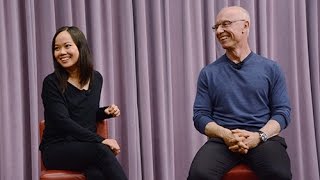
Tracy Young, co-founder of PlanGrid, talks with Doug Leone from Sequoia Capital about building the construction software company. Young emphasizes solving problems you actually have rather than chasing trends, and discusses recruitment, culture, and the adversity founders face.
Chapters
All right, you guys. So, Tracy, let me start with you. What's plangrid?
Plangrid builds beautiful, simple, effective software for the construction industry. We emerged from y Combinator's winter 2012 batch, and we partnered with Sequoia, and Doug joined our board in May of 2014. And today, over 500,000 construction projects have been built with PlanGrid, from the smallest kitchen remodels to the largest projects in the world. And we're the number one mobile construction software on App Store, on Google Play, on Microsoft Windows. And Apple actually named us one of the top 10 enterprise apps of 2016. I don't know if you know that, which still blows my mind.
So I can feel your passion, and you seem to love what you do.
Yeah, on most days, I love what I do. I do.
All right, so in the past, you've advised entrepreneurs to fix your own problem, and that's an interesting statement. What do you mean by that?
Fix your own problems? I think the first step is to make sure we've prioritized the right problems. Something that has worked for us is we sort of. Because as a startup, there's just this barrage of problems that are coming your way, and we only have so much resources and time. And so our big task here is to make sure we're working on the right problems. I like to sort of think out a little further, and our team does, too. Like, if we don't solve this problem, how bad is it going to be six months from now? Is it going to become 10 times worse and it's going to completely come back and bite us in the butt? If so, we should probably solve it right now.
Fantastic. Doug, have you seen this type of mindset from other founders? What's the common element that you see here? What did you find so unique and compelling about Tracy and plangrid?
Well, I think the very first thing I'd like to say is a bad 1988 sound that it? We have to kind of strike that in the future. So what we found is a few things. First and foremost, what we saw is a company with 20, 25 people with no salespeople, with revenues coming in, all the employees with salespeople, and they were answering the phone. And that is so unusual, because when you start a company, the toughest thing to do is product market fit. If you can do product market fit, we can help you do everything else. Imagine a world where you don't have product market fit. What can we do as investors, as partners? So we had that, and then we just saw Something else, and that is we had a founder who solved a problem she had in the business. And let me give you a whole bunch of other cases. It's a lesson to you. If you're going to start a company, solve your own problem. I'll give you just four or five examples. The founders of Airbnb, Brian Chesky and Joe and Nathan, needed money. They rented a room in their house, and that's how they found that market. They solved the problem. They have Cole cash flow. The founders of Zappos couldn't find a pair of shoes. The founders of Medallia, which is an enterprise company, probably one of the best private companies in the market, they understood the mismatch between customers and vendors by being very unhappy customers at a hotel in London. And yet the hotel kept on using them as references closer to Stanford. The founders of Yahoo, Jerry Yang, there's a building named after him, couldn't find anything on the Yellow Pages. They solved the problem for themselves. They just happened to be a proxy for the next million people. Or the founders of Cisco System here at Stanford, again, trying to network, discuss the campus networks. And so, key number one, a little message. If you're going to solve a problem, if you want to start a company, don't intellectualize some crazy stuff you know nothing about. Solve a problem you have, and there's a chance that if you're up and coming and you're in the right circles, you go to the right schools, that that problem is just that you're the beta site for the next 5 million people. Tracy was that beta site. The other thing that we saw, though, is a very passionate founder, domain knowledge, solve their own problem, committed, authentic. Those are the ingredients that we look for when choosing a company with whom to partner.
Now, Doug, how did you first meet and tell me about what that process was from that first meeting to an initial investment?
So we hired a young associate that not only had he started a company right away out of college, out of mit, that he sold to Twitter. So by the age of 25, 26, I started a company, sold it, understood a few things. But the thing that caught our eye, he had won $600,000 playing online poker at MIT, and he parlayed that into seed investments. And suddenly he was an investor in four or five companies before joining Sequoia that we were all interested in. And so Plangrid was one of those companies. He had a great nose for investing, and so he made the introduction. Of course, we weren't the only company that Tracy was talking. The only firm I had to drive to San Francisco twice. You know, she did a whole bunch of references on me. In fact, for my Christmas present, she gave me a little card that's on my desk of all the feedback she heard on the market on Doug Leone and Sequoia Capital.
Just to keep me honest, Doug has a resume. Believe it or not, his resume, if you're Doug Leone, is a sheet with CEO and founders names and their phone numbers.
So it's call anybody, basically, and I'll tell you, the last two or three times we've lost money. Because the real measure of a partner is not when things are going great. The real measure of a partner is what happens when things aren't going so great. And so I just put them all. Just call anybody, go for it. And she did her homework, and we were fortunate enough to be chosen.
That's fantastic. Now, one of the things I'm sure you've seen is this relentless resolve, ability to solve problems, but that focus, I think you came into some very early adversity. I believe you had three of your four founders. Parents were diagnosed with cancer, and one of your founders, unfortunately, passed away. How did you get through all of that?
I think the problems of genetics and biology and disease, accidents, the challenges of aging affects all of us. It's just unfortunate that this incredibly tragic thing happened early on in Plangren's life. Life doesn't stop just because we're trying to do the hardest thing we've ever done before. It's not going to stop for any of us. And Anton was diagnosed with cancer at 27, and it's totally unfair. It's complete chaos, right? And when he passed a month before his 30th birthday, wow, it was. It was really hard on us. How could it not be? We were trying to get our product out to market. We were busy hacking, talking to users. And I remember I turned the corner in our hacker house in Sunnyvale, and I'd find. I'd find one of my co founders just sobbing quietly in the corner. And this would go on for months. And as humans, we always find a way to cope. We cry, we mourn, we build these shields around our hearts to protect ourselves from any more pain and hurt. And then eventually we find beauty in the world again, and we find beautiful distractions and delicious comforts, and we are able to ease some of that pain and be able to open up our hearts again. And so for the founders of Plangrid, at that point, we sort of asked ourselves, we have this one precious, short life to live and we thought that if we could build a tool that makes construction just a little more efficient, we could probably make a good dent in the world in a really impactful and good way. And we're also incredibly egotistical. We wanted to build a company that. We wanted to build a good company. We wanted to show the world that this is how you build a company responsibly that takes care of our employees and builds undeniable value for our users and is a good business within a community. And so we took all of that hurt and we took all of that pain, and we just fueled the company with it because it was our privilege to do so.
Wow, that's amazing. Did you have outside help? Is this something that you and the team just sort of came together to work through the bereavement period and how to keep things focused through this massive chaos and unplanned series of events?
Yeah. So it's already hard enough to, like, live in a house together with your co founders and working around the clock. And so part of this process with the dying co founder is there's hospice at our house. And Antoine was coding to the last days. His code is still live in Plangroup today. It's actually quite incredible. I mean, you know, we were. We'd never seen someone get eaten up by cancer in front of us before. And it's like, so frustrating because you're feeling all this, like, pain and horror and there's nothing we can do about it. And so, you know, our families were over a lot. Antoine's family was over. We had. We had care.
So, yeah, that's amazing. Doug. I'm sure you meet with lots of entrepreneurs, probably look at lots of business plans, get lots of emails. I'm sure you see this common thread of this incredible focus and this resolve. How do you vet that out? And found that's obviously a common element. I'm sure you find that with everyone. How do you find that out? How does that character attribute surface? And what's that process like?
The process has many flavors. Imagine someone coming to you with an idea and no code there. You look for clarity of vision, clarity of thought. We had the luxury with Tracy and Plangrid. The fact that there were sales incoming, and that's a heck of a data point. But then, you know, Tracy had to show us anyway that she could go from a terrific founder, that she had the ingredients to become a terrific executive and CEO and leader of the company. Because our best partner companies are the ones where the founder takes them all the way and you know, when you lose a founder, you lose the soul of a company. And so you want to make sure that at least one of the founders can take it. And I always remember the meeting at Sequoia Capital. And look, we are a friendly place, but we also know reality. And we know when people come to Sequoia, they take that quite seriously. And so we go out of our way to make people feel comfortable. Nobody has their iPhone up, nobody checks email. We're as welcoming as can be, but it's a pretty important day. And I remember the presentation and Tracy up there and look, I knew she was nervous, but I also knew she held it in. You know they say hold your water kind of thing. She held the water and she delivered like a champ. I remember that. And we all came out of that meeting and say, this founder has it. And so she answered for us the fact, how far can this founder go? It was pretty clear to us she had the courage to go all the way because starting a company is really the tough thing. Everything else is kind of mechanical and road. I mean, you know, building a company, it's not easy, don't get me wrong. But that doesn't require genius level. Starting companies with a genius level. Running a company requires courage, dealing with personality, lots of iq, some eq, can you recruit and those kinds of things. But it was clear to us right after that meeting and it was a long conversation, I'll admit it to it to you now, I don't think I ever told you that. It was a 15 minute conversation. It was, you know, clearly, when we all say yes to an investment, we check ourselves. Whoa, whoa, whoa. There's too many yeses too quickly. It was one of those things. Everybody wanted to be an investor, everybody wanted to be a partner. And so it was plus she came with a co founder that had complementary kind of skill set. She knew construction. Your co founder was from Pixar, if I remember correctly, who had the coding experience, the graphics. And we thought that was a match made in heaven. It was more in the heaven than we ever thought because that was her husband's. I was really in heaven. And the next thing became how can we convince them to choose us? And so that was kind of the tough part for us.
Is it true that the only heart you've ever put on a term sheet was our term sheet?
I put a heart.
Yeah.
Really? I don't know what to say because I don't putting a heart. If I put a heart, I don't remember putting a heart. I'll send it to you really isn't that nice.
You actually told me. You're like, I've never put a heart on a term sheet before. This is how I feel about you guys. It worked.
No, the reason, because I have a reputation of being a little tough, but I'm tough when things go well. And you'll know when things. Things have not always gone swimmingly, but you never felt an iota pressure in your that time is how can we help or can we solve the problem? It is not adding stress. It is incredibly difficult and stressful to run a company. The last thing you need is a partner who adds any stress. So we like to remove stress and help. But if I put a heart, that's going to ruin my reputation.
That's awesome. All right, Tracy, I'm kind of astounded that you have this ability to attract incredible talent. Talent's everything, right? At the end of the day, there's a massive talent war here in Silicon Valley. Even at a global level, you've got these super sexy companies of the Airbnb's of the world, et cetera, et cetera, and slack. How do you recruit for a construction company? You've obviously been really successful in doing that. What's the magic?
Something like 20% of PlanGrid comes from an architectural, engineering and construction background. So by the time we meet them, they sort of understand the problem that we're trying to solving and what we're trying to do. And, and so that means the other 80% does not come from a construction background. And so there's a lot of selling to do. I think we've gotten better at it over the years. You know, we've had six years of practice now of selling our company, and the company's evolved and it's much more compelling to sell. But I think there's three things that we try to do when talking to people that we want to recruit. Number one is explaining in an incredibly clear way the problem that we're trying to solve and why it's so bad of a problem. Number two, why our product and why our company is going to be the leader in the space. What we're doing today that makes it the best product and what we're doing tomorrow, that's going to keep us ahead of everyone. And three, helping them understand the market size and how big the opportunity is for their careers, because that's all we care about them today. It's what's in it for me. And so if we can nail those three things in a conversation, it's A good thing.
Fantastic. Now lots of budding entrepreneurs out here. Recruiting is the toughest thing. So how have you been able to assess talent? I'm sure there's many more people that want to work there that actually end up getting to work there. What are some sort of things to look for? What are some pointers that you could give some folks out here thinking about starting a company or maybe joining a young startup of how to assess talent?
Yeah, I would say that past experience and what they've built in the past is a good indicator of what they can do at your company. Especially looking for leaders. We like to, early on when we were, you know, whatever, less than 100 people, we were sort of looking for people who had built something before and had, who had taken projects to the finish line over and over again, whatever it might have been. And now we need people who are experts in their domain and so we definitely look for that experience.
Yeah, yeah, very good. So Doug, tell me a little bit of an opportunity to do a commercial for Sequoia. So we actually had a discussion in our class on Monday. Do you take VC money? Do you not? So overall, what are the advantages of when you have an opportunity to get an institutional investor like the likes of a Sequoia to make an investment? What could an entrepreneur expect from the type of interaction? What does a board member do? And talk a little bit about that experience?
Look, I think the role of a board member changes as the company evolves. Let me take you to the end game and let's go back in the end game. When you've got a successful company, the board member does not help you in anything operationally. They help you in strategic issues and so on. That's when you've made and you're a large company now. Why don't we take it back to one person starting a company? The very first thing we will do is we'll help you to recruit a few world class engineers. Because we know unless you start with world class, you're only going to come down if you miss on your first two engineers. It's very tough to recover up. So we'll help you do that. We will help you through the reputation we have recruit people that may not necessarily join you in your dream because even though you're the best salesperson, you're a great founder, you really don't have very much. And so they find some comfort in the fact folks like us are around. It doesn't mean we didn't do any of the important work. They do the important work the last thing I'd say is break away from conventional thinking. There's a lot of people here, there's a lot of tourists in our business that have come and gone. They made a few dollars, they have a million dollar to invest here and so on. Maybe they can help you with a Rolodex, but we have 45 years of institutional knowledge and I will tell you that most great companies don't need venture capital or most great founders don't need us. But if we can help you get away from making one mistake, recruit the right person a year earlier, give you another 10% of growth through some of the decision, maybe not break a leg in a pothole, if we can help you do one or two of those three things that could make the difference between being a great company and a spectacular company. The other thing is we know that every great company has always had the crazy looking acquisition, offer and knowing recognizing that when the business starts working. We've seen it now over 250 times. They surprise you on the upside, in many cases we help stiffen the backbone of the founder saying it looks like a great offer, but is it going to look like a great offer two years from now? So those conversations, playing a bit of the Delvile's advocate and not adding as I said earlier, an iota of stress are very important. The other thing you mentioned, how can you recruit? I'll say two other things. It helps to recruit when you've got terrific numbers, somebody else can sell you a dream. Yes, we're going to be the Snapchat of the next generation. But we have something else. We have rapidly growing revenues that you can point to, great gross margins that you can point to. So those really help to recruit. And then the education of breaking down the market to explain hey, it is not a $1 billion market we're chasing, it is a 15 billion dollar market. Therefore the opportunity to bring to build a large company. Getting that thought process in the recruiting system is what makes the difference. And then the last part is the skill set of the CEO. So we hired a vice president of sales way, you know, we dated way above our grade. We got something we had no right to go get. Employee number 40 and employee number 40. The first board member I put in front of Tracy was the president, was the former president of Salesforce. I will tell you when I made the intro I would not have forecasted that Tracy and a one on one meeting would have been able to land him as a board member. I got a call from George Hu right after the meeting, super pumped up. I want to join this company. I almost looked at the phone. Oh, terrific. Then the former president of Autodesk, Carol Barts, she's a hitter. Guess who recruited Carol Bartz. I may have said Carol Bartz, but it was Tracy and the team. So it's that ability to tell the story, to recruit, to share the dream, to use the we pronoun that great founders do.
Fantastic. All right, Tracy, you, I think, spent five years in the construction business. Before that, you were in school, then you went to a CEO. How did you do that? What skills did you acquire along the way? What gave you, first of all, the. The resolve to actually make that huge leap forward and take that massive risk. And tell me about being a CEO.
So I'm trained as an engineer, and I think as a founder, there's just so many problems to solve. Actually, our skill sets translated nicely into being the founder of PlanGrid. Five co founders were all engineers, two construction engineers and three software developers. And so we sort of look at problems and our challenges and we just slice them up into smaller things that we can tackle. And there's this funny side effect that happens if you have any success at all as a startup, especially as a first time CEO, it's that I am constantly in the biggest job I've ever done before. And so surrounding myself with people who can shore up in every way I'm weak on was key to my ability to being able to do the job. Having four other co founders to help take the load. Now we have, I mean, our executive team is quite awesome. I'd go to war with them any day. And in a lot of ways, running a company feels like we are going to war. And so making sure I'm surrounding myself with people that I can learn from, people that can lead, and they are sort of my medium to lead the company through. I think we are the average of everyone we surround ourselves with. And then there's also this need to understand that if I don't grow, I won't be planning CEO a year from now. And so I have to believe in myself and I have to make the effort, however painful it is, to grow as an executive, to grow as a CEO, to grow professionally, grow personally, to dive into areas that I don't understand at all and try to become an expert at it. And so there's this need for change and growth, and it starts with acknowledgement. I mean, I think I would have been an okay or decent CEO for six to eight months ago. And so just constantly working at that. And I think it's the will and whatever it is we're trying to grow on. And it's like a muscle. I mean, it's like running. You run enough, you can run 10 miles, you do enough push ups and however shaky and painful it is, you're going to be able to do that 15 push ups in a few months from now.
What does a typical day look like for you, where you spend your time? What do you think about?
I think about Plangrid constantly. So I like getting up early because our clients are up early. So I'm up by 6 o'. Clock. I like to look at my emails, drink coffee at 7 o', clock, 7 to 8 to 9. It's nice to crush those emails just because I can actually think. And then it's a series of meetings. I spend a lot of time with the executive team, I spend a lot of time with the projects that are our priorities for the month, for the quarter. And then I probably spend about 20% of my time right now, which I'm trying to cut down on. Just visiting our remote team and being with them, meeting with clients, meeting with customers, understanding the market and then just supporting our remote team.
Yeah. How do you manage work? Life balance. I know it's always a brutal thing for a young company and CEO.
I suck at it.
Yeah.
I meditate a lot now and that helps.
Yeah. Okay. Tell me about the culture. Was it a lot of thought went into it. Did it sort of just naturally and organically materialize? Talk about your culture and how that developed.
I would love to hear your opinion on our culture. So I think out of all things we've built at plangrid over the last five, six years, I'm actually most proud of the culture that we've built. We're sort of this team of incredibly hardworking people. We like to nerd out on whatever we like to nerd out with. And it might all be different, but we like building things and we especially like building tools for some of the hardest working builders in the world. We care deeply about fairness in the world. Respect is our number one core value and we actually live it. It's a good culture. It's a good, happy place, I would say. But I would like to hear your perspective because you see companies.
Yeah, I'd say, look, it's a healthy culture, just for the. For completeness sake. When we came across plangrid, it was a happy culture. It was, I'd say it was a happening more than a company. 40 people all reporting to the CEO to the founders. To the founders, which is cool up to a point. But if you're going to grow the company, and I don't want to get into conventional thinking, but you need a little bit of structure. You have too much structure. You suffocate these incredible fragile environments early on. And so shift one, we needed to, while not breaking the goodness of the company. Tracy, not we. We didn't do anything. Tracy had to inject some level of accountability. And some people just don't like that. And most of the people can make an adjustment. Some people like it when it's, you know, hey, I'll do whatever I want, and so on. So that was shift one. Shift two, we missed in marketing on a VFA marketing twice, but we didn't miss in any of the other executives. Our VP of engineering is out of Google. Talk about recruiting. But he came in. It took us a year and a half to find the VP of engineering. And he came into an engineering organization that was loose and they were starving for leadership, but they had to change in order to be more productive. But they knew it and they were welcoming it. It wasn't one of these things. Oh, no, the Google person's coming. They're going to change. So I think the culture has shifted. I like respect. I think that should be way up there. My number one thing is performance, because if you don't have that, you don't have a company, and then everything underneath goes away. But I like respect right up there. But you always want to take the goodness and you always want to change and evolve. I think that the building of a company is the constant evolution of that company and the constant growth of people. And most people will continue to grow. Once in a while, you lose some because they don't want to. They're incapable. And then you hire some more people that can do that. So it's a dynamic entity that changes through time, and it must change through time because every day is different.
Yeah. I will add that on a very practical and tactical level, having recruiters that just filter out, like the people who wouldn't have been a cultural fit has been key for us in our ability to maintain our culture. And you're right. As more people come in, the culture's dynamic. But I would say that whatever was important to us five years ago is still important to us today. And our recruiters have done an amazing job at making sure that by the time our managers meets these candidates, they're just a cultural fit.
Yeah. Awesome.
Write your values in pen and your strategies and Your tactics in pencil. All right, so write your values in pen and your strategy and tactics in pencil. Values don't change.
I'll get a pencil.
Yeah.
So we'd all like to think we're perfect. Some hires maybe aren't the right fit. But first question is, talk a little bit about when maybe an executive, you have to have a difficult conversation with them. Maybe the performance isn't there or there's something else that's always really hard. One of the hardest skills as a leader. How do you go about doing that?
Yeah, I mean, we're always told to fire fast, fire the wrong people fast, but we never want to be in a position where someone's surprised that they're getting fired. And so setting the right expectations is key. I've certainly made this mistake many, many times before. I learned it just having a clear understanding and agreement on what we're trying to accomplish together. And actually, it's so funny because it's the same thing in construction. I worked for a general contractor. And so you sort of always want to make sure that your subcontractors are agreeing to what you want them to do. And you have that commitment. And, you know, hopefully you've got a good record of where all this stuff is, because our memories are incredibly selective and fragile and just checking in and asking a lot of questions.
Yeah. And Doug, same question. You maybe on a little bit broader level, but you're dealing with folks that are CEO for the first time and not a lot of real world experience. And there's egos at play. There's a lot of psychology at play. Where's that balance when the company's not performing the delicate conversation? How do you sort of guide that and have those types of conversations that don't derail or demoralize or end up having a negative impact? How do you do that?
Well, there are many reasons why a company may not work. Take the notion of you threw a party and nobody showed up, meaning you built a product and there are no customers. And my always take on that, who's going to get us out of that pickle? Am I going to get you out of that pickle? If I were that smart or that capable, I would have been a founder. And so to me, that's when you double down on founders, the other one, they're the only hope you have. Their execution challenges. There's always lack of experience with founders, but that's where we come in to help recruit executives, to help surround founders with operating people that have built businesses. So you can go have dinner, you can go have lunch. I can tell you I'm probably not the first call you make on an operating issue, even though I'm known as having operating. Know how you probably call George or someone like that, which is fine by me. Just call somebody. And then you have the extreme case. The extreme case where it gets really tough is where five vice presidents come to our office and say, can't work for this person. It's either he goes or she goes, or we all go. Those are the tricky situations. And you hope that those are the rare cases. Look, it's happened to me. I've been in business for 1988. You know, it's only happened twice. In that case, it's a very unpleasant choice because, you know, the founder is the. You know, you're not going to recover from that. You basically are not. And so you do everything you can to take this most talented people in the building and make sure you put them in a position to succeed. And that's the best way, and that is try to nip these things in a bud. Pay attention. Don't be an absentee board member. You know, don't be a pontificating. Let me give you the look of a pontificating board member. They have this look. Have you thought of, you know, they don't know anything about anything. And so it's just get involved, ask the questions, and help to recruit the right people. And right now, if we look at a management team, the VP of engineering from Google. Terrific. The VP of marketing. Wonderful. The CFO is taking a company public. The VP of sales. Wonderful. Tracy has an easy job. Just kidding. Look at the look I got. Shows you how tough she is. She should give me the look, the cool look.
Now follow up to that. So now an average exit is nine to 11 years. That's a decade. How much weight do you put on the idea versus the founders? You're going to spend a decade with these people. And what attributes do you look at and sort of what advice would you give this group in terms of the personal side of things?
Look, I remember back five, 10 years ago, before many of you were here, there was the debate, is it better to have a great market or a great founder? Well, let me tell you, great founders find their way to great markets. The two are interrelated. They're absolutely interrelated. If you have a great market, you don't have a great founder. You don't have anything. And so to us, it's the package deal. It's a package deal with a Real understanding what the market potential and the willingness to dare to dream with the founder to see how big can this thing really get. I can tell you, I mean, take many cases, take Airbnb. Imagine they come to you the first time. Now it sounds commonplace. When you rent a room in your house, you would not think two sided global monopoly. Those words wouldn't come from rent a room in your house to two sided global monopoly. But that's where, you know, you have a little bit of vision. A little gets done, the vision gets brought. And it's the same thing with PlanGrid. We have product one that got us toe in the market. We have a long way to go there. But now we see a clear vision how this can be a beachhead for product two and three, for, you know, if you will, world domination. So you have a terrific big company. It's the same.
Yeah. All right, Tracy, we all know this. No plan ever works the way you draw it up. Welcome to the wonderful world of startups and entrepreneurship. Tell us a little bit about some of the things you either miscalculated or had wrong and what you learned through that.
It's gonna be a two day conference. So the biggest mistake. Oh my gosh. We tried to be so clever. You sort of hit on it earlier when everyone sort of reported to founders. So we grew ourselves from five co founders to something like 30 people. And we had this flat management structure. This was by design because we wanted to be so clever. And we said crazy things like we're never gonna hire MBAs. RAWR. Why would we ever say that? They're bad for sales, we're never gonna hire salespeople.
Bad vibes.
It's just like we're not gonna be the Red Bull, drinking gong hitting kind of culture. Oh, and by the way, we're never gonna work with VCs. And I think this is just from a lot of us. I mean, most of us grew up in the Bay Area and we were like in high school or in College through Y2K. So we had this like distorted view of Silicon Valley and venture capitalists, which was we thought all of them were evil. We've since found that they're not all evil. And we partnered with actually a great one. But we just wanted to be so clever about the organizational structures. We had this flat management structure and we would boast that we're running Plangrid like Star Trek. You're either in operations or you're in engineering. If you're in engineering, you coded all day. If you're in operations, you did everything else, which meant sales support, qa, QC facilities, just everything that wasn't coding. And that sort of works at 10 people because you have to make yourselves into like five people apiece to make the startup work. And then things just start breaking down fast when you get to 20 people because communication starts getting a lot more challenging. Suddenly you're in a bigger office and you're not just y yelling at each other and suddenly people don't really know what they're doing. And I remember one of our employees, I think she was employee number 20 something, she's actually our director of professional services now. She said to me, what is my career path here? And I remember thinking, we have so much work to do here, why do you care about your career path? But this is what people care about and this is your responsibility as a business, as a company, to take care of your team members. And so obviously that was when you got the call from us because we clearly needed help on building a company. We were managing our business off of this massive Google Docs spreadsheet where we managed all our finances. And this is like a three year old spreadsheet where we were managing multi million dollars and we'd sort of like look at the final number and then look at what we had in the bank account and was like, yeah, it's close enough. I think the math is right. And we needed to go on to netsuite at some point, but we didn't really even know what that meant. And so the lessons learned here is be creative about the problem that you're solving. Be creative about how you're solving the problems for your users. Don't be creative about the business stuff. There is degrees at Stanford for this kind of stuff. There's a reason there's a finance team, there's a reason why you need a sales operations team. And you guys really helped us build all that structure over the last few years. And it was painful.
But I want to add something to that. And that is while you don't want to buck conventional wisdom 100%, I will tell you that we learned a ton from founders on how to do things better. We learned a lot about recruiting from Google. And so you can always evolve and improve these processes. The point is I'll make two points. One, don't just, don't just let them all go, but feel free to improve on them with your experience, with your insights, because you may find that you may do something better than the rest of the world does. Point one. And second point, I'D say, choose your first partner extremely carefully. And it's not the first person that approaches you with a check. Choose that partner because that can make the difference between, you know, raise as much capital as you can, and after the Series A, you find out you only own as the founder, you and the employees only own 32%. Because by the time you do all these seeds and they have pro rata right to invest in the next round, it seems like free money at first. So you got to be very, very clever, very, very selfish with the equity. Invest in engineers, invest in people that can really help you. But choose your partners early on extremely carefully.
Did you know I was terrified of you? Which is why I called everyone under the sun just like. Which is really strange, like reference checking. Someone like Doug Leone.
And what did you hear?
Surprisingly, only good things.
Thank you.
Very good.
No, let me tell you, because you have to be authentic. There's a whole bunch of investors here who say, I'm founder. And that's how, if you will, they bait. And I'm very conscious of the word bait. A young founder is looking for comfort. I'm founder friendly. I'll do whatever you want to do. Well, let me tell you, I don't think you want someone who's founder friendly. I think you want someone who's founder focused, who's super focused on helping you succeed. Later through life, you'll become friends and you can go have beers together. But early on, you use the word war. It's you against the world. You want to find someone who's on your side, who has your back and was going to help you in. That's what you really want. Skip all this founder friendly stuff that's in the market. It's baloney and it will not help you.
Good point. All right. I don't know if you have a specific example or maybe more philosophical. So one of the most important things that all startups go through, both decision making and pivots. So when do you know when it's time for a pivot versus, like, when you're almost there, Some of the key decisions that you've made. I'm going to say the same question for you, Doug too, at a broader level. And that's a tough thing, right? I'm not succeeding, but if I stay down this path and keep going, am I eventually going to get there? I just have to keep working at it or, man, I'm like, I'm probably on the wrong path here. It's time for me to change my decision or make some Type of large scale or small scale pivot.
I've had the opportunity to meet a lot of entrepreneurs over the years through Sequoia, through the YC network. They're just random people in our space. But I'd say that most people don't try hard enough or spend enough time on their problem. Like they give up too fast. And they're good problems they've identified and solved. I'll talk about. There's this moment in Plan Grid in early, actually like late 2011 when we're about to launch the product. IPads were sort of this new thing in the market. Steve Jobs announced it in like summer of 2010. And certainly in the enterprise and in the construction industry, you know, wasn't something that had been adopted yet. And at the time people were making fun of even the word iPad. I mean, there's like photos on the Internet with people talking to the iPad, like a giant iPhone, totally making fun of it. And so we would show potential clients PlanGrid and everyone would look at it and say, oh, that's really great, I would love that. But we can't really invest in these mobile devices. We're not going to because no one else is. And so there was this moment where it was like, well, is the construction industry going to ever use tablets? And so we sort of knew that they were the perfect devices. It's computing power that we can take out to the field for the first time ever. And the co founders looked at each other and we looked at our clients and said, well, if you had the device, would you use PlanGrid? And our clients were like, yeah, we would. And so we actually went out and maxed out our credit cards, bought a ton of iPads. And at the time, Apple had limits on how many devices you could buy because they were only manufacturing so much. So we went in, we'd buy like two or three at a time, and then we'd go from store to store and swipe our credit cards until we had something like 20. And I remember that night when we went back to our hacker house in Sunnyvale, it was everything we had and they were so valuable to us. And we were going to go deliver it to the job sites the next day. And I had convinced my co founders that we were totally going to get robbed that night. And so then we started shoving them into the kitchen cabinets. And I remember Ryan had put one above the refrigerator and I was like, what if it's a tall thief that comes in? They're going to be totally able to see it. And so we didn't get robbed that night after all. But, you know, that would have been a moment where it would have been easy. Easy for us to just say, well, this is never going to work and sort of give up. And we kept going and it worked out for us.
Awesome. Doug, same question to you too. That's always a difficult question. Airbnb had a couple spectacular pivots, but when do you know when to pivot and when do you know, like, you're almost there. You need just more resolve.
Well, one of them is when the customer has spoken. Nobody's interested. That's a clear signal that you're going down the wrong path.
Path.
And for those of you wanting to start companies, I will give you a hint. There's unlimited type of demand for a product you have not built. So the simple question, if I build it, will you buy it? That is the wrong question because people always buy product that doesn't exist. You have to understand their second order issues in their business, why they might, why they may not. So just take that as a lesson. But first of all is when the customer speaks. And second, when you are trading the short term, for the long term, that is time for you to reconsider your strategy. Now, clearly you've got to survive. You have to work for tomorrow. Think of these. Think when she needed iPads, she need to get through the next day, the next month. Assuming you have some resources, you can last. The only true north in running a business is what's the best thing for the business over the long term. And so if you find yourself making suboptimal short term decisions that you're going to pay for the long term, it's time for you to pivot a little bit. Maybe not 180, maybe not 90 or 180, but at least 1015, but everything else, you want to continue to pound and press and press because very few companies, I can't think of any that have had clear sailing. My partner, Mike Moritz, two or three years into the Google investment, came to Sequoia and said, we've never paid so much for so little. It shows you how fortunes of a company can change. And so it is the founder, it is you that are going to zigzag based on new data point, market condition, your learnings. But when the customer speaks and there's nothing there, then you want to pivot fast.
Yeah. So Tracy, talk a little bit about, just from a methodology standpoint, how you approach the product requirement side of the business, which is absolutely critical, and the importance of UX UI and how that's managed. My guess is you were pretty actively involved in that part of the business early on. Probably still are, yeah.
We have a design and product team now. They're sort of the CEOs of all the products we build. But you can imagine something like UI is incredibly important for our industry. Our builders are the most impatient people in the world. If they have to wait for anything on PlanGrid to load, or if they have to press a couple times and not figure it out, that's the last time they're using our software. So we, I mean, early days, I think is probably more applicable. We used to do something called the mom test. We would develop new features and we'd shove it in front of our mom and dad's faces and it's just like, can you use this? And if they hit the buttons a couple times and it's just like, I don't get it. It's like, okay, this is not going to work. Yeah. But obviously we have a team that does that now. They take it out to our beta users and they test it out before we launch it out public publicly. So it's just getting feedback. The faster we can get product out to market, the faster we can get it in hands of the users, see real usage and what's happening or what's not being used, and then we iterate from there.
Steve Jobs talked about this quite a bit in his authorized autobiography, and one of the things that really resonated with me, but a lot of the times the bigger decision is what not to do. So especially in a product management side, I'm sure there's like massive features. We need this, we need all these right now. How do you sort of reconcile that and how do you sort of approach how to prioritize an unending array of features? And we need this and we need that. Especially at a company of your side, that's a really critical thing to focus on, what not to do.
It's complicated. Yeah, it's really hard. And this is why there's a team around this. We sort of like to think that if we built out this feature, how much time would we save a superintendent, how much time really, would we save a foreman? And would the whole industry, Would most of our user base benefit from it, or is it just a specific profile? The project managers would benefit from it. And so it's all about. What we're trying to do is about increasing productivity in the field. And so having a clear mission statement is key here because it helps Us make the right decisions. If we're all driving at the same thing, then we. We might actually be able to move the needle there.
Yep. Okay, cool. All right, Doug, looking at your crystal ball, lots of folks either in an entrepreneurial endeavor, thinking about an entrepreneurial endeavor. Where are the good places to focus and what advice would you give an audience member?
What advice would I give? Don't listen to anybody who tells you no. Stop talking and do something. Don't tell too many people what you're planning to do. Don't join the bar circuit and share. Your secrecy is an incredible thing in your early days because keep in mind your advantages. Stealth and speed. You don't have any other reason. And your brain. And so keep your mouth shut. Say less, and just go for it. Those would be my advice.
All right, last question for both of you. Tracy, you first. If you could go back in time, what would you tell yourself at 19 years old? What would you tell your 19 year old self?
So I wouldn't want to tell myself anything that would alter my life today because I'm incredibly lucky to do what I get to do, and it's actually a spectacular life, so I wouldn't want to change that. But I'm 32 now, and when I think back at my 20s, I can actually remember it very clearly. It feels like it just went by like this, which is incredibly scary. And so it went by.
So she looks amazing.
I have to say, I almost hesitated asking the question. I wonder if she's even 19. But you go back to thank you.
I think that because it went by so quickly, I wish that I was more present. I think the most meaningful moments in my 20s were probably the deep connections that I built with my colleagues and my friends and my family and just being more present in the moment. Because everything else, I mean, so much of what we do is just planning for the future and solving problems. And so we live in our head so much. But that just really added so little to the quality of my life in the end.
Yeah, very insightful. All right, Doug, you can go back 10 years and talk to your 19 year old self.
What would you say at 19? I was thinking, that's 1857. I'll just keep it brief. I would tell him, shut up. That's what I would tell myself. Shut up and think more. Think more. If there's a wall, don't assume. Or the door, don't assume. The only way past the doors, busting that door, through it. Maybe there's a clever way you can go around It. And I wasn't that clever back then.
Awesome. That's fantastic. Tracy, thank you so much. This is an incredibly insightful talk. And, Doug, thank you so much. Likewise. It was a lot of fun. Let's give a big round of applause. We've got about seven or so minutes for Q and A. I'll let you guys pick who you like.
I want to ask, what are you reading right now?
Your colleague, Michael Moritz, he wrote a wonderful book, Reading. Are you planning to write a book? No, I don't have the gift that Mike Moritz does. I'm reading a book called Homo Deus right now.
Me too, Doug. Oh, see, that's great.
Homo Deus. Don't ask me who the writers are. I never remember.
Yeah, you do so many things.
You teach, you mentor, you open Sequoia, India and China.
Do you do so many things to save tax, or you don't want others.
To work to save tax? No, no, no, It's. Look, it's a. We thought in 2005 we were going to head towards a globalized world, and we decided to go into those geographies. And now we have 300 companies in China, 150 in India. And I will tell you, by 2010, my partners were looking at me and say, you're crazy. And I told them, you can take me out. I'll remove myself, it was a mistake, and hang it around my neck, and Sequoia can go back to being a West coast investor. By 11 or 12, those questions were out. And right now, every company we see has global ambition very early on. So it was a courageous bet we made. Maybe a silly bet, but we called it right. Somebody back there.
Hi. First of all, I just want to say thank you.
It was a fantastic talk.
My question pertains to the use of the first hire. How do you draw someone to a.
Company for that very first engineer when.
All you have is your founding ability, a little bit of money behind you, and not much culture because there may be only three or four people at the company. How do you convince them to come on board?
I would say probably the first 10 employees were people we had worked with before. And so just going back to the people who had worked incredibly hard with us being able to recruit them to.
The team, there's another way. Sell your ass off. And I'm not kidding. Just show them the vision and pound, pound, pound, sell them. Be relentless. Don't take no for an answer.
And that's true for employee number 300 as well.
Just sell, sell, sell. Show them the vision Bring them in a tent, get them pumped up about changing the world. And a great line I have, I tell people, yes, you can work at Google, it's terrific to work at Google, but there's nothing you can do that's going to change the price of that stock by 1:16. And if that's what you want, that's great. If you want to work for someone that has a chance of changing the world with what you do, can actually make a change, then come on board. So it's that reality. It's not a sales line by the way, it's reality. And some people will say no and they'll self select and those are the ones you don't want.
I also think it's important to be generous with equity early on. I mean, just look at them, it's like, are they going to add 1% more to the company than they probably deserve that.
Anyone else? Yes. We talked about in your journey as a founder, CEO that you had to close personal growth, professional growth. Could you share some unconscious confidence that.
You came across about your own capacity that you found you were really good at that helped you navigate through all these changes? And as you grew the company, you grew yourself.
I think over the years my pain tolerance has just gotten higher and higher. I mean, so much of running a startup, just not new to me by the way, sometimes. So it sure feels like we're getting punched in the face over and over again. And then at some point it just like you, you're just standing up and you're still taking these hits. And so the ability to manage our emotions, I think that's probably the most challenging part, is that there's bad stuff happening all the time on the personal side, on the company side. And our ability to just like take it and then wake up the next morning, start a new day and just march forward without letting the past hinder us is really key to our ability to stay alive as a company.
Yep.
We're an Austrian startup, we're in construction as well. So maybe could we like talk. I'd love to talk to you. Yes.
Back here.
How does Sequoia think about defensibility in.
Hardware and whether that exists or doesn't.
Or what way it does?
It's always tough when you've got atoms for defensibility, as you know. But what defensibility means, it's not just ip. It could be first to market, it could be a 90 day advantage. It could be known, it could be the fact that your company is known as the company that does something it's quality of execution. It's getting. It's what I call pixel beauty. Meaning think of how beautiful the Apple products are now. They have software, too, but that's beautiful hardware and it's amazing. No one has really replicated that. So it's possible. And let me tell you what it's not. It's probably, unless you're in health care and you're in deep tech, it's not patents. It's wonderful execution of a beautiful product and getting there early and building and I don't want to use the word brand. I'm trying to stay away from that word. It's a dirty word in my mind because it means spending a lot of marketing dollars is just getting it in the knowledge base of your customers that if you're serious about buying a product, this is the product you want to get. So it's possible.
And Doug's absolutely right. I know Elon's an enigma. I'm an executive at Tesla and living proof right there. Yes.
When did you realize you needed a VC and all the money you owed so far was from bootstrapping or did you have any other kind of investments?
Yeah.
So we raised a small seed round, I think May of 2012, after Y Combinator's demo day. We actually never spent that. That was like, we wanted that in the bank. And then we. It's nice when you create real value for your customers because they're willing to pay you real money for it. So we went that way for up until May of 2014, so quite a long time. But without talking to any investors again, things were just clearly not working. And it was clear that there was all these copycats in the market and we needed to grow a field team, we needed to grow a sales team, and we didn't want to do that. And so we went to the folks that knew how to and convinced them that we were worthy of a company for their investment.
And keep in mind, they do all the work. It's really amazing. They do all the work. All we do is play plug in a little piece here and there. But they are really the horses that run. And just the ability, just an introduction, the ability to recruit one executive really helped the company for the next two years. And we didn't have to do very much after that. But the right executive, not someone that had run $2 billion in sales, that person's an administrator. He's no longer sold. To find the right level of experience for this kind of company bucks conventional wisdom a little bit. Maybe he joins because A little bit of Sequoia Brand, certainly because of Tracy, just doing that. And then you step back and wonderful things happen and we don't have to do very much. They do all the work.
Last question.
Yep.
So where have you seen, this is question for Doug. Where have you seen co founders that come out of undergraduate succeed?
And where have you seen them not? What do you think are the undergraduates underlying reasons why you see people that.
Are friends, that go to school together and not succeed?
Look, I think Evan Spiegel came out of Stanford. He was raw. I think just thinking, the Airbnb founder came from risd, from undergrad. I don't straight stripe founders. I don't think there is a, I don't think there is a, a certain path one way or the other. It is the founders that are engaged in the world and just look, there are some kids that are terrific students just reading and studying the books and that's what they do. And they want to get the Ph.D. and maybe they'll solve the next great algorithms. They can be great founders. But the founders out of undergrad are founders who have managed to network. Yes, they go to university, but they also build a network of people. They ask a lot of questions, they know what's going on. They know about business more than I've ever known about business when I was an undergrad. They know what's going on in the world and so on. That would be the issue more than personality traits or what succeeds and what doesn't. Who are the ones that are aware of the world around them and have built a passion in one little area.
Let's give a big round of applause.
More from GHION.AI


O processo de reconhecer limites, mesmo quando a vida parece exigir sempre mais.





Depois de tantas histórias, aprendizados e pausas necessárias, o @interior_iza está de volta



