Transforming Digital Healthcare [Entire Talk]
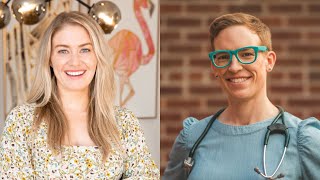
This content was created by GHION.AI . This content was uploaded by GHION.AI . This is a YouTube video titled "Transforming Digital Healthcare [Entire Talk]" created on November 9, 2022. It features a talk hosted by Melissa Valentine, an associate professor at Stanford, with guests Dr. Jerika Kirkley, founder of Plume, and Kiki Friedman, CEO of Hey Jane. The discussion focuses on how digital health companies are addressing healthcare inequities, particularly for marginalized communities affected by public policy changes, such as the transgender community and those needing abortion care. The talk explores the intersection of entrepreneurship, public policy, and technology in transforming healthcare delivery.
Chapters
Who you are defines how you build.
Well, hello, everyone. Good afternoon. I am your host for today. I'm Melissa Valentine. I'm an associate professor of management science and engineering here at Stanford. My own research is how technology changes people's jobs. So that's certainly true for entrepreneurs and certainly true for our founders today, who are both founders of digital health companies. There is also special significance to the themes for today. As you'll see, both Kiki and Jerika run companies that provide services for communities who have been impacted by policy change. So let me say specifically, PLUME and Hey Jane are both reaching people whose lives have been dramatically affected by changes in public policy at both the federal and state level. So that would include the overturning of Roe v. Wade and state laws that restrict gender affirming health care for transgender people. So there's special significance to these themes. And the staff at etl, the producers, had sort of a visionary idea to use this as an opportunity to think about how entrepreneurship can be a vehicle for change, how entrepreneurship can be a way of reacting to public policy, and how entrepreneurship can be a vehicle for sort of influencing and driving social change. So that's a really interesting and provocative and really important topic. I think it's great that ETL wanted to kind of host this conversation. I'm really honored to be a part of it. That's the significance of today. And with that, let me tell you a little bit more about our founders who are very lucky to have today. So let me first introduce you to Dr. Jerika Kirkley. So Dr. Kirkley is the Chief Medical Officer and founder of Plume, a virtual health care center of excellence. It is dedicated to providing care for the transgender community. It provides gender affirming medical care at the convenience of a smartphone. Jerika has cared for thousands of gender diverse individuals and has also been the recipient of gender affirming care as a patient and trans woman herself. Her mission is to transform health care for all, to make it accessible, affordable, and aligned with the needs of individuals to help folks live happy and healthy lives. I know friends who have personally really benefited from Dr. Kirkley's work. So very excited to have you here today. The second person who I'm excited to introduce is Kiki Friedman. So Kiki is the CEO and co founder of hey Jane, which is a virtual clinic that offers telemedicine abortion care, which she founded when she was a student at Harvard Business School. Before she founded hey Jane, Kiki was an early employee at Uber, where her roles included launching Uber in Kenya, spearheading key Operational initiatives on the company's pro team and leading strategy and expansion for Uber Eats in the Middle east and Africa region. With that, I'm going to now open with some questions for our founders. So, Jerika and Kiki, now that we know a little bit about you and your companies, I'm going to start with this question. I'd like to talk about your lives and your background and how that led you to this moment. So the question is, how has your lived experience shaped you as entrepreneurs and influenced the way you think about the communities your companies serve? Let's start with you, Jerika.
Sure. Thanks, Melissa. And really excited to be here alongside both of you and all of you listening in. Really an honor. Wow. I think about that question. It's kind of like it's just so deeply integrated into everything I've done. But if I go back to the days when I was thinking about even going into healthcare, becoming a doctor, for me, that was through a lens of social justice. I've just always idealized medicine as a vehicle to do that, and maybe naively so, back in those early days, but what's cool is I've found a path to do that. That's what got me into health care. And I saw a lot of communities around me that were drastically underserved and wanted to find ways to provide high quality health care to those communities when I was in my family medicine residency. So I'm a family physician by training, and I had the opportunity to work with a faculty mentor and build out a curriculum basically dedicated to LGBTQ healthcare in this family medicine residency. And a big part of that was developing a protocol or having some guidelines within the residency for gender affirming hormone therapy. And it was incredible to be a part of that process with patients. And also opened my eyes up to the massive gap in care that existed for the trans community in a big way, actually, as a physician. And so from that point forward, decided to dedicate my life to that. And so I have the lived experience, certainly as a physician, as a healthcare provider who's taken care of many trans people, who's taught healthcare providers on how to support trans folks in a healthcare environment and beyond. But as a trans person myself, and, you know, I have a lot of privilege being a physician. I. I know about this stuff. I can happily teach my doctor because that's what I do for a living, but nobody else should have to do that. But even with all that knowledge, I still face a lot of the same challenges my patients face, whether it's high tier medication that I'm having to pay for at the pharmacy, having less than ideal experiences in healthcare facilities. So yeah, I've seen it from both those sides and I think that ultimately really led me to starting PLUME and going on that journey as an entrepreneur, having worked as a physician and practices for a long time and in particular federally qualified health centers and government funded practices. You know, I saw that while it is a system that helps many, there are many people in my community who are falling through the cracks and, and felt like I needed to go outside that, that system to a certain extent to really build a care system around a community that I'd seen underserved for a long time. That's an introduction to that, an answer to that question.
Yeah, great, thank you. Yeah, Kiki.
Hey everyone, thank you also for hosting me. I'm very excited to be here. I think similar to Jerika, had always been really struck by healthcare inequities and really motivated to try to address them in some way. I actually initially started in school and in some of my time right after from more of an international development lens, you mention work in Africa and there it was really interesting to see a lot of focus on family planning, showing how allowing people to choose when and how they grow their families is absolutely one of the biggest predictors of quality of life, not just for an individual, but for a full community or even country as a whole. Coming then back to the US where I think many of us have taken abortion access for granted, given many of us having grown up post Roe, it was really striking to see the reversal of many of those rights. Particularly, you know, I was born in the south, went to school in Missouri, and you could just see this really slow but salient progression of erosion of autonomy there. I think it was often overlooked again because we took for granted that access. But seeing this starkness of the effects in these other contexts, I think made them perhaps more obvious of what was really at stake. Then, of course, as a person who may become pregnant, it's infuriating and sad to imagine a world in which we wouldn't have the opportunity to choose our futures and the status of our own body. So just really motivated me to want to do something about it.
Yeah, thank you. Thanks for those kind of stories of how you got here. As I sort of mentioned in the introduction, as digital healthcare companies, both Plume and Hey Jane are reaching people whose lives have just been dramatically affected by changes in public policy recently. So it's really exciting to kind of take this lens of entrepreneurship on thinking through some of this. It's exciting to hear from you both on this. How do public policy and entrepreneurship intersect in your companies? And how do you think the role of entrepreneurship should be shaping and supplementing public policy in general? Jerrica, let's start with you.
Sure. Yeah. Probably no secret to many people in this room, there have been many anti trans bills specifically proposed in the last three years. In fact, 390 and 155 in 2022. So policy interacts in a big way with the work that we do, since we are entirely dedicated to serving the trans community. Many of these bills also, of course, overlap with the health care context, but even beyond that, those are the ones you see in the news. But there's also nuances to the care that we do and medications that we provide that are affected by various laws and various regulations. So it is. Yeah, it's very intricate, linked to everything that we're doing. And, you know, I think entrepreneurs in general tend to operate at the margins to a certain extent. Right. We're often trying to solve problems that are industries haven't attended too well. So we kind of have to step outside the mainstream. And when you do that, you tend to be, one, I think, under the microscope a bit more and two, having to confront a lot more regulatory issues and legal and policy issues than maybe otherwise. So we're navigating it every day. And I personally, I mean, we make this a part of our vision, which is of course, first and foremost to provide direct patient care, but also to use that patient care, the insights we gain and the data we have to actually inform not only guidelines for care inside plume and outside of plume for all trans people, but also policy change and to truly transform healthcare for every trans life. And for the past 12 months, I've spent a lot of time meeting with legislators, going to the House, the Senate, White House administration, and making sure that people are aware of the needs of the trans community, especially in a healthcare context. So, yeah, it's on our minds every day for sure.
Yeah. Thank you, Kiki. Thanks.
We have also been navigating a fairly dynamic regulatory environment recently, of course, the fall of Roe really exacerbated a lot of the standing issues, but we've been tracking a lot of this closely for a while. And SB8, I think, was really a precipitating factor as well out of Texas. When Roe fell, we had to essentially reevaluate the locations of all of our providers as we assessed laws that were rolling out in real time. One of our really amazing doctors was driving every single day from Ohio to Pennsylvania in order to be able to provide care. I do think that entrepreneurship has a huge role to play in supplementing political failings and policy failures. We're able to move more quickly, to try new things, to innovate where larger infrastructural changes cannot. I think in the case of hygiene, we're able to reduce travel distances by allowing people to get care delivered directly to their home or just over a border into a legal state. We can provide emotional support at their fingertips because, you know, via messaging in our app. But I also think it's really important to acknowledge it's not a panacea. There's no way for any single business.
To.
Overrule these massive changes and the impacts they have. So, sure, we can make things easier, but the logistical burdens are still huge when you have bans across entire states. We can provide more emotional support than may have been available before. But the anxiety of having your body criminalized is something that we're not going to be able to overcome without more infrastructural change. So we just think that good policy, good business has to coexist. We're supporting research to help drive that policy forward, showing again and again that the model is safe, effective patients prefer it in many cases. So hopefully we'll see some movement and science driven policy decisions soon.
Yeah, I appreciate that. I remember as we were discussing at the start, you were saying important but not. It's also important to ask what entrepreneurship can't do. So I love the sort of descriptions here of what it can do and then also kind of the boundaries of it, what it can't do. Both of your companies provide health care to communities that are impacted by public policy, but also face cultural and social marginalization that lead to inequitable health care. So how do your companies work to serve patients in an equitable way and address equity in the healthcare system as a whole?
Yeah, well, you know, I think we think very deeply about that phrase, health equity. It's funny smiling because it's something that I've been hearing for 25, 30 years now. But I will say people are talking about it and seem to be acting on it in a way that is nuanced and different than the last 25 to 30 years. We're a company that's entirely dedicated to one of the most marginalized communities in the world. So it's at the very heart of what we do. When we think about equity, of course, access comes to mind. There is not universal training when it comes to gender Affirming care for health professionals. Right. And that's one of the reasons that we did this, because even just finding a provider that can provide that care for you is incredibly hard. We also know that a third of trans people are actively discriminated against in a health care facility in this country. So having virtual access that's safe, that's comfortable and expert, you have clinical and cultural competence is incredibly important in a virtual environment allows us to do that. So. So access is a big part of that equity piece and, but also affordability. And that's something that we're been looking at a lot. And I think there's one thing I was thinking about in that last conversation was, yes, there are bounds when it comes to policy, but there's also a lot of ways we can be creative in the systems that we have. And what I've noticed is the conversation can look quite different than what you see in the media with all these bills being passed compared to what is actually happening in the healthcare industry. And specifically around the conversation of health equity and specifically around the trans community. You know, we're talking to a lot of employers, a lot of health insurance companies who really want to find a way to care for their trans universe and employees, they just don't know how. And they've tried 10 years ago and they failed and they're now they're like, hey, how do we do this? And so that is encouraging to see. And really, you know, I think thinking about it in different ways, not only just how can we have a service to. To what kind of service can provide this? But also, again, how can we creatively pay for it and thinking about alternative payment models and things like that. So. So there is a lot of energy around this in a big way, more so than I've seen it in the past and specifically with the community that we're serving. Yeah. And so I think that's one of the things that keeps me energized, is like, it is hard to go out and see the headlines, but it is nice to know that there are many people on the inside who are really trying to push this forward as well.
Yeah, absolutely. Financial accessibility has been huge focus for us. We've been seeing, as Jerrica mentioned, a lot of appetite from insurance payers to get involved and support this type of work. And I think in ways that hadn't been seen before. We recently launched our first payer contract with Aetna, which we're really excited about and are pushing hard for Medicaid as well, given that it'll have the highest impact on our patient population. About 50% make under 25,000 per year. We also do a lot of listening to ensure ongoing equity within our communities. Abortion affects such an incredibly broad swath of people and so making sure that we have representatives from those communities who can give us real time feedback on small details to the site all the way up to how we apply much broader justice frameworks, I think is really key. And another thing that I think entrepreneurship, and particularly tech entrepreneurship really allows for is that ongoing testing and iteration and these feedback loops that allow you to constantly be learning from your patients in general. Just reminding ourselves not to reinvent the wheel, to look at the existing literature and all of the amazing partnerships from folks already in the space. Space has been really helpful as well as we think about expanding equity.
Do you mind if I add something there jogged a thought. Yeah. I think the other way that we didn't mention this before but think about equity is the care teams, right? And the company that we're building and you know, we're entirely dedicated to trans community and from those very early days we wanted to make sure that we're having folks from the gender diverse community being a part of this company, right? And everything from our care team, our care coordinators, who are the frontline folks, triage and questions that are coming in, our physicians, nurse practitioners, PAs, our nursing teams, all the way to our product teams, our marketing teams, our operations teams. Because everybody that touches this like really needs to have a deep understanding of what these folks are going through. And so trying to insert as much of that lived experience into those teams as possible. And of course also bring on allies who are going to make that leap and bring them, you know, themselves along and learn and also be able to offer that both clinical and cultural competency when thinking about how we're building these systems. Again, not only the care teams and how we do that, but how we're, how we're building a company. And I think we think about it in two pathways. One is of course our patients. We want to make sure that they're taken care of and we're driving really strong health outcomes. But also our company, this is a unique place. I mean over 50% of our company is gender diverse in some way. Many intersectionalities beyond that and really is a unique, unique space of employment. We have employees every day coming out on the job and which is amazing and people that say that they feel safe here in a way that they haven't felt in other environments. And we really take a growth and development perspective. And we want folks to, of course, progress through the organization. That's great. But if they find opportunities elsewhere where they can really leverage the skills and things that they've learned here at Plume, then that's also a victory. So, yeah, really like a two pronged approach in terms of how we think about equity in the trans community.
Oh yeah, that's great. So we've talked kind of. So your companies are just, you know, they're notable and they're significant for the policy challenges that they are navigating. And then as we were just sort of talking about some of the social and cultural marginalization that can happen and some of the equity issues that come up around that. I want to connect these. I want to connect these and I want to ask you for stories of. I'm building on one of the student questions. I want to talk about business for a second. I want to talk about. Because you're building businesses, like you're dealing with like sort of extreme policy change and regulation. You're dealing with, you know, cultural marginalization in a lot of cases. And your business people, you're entrepreneurs, you're like running businesses. So I'm pulling in one of the student questions. Can you tell us about sort of like a make or break moment in your business? Like a make or break decision that you had to make as you were sort of being like true, like entrepreneurs. Like, you're solving this through business, through entrepreneurship. So do you have a story? Can you tell us a story, like make or break story for your business?
That's probably every day. Okay. Every decision that we make.
Right?
No, I think, yeah, there's definitely been some big moments. I do go back to the first time we went out and raised money. You know, it was. This is like literally so my, I should mention my co founder, my amazing co founders, helping with some child care because I have a single mom and have a kid who's at a festival right now. I got to go see the first half. He took over doing the second half. So if there's any interruptions, that's what that's from. But you know, we were two doctors with a dream. I mean, literally in Denver, you know, taped a sign on the door of a borrowed clinic and saw our first patients and we knew the potential that was there. Ran that pilot and went out and raised money. And I mean, just that moment of landing that first funding is totally make or break. You know, startups are, you know, default dead, right? And that I think we knew the potential was there. But then Hearing that from the venture capital community just really affirmed it in a way that maybe we didn't even totally, you know, understand or believe even as much as we want it to happen. So that was a pretty incredible moment. And I think let us know that this was. This was really possible. And we've carried that momentum a long way, I think. Yeah, I mean, you go through rounds of funding and you just learn so much about your business. And I think, you know, when we started out, and so much has changed in the last three years as well, we started out at a purely direct consumer offering and tried to pick a price point that was generally accessible and created an access fund to go with that. But even then, right, like, there was not the interest from health insurance that we're seeing now. This whole health equity conversation again, is just, like, taken off, but really in the last six to 12 months in a big way. And so to think like, oh, wow, yeah, we're going to create contracts with every major payer in the country. That sounds great, but that didn't feel like a total reality three years ago. And so that was, I think, one of those moments where I was like, hey, one, for this to be viable, we need to do this. It's the right thing to do. And now there's actually an appetite for it. And so kind of a lot aligned at once. And I think about expanding our scope of services as well. And.
So.
So, yeah, I think this last, like that first and our last raise were sort of the big two of those bigger moments for me, anyways.
Yeah. Awesome. So how do you think about upholding your company's values when there's, like, legal consequences or other kinds of risks to doing so? Can you also give us just another example of a time when there was either a legal risk or some sort of other challenge you had to. To deal with?
Yeah, absolutely. Listen, our primary goal is to serve patients. Patients are at the center of every single thing we do. We are not going to be able to fulfill our goal if we get shut down. So even if there are risks that individuals on the team may be comfortable taking, we have to keep that bigger picture in mind. There was recently a really tough decision that we had to make to relocate some members of our team for context on this. And I will say this is one of the few sort of bright spots in the abortion regulatory space right now that's not getting a lot of press coverage, interestingly enough. So I like telling people about it. There's these frameworks emerging called shield laws that basically say we As a progressive state will not participate with cross state lawsuit. So extradition subpoenas from other hostile states related to reproductive health care. Obviously this is really critical in a time like now where the panel, you know, the consequences can be extremely high for providing medical care. So we made the decision to require all of our team members to move to these states of shield laws to protect the patients themselves. And the business as a whole, there was pushback because a lot of people on the team come from a background of activism and they were comfortable getting arrested.
But ultimately.
It'S not about the individual's risk tolerance, it's about what we have to do as a business to continue striving towards our mission. And so we did have to make that tough call.
Oh, interesting. Yeah, great example.
I think Kiki had the nail on the head. You have these individual decisions again, why they can be. We want people to feel empowered, but like we're talking about care for thousands of individuals here, you know, and we always have to keep that in mind. And we haven't faced, I guess like a particular scenario yet to be put in a situation of, you know, do you do this or that? I mean, we made decisions early on trying to navigate the laws. Like for example, you know, there's states where we just can't prescribe testosterone virtually. Right. And so that is, I guess the decision that we did have to make early and say like, yeah, we could do this and we could wait for that slap on the wrist which might turn into something much more. But we didn't. And so like there's states where we prescribe more kind of estrogen only or estrogen supportive medications and then find other ways to support folks, whether through mental health support, virtual peer support groups and that kind of thing. So that was something we did have to do early on. And you know, now that I think about it, we did have to kind of hem and ha about that because we were worried, of course we want people to get care, you know, worried about what is that going to look like, you know, from an image or reputation thing within the trans community. And I think, I mean folks have been, of course, very understanding, but that is something that, you know, we still don't do in some states. And there's with the phe, you know, in effect, there's other exemptions that we're able to work under and there's a lot of unknowns that are, you know, with if and when that PHE expires and what that's going to look like. So, um, but, but yeah, I think we always have to think about how are we, you know, doing the most good for the most people. And then I've seen, yeah, like hospital systems have to make incredibly hard decisions, especially when it comes to trans youth care. You know, and hospital systems basically saying that they're not going to do that care or else they'll be shut down. Right. Because of these just incredibly punitive laws that are coming from the states. So I mean it's on, on our minds all the time. But I guess that would be like a specific example of something that we did have to do early on.
Yeah, yeah.
Maybe I could add on to that by also sharing some examples of times when we expected there to be a potential conflict. But it actually ended up being like a totally optimal situation both for the business and for the patients. We actually very recently launched a sliding scale payment method. Our pricing before was 249. National average is 550. We are already well under that. We were able to reduce that to 199 for patients based off of self reported income. With higher prices at the higher end, our average revenue per patient went up by a dollar. We were able to essentially increase conversion across that spectrum, increase access across that spectrum and not impact our unit economics at all. I think finding these win wins is one of the greatest joys of the job and I think really is so much opportunity there. But I think often social impact in business are viewed in conflict and I just don't think that that's true based.
Off of my experience. That's great. Well, I'm going to, I'm going to stick with you actually for. Because I know that you've actually recently gotten some other good news. So that's a story of where things turned out for you. So here's another one. So you've just completed 6.1 million round of fundraising. And I know oftentimes fundraising as a woman entrepreneur is often painted as a difficult or even impossible challenge, but I think you had something to say to that. So. Yeah. What does your success sort of tell you about, you know. Yeah, fundraising as an entrepreneur? Yeah.
I would say that fundraising is hard.
Always.
Right.
Like regardless of circumstances, it's hard, difficult. I will say that even since I started hygiene, we have seen such an influx of funds being created by underrepresented founders for underrepresented founders addressing needs that underrepresented founders more commonly identify. I will make the pitch to those in the audience who are interested in VC that this to me is like such an obvious arbitrage.
Right.
Like there's these massively overlooked markets that no one is touching. First movers are beginning to get into those spaces and we are already seeing unicorns emerge within them. They are going to be very well rewarded for being on the leading edge. You know, we've had some investors tell us that women's health is niche. It's a trillion dollar market. Like it's just not niche. And I think people are really beginning to see that and move their capital accordingly. One other thing I've been thinking about recently as it relates to certain groups having more difficulty fundraising, I don't want to underplay that. I also want to recognize, like, absolutely have privilege as a white woman raising relative to other underrepresented groups. So not to say it's not hard, but I think as the market shifts, it'll be really interesting to see whether or not these startups that have not had access necessarily to the say, exuberant funding markets of the past few years will be the ones that make it. Because we've had to think about sustainability, we've had to build businesses that don't rely on constant injections of external funding. And I'm pretty optimistic to see what emerges there.
Yeah, great. Jerika, let me ask this question, how you've talked about the kind of exciting moment where, you know, funders recognized and sort of rewarded what they saw in your business model. You've also kind of talked about the challenges of being a venture backed company that's working on healthcare for a stigmatized community. So how do you navigate your relationship with funders in light of those kinds of dynamics and challenges?
Yeah, you know, I think the. Well, so one thing that's been nice is the funds. And there have been many more funds, as Kiki mentioned, who are really focusing on underrepresented communities. But all the funds that we've been working with and a lot of the ones that we've talked to, you know, who aren't necessarily investing in this, are, I think very excited about supporting the trans community. And about the idea, there's a whole business side of it where you have to convince folks as well this, this idea, you know, being a venture backed company in a healthcare field focusing on a marginalized community, that relationship navigation really comes more with the healthcare provider community and trying to bring folks along there. You know, certainly there was a lot of trust building for our patient community that we've done the last three years and you know, now we're getting to that point of I think really doing that in a big way. For the healthcare provider community, where many people, many healthcare providers who serve underrepresented communities are typically working in FQHCs, just like I was, right? That's where I was for five years before I started Bloom. And. And the framework is very different, Right. And of course, it's a very grassroots approach and reliant on grant funding and with very limited resources. And. And what's interesting, there's a lot of parallels to that, of course, when you get into a startup environment, but you do have a bit more flexibility and agility to, I think, cater systems to the community in a way that I couldn't find a way to do in those other environments. But basically convincing folks that, hey, actually, no, like, we're really building systems that truly center patients that are taking into account access and equity and trying to do that at scale. And that can feel uncomfortable for many who have been spending their whole lives doing this. And, you know, you feel like you're on a treadmill and you're not getting anywhere, and you're constantly being told that you can't do XYZ for your patients. And so, you know. But I think kind of a moment that happened recently. We went to the World Professional association of Transgender Health Global conference about a month ago, presented an abstract that was based on some data from our patients, looking at fertility desires among trans folks and over 10,000 people in this abstract. And this was, to date, the largest abstract ever presented on the trans community, period, by. By far. And there was an audible gasp in the room, this packed room at a global health care conference of a bunch of health care providers. Right? You know, and I think that. And I guess this gets back to, like, you know, being a somebody from an underrepresented community who's dedicated to, you know, caring for that community. It can feel a bit like this sort of minority tax, right? Where it's like, you got to be two times faster, stronger, smarter than everybody out there, right? Even just to be like, oh, yeah, okay, you're cool. You're legit. And I think there can be a lot of that. And it's. And it's. Funnily enough, it was minimally on the investor side and more on the health care provider side in terms of convincing folks that this is actually a meaningful way to provide care. And so, yeah.
Oh, that's so interesting. Well, let me stay with you for a moment. We now get a chance to hear student questions. So the students have been posting in the Q and A in the chat, and I think one of them kind of segues nicely. That's such an interesting perspective that you feel like the, or not you feel like that your experience was that with investors you felt like maybe it was easier than with healthcare providers to sort of share this. So the student question was sort of staying with this idea of kind of like pitching your idea to investors. So how easy was it to pitch your idea to investors? Did you feel like the venture capitalists were evaluating it through the lens of profit, exponential growth, or more through the lens of social justice? Like, did you have a sense that like one or the other message was really kind of. Yeah. Getting purchased with the, with the venture capitalists?
Yeah, I mean, it's all of them. You know, I think you, it's really, you can't really leave any of those out. I think we, given the work that we're doing, we probably, you know, gravitated towards funds that had a really like social justice or mission oriented vision and that was certainly helpful. So there, there was certainly some education that had to be done, but didn't feel like we had to do a whole lot to convince people that this was like a needed service. Right. I think people could definitely get behind that. And I think where the bulk of it was like, okay, like how do you explain how you're going to make a sustainable business out with your tam? You know, that was the conversation, like every single pitch, right. And every single diligence after that, you know, you get to your Series B and then you have, you can like kind of stop explaining that like people get it and there's ways to do it. But, but yeah, that was probably where most of the work was done to, to get people to that moment of, you know, thinking about investing. But yeah, fortunately, you know, hopefully that's a sign that things are changing. Didn't have to convince folks too much that this was like needed and a good idea to invest in.
That's great. How about you?
For.
I would say our experience was.
We.
Did have a few pitches that I found particularly frustrating because they came away from it asking, well, should this be a charity? We have substantially higher revenue than the average Series A digital health company, better margins, a fantastic team. Why would we make it a charity? What about this? Suggest that this would be a charity is basically my question. So I think that some people are still, you know, learning that this dichotomy that I referred to earlier does not necessarily exist, that you can genuinely achieve, you know, social outcomes with a sustainable, big, profitable business. But for the most part, I think our questions that we got were Similar to what Jerrica mentioned, rationalizing TAM under, like explaining the product to people who haven't heard it before and conveying it as a credible opportunity that can grow.
All right, so we're actually going to kind of take a right turn here, a question about platform dynamics. So the question is how do you work to mitigate abuse or misaligned incentives on your platforms? So the example that's given is where companies might have issues like over prescription or to. Because they're trying to grow their business and make money. So yeah, as platform companies, essentially, I guess, like, as platform companies, how do you work to avoid those sorts of issues?
I would say for us, I mean, it's something we think a lot about and having seen Cerebral in particular go the way that it did, it really comes down to culture and particularly I think the responsibility and vision that you set from the top. We want to be a long term business, that means, and we want to be a responsible business that delivers the highest quality of care. Those incentives are created and making sure that you have a culture that's aligned towards that vision that will create those incentives I think has been, has been essential.
Yeah, culture is huge and you really have to build that from day one. I think something that both my co founder and I have been really focused on from the beginning. One sort of protective mechanism we have is, you know, we provide a clinical service, but not necessarily a pill. There's many medications which we prescribe to support folks and whether it's gender affirming, hormone therapy, primary care, mental health support doesn't mean you're completely immune to it. And you see, you see fraud and abuse happening in the legacy health care system. Right. Um, in fact, that's where the biggest examples of that are. Cerebral is getting a lot of attention now. But I mean, take a look at your run of the mill provider system and you'll see some pretty, pretty big fraud examples. And so, yeah, but with that, you know, we're providing care to folks and again like whatever is required to do that and always keeping it like incredibly patient centered, whereas we're not really, it doesn't matter like if it's, you know, estrogen tablets or testosterone injections or antidepressants, we're not tracking it in that way. And also this is the other piece, you know, I think focusing on the health outcomes and that can be something that's emerging in the digital health world, but something that I don't think has been done a lot historically at least, like, you know, going back the last five to 10 years. And that's what we're watching. We want to know like, okay, regardless of what's prescribed, are we decreasing rates of depression and anxiety? Are we increasing quality of life? Are we making an impact in social determinants of health? And I think that is a space in particular where entrepreneurs and startups can be incredibly effective, as Kiki noted before, you know, could just be much more agile and the systems that we use and being able to collect data in a robust way and use it for the better.
Awesome. This has been just really compelling and interesting to talk with you both. We're to our final question. They told me as guest host, I get the last question. I am actually going to piggyback on a student question. It's going to be about technology and data just to warn you, but just to sort of like, you know, set the context for the, you know, sort of the end of the conversation. We've, you know, we've been talking today about entrepreneurship as a way of reacting to public policy. And both of you have been leading companies that sort of give you the chance to try to solve problems for communities that are, you know, being affected by public policy. So there's, we've talked about challenges, we've talked about just ways that's a very particular, you know, kind of entrepreneurship and particular challenges you face. I want to, I want to end actually just like talking a little bit about digital health care and just talking about like platforms and the rise of, and technology. So the student question is, and I guess I'm starting it like that because I'd love to hear you kind of link together your vision for social change, for policy, sort of reacting to policy and so forth. But the question is, do you see a shift in kind of healthcare paradigm with the rise of technology? So Jerika, you were talking a little bit about your abstract, right? You have 10,000 N equals 10,000 and that's never happened. And that's because you have, you know, data like at kind of a bigger scale than it has ever happened before. So do you see a paradigm shift in the healthcare industry because of the rise of technology and how does that sort of influence some of the things that you're working on and feel free to like use it as a chance to kind of do like a wrap up, a final, final statement?
Yeah, absolutely, 100%. I mean, yeah, the only way that we can even do that is because we have a distributed virtual company that's providing services all over the country and you just can't do that in a single Geographic location. It is literally impossible when you are talking about serving a community that is so marginalized and underserved based on provider availability, but also just the way the population is distributed. And that's why we haven't seen it today. Right. And that's why we are seeing it now. We're seeing companies like cvs, Walgreens, Walmart, all of them have opened up these decentralized clinical research units in the last two years to specifically leverage digital technology to conduct clinical trials. And yeah, so I think technology being able to do that virtually meeting patients where they are, has actually radically changed, started to change the care paradigm. I think we're going to see a whole lot more of that over the next few years.
Awesome.
Yeah, totally agree. I think we've been able to see just how the frequency of data collection allows for such a greater nuance of understanding of what patients want in their experience and that we're able to quickly iterate and adapt to those preferences as we discover them. Jerika references as well. But the community element, I think, has been really critical and something that's only enabled by technology and scale. We have a forum where patients having an abortion can connect with other peers going through the same thing at the same time, normalize their experience. And that's something that really could never be done before. So as we think about ways to confront these stigmatized or isolating moments, I think that will be really, really significant.
And the last thing I'll say there, and I mean, Kiki's alluding to it, but we actually have data to show that within the trans community, just support from another adult can decrease depression rates by as much as 40% and probably more. Quite frankly, we're not even talking about a physician. Doesn't even have to be somebody in healthcare. It's just the support of a peer. Right. And whether, whether that's somebody who's a youth or an adult, just having that support go so far. So if you are able to provide that support in a digitally leveraged way, that is just as meaningful. And that to me is like, wow, that's mind blowing. Right? Because if you know that you don't have to navigate licenses and a whole bunch of regulatory issues, you just got to be able to bring it to folks. And of course, that goes for many communities in terms of having that support. Sam.
More from GHION.AI


O processo de reconhecer limites, mesmo quando a vida parece exigir sempre mais.





Depois de tantas histórias, aprendizados e pausas necessárias, o @interior_iza está de volta



