Tristan Walker: Be an Authentic Entrepreneur [Entire Talk]
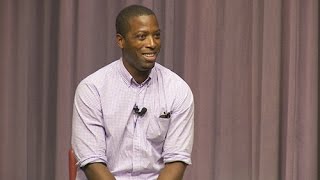
Tristan Walker went from Queens to Stanford to Twitter and Foursquare, then started Code2040 to mentor Black, Latino, and Asian engineers. He founded Bevel to solve razor irritation for men of color, arguing that authenticity is everything: your brand is what others say it is, and every employee has to live the product vision.
Chapters
I am very, very, very, very happy to be here and share a little bit about my story. So as Tina mentioned, I grew up Queens, New York, born and raised, pretty humble beginnings, the whole rose that grew from concrete story, right? I grew up projects, welfare family, all that stuff. I realized early in life I had one goal in life. And that was to get as wealthy as possible as quickly as possible. I said there's no way I'm going to come back to this, I want to figure it out. I realized that there are 3 ways to do it. The first way was to be an actor or an athlete, right, and that didn't work out for me too well at all. The second way was to work on Wall Street. I had the good fortune to work on Wall Street only to realize that I hated it. It was the worst 2 years of my entire life. I was the victim of bad culture and realized that in order to kind of reach my potential I really wanted to be the creator of great cultures. So man, I was like 20 years old and I was like, God, I'm stuck, right? And the only other thing that I could realize I could do to kind of get to that goal was entrepreneurship. The day I came to that realization I said, okay, here's Wall Street, I want to get as far away from this place figuratively and literally as possible, I applied to Stanford Business School. I was like Atlantic Ocean, Pacific Ocean, makes a hell of a lot of sense. Fortunately, I got in, came here and realized that Silicon Valley existed, right? I had no idea about this place at all, right? I thought it was a place where semiconductors got made that got better over time. When I got here, I was about 24 years old and saw other 24-year-olds making millions of dollars and fundamentally changing the world and I said I had to figure this thing out, right? First year in business school, I had the good fortune to work at Twitter also full-time which I, you know, Working full-time, going to school at the same time, I wouldn't wish on anybody, very, very difficult. And then in between my first and second year of business school, I heard about this company called Foursquare, I think 2 employees at the time, hustled my way into that company somehow as one of its earliest employees running business development for the company for 3 years. After that, joined Andreessen Horowitz as an entrepreneur in residence, the venture capital firm, 9 months later started my company Walker Company and that's what I'm doing now.
So I'm curious, we talk a lot here about creating meaningful things, doing things that have a positive impact on the world and you started out saying my goal is to make lots of money. Is that still what drives you? I'm really curious because people are motivated for different reasons and it would be really interesting to understand if that motivation still propels you forward.
It's not the biggest motivation. It is a big one, right? I'm not going to be the one to BS you and say like money isn't important. I think it is, it fundamentally is. I understand what it can afford folks. I got some advice when I was 20 years old from a gentleman who worked on Wall Street and he said, Tristan, I have the secret of life, I figured it out, right? And I was like, all right, tell me, what is this, right? And this is a gentleman who's really successful, he's a managing director on Wall Street, made millions and millions and millions of dollars. He said, Tristan, you want to spend the first third of your life learning, right, the second third of your life earning, and the last third of your life returning, right? And here's a guy, he left Yale when he was 20, worked on Wall Street, left Wall Street the day he turned 40 and now he's kind of doing the philanthropy thing. And what I got out of that, he said, a lot of people try and put the returning thing before the earning thing and that prevents them from like scaling their returning efforts, right? And that had such a profound effect on me and I was like, man, wouldn't it be cool if I've done this learning thing, can I shorten the earning thing to maximize my ability to return to folks? So it's important for me, but it's not the end. So that's one thing. And then the second thing, when I was at business school, a gentleman, Mark Leslie, who's the founder of Veritas, there was this entrepreneurship class and he said there are 3 reasons people start a company. The first is to get rich and wealthy, right? And at the time that kind of resonated with me. The second was to build a great company, right? And the last was to change the world, right? And there's nothing wrong with either one of those things. You just have to know which kind of lane you want to go in and whatever lane you go in, you're going to build a very kind of different company, right? It's totally fine. And fast forward kind of through the career that I had, Twitter, Foursquare and Andreessen Horowitz and now, it's changed a little bit for me. And now I'm just inspired by building a great company, right? If I build a great company, we'll fundamentally change the world and that money stuff will figure itself out later. But yes, it is an important thing for me just because I want to scale the returning thing as much as I can.
But I know that you're also really involved with starting and running an organization called Code2040, which is helping young people with backgrounds similar to yours kind of navigate their path in the world. So maybe you could tell us a little bit about that and how it fits into what you're doing.
Yeah, totally. So I'm very jealous of you guys. Like the fact that you guys are here at the time you're here, a lot of undergrads, I've met some freshmen before I came here, I was like, you guys are really lucky, right? Just to be in this place where all this really rich innovation is happening. Had I known about Silicon Valley and didn't think it was just a place where semiconductors got made, my entire career path would have probably been markedly different, right? So I said I wanted to create something that would prevent folks like me from realizing that this place existed too late, right? So that started me on this path to— with a business school classmate of mine found this organization called Code2040. The goal of Code2040 is to get the highest performing Black, Latino engineering undergraduates internships out in the Valley and provide them with all the tools they need to be incredibly successful while out here. That's— in addition with the internship you get things like media training, one-on-one mentorship and a whole slew of other things. By the end of the summer you're pretty tired. And it's meaningful for me, the reason why— in addition to just not having people share my story, we fundamentally feel year 2040, that's when folks of color are the majority of the country, you need to have people in positions of leadership actually kind of guiding the efforts of these technology companies to build really a better America, right? And it's working. We have a fantastic team, 7 people working on it day to day. I'm just the chairman now. It's their organization, they're doing a great job, but it's an important, important important piece of me.
So the wonderful thing is you actually figured out a way to do the giving back even while you're building your company.
Yeah, yeah, yeah. Ben Horowitz, founder of Andreessen Horowitz, one of the co-founders of Andreessen Horowitz, I told him this learn, earn, return thing and Ben Horowitz in his pure way, he says like shut up, that doesn't make any sense. And he said you can do both at the same time and fortunately I've been afforded all these really great opportunities to be able to do that. So it's as good a time as any. It's never a good time. So I just wanted to go and run with it.
Terrific. So when you were at Andreessen Horowitz as an entrepreneur in residence, I understand your goal is to figure out what the next big thing is and what you're going to do. And you started your new company. Can you tell us about it? I think it's fascinating and clearly it's really taken off.
No. Yeah, sure. So I joined Andreessen Horowitz in the summer of 2012. God, time flies. And I realized I wanted to start a company. I had no idea what I wanted to do, but I knew I needed some time to figure it out. So Ben Horowitz, he said, come spend 6 to 9 months with us trying to figure it out. And I like to joke that I spent the first 7 months of my time there kind of wasting their time. And what I mean by that is I was chasing things that I probably shouldn't have been chasing. I set after Twitter, Foursquare, Andreessen Horowitz, like what's the most ambitious thing that I could build, right? I wanted to build a bank, I wanted to fix childhood obesity, I spent 3 months of my time there trying to figure out a company that would fix freight and trucking in this country, right, of all things. Only to realize that I probably wasn't going to be the best person in the world to solve those problems, right? And I felt like if I was going to dedicate the next 10+ years of my life to anything, I wanted to fundamentally feel like I was the best person in the world to solve that problem. When you look at like a lot of entrepreneurs that either you're inspired by, certainly for me, they had this one thing about them that was— that kind of carried with each one. They had this unique authenticity to the thing that they were trying to build. And one thing that you'll realize if any of you kind of want to become entrepreneurs, like you have no idea how much of a comparative advantage that is relative to everyone else. There are a lot of entrepreneurs that are entrepreneurs for the sake of being entrepreneurs. But once you have that authenticity, you can't— it's very, very hard to lose. So fast forward 7 months later, I came up with this idea based off two views of the world that I had that I think few people in Silicon Valley really understood. The first view of the world that I really believed to be true centered around this idea of culture. So if you really think about it, and I really believe this to be true, most international global culture I believe is led by a lot of American culture, which is led by a lot of black culture in the U.S. When you think about food, music, dance, et cetera, more recently Latino and Asian culture. And a big frustration of mine is I live in the earliest adopting region in the world and it knows very little about the earliest adopting culture, right? Like that discord didn't make much sense to me. And the second view of the world that I had was really to health and beauty companies of all things, right? It dealt with like this frustration of my having to go to CVS, right, having to go to aisle 14, it's the ethnic aisle, right, but it's not really an aisle because it's a shelf. Then I have to reach the bottom of that shelf for a package that's dirty and then there's a photo of like a 65-year-old bald black guy in a towel drinking a cognac in a velvet robe, right, and they assume that I should buy that product. Like that entire second-class citizen experience just fundamentally needs to go, especially considering how much money we spend on that stuff, how culturally influential a demographic we are in this country and we'll be the majority of the country in 20, 30 years. Well, I wanted to build a company that puts two views of the world together to build a very special CPG company focused on the needs of Black, Latino, and Asian consumers.
CPG?
Consumer packaged goods, health and beauty company.
Okay, thank you. Great. So I know you've— are obviously bringing a lot of expertise from your experience at Twitter and Foursquare. What are you bringing from those experiences that ends up really influencing what you're doing in this new company?
Yeah, yeah. So I learned a lot during my Foursquare experience, right? Foursquare at the time— how many of you guys, like how many folks are familiar with Foursquare anyway? That's cool. So what I realized at Foursquare is that like very technology-heavy kind of company, right? We— it's a technology feat that is just fantastic, have one of the best technology companies in tech. But the reason why I think we won kind of the market was that we had again an authenticity to the things that we were trying to build. Every single employee lived that brand. Every single user of our service lived that brand. People were very— they were very discerning in our ability to articulate the vision for the brand because we were so uniquely authentic to what we were trying to build. So the one thing I took from my Foursquare experience is the importance of authenticity in brand. People can suss you out, right? They'll fill you out. They'll know you're lying and if you don't have that authenticity, no one is going to believe what you're selling, right? So that's number one. As far as what I'm doing for health and beauty, right, a lot of folks look at me and they're like, Tristan, like how do you go from Foursquare to building a health and beauty company, right, shaving and cosmetics and stuff, right? But the one thing that I really understood and this is spending a lot of time with folks like Ben Horowitz, Marc Andreessen. Marc Andreessen always talks about this idea of like software eating the world, right? And software's place in really disrupting every single industry as we know it. If you think about health and beauty, there really hasn't been a technology wrapper around it at all. You might go out and get some form of lotion, you might go out and get some form of shaving product, but that brand has no idea who you are. They have no idea what kind of merchandising experience is unique to you. They have no idea how you should be spoken to. What resonates with you, like what actually makes you feel great as a consumer. Like our ability to apply that technology wrapper around health and beauty I think is pretty profound, especially for a demographic that hasn't been served at all, right? So our ability to do something that is markedly different from the status quo is pretty special and that's what I've taken from those companies.
I know you're also very interested in developing a personal brand.
Yeah.
Your personal brand, the brand of your company. What are the things you've learned about the importance of each individual creating their own brand? And how do you do that?
[Speaker:GARY VAYNERCHUK] There's one rule on this which is really, really important. I think a lot of people lose sight of it. I got some advice a couple years ago from a marketing executive, and it stuck with me for a long time. And this kind of relates to personal brand or your company or whatever. He said, Tristan, brand is not what you say it is, it's what they say it is, right? And the minute you realize that, you start to really understand the importance of the thing that you're trying to build, right? When it comes to like personal brand, like whether it be on Twitter, Facebook, all that stuff, like I'm pretty ridiculous. If you're following me on all these services, like I apologize because I'm pretty heavy on every single one of them, but it's only because I care so much about my own personal story and no one else should be telling my story, right? And the thing that a lot of folks really don't get about brand is that sometimes it's okay for people to be a jerk. If you're consistently a jerk, that's cool, right? If you're consistently nice, that's cool. Where the problems happen is when you kind of break from that consistency, right? So as long as you understand that like brand is what you— like what other people say it is, That allows you to kind of manage your own, right? And like that has stuck with me for a really, really long time and I think has benefited not only just me but my company and every company that I kind of create from here on.
I'd love to drill down on that. I think that's really interesting, especially we've got a room full of lots of young people who probably have a primordial brand at this point, right? At what age should people start thinking about their brand? Is this something, you know, when you're a little kid you start thinking about this? Is it when you get in the professional world? At what point and And how do you really start crafting it?
Well, I mean it's become different for me, right, because I mean things like Twitter didn't exist 10 years ago, right? Now your brand is public, right? Everyone is talking about it and you might think that people aren't talking about you but they probably are, right? Like there are haters everywhere, right? People will care enough about other people to be able to like try and bring them down, right? So as long as And maybe that's an inherent cynicism, right, about everyone, but I believe it to be true. So now we're in a world where kind of your life is public, you better take control of it before someone else does, right? So as early as you have the ability to control your own personal brand publicly online, I think you should be doing it.
Cool. So in a couple of minutes, I'm going to open up to questions from the audience, so start thinking about the— profound questions you want to ask Tristan. So you obviously spent a bunch of time here at Stanford in business school. What sort of things do you wish you had known then that you know now? I mean, that was only a few years ago and your career has really taken some very interesting turns since then. What sort of advice would you give to people who were sitting in your seat then?
So I have one bit of advice that I've gotten from someone which I think is the best piece of advice that I've ever gotten and I'll kind of give that to you in a second. And then I have this Post-it note on my laptop that really kind of— that I refer to every single day and it has kind of 3 points on it that are super important as I think through like leading my life, but specifically like for the company. The first bit of advice came from Tyler Perry, the famous director, kind of movie producer, that sort of thing, right? About 2 years ago I had the good fortune to interview him one-on-one in 3 different cities around the country. Where he got to speak about his entrepreneurial story to a bunch of small business owners around the country. Tyler Perry is like he did his thing, he was homeless for a while, right, now he is like the highest paid dude in Hollywood, right? Really fascinating story. So I'm interviewing him one-on-one, start the Q&A, one woman raises her hand, stands up, she says, Mr. Perry, we have to always go through these different trials and tribulations as entrepreneurs, like what keeps you going? Right, how do you get back up and just go, right? He said the most profound thing that I had ever heard. He said the minute he realized that the trials that you go through, right, and the blessings you receive are the exact same thing, like that freed him as an entrepreneur, right? Like just think about that for a second. Like it— I kind of stopped the interview because I had to soak that up for a little bit. Every single kind of trial, tribulation, all that stuff that you go through, it's just a lesson, right? And that lesson is just an inherent blessing, right? So as entrepreneurs, this entrepreneur thing is hard, right? At times it's amazing, at times it sucks, right? And I've been very blessed and fortunate to have really good opportunities, but it's very, very hard, right? And you don't want to stress yourself out unnecessarily and what that lesson taught me was that I didn't have to be as stressed out. Like I'm going to go through these issues, they're just lessons, let me treat that as a blessing, we're going to move. And a lot of folks look at me when I start this company and they're like Tristan, you're way more calm than you should be. And it's like yeah, because I fundamentally understand this lesson that I learned. The second thing is, especially for you folks who are thinking about what you want to do next, you guys are really lucky. I'd say take your time. This is coming from a guy who always wanted to do things faster. I graduated university early, I left Wall Street early to come out here, I tried to figure out the Silicon Valley thing as quickly as possible. When I was in business school, I wasn't as social as I probably should have been because I wanted to really get to this. On my Post-it note, I have 3 things and this really speaks to how I want to build my company. And things that I tell our employees. The first kind of lesson which I think is important is not letting your own lack of context drive all of your personal decisions and judgment. So what I mean by that, at least in our startup context, don't let my lack of context drive our kind of business decisions like speak to customers, speak to customers, speak to customers. When I think about kind of your experience here, a lot of folks are in a rush to start the professional thing, right? But don't let your lack of context kind of drive that decision, right? You got to speak to people like me because the grass is always greener, right? You have no idea how good you guys have got it, right? To be here, to be able to kind of be amongst some of the smartest people in the world, like soak that up, right? The second kind of thing that's on that Post-it note is a lot of people, especially out in Silicon Valley, think so far into the future that they forget kind of what's the opportunity in the present, right? There are so many, at least in the context of my startup, right, a lot of folks are like, Tristan, like why aren't you building a flying car, right? You have the potential to do it. But you're making like shaving products? It doesn't make any sense, right? And I say no, because there is a fantastic opportunity in the present and your kind of lack of context is blinding you from the opportunity here, right? So at least as it relates to your guys' story, right, don't be in that rush, right? You are in one of the best places in the world to be your best you, right? When I was at Stanford, I was so lucky. It was the best business school in the country, on the top law schools in the country, medical schools, engineering schools, your ability to just walk across the street and speak to these people for free, well, kind of for free, is pretty profound, right? So think about that. And the last kind of note that's on my Post-it note, I watch The Wire a lot and I kind of guide a lot of my thinking through like quotes from The Wire and there's one special scene in there where they just talk about product, right? And what I say in my posting now is that it's just all about the product, right? No one is going to buy our stuff if the product sucks, right? If the product is weak, nobody wants it, right? So what does that mean for you guys? Like you are the product, right? There is no need to rush, like build your own product, right? Again, you have the best law school, business school, engineering school, all the stuff. Work with each other to build your own product, but don't be in a rush. And it's always— I always dreaded that experience of having like the old dude in the room come back and say like, don't speed up your life, right? But I mean it, right? I would give anything to potentially soak up this experience again because it's a pretty special one. So take advantage of it for as long as you can.
I'm going to drill down for a second on resilience and learning from failure because people could look at you and say, oh yeah, you don't really know what that means. I mean, look at all the success you had. Can you tell us an example of someplace where you hit the wall and had to pull yourself up from the pavement and what you learned from that?
I mean, my story alone is kind of nuts, right? I mean, I kind of don't belong here, I suppose. And what I mean by that is, I mean, if you just look at the stats alone, kind of my story doesn't make any sense, right? A lot of people like when they ask me that question about failure, I always have a hard time kind of answering it because at the end of the day, every single day I make mistakes, right? But I don't regret any single decision that I've ever had, right? So for the folks that say, Tristan, you're full of successes, like, What does it mean? I refer back to them, you tell me if you've ever felt kind of taking a food stamp to the store to buy some food, right? You tell me what it's like to hear gunshots out of your house, right? And that kind of fear for your life, right? You tell me, once you have that experience, then we can talk about it, right? So I think there is some kind of level setting that's required when asked that question. Because it's true, I've worked my ass off, man. I've worked really, really, really hard to get to where I am. But I think again it's important to not lose sight of the fact that there are a lot of people who helped me get here. And I need to make sure that I'm doing the same, especially for people who kind of share that same story.
Great. Questions from the audience? Yes?
With regards to race, what was the biggest obstacle you'd say you had to overcome within the last month and a half?
So let's repeat the question, please.
Yes, so with regards to race, what's the biggest obstacle I had to learn in Silicon Valley, is that correct? Overcome in Silicon Valley. So there are two things. Number one, I haven't had any experience with like explicit bias, right? I've just performed well, right, and I think I've had the opportunities that have opened up to me. That said, implicit bias exists, right? And this is everything from getting on the phone with somebody, going for an investor meeting, right, and having that person surprised that it's me because I sounded different, right, or there is some expectation for how I needed to sound. What I've learned, and I haven't really spoken too much about this, but I actually do believe it to be true, and I don't think this is unique to like the Black experience, I think it's It's an experience that a lot of folks actually do share, but I can only speak from my experience because I've lived through it. A lot of the things that I do will be scrutinized 2x in either direction, right? If I succeed, a lot of folks might think that I succeeded more than I actually did, right? If I fail, A lot of folks will think I failed 2x more than I actually did, right? My lesson out of that is just don't fail, right, and continue to succeed. And I say that, I mean, with a little facetiously, right, but it's true, right? You just continue to work as hard as you can and make sure that you're not— you practice very, very good judgment, right? As long as you're practicing very good judgment and you're working harder than anyone else, everything will work out for you much better than you would expect.
Yes. Yes, thank you so much for coming. You mentioned that when you were here and you were going to business school, you also saw the opportunity to work at Twitter and it was extremely difficult. So how did you actually saw the opportunity that it was a great opportunity? Opportunity and how did you look for those opportunities?
Okay, yes. So the question was when I got here for business school, I knew I wanted to work at Twitter that first year and even Foursquare, how did I find that opportunity and what it was like to kind of work at the same time, is that right? Yeah. So what it was like to work full-time at the same time, it sucks. Like it's really, really hard. It's very hard for people to do all that stuff. I did that when I was at Twitter and then my second year of business school was the worst because that's when I really started at Foursquare. I'd wake up in the morning, go to class at 9 o'clock, class would go over, I'd go to the Center for Entrepreneurial Studies to take conference calls and I'd go to class and I'd go back to the Center for Entrepreneurial Studies. It got so bad that Nancy, God bless her, she was— every time I'd come there it got to the point when she had to almost ask me if I ate the past 2 days, right, just because I was working that hard. Like I would not wish that on anyone. The— to like how I actually like realized Twitter and Foursquare were companies that I wanted to work for, again it starts with product, right? I was fortunate enough that I was able to identify those like well before anyone else and it's only because I felt that those 2 services were fundamentally changing my life. Twitter at least in communication, Foursquare much in the same vein. And it allowed me to identify the use of those services before other people started using them. And one thing that I tell a lot of folks who come to me and ask me these questions like how do I know which company I want to work for or how do I know what startup to create, I just tell them like look at their phones and you'd be amazed by even on that like first page of your phone, the types of things that you use that other people do not, and you start to get a very clear picture about like what you're most passionate about and what you have a view on that other people do not. And the reason why that's so important is because number one, it allows you to identify things before anybody else does, which allows you to be introduced to those companies at times when no one else is trying to compete for those same roles, right? And I've been very, very lucky to be able to find those things as a result of that. So think about things you already use and the things that actually make your life better.
Great. Yes?
So you mentioned internal authenticity as one of the main drivers in Foursquare's success and that you'll be producing the same authenticity within Walker Co. Could you give some practical specific measures that you're taking to build this authenticity?
That's a good question. So the question was— I talked about how important authenticity was at Foursquare, how important it is at Walker Company, and then what are some kind of practical things I'm doing to ensure that authenticity. So I think number one, I built my company around that mission. And what I mean by that is it really started with my own personal story. So our first brand that we're launching is actually a shaving brand and it's the first end-to-end shaving system to fix issues related to like shaving irritation, razor bumps and that sort of thing for men of color. And I was able to get there because I realized for 15 years of my life I wasn't able to shave because all the mass marketed products out there were just not for me. Which allowed me to kind of do the research and figure out, all right, what's the story behind that, right? It's a function of my having curly hair and I could kind of go, but that's for another session. Not only that, I didn't have a father to teach me how to shave the right way, right? When I worked on Wall Street, I remember this experience of walking on the trading floor, having hair in my face, having a guy stand up and saying, Tristan, get that stuff off your face, in front of everybody. Being mortified not by the fact that that guy was a jerk, but because I knew I had to get that stuff off my face and use all the crappy tools that were out there to do it and know that I had to spend the next 2 months of my life trying to fix what was going to happen to me. Anyway, I say those stories because now when people ask me why I'm like starting a brand with a first focus on shaving, it's because I could tell that story better than anybody. And when I think about Foursquare, what was interesting is we were like starting a whole new market of sorts, right? This whole— well, location-based services or whatever wasn't really brand new, but our take on it was pretty fresh and new. And we were building things that just made our lives better, right? So our ability to articulate what the product needed to be, right? Our ability to tell our users and talk to our users about why we've made those decisions, it was just entrenched in the company. We were a bunch of kind of guys and girls who just wanted to have fun in cities and explore our cities a little bit better. So what I learned is if you can't tell that story yourself with your own personal story, it's probably not worth doing because you'll probably get bored of it after a couple of years. So again at Walker Company, the shaving thing started my story. With my story and because we're building a company that is focused on a very diverse group of people, that means I have to hire a diverse group of people. And maybe the next brand that we launch isn't my story, it's one of my employees' stories, right? So I try to set up the organization in a way where that won't not be an issue.
So when you hire people, how do you pass your vision across Walker Co. in a very clear, specific manner and have it— as you scale and have more people and it's less easy for you to talk to them personally, how do you ensure that the vision gets passed on across the company?
That's a great question. So how does the— how do I ensure, at least as a company kind of grows and scales, that the vision is kind of passed on for kind of new employees? That's right. So it also starts with like values we have for the organization, right? So we say, here are things that we all agree are important. We've got to be inspired by our employees, we've got to have respect for each other, we've got to have the courage to do daring things, we've got to practice good judgment, like wellness is an important thing and loyalty. Now a lot of people always talk about like all these values that are in companies and they feel fluffy and all that stuff, right? But you really have to like entrench it into the culture of the organization, that's how we recruit, right? So when we actually recruit a candidate, we will kind of— base our judgment on that candidate based on those values. Every single new employee that comes in, they're going to have to learn those values. That's just one of the very many types of ways that we do it, but you have to put it in the processes of how the organization operates.
Another question?
Yes.
So you said that Bevel was one of your first products. What do you think is the future? What is the aim of Walker Company? Like what do you— what new products do you see coming out and like 10 years from now like where would you want the company to be?
Yeah, so the question is kind of really what's the vision for Walker Company and after Bevel, our first shaving brand, what do I want the vision to be? So I like to say we exist really for one reason and that's to make health and beauty simple, period, right, for people of color, right? But it really should just be simple for everybody, And we like to say we're going to do that really in 3 ways. The first is our commitment to really only designing, developing, and testing products specifically tailored to the community's needs. So we're not going to make shampoo for the sake of making shampoo, like that's been done and exhausted. We're in the problems and solutions business. There are a lot of problems that exist in these communities that folks really aren't fixing. So Bevel, the first one is the shaving irritation issue. I think about things like hyperpigmentation, natural hair transitioning, right? I think about vitamin D deficiency, right? Like these are all brands that really no one is really speaking to that I think we can do some really beautiful things with, right? So the first way we're going to design around those problems, right? The second way is really delivering on this promise of amazing customer service, right? So when I talked about that whole experience of walking into CVS and whatever, there's no one there to educate me on the right way to do things, the right products to use, the right complementary products to use, all that stuff. I think we can do something pretty special there. And the last way, and this is where I get really excited and to your question about like how I take what I've learned previously and apply it here, talk about this idea of developing the most practical shopping experience we can for consumers, right? And this means things like what do you do for people that still want to pay for things with cash, right? What do you do for customers that fear getting stuff shipped to their door because they don't have a doorman and fear that it's going to get stolen, right? Like we need to develop experiences to like fix those issues. Perfect example of this, there's one company that does this, allows people to pay with cash, it's Walmart, right? So a lot of their transactions are either debit or cash. So they have this pay with cash feature on their website, so you go, you pick out all the products that you want, you click pay with cash, you go to the store, and then you pay for it and leave, right? Really successful for them, right? They realized one thing that was really, really interesting and profound. When people got to the store, they didn't pay with cash, they used plastic, right? Why? They came to the conclusion that there's still a hell of a lot of people who are scared putting their credit card credentials online. Now as a Silicon Valley-like company, right, you won't hear any Silicon Valley company talking about that use case, right, but it's a really important one, right? So when I think about this vision for Walker Company, like it's a company I want to exist 100 years from now but focus on those 3 tenets to build a very special company.
Can you paint a picture of how big the company is now, how many people, where are you located, what does it look like?
Yeah, so right now we're a team of 7 people, we have 6 folks in downtown Palo Alto, one in New York, and yeah, we just launched our first brand December and officially started shipping in February. We are hiring. So, but yeah, no, I'm very, very proud of what we've done to date. We raised $2.5 million last year from some of the top venture capital firms in Silicon Valley. But yeah, we're plugging away. And for some reason, people keep buying it. So it's exciting.
Perfect. Yes? Your story is so amazing. I was wondering if you wouldn't mind speaking a bit more about your life prior to Wall Street and the opportunities, people, personal traits that you have that helped you get to that step.
Great. So I guess the question was talk a little bit about my life before Wall Street. Right, even, and then kind of the traits that allowed me to persevere and I guess get me here. Good question. So I— God, I breezed through a whole portion of my life real quick. So the best kind of 4 years of my life or the most interesting 4 years of my life were high school. So I got to go to one of the top boarding schools in the country on a full scholarship. And it was the first time I got to really see how the other half lived, right? I was going to schools with Rockefellers and Fords and all that stuff, right? And I was like, man, like I knew what rich was but like wealth is another thing. And it was like, it was really eye-opening for me and the most poignant part about that experience is that it showed me that I can compete as well as any of them. And it was the first time— like I was already pretty confident and many might say cocky before that, but it was the first time I actually had the like pure confidence to know that I was going to be able to compete. So as far as like the trait that I think I have, someone told me this probably about 5 years ago, they say Tristan, The difference between you and like a lot of other folks is that you're always willing to ask why 6 times when other people are willing to ask why 5, right? And it's always like that 6th time that gets you over the hump, right? And there's this crazy YouTube clip on Will Smith, right? If you guys haven't seen it, I think you guys should watch it. He talks about like running on a treadmill, right? And like he's really an incredibly competitive guy and he's like if you get on a treadmill next to me, I am not going to be the guy to get off first, right? No matter how fast you put it up, like it could be 13 on the treadmill, right? We're going to compete and you're going to be off that treadmill before I am, right? And that's the kind of like spirit that I think I've always had. And sure, like, don't give up sounds cliché, right? There are times actually like giving up might be to your benefit, so I don't really believe that so much. But you got to be willing to persevere for those 6 minutes when other people want to persevere for 5.
But let's go back further.
Yeah.
I mean, you obviously ended up at this very prestigious boarding school, but your story before that was clearly one that was very different. How did you make— what was there that helped you cross that chasm?
Yeah, people. People are generally good, right? Fortunately, I had a fantastic mom who wouldn't let me go outside as much, right? She made me study a little bit more. And that allowed me to perform at a pretty high level relative to a lot of my peers. At the time. Fortunately, with that performance came other people who just wanted me to succeed. The great thing about like at least where I came from, right, is that there is a camaraderie there that like wasn't divisive. Is it divisive or divisive? I always wondered about— Barack always uses divisive and I think it's divisive.
East Coast, West Coast, right?
Yeah, exactly. And when there is like that, I guess, like shining star in the hood, I suppose, like folks want that person to succeed. And I've been very, very fortunate to always have people that were so genuinely interested in helping me to succeed, right? Like, I— there's no way I could have done this by myself, period. Right. So as hard as it was before that boarding school experience, It was a lot easier than it could have been, that's for sure.
Great, super. More questions? Yes, back there.
Can you talk about your product acquisition process? I'm imagining with 7 people you're not designing all the products yourself, so how do you get new products?
We are. So the question was with 7 people you guys are a puny small company, you can't do anything, how do you go about actually making the products?
Developing.
When you say like product acquisition—
Different kind of engineer to design a razor versus shampoo, for example.
Okay, totally fair. How do you balance all that? Totally fair. So figure it out, just like any other entrepreneur that kind of figures out things that like they may not have any experience in, right? The education or the opportunity to educate yourself is there. When I raised this money back in May, I raised it with a 21-slide pitch deck with no designers, no team, no product, nothing, right? Fast forward 6, 7 months later, we have a 6-product consumer line that folks thought there is no way we could have launched, right? It's a matter of persevering and finding the people who can actually make the things for you, right? And not only that, having a very clear focus and understanding of what you want to ask them for. I mean a lot of folks are like, hey, sure, I want to build this shaving cream or restoring balm with no idea of like what they want to put in it. Like I knew very clearly what we needed. All I needed was someone who can actually put it in a bottle and give it to me. And then quite frankly, The story of Walker Company isn't necessarily the products, right? I mean, we're going to make great products. The story of our company is the team that we built, right? And the advisors that we have and the investors that we have. Those guys have made it so much easier for us to build this thing, right? Whether it's their own contacts or their own expertise, right, that's really allowed us to build this thing so quickly. And if someone else were to do this, you speak to a lot of these larger consumer packaged goods, health and beauty companies, like Tristan, usually this process for us takes 18 months. Learning what I've learned already, I would be able to do the same thing in half the time with half the cost. You just learn these things and you figure it out.
Are you— do you have a lab? Are you actually building and designing these products or are you licensing products from from other places?
So right now we have a manufacturing partner out of the Midwest. So we took some— well, you start with kind of off-the-shelf stuff and then the two of us went back and forth about through 6 different iterations of product for each single product until we found the one that like was perfect with the right ingredients, with the right amount of aloe, with the right whatever. And then at least in the design of like the Razor, we actually found a design firm that was just fantastic. But again, I knew exactly kind of what I wanted it to like feel like, if that makes sense, and they just helped me bring that vision into reality.
Great. More questions? Yes.
What keeps you going now? Why do you want to build a successful company that will last 100 years? Yeah, because it needs to happen. So those are kind of like kind of two separate questions and I'll try my best to attack each. So the first one was what keeps me going, right? And the second thing is like why do I want to build a company that lasts 100 years? To the latter, I think, there is a wide open opportunity to build something incredibly audacious and ambitious, right? If you think about at least the space that we've been in, there have been a bunch of companies that have catered to this demographic for a while, right? But what happens is a lot of these folks kind of build up and then they sell out to larger companies, right? And then those large companies swallow them up, quality of products go down, right? Management starts to go crappy, right? And then nobody really— has any pride in those things, right? When I think about my entire life and I'd actually wonder the same for you guys, I have never had one product or company that I look to that I was actually proud of, right? Like there are a lot of companies that had great products that I loved, right? But there is no company that I was proud to support. Right? And I think the opportunity that we have and we're already proving some of that now is that we can actually inspire a lot of pride not only in like the products that we make but the company, what we stand for and that sort of thing, right? And there is no reason why we can't build something with as great a legacy as a Johnson Johnson or a Procter Gamble. I think the issue is that no one really has set out to be as audacious to drive that legacy. As far as what keeps me going, right, it's number one, having a wife who is incredibly supportive and continues to support me and making sure that she is good, right? And as long as like that's figured out, everything else kind of works itself out for me. And then number two, just making sure that I never lose sight of doing the thing that I fundamentally feel like I am the guy to do, I am authentic to, and staying true to like who I am and not letting people kind of send me off base in that way because that's when I tend to falter a little bit.
I'm curious, a lot of people say they're building companies to build to last, right, and they want to build something and then they get an offer from some big company, Procter Gamble shows up, is that— would that be a big temptation?
It would be irresponsible of me and I tell our employees this, to say I would never sell my company. It would be irresponsible of me. There is a price for everything. I do fundamentally feel that there is a price for everything. Our price would be very, very expensive.
Did anyone bring their check?
So $33,000 is looking really good right now. But there are a couple of things here, right? Number one, I put my name literally on the company, right? And the reason I did that is not out of any semblance of like ego or anything like that, like I wanted that accountability, right? I think that there is a way even if there were an acquisition of some sort to still have my company exist 100 years from now, right? As a part of like let's just say terms or whatever, That would be really important to me, right? But yeah, I'm not going to put a stick in the ground and say I'm never, ever, ever, ever selling my company.
This video is going to be up a long time.
Yeah, well, if someone came to me today and said, Tristan, I'd give you $400 billion for your company today, would you take it? I'd say yes. Great.
Do we have another question? Yes.
So you alluded to the intrinsic value people over the course of your journey that you're thankful for and you kind of owe part of who you are today to. I'm curious, what do you want those people to remember you as as you go forward?
Yeah, that's a good one of those tombstone questions. So the question was for all the folks who have been incredibly supportive for me, like what's the one thing that I want them to remember me by if I die I guess or something like that?
You don't have to die. Please don't.
That's a good question. The minute— the one thing that no one can say that I am not, I probably said this the 100th time I'm saying this word, is like truly authentic. Like I'm me. You're going to get the Tristan that likes to talk about Walker Company, you're going to get the Tristan who likes talking about watching Real Housewives of Atlanta, right? Like you're going to get it, I don't care, like that's me, right? And there is something special about that, right? Like whether I'm the CEO of this company, whether it's my being a good husband, like people are going to know that I'm incredibly consistent and you're going to know what you're going to get, right? And then the only other thing that I'd hope that they think of me as is like someone who has always chased that ambition, not at the expense of necessarily other people. I'll always be incredibly ambitious, I will, probably sometimes to like a fault, but the minute I lose that ambition I wouldn't even know what I'd do with myself and I think I think that was a big reason why a lot of those folks were willing to support me and a big reason quite frankly why I was also able to even raise money on like a slide deck, right? There is a belief there. Now it's up to me to make sure I don't eff it up.
Great. Yes.
So you talked a lot about working hard and even to the point of saying that you wanted to work harder than everyone else. And I identify really strongly with that, but I'm curious what you've learned about how to balance your personal life over time.
Yeah, it's a great, great question. You didn't tell me it was going to get this deep. This is very therapeutic.
In fact, we're going to send you a bill after this.
Should have known. That's good. The best thing that ever happened to me with that is my wife. It is. I was crazy ambitious before I met my wife. And now every single kind of decision I make is not only for me, it's for two people. I was very, very selfish, very, very selfish until I got married. So the one thing that I would say at least for me is to almost find that counterbalance, like she kind of is my balance and she holds me accountable. The great thing also about like founding my own company is that I can actually inspire that in the culture of the organization, right, as one of the values that we support and are strong with us, right? And the reason why that's so important, we have a ton of folks who have families like on the team. If it is an entrenched value in the company, I tell all those guys, whenever I'm faltering off those values, call me out on it and call me out on it publicly. You need to pick up your kid from school, pick up your kid from school. Because if you don't and something happens with that, you're going to come in tomorrow morning and you're going to be pissed at me and your work output isn't going to be great. So it starts with, number one, again, for me at least personally, having that counterbalance to hold me accountable, but also having a group of people around me who will hold me accountable to it if that's important to you. For some people it's not necessarily that important, which is totally fine. It's important to me, it's important to my team, and it's important to my life.
Great. Yes.
Hey, if you were to be a first-time entrepreneur today—
Like now? Yeah.
Well, it's a little off topic, yeah, but if you had never started any company before, would you be interested in working with an accelerator? What would your perspective on accelerators be? Like Y Combinator, 500 Startups, stuff like that?
Yeah, no, it's a great question. So the question is, if I were a first-time entrepreneur, would I— what are my views on accelerators and would I join an accelerator, that sort of thing. For me it's hard to answer that question because you need some context, right? Before I founded Walker Company or even Foursquare, I had a network of people that I felt comfortable enough to go to, to potentially raise money from them, right? So I didn't necessarily need an accelerator, I don't think. The great thing about those things though is that like you have a condensed time to actually like develop product that matters, right? Whether it's Y Combinator, 500 Startups, like if you can actually develop or get the team and know that you want to kind of develop something very quickly and get the network that you need to do it, do it. Thing is though, there are a hell of a lot of accelerators and usually there is one or two, I mean the Y Combinator is 500 startups that will actually get you more out of it than you potentially like even put into it. So don't necessarily chase an accelerator because it might give you $10,000, they might also expect to take 20% of your company. So understand that first of all. But also understand the leverage you get from the brand of accelerator you actually affiliate yourself with.
So who has the best last question? You do? The best last question? Okay, good.
You got it. You talked about the 3 stages of your life, learning, earning, and giving back. Do you see yourself being in that philanthropic stage of your life yet with Walker Company and if not, what's your plan?
Well, [Speaker:GHION_AI] I am with it now. So Code2040 is an important, important, important, important part of like my life. And Walker Company, what's interesting, they're really both the same story, right? The one thing that I tell a lot of folks is like I'm fundamentally dedicating my life to this demographic shift that's happening in this country. I really do believe it is the greatest economic opportunity of my lifetime whether it be for profit or not for profit. Profit, right? And at least rising tides lift all boats, right? Like Walker Company's success will aid in CODE2040's success, which will aid in Walker Company's success, which will aid in CODE2040's success. And then hopefully, at least the vision for CODE2040 is if we will have amassed the greatest network of these engineers who can actually affect major change in the world, Imagine like the amplified effect of their ability to actually change the world. These 20, 30 fellows that we have each year, let's assume we take that to 1,000 and those 1,000 fellows are kind of startup entrepreneurs or executives in large companies that can actually affect millions and millions and millions of people, that's important. Really important. And for as long as I can and hope, I'll invest whatever I can into making that successful.
This has been an incredibly authentic discussion. Thank you so much.
Thank you, Jen.
More from GHION.AI


O processo de reconhecer limites, mesmo quando a vida parece exigir sempre mais.





Depois de tantas histórias, aprendizados e pausas necessárias, o @interior_iza está de volta



