Underestimated [Entire Talk]
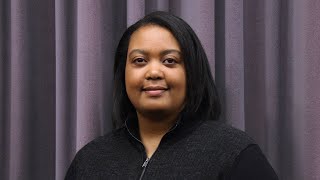
Arlan Hamilton discusses founding Backstage Capital and her journey as an entrepreneur navigating venture capital. She shares how she overcame adversity and the specific challenges underrepresented founders face when raising money.
Chapters
Who you are defines how you build. Thank you.
There is, I would say, oftentimes two narratives that get told about founders. There is a narrative about founders as vision holders where you have a founder who can see into the future more clearly than anybody else and uses that vision to trumpet the resources they need. Think about Elon Musk saying, I want to go to Mars and we're all going to get there. And then there's another narrative that says that actually entrepreneurship is not about knowing the end, but it's all about managing the process. And that the end can be far bigger than you ever even expected. And the great founders are ones that can manage the risks along the way. And there are process driven methodologies. The design school at Stanford is probably the most famous here with the D school methodology. And so I want to start out with this question. Did you know when you were a child that you wanted to be a venture capitalist? Did you have the vision of being a venture capitalist when you were younger?
No, when I was younger, I shaved one of my eyebrows off when I. That tells you something.
Yeah.
Yes. That's it. That's the story. And. And I had to pencil. My mom had to pencil it in for weeks with her eyeliner. So, no, I wasn't sitting around.
And did you know what venture capital was?
No, I didn't know until my 30s what venture capital really was. I heard the term in the. In the ether, but I did not know what it was. I also didn't care what it was. And it was my early 30s that I started to understand what venture capital was. And so when I was a child, since I was very little though, I was definitely a founder. And so I feel like this is.
Definitely full circle because you had that spirit inside of you. And so can you just. I don't want to summarize your whole life up, but can you then mark the salient moments in your life and paint a picture for what it was like as a child, what you were like as a child, and then how you went from that to being the venture capital. The starter and founder of a venture capital fund today?
I'd love to. Can I get a little understanding, though, of who has heard of Backstage Capital? Just so I can understand. Okay, great. I was an adorable child, as you can probably imagine. I was very precocious, as they say. I was very. Once my mother told me it was okay to speak up. I spoke up as soon as I only had to learn that lesson once. So I asked a lot of questions. When I was a child, I Was also very tall and what we like to call big boneded as a child. So I was kind of, you know, intimidating to some, including teachers, for whatever reason, even though I was goofy and very good student. And I asked every question I could. You know, I remember back in the fifth grade, I think it was, or fourth grade, they asked that question about if a tree falls in the woods, doesn't make a sound, does it make a sound if no one hears it? And I remember still to this day, I thought my answer was, it makes the vibration that causes sound. And like the fourth grade, you know, And I was thinking about that sort of thing. And I remember being sort of dismissed when I said that by the teacher because it was just like, it wasn't something that she was expecting to hear from. But I was at the same time, I was like obsessed with like the lemonade stand type of thing. So I. I had a little candy shop going in the third grade. I also wore six watches in the. In the third grade because I was a little odd. But it was because I was like, totally odd. And it's going to be a great first scene of the Lifetime movie one day. But it was because I found out from an encyclopedia, which I could read very early, I found out that there were people in other parts of the world who had. It was a different time for them. And for some people, it was dark while it was light, where it was with where I was. And that blew my mind. And so from a very early age, I felt a deep connection to people from all over the world, even though I didn't quite understand the scope of what that really meant. So everything from that moment on, I can trace back to wanting connection and seeking it and also building it and catalyzing it.
And you said that you always knew that you were a founder. And what I want to know is the class that I teach is called the Spirit of Entrepreneurship. And part of that is trying to understand this ineffable drive that certain people have to break out from the pack, whereas others don't. And there is one school of thought that says that you're just born that way. And maybe that was the case that you always knew that you were a founder. And there's another school of thought that says actually almost just like the narrative of superheroes who always have these mythologies where they develop these strengths in stressful situations, that real skills and real superhero strengths actually get galvanized in times of stress, not pleasure. If you agree with that, what I'm wondering is, what would you Say, are your superhero strengths, and did those get galvanized in times of stress, or do you feel like they were just intrinsic to you?
I think it's all a mixture of all of that because I think that I definitely enjoyed it before. It was something that I thought I needed to do, do. But I also remember early on understanding what money was and what lack of money was and what it meant, and that it made my mom cry not having it, and that if I could find a way to get it, that would change things, or I thought it would. And so it was a little bit of both. I do think it was because it started kind of in the third grade. I think it was really intrinsic. I also think, superpower wise, I think I call myself, like the Simon Cowell, which is, like, probably not a good reference for this crowd, because you could all be my children. I think at this point. I'm 39. Yes, you could. Wow, that's crazy. But I can see potential very early, and I can. And I think I have good taste and people and things, and I can see around corners a little bit.
And you've always been a founder, would you say? Like, even when you were a kid, you were doing entrepreneurship?
Oh, yeah, I was. I had my candy shop, and then I had my paint by number. I painted on the sidewalks, on the curb of people's houses so that the pizza delivery person could find them easier at night. And I did all this from very early age.
And what's the difference, though? There's a difference between a candy shop and being an entrepreneur in that way and then building a venture capital fund from scratch.
No, really? I mean, you're.
Is there a difference between a side hustle?
I had the same ego as both.
And maybe there's not. But do you think there's a difference between a side hustle and a viable business that you can commit your life to, or do you view it as all the same form of entrepreneurship?
I mean, one can become the other. I think it's very legitimate to start as a side hustle and turn it into something. I interview people on my you First Million podcast all the time who started something that was away from what their day job was, they started on the weekend, or they started it as something that they started in their kitchen or something, and it went on to make millions of dollars and be their life's work so far. So I think both. Yeah.
I just have to say that we have many people in the entrepreneurial thought leader seminar who are founders of startups, and they talk about that journey to be a founder of a startup. I personally come from a venture capital background and I know how much harder it is to actually start a fund. Can you educate people on what the difference is between being a founder of a fund versus being a founder of a startup and why that is why I would consider that, why it's more challenging.
In some ways, it's like riding a unicycle on fire, underwater, on the sun. So I've done both. And I've done, I mean, definitely, you know, I haven't built like, I've built a lot of little companies and a lot of little projects and things, and then I built this massive kind of movement starter thingy with this fund and firm. But I have seen 6,000 plus companies in the last five or so years invested in 130 of them. And a lot of cases we are with them in the trenches, side by side. And even as you know, I don't want it to be like the oppression Olympics. Right. It's like yours is more difficult. But I can say, even comparing it to anything I've done in the past or anything that I would do, like if I wanted to have a break, I would start a company that I was passionate about because this is, raising a fund is really difficult. I think the way that I did it and chose to do it and put myself out there is on a whole new level. So I would even say raising a fund is harder than raising for a company or starting a company, but that can debate me about that if you're a founder. And I would say raising it the way that we have is more difficult than your average fund.
Yeah. Let me just double emphasize that because I would say people probably don't realize this, but when you raise money for a startup, you have to get maybe one investor, maybe one institutional investor, maybe a handful of angel investors, but one investor can make all the difference. And then you're off. When you raise money for a fund, you typically need to get at least 10 investors because nobody wants to own more than a certain percentage of that fund. So it's like herding a ton of cats. And many people would say that you can't do that unless you, you work at a venture fund for a while. And so what I think is just the holy thing that you've done is raise a fund from a lateral move. And I want people to really understand this. So the definition of entrepreneurship that we often use is from this Harvard professor Howard Stevenson, who talks about entrepreneurship as the pursuit of opportunity without regard for resources, controlled and that usually we can talk about that in this class, but it comes more in stark relief when you really come from a place where you have no advantages in that domain. And I want people just to understand the grit that it takes to do what you did. Can you walk us through how many emails you had to send and how many meetings you had to have and other hustles to get to your first check in the fund and how big that first check was?
Yeah, so approximately three years of no's. So nothing. At least half of that, if not more, without a permanent residence. And in a lot of cases, just really not knowing where I was going to sleep that night. And a lot of cases not having having like one meal. Understood. Like, actually, I'll break for a second to tell you that I went to a course here at Stanford in this same hallway, like around the corner for two weeks. That kind of is where I met my first lp, Susan. And it was a lot of millionaires. Susan Kimberly. I say her name every time. It was a lot of millionaires in this course because it was like a how do you spend your money? Better? Sort of thing. And I was the only one that I know of who was like, broke, broke. And so I would. They didn't. No one knew this in the class, but I would, like, figure out how to put together like a $19 or $1.09. What are the taxes? So I could go to Taco Bell down the street when I got back to where I was staying and have like my dinner. And that was 2015. So that was like just a few months before I got my first check from Susan. So it had been months and years of that. And I probably. I don't know the exact number, but I. When I was on. I was featured on Gimlet's startup podcast series last year, and they recorded me for months before it came out. And they had me just go back and do all this crazy vetting of or, you know, diligence on me for me to say, did you really do that thing that you said you did four months ago on tape? So I'd have to go find the proof, the evidence in an email, which thankfully I still had, because I have these emails. So I was able to look at. And like, just in searching for a word or a phrase, I was like, oh, my God. Like, I talk about how much I. How much out outreach I did, but my goodness, seeing them just back to back, I mean, I'm talking hundreds of emails, but maybe more than that, maybe in the thousands over Those three years.
And how many no's do you think before your first yes?
Hundreds.
Hundreds. And how big was that first yes after three years and hundreds of no's and approximately $50,000.
$50,000 in a world where. Which was amazing and I will always be grateful to Susan for that because no one was doing anything. But this is in a world where I had to compete with people who had millions out the gate.
And can you walk me through what that's like to. So you. I can't fathom this. And I want to just make this really clear for people. So you would, you're going to these meetings, you're pitching these people. You're. You're going to the Stanford class to hobnob with the millionaires and you don't know it's hobnobbing.
That's a good word for it.
And where are you waking up? Where are you going to sleep? How are you dealing with the bifurcation of that world? Are you pretending you're one thing or.
Absolutely not.
Okay, so can you walk us through just what it's like?
Okay, so it was different at different times. So I started out in Pearland, Texas, near part of Houston. And paralleland when I first started learning about VC and the disparities in capital between white men and everyone else getting capital from venture capital, I was in Pearland, I was in an apartment with my mom. I had my bedroom, I had a blow up bed and I had a whiteboard that I was teaching myself about cap tables on and reading Brad Feld books. And we got kicked out of that because we couldn't pay the rent. So then we moved into a Comfort Inn and we shared a room and every night or every morning we'd figure out how to pay for the next. For the next night. And sometimes we go down and talk to the owner and he would see us coming and he'd be like. And we'd be like, hey, man. Hey, you looking good, man. How you doing? Yeah, can we get like a week? Just, you know. And we just ended up, I mean, for like two years. It was the address to my driver's license because we lived there and we just made our way. And my mom would go out and get a gig and I would get. She's in her 60s at that time. I would go out and get a gig. I was trying to get a car so I could work for Uber because it was like the early years of that. Couldn't get a car, all of that, and then couldn't afford that anymore. Moved to Pflugerville in Austin, north of Austin, because I wanted to be closer to startups. If I couldn't be in Silicon Valley, I wanted to at least be closer in Texas to startup world at that time. And it wasn't at that time so prevalent in Houston. And got a kind of a lifeline and in the form of a small personal loan from Sam Altman, which is a whole nother story. And that helped us have an Airbnb for a few months. And like, because he understood. But while I was at the Airbnb is when I got the word that I was going to be able to come here for this 500 Startups program that you all have. And I didn't have any money and it cost a lot of money, even though I was getting a scholarship. Cost a lot of money. So made my way here and I had about 10 days worth of Airbnb. And in fact, there's a guy here who had his own company that like was venture funded and I was staying at his place in East Palo Alto and I couldn't pay him at the end of it. And like, he let me, like there's these people that have kind of gone back to and thanked because he let me stay for a few days. But I was in these classes. So to answer your question about what was I portraying myself as, I was never ashamed of any of this. I was actually proud that I was surviving. But I wasn't going to put my whole sad sack story to anybody. That wasn't important. I tried that a couple of times and I'm like, wait a minute, that's not really what this is about. Because what this is about is getting more funding to underrepresented founders. It's about me seeing a great, great deal flow. It's about a fund that needs to exist. And all of this is going to be temporary and we'll get to business, the business out of it. So I did end up sleeping at the airport and I don't recommend it. And I'm not joking. I say that people start laughing, but what I'm saying is there have been people who have started staying at the airport to try to impress me. And I find it really insulting and painful when they do that, because I didn't do that for fun or giggles. And they're trying to do it. So I'm just really saying don't cross that line and don't do that. Don't put yourself in that position. Because I was there because it was the safest place I could Be without any place to live.
Yeah. Well, let me shift now then, to talk about identity and the thesis for Backstage.
Backstage. Backstage, yes.
So you talk about how less than 10% of venture capital dollars go to people of color, LGBT or women, and that is the focus of the fund. What does the world not still appreciate or understand about underestimated minorities that you would like to shine a light on?
I mean, a lot. So much. We don't have time for it here. I mean, it's. I always have to kind of laugh because, I mean, look at this room. Look at the room. You can't tell me that the only people in this room are the white. Only people in this room who can start great companies that are profitable are the few white guys that are here. Right. Even the white guys in here can't say that doesn't make any sense. Right? So there's this. Still to this day, there's this whole thing of as soon as you say d and I, diversity, inclusion, underrepresented, even underestimated, which we've coined, people start. They immediately go to. That is either an HR problem, or that is a charity problem, or that is a down and out poor you problem. Instead of, that's your problem now, because that's your biggest competition coming for you and coming for you without any of this baggage of what they think they're expected to be. And so you're seeing it now. You're saying there's a reason Delaney, the esports CEO, just raised about $100 million for his company out of nowhere. You didn't see him coming. We did. We saw him. We saw him years ago. There's a reason that these things are happening because we don't sit around. If you're a woman, you know this already. You know that you're a master multitasker. And sometimes you'll be sitting and I'm talking to the ladies right now. You'll be sitting with the guy and he'll say something that he did and how difficult it was, and you'll just be like, man, I did that before noon, before I even got here. You know what I mean? And it's like that. So everybody in this room, even straight white men, have something that they're underestimated about. Because everybody, everybody, no matter how good of a person they are, is prejudges. So when you walk into a room or you're in a room and someone's judging you, like, I'll give you a quick example, because I think it's important to think about privilege in all cases. So I can have this whole conversation, say all this, and I can say, and white guys did this and this and that. And then we can all get up to leave. And I can notice that one of the white men that I was talking about is in a wheelchair. And I made the assumption that he had it easier than I did because he's a white. So it's everywhere. And I just think people are still sleeping, and that's better for me. It's gonna make me even more wealthy faster. But they need to wake up.
And then. So then do you espouse? I think there's sort of two schools of thought when it comes to identity. There was a school of thought that talks about how difference is an advantage and you should trumpet your difference. And it's also because you're looking at the world differently, and so trumpet the differences. And then there's another school of thought that says, no, what we really need to espouse is to transcend differences or identities and realize that it's really superficial. How do you reconcile those two? Or are they.
I don't necessarily agree when people like. I know sometimes it's coming from a good place. When someone says, I don't look at color, I don't see color. Well, that's. That's like your privilege talking. You. You get not to look at color, but people who are of color or black or however you want to call it, Latinx or whatever. We have to think about color every day of our lives. If you're walking around in this country, and I mean, today I was at an event, and I went to go get a little snack at the hotel snack place. And I was, like, looking at it with my little VC card, you know, going to pay for these expensive almonds, because a can, $6.99, and a nice little friendly Caucasian lady just ran up to me, where can I pay for these? And I'm like, I don't know. You should ask someone who works here. Maybe you should do that. And she's just, you know, and it happens all the time, and I'm always mistaken for the help and this and that. So we have to see. I think you have to. I think it's disingenuous to say that we're not different. I think it's just not realistic and it's not mature. I think we say, yes, we are different in this way. My difference, everybody. The cool thing is that every single human being is different than everyone else, no matter what, even if you're a twin. So you Use the strengths of your differences and talk about it openly. That's my opinion.
Now you shifted. So you have this headline fund that you're pursuing now called the It's About Damn Time Fund.
Yes.
And also the name of my book.
That you can pre order right now. You can open up, go ahead and open up your phones. It's PR h dot com. It's About Damn Time. Go ahead and click that pre order button.
There's the founder. There's the founder.
If you have the means, go for it.
But you shifted. The Headliner fund, It's About Damn Time Fund is specifically focused on black women. So you decided to get. You decided to narrow the focus down more. Can you explain why focus just on black women? And how is that decision made?
I sure can, man. So we invest in women, people of color, lgbtq, which is a lot of. A lot of people is more than half the. Half the population, even just at women. Right. And we invested in 100 of those in that thesis. Then I looked at the stats and it said that women. Well, there's two. Some people say we get. Black women get 0.2% of all venture funding, which, if you do the Math, last year $130 billion was deployed. So we shared, as black women in startups shared the equivalent of Bird's last round of funding. Some people say it's even less than that. And I looked at that and I said, and I also understood that for every million dollars that a white man raises, a Black woman raises 28,000 when she is able to raise. Right. Not if you're doing apples to apples, because it would be minuscule. So I said, the only reason you could have a problem with me starting a fund that just puts her on level ground is if you're afraid that she will beat you when she gets there. And so to me, it was just a. It's one more part of the thesis. It's one more vertical. Just like if I had been out for three years and I realized, you know what? AI is where I'm going to focus this next fund. That's the same way I look at it.
And don't you think there's a power in focus and simplicity? Because I think some people would argue that those same claims, to differing degrees, can be made about the other communities that you were.
It can. And there's nothing to say that we won't do other funds, but we're starting there.
And how do you respond to people that say that you are responding to an injustice with an injustice that your Fund itself is biased.
It would depend on how they're saying it. If they're saying it on Twitter in their basement with their thumbs, they can go fly somewhere. Because honestly, it doesn't mean anything to me. If they're honestly. If they honestly see a problem with this and they're willing to talk to me about it like a mature person, I'd love to have the conversation when you have. I don't know if you heard, but I said.2% is the high version of the number that black women get in venture funding. And we make up nearly 10% of the population. 7 or 8% of the population doesn't make any sense already. That should be what people are worried about and upset about. They should not be upset about someone coming in and saying, you know what, I'm just going to slightly try to change that to 0.1%.
So I want to end on focusing on a little bit around principle driven entrepreneurship and then we'll open it up for questions. But I want to sort of double click on two specific scenarios to really dive deep into understanding how to be a principle driven founder. And this is one of the core new focuses for stvp, is thinking about principle driven entrepreneurship. There was a situation where you were offered a 250k check as an investment into Backstage Capital from Peter Thiel.
Nope.
Oh, sorry.
It was someone associated with him. He doesn't probably know that I exist.
Okay. But that 250k check is 25k Susan Kimberland checks. That's ten 25k checks that you could give to black women that would actually make their businesses potentially survive when they otherwise would fail.
Correct.
You said no to that 250k check.
Correct.
Can you walk through your principal driven process on how you made that decision?
So it feels like a lifetime ago, but it was in October of 2016 and what happened was for a couple of months someone had been talking to me about this, like closing out this fund, the first fund. So our first fund was. Ended up being 1.2 million. And I mean, it was so hard earned, you know, it was brick by brick by brick. And we needed that last bit of it to close it out because we had companies in queue that we had chosen as 2% of what we had seen. So we really needed it just to keep going too. And so this company, this person who is very wealthy came in, their people got in touch with me and said, you know, we're interested in doing this. They want to be anonymous so publicly. So you wouldn't say who it was this, this, and that. So I knew who it was. And the stuff started happening with Trump getting, you know, getting. He was going to be the nominee, and he was the nominee, and he was going to do all this. And then these tapes come out of him saying things about grabbing women and sexual assault, him admitting to that. And the same kind of time period Peter was a partner at, or like a visiting partner at Y Combinator. Now, I just told you earlier that Sam Altman is a friend of mine and helped me before. That did not stop the fact that I felt it was wrong for. For Peter to still be there and enjoy that. That privilege of being there. So I called that out on Twitter. I said, I'm no longer going to be sending companies that way. They. I'm not stopping them from going there. Not saying, you're bad if you go there. I personally will not continue to send the deal flow that I have been helping YC with until he's gone. That was just my personal decision. And when I said that out loud, it became this whole thing. It was picked up in all of these, all this press. And Sam got in touch with me, and Michael got in touch with me. It was this whole thing. And at the same time, I was like, wait a minute. I know that this other person is so, like, entrenched in that Peter Till world. Let's just see what they're saying online about it. Like, it doesn't mean that they're a bad person because Sam's not a bad person. Right. And they're good friends. Let's just see what they're saying. And I go over to their social media, and they are just defending Thiel. I should say that Till. I'm sorry, I forgot to make the connection. He, during that same time, announced, or it was announced that he put another million dollars behind Trump. Now, if. Let me tell you this. If Till had run for president himself on, like, a conservative or libertarian or conservative ticket, I wouldn't have agreed with him for a moment, but I would have respected the hell out of him. What I did not respect was him saying, you know what? He's saying this about people of color. He's saying this about, like, very specifically about Mexican people. He's saying this about immigrants. He's saying this about women. He's done these things to women. Some of it he's admitted to. Some of it he's been accused of. That's horrible. He's also doing all these things that are going to affect us. It's not like we're Talking about freedom of speech, speech to, you know, say what you want to say on Fox. We're talking about someone who could become the president and you're speaking with your dollars that you want this in office. And I said, how would, how could I with, in good faith say this thing on Twitter about not sending people in about. And really almost losing a friendship with Sam and then go behind anonymously and take the money? I just felt like I couldn't live with myself. No one would have ever known, but I would have known. And it just didn't make any sense to me. So I said, yeah. So I said to the, to the, to the people that were vetting it, I said, you know, this is a really hard decision. And I thank them for, for doing this and that. The thing was, it was actually half a million because they were going to have someone else in their portfolio come in as well. I said, I just can't take the money.
Thank you for sharing that. I want to dive into one other situation just to understand about resilience. So there was a lot of attention a little while ago when you announced the It's About Damn Time fund and you announced it as a $36 million fund.
Yes.
And then it didn't close.
Yes.
And so what I want to first ask is when you announce, and what I want to really understand is how you have gone through that process from a resilience perspective. But first, just so that people understand the facts, when you made the announcement, was it legally signed? Did they sign the documents for the commitments, or did you make the announcement with a verbal commitment?
What I announced was, and for months we had been working on it. The first thing we did, because we were going to be in a six episode podcast, the Gimlet podcast, where I was going to 500,000 or so people were going to be listening every week. The first thing our lawyer said was this fund that you're doing quietly before it was announced has to be a general solicitation fund, because you're priming the pump, you're going to be accused of that. So we were like, really? And we said, okay. So we signed it up as a general solicitation, which means you can talk about it in press. Usually you can't talk about fundraising while it's happening. That's the first thing we did. So our general solicitation. So I can talk about it here. I can talk about it anywhere. The second thing that happened was I was speaking at an event in May 2018, and on that panel, I announced that we were raising a $36 million fund that was going to be deployed a million dollars at a time. We had an anchor, and we had some commitments. It was not fully raised, like 80% of funds. And you know this as a fund manager, most funds don't get raised overnight. Because we had the general solicitation, I was able to talk about it sooner than most people would. I did it because I wanted people to hear about it. I wanted people to want to invest in it. So I made the announcement. We were doing that in the room. I think people understood what I was saying because they said, we're raising it. The first. When I got off stage, my phone blew up. It was a different world. When I got off stage, the first people to write the story about it were recode. Peter Kafka, he wrote, Backstage has $36 million to. I immediately wrote to him and I said, it's we're raising it. He immediately retracted and said, backstage is seeking $36 million. Some people took that headline and said it correctly, and some people did it. I went on Twitter and I said, we're raising it. I had a little picture of Cardi b. I said, we're raising it. The same day, all of that. Anytime anybody asked me, I said, we're raising it. Because I wanted people to invest in it. We already had 20% of it committed. Throughout the year, a lot of things happened. Really good things happened. But one of the bad things that happened was the anchor that we had. So it's a little bit sensitive because that anchor was a black person themselves. And I really wanted them to be the anchor. They backed out.
Can you walk us through that? So how did you feel when you. How did you find that out? And how did you.
Did they backed out?
Yeah. And how did you feel at that moment? And then how did you unwind?
You know what? It was going to be their first investment out of a very large fund. And they had a lot of experience in the past, and they were finding out that they were not going to be able to close their first close. So to me, I was like, and this has happened many times where I thought, as bad as this sucks, this is the least of their worries right now, because they have to now. And I thought. I really thought, at least it's not me. I don't have to worry about this amount, this crazy amount. And I thought, you know, I just spent the last three, four years raising brick by brick. I'll do the same thing here. So our plan was, we had two companies that were lined up in our diligence. We were going to invest in those two companies. This is a fund that's going to be deployed over three, four, five years, a little bit at a time. As long as we do it, as long as we do it in some way we can do it. So I wasn't, I wasn't concerned. That's why I didn't panic or say anything. I was disappointed and it felt like I had taken two steps forward to take 10 steps back. But this happens all the time to us, all the time. We have billionaires who pull out the last minute all the time who go on Twitter and get their Forbes article and then take from us. So I've been used as the example in the adaptability quotient. So there's eq, IQ and aq. Now I am used as a baseline example of AQ because my adaptability is so the level so high because we've had, so I've had so many disappointments. So it was, it was devastating. But it wasn't the first time.
It wasn't the first time and you knew that you were, you had the long term vision to just 100%.
I look at things in decades. I don't look at them in quarters. Yeah, right.
So I think that's the key.
So it was one foot in front of the other.
That's a great thought to.
And I should say that a few weeks ago I led a $3 million round from Mommy. I brought in Mark Cuban for another million and I brought in Serena Williams to join the round as well. So we're doing okay.
Awesome. Well. With that I want to open it up to the crowd so you can play teacher.
Everybody calm down.
You can play teacher Arlen. So you get to call whoever you want.
Okay. Okay. I kind of want to know about how you all plan to work with your portfolio companies. And then it's about getting time for what type of interaction do you expect between how do we plan to work with the portfolio companies in our new it's about damn Time fund like as compared to what we do now? Because what we do, what we do now is we have 100 total, about 130 companies across these different funds. We're very hands on on a lot of them. I would say 20 to 30% we talk to on a monthly basis. It's probably 10% that we might as well be co founders. And then the rest we just have like this scalable way of talking to them so they can come to us if they need one. One thing here or there. We don't take any credit, of course, for building their companies. They're building them, but it's very much a tribe and a community. We try to get them together, either virtually or in person as often as possible, because that's when the real magic happens. And then I think what we're best at is follow on finding, follow on funding for companies and also just being. Being there for them. A lot of times where their smallest check in their first call. And so with the new fund, the thing that will be different is that we will invest. Like right now it's about an average of 2% that we invest in. We'll probably invest in the 0.2%. Like we'll invest in a lot fewer companies because it's going to be a larger check for us. And then over in the know, two years from then, then we'll raise a bigger fund and we'll do this and that. But I think, I think, you know, if we're able to invest in three to four of these companies per year that are this million dollars at a time, they're more than likely going to get an extra bit of my time, which is, which is right now pretty difficult to do. Yes, I'm just going like it. I'm just waiting for the type of companies you're looking for. Are you looking for companies that's going to make everybody billionaires or do you also just mean. Or do you also consider social impact companies the double bottom line or it'll make money, but it might also do a lot of social good. Is that part of your. Yeah. Do we look at companies that are only about doing it right now?
Oh, thank you, sorry.
Doing it right now. Do we look for companies that are only about the bottom line and they have to be like outsized unicorns or do we look at social impact and it's a combination. So I personally will look at any of it. You know, the first few funds that we have have a limited partner agreement, which is our agreement with our investors. It's very. And it's more traditional. It's like we're looking for companies that can scale at a certain place and we're trying to just as fund managers, bring them back three plus X. You know, I've heard 10X before. Which means that because so many companies will die out, the winners have to be big, big winners financially. I think they can be both, though. There are a lot of companies, some of the companies that are doing the best in our portfolio are social impact companies. And so I'm Just kind of bullish there. Anyway, so I guess the best way to answer it is to say that if I were to start a fund from scratch from my own capital, I would be looking, I would be looking for companies that, yes, could become unicorns. It's all good. And also companies that would catalyze others in a different way and kind of measure it in different ways, for sure. Yes.
What are the technologies that you are seeing from the companies that seem to be right now, from your perspective, what.
Are the top three technologies? So just like the, the industries, like. Yeah, so the, I mean, they, the verticals. So we're, we're Agnostic Fund and Agnostic Fund. So we see everything. But what, what is really kind of coming to the fore right now is like health tech, specifically fintech, but like a lot of deep tech, you know, in the health space. Fintech and then consumer. Direct to consumer. Yes. Yes.
So what do you see in the next two, three years?
Yeah, the next two or three years. In the Valley. I don't think about anything when it comes to trends or what other people are going to do. I have no idea what they're going to do. I know what I like and what I like is things that have to do with renewable energy and with health. And then anything that's like really, like something that's really been interesting recently is like, how do we, how do we handle what's coming with drones and managing them and how do we handle what's coming with autonomous vehicles and managing them? Like the infrastructure for those types of things, not just the things themselves. It's just interesting to me personally. And the good thing is that we have many people on the team who can write checks and they have their. Each of their individual preferences. Someone further back. Yes.
Can you talk about the early days when you were getting rejected a lot, how you persevered and got through that?
Yeah, I did a lot of crying.
Can you repeat the question?
Yes, I can. Thank you. Can I talk about the early days? How I persevered through the hard parts, the hard times? I cried a lot. Fetal position. I cried a lot. And I also did a lot of. It was. It was very lonely, not to make you sad for me, but it just was. It was. There weren't a lot of people who understood from any world I was in. Right. They didn't quite understand what I was doing. So I would, I had, I had that whiteboard. So at the old place, in the new place, I had the words keep going written in red with an exclamation. Point. I would, like, look up at it and I would say, you know, you, you were clever a few days ago. You told me that a month ago, I'm going to do it. So I would just tell myself to keep going. I would. I would, you know, let myself feel the pain of it and not be ashamed by it. I would let myself go through that because it's like the wave of it is probably important. But then I would think about, what if. What if this works? What if that person that, you know is just an amazing founder who is just inexplicably being overlooked, gets a chance at this and does well and you had some small part in that. You have to go, keep going. And I would just kind of talk myself out of. Of despair. That was a lot of it. And then music. Music helped me a lot. It's weird, I never say this, but I should say this. So when I would be feeling down and I need to kind of get myself psyched to go to have like this power meeting, I would listen to Walk the Moons, Shut up and Dance. I don't know why, but it just got me hyped. Of course, I listened to like Cardi B. Back like a little bit. And I listened to. To little Kim and Rihanna and Beyonce. I did all that. But that one song was like my good luck song. So there was a question right here. Yes, in the back. Yes.
So you said you fully will focus a lot the next fund on black women. Is that black woman majority in the US or are you also looking at other countries?
So is the black women led companies in the US only or other countries? It's global. The fund. Yeah, sorry, the fund. Are we looking only in the US or globally? One of our accelerators is in London, so we've already started there. So we have a lot of British and African dysporia spora companies, led companies. And then. I thought you were going to ask what I get asked a lot, which by black men, which is like, have you forgotten about us? And the majority, the most. The biggest group in our current portfolio is black men. Just as an aside for anyone who's questioning that. Yes. I'm sure you're inundated with, you know, pitches left, right and center.
And so I was just out of.
Curiosity, like, how would you advise an entrepreneur to actually get in front of you and like, pique your interest if they have like a sentence in? Right. What's my advice to get in front of me as a founder since I get inundated with investments? My true advice And a lot of times I say this to people in person and they kind of like, you see them sort of sink back and they're just like, oh, you're blowing me off. This is my true advice, especially not necessarily today, because I didn't come here with anybody, but usually I'm here, I'm in person with you, with someone on my team. And if I'm seeing a thousand pitches a year, they're maybe seeing a hundred. I would just. Don't even just bypass me, just go to them. Because a lot of people on our team can write checks now. You can do that virtually too. I don't think the answer is to find me. There are. Christie Pitts is my investment partner. You can reach her at her first name at Backstage Capital. Brittany Davis is our head of deal flow. You can reach her at Brittany at Backstage Capital. We have Anastasia, we have Chacho. We have many venture partners like Lolita, Adele all over the country. Go to our website, look up our team and look at something like find someone on there that you think, oh, I. They went to this school, maybe I can talk to them about that. Or they like to have this hobby, I can talk to them about that. Or maybe I can just ask them what it's like to be on the road with Arlen. Because I can see there, on there, I would just be hacked. If it were me, that's what I would be doing. I wouldn't be going to the person who's like, just. I get pitch so often that honestly when I like especially right now, I Woke up at 3:45 this morning. Somebody tried to pitch me earlier today. I honestly just, I could, I couldn't tell you what they said. I couldn't tell you because I was just like, oh. But I say, like, email me. You know, I'm at arlene@backstagecapital.com A lot of our founders, it took them like a year or six months to get an investment from us. And it's not come you. I'll tell you what not to do. Don't send a message. And then a month later send like, I'm only going to ask you one more time. We get that passive aggressive stuff. And I'm like, oh, let me get my checkbook. I'm so sorry. No, like, be real. Like, think about it. Like, let's be cool. I'm not going to reach everybody, but. And also I would say, listen to the podcast, your first million. Because I talk a lot about these hacks in that and you learn a lot about me. The last thing I'll say is, if you're on Twitter, don't just look at what people tweet. Go to their page and see what they like. And it doesn't always mean they agree with the things they're liking, but it tells you kind of what they are doing with their free time or with their time. And it's actually, you can learn a lot. I learned a lot about our investors that way and found investors that way.
So with that, I have to draw this part of ETL to a close. Please join me.
Thank you.
Thanking Arlen Hamilton.
Thank you.
More from GHION.AI


O processo de reconhecer limites, mesmo quando a vida parece exigir sempre mais.





Depois de tantas histórias, aprendizados e pausas necessárias, o @interior_iza está de volta



