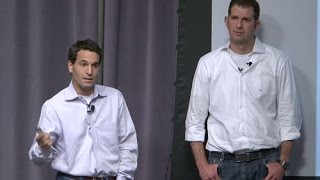
Wences Casares recounts building BlingNation, an early mobile payments startup that experimented with RFID tags and ran pilots with banks and PayPal. The team relocated to Silicon Valley in 2007, faced scaling challenges and competition from larger companies, and decided to regroup and relaunch.
Chapters
In 2007, we were in a— we were with our wives traveling. And Wences comes, we're in India, and he says, you know, I have this— let me put some context. This was before the iPhone even came out. The iPhone was not even in the market. I have this vision that we're going to be using the phone to pay. And that the phone is going to become a very important instrument in our financial world. And I think that there is an opportunity that it's going to happen and we're going to be spending the next 30 years of our life using our phone as much more than what we are thinking. And by that time there was no software, the phones were all locked, they had nothing, you cannot do anything on them. So I looked at him and I said, What are you doing? What are you thinking? And but by now after 10 years together, you build a certain level of trust, important trust at any level. I mean trust from being a CEO when he is not or vice versa, being able to talk and over-communicate. And when you get one of the partners with that level of motivation, the trust becomes an important aspect for success. So this— we— I was living at the time, I was in between Brazil and Venezuela, had a— we were both with small kids and this was February of '07 and by August of '07, we both had relocated to Silicon Valley. We both had moved our families here. We had no clue what we were going to do with it, but we decided that based on the trust that we have in our ability to work as a team, this was the place to do it. And we moved our entire personal circle with us now to here to start this.
It didn't feel so crazy at the time when we did it. As time goes by, we look back and it feels like a crazier move. We started Shortly after we started, the iPhone came out and that pretty much changed dramatically the mobile landscape. We started issuing— we started focusing on enabling consumers to pay at the retail location by tapping their phones, issuing these stickers that we call BlingTags with an RFID sticker. We do that— we started doing that with banks. We deployed with 17 different banks across the country in communities of less than 200,000 people. And we felt that that didn't allow us to grow the way we wanted. We were at the mercy of the banks to acquire more consumers. So we did a partnership with PayPal to go directly to the consumers through PayPal and bypass the banks. We did a pilot here in the Bay Area with PayPal. And then we found the problem was the cost. It was too expensive for us to acquire the merchants. And we improved that a lot, but we couldn't make it economic. We couldn't make it work. We started focusing on very large merchants and shortly after we started focusing on the large merchants, so did the very, very large companies like Google, AT&T, and Verizon with ISIS with their joint venture and even PayPal itself going after these very large merchants with a value proposition that we couldn't match. Subsidizing Google alone is subsidizing almost $500 million worth of hardware, a lot of— ISIS is subsidizing a lot of advertising dollars. And after— when that began to happen, we decided to regroup and that's where we are right now in Bling Nation, taking some elements, some small elements that we think worked and getting rid of a lot of things that we haven't been able to work, to relaunch hopefully in a month or so. I also find in this process that is a very hard process of iterating, changing, recognizing what has failed, go with something else. Having a partner who you can trust and share these impressions you have in as intellectually honest way as possible, it's invaluable. If we didn't have that trust, it would be much more likely that you're just— that you would just keep trying with something that maybe you know that is not the right thing to do. And I think that has become very obvious in what we're doing at Blink Nation.