Ahmed Omar's Journey: From MMA Fighter to AI Pioneer
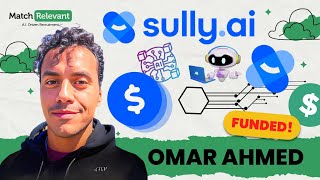
In this episode of the From the Ground Up podcast, host Jake Aaron Villarreal interviews Ahmed Omar, co‑founder of Sully AI. Omar recounts his early entrepreneurial ventures, from a teenage e‑commerce brand that grew to $55 million in sales to a SaaS company that reached $14 million ARR, and his parallel path as a three‑time gold‑medal MMA champion, explaining how the discipline and resilience from combat sports shape his founder mindset. He then introduces Sully AI, a LLM‑powered, agent‑based platform that automates clinicians’ administrative tasks—scribing, order entry, insurance follow‑up, and patient communication—to reduce burnout, improve efficiency, and ultimately lower misdiagnosis rates, a problem that affects over 500,000 people annually in the U.S. Omar details the technical stack: transformer‑based models, secure HIPAA‑compliant infrastructure, internal evaluation trackers that outperform average physicians on USMLE‑style metrics, and a team comprising ex‑Google engineers, a former OpenAI GPT‑4 evaluator, and a PhD‑level robotics patent holder. He emphasizes Sully’s focus on seamless user experience, cutting down clicks in EMRs, and voice‑activated workflows. The conversation moves to clinical impact, describing how real‑time AI insights can flag abnormal labs instantly, shortening the average 22‑day diagnosis lag and potentially saving lives. Omar shares market sizing—administrative and billing sectors together represent $15‑20 trillion globally—and outlines Sully’s funding from 500 Startups, Y Combinator, Goodwater Capital, and notable angels. The company is currently a 5‑6 person team, aiming for product‑market fit, profitability, and a “default‑alive” status in 2024 while working to eliminate LLM hallucinations. Finally, Omar describes the company culture of limitless ambition, self‑managed ownership, and a mission to bring one doctor to every human on the planet, inviting interested clinicians to contact him via email or the Sully website.
Chapters
Welcome to our podcast From the Ground Up, where we interview startup founders, exploring their journeys, their successes, challenges, and lessons learned. We hope you'll be inspired in discovering what it takes to build a thriving startup. I'm your host, Jake Aaron Villarreal, and here with us today we have Omar Ahmed, the co-founder of Sully AI, a startup with founders from Google and folks that helped build ChatGPT. They're on a mission to help doctors save time and help patients save lives. Ahmed Omar, welcome to the show.
Thanks, Jake, for having me. Appreciate it.
Great. So a little bit about Omar. Omar started from a very young age selling products online at 13 and saw how online commerce solved a vast supply and demand problem, making him eager to start more and learn more. He found a passion in building companies. He's built a total of 6 companies today, one of them which was an e-commerce brand company in New York City that grew from $0 to $55 million sales over 3.5 years. Then he went on and started another company, Odigo, that grew to $14 million in ARR in less than 3 years. Fascinating experience at such a young age, but there's more to your story than just building technology and businesses. You also are an MMA fighter, have a 3-time gold— you're a 3-time gold medal champion, and I'm sure some of that has translated into how you run a company or run a business. What led you into MMA?
That's a very good question. I think building companies is a little bit harder than getting punched in the face, I would say. Um, but I think I was really, uh, I really like the— it was for me like an art. I started, I started actually with boxing. I was really, I was really obsessed with Muhammad Ali and, you know, how how passionate he was, how driven he was. It was really— I, I really saw that. And I was always, you know, trying to protect, you know, my friends, protect my family. So his strength was something, you know, me and my dad, we used to spar when I was a little kid, um, like 7, 7 years old. We used to, you know, like, that's how we had fun. We used to fight. And, um, and yeah, at the age of 13, at 12, um, 12, basically I started basically learning how to fight, you know, and it made me more disciplined. It made me respect myself more. It made me, you know, more determined. It made me more, I would say, confident about what I could do. So I do nothing basically to someone that I can know, um, you know, if, if my strength is better than this person. So it developed, I think, discipline, a lot of things towards, you know, being a pro athlete. And you could see This, you know, and it's also in building companies, this 1%, you know, daily improvement and this, you know, this final fight, if you can work on yourself and make yourself, you know, this last 5% is what makes you a great founder to, you know, an average founder, and, or a great fighter and an average fighter, you know? And this is, and yeah, it basically was something that I would say helps a lot with me building companies, helps a lot with being persistent, you know, even if things are not working, finding ways. Because I think something really, really interesting story that I tell a lot of people about that I don't really share with a lot of people, but it's really interesting. The only person who took the gold Olympic medal in the Middle East, his name was actually Muhammad Ridha Ali. So we used to call him Muhammad Ali of the Arab, you know, and he's a heavyweight champion boxing. He took the gold Olympic medal. It was a big deal this time. And at the age of 14, I remember he came to me and said, um, Omar, I think you really should fight in another sport, you know. Um, I don't think that's your game. You've been training here for a year and a half. I don't think that's a good thing. You're not really, um, like, you know, these, these kids have been training since they were 7, 8. And at this point, it started to make me think, like, if I take his word and just, you know, go home from an expert, right? That's the expert person and go home and do nothing. I'll just do that, you know, my— I'll just keep repeating this scenario my whole life anytime someone's telling me I can't do something and or I'm not good at something. So yeah, it turned out that I actually like boxing. I took the, the first place and second place in Egypt for boxing, you know, like the second, uh, and then I took 3 gold medals in Muay Thai, you know, and then I started basically playing the, you know, the mixed martial arts, which I thought shows more strength than just boxing. And yeah, and it turns out that, yeah, I'm a great mixed martial arts player, so I'm a great fighter. Not necessarily boxing only, but I could still— great boxer. So I was able to get the championship of boxing and also, you know, mixed martial arts. So it was just this kind of drive that anytime someone tells me I can't do something, I have to try, you know, and I think trying is what counts at the end of the day.
I love that. And you're not the only CEO that is practicing in martial arts and MMA. I mean, Mark Zuckerberg and many others, you know, on the side are learning and growing and you never know, you know, what they're getting out of it. But it sounds like the discipline and the fight and the desire to compete, all those things really are what make up a founder. As a startup. I want to talk about your startup here because I think in a lot of ways it's going to resonate with people, not just from a technical perspective, but from a humanitarian perspective. What was the inspiration behind the idea of Sully when you first thought about it? And what was the main problem it was originally working to solve?
I think when we started building like when we started looking at the healthcare industry, how a lot of people struggle, even my co-founder, Nasser, had chronic illness, Chatania had 2 years of chronic illness, you know, our CTO and co-founder, so to see all these struggles, and we know what we're capable of as founders building companies, build tech companies, grew companies in many different industries, we kind of felt that there's not a central place that you could trust and go to in healthcare. And we, it felt like serendipity at some point that I kept asking myself this question that I never got an answer until I started building Sully, was why, why was my mom diagnosed with polio? She never walked. And the root cause was she got misdiagnosed, which happens today in the US with over 500,000 people every single year. So it started basically, everything started coming together as, You're tech builders, you know how to build technology, you know how to scale technology, why not do something in healthcare that could change and save people's lives? And this impact is personally related to us, as you know, my mom and the co-founders as well, like themselves, their health, and it just made perfect sense that this should exist. And we started actually with diagnosis, and then we started saying it doesn't really make sense to start with diagnosis while doctors spend half of their time on issues unrelated to medical, something that they didn't go to school for, we have to solve this problem first for them, and then we can help them with diagnosis or misdiagnosis, and then maybe we can, you know, build something for patients to use real-time to help them diagnose them earlier and get them to the right doctor earlier down the line, you know, so this was basically the vision of the company, and we just, you know, switched the go-to-market for it to make sure we can— we're not going to solve a futuristic problem while doctors today spend time and make mistakes because of their admin burden and burnout, basically, that they go through every single day.
So the product itself is an AI-driven application, AI agents, essentially, for doctors that helps them do administration, scribing, note-taking, follow-up, basically an all-in-one or encompassing platform that doctors can use that's going to automate the menial tasks that they typically do that they hopefully don't need to do much longer and helps them become more efficient. Is that kind of the idea of the platform?
Exactly. I think you articulated it pretty good. This is exactly how we're building it. And the reason we went with the agent approach is that we saw a lot of doctors are being offered a lot of other tools and it's basically, you know, sold as a tool. It will help you do X, it will help you automate a certain workflow, but it's not solving the biggest problem for doctors, which is the whole admin part, misinformation of patients, misinformation and insurance information, declining claims, you know, all these things. They still have to call, you know, insurance companies. They still need the medical assistant to call insurance company. So we started basically building with an agent way to basically, and I worked behind the desk as a, like in a clinic in Santa Clara for 6 months. And I started seeing all the scribe tools that are there today in the market. And I started seeing how, why are they, why are they not really working? Or why from 30 organizations, 50,000 doctors, healthcare providers that we, like we spoke to all these organizations with holding 50,000 doctors. No one's using anything. And we started looking at what is the gap here? And we started seeing the miss point of dealing with a human, you know, they deal with an AI scribe or like they deal with a human scribe that does many things. They don't only scribe, they add order labs, they add prescription, they do all these things. They can follow up with patients, they can call, you know, patients, they can call insurance companies for certain, you know, MRI approvals or prior authorization. So we started seeing, And we started saying, let's actually build it the same way as an agent that could help either a human scribe that manages many doctors or replace a human scribe. Because even humans, like people that scribes, they're just, you know, training. They're not really interested in scribing. They're just training just to, you know, shadow doctors for a couple months. And then there's like a very high turnover in scribes. Like it's a 3 to 6 month turnover because they're not really interested in scribe. Even one of the scribe, I remember people that were scribing, they were helping us build up the product. They were like, "Oh no, you should, the product should, could actually do this as well." And they didn't really care if it's going to replace them because it's not their future job that they're looking at. It's just something that they train or, you know, get certain, you know, internship done or rotation done basically for their medical study. So yeah, I think The way we built it in agents that we see it as like actually helping doctors and doctors can actually talk to it just the same way they talk to a scribe, to a human scribe, you know, doctor could ask it, can you send this email? You know, can you do— it does much more than, you know, an average tool that is there today in the market. So yeah, this is the re— so I think you perfectly articulated it and that's why actually we built it in an agent model or an agent-like model.
So if I'm a doctor, I'm in a small facility, I have my own practice, or I'm in a large institution, it's helping me do a few things. I can assume it might increase my productivity because I have something automating the menial tasks that I have to do, but I don't necessarily want to do, and it can automate it. Um, I also have to trust that it's going to work because this is information that could change a life. Talk to me about the team that's building this and what's the trust in your company that doctors can look at and say, okay, if they've done X, Y, and Z, I think I can believe in this product or at least try it.
Sure. So I think the team is one of the— I think the greatest assets that we have, like Chaitanya Garpia, our CTO and co-founder, built foundational technology that we use today, like Wi-Fi routing of Google Maps, you know, Google Assistant, the NLU and NLP part of Google Assistant, managed like teams inside of Google, 30+ teams inside of Google. And he built like 3 startups at Google. One of them actually used applied AI. Justania has built products with computer vision 12 years ago, you know, so it's really deep experience in, you know, RNNs, like AI and machine learning algorithms, you know, all these technologies and recurrent neural networks. And this is basically one of the things that we did in the past, basically a couple, 6 months, is how can we make it first secure, second HIPAA compliant, third very high performance agent-like model. So in terms of, let's say, the capability of the models that we built, we have also Sully. So Sully basically is one of the people who built GPT-4, one of the people who actually was working with the co-founders of OpenAI, Ilya and Greg Brockman, on the newest technologies of the LLMs, built the capability evaluation of the GPT-4. And he studied medical and he did it more than, you know, he studied Duke Neurosurgery, been researching medical, like been an AI researcher for over 10 years, been a medical student for a couple years. So he has this unique perspective of, How can we build safe, you know, safe models for doctors to use? One thing that we do is we have internal eval trackers on every time doctors close a note, we run an evaluation like metric across this note compared to the notes we generated and we keep improving the models every single day. So there's actually, and the current trackers, the current metrics that we built is actually better than an average physician. So it exceeds the USMLE tests by over 85%, which is higher than an average physician. So you can consider that any output that the model generates or Sully generates is actually reviewed by a better, by a better than average physician. So it's basically, and, and there's a lot of things that we do that we require doctors to approve before we go ahead and do it or automate, which basically keeps some kind of, you know, gateway or some kind of approval from doctors to, you know, get certain information done or get a certain automated action done. So we also keep doctors in the loop for some of the tasks that might affect people's lives or might basically be with diagnosis, all these things. We actually don't sell any diagnosis, you know, AI agent, although we do it, we have it, they could turn it on and off, but it's very key basically to us to see like what, how is our diagnosis getting better every single day. Compared to, you know, the physicians that are working on it? And how can we actually, once it exceeds those physicians' performance, we can actually share it and give it— give access to the physicians and say, hey, this can help you misdiagnose better, like decrease the misdiagnosis and diagnose better.
So just to reiterate, your founders, which by the way, thanks for sharing that, one came from Google.
Yes.
15 years, something like that. Is that correct?
25 patents, PhD in robotics. Yeah.
And he left to join your company?
Yes, for the first time in 15 years, yes.
And your other founder helped build ChatGPT specifically for medical questions or just in general, the functionality?
The capability evaluation of the model. So any output the model creates, he was building the capability evaluation of it. Like, yeah, the eval trackers, all these things that he actually built for us from OpenAI.
I mean, it's hard to argue why that team couldn't succeed in building something really cool. I love the purpose of what you're working on. Um, tell me a little bit about, you know, you're an AI-focused application company, and we had a chat a few weeks back and you mentioned Transformers and how they help your company or how they are supporting what you're building. Just define what a Transformer is.
So I think it's a very good question. I think Transformers are, I would say, recurring neural networks that are working parallelly, like in parallel to get to a certain output. And I think the way Transformers work, I would say, is very like, it's a parallel sequence-to-sequence approach that improves the basic Seq2Seq, you know, recurrent neural networks breakthroughs that happened before. And it works in parallel to come up with a better output than just a normal machine language recurring neural network or a normal machine language sequence-to-sequence. Parallel in terms of they can propagate certain— I would say they can propagate certain inputs and encoding and decoding or embeddings parallelly to each other to come up with the best output, best reasoning, you know, best, all these, you know, all these best reasoning, best output, best performance. So I would say that's my definition of a transformer. Most of them are now decoders like ChatGPT. So it's only decoders. The embeddings basically is simply, you know, The custom embeddings or the embeddings of any transformers is basically giving, it's like giving a human brain a certain piece of information and classifying it and saying this piece of information is X, but it also could be Y in other, you know, in another, you know, embedding, custom embedding. And transformers tend to perform really good with high quality data rather than large quantity data because they have this aspect of, you know, evaluating which, you know, which input is, uh, which output is much— would perform better than another output. That's why it works in parallel, it works in multiple sequence-to-sequences, um, to come up with the best output, you know, for us. I think it— a lot of people debate like how, how LLMs work, um, or how they should work, but I think it's very similar to human brain, specifically with approaches like meta-learning. And, you know, you know, the meta-learning approach that said, okay, if we get a baby and teach them how to jump, you don't really need to teach them that they need to jump right, left, front, or back. So meta-learning is basically similar to giving a transformer how to jump or skip, and then they should be able to jump back or, you know, jump right and left, they tend to do really well with these kinds of tasks because they have some reasoning, they can collect a lot of, you know, a lot of inputs at the same time, a lot of embeddings at the same time. So yeah, I would say that's my simple definition of a transformer.
And how is it helping your platform to help doctors or help the functionality of it?
That's a very good question. So I think— so think of a transformer like a brain, like just to simplify it, it's a brain. And for the past 200 years, there's never been a brain that you could upload the most recent medical researches every single day regardless of the amount of information. So think of the gap between you as someone with chronic illness having certain pains and there's every single day there's new medical researchers about your illness and there's no way that the human can keep up with that. And think of this gap as transformers actually embrace, like LLMs could help actually bridge that gap, which could change many, many lives in healthcare, millions and if not billions of lives in healthcare. So think of this gap that it was never possible to fill before. And now it is. Now we can bridge that gap. Now while you talk, we actually show you that demo. While you talk, the model can actually propose some diagnosis. We have it for doctors now to turn it off and on. It's really amazing to see, you know, if they prescribe something on the call, the AI model can tell it, hey, by the way, prescription you gave was a little bit off or could mislead another prescription that you gave 2 months ago to this patient. So all these gaps, it can now be filled with transformers with the most recent data, like daily data, like minute basis or hour basis medical researches.
Great. You know, as you're building your products, what have you learned from doctors that have told you about your solution, or what is it that doctors like that they don't have today in the market, What are some things they just don't like about technology? Because there's so much technology out there that's archaic, that's been in healthcare for years. It's been trying to be disrupted for a long, long time. And, you know, we've got a new generation of doctors, you know, they expect to have modern technology, a modern UI, better functionality, mobile integration. Like what, what, what are they teaching you as you build your product?
One of the most feedback that we get from doctors, other than metrics, of course, so one of the doctors actually are using us more than 10 times per day now. So they're using us with every single visit. So they, and it's a new doctor, so it's someone that wasn't used to do that, and now they started doing that every single day. So other than the feedback we get from doctors, I think one of the biggest feedback that we get is the user experience. I think, and I mean this with really like stressing on user experience. Anything they try to do in their current EMRs takes like 10, 15 clicks, 20 clicks, 50 clicks, and they basically have certain workflows that you don't want to change. And with, let's say, older generation doctors, being in the flow of their workflow was something that, like, the first thing we started with. Decreasing any amount of clicks, removing any signups, any paywalls, anything was the first thing we wanted to do. A newer generation, we could see that there's no way for them they're going to use Epic or, you know, all these old systems. They're like, no way, that's like really old. But if they have to work for an organization that is using this system, they need another way to practice, or they need another tool that they could use to practice. So I think the biggest feedback that we see is easy to use. It's really easy to use. It's really easy to use. And, and I think that part was really missing from healthcare, and the excuse from all those startups was, "Oh, the regulations," or the HIPAA compliant, or, or, or, and we were, we found ways beyond that, and I think that's one of the things that we like pride ourselves to have, like user experience, user experience, user experience is number one thing, and then we see what kind of regulations we need to go through, what kind of, you know, hurdles we need to go through, but the first thing was user experience. Now we activate Sully by saying, "Hey, Sully," 'Can you send an email to the patient?' And it will do it. So, so less than 1 second, less than like 3 seconds, voice prompt with no friction was something we wanted to do. So it will create a JSON file, build an email template, add the email of the patient, and just wait for you to hit send. Or you could just say send it. So it's, it's really, I think it's in the healthcare industry that the user experience part was really lacking for the past years. We were shocked as well. To see like, why do they have to go through all these clicks to add a lab order or send a referral to another doctor or add a prescription? It was really funny to see after all these years in the Bay Area, we thought there's gonna be like flying cars and robots everywhere, but yeah.
You know, the tactical side of it, it sounds simple. You have a platform, you integrate on top of technologies that are already there. It's better. User experience. It helps take away administration time and, you know, give doctors an area to focus on things that are maybe more important. What's the end goal for the vision of the product? Where does it save a life? Where does it improve someone's health? Like, where is the story to, you know, helping humanity?
That's a very good question. So we started seeing, like, by building the AI medical, assistant, we started seeing a very clear road to having a real-time diagnosis or having patients who diagnose real-time, and then they can be sent to see an expert or they can initially get their labs done or lab tests sent to certain like LabCorp or, you know, or prescription sent to a pharmacy. So by decreasing, there's a huge, Time to diagnosis gap, there's almost 22 days on average to diagnose a patient today in the US. And there's going to be a shortage of physicians, of 100,000 physicians, and by 2030. So the way they practice, the way healthcare is currently built or designed should completely change. So the only way to do this is to see where's the biggest gap. Now you see websites coming up and say, we can help you see a physician in less than 4 weeks. So that's a marketing approach. So And we think it should be real-time. So bridging this gap of getting a version, maybe an FDA version approved that could help diagnose certain pains or certain reasons of visits, at least at the beginning. If you diagnose earlier, you can save, you know, the problems earlier that you can basically have a treatment assessment plan earlier. You could save lives at the end. If you have all the medical information of this patient, all the medication, all this data is in one place and in one model. You could give real-time feedback to doctors to say, "Hey, this is a risk. This is something that they could hurt. This is food that they're allergic to," you know, in real time. So doing all these small, you know, building these small puzzles, pieces of puzzles, will at the end save a lot of lives. Like today, you have 500,000, 450,000 people, 46 people die every day because of misleading prescription or misdiagnosis. There's also a reason of the death of late diagnosis as well. Removing this gap to getting real-time diagnosis that is FDA-approved, that is fast, that is linked with the local infrastructure, you know, the pharmacy next to your home or a lab next to your home, you know, that is linked in all in a single place can help, you know, save a lot of lives if we are able to get this data earlier. For example, something that we do now an abnormality coming into your EMR when an ab— like, let's say a lab result coming back. So what happens is doctors send the— add the lab results on the EMR, lab orders on the EMR, the results come into the EMR. The results came in Friday night and there's one abnormality that if it's a certain— if it's passing a certain point, a doctor's told the model that, hey, if it's this, if the WBS is passing a certain point, please send patient to EMR right away. So before Sully, What happens is the nurse comes back on Monday, tries to reach the patient, probably doesn't see the lab results coming in by Monday or Tuesday, can basically reach out to the patient on Wednesday, call the patient, does not answer, finally connect with the patient on Thursday and tell him, "Hey, you have to go see the ER." And that's what, Friday, Thursday, that's 7 days. And imagine what could happen in these 7 days if Sully now is, in your EMR can easily say, hey, it's Friday night. Once the lab results come in from the labs, it could say, hey, go see the ER right away, you know? So at Friday night, instead of spending all the 6 days to get to the patient, and that alone could save a lot of lives if it's a very serious point or an abnormality in the lab results.
That's amazing. What's even more amazing is 100,000 physicians or lack thereof in the next 10, 15 years. Hopefully AI can help solve that problem. It sounds like, you know, you're starting with administration, which will kind of gain more traction as it gets deeper into the process of healthcare. You started the company and you got funding. You've got a great team. Who are some of the backers of the company? Who are some of the people that are funding the company?
We have really good names like 500 Startups. YC, Goodwater Capital, it's a VC in Menlo Park. We have very good names, we have really good angels, we have like people like Haroon Mokhtarzadeh sold this company to $1.27 billion, sold Truebill to Rocket Money for $1.27 billion. We have Brendan Driscoll sold this company to Spotify, Sequoia actually scouted us for this round, so we do have amazing, I think, people on board in terms of angel, a few Saudi angels, healthcare Saudi angels actually, so angels that funded like or basically own hospitals in Saudi and all these things. So I think there's a lot of good names on board, and I think, yeah, and I think there's amazing basically people backing this company, and there's amazing people that see vision of this company and how this could be big in many, many ways. So yeah, I think we have pretty good names on board. And I think this round too, I think there's a few good names that are joining as well. We have a new round opened up for our Seed+. So yeah, I think I'm, yeah, really proud of the team, the team and the investment team as well, like the investors as well. Really, we really like everyone on board now.
That's really great to hear. Sounds like there's a lot of upside of not just getting people on board, but, you know, growth in the company. As a company today, how big are you?
So we're about 4. So we're 3 co-founders, 1 founding researcher, and I think, yeah, and we have a few like advisors, you know, partners. So our first, like, one of the investors was our first user actually that helped build the product. He's also, you know, building the product with us. We have people from Kaiser actually joining on Friday, like one of the CMIOs joining on Friday, the team, as a, you know, part of the team. So I would say currently we're about 5 to 6 people, 5 to 6 team members.
That's great. You know, as you look in the future here, I'm sure you're going to be growing. What, what type of culture are you trying to build? What would make it exciting for someone to join if they heard about you, or, you know, maybe you're at Google and want to leave to a company that's building a startup?
Yeah, I think one of the most things that I value in the company culture is there's no limits. Like, there's no limit. Like, there's no ceiling of things that could be possible. And that's one of the things that we made sure to maintain in the culture. Anyone saying impossible, or something like that. We don't have this in the culture. We don't have like, yeah, because we've done things previously in our lives that was completely impossible or kind of, and many, many people over and over told us it's impossible, and we still achieved it. Sometimes broke the numbers that we provided to investors as well. So the culture is built that everyone, everyone is basically has no ceiling, which is the gap of learning is extremely high. Everyone in the team is extremely exceptional. So for someone to pass through, you know, all of us, it's really hard. But if they did, it's like a really big, you know, learning experience. They can— every single Saturday, we run through research papers, see what we could actually do from research papers in our company and what could actually improve or solve some problems that we have today or challenges that we have as a company. So, the company basically, the people in the team, even we were— I'll be honest with you, we were kind of shocked when people like Chetanya working 15 years with leadership at Google, Sully Chen working with, you know, Ilya and Sam Altman coming to us and saying, "You guys move faster than like companies I worked at," or, "I learned a lot from you guys." And I think it was just, you know, the culture of learning and, you know, nothing is impossible. If you want to try an experiment, you should try it. It shouldn't be a thought. And the way we build things, you know, from putting the customers and the experience first and then working backwards from there, you know, taking like responsibility of anything. We're all basically as well technical, so we all did coding, did engineering at some point of time in our lives, so we all understand each other's pains. And yeah, we trust, I think, before getting someone on board, we trust, like we try to make sure we can trust them with what they do. So we basically give them the freedom to do certain things. Everyone in the company is self-managed. Everyone has a mission to achieve either in LLM performance or in application, you know, speed or in user experience. Everyone has, you know, a core direct responsibility like a DRI. They're self-managed. Everyone is driven by the mission as well and the vision of bringing like, you know, one doctor to every human on the planet. That's our ultimate vision. And I think, yeah, and I think that's the kind of culture we have. Someone who's not driven, someone who's looking for a full-time job or like a typical full-time job, 9 to 5, I don't think that's— yeah, I don't think they'll fit in Soli's culture.
Sounds amazing. You have an amazing journey here, and I know you're kind of in the middle of it getting started, but actually have product in the market you're getting revenue from. What's next? What's 2024 look like for you? What's on the horizon in the roadmap?
Yeah, 2024 is really exciting. First thing is removing hallucinations from LLMs for good. So I think in 2024, we want to reach to an enterprise-level technology company where it can scale to hundreds of thousands of concurrent events a minute or an hour. So I think 2024 should be— so I think we're very close, like we're early seed, but we still are very close to product-market fit. We can see very good early signs of, you know, 50% of the people are using it every single day, um, 80% of the people are using every single week. So, um, we could— there's very good signs of product-market fit. I think reaching, hitting product-market fit, reaching profitability, default alive mode is the goal in 2024. Um, we're raising this round actually, we want to make it the last round that we raise that we need to raise. Other than that, like beyond this round, we shouldn't be raising that we need to raise. Should be a default alive, profitable company, at least close to profitability, but it should be a default alive company. And that's the goal for 2024.
That's great. What's the market opportunity? I know as a company you go out, you raise funding, you've got to provide some numbers and some opportunity to scale and show what that looks like. From your view, from your research, what's that look like?
So now the research says $4 trillion. 90% administrative workers. The billing is a $13 trillion industry. So together, it's like $15 trillion industry. I believe it's more than $20 trillion. The reason is the possibilities that the AI will bring to this industry will open up even more ways of not only monetization, but more solutions that will basically be accord features to doctors, patients, healthcare providers, you know, insurance companies, and any healthcare basically organization. And I think now with all this admin work and paperwork, it's a $15 trillion industry, or let's say worst case, $4 trillion industry. I think it's actually way more, and it will be. If it's not way more today, it will be much, much more. And the reason why I think so is it's directly related to people's lives, and it's basically a need, it's not a want. Healthcare, 8 billion people, and yeah, I think it's not really— no one has built something that is as big as what we envisioned Solly could be, and yeah, I think with all these technologies, I think it'll open up a lot of bigger markets as well, and it will improve lives as well. Yeah, 100%.
You talked about 8 billion people. You're focused on the US. What's the opportunity internationally?
So that's why I told you it's more than $20 trillion. And I think the problem worldwide, basically, it's hard to track some countries like Egypt, Africa, you know, very, very poor countries that have no access to a lot of other things. Most of the records are not even electronic, so it's really hard to track in other countries than the US. The global opportunity, I think, is more than $20 trillion, and that's why I said it's the whole global— the whole opportunity is more than $20 trillion. You know, we can track countries like Africa and Africa, or, you know, countries in Asia. We can track those, but they do need the product. Physicians, actually, their physicians need the product more than the physicians here. There are very few access to education as well. So that can bridge a bigger gap. And yeah, we think we scaled the company before globally, so in 3+ countries, 4 countries. So we know how to scale companies beyond, you know, just one country. We know what it takes. We know, you know, how to structure this. We know how to build basically a copy and paste model basically in any country we launch. So, So yeah, and now Transformers tend to do— Transformers were built for language translations first, right? And they tend to do really well with different languages. So they actually understand, like, most of the Transformers now work with 26+ languages. Some of them work with 90+ languages and dialects. So the barrier of, you know, languages and translations and all these things is also really— became really simple after all these innovations.
Ahmed Omar, if I'm a physician out there or a healthcare provider or a hospital or a network of hospitals, they want to try your product, they want to know more about Sully, where do they go? How do they find you?
They can email me anytime at omar@sully.ai. So Omar, O-M-A-R, @sully.ai, or they can find us at sully.ai. They can schedule a demo with us. They can email us if they have any questions. Yeah, I think they can find me on LinkedIn. And yeah, I'm really happy. I talk to customers every single day. I don't think anything makes my day than talking to users, either potential ones or current ones. I go to the clinic maybe 4 times a week now, to one of the clients' clinic, make sure everything is working fine and the new features are actually helping and it's not a nice-to-have features, it's a must-to-have features. So yeah, they can find me, Basically anywhere, yeah. Either email, LinkedIn, or use the platform, the website.
That's great. All right, well, thanks so much for joining here. A big shout out to you for having the courage to come on and share your story, as well as I want to thank the listeners for listening. World's the Word means the world to me. My name is Jake Garen Villarreal. I'm your host and look forward to catching up with you all on the next episode. Until then. Take care. Before we wrap up, I want to give a big shout out to all the entrepreneurs that have joined to make this podcast possible. And for all the listeners, for listening, it means the world to me that you chose to spend your time with us today. I'm your host, Jake Aaron Villarreal, signing off for now, but can't wait to connect with you all soon on the next episode. Take care. This show is sponsored by Match Relevant, Match Relevant is a company that helps venture-backed startups find the best people in the market, and they do it in 3 simple steps. First, they sit down with founders to understand their story. Second, they tell their story into multiple candidate channels. And third, they schedule interviews within 48 hours. Find us at matchrelevant.com to learn more about how we do it.