How to go digital with your business, with Ahmed Omar
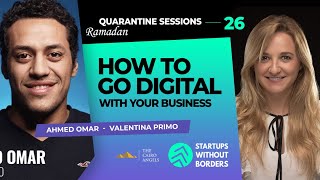
Ahmed Omar, founder of car-parts marketplace Odigo, breaks down digitizing a business in three steps: build an online identity, get found through SEO and ads, then scale via marketplaces and reviews. He walks through real examples from barbershops to rice suppliers, with budgets starting at $50 for an MVP.
Chapters
Should be going live in 2 minutes.
Meeting is now live on Facebook. Are you sure the meeting is not gonna cut in 45 minutes? Do you want us to restart another one? No, no, you paid for Zoom.
Oh, I'm telling you, I tried everything.
The guy is $2 billion rich now. Yeah, Eric Yuan is $2 billion, $7 billion richer actually.
Yeah, yeah, well, it's an opportunity the same way you took it. I think we're live right now. Welcome to the quarantine sessions, everyone. We are super excited today. By the way, happy Labor Day to everyone staying home. We hope we're staying home and you're staying Safe. Today we have a session about going digital with your business, and we have a very, very special guest with us, an entrepreneur that has managed to grow his business in an incredible, incredible way. His name is Ahmed Omar. He's the founder of Odigo. Ahmed, thank you so, so much for being with us today.
It's my pleasure, Vi.
How has it been with the quarantine for you?
Ahmed Omar: It's been good. We grew as an e-commerce. You know, every industry has its ups and its downs. I think a lot of industries fell through the coronavirus or the quarantine, but we had two options. We had either to say, oh, we can't ship anymore, or we use it as an opportunity. So thank God we had a team with a very good mentality, started working together, specifically Ahmed Omar, he's one of the people who, he's the one managing the people in the marketing. We brainstormed and we started launching big campaigns during quarantine, as in stay home, stay safe campaigns, so it helped us grow 10x, I think. From 8 to 10x.
You were telling me before, right? Yes. This is incredible, a 10x growth in times of global pandemic when every entrepreneur, every business is struggling, right? What do you think? I mean, how did you manage to achieve that? What was the key secret to that?
I think it was our mentality from the beginning, but we had this instinct that there's time that we have to grow. And maybe it's when you get a lot of hits and a lot of failures, at a certain point, you start refusing those kinds of failures, so it's kind of a shift that you don't have to accept that you failed, so no, even though I have time and we have resources, we started building partnerships in a few hours, and in a few days, we were able to launch a very big campaign with the help of my, of course, with the teammates, I think also, Yeah, the marketing and the head of people and marketing in the organization. We started building a few strategies to launch it to the public during the virus and during the stress, I think, of the people.
Right, for those who don't know Omar, I personally consider Omar a mentor. He is a master, a genius that cracks all the digital marketing techniques, and he's actually mentored our startups, our startups and entrepreneurs and Startups Without Borders to take their business digitally. What I want to know, Ahmed Omar, first thing, what is the first step an entrepreneur should do to go digital? I know that you have a full webinar prepared for us today, so we can start rolling that out. But I want to know, can every entrepreneur, can any entrepreneur on any business go digital? Because this is what many people are wondering today.
You see, I I don't know what can't, so there's always like, if there's a service that can't go digital, there's always a certain feature that they have that can let them go digital. So let's say a barbershop, so I always give this example during the corona, you know, the barbershop, I knew one of my friends that had a barbershop in a very expensive place, and we were brainstorming of how we can solve this problem of people can't even trust the equipment, people can't, like, they don't trust anymore the barbers and everything, so we built a very small Facebook page, and we started targeting the people around the area, and we started sending those barbers to the people at their houses, and they just had to pay extra money to buy a new kit every time they go and visit them during the corona, So I think there's nothing that can go digital. I doubt there's something that can go digital, maybe except like selling planes or selling yachts or something like that, it can go digital, but at the end of the day, the transaction will be offline at the end of the day.
Right, right, right. Yeah, we're seeing industries like the travel industry that is very, you know, struggling a lot in this period, but there are several companies that have started reinventing themselves, adding VR to their services, so there's also that opportunity, right? We have on the one hand all the going digital space, and then on the other hand, adding value, right? And finding sort of new revenue streams.
Yeah.
So can you take us, can you walk us through the steps of going digital? If I'm a business and I still do not have digital presence, I'm not selling online, where do I start?
So you see, I learned that from Ahmed Omar Omar. He's one of my people that works directly with me. He's one of the people that I learn a lot, and we learn a lot from each other. So when me and Ahmed Omar was talking, it was more into the first thing that we had to do is to make sure there is the right people, there's the right— we set the stage, as they call it in many books, setting the stage. So we have to choose our people to make sure they can manage this. So the first thing I have to do is choosing the team that can help us through this kind of transformation. The second thing is start seeing where, where do we stand? Do I have an online presence? Do I don't? And identify what you guys need to be sure to be online first. So after being online, having an online presence, having a platform, having a website, and then there's about how to grow it and how to make sure you reach out to millions of people with, of course, the lowest cost, as that's why they call it growth hacking. So that's pretty much the process. It's pretty simple. It can be done in 5 days. It can be done in a sprint week. It can be done with, but with the right people, of course.
Right. Do you want to take us and walk us through the steps?
Sure, Tamim. So yeah, let me— okay, so you guys see my screen? Yeah, everyone can see my screen. Okay, okay, so that's basically a very small presentation that will help you go through, like, identify what you guys need to go through the next stage if you want to go digital with your business. So the first thing I sold online was when I was about 14 years old, I sold it on Dubizzle. It was a marketplace that I sold my father's motorcycle online, and then I started building a network of people who wanted to sell their vehicles, and then we started making a lot of money during when I was in school. It was me and my friend, his name was Khaled, it was me and Khaled who built this, and we started onboarding a lot of people that want to sell their vehicles and their cars, but they didn't know how to use the internet back back then in 2006. And then I started, I came back, I came to Egypt for university, I started selling on Souq and Jumia, and then we started making a lot of revenues and a lot of profits. From this experience, I got a job opportunity in the US, and then I came back with a lot of experience to start Odigo.com, which is my marketplace. It's a car parts marketplace, it holds over 300,000 products, we have achieved over 100,000 visitors monthly, and we're growing in Saudi Arabia and in Egypt, and we're expanding soon to other countries too. Right. So what's the first thing you need to make sure? To make sure you can take your business digital is to kick out the troublemaker. So the person who is not convinced with going digital needs to leave the room.
Right.
So if you have, if you have any kind of, uh, of, uh, doubts, that's not gonna help because we can all sit in doubt until the corona, or until the quarantine is over, and then we'll see that the past 6 months we lost so much money. Um, but the first thing you need to do is to make sure your mind functions in a way that understands that, uh in every crisis, there's always a way that you can do more. So there's always a way that you can do more, either in investments and buying more products because people are selling a lot of products with losses because they can't pay. There's always an opportunity, so much more. So the first question you need to ask yourself is, what type is my business? and can it be digitized or not? So what is my business? Is it a retail business? Is it a shop? Mahal? Is it like a store, a small store that sells electronics? Is it a brand that manufactures products? An Egyptian cotton? Or is it a service? So that's the first thing you need to know. How can you digitize it? Yeah, tell me, V. Let's clarify one thing.
When you talk about digitizing your business, we're not just talking about e-commerce, right? We're not just talking about selling online. What are we talking about?
We're talking about being on— selling, like operating during quarantine. We're talking about not only being online, but also selling online, but also growing your business online, but also being there after the quarantine is over. 'Cause a lot of people ask me this question is, what is, what if the quarantine is over? Will you make sales? So my nature is to collect a lot of nos from people. I like to go and get a lot of nos. So a lot of people were like, a lot of investors who was interested were like, yeah, you're growing now, but then after the quarantine, what's going to happen? So when my reply was that actually people got used to the service, and they saw that there's no sense for them to go outside and to try to get this same service with an effort, right? So why not do it at home, right? So you can go out for parties, for events, for dinners, but they can still get the service while they're home, right?
That's one of the biggest things that you have taught me personally, Omar. I remember once when I asked you, how do you overcome rejection? How do you overcome all the nos from customers, and you told me, change your mindset, start collecting nos, and for 100 nos, for each 100 nos, you're gonna get a yes, right? So it's a very important mindset shift, and it completely changed the way I see things as an entrepreneur.
Yeah, I got this honestly, I got it from a book called Thick Face, Black Heart. It was a Japanese master that actually mentioned the dynamics of everything, and he was explaining the same module, the same concept. That I told you about, but it was just a blasphemy over reading. So this is the way everyone I think should think is that they need to digitize. How can they digitize their business? And it doesn't matter after the quarantine, are they going to grow? Are they going to stay the same? At least they have an extra channel, even if the quarantine is over, they have an extra channel to make sales on. So the first thing, as I mentioned, is you need to set the stage. Make sure you have the deciders, the facilitators, and the finance experts in the team, like maybe one each. You don't need a developer, you don't need a marketing guru, you don't need a lot of things. You can just read and open Google and start typing what you— from the keywords you'll see from the presentation. You don't need a lot of resources. Because I think in Odigo, we've been there for 2 years, we haven't had a lot of traction, but we are going to in the next few weeks. But why didn't we grow rapidly? Because we had the wrong team at some point, we had no resources, maybe zero resources, we had no investments, and we stayed there, we started building solutions to stay in the market no matter what, and that have helped us overcome a lot of challenges. So the first thing you need to do is set the stage. Yeah, so whether you're a retail brand or service, you have to go through these 3 steps, build your online identity and presence. If you have them, then you will start listing your products or services on marketplaces, aggregators, and everywhere. If you have those, then you will need to do an omnipresence. An omnipresence campaign or an omnipresence means that you show up on every screen available to the user. So for instance, if I'm running YouTube ads, if I'm running Google ads, if I'm running ads over other websites, if I'm doing SMS campaigns, email campaigns, a few other types like SEO and search engines and Google Shopping campaigns, then that means that I'm showing everywhere. So that's called omnipresence. At this point, you start to stick to the subconscious of the user, right? Yes.
I, so I have a lot of questions, but when you talk about omnipresence, do you— because some services may not be relevant to some platforms, right? So what are we talking about? So for example, YouTube, do you need to— so you want to run YouTube ads, do you need to create a video? Entrepreneurs may sometimes worry about the budget required for the ads themselves, for the sort of content that each platform requires, right? So how do you choose those platforms?
So I think if you use like Fiverr and a few other tools, it will help you build a video with $5, it will help you get the voiceover at $5. So there's always, you can always find a lot of excuses not to do the content because of the budget, but there's always, when it comes to, if If you can afford $20 or $50, you can build a full content that you guys need. So you need the $5 for the design, you need $10 for the video and the voiceover, you need $5 for running the ads every day. So at some point, there's a lot of tools now that can keep you away from saying, "I have no budget," or, "I can't create a video." So there's a lot of tools that you can create the video out of pictures. You could just upload pictures, and it will create your video, right? So this is what I, uh, so this is why I mentioned at the beginning you have to be able to change a bit of your mentality and find solutions to grow.
I love this hustler mindset where there's no, like, no is not an option in this case, right? You always find a way, you always find, and, and content is so relevant, it's so much related to it, right?
Yes.
Yeah, Salah is saying interesting advice from Ahmed Omar. Mohamed Marawi saying, "Definitely, everything can go digital, even taxi drivers and bus services did." So take us through these 3 steps, basically.
So the first is building your online presence. The first thing is the identity. What kind of identity do you have? How can you build it? It's pretty simple. With a few tools, you can do it. If you're a retail store and you want to do an e-commerce shop, like a shop that sells products of your own store, you can use like BigCommerce, Shopify, Zvendo if you're in Egypt. So those tools are very easy and simple and very affordable that you can use, that you can actually build a website in 3, in actually 3 business days, so 72 hours. Odigo was first built in a camp in Gouna in 5 days, it was built as a prototype. We built Odigo, it was called Zero first, and we built Odigo in 3 days. We started making transactions in the 4th and the 5th day. There was no products, there was no anything that we had, and we started making transactions over the website. So yeah, so if you're a retail store, I think those 3 options are very good because it makes it pretty simple for you to upload products, download products, to change the prices, to add plugins for marketing. Like if you want to add Google Shopping plugin, you can just add it and put a budget, and it's pretty simple. You wouldn't need to be a Google expert or a Facebook expert. So they have a lot of plugins that you don't need a developer to do it. And if you need like a website for selling your real estate or something that you would need the customer to just fill a form to get in touch with you, and so you can make the transaction over the phone or offline, then you can just use GoDaddy or Wix. For the services, like if you have like a service, like if you are a service platform and you have like end-to-end point, customer to customer, or peer-to-peer, you can build it using WordPress or Magento. So these things, you can find freelancers online with the services, like if it's a bit complex project It can be built via WordPress, and you will find a lot of freelancers online, they'll do it for $80-$100 max to build your own website.
This is a very important piece of information, the budget is not as high as we tend to think, right?
Yeah, it's not as high as you tend to think, yeah, of course. It can scale up to be very high, but it's because you're growing the business. So currently at Sudigo, we spend so much, but the business is growing. So the numbers are growing, so you'll always be able to manage that kind of expenses, right?
Right, right.
For after building a website, what's next is your online presence. You need to build your online presence. There's very few things that you can do to manage listing your website on search directories and engines. So you just go online and start giving Google the information that you are there. You can just apply on Google, Google My Business, or Bing Business, or Yellow Pages, and add your website on Yellow Pages, or Yahoo for Business. So those are pretty simple things you can just do and start listing your business, so it can be out there in the, in the, in the, in the, in the, on, on the search engines, and, and Google can start indexing those results and start getting your website for your service. How to do it and what's the best way to do it, that's a long, like a bit, we can stay like a few hours on it, like optimization and how to make sure you add those keywords to certain titles so you can show up when people search for certain things. So actually, in the keyword car parts, it's a very competitive keyword in Saudi and in Egypt. In Arabic, it's "kata'agyor," we show up on the first page. Organically with no payment, actually after the second most expensive, the second biggest website in the world that sells car parts. So the best website in the world that sells car parts are carparts.com, below it odigo.com comes.
Right.
So this is how we managed to, we managed something called findability, how people can find us. So we started building it with ads, then we started organically adding car parts keywords in our content. To make sure that Google says, oh shit, they have a lot of car parts keywords in their website. That's a car parts website, we can show it to the users.
Right, right. Yeah, there are— I mean, it depends on the platform that you use, right, for, for SEO. Uh, for us, for example, we're using WordPress and we just use a plugin called Yoast. Yes, that has been working.
Sorry, Yoast SEO.
Yeah, yeah, and it's pretty good in terms of SEO. We're getting pretty good results. Organically as well by listing every piece of content. As you were saying, content here is key, right? So you list the content and the keywords, and then that helps people find you.
Yes, exactly.
Right, right, right. Um, you were saying manage findability. Can you explain that concept a little bit better?
Okay, so a lot of people, um, is a lot of people, they build the business, they build an online presence but people just can't find them, so it's like they search with their own names, and they can't find them, so sometimes you write Startups Without Borders, you'll find the blog, right? So you need to find the website first, so that's what's called managed findability, you need to be findable for people, even if they search with your own name, so if you're not listed on search engines and directories, you will not be findable.
Right.
If you're not working a bit with your content to put— to add some keywords to your website, people won't find you. So that's what's called findability. You need to be findable, and the first basic stage is findable on your name. Like, your business name needs to be findable for local people, right?
Right. So we're talking about two different things, right? We're talking about SEO, search engine optimization, on the one hand, but also we're talking about the directories that you just mentioned, right? Being out there in the directories. These are two different ways of sort of showing up, right?
Yes, yes, adding your business to directories is the first step where it comes that, yeah, at this point we will be findable. Google will find you, crawlers will find you, it will index you. So at this point, it will show you to the users that are looking for those kinds of things, right? For your services. And then build the social presence. You need to build up the pages, the web pages, like Instagram page, Facebook page, Pinterest The more you can do, you should do. Like if you want to have 25 accounts on Twitter, Pinterest, things that Egyptians don't even use, you can actually add it because you're going to be more findable. If the user found you through Pinterest or Twitter or YouTube or Skype or whatever, or Tumblr or any kind of social media, it's better to keep listing your business. Right, all over, right?
Is it more important to have many accounts, many different platforms where perhaps content is not updated every day, or to have, you know, fewer platforms but having regular content pieces?
Yes, so what you just said is, you said that the, we call it the diverse, but you are focused. So at the diverse, you're there on all platforms but you focus on 2 or 3 channels like Instagram and Facebook. So yeah, of course, you have to focus on 1 or 2 until you master them and get the most out of them, and then focus on others. But of course, you have to focus. So you should— but at the beginning, to be findable, you have to list your— keep listing your businesses. Because what happens is that social media platforms, they go and verify this domain with Google. So the more verifications you guys get from social media platforms, the better Google says, oh, that's a legit business, right? So it keeps showing you and makes you more findable, right?
Mohammed El-Damarawi saying, oh, the quality versus quantity issue. Yeah, usually it's that, right? It's a dichotomy. It's a question we all ask ourselves. What is better?
Yeah, but at the beginning, the domain is pretty fresh, and if you send an email to someone, you'll be put in spam sometimes. So yeah, so at the beginning, you need to verify the domain. So of course, you need to be focused on 1 or 2 channels, that's 100%. But at the beginning, it will take you a day to list your business all over the social media channels and all over the search directories. You need to get more hits to the website because they go back to Google and ask, is this website legit? And Google goes back to them, says yes. So the more Google says yes, the more your domain is more legit, right?
Right, right, right.
And it's more findable, of course, right?
Very, very interesting insights.
Yeah. So if you have a product, like, let's say now you're a brand or a manufacturer and you want to go digital and you have a product, let's say like a, a, um, a cotton line or like a shoe brand, like a leather, original leather, Egyptian leather, and you want to go digital, you need to do those, the previous two steps, and also list your products on all marketplaces. So if you're a car part manufacturer in Egypt, you can list it on a marketplace, Odigo. If you are selling fashion or watches or phones, you can list it on Jumia or Souq. If you have a property that you want to sell, or you're a company that sells a lot of properties, you can list it on AkarMap. So also the aggregators are ones that, uh, are actually— AkarMap is an aggregator. Aggregator and marketplaces are different in one single term. Marketplaces are marketplaces, and e-commerce marketplaces are those 3 on the left, which means you can actually do the transaction online. It's an aggregator or just a marketplace, not an e-commerce marketplace, if you can list and you can do transaction over the phone or offline. So like OpenSouq, like OLX, like Facebook Marketplace, you can do the transaction over the message and then they'll call you and then you will continue the transaction with no payment made or any kind of promises made until you meet the guy offline. So that's the difference between aggregators.
So I have a small question. So when you say list your products, do you list your products under your brand? Do you register yourself? I imagine it's different from platform to platform, right? But do you register as Odigo or you just register your entire directory of products?
So Odigo is a marketplace. So Odigo will take a brand like Valeo. If Valeo decided to sell, or let's say a mobile, that decided to sell online, they go to Odigo and say, okay, we want to be listed on Odigo to start selling my oil to the public. So what happens with other marketplaces is that with other brands, like if I own a brand, I want to be there on every single channel, right? To make sure that I'm going to get a sale there, a sale here, a sale there today, and then within 30 days, by the time you build reviews on your products, and that's another session. That's a totally different way to get, like how to get reviews on your products if you're selling online. That's also called, we used to do it in the US. It was a full department full of people that we used to manage how to get reviews over our products on Amazon to be from the top 100, because the top 100 products sells up to $10 million to $20 million monthly. On Amazon. Depends on the category, of course. So that's like, so if you wanna sell your brand and you are there, even if you have a website and you're selling on it, you need to be there on Jumia and on Souq and on Odigo if you are selling a car part brand, or if you are manufacturing car parts in Egypt, or if you're selling a brand that has to do with cars. So you need to always list and be there everywhere. So people, if they go to Odigo, to Jumia, to Suu, to— of course not AkarMap, but like, um, sometimes you can do ads on OLX even if you're selling a product that you will have to create the transaction online, but you can do on OLX now because OLX can help you ship. So you need to be there everywhere. You'll get 1 transaction a day, 2 transactions a day, and then it starts builds up. Start to build up, those transactions start to build up. So by the time after a year, you'll get maybe 50 to 100 orders per day from 7 marketplaces. There was a company I was working with in the US. This company, it had a product that it was impossible to sell online, to the extent that we had to build 46 accounts on 46 different marketplaces to make the first sale. So we had to go to Wayfair, to Houzz, to eBay, to Amazon, to Overstock, to Rakuten, to a lot of other markets, to Home Depot, to Lowe's, to all these marketplaces that they're there online to list their products, to make sure, oh yes, finally Wayfair is the marketplace that will sell my product. So it was a very tough time that we had because like we always had, I'm sure this will sell on this marketplace, and when we launch it on this marketplace, it doesn't sell. But because we tried a lot, it worked. And now they make about $20 to $25 million monthly selling online, and they have never sold online 5 years ago. So, and their business is transformed. They were selling to local traders, now they're 80% is selling online.
Right, right. We have two questions from the audience. So Mohammed Hassan is asking, what is a good budget to get realistic indicative results? And Mohammed Omarawi says, great, but what about services? So what about startups that sell services?
Yes, a good budget for ads or a good budget to build this online presence, it depends what you want to build. If you want to build like something that you want to do an MVP, like of your service, that because there's no one is selling this kind of service online, so you want to do an MVP, it can cost you from $50 to $250. If you want to do like a big website that you're sure that there's other competitors that had their online presence and you want to be the same, then they might be from $1,000 up. So it depends, what do you want to build? You want to build an MVP or you want to test, or you want to build something that you already 100% sure that it will sell online? As of services? Like, if they can see me now, if they can share with me what is the service type, and we can actually use this example. If not, I can mention a very pretty simple example. So let's say a barber shop, or let's say, yeah, a barber shop. We did the website within 2 days, okay? and we did this very stupid form with a click of a button, you can fill like 3, 4 things, actually, that's it, name, phone number, email address, and what are you looking for, like a comment box, and then thank you, and we started calling those customers after they did the transaction online, and making sure they actually need the service, and we transformed this to making sure it can be at home, so If the barber needs 1, 2, 3, 5, 10 items with him in the shop, how can we make sure he has those 10 items? So let's say we see what items need electricity, so he needs to take a certain— so the operations is pretty simple, you can just mind map it and you will know what exactly you need to transform it to a delivery, as a barber delivery. So, and we started to build a campaign on 'Your barber shop is now a delivery,' or like, it's— I can't remember, I can't recall the campaigns with the content. I'm not really a great person with content.
Something like a barber at home.
Yeah, so I know how to make sure the content gets to the maximum number of people with the lowest number of amount of money, but with the content, like, there's a lot of content, there's a lot of ideas. Yeah, so did he mention the— what kind of service is he doing?
No, but Mohammed, if you want to tell us in a comment what kind of service do you offer, perhaps we can find a clearer example, right? There's also another question by Ahmad Yusuf: how to do this if you're a B2B business?
Okay, so we have a challenge in our company that we wanted to turn it to B2B B2B. So if you have certain products, like let's say I'm thinking of a B2B product, if you're selling a ton, not like 1,000 kilograms, of let's say rice, okay, and you have different types of rice, what you could do is you could build a very small Shopify website and you can start contacting your suppliers mentioning that If you order online, I will give you a discount over the price I used to say— I used to give you. What's good about this? Because if you wanna— if you wanna keep them loyal to your business online, they'll keep coming back to the platform. So if you lost money today, and if you added— but if you added another product in the future, they'll buy more from it. So if you keep them loyal to a certain platform even though it doesn't make a difference that if they call you with the phone or if they go online, it doesn't make a difference for them. If you motivate them to use the digital, use the digital and use the web, the platform to make the transaction, I think it will transform your business because you can then monetize the business, you can actually do certain kinds of ads on it, you can actually take more suppliers mentioning that I have a lot of businesses that sees this screen monthly or weekly or daily. So it will open up a lot of opportunities for you if you're going into B2B. I know service centers that they don't have except a smartphone, they don't have a printer, they don't have a laptop, they don't have anything, and they're able to go online, buy from Odigo because they're just getting £100 discount over Odigo if they're using the app. So this kind of customer you need to look at, because you will not be always accessible with the phone, but you will always— 24 hours you will be accessible through your website or through your app. So for example, if he needs to ask for what's the new price of the rice you're selling with Ton, he will just go online if you make sure that there's someone that updates it. On a daily basis or weekly basis, he'll just go online and say, "Ah yeah, that's even cheaper than yesterday that I used to buy it." So he will make the transaction online, and he will actually trust your brand more. He can see frequent updates, and he can understand that you are up to date. And there's a lot, a lot, a lot of overselling and cross-selling when you get the business to start using a platform of yours. When it comes to B2B sales.
Mohammed is also saying, yeah, but what about omnipresence when it comes to services in general?
Okay, so let me see what about omnipresence. So if what kind of service is he doing? Services in general. So let's say house cleaning. What kind of service? Like, is it a house cleaning, or is it like a tire change service? So let's say a tire change service, that let's say it's a location, because I think that's what he's trying to tap into. It's somewhere that people need to come to perform that service, right? So as I said at the beginning, there's one type that you can make the user, make actually a certain person or one of the team members go to the users. So let's say you can't, okay? Let's say the car has to come to you, and you, that you should, that you have to perform the job over when the car is at your place. So using this kind of service, how can you push it during the current time that the people are very scared to go outside? We actually fixed someone's cars, someone's car last month, by when she, by literally she was in the balcony. She gave the key to the landlord, or to the guy, the doorman, yeah, exactly, she gave the key to the doorman, and she was watching her car being picked up by a pickup truck and delivered to the service center, and it came back to her. That service costed us £500 more, but it gave the customer the maximum and the best experience he could ever have. So let's say you can't, you need the customer to come to you. So what you could do is that you could start promoting your business via channels to make sure it's with the trend. So the omnipresence needs to be trendy. You need to be trendy, you need to be there, you need to be alive. People need to know that you are there. You, your platforms say that, that there is a corona and the delivery time might affect the during the quarantine and all this stuff. So with the push and pull strategies, when it comes to omnipresence, you can advertise this kind of content that says, yeah, we worry about you and we'll make sure that when you come, you will be able to perform the service well. How can you onboard the customer online? You can start also building a very simple website that says book now, and then you can book add the appointment, the date and time, and someone from your team can get in touch with them and make sure the logistics is done.
Right, right. One service that— one sort of service industry that is booming right now is everything related to education. And I see actually lots of businesses that may not— that before were not only offering education or training, that are now focusing more on that because that's what they can provide best online, right?
Yes, yes, I think education is one of the most growing. I've heard it's growing more than 357% worldwide. So yeah, of course, education is growing. I think it's pretty simple, like there's a lot of education content online. If you have an education content piece, you can start selling it also online on marketplaces, like there's a lot like Coursera and all these, they accept those kinds of courses. So if you have an online course that you want to sell, if that's your business to build online courses, so you can still sell it on marketplaces like Coursera and others alternative to Coursera to make sure you're there and you're able to make money. I think that's pretty good money.
Right, right. So you were starting to talk about advanced omnipresence. What are we talking about here?
So when I say advanced, I don't want to complicate it. Complicated, but you need someone a bit advanced to be overlooking your digital growth, so, or you're making sure like your digital presence is growing. You need a bit of an advanced candidate that is able to create some push and pull strategies, like pushing display ads on different websites, like pushing your ads on all websites or on YouTube, or on shopping, shopping campaigns. Now shopping campaign is there in Egypt. I think it's there all around the world now. It wasn't there in Egypt a few weeks ago. Shopping campaigns are like showing products on Google directly when the user is searching something. He doesn't need to go inside the web and start looking at the product. He can see it from Google directly. So there's video ads and there's UACs, so Universal Ad Campaigns. Universal app campaigns are like the campaigns that the ads that show up when you're playing games or reading a Quran on an app or something like that.
Right.
So those are the types of ads. So with the push and pull strategies, you need a bit of an expert to start doing this. If you don't have, then you can take 2 weeks to start learning the basics, but you need like 16 hours I think a week, like every day a week, yeah, to get the feel of and the look of everything you need to do when it comes to push and pull strategies.
Do you have any source where people can get training on that? Let's say they can't manage right now to hire someone that is an expert in push and pull strategies. Is there anywhere they can learn?
Yeah, there is actually Coursera. There is a lot of— there's one of the top, I think. I can't remember it now, it's not on top of my mind.
Udemy.
Udemy, yeah. Udemy has one of the best Google Ads courses because they always update it. Yeah, because you know, the problem with the courses is that after a week, Google changes their algorithm, so you have to start learning all over again and know what affects Google and how can Google understand your content. So I think Udemy updates those Google Google campaigns. But the most important thing you need to do is to make sure that this course is decent. So it's a month old, 2 months old, something like that, right?
Right.
Even though if it doesn't have too much reviews, if it's newer, it's way better than before because a lot of things that Google used to use 6 months ago, they stopped using now.
All right, right. Second strategy, SMS and email marketing.
Second thing is the SMS and email marketing, like getting to people. So we have the SMS email marketing. If you have an app, that's an in-app notification. One of the best things actually about Shopify, like if you're building a Shopify website, it's pretty easy to make an app out of it. There's a plugin, you buy it for $40 a month, you can put it out in an app. So if you have an app, you can start doing in-app notifications, like the push notifications you get. What's good about SMS and email marketing? Because I've had a lot of debates with a lot of people about, yeah, emails are not selling, yeah, SMS are not selling, what do we do? What do we do? What do we do? You keep sending SMS and emails because it doesn't need to sell. Because it's not its purpose to sell, its purpose is to make sure the customer remembers you when it comes to car parts, when it comes to barbershop service, when it comes to barber service, when it comes to whatever kind of service you're selling, you need to make sure you're always in the subconscious of the user, right? It will cost you a bit more money, but at the end of the day, it's pennies to what the value you're creating in the market.
Right. And the third technique?
The SEO and the social media management is the search engine optimization. How can you show organically on Google with all your products, with all your services, with the highest ranked keywords and the highest volume keywords? That needs a little bit of an expert because he plays with the website code. With the— there's some stuff in the CSS and the HTML of the website that he needs to adjust. There's sometimes the website speed is not really good. There's actually the in-analytics, the in-app analytics, or the in-web analytics, like all the web analytics. It's not really good. A lot of people are bouncing off the website. So Google indexes this and says, no, that's a bad website for this kind of keyword, so let's rank it to another keyword.
Um, how can you track that? How can you track the speed? I know there was Hotjar to track where the user goes, but do you know other tools where people can track, you know, the website?
You can type in Google PageSpeed, how can I know my website speed? So you will find like Google PageSpeed Insights, there's a Google plugin for it, there's SEO Site Checkup, there's a lot of websites. If you just Google what I'm saying right now, literally what I'm saying, you'll be able to find all kinds of content that you need or tools that you need.
Right, so we have two more questions. Mohammed says SMS and bulk mail marketing is usually considered as spam. And Ahmed Yusuf is saying how to use the suitable channel to go through, uh, his service is a medical insurance. Okay, so suitable channels to go through in terms of omnipresence marketing.
Okay, so, um, it goes to spam because you're not using a tool. You're sending it out of your outbox or out of your Outlook, it will definitely go spam. And maybe you didn't set the online presence well, so Google doesn't know your domain. So you're not listed on Google, you're not listed on any kind of search directory, so it will definitely show spam on Gmail, on Yahoo Mail, on all these kinds of stuff. So this is why at the beginning I said, yeah, you need to list your domain all over. Make sure your domain is there in Yellow Pages, Google, Bing, Google My Business, um, like all search directories to, to not allow this to happen. And of course, use a tool even if you're gonna pay for it. So if you're gonna pay Mailchimp $80 a month for 10,000 emails, email contacts that you can send all day, all, um, every day Okay, like you can send to 10,000 people every day. That's going to cost you $80, and it will not let your email be spam because Mailchimp verifies that. And this is the edge actually of Mailchimp and SendGrid. It allows Google to understand your domain, and they have like a lot of going and coming back, incoming and SMTP out and SMTP in between Google and Mailchimp.
So however, there is a verification to be done inside Mailchimp, right? Yeah, there are steps you need to follow before sending emails.
Yes, that's like organically when you join Mailchimp, you have to do this. And there's also something that is called Google Merchant Center. You need to verify your domain on Google Merchant Center. So that's something called, that's like a way that you can tell Google, please index my sitemap of my website, verify my domain, and help me show up on search engines.
Right, right. Marwa is also asking, how do you go high on the search engine with social media like Facebook?
So she has a Facebook page only, that, right?
This is— yeah, this is what I understand from the question. So how do you— yeah, with a Facebook page, how do you, uh, yeah, rank highly on Google?
You can run Google Ads that will get you traffic on your Facebook page. That's number one. Number 2, you can add a lot of content in your posts with keywords that are very close to your service or product. So let's say in my content, I have to put a lot of "kata'gior," a lot of car parts keywords in my content to make sure I rank. And something that you should do if you have like a single keyword that you want to show up with, like let's say, women bag, women bags, let's say, or women, yeah, women bags, you have to add women bags into your name on Facebook if you want to show up with the Facebook page. Other than that, it could be a bit tough until you build your own website.
Right, right. Going back to Mohammed Omar's question before about spamming, he's saying no, he means customer behavior. So I'm guessing what he's trying to say is that it is themselves. Yeah, by the customer.
So there's— in Mailchimp, there's a pretty interesting button at the end of the mail that says unsubscribe. Okay, if you want to make it clear for the user so they can unsubscribe if they don't want to, it's fine. But people don't mark you as spam before they can unsubscribe. They unsubscribe, and if you sent them another email, Mailchimp tells you you can't. They unsubscribe.
Right, right. From a content perspective, I would also add from a storytelling perspective, right, that if you're really providing with content of value in the emails that you send them or the SMS that you send them, if you're not just selling in your face but providing with content, that's also— you're not spamming, right? And that also keeps the customers engaged. I'll just give you an example. So I registered to a newsletter from an e-learning platform about storytelling, right? It's a podcast. He has a very interesting funnel because he has a podcast. You listen to the podcast and then he starts mentioning the courses he offers, right? The courses naturally are very expensive, so you don't sign up to the courses. But every week on a newsletter, he sends you a 5-minute video that is part of his courses, and he's adding value. Each, each video that I watch gives me value on how to write better titles, how to write better email subject lines, right? He's giving me value for free with the emails, but he's also trying to sell at the end of the day.
Yeah, right.
And we had one more question from Ahmed Yusuf. Uh, he was saying how to use the suitable channel to go through. Uh, he was the medical insurance service.
Yeah, okay. So the most suitable, honestly, is everything until you are sure of one thing. So let's, let's say you have $100, you have $100, okay? And you have 10 channels like Twitter, Facebook, Google, LinkedIn, YouTube, um, Facebook, MailChimp, let's say like maybe 3 more social media engines, Pinterest and 2 other more. So if you have $100, you can— you have to test $10 on each. And see what is the most cheap, what got you the best and the more, the best kind of target audience, the customer that is very close to your brand and is actually looking for something like your service. You have to identify the cost of acquisition, how much did I pay to acquire the users actually? Like I got 10 calls, but actually 2, but from LinkedIn, I got 5 calls and I converted 4. So you need to identify the cost of acquisition and where did you get the acquisition from. I used to tell that to a lot of people. I told them, test. You have 8 campaign types on Facebook. You can test on those 8 campaigns on Facebook and see what's the best campaign that will get you the best results with the same content, with different content, try to change the content, Try to play with the content. So all I can say is keep testing until you find the right channel online, but make sure it's a digital channel.
Right, right, perfect. Well, we're running out of time. We're only going to take a few more questions. So sorry, Ahmed Omar, for keeping you for so long.
My pleasure, Bee.
What would you advise? Let's say we want to create a starter kit, right? A starter kit for an entrepreneur who's going digital in times of pandemic. What do you advise as an initial budget and as initial sort of channels?
So if we're talking about Egypt and the Middle East, so like Egypt and Saudi and Dubai, maybe we are talking about a kit that consists of building a website, building content, and building and pushing this content to over different channels, right? That's what you mean. So what I'm saying is it differs, but we can say like up to starting at $500, we'll build you a website, we'll make sure you have someone that writes you content, we'll make sure that you are there listed online, and we'll get you all the data that you need, the data entry you need to be done. it will get you all kinds of video content that you need, the designs you need to do. I think the starter kit would be $500 up to maybe $2,500. If it's a big corporate company, then it can, of course, it can start investing a big chunk of money towards their online presence as that's where everyone knows it's going to be the future. So there's no use to delay this kind of decision.
Right, okay, so we have one last question from El Virus. Thank you, Valentina and Ahmed Omar, for the valuable session. So my question is regarding platform as a service models, any advice on how could they get funds to scale?
So it's a platform as a service, so it's like service models, so it's like a Zvendo, like Shopify, like, yeah, I think they're really growing right now. All what you need to do is, I think, get in touch with a lot of people online, start building your— I think you're a platform, so start showing up to people that they can digitize their business, partner with people like us, like Valentina, and they can start showing you to a lot of other entrepreneurs in the ecosystem to start using your service, and then with this traction, you can get a lot of money.
Right, so getting traction first, that's basically in a nutshell.
People need to love this platform and start using it, for him to get money. Like, it would have been easy for you to get money, but we had to show a lot of people a lot of transactions and a lot of growth numbers to get the money we are spending right now.
Right, right, perfect. Well, Ahmed Omar Omar, thank you so, so much. This has been such a valuable session, so many insights to take into. The session is going to be available both on our Facebook page, on our YouTube channel as well. So you can go check it out once again. And thank you again. Ramadan Kareem, Ahmed Omar. Thank you so much. See you on Monday on the next quarantine sessions.
Bye. Thank you.