AI's Impact on Clinical Operations and Patient Outcomes
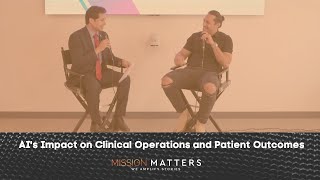
In this interview, Ahmed Omar, founder of Sully.ai, shares his unconventional journey from MMA champion and e‑commerce entrepreneur to AI‑driven healthcare innovator. He recounts early ventures selling goods as a teenager, building a dominant auto‑tech marketplace in the MENA region, and the personal motivation sparked by his mother's healthcare struggles that led him to create Sully.ai—a real‑time clinical decision‑support platform that processes fragmented audio in 7‑second chunks to deliver instant diagnostic suggestions and automate administrative workflows. Omar explains the product’s technical approach, regulatory navigation with the FDA, rapid growth metrics (90% month‑over‑month, 100+ healthcare organizations, seven‑figure recurring revenue), and the strategic assembly of a high‑caliber team from Google, Tesla, NASA, and other elite backgrounds. He emphasizes a "1% daily improvement" philosophy, the importance of immersing himself in clinic operations to deeply understand physician pain points, and a go‑to‑market strategy targeting chief medical officers, COOs, CIOs, and influential physicians. The conversation highlights the challenges of AI explainability, compliance, and scaling in a heavily regulated industry while maintaining an enthusiastic, confident tone about the future of AI in clinical settings.
Chapters
So this is gonna be a fun interview.
So I was—
when I was researching Ahmed Omar's background and otherwise, and I'll read the bio right now, but very diverse background for being a healthcare and a tech entrepreneur. So let's just get in the bio and you'll see what I mean. I got tons of questions for It's gonna be fun. All right, so Ahmed Omar is the founder of Sully.ai. Ahmed started selling online, started, um, and really has an MMA background. He became the number one fighter in Egypt, receiving, uh, 3-time gold medals. Uh, quickly realized he was more passionate about tech, and in 2014, he left to NYC and built a brand from $0 to $55 million in e-commerce sales in 3.5 years. Ranking number 1 in Amazon placements. Due to his passion for tech, in 2015 Omar built an app to help consumers find their pictures on their phone in 3 seconds. In 2019, he met Nasser. Together they built the number 1 auto tech startup in MENA, in the MENA region, with 55% of market share. After his multiple successes in different industries, Omar decided to focus on healthcare. Now building one of the fastest-growing AI healthcare startups in the Bay Area called Sully.ai, which is solving the shortage of doctors problems by making doctors 100 times more efficient. So first off, Ahmed, welcome.
Thank you so much. I like that you have my chief medical officer's picture instead of mine, but it's good.
I like it.
Hey, who did that? I like it. I like him. He's the doctor though. I'm not the doctor. Ahmed Omar Omar.
He deserves to We're giving that one to him. That's why Elias didn't show today, right there. Take that, it's recorded, Elias.
We're coming. That's awesome.
So I like my picture. Background in MMA, I, I have to get into that part of it. So like, talk to me about how you got started in that, in that world of things. We'll get up to the, up to what you're doing today, but how'd all that start for you?
Uh, yeah, I think I was, uh, growing up I was always sparring with my father. Like when I was 7, I was always fighting with my dad. Like being strong was something important, and I was inspired by some of the fighters in the world that they changed something not just by fighting, but, you know, they influenced a lot of people. So I started fighting, but I was good at it. I took the first place in Africa 4 times and did boxing only, and then did MMA, mixed martial arts, played for Cage Warriors. It was fun, but I think the most important thing that I enjoyed was the problem-solving aspect of it. Like, in 25 minutes, it was the enjoyment was like the solving the problem of, you know, winning the match. It wasn't really that I like to hit people or, you know, or yeah, I like it a little bit. Yeah, I guess get my ass kicked. Actually, no, not at all. I've never had a fight. Yeah, I've never had a fight in like any bar or any me say Ahmed Omar, never. Yeah, maybe because of how I look, but, uh, but yeah, like, I usually never— yeah, like, I just liked it. Um, and at some point when I was 19, I went pro pretty quickly. Like, I was 17, I went to Cage Warriors. I used to stream on Sky Sports. Um, so got my ass kicked on TV as well, so you have to tell everybody. So, um, I did that, and when I was 19, I remember I was selling. So in order to do the sport, my father didn't like it. At some point when he started seeing it being really serious, he was like, maybe you should stop, you know, go back home looking differently, right? Like, your face looks completely different. So it's not like— who's— you can ask me, who's that, you know, walking in there? So I started selling online to like selling products in Dubai. I grew up in Dubai. I was selling like used products and taking that money and paying my coaches, you know, to, you know, fight. And then I started making money from fighting, and then I started buying merchandise and continuing selling online. So it was, it was back and forth, but I enjoyed when I saw people using something that I sold more than winning any fight. So that's when I knew, when I was 19, 20, I knew that I wanted something that people use, either physical or a digital product that could save something or make a better impact. And that's when I decided I don't want to fight anymore.
Yeah, yeah.
So I want to stay in the early days just a little bit longer because I feel like there's certain themes that, that maybe can— they correlate that to entrepreneurship. And it's— and I feel like, and I want to hear from you if this is true or not, if some of it kind of carried over and that's part of the reason for the success that you've experienced? Like, what do you think made you so successful? I mean, to be a champion, like, that's not hard. That's a— those are tough sports that you were, that you were competing in and against a lot of people who, let's just say, you had other skills. Some people that are in those sports, that, that's what they're doing. Like, that's what they're doing. That's their life.
Yeah.
What do you think made you so successful? I, I would actually say, I would tell you a story. I started fighting and I was— I wasn't really that good when I started. Like, being the number one fighter was something I never thought of. And when I started, I was 12. As I went, started like being more serious, I— one of the most successful fighters took the second place in the Olympics for boxing in Egypt. His name is Mohamed Reda Ali. They used to call him the Muhammad Ali of the Middle East. Yeah. Ah, very big guy. He came to me when I was 14 years old and told me, you see, like, this guy over there, Nina, who's been training for years, this guy over there has been training since he was 8. I think you should find another sport. Yeah. And I remember going back home this day, and I think that's when the switch happened. The switch happened was that if I take what he told me. I would always take what people tell me, and I just quit. And at this day, I think the switch happened in my brain that, yeah, not anyone, you know, could— I, even though he's very influential, very— I used to look up to him as well.
So, um, that's like one of your idols telling you, hey, don't do this.
Yes, exactly.
So for most people, that'd be pretty devastating.
Yeah, that's Yeah, and then I took the— yeah, this next— the year, a year and a half later, I took the first championship in boxing.
Yeah, yeah.
And then, you know, I started focusing on how to improve 1% daily. And that's when I think consistency and, you know, persistence, and I would say discipline comes together and creates something impossible that you might not even think about at some point. And that's big. That became in everything I do, you know. What's 1% better today? What can we do 1% better today? And most of the VCs, when they invested in our company, when they started meeting us, the first meeting, the first meeting was like there was a month difference between their first meeting and the month. They would always come back and say, what the fuck happened to the product? And I would say, yeah, we improved the product 1% daily. So So by the time they invest, the product looks completely different, much better. So I think we do that in everything, you know. I did that in everything I, I did, and I think it was because that switch, yeah, happened in my brain. Yeah, which I'm grateful for.
Yeah, it's amazing. And so, so you now go into e-commerce, and maybe you didn't even know— I don't know if it was called e-commerce back then. You were just buying stuff and selling stuff, right? Like, by taking your, your winnings and selling stuff. What was that like, figuring out those problems? Because, you know, that's a theme of figuring out problems.
Yeah, I— it's really like the Rolex example, you know. Someone wants something, some other person does not want it. So it was about bridging that gap when I was younger because I couldn't buy. So I'll go for someone who's throwing away his bicycle and going to another kid who wants the bicycle, and then, you know, sell it. And then I started doing that online, and then I started doing that with products. And I started seeing people.
What year was this roughly?
2006. I was, um, 13 years old, like before the tech crash.
You're 13 at this time?
Wow. Yeah, yeah, yeah. And, uh, it was something like Craigslist in the Middle East called Dubizzle. And I sold actually my dad's motorcycle. And, uh, yeah. And then he said, I don't want to sell the motorcycle. I told him— he told me you Did you get a commission? Yeah, yeah, I got my first $100. Um, your first? Yeah. And, and, and he told me, who told you that I want to sell the motorcycle? I told him, you told me 2 days ago that I want to sell it. He's like, no, I was just giving an example, but I want to sell. I'm like, what, what the hell? Like, are you— do you want to sell it or not? The guy's here. And, and, uh, yeah, he ended up selling it.
And, uh, yeah, it's your commission either way, right?
Yeah.
Like, I get my commission, the guy's here, you don't sign, that's on you.
Yeah, exactly. Yeah, so it was really funny. But then I started buying different products, seeing what people need. And there was always this market that is like very low-priced market that people in rich areas can't reach and would never go there. It's a really bad area, but they have really good products. So we used to always go to these areas and try to bridge the gap for, you know, people who buy online could see them. And early days and the Middle East, almost— if you search, almost everything was not available on the internet. So just me making it available as a link, as an SEO, was an opportunity, you know, that I had to leverage.
Yeah.
And so you had other ventures, like, I'll pick one other one and then we'll go into Selly, of course. But, but the auto tech side of things, like, to have that type of market share, like, how do you come up with that idea?
Like, where'd that come from? The idea came from that my sister was pregnant and she was trying to fix her car and she couldn't, and it was like impossible.
I was in a vehicle theme here. Yeah, we got a motorcycle, we got another car.
Yeah, yeah, yeah, maybe. Yeah, exactly. And, uh, she couldn't fix her car, and if I wasn't there in the country, then my dad is busy, then she can't fix her car. So, um, yeah, I found that marketplace very helpful. I got the parts on the platform as a marketplace, like Amazon, and then I got the suppliers who fixed the parts. So instead of just shipping you the part, I'll ship you the guy and fix it at your doorstep. And we did, um, we grew to over a million users in, in a year and a half. And, uh, yeah, and I think we did about $500,000 the first year, $4.5 million the second year, and then about $10 million the last year, I think.
Yeah.
So now, yeah, so now your, your latest venture, Sully.ai. So you're obviously a seasoned entrepreneur at this point. You already had some, you know, great successes, um, and now you transition to healthcare longevity. Like, where did that come from?
I think it was kind of serendipity. My mom— I grew up actually seeing my mom struggling with healthcare. She had, uh, and I never touched healthcare because I'm not a doctor, so I, I would always think of ideas, but I would say I'm not into medicine, so I cannot do something there. And I grew up seeing my mom, she had one bad leg with like a mix in vaccines and misdiagnosis and medical errors. And then she went— she kept going to the doctors, and then until she had two bad legs, you know. So it was getting worse, and I felt like there's something wrong with the entire— with the entire industry, not just in the US, I think globally. There's so much data that doctors just sit and look at you, and there's 10,000 data points that they need to look at every single time, 20 times a day. So there's no way they could do that. And they're also human, so you can't really— you can't really expect them to go through all the data, you know, for each and every human being they see this day. So I saw that gap and I thought, what if we run— like, I know how to build models, AI models, maybe 5 years ago with BERT before Transformers come out. But I was thinking about what if we can give all this data to the doctor as they talk to the patient in real time. And we actually started the first— we became the first company to do it in real time. Problem was that language models or AI models are slow. Whenever you send them something, they take 30 seconds to come back, 40 seconds to come back. So we had to use language models, but run them and host them differently, that they would chunk the audio with 7 seconds, send it back, and then come back with the diagnosis, and then improve the diagnosis as the conversation keeps going. And then until the system is certain it can populate the diagnosis for the doctors, or anything they're missing. Like, um, if I'm talking to you as a patient and you have a reaction to penicillin, and I told you, yeah, I'm gonna prescribe 'Hey, can I prescribe some Finasteride for you?' Within 20 seconds it will populate and say, 'Hey, you can't.' And even if he tried to put it on your chart, in the EHR or the electronic medical record, it won't go through until he overwrites it, basically. So, and then we started automating all the administrative workflows for them, basically improving the care. I think if something like that existed when my mom was getting her treatments, she could have been better that. But we're human, and I think a lot of people look at doctors as, you know, they hate doctors, or they have a bad experience with the doctor so they hate the doctor. But it's a human at the end of the day, at the end of the day, right? So I resonated with the doctors to see like how can we solve the problem. And yeah, we built that, launched it almost 11 months ago. And I was just telling GV, right, I call you GV, right, and I launched that 11 months ago and we've been growing almost 90% monthly and then growth, yeah, we have 100 healthcare organizations using Solly today, yeah, past 7 figures in revenue, recurring revenue, so yeah.
Talk a little bit about the, about the team and that you assembled this. I see NASA, Tesla, yeah, yeah, NASA, Tesla, like Google. Like, you put together an insane team to, to create this. It's not an accident. Talk a little bit about that.
And one of the things, when I looked at healthcare and the healthcare space, it was really boring space for a lot of great minds in the Bay Area. So I live in San Francisco, and when I got there, I started looking at all the healthcare companies that exist. All the health— healthcare startups. And I started struggling to see that there are no, like, really great people working on the problem because of the regulations, because of the HIPAA enhancements, because of, you know, it's slow, it's boring. And I saw it as an opportunity because AI is also changing the compliance part as well. Like, we're using a lot of AI tools to complete our compliances every single day and make sure we're compliant. So I wanted to put together a very impressive team in one room, and I started pitching them the idea that we could be the doctor in the future before the patient sees a doctor. You know what I mean? So, um, it's not like we're replacing doctors, but it's a big good filter that could give certainty to doctors. When they meet you, you know what I mean? Or some kind of signal, strong signals. Um, and I started saying we can build a doctor for every human. It's one human, one doctor. So it's a big mission, very hard to solve. And you could get the best people in the world if you have something really hard to solve. So we put together a team from my co-founder and CTO, contributed to over 25 patents at Google. Invented the Wi-Fi routing. If you guys ever walk in a mall and you have a blue dot on Google Maps, it's his invention. He invented navigation in indoor spaces. And then co-invented Cellbots. It's used by Johnson Johnson for surgical robots. So really smart guy, but he always loved to build. He would like to work We have a big problem in the company now that he's coding a lot. We need him to stop coding and manage. So it's like he meditates when he codes. So I don't know how, but he does. So we have Chaitanya, our CTO co-founder. Nishit started two hardware software companies before as a medical— a chief medical officer, as a really successful primary care physician. So actually, one of the things I would say I was really like— the way I got the theme— so actually I worked for Nishit for 6 months. So after building all these companies, I left everything and I went and worked as a back office admin for 6 months for Dr. Nishit in the Bay Area. I just worked there, I was checking in patients, um, you know, scribing for the doctor, documenting, doing everything basically, just to understand the problem deeply. And And yeah, and then got him as our chief medical officer. He became one of our biggest investors, and then before, like, we raised substantial funds. And yeah, and then Henry built an AI medical diagnosis company 10 years ago. It's like before a lot of people think about these ideas. He's a doctor too, so he was working in a VC and he was doing hackathons. He was basically going to hackathons and making $10,000 every 2-3 days from these hackathons because he doesn't want to stop coding. So, uh, so yeah, and, um, and he was working as a VC. So I'm like, I, I'm, I'm no offense to any VC here, but I'm like, someone like you, you should be building 20, like 20 hours a day. Like, why are you doing this? And he started rambling and I'm like, you know what, fuck it, man, just fucking like stop doing VC. Just come join us. And yeah, and he jumped on board as well. Yeah, as a head of engineering. And then yeah, like, we have the one of the recruiters that recruited with Elon at Tesla, the entire Copilot team. So a lot of great people. Everyone in the team is really exceptional. I'm the dumbest in the room, I would say so. Yeah, every single day.
So I have one more question that I'm going to open it up for everyone else so that you can also get involved. I'm sure there's some other questions out there. So what was that like being boots on the ground, like doing the admin work in the back office, like to really understand the problems? Like, did anything surprise you? What was that like?
It was really painful because, you know, you can solve it, but you don't want to solve it too early. Yeah. And you don't want to You know, you can code, and I could code. So if you can solve a problem, you usually go into solving mode right away. But sometimes it's extremely— You have to let it sit. Yeah. Sometimes it's extremely hard to just sit with the problem for a long time and understand deeply what they go through. And I love— I'm not a dramatic guy, but I love problems. Like, when there is a problem, that means there's something happening. If we have something in the company called obstacles, everyone, every, every day, every person in the company fills that stand-up form. If they say no obstacles, then there's something wrong. They're not doing something impactful, or they're not doing something, they're not shaking something, they're not trying enough, uh, new, new, new things. So Yeah, like, I love problems. So everyone at the clinic used to say, oh, you have a problem, just go to Omar, you know, he likes problems. And it wasn't about liking problems, but I like when I see it solved. That's the dopamine that I get. So, uh, yeah, and it was hard, but it was, it was like a lifetime of experience because I was, I wasn't like a, I wasn't checking in patients, I was watching patients, how they interact. The network on their phone is not good, they can't check it on the phone, they need to check it on the iPad. So I was watching every single thing, and I built tech products, so I was kind of like doing research 24/7, real, real-time research. So, um, it was really important for me. And saw also doctors, different types of doctors, same primary care physicians, same experience, same years of experience, completely different workflow. She doesn't want to do a certain thing before the patient comes, but this other doctor wants to do 3 things before the patient comes. So started seeing like, how can we build a scalable product that could be customized on individual level? So it made me understand the problem deeply. So I think it was painful, but I loved it. I would go back every single time. And actually recruiting the team, I would go online from the clinic and they would say, where are you? I'm like, I'm in the clinic. Like, what are you doing in the clinic? I'm working there. Like, aren't you the founder of the company? I'm like, yeah, I'm the founder of the company, but I'm still working there. So it was, it was, it was good as a good example, really good example. We have a policy, to be honest, no, we did not still put it as a policy, but it should be a policy starting next month, is that each team member should work 2 days from a customer's office. That we have so that we can— they can see what doctors go through. And there's a lot of things that breaks when you, you launch, you know. So, uh, yeah, I think it's extremely important. I think it was like, um, something if I did not do was going to make the product experience completely different. Amazing.
All right, let's open up for some questions.
Who went?
There we go.
Tiffany. Hey Tiffany, nice to meet you too. Let me, let me ask you that question again. Let me ask the question, um, are you asking the application in the mental health space? So there's— yeah, okay, so for mental health psychiatrists, we have actually one of the biggest groups in the country, and we use certain medical databases before coming up with diagnosis, some FDA-approved databases that we use. But until today, the diagnosis part that we give is differential diagnosis. It's, uh, it's a, it's a something that could help doctors not miss a diagnosis, but we never— we can never give it certain. We just got FDA clearance because they asked us to remove the percentage that we got out of the diagnosis, like this is 70%, uh, you know, Parkinson's or something like that. They, they said no, no, no, for you, for us to give you FDA clearance, you have to remove any percentages. And you have to put that this is suggested differential diagnosis. So there's a lot of work to do there. But in terms of things like the conversational, like Ambien technology, there's a lot of things that psychiatrists care about more than diagnosis. For example, if someone said he was going on a second date with, Amy, right? He would go back and ask them, the doctor wants to see Sully telling him, ask him about Amy, how did the second date go? That actually improves the patient experience by 2 times. So doctors, actually psychiatrists, have been coming with those requests more than I need help diagnosing this patient for now, I think. And then, but then I think once the AI becomes much better, the models becomes much, much smarter, we could definitely have— be very certain with a certain diagnosis. I think the FDA, um, I was, I was meeting the FDA like multiple times the past couple, uh, weeks, and the FDA is very slow. Like, for them to make a decision, they're meeting in the quarter 1, 2025, to— for the board meeting to discuss something, and that's just a discussion, and then for them to meet again, it'll probably be in, you know, June. So it's like they're very, very slow for them to approve something and, or basically look at something. What they're doing now, they're trying to understand how Transformers work. And the problem is OpenAI— Ilya from OpenAI doesn't understand how Transformers work, and he's the one who created OpenAI. So he doesn't understand it 100%, and they need 100% explanation how it works, as sequence by sequence or recurring neural networks, how do they work, are they— so I think a commissioner, one of the ex-commissioners of the FDA, actually wrote a big article about this and saying FDA shouldn't understand how, they should understand where the resources came from and if they're approved or not. That's it. So it's, it's a long, it's a long research. What you asked about is a long research. It's, uh, yeah, but we come with differential diagnosis, suggested differential diagnosis. Yeah, yeah, it's a very big— yeah, it's a very big topic.
Yeah. Hey, thank you for sharing. I grew up in Dubai too.
Oh, that's awesome. Which part of Dubai? Oh, nice. That's awesome.
Yeah, exactly.
Yeah, Burj Dubai just came out in 2006 or something like that. Yeah, yeah, exactly. Yeah. Did you buy an apartment in Burj Dubai or not? Okay, okay, that's good, good enough. Yeah. Thank you for sharing your story.
I'm curious, how did you— you said you went and worked in the clinic to understand the problem.
Yeah.
Most entrepreneurs don't do that. So how do you— did you already know that that's what you were trying to solve when you started the company? You already had a team? Or did you kind of do that on your own independently, market research, and then use that to convince the team to come on board? Or like, how do you sequence all of that?
Yeah. Because there's a lot of problems to solve, but like, how do you go about Yeah, yeah, I want to give a lot of credit to my co-founder. So it was me and him that wanted to do something in the healthcare space. We didn't know what— no, we didn't know any. We had no idea. We were trying even a lot of different things, um, and we played with GPT-2 before 3 and 3.5 comes out, you know. So we were testing it on medical information, so we had no idea what we wanted to do. And we didn't want to hire before we understand the problem, before we actually have a solution for it. Because when you start hiring, you basically are saying that the problem is valid, let's go fix it. So you can't say that until you kind of be sure that people will pay for it, at least at some point, or people are going to pull their credit cards, or you can find value, or or monetize it later, or people are going to keep using it even if they're not going to pay right away. But I think it was a sequence. I think we— it was me and my co-founder. We wanted to see what we're passionate about.
Have you worked with him before?
Yes, we founded one of the startups together before. So it was the second startup together. So the marketplace was with my co-founder. So we knew that we found each other, and doesn't matter what we do, it'll be successful. So we started thinking, what do we enjoy most? And we found that helping, like saving lives and building tech and making money is really, is really like the best triangle we could do. And we found ourselves like really passionate about this problem, even though we're not doctors. And yeah, we wanted to solve it. And it From there, like, the sequence was me working at a clinic, CTO joining, CMO joining, Chief Medical Officer joining. After you? Yeah, after I've been 6 months, 7 months. Yeah, yeah, yeah. And then CMO joining, and then the head of engineering joining, and then the salespeople joined. You know, it was, um, like, it was sequenced this way, but really didn't matter as long as we understood the problem. Like, we— everyone, like, if you talk to anyone in the company today They will tell you that the founders understand the problem really deeply.
So I guess if you hadn't done that, do you think if there had been Ahmed Omar, could he be there?
No, maybe not. Yeah, that's true. Maybe not. But Ahmed Omar? Yes, exactly.
So you had to sell the vision to them?
Yes, yes. Selling a vision is something very important, but you have to— what's the truth? Proof that you would reach this vision, and what are the actions that you're taking? And if they don't match, most people will just feel like you're just saying words. And it's usually true, most people just say words. Yes.
All right, one more last question.
Yeah, we'll try to make this quick.
Congratulations.
Why are you in a hurry?
Well, You're staying, country and want to pass this along to some folks. I'm just curious who at those organizations do you guys typically want to connect with that are going to be the ones that understand? Obviously, doctors, you go direct to a doctor, but is it more like the manager of the physicians or somebody on the PD or somebody on the executive team?
It's, it's some— I wouldn't say there's a typical person. Sometimes the CEO of of the healthcare organization is completely useless. No offense to them. Yeah, you know, he's just there to collect the money basically, or to do all the billing, that's it. Which is fine, I think it's a very important job unless they won't be able to see more patients. But sometimes it's useless, I mean, to get their attention. So I'm not saying they're useless as human beings. Or as people.
[Speaker] Good clarification, thank you.
Hey, but I mean, like, it's useless to have this conversation with, with them. So, um, sometimes the CEO is the main decision maker, sometimes the CMO is the main decision maker, sometimes the COO is the main decision maker, sometimes it's a doctor in the healthcare organization that's very influential and has actually curated most of their new tech that they're using. So it depends. We try to get the attention of the COO and the chief medical officers, or chief information officer, or chief medical information officer first, and then we try to get their doctor's attention. And then we— they validate it with the doctors, and then they come back and say, hey, yeah, we want to give this to more doctors. And it's been— it's been 99% successful so far. And no, I'm not, but I'd love to chat. Yeah.
Hundreds of doctors. So obviously I thought that she would understand this. Yeah, take it to—
oh, yes, yes, yeah, yeah. We made it super easy to use. It's one of the easiest platforms in the market today. Yeah, it's one click to do anything the doctor wants. It's literally one click. And it's not one click to get the— like, it's not like 6 clicks, 6 clicks to get the entire action done or what they want. So sometimes just one click and that's it, and they just get everything done. We can record the entire conversation, turn it into a medical note, do the action afterwards. You can automate all these things. So it's, it's, um, it's really helpful. Like, we have 99% success rate from the pilot to close. Yeah, yeah.
All right, let's give it up for Ahmed Omar Omar.