Liam McCarty of UnumID compares digital identity to the credit card industry, describing how Visa's decentralized network model could shape a phone-based ID system. Users generate verified identity cards via Face ID and present them with a tap, mimicking the frictionless experience of plastic cards but for digital credentials.
Thank you so much, Peter. And last but not least, we have Liam with UnumID.
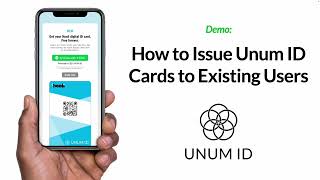
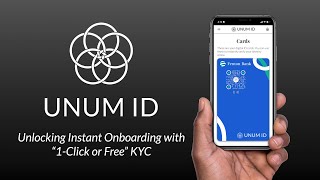
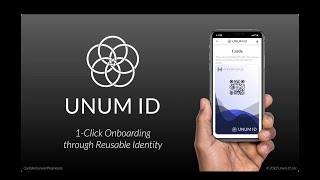
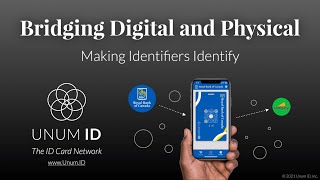
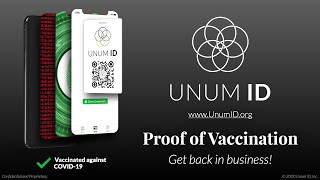
Thank you. We were joking that to participate in these Lightning Talks, you have to have a blue suit because all of us have blue suits today. Hi everyone, I'm Liam McCarty. I run a company called UnumID. We are the ID card network, and I want to tell you what we mean by that. We describe an An ID card network is the next big card business, which begs the question, what was the first big card business? So I'll take you back to the 1950s. In the 1950s, making payments was hard. The average consumer in the US had over a dozen forms of credit. These are things like charge coins and charge plates. You would go to Sears or Gimbels or Mobil Oil, and you would have a specific line of credit with that merchant. This was a huge pain for consumers. You had to have a dozen things in your pocket just to buy basic things. It also was something that only the largest merchants in the world could offer, because extending lines of credit is quite difficult. It's quite expensive. In 1958, Bank of America introduced BankAmericard. This is the first general-purpose credit card in the world, and it revolutionized payments. That plastic rectangle would go on to change the world. And now all of us in our physical wallets have a credit card. BankAmericard grew into Visa, and their main competitor Master Charge became MasterCard. And now these are two extremely successful, extremely defensible networks, some of the most successful organizations in the world. Now the history of an organization like Visa is fascinating because it reflects some of the decentralization goals that we're talking about today. The founder of Visa, Dee Hock, structured the organization based on the US federal system. It was member-owned by the banks themselves. There were checks and balances so that banks in one part of the country couldn't dominate banks in the other part of the country. And the whole premise was, what you need is operating rules to allow for a network of participants, member-owned, so that everyone could benefit. And the upshot is that myself and all of you as consumers with credit cards need to know absolutely nothing about how they work. It is literally a plastic rectangle, and it just works. What we do is the same thing for identity, but it's not a plastic card. It's on my phone. I have a digital ID card. It looks just like this. All I have to do is open a website, do a biometric, and I have my card. This contains verified data about who I am. It's web-based. There's no installation required whatsoever. And what it means is that anyone who needs to know something about me simply asks for it. I click a button, I do Face ID, and I'm done. This allows for a network of participants. If you hear the jargon today of issuers and verifiers and so on, that's exactly what we do, analogous to a credit card network. There's issuers of digital ID cards, and then there's companies that accept those. We think this sort of network structure is what's required because at the end of the day, we as consumers who want to prove something about ourselves, we don't want to have to think about the details. We want something as easy as a plastic rectangle, but because it's 2022, it should be on our phones. And companies want something as easy as just asking a question and getting an answer. So I would love to talk to all of you about this. As some brief fun history, my brother and I run this company together. We started in college by building civic engagement tools. And we had proof of constituency so that people could prove that they were constituents of particular government reps. We're very passionate about the intersection of the private and public sectors in this. We think that there has to be cooperation and that we, playing our role in the private sector, should collaborate with government. So we'd love to talk to all of you about this. Thank you so much.
Thank you so much, Liam, and thank you to our three companies. I I think it's pretty illustrative how efficient that was and how effective we were able to get that in time before the lunch break. So I think it speaks a lot to those 3 companies and their leadership styles.