BUILDING A DREAM TEAM & DREAM LIFE - INTERVIEW WITH THE BEST: JP MONTALVAN WITH KEVIN WARD
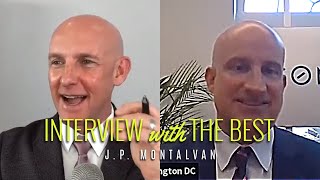
JP Montalvan built a real estate business from $16,000 first-year income to nearly $100,000 monthly by calling 350 people, hiring strategically, and rebuilding his team multiple times. He credits Kevin Ward's coaching and an 11-person partner-based firm called Capitalist April for doubling his business while doubling his charitable giving.
Questions this video answers
Bought in 1999 and sold in 2001.
About $15,000–$16,000.
About $900 per month rent and about $400 per month car payment.
About 350–400 people.
About three and a half years prior to the interview.
Chapters
Foreign. Hi there, it's Kevin Ward. And welcome to another Interviews with the Best. I'm the founder of yes Masters Real Estate Success Training, helping you get more yeses and more successes in your business and in your life. And with our Interviews with the Best, we interview agents who are not only top performers in the real estate industry, but also agents who believe in being the best not only for themselves, but for their clients, while at the same time having a life. And today we are very honored and very excited to have with us JP Montalvan from Compass Real Estate up in the Washington, D.C. area. JP welcome. Thank you for joining me.
Thank you for being here, or thank you for having me. I should say you're not here, you're there.
I'm glad I'm here and I'm glad that we're having this opportunity to talk. So just to kind of get us started here, tell us a little bit about your background, where you came from, how you got in real estate, and just kind of tell us who JP is.
Absolutely. So I got into real estate about 19 years ago. I would say that the journey started about. Well, it started right after college. So right after college, back in the, in the 1900s, the. This was the. Obviously the late 1900s, but like the 1900s. So in the recession of 91, it was a very formulative time for me because I graduated from college, I was in my first job, which was international economic consulting. And the company went down, the company went bankrupt, and I lost my job in the middle of a recession. And it was, when you're in the middle of a recession, there are no jobs. And so I had the. I had two job offers ultimately. One was to be a personal trainer, which was really a towel boy at a local prominent country Club at $7 an hour. And I had another job offer to work as a trade show, a trade show assistant. And that was for a whopping $6.75.
An hour, which is basically. This is all minimum wage work.
That was minimum wage work, right? Yeah. So my first year after the recession, I earned about $16,000. And just to kind of frame that, that first year That I earned 15. That I earned 15, $16,000. My monthly rent was $900 a month. And I had a car payment that was about $400 a month. So right there, that's 13.
What?
Thirteen hundred dollars. And you do the math there. And that math doesn't. That's not exciting math. Right.
Not much wiggle room.
Not much wiggle room. And so what I did is I turned I took the job as the personal trainer, towel boy. I actually turned that into working with clients, working a 40 hour job. When I left that job of the 40 hours, I was working 36 hours with clients. So I was literally back to back to back to back. Every minute that I was there, I turned that I left there. I turned that into a business, a training business in my home. Then in 97, I built a studio and took my business there and just worked through the creation of business. And around the same time, I really got excited about real estate. I bought my first home in 96. It's a condo. It was a total fixer. It needed everything. It needed floors, carpet, new kitchen, new baths. So I took that and over the course of a year, I just totally renovated it and I lived in it for another year. And then I said, okay, let me try selling this. And rather than I was the dreaded for sale by owner that agents hate. And so I did. I sold it myself and made a great profit. And I was really excited about that. And then I wasn't as dumb on the buy side. So on the buy side, I had an agent that I worked with and she helped me buy another fixer. But this time it was a single family. And so I bought that, that was another fixer. I ended up massively renovating that, flipping that, doubling my dollars. And that was serious. That was a 250,000 DOL that I bought and then I sold it for over 500,000.
Wow. Now what year was this?
That was 1990. So I bought it in 99 and then I sold it in 2001.
So this is Y2K all in the Y2K area. So I think it was your home as well. I mean, you lived in it.
Absolutely.
Picked it up and lived in it and then flipped it.
Yes. Okay. So I leveraged it out. It was leverage, Right. I was leveraging the flip and I was leveraging the deduction. It was just leverage. Leverage. Leverage, Yep. And then in that process, I realized that I actually enjoyed the and I again fizboed it. So again, I sold it myself. And I realized in that process that I liked the people portion. I loved real estate, that I loved meeting people because I held the open house and people came through and I talked with them and share with them about the house, and I really was getting to enjoy it. So that's where I ended up getting my real estate license.
All right, and so when you got your real estate license, did you go full time right away? How did you get into the Once you got into the business, how did you go in?
So I went in, I was really, I was dual career for a long time. I still had my fitness business. It was now a thriving fitness center in downtown Bethesda, which is just outside D.C. right. And continue to build that, that business. And at the same time I was building a real estate business and did, and did very well. Really ramped up very quickly. I mean I was in my second year as a, an agent. I was credentialed at that time as in my second year, my second full year in real estate, I was a top producer and by my third year I was a top ten with the company.
So you were doing this and still had your training business on the side. Okay, so let's just go here for a second because this is like a lot of agents come in and they have another job and they're like, how do I get started? Can I get started full time and how do I do that? You had success while you still ran another business. So how did you divide your time? How did you do that? How did you generate your business? How did you make that work?
Sure, a lot of work. I mean there's. No, it's not, it's not. I will definitely tell you it wasn't pretty. It was, it was, it was hours and I mean there, it was a seven day, it was a seven day roll.
And how many hours, honestly, how many hours a week were you working here and here combined?
Well, I mean, you know, you open a Fitness center at 6 o' clock in the morning and you're, you know, the fitness center is closing at whatever time I think it was, we were at 8, 8 o', clock, 8:30 in the evening. It was more, I was more individual training, focused. It wasn't a gym, it was a, it was a studio. So it wasn't, it wasn't a 24 hour role. But it was still, you know, that was a solid chunk of time. I did have people that were helping me there. I mean I had a team, I had staff and so forth. But it was definitely a haul because I'm toggling back and forth, right? I'm going from that to real estate, back to that, back to real estate. And so my days would normally not end. I wouldn't say they ended until about midnight. And so that was eating, that's eating on the go. That's, I mean I ate a lot of, lot of bars. I've eaten more bars in my life than most people. I've, you know, it's It's, I took naps sometimes in the car. You know, it's because you're, you know, that's a haul.
I mean, you're 7, 8, 16, 17, 18 hour days. Seven days a week.
Yes.
So literally you're putting in 110, 115 hours a week.
That's right.
Okay. So to answer everybody's question, can you do real estate while you have another job? The answer is yes. You're going to burn the candle. You literally burn the, burn the candle at both ends if you want success.
That's right.
And you paid the price to do that.
Yeah, I did. I definitely did. It was, it was something that's. It's a high price, right? Yeah. And I would say, I wouldn't say, I mean, it was not, it was, it was tough on, it was tough on relationship. Right. And that's been a theme that was, that carried through this. I mean, my first, you know, I mean there's, it's ugly. Right. I've been married twice and now the first was my first. My first marriage ended in part in large part because my, my ex was, was an alcoholic and it was disastrous.
Was this while you were doing real estate?
Was this, that's period. That's while I was in, I was in real estate.
So this is going on in the, in the background or in the foreground or whatever while you're building it, running a business. Building a real estate business and a major personal crisis in a relationship, in a marriage where your spouse was an alcoholic.
That's right.
Which has a whole lot of repercussions on everybody.
It does, yeah.
And you've been, you working 120 hours a week did not help.
Yeah. You know, not that it's your fault.
But it's just part of the journey.
It is. You know, it's interesting. It's interesting. It, you know, when I look at it, it was, it was an unhealthy. It was an unhealthy reaction. Right. Because there was a part of my life that was really bad. And so, and so the people that were in my fitness business and the people that were in my real estate business, that's where I was getting love. Right. I was getting love there and I wasn't getting love here. And so, and so I spent my time in. Obviously you're going to go where the love is. Right. So I spent my time there and then. And this fell apart. And so there's obviously good and bad with that. It led though, to an unhealthy habit because, well, it Had a repercussion because it bankrupted me. That divorce bankrupted me. Well, I mean, not technically, but it put me massively into debt. And then it also, in my second, My second marriage, it.
I learned.
I learned I built a habit of working too hard. Right. I built a habit of pushing through. And this is for the good of the relationship. And so that was when the second. My second relationship failed, that was because of bad habits that I built in part because of what happened earlier. Right. So there's a heavy cost. Right. And putting these things together are only. That only comes from coaching with you. Coaching with my leadership coach. It only comes, you know, in hindsight, putting these things together, that there's good and bad. That comes from everything. And how do I learn from. From the bad that happened.
Yeah. And you learned. We don't always learn from our mistakes the first time around. Repeat them with a vengeance.
Absolutely. Absolutely.
Wow. So how do you. You got through all of that? How do you. As you started and now how do you generate your business? Where does most. Where did you. When you were new, where did your business come from? Because you got started and made business happen pretty quick. Where did your business come from?
Sure. So it always came from people. Always came from relationships. Building relationships. And so my. What I always. The way I've always been built was I want to do a great job for people, right. I. My fundamental philosophy was always, if I do a great job, everything else will take care of itself. Right. I'll be, I'll be, you know, some. If I do a great job for someone, they will refer me business. Now, there was a, There was a, There was a missing component to it, which was. I didn't ask people to refer me. I just thought that it would happen. But the, but the most important part, you know, I think there's a, There's a. There's still an important foundational piece, which is excellence. Right. I want to do. I'm just. The way I'm built is if I'm going to do something, I want to do it at a 10. I don't want to do. I don't want to do a whole bunch of things at an 8 level. I want to do this number of things at a 10 level. And if I can't do it at 10, I don't want to do it.
Nice. So you, so you, you built it with relationships. What we call your personal circle, what we call the real estate vortex, is you took relationships and built it that way. And then you said something, you said, well, there was a component that was missing, and that was. I expected him to bring me business, but didn't really ask. So. Which is, I think, critical is that you started with the right intention, which, if you don't have the right intention, you're never going to be powerful with winning business through relationships. So, one, you start with the attention. What was missing, it sounds like, was a system.
Yes.
Was a strategy, was a plan. How do you do this and how do you build it? So I. I don't know if this is what happened next or not, but let's talk about you. You and I. You and me, when we connected. So tell me how you found yes Masters, how you came, how long ago? How long has it been? Do you know?
So, yeah, it's been about three and a half years, so. Well, I mean, I'd always seen you in this form. Right. I'd seen you in video. Right. On YouTube. I found you on YouTube. I'd seen you in video. And what was very compelling was the message. Right? The message, it really resonated because it was a no bs, Right? It's. There's too much of that in life, you know, forget about real estate. There's just too much of that. Right.
Anywhere you go. Yeah.
Everywhere you go, there's just. There's this. Oh, this side thinks this and this side thinks this, and. And there should be a universal bs, right? There's a universal truth and a universal bs. And so you broke things down in a fantastic way, which is. This is what some people are saying. So you were talking about what agents tell people. I mean, one of the things that. One of the. One of the first early videos that I watched of yours was the I've got a buyer. Right. And so. Right. Agents call sellers and say, I've got a buyer.
Yep.
And 90% of the time, maybe 95% of the time, it's a lie. Total crap. It's just bs.
Bs. Yeah.
Yep. And I never did that because I never felt comfortable doing that, because I knew it was a lie. But you were the first person I ever heard that said, not only is this bad and this is a lie, but here's what you should say.
Right.
Right. Or here's what you should do. What you should do is go to have either say this because you don't have a buyer, or say you've got a bot. Talk to the people who you really have a buyer for.
Right.
Well.
And basically, there's a straightforward way to do this without the bs, Right? You don't need the bs. There's a better way.
Absolutely. Yep.
Awesome. So then what happened next?
So then.
So connected.
Yes. Yes. So I, so I watched the videos, then I shared the videos with my team. Then you came to D.C. you had an event here in Washington, D.C. and I went to the event. It's called double your listing power.
Yep.
And it was. And I, and there was, it was fantastic because I did things that I'd never done in another conference, another seminar, another training program, whatever. Because there's always a knowledge piece, right? There's always, whenever you go to something, there's a knowledge piece.
Right.
And that's not to minimize the. Your knowledge piece because your knowledge piece is very thought out and it's very. No bs but the piece that is just as important that you coach us on is the mindset piece, right? Is the, this is what you have. This is where you have to be here in order to do all of what we want to do. Because if you are not good here, you can't be good there. So I really appreciated that you spent time not only in the knowledge piece, but you spent time in the, in the mindset piece.
Awesome.
So that, Sorry. And so that led to. So, so then I, that led to me doing the, the challenge, the 100 day list master challenge. And that was one of the most. That was, that was hard. That was, you know, the first, the first, your first task was call everybody that you know in the first week. And I think the size of my personal circle at that point was about 350, 400. And so I'm thinking, holy. And so, and I did not do it in the first week, but I did it in the first two weeks. And it was the most eye opening experience I'd ever had. And well, you know why it was because not only did I, did it, did it result in. Leads in business, but there were two things that it taught me. Number one, that people didn't know. Again, it was. Goes back to what I shared. People didn't know that I needed them.
Yep.
That's Number one. Number two, I probably counted about 5 million in business that I had lost in making those calls because I heard from people that had bought, I talked to people that had bought the people that had sold. I talked to people that had a neighbor that had just bought or a neighbor that had just sold. I mean, I just, I was counting the dollars, right. And so I'm not all about the dollars. So I didn't, you know, it didn't, but it just told me. It just reminded me, shame on you. You didn't because not one of them said, oh, we would never use you. What they all said is all of them. That's when they told me that said, oh, shoot, I should have thought of you, J.P. and so shame on me. Right? Whose fault is that? Like, it's. I didn't. I wasn't creating top of mind awareness.
Wow, that's huge. So not to mention that it cost you $150,000. 5 million in volume. About 150,000.
$150,000.
Just the people that you could have helped. And that's just the ones you know of. That's just the money, you know, you had lost 100%. Yeah. We see. We do this all the time. Right. We see happen with agents all the time when they do this in the challenge, and they all of a sudden realize, I've been kissing off tens of thousands and in many cases, hundreds of thousands of dollars. By not simply asking for business from people that know me, they. People that know you like to help you, and they like to let you help people that they know.
Right.
But they got to know that. They got to know. They don't connect the dots.
It's crazy.
When I figured that out, which took me over 10 years as a real estate agent, was when I created the real estate vortex, was that they'll come to you and they'll bring business to you, but it's not automatic. You have to pull that. You have to bring it to you.
That's right.
That is awesome. Okay, so you did the challenge. So because the challenge also was you had to. You had to learn a totally new listing presentation, you had to learn all these scripts. You had to do stuff you'd never done before, including probably prospecting every day.
That's right.
You all built your business from repeat word of mouth.
Right.
What was it like mentally, emotionally, as a top producer, somebody already with a big six figure income, to go back to the drawing board, to kind of go back to the fundamentals and be willing to be coachable and learn the basics again. Tell us how you do that mentally. Because a lot of new agents are. A lot of top producing agents are like, they're stuck at 3 or 400,000 a year. And they're like, yeah, I got this. I'm good, I'm good. I already know how to do that. I already know how to take a listing.
How did that. Yeah, it's. So it's, you know, the way I look at it is it's. It's foundational. The best kind of analogy the Best analogy that I can give is I practice Muay Thai, so I practice Thai kickboxing. And you know, when you start any session, you're starting with a warm up and then you're starting with your basic moves. I mean, the basic moves of Muay Thai, there are eight moves. There are eight points of contact. There's, you know, there's your hands, there's your elbows, there's your knees, and there's your feet. And so there's eight points of contact. And ultimately there's only a certain number of, of strikes that you, that you create with these eight points of contact. The trick is, is the more you do that you practice those techniques, the better you are at those techniques, right? And it never stops. And so, and so when I went back to the basics with the list master challenge, there were, you know, I was back to internalizing what I was saying. I was back to thinking about what I was saying because you were sharing this word doesn't work and why. And this word does work and why. And so then I'm changing my language, right? And it's extraordinarily powerful. So it's a foundational, it's foundational skill that then allows you to be great. And it's, and I'm just. As a real estate, as an aside, it's not just about real estate. Because your ability to communicate is. Our ability to communicate is incredibly important, right? I mean, it's, it changes every part of my life for sure. And so, and so those, you know, the use, the use of certain words and not using certain words, whether it's with my boys or Olivia or my friends or my family, now I have better relationships because of the foundational pieces that you taught me. And so, and so the foundation, you know, I don't even like the word script because it's. I know, I know. I don't like the word because. And I mean, you have to call it something, right? It's such a limiting word because what you're really, it's almost like you're teaching us dialogue, right? You're teaching us communication, right? And how to connect, you know, and so that anyone who. That was incredibly powerful for me. It's been incredibly powerful for my team because you sharing that with me means that I'm sharing that with, with others. I mean, even the word share, you taught me, right? Like, I don't tell anybody anything anymore, right? I don't tell because I don't show you. I don't show people stuff anymore. I share. And so that's that's from you. That's foundational. That's the basics. That's the list. Master challenge.
Yeah. Well, and another I just one that you already mentioned was the. The foundational skill of, hey, you want business? Ask like you knew, like. And that's where a lot of agents were in Muay Thai, everybody starts at the lowest level belt. Right. And you have to earn the first belt before you go to the second belt. In real estate, there's no belt. So agents come in and there's like, what do I do? And depending on who's talking to, they just do this and they try this. And one person says, go talk to sell by owners. No one says, go do open houses. And so they don't really get a foundational training where that they have solid, rock solid, proven fundamentals that are the best. So I really appreciate the fact that you had the humility and the coachability to go back and go like, okay, I'm willing to learn. I'm willing to take this journey because I know there were times it's frustrating when you're like, I got to go back and do this. He wants me to do this. Really? And you did it, and you did all of it. Tell us about now beyond the. Just beyond the challenge. But after the challenge, what'd you do? Because you've been in our inner circle now for how long?
Three years.
Three years. So you've been. You. Right after the challenge, you went right into the inner circle because you qualified and you're as a producer. So tell us then how that has changed your business in terms just the growth of your business from then to today.
Yeah. So the growth, I mean, everything is. Been tremendous. I mean, your help and coaching has. I mean, over the course of the last three years, my life has changed dramatically. I'd say everything is in my life, personally and professionally, is a double. I'm doing double the amount of business that I did before. I am giving in terms of the charities that I support. I'm giving double what I was able to give. And I've actually. I've quadrupled my family size because it went from me to me, Olivia and two boys. And so. And all of those things happened because of the environment. There's coaching and then also there's the environment of the inner circle. One of the. You've put together a group of people who create positive positivity, who push in a collaborative way, who want to be the best, and you train with those people and you interact with those people day in and day out. Then they give you lift. So there's just, it's so, so I can't. I mean, double business, double business, double giving and, and a happy life. I mean, happy, you know, happy. I mean, I don't know what, what more I can want.
You know, that fulfills me because that's my passion is helping agents like you win in life. Not only win in business, but win in life. And you know, one of the things that I love in the inner circle is the environment. Not only a business environment, but also real relationship life environment. So we get to hang out with each other. And so we, you know, Julie and I have got to hang out with you and Olivia and all of that. And just building those relationships with other inner circle members and all of that is phenomenal because it elevates all of us and makes us all better, not only as agents, but as people. So I love that and I appreciate you sharing that. Okay, so now let's turn back to the business and how, and just so that everybody has a context here, we're talking a guy who went from making big bucks. So you're now making nearly $100,000 a month on an average month. I mean that's pretty much very close to that. Your business alone.
Yes.
Your personal production. And you've also got a team that makes a lot more money. So let's talk about that because when you, even when you joined, came and started working with. Yes. Masters and got into my coaching and all that, you already had a team. Right? You already had a team at that point. And you've been a team leader now for a long time. So talk to us about how you built your team and how that shapes up.
So team is hard. Let me just start by sharing that that's a journey that's. I would, I often share with folks that I'm on my fourth version of team, my first version of team and might be my fifth version of team. Actually my first version of team was just having a buyer agent and that was several years ago. And you recognize in that, just in that relationship expectations, what, what someone expects of you. What someone, what I expect of someone. And it didn't work out because our expectations were she was working part, she was only working part time. It's very hard to do that real estate unless you're going to work double time, like part time. It's really a misnomer. Right. If you're going to do this, you're going to work two jobs, two full time jobs. That's what I didn't do. I didn't work one and a half jobs. I worked two jobs. And so. And so that didn't work. And then, then I was hired by my broker to run a team, to run his team. That was a big team. That was a 12 person, 13 person team. So that my second version of team was. I was the managing director. I didn't own the team, it was his team. And there I learned that there were some great people. I still have great relationships with just about everyone on that team, but their goals, their values and their goals were totally different from one another. And they were also not aligned with the owner's role, the owner's vision of the team. And so there was a massive misalignment on that team. And so I left that to start my first version of team, personal team. And that. So let's say that that's 3.0 and 3.0. That was. We grew very quickly. We went from. And when I say we. I had a partner that I started the team with and we went from the two of us to again, to about 13 or 14 people.
And.
What I. It was, it was not a team again, it was a collection of people.
And it was paddling their own canoe, their own direction.
Absolutely. Yeah. And everybody, it was okay, you're the culture guy, you're the business guy. And there were things that were, you know, was kind of pieced out and that doesn't work. Right. You know, everybody's an every guy, right? You gotta do your. Nobody wears just one hat. And so in one day, it's one of the, it's one of the worst days of my life. One day I got a letter under my door from my former partner, from his attorney, saying, I don't want to heat. My client, doesn't want to be in partnership with you anymore. Don't contact him and we'll be contacting you in two or three weeks. And I felt like, and I was just about to walk out the door to a team meeting and I felt like it been just kicked in the gut. Yeah, I just, it was. And what I later found out, he later ended up working with directly with about half the team. In other words, half the team followed him somewhere else. And so you. I'm a, I'm a, I'm a loyal guy. I stay, you know, I'm a sticker for better or for worse. And so that was a kick in the gut. Like that was hard. And so, and so that. But that was one of the best things that ever happened. Looking back was one of the Best things that ever happened. That was 2016. And that was the year in. So 2016, in the summer of 2016, was me meeting you, my partner saying, I'm out of here. Most of my team saying I'm gone, and me starting all over again. And it started this journey for me. Like, okay, so I could say, you know, I could sit here and I could say, ah, you know, he and asks for doing that, right? That would be the easy, the easy answer. And there's a part of that, right? I mean, it takes two to tango. But I can't control that part. The only part that I can control is my part. And so that started a journey that led me to you, that led me to what do I need to do to be the best person for me? And so, so one of my. One of that I still was. We went from 12 to two. For me, it was me and one of a wonderful woman who followed me and we started the process together, not as partner because she was very junior and I was very senior, but we started the process of, okay, let's. We're gonna do something here. So I hired another. I hired a new director of operations and started to bring in people, but in a very, in a very different way. In a way that was, you know, instead of what the first questions were, instead of your first questions being, well, what are, what have you done? The first questions were, who are you? Right, what do you want? Where do you want to go? Right. And so it was a lot more time spent in where do you. Where? What would you like? Where would you like to go? What's your path look like? And so it was really. And to this day, I don't. I care very, very little about what someone, what I think someone can do, because it has nothing to do with me. I would care. What I care deeply about is what someone wants for themselves and then how I can help them to get that. And so. And everything I do relates to that. And so 4.0 was grew to five agents. Great. They are still, they're still agents with the team. My. Well, the agents are with the team. One of our directors moved on, but the agents are still with the team. And they're just, they're like brother and sister. And then 5.0, which is the current. About a year ago, two wonderful women came on as partners for the team. And so. And so now we're an 11 person team. We've grown both in terms of junior agents. We've obviously grown in terms of partners. We've grown in terms of inside team or our administrative side of our team, as opposed to our sales side of our team. And it's just. It's a complete. It's three years of journey that went from one of the worst business failures that I've ever had. Right. The worst business. I never had a business failure like that. The single was terrible. Punch in the gut, awful. What the hell am I going to do to today where I'm just going to completely do this?
Yeah. I love the fact that you did not, when that happened with your partner, when you basically stabbed in the back or whatever you want to call it, you did not go into victim mode and go like, well, that's not fair. You can't do this. We're going to. We're going to duke it out. You like, what do I. Where do I go next? And you didn't quit. You didn't slow down. You're like, okay, time for the next version of me. I love that. And so it sounds to me like. And when we first had this conversation in our coaching calls, when you were talking about your model, it sounds to me like what you've done in your real estate business is you've kind of taken almost like a law firm concept of having partners that you're not like partners. We do everything together. You each have your own business, but collaborate and kind of created a conglomerate where you're sharing administrative support and marketing dollars and just kind of your one business, but each of you in that have your own business within the big, bigger firm. Is that.
That's exactly right. That's exactly right. So, you know, so a few things that distinguish how we're. How we operate, which is very different than a lot of teams operate. Right. It starts even with the name. The name is not the JP Montalban team. It's Capitalist April. And so because the vision was not about it being about me, the vision was being about team. And so, I mean, there's. So how many teams are the John Smith team? Right. I mean, it's the vast majority. And I'm not knocking that. If that's what. If that's what someone wants, if that's their vision. But my vision was a different vision. My vision was I want to create an umbrella that. That allows that everyone can fit under. Right. Or at least people that share the same values. And so. And then it goes. And then you got the, as you say, the law firm model, which is. Which is leveraged. It's a resource share and it's an income share. And so it's Based on. So, you know, expenses are shared as proportional to what you spend. Right. And actually it's expense shared as you produce, and then it's income shared depending on where you are within the organization. Right. So partners receive a share of junior agent production. And junior agents are incentive because they have an opportunity to come up within the team. They have an opportunity over time to become a partner. They're getting coaching, they're getting mentoring, they're getting lift from the administrative, from our. They're getting marketing lift. We cover everything for our agents. Our agents do not need to spend hardly anything. They are. So that they can really focus on building great relationships, giving great service, and building more relationships over time. And then ultimately, hopefully, they become partners. And so I've got one agent, we've got one agent now who is going to be a partner within the next 12 months.
Wow.
A new partner.
They've earned their way up.
They earn their way up. Absolutely. And his business went from. It's doubled. It's doubled every year for the last three years.
So tell us how you make new people that come onto your team. How do you make them successful? Because obviously your success is directly tied to. Your increased success is directly tied to their success. In other words, you can go out and do your own business and succeed to a certain level based on what you can do. But to scale that, you got to not only hire somebody and go like, okay, do this, you got to help them do it successfully. So how. What are the. Would you say are the keys to creating successful people on a team that makes the team successful? People want to have a successful team, but they don't realize, well, to do that, I got to make this. I've got to make every single person on it successful in their role.
That's right.
What are the keys to making them successful so that ultimately the team is successful?
Yeah. So great question. So the first is me. I've got to get coached. So you coach me. I coach them. Right. Because if I need to grow, I need to always be growing. Because if this is the, you know, if I don't. If my bar doesn't go up, then what's happening is my people are hitting my ceiling. Like, I've got to continuously raise my ceiling so that they never hit my ceiling. They never say, you know what? There's no place for me within this. And that's in everything. That's as it relates to, again, dialogues and the use of language. That's as it relates to how you service a client, how you market a phone. How you. How you treat a buyer, how you. All the. How yous. Right. All of those. There's a technical components to it and then there's the mindset component to it. Like, I've got to continuously work my mindset so that I can show up for them in a way that's going to lift them. So number one is I have to be coached. Number two is then creating an environment that is conducive to success. And so how do we create an environment? We create. You know, I get coached. We coach them. And so coaching means that they're getting individual coaching. And then we do an agent mastery session where we're coaching them. So once every two weeks, I coach. You know, we coach the part. The senior agents, partners, we coach the juniors. And then once every two weeks and all of the juniors for getting together with a senior partner to talk to group learn, because there's benefits to both. So we create an environment through coaching. We create an environment through shared goal setting. Right. Dream setting, goal setting. So in a few weeks, we are going to go out to Middleburg, Virginia, and we are going to take a wonderful home in Middleburg, Virginia, and we are going to stay overnight. We are going to spend a full day just sharing not only our professional goals, but our personal goals. Because, you know, that was one of the things that I learned at the end of my last team's role is that if I didn't understand what was important to someone personally, then the professional stuff didn't matter. Right. I mean, I can coach them, but if I don't understand what really matters to them, then I can't really help them. And so setting the environment. And again, so environment happens through coaching, through goal, through goal, group dream and goal setting and shared experience, shared time. I can't, you know, the last. It's funny. Agents are very entrepreneurial. Yep. Very, very entrepreneurial. Right. And don't like the idea of meetings. And so it's funny because we, we meet as a team for about three to four hours a week. That's an agent. That's an agent. Commitment is about three to four hours a week. So. So that's. That could be coaching. It could be mastery coaching. It could be our team meeting, but it's about three to four hours a week. Now, if you talk to someone who is in the business world who has a, you know, a salary job, right. And you told that person, hey, we're gonna have four hours, three to four hours of meetings a week, and you're have the rest of the time they would love that. They'd be saying, wow, this is great. Like, we don't. Like, I don't. You know, I'm gonna have good independence. And, you know. But you tell agents that. And, oh, my God, we meet so much.
Yeah.
We can't even handle all this meat. I mean, and it's funny. And so it goes back to what you said about mindset. It goes back to what you said about be coachable. Right. Like, challenge your beliefs. Three to four hours is not a lot of time to devote each week to to build your business, to build craft, to be great.
Yep, totally. So you just to kind of summarize or. Some of the things you've said that I think really resonate with me is one is you see your role not only as being the. I'm doing the important work. You guys are doing the unimportant work. You don't even think of it that way. It's like your responsibility is not just to sell houses. Your responsibility is also to be a coach. So you're not just getting coached and then bringing them in and going like, okay, you do this, do this. Not just giving orders. It is training them and coaching them to be able to execute that. So it actually takes more time before. It takes less time.
Absolutely.
With everybody you hire and then goal setting together. So you're finding out what's important to them, not just telling them what's important to you. Like, okay, your job is to help me do this, this, this, and this. For me, it's not just a boss mentality. It is a collaborative mentality, which also then leads to the idea of we spend time together every week in meetings different. Whether it's goal setting, planning, strategy, feedback, you know, course correction. But it's in that collaborative environment that everybody succeeds together. Otherwise, there is no. There is no synergy.
Absolutely.
Energy is work. It is to create synergy.
Yes.
Crack the code of creating synergy.
Yes. That is. That is. That. That's exact. Spent a lot of that. I appreciate you saying I've cracked the code. I'd say that's a journey. Right? I'd say. I'd say. I'd say I've unraveled a lot of the layers of. I don't even know what the fruit would be, but it's kind of like, you know, it's. It's. It's understanding. There's a lot of layer. Boy, it's a lot of layers to people. Right. Think about any relationship that you're in. Right. Any relationship that you're In. There's so many layers. I mean, you. If you're in a. You know, I mean, you can be in the, you know, you're in the lust. In the lust phase first, and then you're in the love phase second, and then you're in the friendship phase third. And it takes getting through, you know, like, you know, you're. Everybody's excited at the beginning of a relationship, right? But then you have to so and so there's really important to. To create an environment where if you understand what people want and you continuously go back to that, then. And how can I help you then? You've got it. You've got a place where. Where people feel comfortable crying, right? You've got a safe place where people feel comfortable sharing their deepest worries and fears because we all have them. You know, people say, jp, what do you don't mean. Yes, I cry. Yes, I have fears. It's just that I don't. I push them so far back into my head that they don't dominate what I do. Yeah.
Yeah. And I will tell you this. I think for me, when I had my own team, and I never had a team as big as yours, but there was a reason I hated meetings. I was like, I hired an assistant and I was like, okay, here's your job description. Do it. If you have questions, let me know. And buyer's agent, same thing. I trained them how to work with buyers.
Go.
And that was as big as I literally had. Never more. Four people was me and three other people was the biggest my team ever got. And it's interesting that I look back on it. I didn't. I never liked meetings. Even growing our coaching company, I did not like all the. I did not like all the meetings. And Julie, who's the CEO, my wife, who's the CEO of our company, she's the one. They go like, you got. We got to have these meetings. These are important.
We have meetings with.
Literally there's daily huddles with our different people in the team and some. The whole team and all that. And it is that meetings, when they're structured right, are critical to the growth of the team. And I love the fact that you've kind of understood that, embraced that and put that together. And one last thing I was thinking of as you were talking about as you grow a team, there's that you were using the falling in love analogy. It's not just, you know, when you're just you solo, it's very easy to work with yourself because you just do what you Want the moment you bring in another person, it's like bringing on a partner. It's like getting married or dating somebody. All of a sudden your life just got a whole lot more complicated. Then you have a kid.
Yes.
And you thought your life was complicated when it was just the two of you. Now you got a kid. That's the way it is growing a team. Every time you bring in somebody new, the complexity of it grows. And for you to become a family, it takes a conscious, structured plan to grow a family. Same way to grow a team. It is not like, just hire the right people and they'll come on and just tell them what to do and they'll do it. There's all the moving parts that you've really covered well, that. I really appreciate you doing that. So let's. As you look back over the last few years of real estate, what has been, would you say personally, has been your biggest struggle? What has been the hardest thing for you that you can share that maybe can help somebody in hearing the struggle and how you overcame it?
Yeah. So, I mean, I would go back to, you know, getting the letter. Right. But biggest struggle was, was someone saying, I don't want to be with you anymore right now. And so that, that leads to then growth. You. You know, the big. I mean, it's, it's. There's. There always. Every failure that I've ever had has been predicated by things that I needed to work on and has been followed by areas where I've grown. And so having that understanding over time has really. I mean, the struck like it was, It's. I was. I mean, I appreciate that. You know, you didn't, you know, you say I didn't spend a lot of time in, you know, in victim mode. I was pissed. Right? Like, I was pissed. I was, I was hurt. I was just. I mean, it was. It sucked. It was terrible. Like, I can't, I can't even. Because it was the lift. The work that I had invested into in that to just go. To just be gone in a second was, Was horrible. And so, but, but, but it was. But it, again, it led to. It led to where I am now. Like, I couldn't have. I know that people always talk about their failure is, you know, fail forward and what's your. And it's so, it's. It's important. It's okay to be angry. It's okay to be upset. You've shared, you know, you shared. At the last retreat, you shared that that emotion is okay. But what do you what you do with that emotion is what's important. And so. And so the. The. It's. It's the struggle is the emotion. That's the struggle, whether it's small or big. Like the emotion there was huge. But you. But I. But. But I just got out of. You know, Les Brown says, if you're in hell, don't stop, keep moving.
Yep.
Right. I mean, you know, we're gonna stay in one place if it sucks. Right. You know, keep going. And so that's. That, That's. That's been helpful.
Absolutely. I love it. And that's great. So last 12 months, this year, 2019, been by far your best year ever.
Yes.
And congratulations on an amazing year. And I know you're going to the next level. What has been your biggest breakthrough this year? Like, personal business.
You know. Biggest breakthrough, I would say, You know, it's on so many different levels. I mean, I grew my business by 20, 30% this year. @ the same time, our team doubled in size. Well, I took on two new partners. Our team doubled in size. Our boys were. Are going through teenage years, and so. And they are right now achieving one is awesome. I mean, he's a double bassist. We watched him at a symphony last night. And our younger one is a track star. Track athlete, Varsity for four years. And just. And he just got his first acceptance to college. Well, the first college he applied to. And so what is the. I mean, it's hard, you know, in all of these. It's hard to. What's the biggest breakthrough? You know, it's. There's the concept you've probably heard, right, which is gradually, then suddenly, right? There's. There's this. There's this belief that you. There's this belief that you. That I'm here and I got here all of a sudden, like, holy crap. Like, look at J.P. right? But. But really the. The reality is, is that I got there gradually and it. And it was a pat. It was like this, right? I was going up, but there were peaks and valleys. And so. And so the biggest great. I mean, look, the. If I nail. If I just talk about. Might be that. It might be the. It was. It might be that. Keep moving. You know, the biggest breakthrough is. Is keep positive. Keep moving. Right? Just. It's. It's. You're. If you're moving in a direct. Don't stop. Don't get. Don't. Don't allow yourself to get stuck. Just, you know, if the path is never straight. J. Steve Jobs said that the dots only connect looking backwards. Yeah, right. And so. And so don't. So if the dots only connect looking backwards, you know, even if I got up out of this chair and needed to walk to the front door, it's not a straight line. I gotta. I gotta move my way around the table and the chairs and the door and the front desk and whoever else is, like, milling around out there. And then I'm at the front door. It's not a straight path. And so those road. That analogy. Those roadblocks are. Are always there. And I think the breakthrough is I'm getting faster all the time. I'm getting faster at moving through the roadblocks.
Love it. That is awesome. All right, one of the last things I want to talk about is if you got. If somebody's watching this right now and they're a solo agent and they've, like, they want to build a team, what are two or three things you'd say is, this is the first thing you need to do. Second thing, how do you. How would they. What would you tell them to do to start building a team?
Right? So number one, coach with you. Number one, coach with you because you're the best. And so if you want to build a team, coach with Kevin, coach with you. The number two is because you're going to get incredible foundation, right? We talked about the foundation you need. The foundation I got. There are other components to foundation, you know, reading, you know, learning, studying. I think the red book, you know, the Millionaire Real Estate Agent is a foundational book by Gary Keller. It's a foundational book. I mean, I'm an mba, and when I read that book, I felt like the dumbest dude, because I had treated every. I had treated my real estate business totally different than my other businesses.
Another business, Right.
My other businesses. I totally did what. What. What I was supposed to do. But in my. I was realist. For some reason. There's this idea that real estate agents think that real estate is a unique business. It's not a unique business. It's a business. Applied business principles to it. Sure. They're nuanced. Sure. You're getting a license. You've got, you know, but. But, I mean, doctors and attorneys are working with clients just like, you know, they're. It's just that their vehicles are different. Doctor's vehicle is a person's body. An attorney's vehicle is. Is a case. Our vehicle is a. Is a house. The vehicle may be different, but the business is the same. So. So don't think that, oh, that real estate's any different than another business. It's not. So I think there's a foundation. So there's you coaching, there's reading, there's. If you're building a team, I would say you need to. The systems you need to. You need to already. You need to be producing more than you can handle yourself. If you're not producing more than you can do yourself, you're not ready to have a team. Some people, they want to. They want to have a. They're in their first year and they're only doing one or two transactions a month. And they want to hire a buyer agent. Like.
No, they want to hire somebody to increase production for them rather than hire someone to help me be able to increase my own production because I'm already got more than I can handle.
Exactly. That's irresponsible. It's not only. It's not only bad business, it's irresponsible because if you hire someone, you got a responsibility. Now you have a responsibility to someone else.
Right.
So don't F them up because you don't know what you're doing. Right. Start by. You should. The week before you make your first hire, the wheels should be falling off your bus. Right. You should be. And you should have already had. You should already have used some type of virtual assistant, some type of transactions coordinator. You should already be very good at using leverage. So I think that's really, really important. That was, you know, my first experience with a buyer agent. I wasn't there yet and it didn't work.
You have to have enough money work or something to feed them 100%, otherwise they starve and they leave you.
Yeah, yeah. So you've got to starve because now.
You'Re giving them all your money.
Well, now it's opportunity. Now it's great because I'm creating opportunity for them. And that opportunity is built, is predicated based on I'm. I can't do any more personally.
Yep.
Right. And so now it's, it's. It's creates opportunity for others. And that's. And that's wonderful. So start. So you've gotta. You gotta have more business than you can handle. So you're. And that means your systems got solid systems. You know how to run a transaction, you know how to. How to run a listing, you know how to. You've got all of your systems, your systems for selling, your systems for generating business. All of those are solid. They may not be. They're not gonna be perfect, but they're solid.
They're working.
They're Working.
They're working. Getting results. Yeah, I love that. And then when you hire, you go from being just a selling to now leading. That's one of the biggest shifts is the idea of you getting coached. And now you are. So you are coaching, you are training, you are leading. It's easy to lead yourself.
Yes. Yeah, absolutely. 100%. And also the higher. The hire should be an administrative person. It should be what I call the inside team. I don't like the, I don't like the executive assistant or, you know, this is, this is, you know, these are the assistants. This is the. We call it the inside team. Right? Because the inside team is just as important as the outside. I'm the outside team. They're the inside team. Can't have, you know, it's offense, defense, it's special team. You got. Everything's got to be jiving. See, what I, what I did early is, is you got buyer agent, right? The buyer agent is not. Because what I'm good at is not what a great inside team member is good at. They're really good at systems and processes and that. And so I just, you know, it's, it's. That's probably your Julie, right? Like, she's really good at that. Right. And you're probably not as good at that. Like you understand it. Like, I get it. I understand that I can put those things together all day long, but I don't. That's not my, that's not my gift. My gift is. My gift is being on the outside. And so their gift is being on the inside. And so you build a team, you want to build a complementary team. And so I should have started by hiring a full time inside team member, A full time someone to give me administrative support, not someone to give me sales support.
That's a really good distinction. I really like that. That is awesome. So thank you for all of that. Jp. Last, Last thing. What's next? What is next for JP Monovan? What do you see in your future?
Oh, great question. So I'm, I'm going through that exercise now. You know, we're recording this toward the end of the year. This is the time of year that I spend a lot of time thinking about the next year. And I also, and you've coached me very well on this, is that I need to really have a better sense as to what I really want and to really define that, to understand what my future self will look like. And so I have a much better definition idea of that from a business perspective. It's to continue to grow through partnership and collaboration. So it's to work with, not have people work for me or not work for people, but it's to work with people. And so I see that growing and tangibly again right now I've got two wonderful and amazing partners and I'd like to see that grow to seven partners to support seven other partners in addition to the three that we are. So I like to have a ten partner team.
Nice. Wow.
And then, and that means then that we're creating opportunities for inside team to grow into executive roles. We're creating opportunities for junior agents to become senior agents to become partners. You know, some of those partners will come in, some of those will grow from within. And so that's. And I see that is giving all of us lift. Yeah, that's my vision for the business is that is everybody gets lift.
Love it.
And so for them on personal side, you know, I'm a relatively, as much as I like nice homes, I'm a relatively simple guy. So I like, you know, so my, you know, I look forward to having a nice home out in the wine country of Virginia. That's not the wine country in California. Wine country of California is. That's some serious dollars. The wine country of Virginia is right. It's my speed. It's certainly a nice living by anyone's standards. Then Olivia wants, she wants to see the, she wants to see the water. So. And if she's not happy, then I'm not happy. So that means that my dream includes some type of water view condo. And then the boys dreams are still tbd, but I, you know, they want a whole bunch of kids and so I've got to think about how I'm supporting them with that. And hopefully, you know, we're talking about maybe adopting a child or two and so that's, we're having those conversations, you know. And so yeah, so there's a lot of, you know, what's the future look like? It's. Again, it's never a straight path. I've always looked at future as where. As go to where the opportunities lie. So your coaching, you know, very grateful to because it's. There's still the possibility, there's still a way to do per. To go toward, toward a place rather than just follow the opportunity like they. And both can exist. But I need the, I need what you've coached me to do, which is define that. So as you can see, I'm defining it.
I love it. Well, it looks like you are whatever it is, your future is full. You're building your empire and I love it and I want to really thank you. Not only has it been such a delight for us to get to work together and grow together and have you with work in our inner circle, mastermind and watch you and Olivia grow and all that's been terrific. I really appreciate you also being willing to take all this and share and give it back to all the agents out there that are going to be watching this. So if somebody wants to get in touch with you, they have a referral for you in the D.C. area, Washington, D.C. area or just have any questions, what would be the best way for them to reach out to you?
So they can reach me through my email which is jpeg homes.com so that's C like capital, E like estate, G like group homes with an S.com jpceghomes.com Very, very simple. Yeah. And then and it's and I'm happy to, you know, if you need questions, if you'd like to mastermind, I'm happy to help. And I just want to share two things before I go. Number one, the I'm tremendously grateful to what you've built. The relationships that I've built, I'm going up to see tomorrow. I'm going up to see Russ and Aaron who, you know, we're going to spend some time with them. So the relationships, that's where the joy in life is. And so I'm looking forward to I'm just so grateful to what you've created because it's larger than real estate for sure. And I'm grateful to you and Julie as people because you, you walk the walk. And that's not everyone in life walks the walk. There's more people prefer to talk the walk and so and you walk it. And so thank you for leading that path, man.
I appreciate that means a lot. Thank you so much. JP Great. This is awesome. So I'm so excited we're recording this. It's right before Christmas. So happy holidays to you and Olivia. Merry Christmas to you too, guys. Thank you for joining us today. If you like it, make sure you give the video a thumbs up. Subscribe to the channel. If you haven't. If you got questions or comments, you can reach out to JP or you can type your comments in the space below and play to win and always expect yes. Thanks, J.P. thank you.
More from Kevin
When a Seller Says "Not Interested," Ask This #realestatecoaching #realestateagent


Suck At It. Stick With It. Succeed At It. #realestatecoaching #realestateagent #listingagent
You're Not Procrastinating. You're Lying to Yourself #realestatecoaching #motivation

