HOW TO AVOID BURNOUT AS A REAL ESTATE AGENT - KEVIN WARD
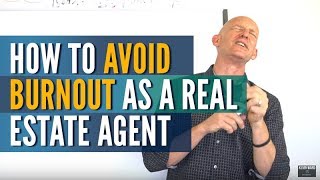
Kevin Ward gives five ways real estate agents can avoid burnout: keep a daily schedule and clock out, delegate to a transaction coordinator, take one day off weekly plus four vacations yearly, check if you're still having fun, and attend training events four to six times a year.
Chapters
If you want to avoid burnout, one of the most critical, important things for you to do is to master the art or the skill of clocking out. Hi there, it's Kevin Ord, the founder of yes Masters Real Estate Success Training, helping you get more yeses and more successes in your business and in your life. And when you get right down to it, life is what it's all about. So one of the challenges that happens for real estate agents, especially the successful ones, is this struggling with burnout. And that is that they just get going and going and going, and there comes a point where they hit the wall. There comes a point where they're like, ah, I got to quit. I'm burned out, I'm depressed, I'm frustrated. They just don't want to work anymore. And if you've been in real estate for a while, you probably have at some point felt that sometimes it's a shallow burnout, sometimes it's a deep burnout that takes a long time to get over. So what I want to talk about today is how do you avoid it? How do you keep burnout from happening? Whether you've been in real estate for a year or you've been in real estate for 20 years, how do you avoid burnout? Because you can avoid it. Just got to be prepared properly so that it doesn't happen, because it's a lot easier to prevent it than it is to cure it. So five steps to prevent. Five steps to avoid hitting the wall of burnout in your real estate business. So here's number one. The first thing is to prevent it is have a daily schedule. Now, like a daily schedule is immediately makes a lot of ages go. Like, I know I need a. I need to. I have a schedule, but I never follow it. I don't have it. I don't have a schedule. I don't want a schedule. I hate schedules. You know, whatever. I've tried following a schedule didn't work for me. Here's the key to a schedule. The key to a schedule is one that it has the things in it you need to do today to make money. It's got to have the items that are going to put points on the scoreboard and put dollars in your bank account. But in terms of avoiding burnout, here's the key is that you must actually honor the schedule, especially the start time and the end time. And what I mean by that is that when your schedule says, I'm going to start working at 8am, that you actually start at 8am, that you actually clock in when your schedule says stop. And to avoid burnout, the most important thing is that you actually clock out at the end of the day, which means there comes a point on your schedule where it says stop working. Your ability to stay focused on your schedule not as just doing what you're supposed to do when you're supposed to do it, but how to stop doing work when you're not supposed to be doing work. And if you want to avoid burnout, one of the most critical, important things for you to do is to master the art or the skill of clocking out. If you don't clock out, and agents are notorious for this because you don't have a set schedule. You don't have a, you know, business hours from 9 to 5 or 8 to 5 or 8 to 6 or whatever it is. It's like 24, 7 for a lot of real estate agents. And that is a sure path to burnout and to a major crash. Both emotional mental breakdown, nervous breakdown, depression, just stressing out. All of that can happen unless you master the ability to clock. Now here's what happens is real estate agents check their phones. And this has been, this is one of the critical changes that have happened in the industry. And that is now this goes with us everywhere. And this also has work on it everywhere. Because you got your cell phone on your cell phone, you got text messages, you've got email, all those. And most, for most agents, they have it set up with push notifications or it's just that habit of, oh no, what if I miss something? And, and so what do we do? We're checking our, constantly checking our cell phone, going like, okay, what's on? What's going on? And let's say that your schedule says quit at 6pm how many times after 6pm Are you checking your email? Are you checking your text? Or how many times you have a client or an agent or someone that sends you an email or sends you a text at 8:30 at night or 9:30 or 10:30 or 11:30, and you're still looking at it. Guess what, my friend, you're stressing yourself out. And you stress yourself out, you're burning yourself out. I don't care. Don't give me excuses. It's the way it is. And you may go like, yeah, but no, but you got to have a life and you got to protect your life or you are on your path to burnout. And here's what they now know. And there are now research that has been done on addiction to digital devices, especially our cell Phone. Here's one of the things that a study found and that is that people who are checking their email and checking their cell phones, well, checking their email and text messages on their cell phone, on their computer, it doesn't matter where. And they're doing that for long hours a day where they're not clocking out. And they're literally doing it from the time they wake up till the time they go to bed. They are literally what it does, it keeps you under stress. So as your stress level stays high because you're constantly stressing about work, you get more and more cortisol. And here's how it shows up in your body. Physically, it causes you to gain weight. It causes you to retain body fat, primarily in the gut, primarily belly fat. That one of the hazards of checking your email all day every day and responding and getting sucked into that game of being available 24,7 is you're going to get fat. Belly fat. Why? That's where when you're under a lot of stress, cortisol, you tend to store body fat. I don't like it, but it's just the way it is. You want to release all that, get out of the stress. How do you get out of the stress? Clock out. You set business hours, you communicated your clients and between 8am and 6pm I'm available. But after 6pm I'll get back with you the next day. And in real estate, the beauty of it is there's not anything that's going to blow up after 6pm it's going to be fine. Everything's going to be cool. Don't, don't live into the drama that a lot of agents create. The self imposed where they think they have to be available 24,7. What's important is that your clients trust you and you communicate what so they have accurate expectations of what to do. But get this off your plate. The other thing that they know is that when you're looking at your cell phone or your computer within two hours of bedtime, you have less, you have more sleep disruptions and you have lower qualities of sleep because of that, you have lower recovery, which means you don't think as well. Your cognitive abilities, your memory, all of that's affected because you're working too many hours and you're not unplugging. And the blue light of the digital cell phones, tablets, computers, all that affects your ability to sleep at night physically and also emotionally because you're still thinking about work. So you want to avoid burnout. You got to clock out every Single day, set a time and quit working. Period. I know it's hard, but you can do it. Number two, the second thing that you've got to do if you want to avoid burnout is you have to learn how to delegate. Now when you're brand new and you're basically doing everything, there's a point where that's appropriate. But as time goes on and as your business increases, the learning how to not feel like you have to do everything, that you got to be the one that is responsible for everything is really, really important. First step is once you've got more than one transaction a month on average going on, hire a transaction coordinator. They're only paid on the transaction, so you only pay when it closes. So it's a set expense. And they will take enough off your plate in handling the administrative tasks that it will free you up. One to not feel like you have to do everything gives you some support and it gets stuff off your plate so you can actually make more money without just adding more hours. And as you get more and more successful, you're going to be hiring assistants. You're going to be hiring, showing assistants, administrative assistants, listing coordinators, all that kind of stuff as your business grows so that you're not all the weight is not on you. And once you get to a certain level now I can literally have somebody covering the business when I'm not available, when I take time off. All of that is part of this that you've got to start right now with this mindset of clients don't clients need to be taken care of. But that doesn't mean they can only be taken care of by me. That there's other people out there that your transaction coordinator, assistants later on team that can help you take carry the load, shoulder the load so you can stay fresh and not get buried under the that self imposed responsibility. So you've got to be willing to delegate. The first hire should be a transaction coordinator. As soon as you're doing more than one deal a month, you got if you're consistently doing a deal a month, boom, you need to have a transaction coordinator handling that so that a lot of stuff is taken off your plate and you can spend more time doing the things that will get you more transactions which will allow you to delegate more stuff and hire have the income to hire more staff. Number three, the third key to avoiding burnout is taking time off. You have to take off, take time off. It is required if you want to avoid burnout and be productive. It is required. Now how much Time should I take off? I'm going to give you two guidelines. Number one is one day. One day a week. One day a week you should not work. And when I say one day a week, not work, I'm not talking about, well, can I do an open house on that day? No, that's called work. Well, can I show buyers? That's called work. Can I answer my email and do phone calls? That's called work. One day a week. Take it off. The world will continue to spin if you actually take some time off and enjoy your life, enjoy your family. It lets you bond with yourself, it lets you bond with your family, it lets you recharge your batteries. It's just critical that you take time off. And to do that one is you need to take off one day a week and on that day, do no real estate. Get somebody to handle, help you cover your business if you like. If I do open houses on weekends and take Monday off, pick a day of the week, but take a day off every single week. Do it. Trust me. Got to do it. Now, four times a year you need to take a vacation. Four times a year, every quarter you need to take a vacation. Now how many real estate agents actually take four vacations a year? Answer. Virtually none of them. Okay. That is why burnout is so prevalent in our industry. There's washout, which is what agents do when they don't make enough money and they get washed out of the business and have to go get another job. I'm not talking about that. I'm talking about the ones that are making money that don't ever take time off or they may do one vacation a year. And I'm going to tell you, you need to take four vacations a year. You go, how can I do that? Well, here's how you do it. Those vacations should be four to 21 days each. Now, probably not going to take four 21 day vacations every year, but you can take a four day vacation four times a year, no problem. Now what would a four day vacation look like? Thursday, Friday, Saturday, Sunday, Saturday, Sunday, Monday, Tuesday, Sunday, Monday, Tuesday, Wednesday, four days off and clock out. Get somebody else to cover your business, get your team to cover your business or another agent in your office. Take the time to take off and then go somewhere. If you're still new and you're struggling financially to get going. It doesn't have to be expensive, but it does have to get out. Get a tent, go camping, do something, go somewhere to enjoy time off. And what happens on that is you get the deep battery recharge, you get to take a break where you're completely disconnecting from the business so that you can reconnect with yourself. And it's really, really important. This one day a week gives you a regular recharge of your emotional, mental and physical batteries. This gives you the deep recharge which you need. And four times a year, take off four days. At least one time a year, take a good vacation, like seven days to 10 days, to two weeks, three weeks. Once you're making some good money and you can do that and you have a team that can cover stuff for you, then a good three week vacation is awesome. But at least pre schedule them, sit down this week with your family and go like, okay, I'm committing to four vacations for the rest for this next 12 months. All right? I want to do three that are four days and one that's 10 days. Just figure it out, set it, put it in the calendar and plan around it. It will work. And what happens, you stay excited about real estate. You take, you go, you go away. When you come back, like, I'm ready to get back to work. I can't wait. It is so powerful. If you'll do that. Some of you are freaking out right now. Stay with me. This is critical now. Some of you are like, I don't, I love what I'm doing so much that I don't want to take a day off a week. If you're at that point, congratulations, that's a great place to be. Still, you got to take some time off for your family. You got to take some time off for your health. But if you're working, some of you people, they're just like, they're in it, they're loving it, they're loving it. I get it. I get that way too, when you're loving what you're doing. So this fourth step is something that you must do all the time in your business. And that is simply this. Ask yourself this question, am I having fun? You need to ask yourself that question regularly, every week, every month. Just, am I still having fun? Am I loving what I'm doing? Am I having a good time selling real estate? If you ever go, am I? So am I having, am I still having fun selling real estate? Oh, no, I hate it. I just want to quit sometimes. That, my friend, means you are at risk of burnout. It means the stress is getting to you. It's wearing you down emotionally, physically, mentally. Something is wearing you down that you're not enjoying. Yourself. Now that doesn't mean that there's going to be times in real estate you're not having fun, you're going to have to do stuff. In real estate that is not fun. I love having cats, but sometimes I got to empty the litter box. I really never enjoy emptying the litter box. It doesn't mean I shouldn't have cats. You just means sometimes you do stuff and any fun, does that make sense? So having fun just says, am I still enjoying real estate? And if I'm not and I'm stressed out and I'm like, I need a break, then guess what? You have to take a break. And part of taking a day off and taking off the vacations, it will keep you having fun in real estate. Number five, the fifth thing to keep you from getting burned out is attend events. Now what I'm talking about is attend real estate training camps, training events, attend self improvement events. And I recommend you do a minimum of four to six per year. Okay, once a quarter, once every other month you want to schedule time to go spend two or three or four or five days at an event. This is not vacation time, this is working time. But it's time in to keep you growing and excited because you know what you notice, like if you go to a real estate convention or you go to a seminar and it's good, you just get fired up and you learn a lot of new stuff and you're like, alright, now I'm ready to go back to work. When you are learning and growing, it keeps everything fresh, it keeps it exciting, it keeps you in the game. So you got to make sure that as you're going that you're feeding yourself, that you're giving yourself this pump up of new energy, of new ideas, of new strategies that makes you feel fall in love again with the exercise, the practice, the business of selling real estate. It's going to be better for you, it's going to be better for your clients and you're going to love it more and you're going to make more money. It's that simple. I know some of these things. As you look at them, you're like, how do I do it? Or what if? And you want to negotiate with it. But if you want to have a long term career and you're playing for the long game, not the short game, you got to take care of yourself. Take care of yourself. You're going to do better in your business and you will never burn out. So if you have questions or comments or thoughts or arguments with any of this, make sure. Post them down below in the comments. I love to see them. I'll. Come on. I'll answer the questions. I'll engage with you on the comments or the thoughts. Make sure that you do that. Engage. If this video has been helpful to you, give it a thumbs up for me. And also subscribe to the channel if you haven't done that yet. Hey, if you know another agent that's kind of burned out, share the video with them. They need it right now. Hurry. Help. They need it. And I'll talk to you on the next video.
More from Kevin

When a Seller Says "Not Interested," Ask This #realestatecoaching #realestateagent



Suck At It. Stick With It. Succeed At It. #realestatecoaching #realestateagent #listingagent
You're Not Procrastinating. You're Lying to Yourself #realestatecoaching #motivation

