How to Create the Prospecting Habit - Kevin Ward
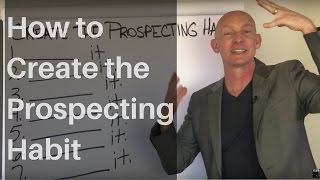
Kevin Ray Ward lays out a seven-step process to build a prospecting habit. Start with your personal why, commit for at least 30 days (ideally 66), schedule it, use accountability with penalties or rewards, show up consistently, and automate it until it runs on its own.
Chapters
Hi there, it's Kevin Ward, the founder of yes Masters Real Estate Success Training. And one of the hardest and yet one of the most important habits that real estate agents can create is the habit of prospecting. How do you create the prospecting habit? Because if you can do that, you are going to make money. Because one of the biggest challenges that real estate agents run into when they're getting started on really building their business, and that is inconsistency. We start, we stop, we start prospecting, we get a couple of leads, we get an appointment, we get a deal or two pending, and then we're so busy chasing that deal down and working with those buyers or working with that transaction that we stop prospecting. We start and we stop. We start and we stop. And when you do that, what you end up with is what I call yo yo real estate. And real estate is really yo yo income, that your income starts down here and then you start prospecting your business and everything goes great and you got a business, you got deals going, you got money in the pipelines, and then you quit prospecting to convert that money, and then your income drops again because you have a closing. And then you look around and go like, oh, I'm so busy getting this deal or to close that I quit prospecting. If you want to close, create, and if you want to create success for yourself and sustain success for yourself, the greatest key is to create habits that will consistently support your business and support your success. And one of those, probably the initial one, is the habit of prospecting Masters in any field of endeavor, those who are the best, the elite performers, the highest achievers, they operate their success on the basis of having a great set of habits. And so in this video, I want to just break down, how do you create the habit of prospecting? How do you get yourself going and get yourself to a habit? And when you do that, what will it do for you? So that's what we're going to talk about on this video today. How do you do it and how do you sustain it? So I'm going to give you seven steps to create an amazing, powerful, profitable, successful prospecting habit. So number one, the very first step to creating a prospecting habit is what I call you have to why it? Why am I going to prospect? You've got to create, start with the big why. Simon Sinek wrote a book called Start with why, why are you doing this? And what I mean by that when I say why it is you've got to attach the action of prospecting to. To Something that is bigger than just the goal of prospecting. Well, my goal is to prospect three hours a day. Well, it's a great goal, but it's not very exciting. It's not very sexy. It's not very fun because you get prospecting and you get going and like, oh, I don't feel like prospecting today. Three hours is such a long time. And if your goal is prospecting, it's not compelling enough for most agents to keep them going. So what helps is attaching your action goal, your action commitment of prospecting to a big why goal. And here's what's this going to do for me if I prospect every single day, two hours, three hours, whatever your commitment is, let's say three hours a day, five days a week. Why would I do that? Well, because if I do that, I'm going to get listings. If I get listings, I'm going to get sales. If I get sales, I'm going to get income. So what's the benefit of that? Well, now I can do stuff. Now I can have a lifestyle. Now I can actually pay off bills, I can pay off debt. I can now have vacations. I can get a new car, I can get a new house. I can create financial freedom. I can do all of the things that really you want to do that are the reasons you got into real estate. So it's not. It's not why am I prospecting, it's why what will that do for me? What's the benefit of prospecting? And the benefit, when you get right down to it, when you boil it all down of, well, the benefit of prospecting is to get appointments. What's the benefit of that? I get listings. What's the benefit of that? I get sales. What's the benefit of that? I make money. What's the benefit of that? I get a have a lifestyle. Now I know why I'm doing this. So I recommend that if you want to create really a sustainable habit of prospecting, I train agents to create a vision board. Create your goals of not the means goals. Prospecting is a means to an end, which is the why goals, and get pictures of those and create a vision board that you post in your prospecting station. So every day when I'm prospecting and when I don't feel like it, I don't feel like prospecting, but I do feel like, hey, having a new boat or a new car or whatever your dream is vacation. Or paying my kids way through college or being able to give more to my church or synagogue, the Ability to do the things that you really want in your life are directly tied to prospecting. So start with the big why. That will motivate you on the days when you don't feel like prospecting. Because frankly, all of us are going to struggle at times with feeling motivated to do the grind stuff, which is the things that I have to do every day that are required to be successful in your business. So number one, you've got to why it Number two is once you've got the big why, now you've got to commit. You've got to commit to it. And that is, I've got to now make the commitment. What am I going to do? I'm going to prospect three hours a day, five days a week, one hour a day, five days a week, two hours. Whatever it is, the key is you've got to make a commitment. It's not like I'm trying, I'm going to try prospecting, I'm going to try to do it three hours a day. As Yoda, one of my favorite mentors of all time, Yoda, the Jedi Master, said, do or do not, there is no try. When you try to do something, you automatically set the. You give yourself an exit. And that is, well, I tried. And you give yourself permission to fail. There is no try. You either do it or you don't do it. And you commit to it, which means you have to make the permanent commitment. I'm going to do this. Now, my suggestion is that you commit to a certain period of time. Now, how long does it take to create a habit? So there are two ways you can do it. A minimum. This is not the best, but a minimum of 30 days would be the minimum commitment. So I'm going to prospect every weekday or whatever your schedule is for 30 days. Better is the best is 66 days. That's the best. Because in the latest research, all the latest research on how you create and hardwire a habit, they're saying 66 days on average is what it takes to make a. Have it so ingrained into your psyche, so ingrained into your mind that it becomes automatic that it's easier to do it than it is not to do it. And that's 66 days, which basically be a little over a two month commitment. So you have to make a commitment. I'm going to prospect every single day. Now, when I say every single day, I'm talking about every day you're working. So if you're working five days a week, Monday through Friday, commit. I'm going to Prospect every day, Monday through Friday for the next two months and a week. Make that commitment you have to make. It won't happen if you don't commit. For example, let's say you went and got a job at Starbucks. When you get a job at Starbucks, are you committed to showing up every single day? And when you show up at the store actually working, doing exactly what you're supposed to do, whether you're a barista, you're making drinks or being the cashier, whatever it is your commitment is, you're going to do exactly what you're supposed to do every single day. It's not like, well, I'm going to only show up for work. You know, I'm going to show up for work. 80% of the time. That would work at Starbucks, they would fire you. Or at McDonald's or at a Home Depot or anywhere else that if you're working for American Airlines, it doesn't matter. Apple, Google, wherever you're working. If you had a real job and you didn't commit to show up every day and do what you're supposed to do every day, you would be fired. Challenges in real estate. You're self employed, you're your own boss. So you either have to do the work or fire yourself. And most agents don't fire themselves, they just go out of business because they're not willing to do the work. You have to commit to this action because it's critical. It is essential to your business success. So make the commitment number three. The third thing, once you commit to it is now you got to go public with it. And that is you got to post it. And when I say post it, what I want you to do is let's say you commit to 66 days. I want you to create, get a poster board or a sheet of paper, but the bigger the better. And you literally create the calendar of the 66 days and every single day it's posted there. So when you show up, it is your 66 day commitment. And you post, I've got a 66 day commitment. Here it is, it's posted. And every day you check off, boom, boom, boom. What that does, one, it gives you the feeling of accomplishment as you check them off. And two, every day when you walk in your office, you don't forget the commitment. Because the hardest part is during the creation of the habit. This is the most critical phase, is while you're creating the habit. Once the habit is created after 66 days, it's automatic. You don't have to think about it Anymore, you just show up and do the work. But until it becomes an automatic, until you reach what we call automaticity, which means it's automatic in your brain every day. It's just an action you do every day until you reach automaticity. It requires some willpower, it requires some discipline, it requires attention. It requires that you don't forget about it or get distracted. So post it. Make a big deal about it. Number four is not only do you have to put it up in your office, you actually have to put it in your schedule. You schedule it. Which means it's not like, okay, I'm going to prospect three hours a day. Well, when are you going to prospect? Today? Well, I've got this, this and this. And so I'm going to do it after that. You can't do that if it's not in a daily schedule in your calendar. You won't do it because life comes at you from too many different angles. There's too many distractions, there's too many things pulling at our time that if you don't block the time, if you don't time block that two or three hours a day, it's not going to happen. So you've got to put it in your schedule where that it's there every day. Schedule it. So if you're prospecting, I recommend that you prospect, for example, from 8 to 11am Great time to prospect. If you want to do a little later, 8:30 to 11:30am Right after that, I recommend lead, follow up. Because you're going to be generating leads. You want to make sure you have time scheduled to follow up. But the key is it has to be locked into a schedule. And the next thing is with the schedule. Then you probably need to set a reminder, and that is, I like alarms. You can do it with a timer. Get a kitchen timer. And you set it so that when you show up at the office in the morning, you're like, okay, I got 45 minutes until my prospecting time starts. Boom. Set the timer so that five minutes before prospecting starts, the alarm goes off and you're like, oh, I got to get ready. I got five minutes to go. And all this goes into a routine. Preparing to prospect, getting the numbers, who you're going to call or if you're going to door knock, who you're going to go, door knock. All that's got to be prepared. That's preparation for this time right here. So that when this time hits 8am starts, I am either out the door knocking on doors, or I am on the phone, calling people. You have to have it in your schedule. So I need a calendar, I need an alarm and, or a timer, all that. So that you're having. You got structure, you've got things in place to make sure you don't get distracted, you don't forget, you don't dodge it. All of this is happening to give you the support that you need until the habit is created. Number five. Number five is to get it into a habit is once you make the commitment, now you have to leverage. You have to leverage your commitment prospect. Now what does that mean? That means you got to get leverage on yourself, which means I got to have the push, something with leverage on me that forces me to do it. No excuses, no exit, no way out from the commitment. So how do you get leverage on yourself? Well, two ways you can get leverage on yourself, pain or reward. So the pain would be the penalty. And the penalty would be having accountability partners that say, okay, if I don't prospect, I owe you five bucks today. If I don't start at eight and prospect all the way straight through to eleven, then I owe you. X. You may write a check to somebody that you don't want to write a check to. That if that you get somebody you trust that will hold you accountable. And if you don't do it, they're going to give that check to the person you don't want it to go to. That would be pain. So that if you don't do it, there is a penalty. Another leverage that you can put on yourself is a reward. And that is what is the reward I get after I do it? So after I've completed the 66 days or the 30 days or whatever it is, after I've completed it, how do I celebrate? What's the victory? What's the reward? And you got to reward yourself. Another thing you can do is you can reward yourself every day. Just little, you know, little things after your day to celebrate. Yes, every day that I prospect my three hours, I get to do this. And it may be going to get, you know, a Starbucks or it may be going to. Whatever it is, you pick some reward that makes you feel great. So you can use the penalty of when I don't do it or, and. Or the reward of when I do do it. What motivates you the most? What's most likely to force you to do it? Having a coach, having accountability partners, having other agents that you play with that also keep you on track and just make a commitment. Say, I've got to text you every day at 7:59, you're going to get a text from me, say, I'm starting now at 11am when I'm done and get off my last call, boom, I'm going to text you and say, done. And I'm going to report my numbers to my accountability partner or role play partners or your coach or whoever it is. Having that in place gives you the support until the habit is totally, completely formed. Now, the beauty of this is once the habit is completely formed, you don't have to focus on all the, this is the hard stuff, this is the ugly stuff. It's not sexy, okay? When you start a new, when you go create a habit that is powerful, you got to understand at the beginning, there's going to come points where it's hard. There's going to become points where you mess up and it's going to be ugly and you're probably going to fall down and you're going to have to get back up and keep going forward. But when you get to the end and that habit is formed, it is so beautiful, it is so powerful. And you're powerful because you don't have to use willpower anymore. You don't have to use discipline anymore because it's a habit, it's automatic. So leverage it. Get people around you, go public with it. Let them know, here's my commitment. If I don't do this, I owe you. If I don't do this. And then whatever you set up, you have to honor it. You have to keep your word. And then once you do that, number six is very simple. You have to do it. You just have to show up every day and do the work. You got to run the miles. Once you've made the commitment, the trajectory to greatness is set. Your success is already. The trajectory to your success is set. You just got to run the miles. You got to put in the work of actually showing up and actually doing it. And then the seventh step happens without any effort. And that's this. That you, number seven is you automate it. You automate the habit. And what I mean by that is not, it's not a technology thing. It's that the habit becomes just the automatic response. Every morning I get to the office on time, I get prepared, I get all the, what I'm going to, who I'm going to call or who I'm going to visit that day. It's all set up. I do my role play, I get there, I get fired up, I get my, I do what I whatever warm up ritual you've got. And then boom. When the timer goes off at 8:00am, boom, I'm dialing. Boom. I'm out the door. And I don't have to make myself do it anymore because it has become a habit. And when you get to that point that it's automatic, that you just do it over and over and over every day, no longer do you like. I know I try so hard, I just. It's hard. All the stuff about hard right here, this is hard. Everything right here that I'm talking about, the commitment to it, posting it, scheduling it, leveraging it and doing it, that's hard. But it's only hard until the habit's created. Once the habit's created, it will never be hard again. If you do the work once, you maintain the consistency. I'm not saying you're not going to work hard, but I'm seeing emotionally it's not going to be like having to torture yourself and drag yourself into the office and, you know, put the phone up and it weighs 100 pounds and put the headset on or whatever it is. It's not going to be hard, it's going to be effortless. Because the power of automaticity has now taken over the greatest achievers in the world. In any area, in any industry, whether it's business, whether it's performing arts, whether it is athletics, whatever it is, the greatest achievers in the world run their life by having powerful habits. And one of the most powerful that you will ever create in your life as a real estate agent is the prospecting habit. Once you create that one, then you can stack other habits on top of it. That will just make you more and more and more powerful. You will always be able to expect, yes, you're going to have great success. Do the work, commit to do it today.
More from Kevin
When a Seller Says "Not Interested," Ask This #realestatecoaching #realestateagent


Suck At It. Stick With It. Succeed At It. #realestatecoaching #realestateagent #listingagent
You're Not Procrastinating. You're Lying to Yourself #realestatecoaching #motivation

