HOW TO FIND THE RIGHT COACH OR MENTOR - KEVIN WARD
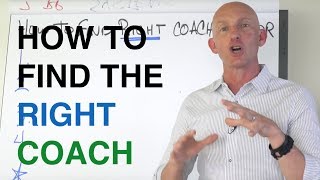
Kevin Ray Ward (founder of YesMasters Real Estate Success Training) explains how to find the right coach or mentor. Using a personal anecdote about his high-school basketball coach (Coach Milson), he outlines four key traits to look for in a coach—passion, pro-level coaching (mastery vs. shortcuts), demonstrable track record, and generosity—and adds one requirement for the student: be coachable (honest about struggles, implement guidance). He frames the advice toward real estate professionals but presents it as general coaching guidance.
Chapters
Foreign. Hi there. It's Kevin Ward, the founder of yes, Masters Real Estate Success Training. And I wanted to shoot this video today in response to a question that I'd received from an agent on how do you find the right coach or mentor? Now, of course, my first response to it was, you're asking me the question. I'm a real estate coach. How about me? And so if you're interested in my real estate coaching, you can go to my website, yes, masters.com coaching and you can find out about not only my different coaching programs, but how I coach, why I coach, and so forth. But it's a great question. How do you find the right real estate coach and the right mentor? And when I think about that, I think back to the very first great coach that I ever had. And it was my sophomore year in high school. It was my basketball coach. I had him for only one year, and in my entire life, it was the only really great, I mean, great coach that I ever had. And the next year, he left. He went on to a different school. He was a young guy, brand new coach, went on to a different school that believed in excellence, and he took his team to the state championship year after year after year after year. Even as a young coach, he was great. And my dad had told me, he said, coach Milson is going to go far. And his name was Coach Milson, and he was awesome. So when I think about, how do you find the right coach or mentor? I think back to Coach Milson and how great he was for me. And I've had a lot of other good coaches and great coaches over the years, but he was the best. And so I thought, what is it about a coach? Whether it's a real estate coach or in any industry, in any field, how do you pick a great coach or a mentor? And I think there are really four things that you want to pay attention to, and that's what I want to share with you. Then I'm going to talk about a fifth element that requires something of you. And it's not about the coach or the mentor, but it's about you. So let's talk about the four keys to. To look for in a great coach or mentor. Number one is passion. Do they love what they do? And that was one of the things about Coach Milson. Coach Millsen loved what he did. He loved the game of basketball and he loved playing it and he loved coaching it. And he wanted to help me be the best. And he believed in being the best. Number one is if they're not passionate and excited about helping you, then it's going to be like painful trying to get them to help you and give you the help and the guidance that you really need. If they're just doing it for the money or if they're, you're just another, you know, you're just another coaching member, you're another person. If they're not passionate about what they do and they're not passionate about helping you, you got to keep looking. In fact, I believe one of the reasons that so many people do not appreciate or understand the value of having a coach is because we've all had bad coaches. And bad coaches can mess up your game and they can actually cause you to lose your love and your passion for the game or for your business or whatever your career, whatever it is you're doing that you're getting coached in. So, number one, look, I want to see passion. Are they passionate about whatever they're coaching the topic or subject matter, and are they passionate about helping you be great at it? Number two is what level are they coaching at? And I want somebody who coaches at a pro level. Now here's what I mean by that. If you're looking for a coach or mentor, I'm assuming for this video that you're looking for a coach or mentor in something that you want to be great at. In other words, you're doing it as your. It's your business, it's your profession, it's your occupation, it's your career, it's your passion, and you want to be great at it. Well, I want to coach that coaches pros, not one that coaches you as if you're an amateur. And the reason I think this is so critical is because so much of the coaching that I saw when I came into real estate was all of the training for real estate agents was training them as if they're amateurs. And so we would get lots. Well, let me just kind of explain the difference. A pro level coach coaches you on principles of mastery. In other words, you've got to become great at something. An amateur coach, somebody who's coaching you at an amateur level is always teaching you tricks and they're teaching you shortcuts, they're teaching you magic bullets, they're teaching you quick fixes because they know if I can't get you to look good fast, then they're afraid you're going to quit coaching. The problem with that is, is that shortcuts and tricks most of the time are bs. Most of the time they're not sustainable. They're designed for the short game, not the long game. They're designed to help you make get a little win today, not to build a great business or to build a legacy or an empire. And that requires somebody that coaches you at a pro level. Are they into mastery, or are they into tricks and shortcuts and gimmicks? If you got a coach that's trying to get you to try little different things in this gimmick or this shortcut or this trick, you got the wrong coach. Unless that's what you want. But if you want to be a master, if you want to be great at what you do, if you want massive success, you want to find a coach who coaches at a pro level and requires you to perform at a pro level and do the work that a professional coach would do totally different. So this is. Think of it. If you wanted to play tennis, do you want a pro tennis coach, or do you want a tennis coach that trains amateurs? Well, it depends. If I just want to do it as a pastime and get to where I can go out and play a little tennis and not look totally silly, then I can find an amateur tennis coach, which means there's somebody that you go to and you take eight or ten lessons, or you sign up for a few classes and you learn how to swing the racket and how to serve a little bit and how to not look silly, keep the ball in balance, then you can hire an amateur coach. But if you want to be great and you want to play on the pro tour and you want to be a master, you want to win tournaments, and you want to make a living doing it, then you want to hire a pro coach. And a pro coach is going to demand something totally different from you than an amateur coach is going to demand. If you want to be great, hire a coach that trains you at a level of mastery, not at a level of gimmicks, BS and shortcuts. Number three. The third key to look for is I want to see their track record. I want to know what their expertise is. Do they know what they're doing? Do they know what they're teaching you? Now, there's multiple ways you can have a track record, but if it's, for example, if it's in real estate, do they have expertise? Have they sold a lot of houses? Have they had success in real estate? Now, is that the only thing that matters? No, it's not the only thing that matters, because there have been agents that were fantastic at selling houses, and they've had massive success. But when it comes to being a coach, they don't know how to teach it. They don't know how to empower others to do it. So I'm looking for one. When it comes to track record is somebody that knows what they're doing. They've got some expertise. There is something powerful about personal experience that you can learn from the nuances that. That they know because they know the game. And one of the things about Coach Milson, that was my basketball coach in high school, that was the great coach that I had, was that he was a master and a student of the game. So whenever I needed help with something, he knew how to help me because he could do it and he could demonstrate to me what needed to be done, because he actually had done it. Now he didn't play basketball anymore. He was now just a coach, but he knew the game because he had mastered it himself. So he had been in those game situations. He understood where your shots went wrong. He understood how to make a move on a defender. He knew the fine points that he could teach me because of the acuity that comes from personal experience. But most important was not only did he know how to be good, he knew how to help me be good and how to help teams be good and win. So when I look for track record, it's one. Personal experience is great. But even more important, a higher level is does that coach have a track record of helping train other agents to be successful? Because if they can teach others to do it, then they can teach you to do it. They can help you do it. So I'm looking for the track record. And then fourth. The fourth thing I'm looking for, the fourth thing in a great coach or mentor is generosity. Generosity. And what I mean by generosity is, are they open and willing to help you and give you the whole. The whole everything you need, the whole spiel. Will they give it all to you or are they going to hold stuff back? Now, again, what I mean by that, this is that there are some agents out there or some coaches out there who, they don't want to give you everything. It's like they don't want to give all the secrets that there's. They're always holding back. That comes from people who are insecure. They're afraid of competition. They don't want you to get too good or they want more money from you, and so they hold back from you. What you're looking for is a mentor that they want you to succeed. That's what you want. And they're going to give you everything they've got to help you succeed. Now, if you're, if you're. It doesn't mean that they're going to give you, you know, if you're paying for a one coaching call a week or one coaching call a month, it doesn't mean they're going to give you six hours instead, you. I'm not talking about that because their time has value. But what I'm talking about is are they willing to give you the best information and guidance that they can to help you be great? One of the things I knew for sure about Coach Milson was not only could he coach me and did he know a lot, but he wanted me to win. He wanted me to be great, and he was willing to do everything he could and never hold anything back to help me be great. Now, the last thing I'm going to tell you is not something to look for in the right coach or mentor, but it is the single most important, and that is for you, and that is that you have to be coachable. Be coachable. Now, here's how that looks. There's a couple of things that are very, very important when it comes to being coachable. One is when you're actually talking to a potential coach or mentor, if it's somebody that you actually have the opportunity to sit down with and talk to them, don't try to impress them. One of the biggest mistakes that you can make, if you're looking to find the right coach or mentor and you're talking to somebody who's great and they really can be a good coach or mentor for you, and then you sit down and talk to them and you're interviewing them about being a coach or a mentor, and then you're sitting down, you're trying to impress them with how good you are. Or when you start the coaching with them, all you do is tell them all the good stuff. And you don't really tell them what you're struggling. They can't help you because you're trying to prove to them in a. It's almost like you're trying to prove to them you don't need their coaching. As if you're going to impress them and they're going to go like, wow, you're awesome. Don't do that. You got to. If here's what you're telling them when you try to impress them and you only want to tell them your good stuff, you're telling them, I'm not coachable. I'm more interested in how I look to you than Becoming great. And so I've coached agents that everything I would tell them to do and say, okay, I want you to do this, they go like, oh, yeah, I know that I'm already doing that. Well, that's exactly what I did and it didn't work. What else should I do? Well, do this. Oh, I did that. And no matter what I told them, it was like, they weren't, they would not take the coaching. They wanted to impress me. You've got to be willing to take the coaching and implement it and apply it and be a doer. Look, strategies, skills, approaches, all of the stuff that a coach can do for you are useless without execution if you're not willing to go out and do the work. It's like hiring a personal trainer. They may be the best in the world, but they can't do your pushups for you. You've got to be willing to take the action, take the coaching, put it into action, be willing to make mistakes, be willing to fail, and be willing to be straightforward and ask them what you need help with, tell them what you need help with, listen to what they say, and actually implement it. More important than finding the right coach is being the right student and being a great student so that when you get the great coaching, you're going to be able to take it out there and help you win in your business and in your life. So I hope this video has been helpful for you. If it has, make sure you give it a thumbs up, make sure you share it, make sure you subscribe to the channel, and I look forward to talking to you real soon. Always expect yes.
More from Kevin
When a Seller Says "Not Interested," Ask This #realestatecoaching #realestateagent


Suck At It. Stick With It. Succeed At It. #realestatecoaching #realestateagent #listingagent
You're Not Procrastinating. You're Lying to Yourself #realestatecoaching #motivation

