How to Overcome Failure Fast - Kevin Ward
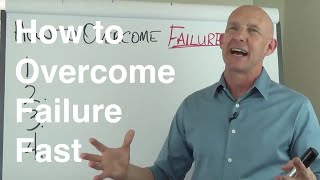
Kevin Ward walks through four steps to bounce back from failure: own it, handle it fast, learn what went wrong, and let the guilt go. He uses personal stories and practical metaphors to show why dwelling on mistakes costs you more than making them.
Chapters
Hi there, it's Kevin Ward, the author of the number one best selling book, the book of yes, the ultimate real estate agent conversation guide and the founder of yes Masters Real Estate Success Training, helping you get more yeses and more successes in your business and in your life. But today I've got to tell you some bad news. And that is, it happened again. I totally messed up. I failed to be perfect again. And I think, I think it's like over 15,000 days in a row that I have now failed to be perfect. I made a mistake. So raise your hand if you've ever done the same thing. Yes. Every single day. We're not perfect. We have failures in our life. We let people down. We say we're going to do stuff and we don't do it, or we make mistakes, we try something and it doesn't succeed, or we set a goal and we, we don't reach the goal, or we start something and we don't finish it, whatever it is. When you boil it right down to we failed to live up to or we failed to complete something that we wanted to do or decided we were going to do or told somebody we would do, there's no way to say it except to say, I messed up, I failed. But the question is not, are you going to fail? Because we're all going to fail. And we do it virtually every single day because nobody's perfect, right? It's not an excuse, it's just reality. So the real issue is not how often do you mess up. The real issue is how do you deal with it when you do have failure in your life? Because it's so regular, it's such an integral part of our life, we deal with it every single day. How do you overcome it? Not only how do you overcome failure, but how can I overcome failure quicker? How can I overcome it faster so that I can not let the failures slow me down, stop me, discourage me, or get me stuck. So I want to share with you today. 4. I mean, it's just like, it's so powerful. When I just sat down and I'm like, I literally had a failure. And this happened yesterday is I did something, there was a situation with a customer of ours and I didn't handle it right. And I just, I just didn't handle it right. And I was like, ugh, I can't believe I did that. And I felt guilty, I felt upset. I wanted to justify what I did, I wanted to excuse it. And I just, there was no way around it. I made a mistake. It was a failure on my part. And I'm like, okay, how am I going to get over this? Because I hate it when that happens. You know what I mean? You just. You do something and then you just like, ugh, I feel awful. I feel bad for myself, and I feel bad for them and other people that knew about it or whatever. I'm like, okay, I got to get over this. What do I do? How do I overcome this failure fast? Because I don't want it to ruin my day, and I don't want it to ruin that relationship. So how do you deal with it? So here's the four steps that I just. I did this, and when I did it, it was not all fun, but it was so liberating and so powerful when I did it. So the first thing that you've got to do whenever you fail, whenever you make a mistake, is you have to own it. You have to accept responsibility. You've got to acknowledge it. You've got to acknowledge it first to yourself and go like, my bad, my mistake, my failure. And what's amazing is, is when you do that, I used to think that if I acknowledged it or admitted that I made a mistake, that I would lose credibility, that people would go like, oh, well, you're a loser. You're a failure. And I think that comes from our school system and our education system. That makes making a mistake kind of like the cardinal sin of life is if you make a mistake, you're going to get a bad grade, you're going to be a loser. But the reality is, making mistakes is part of life, and it's part of the process of growth and achievement and success. There's no way around it. So when you make the mistake, when you fail, you want to own it. You want to take responsibility for it, because that puts you in a position of being able to solve it. And that leads to the next step. Once I've said, okay, my mistake, I have to do something about it. So the second step is, now I have to deal with it. You have to figure out what is the course of action I need to take to fix the problem, to solve the problem. So it's like, okay, my bad, my bad. What are you going to do about it? I'm just going to feel guilty for a while and hope that it goes away. That doesn't solve the problem. And now, whereas owning it puts you a step forward, a step further, a step ahead. If I don't now deal with it, I'm going to still be stuck in it. So what we do a lot of times is we creatively avoid dealing with it because it means I've got to admit something to somebody. I have to take initiative. And that initiative can be painful because it can be, you know, it makes you vulnerable. It's revealing. It's like, okay, okay, are you ready? I'm going to admit it. I made a mistake. But when you deal with it, when you take initiative and deal with it, one, the moment you do it, you gain credibility, you gain respect, and you gain ground both with yourself and with the other person or other people that are involved. Now there is a possibility that they're not going to receive it well. There's a possibility they're going to be upset. What do you do? You still have to deal with it. Do not avoid it. Don't run from it. Don't hide from it. Don't justify it. Don't put it off on somebody else. And don't put it off till tomorrow when it needs to be done right away. If you're going to get over it fast, deal with it fast. And here's what I've discovered about problems. Most big problems that we have in our life were little problems yesterday. But we put that off. We put it off. We didn't own it, and we didn't want to deal with it because it represented discomfort or pain. It represented vulnerability. And so we go, oh, I'll do it later. And because we put it off, the little problem suddenly now has become a big problem because more people are mad, more people have been let down, the anger intensifies. Whatever it is, the consequences of it grow. It's kind of like a toothache. When you ignore a toothache, it doesn't go away. It only gets bigger, it only gets worse, right? So when you have the failure, when you have made the mistake, own it and then deal with it immediately. Get it fixed as fast as possible. And then the third step. And this is where breakthroughs happen. And that is now I want to learn from it. I don't want to put myself in a position, whoops, learn from it. I don't want to put myself in a position of making the mistake again. So it's like, okay, what? This is kind of the debrief. What could I have done to have prevented this problem from happening once it happened, did I deal with it appropriately? What could I do better next time? Now, here's the beauty of it. Once I own it and I deal with it now, it's behind me. But when I go the next step and I learn from it. Now the failure actually becomes a step of achievement because I got better, because I grew. See, if you just own it and then deal with it, and then, okay, I made a mistake and I fixed it. Now, next, well, if I didn't learn anything from this mistake, I'm probably going to repeat the same thing over and over. He who does not learn from his mistakes is destined to repeat it. Right? That's not exactly how it goes, but you get the gist of what I'm saying. So I want to now learn. What could I do to fix it better in the future to prevent this from happening and to move my life or my business forward or the relationship forward. So learn from it. And then this fourth one, and this is so critical because a lot of people have a hard time doing this. And that is you have to get over it. Now, I summarize this, and I teach people this, and I've taught real estate agents this for a long time in my coaching, and that is you need to become a master of, of goi. And that stands for get over it. And that is, once I've dealt with the issue, I've owned it. I've dealt with it, I've learned from it. You got to let it go. Don't beat yourself up. And so many people, they deal with it, but then they still feel guilty about it or they worry about it, and they're like, I can't believe I did that. Oh, it's going to be okay. And then we can't sleep for a day or two, and it's like, oh, and then we just pull our hair out. You can see that it didn't work out too good for me, and we just. We don't let it go when you've done. Look, let's just say that you owned it. You dealt with it, and it went horribly. And the. And the person, if it was a customer, like, in my case, it was a customer, and what if they just go like, screw you. I'm done with you. I'm done with your company. I don't ever want to talk to you again. I'm going to give you a bad review on Yelp or a bad review on Google, or I'm going to whatever it is, and you're like, oh, no, now I can still learn from it, but how long are you going to carry it with you? Get over, release it. Look at the worst possible case scenario. What's the worst thing that could happen? And when you acknowledge that and accept, okay, if that happens, what would I do? I would deal with it. That's what you would do. And so once you've acknowledged or accepted the worst possible thing that can happen, now I can get over it and I can just move on and go like, okay, it hurt. I made a mistake. I own it. I feel bad about it, but I'm not going to continue to feel bad about it because do you understand, there is no value in punishing yourself over time for something that you resolved. The only reason that anybody should ever punish themselves over time is because they haven't learned or they haven't fixed it and resolved it. And then you're punishing yourself with guilt. Well, guilt is not a great way to live because that emotion of guilt does not empower you. It only disempowers you. It does not make you stronger. It makes you weaker. And so the beauty about owning it and dealing with it is that now I can take the guilt that I felt if you had made a mistake and you knew you did it and it was wrong on your part and it was your failure. The moment I own it and deal with it, I then can release the guilt. Let it go, don't let it keep a hold. And some of I deal with people, and I've dealt with people for years and I've seen it, is that they still have guilt, but from a mistake they made years ago. It may have been a guilt, something they did in a relationship, in a family member or whatever. And because it didn't go well and they dealt with it or they didn't deal with it for a long time, they still carry the guilt around. And guilt, look, and this really wasn't the purpose of this, this video today. But guilt is not a good punishment. Guilt is nothing more than an alarm in your brain, your emotions, your psychology, your subconscious has this alarm. It's called guilt. And guilt says hello. Alert, Alert. Warning. Warning. You are not living consistently with your values. Something is wrong. That's what guilt is. Guilt is an alarm that says you need to stop doing something. You need to fix it. And that's what guilt is. And if you deal with it, it's like putting out a fire. Once the fire is put out, stop punishing yourself for the fire. You can't unburn it. You can't undo the fire. You deal with it, you learn from it, and then you release it. And when you do it and do it quickly, you don't have to wear it for weeks, days or weeks or months or years. Let it go. Get over it. Get on with your life. Get past the failure part and get on with the succeeding part right now.
More from Kevin
When a Seller Says "Not Interested," Ask This #realestatecoaching #realestateagent


Suck At It. Stick With It. Succeed At It. #realestatecoaching #realestateagent #listingagent
You're Not Procrastinating. You're Lying to Yourself #realestatecoaching #motivation

