How to Succeed as a Part-Time Realtor - Kevin Ward
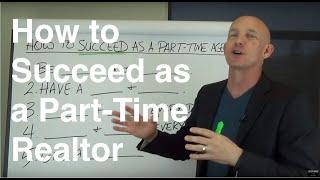
Kevin Ward outlines five keys to succeeding as a part-time realtor: commit to being professional, not casual; set a date within six months to go full time; prospect and follow up daily for about an hour; train every day with scripts and courses; and get mentorship from a full-time agent to cover gaps in availability and expertise.
Chapters
Hi there, it's Kevin Ward, the founder of yes Masters Real Estate Success Training and the author of the number one best selling book, the Book of Yes, the Ultimate Real Estate Agent Conversation Guide. And today I want to talk about one of the questions that I get more often than I would like and that is how do you succeed as a part time real estate agent? How do you do that? And I'm going to just start this video by being very straightforward and very clear and that is that being a good part time real estate agent is very, very difficult. Why? Because being a professional is to me the most important criteria of being a real estate agent. And if you don't have the time to invest, to really learn the skills and the strategies and the systems and to be competent at it, then you're literally an accident waiting to happen. So if you're going to be a part time agent, you've got to be a pro. I'm just going to lay that out and I'm not one. There's too many real estate agents out there that want to just have a license so they can do a deal every once in a while and get a commission because they've got a, they get a few friends that own nice expensive houses and you go in there and you're not doing enough transactions to be familiar with the processes, with all of the things that go on with disclosures and inspections and financing and lending and just all of the myriad of things that can happen in a real estate transaction. So I'm a total proponent, if you're going to do real estate, be a pro at it. So really the kind of part time agents that I work with are ones whose commitment is and whose goal is to go full time and have a great career in real estate and you can do it and not and still have a life. You're not having to give up your whole life. And this whole idea of, well, if I'm going to be full time, if you're going to be a real estate agent, you're, you know, you got to work whenever and somebody else wants you to and you're not going to have weekends off and all of that. And that's really not true when you're a pro, when you know how to control your business, when you learn how to master listings and so forth. But because I get asked all the time, how do you succeed as a part time real estate agent, I thought, you know what, I'm just going to make a video to say if you're going to go this way, if you're going to do it. Here's how to do it. Because I've helped a lot of agents who are part time agents become full time agents. But there are some really key things that you've got to understand and you've got to be willing to do. And there's five keys that will really make it work for you of how to succeed as a part time agent. Number one is if you're going to do this, be a part time, be a part time agent, not a sometime agent. And that's one of the biggest things I see is a lot of people, real estate agents, they get their license and they're up, they're a sometime agent, which just means they just do real estate. Sometimes whenever they have a deal fall in their lap or they run across a buyer or seller, then all of a sudden, boop, I'm a real estate agent. And they're, you know, then they're, they'll work and they'll work hard. But there's no proactive plan or strategy to generate business and to create a consistent income and to eventually be able to replace any other income you need to replace like another job or whatever. So if you're going to do it, be part time, not sometime. Now, what does part time look like? Well, here's what it looks like. If you worked at Starbucks, let's say, or at Walmart or Home Depot or any store, it doesn't matter what the store is. If you work part time, what's expected of a part time employ? Well, here's what's expected. Number one, you actually, when you have a schedule, you're actually expected to follow it. You're actually expected to show up when you're supposed to work. And it's not just whenever you're available or whenever you feel like it, or whenever you're bored or got nothing else to do, or when the store gets busy, you show up based on a pre set plan of when you're going to work and that's when you actually work. And when you clock in, you are actually expected to work as hard and as efficiently and with the same level of skills as a full time employee. You're not expected because, well, you're part time. So if you want to kind of jack around a little bit and goof off or that if you're, because you're part time, it's okay if you're incompetent and you get the order wrong 50% of the time, not okay if you're a part time employee in a real job you're expected to have the same level of competency as a full time person doing the same job. You're just not there 40 or 50 hours a week. You're only there 20 or 30 hours a week or whatever. So that I hope that makes sense, that if you're going to be a part time real estate agent, you have to be a part time professional, not a sometime amateur. This sometime agents that approach it as an amateur where they really don't work and develop the things they need to do and the competencies are one of the biggest negatives and one of the biggest factors that have caused real estate agents to have a bad rap in the country. So if you're going to do this, be part time, not sometime. You don't just work sometimes you have a definite plan. So here's the next thing. If you're going to be part time and you want to succeed at it, number one is you need to have a definite plan. And I'm going to say you need to have a definite time frame and I'm going to say a date to go full time. I just believe that real estate is such a great career and it's such an important thing that you do as an agent where you're literally representing the best interest of clients in one of the largest financial transactions in most of their lives. And it's also one of the biggest transitions in people's lives when they're moving. And if you're going to represent them, if you're going to facilitate that kind of a transaction and that kind of a life transition, when people are buying, selling a house, they're packing up, they're moving to a new place, a new home, and you're helping them buy that, that they deserve to have a professional who knows what they're doing. And if you're going to do this, make a plan to transition from part time to full time. And how do you do that? One, have a set game plan and two, have a definite date. Now what I recomm that you make that date, that definite timeline, no more than six months. Now here's the reason is what they have found out is people who are interested in career transitions and changing careers that they tend to do it in less than six months. And if it takes them longer than six months, it's not. It's that they're not really doing anything toward the transition. But the moment that they make the decision, I'm definitely going to quit this job and go start this career, I'm going to end this career and start this new career and that they'd make that transition in six months or less. So set a plan and say, okay, I'm going to be part time. I'm going to work extra hard for the next three or four or five months so that six months from now I can be out of my other job and be absolutely full time. And if that's your goal, then be clear about it. Have a definite target, a definite timeframe and a plan of how you're going to accomplish it. Now, number three of how do you do this? Whether you're transitioning from, from part time to full time or whether you just want to stay part time. If you're going to stay part time, it's the same. You've got to have the same work ethic and the same commitment as if you're going from part time to full time. So here's what's required. Next, number three is you need to prospect. Prospect and follow up on your leads. Follow up every single day. That's got to be a part of your daily schedule. Now, when I say every day, you say, well, what if I'm only working two days a week or three or four or five days a week, Just part of the time I'm not working? I may be working two hours a day or, you know, two hours a day, three days of the week, and maybe five or six hours on weekends or whatever it is, it's okay. But have a clear plan. And part of that plan has got to be that you're actually generating leads and you're following up on those leads consistently. I recommend every day, if you can find one hour a day, your schedule, to actually prospect for business and follow up on leads. So maybe an hour to prospect, maybe 15 minutes to follow up on any leads that day or that you've generated over the last few days. If you'll do that consistently, you'll actually generate business consistently, which means you'll actually begin to generate some income that's consistent so that you can actually go from part time to full time. And then number four, the fourth thing you got to do is this is about becoming a pro. This is about developing the skills and the actual competencies so that you can succeed in this. And that is that you actually need to practice, practice your skills and train every day. Practice and train. You're in a business. Now, here's one of the really important things about understanding real estate. You're in a business where you get paid based on how well you perform a task, how well you perform a Service. So the better you are at prospecting, at talking to people and getting them to set a listing, appointment with you or set appointments with you, get them to meet with you, get them to hire you, the better you are at helping them sell their house or helping them find a house. The better you perform, the better you are at those skills and strategies, the more money you make. Okay? It's just like an athlete, just like a performing artist. The better that higher level that athlete performs, the more money they make. Right? They get paid based on performance. So do you. So if you're going to expect to get paid for performance, you want to make sure you're practicing and developing the skills, the strategies, the conversations where you're using great scripts, which is what my book, the Book of Yes is really all about. It's learning the skills and strategies of what to say and how to say it that will help you do that. And then practice and train. Now training means take some time. If you're in a company that has good training, attend the training, listen to good videos, audios, get online training programs, go to events like My Double youe Listening Power Training program. I have an online program, I have live events. Whatever it takes, get yourself to those opportunities to get better at what you are doing. Don't just think, well, I'm going to learn by experience. Okay, learn by. Because one bad experience just creates incompetence. So you want to make sure you're learning the good stuff. So practice and train every single day. And then the fifth thing that's so important is, and I'm going to put it this way, get a full time, we'll say a full time agent to help you. Get a full time agent to help you. Now what does that mean? Well, the reality is new agents need a mentor anyway. You're going to need somebody to help walk you through the process. Whether it's your broker, if they'll mentor you, or another top producing agent. You want somebody that's actually selling a lot of houses that actually is good at this. Because if you're going to be successful, if you want to succeed at it, I. You want to be around somebody else that's succeeding. Right? And you want to learn from somebody who's succeeding. Because what happens is a lot of real estate agents get, get in the business and their business instead of succeeding just sucks. It just stops right there. They just. It sucks instead of succeeds. So you want to make sure that you're succeeding. You want to get learning from, get mentorship from somebody who is actually succeeding. Now here's the way to do that. It also, if you're have another job, if you have a full time job, you need somebody that's actually available to talk to clients, to deal with the transaction, to deal with lenders, to deal with inspections, just to deal with closings. Somebody that's actually available whenever something is needed to be, needs to be done. And if you're not available from 9 to 5 because you're at another job, except maybe at lunch hour, that can be a real problem. So if you'll find another, a full time agent to work with now, that means you work with them, it doesn't mean you work for them. I'm not talking about trying to go get a job or be an agent for them. I'm talking about you. You get a partnership with them on the transactions you generate, they're going to help you. Now one of the things that kills agents here is they're going like, yeah, but if I do that, then I'm going to have to split my money. Excuse me, you need the training anyway. So don't think of, well, don't get greedy here and think, well, I'm going to, I'm going to do it myself so I can keep all the money. Here's what happens when you'll get a. If you'll find a full time agent, a great agent that's willing to help you and work with you and they'll mentor you, you're going to split the money. Yes. But you're going to get more deals and you're going to get more deals closed because you'll avoid the mistakes. Any lack of experience that you have is made up for in the other agent that is skilled in season. So if you get a great seller opportunity, a great listing opportunity, and a homeowner says, well, how long have you been selling real estate? It comes out that you're part time and you've not ever done a deal before and so forth, then you get nothing. Now 100% of zero, last time I checked, is still zero. So don't be greedy as a new agent. Get the support, get somebody to help. You want to have a great office where you get good training. You want to be with a mentor that will help you get it done. And this will help you faster than anything else. And the money that you're paying or splitting with the other agent, just consider that a part of the education of learning how to be a great agent. Because you'll learn from their greatness, their experience, their success. You'll learn from them, you'll get more deals and you'll establish that track record and confidence as you get there. Now again, if you're going to be part time, be a part time professional, not a sometime amateur. And the best way to do that is to transition from part time to full time. There is no career on the planet that virtually anybody can get into that you can get into as fast and as inexpensively as it is to get into real estate and have the opportunities to create a six figure income literally. And I have dozens of agents every year that I coach that literally add six figures. Many of them make six figures in their first 12 months. Now you can't do that if you're just waiting in and try to do it part time. But get to full time and boom, you'll see your life just explode with greatness and your income accelerate. It's an awesome path. There you go. Hope that helps. If you have any questions on it, comment on the video. Look forward to talking to you soon.
More from Kevin
When a Seller Says "Not Interested," Ask This #realestatecoaching #realestateagent


Suck At It. Stick With It. Succeed At It. #realestatecoaching #realestateagent #listingagent
You're Not Procrastinating. You're Lying to Yourself #realestatecoaching #motivation

