THE NUMBERS THAT MATTER FOR REAL ESTATE SUCCESS - KEVIN WARD
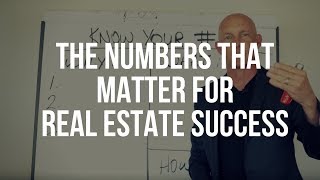
Kevin Ray Ward (Yes Masters Real Estate Success) gives a short coaching talk urging real estate agents to track activity and result metrics. He argues tracking provides truthful awareness, enables assessment, and guides adjustments; lists core numbers to record (time, money out, conversations, leads, appointments, listings, sales, income) and offers a weekly performance scorecard available via his Facebook group.
Chapters
Battles are not won just because armies rush headlong into the fray. It's because there is strategy. Hi, my name is Kevin Ward with yes Masters Real Estate Success Training, helping you get more yeses and more successes in your business and in your life. And today I want to talk about, how do you get more yeses and more successes? And a lot of times agents just think it's by the sheer effort. It's just. I got to get out there and just grind it away. But I want to. I want you to think about. I want you to think about the battle. Where is the battle actually won? When. When armies are at war, where is the war actually won? Is it on the battlefield? Is it on the front lines? Or is it in the war room? And the reality is, it's what happens in the war room more than what happens on the battlefield that determines whether or not armies actually are victorious or not. When it comes to sports, it's not just what happens on the playing field or on the court. It's what happens in the back room where they're working on the game plan. Because see, what happens in the war room, what happens backstage, what happens behind the scenes is where the generals get together and the commanders get together and they assess and they look at strategy and they look at their assets, and they look at the enemy's assets, and they look at their strengths and weaknesses, and they look at the feat at the battlefield, and they look at the obstacles and they look at all of the. All of the factors that go into consideration, and out of that, they create a battle plan. Battles are not won just because armies rush headlong into the fray. It's because there is strategy. It's because there is. There is evaluation and assessing and strategizing of how do we need to position our armies and our infantry and our cavalry and our artillery, and how do we position all that to take maximum advantage of the situations and the opportunities that are presented for us? And as the battle progresses in the war room, where they got the big map laid out and you've seen the pictures on the. Maybe the scenes in the movies where the war room is there in the big map of the battlefield and you've got all the little symbols of the toy soldiers laid out all over the place where. That they're looking at, where do we need to take advantage of weakness? Where's the strength? What's working, what's not working? And it's in that. Assessing that the battle is actually won. How does that happen in your real estate business? And the way it happens in your real estate business is in knowing your numbers. It's in the way you track the things that you do on a daily basis, your activities and the results that you get from that. However, of course, the obvious irony is that the average real estate agent doesn't track their numbers. They really don't have any clue about what it is they do. So today I want to talk about why you need to track your numbers. What's the reason? What's the benefit behind tracking your numbers? What numbers do you want to pay attention to? What numbers do you need to track primarily? And then how do you track numbers, those numbers? So first of all, let's talk about why you should do it, why you should do this. Why do in professional sports, why do the teams keep statistics? They're tracking their numbers. Why? Because when they know what a player is actually doing and they know where this player is taking his shots and where he's making most of his shots, where he's missing most of his shots, the more detailed they are at tracking numbers, the better they can evaluate what's his strengths, what's his weakness, what's he doing? What is he doing that's working? What is she doing that's not working? And how do we need to adjust what training things do we need to address in golf? And it's in golf, it's amazing to me the type of numbers that they actually track and knowing their numbers and nowadays there actually are devices where you can actually measure on your golf swing, when you hit the ball and it takes off in the trajectory, how, how many revolutions per feet does that ball make? In other words, how fast is it spinning backwards? Why? Because that matters for power, accuracy and distance, knowing your numbers. Well, if it matters in military, in military strategy, if it matters in sports, doesn't it matter in your business where your performance and your ability to perform makes all the difference in the world? So why should you track your numbers? Number one, you should track your numbers simply so that you are aware of the truth of what's actually happening in your business. How many hours a week are you actually spending prospecting or lead generating? How much time are you spending doing this? How many people are you actually talking to? How many conversations you're actually having? What's the results of that? What are you doing that's working? Which conversations are getting you the best results? How good is your lead conversion? How good is your converting listing appointments into active listings? What is your percentage of listings that are selling? How many, what is your average list price to Sell price ratio. The more detailed and the more specific you are in tracking your numbers, the better you can be aware of what's happening in your business. So that the number two thing you can do is so that you can assess. I can assess what's working, what's not working. I can evaluate what do I need to work harder on, what do I need to do more of, what's not working at all that I may need to get rid of. And that's the ability to assess. I want to track my numbers one, so I have awareness because numbers do not lie. They simply tell you the facts, they tell you the truth, so you can be aware. Now your ability to take and read those numbers and analyze those numbers is your ability to assess. What does that mean? What do I need to change? What do I need to adjust? And that comes now to the third reason you need to track your numbers is so that you know when something isn't working, how do I change it, how do I adjust it? Or when something is working, how can I adjust to actually ramp it up to do more of that? Those three steps are so critical in tracking your numbers. The irony again is most agents don't do it. So my challenge for you today is that for the rest of your career, you make this decision and commitment. I'm going to start tracking my numbers. So that's first. Why do we do it? What are the main numbers we need to track? Well, I'm just going to give you in this video the basics of what are the basic numbers that I need to track. So here are some of the basic numbers. 1. I need to I want to track time. How much time am I spending on a particular task or a particular activity? So if it's prospecting, how many hours a day am I prospecting? How many hours a day am I doing lead generation? If you want to track how many hours I'm spending on the phone, how many hours am I spending door knocking? How much time am I spending doing my social media marketing? How much time am I spending doing open house events? How much time am I spending showing buyers? The more you track your time because time is your most precious, limited resource. You only get 24 hours in a day and every day that you spend and every hour you spend is an amount of your life that you have traded for a result. So time, how much time am I spending? I also want to track how much money am I spending? And I'm putting this because this is an expenditure. How much money am I spending on an activity on lead Generating lead conversion, whatever it is, how much money is going out? So I want to track that number. Well, how much money am I spending in marketing and so forth. The next thing I want to do is how many is I'm going to is how many contacts am I making? Or I'm going to say how many conversations are you having a day? Now there's what you can go way deep in this and that is who are the conversations with? How deep are the conversations going? There's so many things that you can evaluate is what is the level of the conversation, so forth. But the first thing is how many people are you actually talking to a day? The act of lead generation, lead follow up and lead conversion. So these are conversations, how many people am I actually talking to on a daily basis? Out of that, how many leads am I generating on a daily basis? In other words, somebody that actually could lead to business number three, how many appointments number next? Whatever it is, next is how many appointments am I setting or getting? How many listing appointments, how many buyer appointments? Track that numbers and then next is how many listings am I getting? These are all activities. This now goes into results. So next is listings. Then the next thing after listings is how many sales am I getting? And then of course the final number that I want to track is how much money am I making? Time out. Money out now comes to money in. These are activity markers. How many conversations by having how many leads am I getting? How many appointments am I setting? That's activity markers. And then this is result markers. How many listings am I getting? How many sales am I getting and how much money am I making? Now this takes a little bit of time, but if you'll do it consistently, then you can. Literally just by tracking your numbers on a weekly basis, I can actually look back at my week and I can go, okay, now I know why I'm frustrated. Because I didn't spend as much time doing the things that make me money as I thought I was doing. Because see, here's the time. How much time are you spending doing the things that put points on the scoreboard? And I just want you to think about this, that how we spend our time matters. Am I spending my time tying up my shoes and putting on my uniform if I was playing basketball? Or how much time am I spending dribbling? How much time am I spending? What activities are actually putting points on the scoreboard? Because that's how you win the game, right? That's why you have to keep track. You got to track your numbers, know your numbers that represent your statistics and the numbers that represent the scores so you can know what am I doing, what's not doing. Now final step is how do I measure the results and activities? How do I measure my numbers? Well, I provide for my coaching members what I call a weekly performance scorecard. And it's just a very simple tracking mechanism for you to track these numbers right here on a daily and weekly basis. And this is just for a week. You track your numbers and then at the end of the week you can add them all up. And now you've got an idea of what did I do this week, how productive was I? What actually worked, what didn't work, how many time did I spend everyday prospecting how many people that I talk to on a daily basis? Now, at a deeper level, you take those numbers and then you put them into a longer time business performance scoreboard that will then allow you to assess the effectiveness, the ratios and all of that. That's way beyond the scope of this video. But this right here, what I'm going to do is I'm going to offer this to anybody that wants it the way I want you to get it. Don't email me, okay? It's just too much of a hassle. So here's what I want you to do. Go to our Facebook group, go to Facebook and go to the yes Masters real estate success community. Join that group and I'm going to have posted on the Facebook group, I'm going to have posted this weekly performance scorecard that you can download and start using it right away to track your numbers. When you take simply that resource of the scorecard and you simply start tracking your numbers, you're going to be amazed at what you learn about your business, at what you learn about yourself and what you learn about your efficiency, what you learn, what you're actually doing compared to what you thought you were doing. And the more reality, the more you are in touch with reality and the truth about what you're doing so that you're aware and you can assess and adjust the more productivity you're going to create so that you can play to win. Always expect. Yes. And remember, your responsibility is to be the best. Oh, and by the way, if you like this video, make sure you give it a thumbs up. Make sure you share this with other agents who you know, they're not tracking their numbers. Make sure, make sure you share it with them. Make any comments, questions that you have post here below the video and I look forward to seeing you real soon.
More from Kevin

When a Seller Says "Not Interested," Ask This #realestatecoaching #realestateagent



Suck At It. Stick With It. Succeed At It. #realestatecoaching #realestateagent #listingagent


You're Not Procrastinating. You're Lying to Yourself #realestatecoaching #motivation

