The Right Kind of "Aggressive" Agent - Kevin Ward @ YesMasters.com
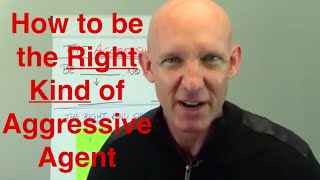
Kevin Ward explains how real estate agents should be "aggressive" in the right way — assertive rather than abrasive. He presents a practical formula: (1) be honest and shoot straight, (2) be confident (certainty) not arrogant, (3) use finesse — back off and change angle when you hit resistance, and (4) get on the client's side by identifying and following their motivation. The talk includes concrete language examples and metaphors showing how to set appointments and influence motivated prospects without high-pressure tactics.
Chapters
Hi there, it's Kevin Ward with yes Masters Real Estate Success Training, helping you get more yeses and more successes in your business and in your life. And today I want to talk to you about being an aggressive, ready, be an aggressive agent. Are you ready to be aggressive? It's funny because I get all this. I get these emails where agents ask me occasionally. I've been taught that I should be an aggressive agent, but I'm just not naturally an aggressive person. Or people say, like, I feel like if I'm being an aggressive agent, that I'm going to push people and I don't want to be pushy and all of that. So. Which I understand. And so the question is, and I had somebody, I even asked this on a YouTube video, they just commented, should I be an aggressive agent or not? Is it good to be aggressive or is it not good to be aggressive? And the answer is, yes, you want to be aggressive, but you want to be the right kind of aggressive. And that's not something. That's not a skill that's taught very much in real estate. So today is your lucky day, because I am here to give you the answer of how to be an aggressive agent that people like. That's what you want, right? You want to be an aggressive agent that people like because you want to get results. You want people to understand you're there, you mean business, and yet you don't want to be pushy, you don't want to be mean. So let's talk about being the right kind of aggressive as an agent. So here's kind of. I want to give you, start by giving you a couple of distinctions about how you can be the right kind of. Of aggressive. One is to understand there is a difference between being assertive and being abrasive. Do you understand the difference? There is a difference between being assertive and being abrasive. Somebody who's assertive, that means they put themselves out there. It means they know how to be strong. It means they know how to be powerful without being pushy. It means they know how to. How to put themselves out there, how to communicate something in a way that lets people know they mean business. And yet it's not in such a way that people are just going to like, oh, get off me, get off me. You want to be assertive, you don't want to be obnoxious, you don't want to be a jerk. And that's probably why a lot of agents are afraid of this whole idea of being aggressive. Then you may say, well, it's just not my style to be aggressive. I'm just more of a laid back kind of person. And I'm not, you know, I'm not going to try to push people or talk people into doing something they don't want to do and all of that and promise I get it because I'm not by nature I am totally a laid back, not a pushy person. I hate pushing, I hate feeling like I'm being pushy. So this whole concept of, you know, be aggressive was. Here was something I was taught and it was, it's kind of true. And that was that motivated people want an aggressive agent and what they're looking for. It's true. But what you got to understand the right kind of aggressive and that is they want somebody who's assertive, who, who's proactive, who takes action, who's strong, who gets stuff done. Being abrasive. Because here's the real difference. The real difference is that somebody who is assertive, when you talk to them, they're compelling. And what you want to be is you want to be compelling, you don't want to be repelling. And that's the kind of aggressive you don't want to be is you want to be the kind of aggressive that people look at and go like, man, if I need to do something, I would trust her, I would trust him. Why? Because they're serious about business. They get stuff done. They know how to make that happen. They're assertive. And that's very compelling. When you're assertive, when you're a strong leader and you know how to influence people and inspire people and be a leader in working with buyers and sellers, that's very compelling when you move with conviction. And so whenever there's an argument between you and the seller about a price, for example, and when I say argument, there's a difference of agreement is when you have absolute conviction that I understand what you're saying. I would love to be able to get you more money. However, based on what the market's telling us, this is the right price. And when I'm assertive and I'm convicted about it, and I stand firm on my conviction, on my belief, and I'm strong in that and powerful in that, that's very compelling. However, if I go like, look, that's just ridiculous and I'm telling you, I'm not even going to list it if you're going to think that ridiculous price, I'm not even going to list it. You need to price it at this price. So we can get it sold. So let's just price it here where I say so I can get it sold. I want you to sign the contract and we're going to get it done now. So sign there right now. Sign it. Sign it right now. I'm telling you, sign the listing agreement. That's aggressive, that's abrasive, and that's repelling. Are you getting the difference now between being the right kind of aggressive, between being abrasive, assertive and being abrasive? So I want to share with you four strategies or four different approaches. That is the formula for how to be the right kind of aggressive. And the cool thing is, is this works if you're naturally a very strong person. If you're naturally kind of a driver personality and you just, you're strong type A personality and you're just in people's face. This is just you, you're a go getter, which is awesome. Or if you're the nice guy, if you're like me, I was just a nice guy. I didn't want to push anybody. So for me, when they talked about, you know, close the sale and make you want to close seven times, I was like, closing seven times is kind of like taking a sledgehammer and putting my hand in between me and the paper. And you know, when I pressured them, when I hammered them, I felt like I was getting hammered. I hated it. I hated that feeling of being pushy. I hated that feeling of being high pressure. So you can be the right kind of aggressive without high pressure if you know how to put, how to apply the right kind of pressure to get the results that are needed. So watch this. There are five, four ways to be the right kind of aggressive. So number one is you got to be honest. You got to shoot straight with people. No bs. Straightforward conversation. So if you want to be the right kind of aggressive, the right kind of aggressive, if somebody is a seller, for example, is not in agreement on a price or you got a buyer that's wanting to back out, you got to shoot straight with them and be willing to be honest. Say, well, I don't want to tell them that because I'm afraid they'll be bad. I'm afraid they'll not hire me. I'm afraid they'll back out of the contract if I just tell them that, look, that's the right kind of aggressive, is you've got to have the courage and the backbone to be straight. To be. To shoot straight with people and don't BS them and don't beat around the bush with them. You got to be willing to have those straightforward, honest conversations that are in their best interest so they make the right decision. When you let them push you around because you don't want to be pushy, and you let you just say, well, I'm not going to be pushy. I'd rather be pushed around. Well, you're not going to be strong enough as an agent to help sellers and really represent sellers and buyers in getting them the best result. So you want to learn. You got to just make a commitment to be honest. I hope you don't have to learn how to be honest. I hope we're past that one. You just have. But you've got to learn to have the resolve and the courage to be honest, to shoot straight with people. Right. Kind of aggressive is just always being very straightforward. Not in an abrasive, harsh, jerk way. Well, that's the way it is. If you don't like it, tough. I'm telling you the truth. That's abrasive honesty. You can be assertive and straightforward with your honesty without being a jerk, without being abrasive. Number two is if you want to be the right kind of aggressive, be confident, not arrogant. There's a big difference. You don't want to be arrogant. It's being confident without being cocky. And when I talk about confidence, what we're talking about is having certainty. They need to know that you know what you're doing. Your clients need to be able to trust your professionalism, to trust your knowledge, to trust your experience. And the way they trust it is if you trust it. But if you look uncertain and you're bumbling and stumbling and like, you're nervous, I mean, think of it. Have you ever been to a dentist and you've been sitting there and you're in the dentist chair, and you're sitting there and your mouth's open, and if the dentist walks up to you and says, okay, now here's what's going to happen. You're going to hear a little buzzing noise, and you're going to feel a little bit of pressure here. But don't worry, it's going to be a little bit of a smell, but it's going to be okay. Then you're comfortable because the dentist seems okay. But if you walk up. If you. The dentist walks up to you and he goes like. And he's sweating profusely, and he goes. And you can see his hands shaking a little bit, and he goes like, I hope this goes better than it did with the Last patient because they screamed like, well, you want to run, right? Because they're not confident. You see, no matter how bad it's going to hurt or what's going to happen, if the dentist is confident, he's certain, then you feel comfortable, you feel confident, you feel certain. Even if you know there's going to be a little pain, even if there's going to be some discomfort, you can handle it because they're in control and you trust them. So you've got to be strong enough to communicate certainty and confidence to people. Because if you're like, well, I don't want to be pushy, I don't want to offend them. And so therefore you don't even ask for the appointment, you don't even have the certainty that they need to meet with you, that they need you, then that's the wrong kind of non aggressive because you're not going to get results. Number three, the third key element in the right kind of aggressive is to learn to have a little finesse. Now what's finesse? Finesse is learning how to try learning enough skills to be able to try something, take a different angle, take a different perspective, take a different tact here and use a different strategy or different tactic. You see, here's the deal. Learn enough communication skills that whenever you ask a straight A question and say, so are you ready to get the home on the market tonight? And they say, say no. And I don't, I feel like you're being pushy. Learn how to back up and come in from a little different angle without giving up. So let me give you an example. Let's say you're talking to an expired and you call them and say, hey, just notice your house was showing up, that it's off the market now. And I was wondering when you were planning to interview agents again for the job of actually getting your home sold. And they go like, oh, there are too many agents been calling us. We don't want to talk to you. And we're just tired of this and all this and you just say, oh, okay, well, I'm sorry to bother you. And you hang up. That's not finesse, that's quitting. Okay, so when would be a good time for us to get together and talk about a way to help you make this move happen? We're not ready to meet with an agent right now. But you do want to sell your house. So when would be a good time for us to get together? We're not interested right now. We need to talk to my Wife. Okay, well, talk to your wife. When do you want to meet? And we just keep hammering to set the appointment. Set the appointment. Set the appointment. If you just hammer people, some people, they know one approach to getting appointments. That's the sledgehammer approach. It's just like I'm going to blast through every objection, every appointment. I'm going to ignore it. So all we need to do is now set an appointment. All we need now is set an appointment. Well, I understand that, but let's just go ahead and set the appointment. Well, I need to check my calendar. Okay, well, check your calendar, but let's set the appointment. Well, I need to talk to my wife. Okay, well, talk to your wife, but let's set the appointment. And all you do when you just keep hammering, hammering, hammering is you keep getting more resistance, Resistance, resistance. And when that happens, you're losing ground rather than gaining ground. Learn a little finesse. Well, we're not going to sell the house right now. Well, you should sell the house right now. You need to sell the house because the market's good right now. And make it bad now you need to sell it. So when are we going to get together? Well, I told you, I don't want to sell it. Yeah, but you need to sell it. Now, hopefully you get that I'm over exaggerating here, but you understand what I'm talking about is this idea of don't just be the sledgehammer is they say, well, we're not selling right now. Oh, you're not selling right now. Excellent. So if you had sold, where were you thinking of going next? Now, that's literally a finesse approach. Now, it's not just what you say. It's learning how to say it in a way that takes the pressure off. So here's kind of a way to approach it, is when you're talking to a seller, you're talking to a prospect, you're talking to a lead, and you're asking them questions, and they're answering the questions. How do you know how aggressive to be, how far to take the conversation, how many times to ask for the appointment? And here's a very simple answer. You move until you hit resistance, then you back up just a little bit, and then you take a different angle, back up and say, no problem. So what's the next step for you guys? What do you think the next step is in you guys deciding what you're going to do next? I'm not just going like, well, let's set an appointment. Well, we're not Ready to set an appointment? Well, the market's hot right now. You need to set an appointment. When's a good time for us to meet? Well, like I said, we want to talk about it and da, da, da, da. Okay, well, that's certainly fine. Let's talk about it. Let's go ahead and set the appointment now and then you can talk about it. We just keep hammering. Back up, ask another question. Ask them something else about their motivation. Dig in a little bit deeper without just, hammer, hammer, hammer, back off. You ask questions, you got some resistance and say, hey, no problem. I just was touching base to see if there was anything I could do to help. So what do you feel like the next step would be? And asking questions, backing off, learning to use a little bit of finesse and stop being the one tool agent that's just a sledgehammer, which is not really powerful. I mean, it's powerful, but it's kind of like a bull in a china closet. Right. And the other, the other extreme then is the other agent, that their only tool is a limp noodle. They got no backbone and they're apologetic and all of that. And that's not helpful either about being the right kind of aggressive. But being a totally passive agent is probably not going to get you much business. And when you do get it, you're not going to represent your clients and in the best way, because they need an agent who knows how to be strong, to negotiate strongly and learn how to be the right kind of aggressive. And then the fourth thing, if you want to learn how to be the right kind of aggressive, I mean, where you really get results, number four is learn how to get on their side. Whoever it is you're talking to, it's prospect, it's a lead. Even when you're negotiating a deal, you're working a deal with another agent, and you're negotiating back and forth between you and the buyer's agent or whoever it is, is understanding that if I can find out what their motivation is, find out what's important to them, speak in terms of their interests, then you're going to be able to get past a lot more resistance with a lot. You're going to get a lot further with a lot less resistance and learn how to use influence triggers instead of resistance triggers, which I teach my coaching members and I teach at my events. The idea of resistance triggers, which are things we say that cause people to resist us, that makes them feel like we're being pushy, that makes them feel like we're being aggressive, that Makes them feel like they want to resist us. He's learned how not to say those. And one of the keys is, is by learning how to get on their side to speak in terms of their motivation and stop spending so much time trying to convince unmotivated people to do something. Don't look. Agents spend way too much time trying to convince an unmotivated seller to set an appointment to do a listening presentation. And they spend your time learning how to identify motivation, find the ones who are motivated and work with them. But what happens is we find a potential lead. We're so afraid of rejection a lot of agents, we're so afraid of getting no's, Then we find somebody who's willing to talk to us. We'll just follow it till the bitter end, just hoping that it could turn into something when we know they're really not motivated. And we end up wasting a lot of time and trying to convince a non motivated person to do something because they're nice to us. And we don't want to talk to the abrasive person, we want to just stick with that one. However, when their interest, their motivation isn't strong, it's hard for you to be strong in leading them to make a decision. And so the way you get on their side means you've got to find their motivation and then follow their motivation. Now here's the beauty. When you find somebody who's motivated, they want the right kind of aggressive, they want to go getter, they want an agent that they know. When I hand you the ball, you're going to run with it, you're going to capture the ship, you're going to get us to the destination. And I can count on you to do that because you're the right kind of aggressive. And when you have that kind of thing, you'll have more opportunities that you can engage those opportunities and you'll always be able to expect yes.
More from Kevin
When a Seller Says "Not Interested," Ask This #realestatecoaching #realestateagent


Suck At It. Stick With It. Succeed At It. #realestatecoaching #realestateagent #listingagent

You're Not Procrastinating. You're Lying to Yourself #realestatecoaching #motivation

