WHY REAL ESTATE IS FOR ENTREPRENEURS ONLY - KEVIN WARD
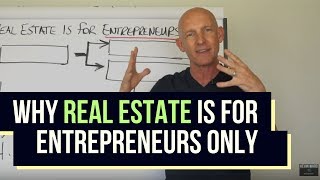
Kevin Ward argues real estate agents need an entrepreneurial mindset, not a job mentality. Success requires personal initiative, risk tolerance, grit, and constant attention to the market. You own your time and income, which means you own the responsibility.
Chapters
A job mentality is death to a real estate agent. Hi there, it's Kevin Ward, the founder of yes Masters Real Estate Success Training. Helping you get more yeses and more successes in your business and in your life. And today. This is a little bit of a weird video, but I just see too many real estate agents not making it and all the statistics about 70 to 80% fail and all of that kind of stuff. Because I believe real estate is for entrepreneurs. In other words, it is for people who are business minded. And if you have a job mentality, if you're come out of an industry where you've been in a job, you've been an employee, and you've had an employer telling you what to do every day, that employer mentality or employee mentality, that job mentality is death to an agent. The 9 to 5 mentality is absolutely death to a real estate agent. And I frankly believe it's one of the greatest reasons that real estate agents fail. And if you have this, if you have this entrepreneurial mindset, if you think like a business owner, your chances of succeeding in real estate or immediately dramatically improved. And I also believe that an entrepreneurial mindset is something that you can develop, it is something that you can create if you understand what is required when you come into real estate. Too many agents come into real estate brand new, they just got their license and they come out of a job, a corporate background or whatever, and they're used to showing up and they show up for a regular job. And the boss goes like, okay, here's your job. We're going to take you this training, you're going to do this, you're going to do this. And every day you've got your tasks, you got your accountabilities, you've got your responsibilities, and every day you're being held to that behavior and activity because it is your job. And then they get into real estate, they get the real estate license, they show up, they're all excited and say, okay, boss, show me what to do. And he goes like, I'm not your broker, I'm your boss. I'm not your, let's do this again. I'm not your boss, I'm your broker. Right? It's different because you're an independent contractor and your broker is not going to treat you like an employee. They expect you to take ownership, they expect you to move you to do your own stuff. And so if you don't show up, they're not going to fire you, they're not even going to challenge you, they're just going to go like, okay, well, like another realtor not going to show up. And so the gap between agents that either barely survive or don't survive at all and those that are massively successful, right here is this idea, this concept of being an entrepreneur. So let's break it down. What does it mean to be an entrepreneur, and how will that help you be successful in real estate? What are the characteristics, what are the traits of being a entrepreneur that matter for you to be successful in real estate? So here are the most important things. Number one, I think the most important keyword to understand as an entrepreneur, the word ownership, and that is that when you're an employee, you don't. It's not your business, but when you're an entrepreneur, you own it. You are there, and it's your failure or success is up to you. It's on you. Out of ownership comes two big keys, and that is, with ownership comes responsibility. If you fail or if you succeed, whichever way it goes, it is your spot, it's your fault. It's on you. It's your responsibility, right? No matter what happens to the business, you can't blame it on somebody else. I mean, you can, but you're going to still be just as broke, right? An employee can gripe and complain and blame it on the boss and all that kind of stuff, and you're still going to get your paycheck as long as you show up and do your work. But when it comes to owning the business, you are responsible for your own success. You have to figure out who. What do I do to be effective? Now, the second thing that comes in this package of ownership, this is the heavy part, this is the great part. And that is with that also comes opportunity. And this is why people get into real estate. It's like, yes, I get opportunity primarily in two different areas or two different things that you get opportunities for with when you own your own business, when you own it, when it's your baby, you got, number one, you have the opportunity for what I'm going to call time control. That's a. In case you can't figure it out, that's a. That's an analog clock, all right? You get the opportunity to control your life. You get control. I can choose when I work, I can choose where I work. I can choose what I do, I can choose what I don't do. You get control. Nobody's your boss. You're the boss, right? And with that, the other opportunity is. And the big one is the money. When you own the business. All the profit is yours to control. You decide profitability, you decide how you can invest it, you decide how you're going to spend it. It's all on you. So with the ownership comes this huge responsibility that sink or swim, it's up to you. And the opportunity is if I'm willing to own the responsibility, boom, I can have the opportunity of time control and financial control, which basically says I get to pick my salary. You want to make more money, you have control of that. Because if you're a employee, that there is very, it's very unlikely that you could walk into your boss tomorrow and say, okay, you know, I like working here for your boss, I like the company, but I want to make an extra $100,000 in the next 12 months. I want to raise, I want a $9,000 a month raise. Highly unlikely that most employees could go in and get a six figure income increase in a corporate job. As an employee, however, I have tons of real estate agents right now that are coaching members that are adding six figures to their income every year and agents, some I'm adding quarter of a million dollars to their income in a year because it's their business. You have the opportunity to dramatically explode your, your income and to control your time and control your life. So what does it take? What is it that entrepreneurs have that employees don't have? And it's those four characteristic differences that I think are the biggest and most dramatic things. And there's more than just these four. But I'm going to give you the four most important characteristics that entrepreneurs have in the real estate industry that cause them to be successful. That employ or job minded people that do not have number one, number one is they have personal initiative. Initiative. There you go. I almost got that right. Personal initiative. And that is you've heard, you've heard they say you got to be a good self starter. And I'll say, okay, we'll go with a self starter. Initiative just means you got to be able to put yourself in gear and go, there's got to be that drive, there's got to be that get the go getter that I'm willing to get up and take action without having somebody else breathing down my throat. One of the greatest, most common things that I hear asked for in coaching is I need somebody to hold me accountable. Now I've done. I have another video on YouTube and I'll put the link down in the description on what I call the accountability myth and why accountability is way overrated. If you're going to be this because basically accountability means I need somebody else forcing me to do what I'm supposed to do. And the whole problem with that is it goes against the entrepreneurial mindset. It's employee mindset is I need somebody else. If somebody else tells me what to do, I'm good, I got this. But if I got to go out and figure it out on my own, I'm in trouble. If you want to be successful in real estate, you the part of the entrepreneurial drive is this personal initiative that says, you tell me what to do, man, I'm on it. Bam. And that's the way the greats operate is they have that drive, they have that internal push that says, boom, show me what to do, I'm doing it. I'm in gear. So number one is initiative. Number two, the second characteristic of an entrepreneur is they are okay with risk. Now this is a shot. This is one of those, like risk. I don't like risk. But if you're going to own your own business, that's what you take. You take a risk. Because unlike an employee, an employee, when they show up, they work, they're going to get paid every single week or every two weeks, or every 30 days, whenever you get paid, an employee knows there's no risk. As long as I do what the boss wants me to do, as long as I'm dependable, as long as I'm efficient, as long as I'm productive and doing the work, I am going to get paid and there is no risk. Now a lot of employees say, well, my boss makes all the money and I should make more because if it wasn't for me, he wouldn't be making as much money. Yeah, but the difference between the employee and the employer is that the employer is the one who takes all the risk. And when you take all the risks, you get all the rewards. With risk comes the rewards. If you're unwilling to take the risk of owning your own business, then you need to stay in a debt job where you have a boss or you're an employee, but with the risk, which is this. Risk is what implies responsibility. With that comes the opportunity for all the rewards. And that's where the magic is, right? But you've got to be willing to take the risk and go like, okay, if I don't, if I don't produce, I make no money. That's the risk in real estate, right? There is no guarantee. There's no base, there's no salary. It's commission based, 100% commission. You'll see if you're watching this on YouTube and you watch other YouTube videos, you'll see video after video after video of people like you shouldn't get into real estate because, man, it's like 100% commission only. And if you don't succeed, you're dead. Right, there's risk. But the reason the risk is worth it is because when you have the initiative and you do the right stuff, you can make so much more money than if you're working for the boss. You be the boss, you be the owner. And if you're willing to take on the risk, that's where. That's half of the price of paying, of getting, of being able to have the opportunity. So with that, with that initiative and the risk, the third characteristic is it takes grit. You got to have the grit. You've got to have the determination, the tenacity that I know it's not going to always be easy. I know things aren't going to always go the way I expect them. I know that it's not going to always be smooth sailing when things don't go right. And in that risk, I hit the wall or I get knocked down or I'm not getting the results. Do you have the will? Do you have the determination? Do you have the salt that you're going to pop back up and go anyway? You got to be able to take a punch in the face and say, I can get back up and I can take a licking and keep on ticking. I'm going to keep moving forward. Because if you're easily discouraged or easily dissuaded and go like, well, every time I get going and something happens, just takes all the wind out of my sails. Well, my friend, if you allow stuff to take the wind out of your sails and that blows you down and knocks you down for a month. Real estate is probably. This entrepreneurial enterprise is probably not for you. Grit, my friend, and you can find it. It's in you. Every single human being ever born has got the grit inside of them. It is wired in our DNA as a survival, a survival code that you can bring it out. Most of us, just because we grew up in a safe world, in a safe environment where everything was made easy for us, we just kind of turned that code off. We just turned off that gear inside of us. That's there. The grit is there. You just got to find it, turn it on and go like, okay, I will not stop. I will not quit. If it gets tough and I get knocked down, I'm going to get back up. I'm going to have the grit and determination, and I will succeed. And you have grit. You have no quit. And that, my friends, is the third trait of an entrepreneur that makes them successful in real estate. And then the fourth thing that you must have, the fourth characteristic is vigilance. Is vigilance, and that is if you're going to succeed in real estate, you got to pay attention, okay? You got to pay attention. Now, another characteristic that some people would throw into this is creativity and the ability to innovate, which are really important that you have that. The beauty of it is because the real estate industry is so developed, there's so many people doing it, you don't have to figure it out because it's already been figured out. As long as you're paying attention and you see something, you can go out and it's easy to find and learn it. If you've got the right coach, you got the right mentorship, it's the beauty of it is it's not that hard to do it. If you're willing to do this stuff, if you're willing to take the initiative and own it, willing to take the risk, willing to work with grit, and then you're paying attention. And vigilance just means that I'm always watching what's going on, what's happening. You've got to be vigilant with the market. You got to be vigilant with technology. You got to be vigilant with yourself, with your mindset, with your work ethic, and everything is just every day, I've got to be aware that if something isn't going right and it falls through, it's on me. I can't blame it on somebody else because I own the business. And with the ownership of the business comes ownership of the responsibility. And so if you get lazy or you get to where it's just kind of like I get in the zone and I'm not paying attention, and you just show up every day and you kind of do the same thing, and something changes and you don't adjust, you don't pay attention and notice it and go like, oh, this is different. Oh, this isn't working now. Oh, that just happened. Wow. I think I'm being taken advantage of. You got to be paying attention and have that vigilance so that when you see what's going on, I now have the initiative to adjust, to adapt, to make the change so that I can win. So, look, here's the beauty of all this as a real estate agent is that this entrepreneurial mindset. When you come in with it and you run with it, it's almost impossible in real estate to fail. If you're coming in and you're expecting everybody else to do the work for you, you're expecting somebody else to tell you what to do, you want to play it safe and you expect somebody else to take care of you. As long as it goes smoothly, you're going to be fine. And I just want somebody else to tell me what to do. I'm just going to tell you right now that real estate is going to be a painful journey for you. And whatever this you don't have. You don't, you know, you don't feel like I'm not strong in that. You can focus on this and build it. Find help, get help. Because this is what turns strugglers and survivors into massive succeeders. You can do this. So if you have any questions on it, make sure you post them down below. If this video helped you, make sure you give it a thumbs up. If you've not yet subscribed to the channel, make sure you subscribe to it. Let me know. Do this. Play with this mentality and you will always be able to expect yes and success in your business and in your life. It.
More from Kevin
When a Seller Says "Not Interested," Ask This #realestatecoaching #realestateagent


Suck At It. Stick With It. Succeed At It. #realestatecoaching #realestateagent #listingagent
You're Not Procrastinating. You're Lying to Yourself #realestatecoaching #motivation

