Unspoken Security Ep 30: Demystifying the Intelligence Community
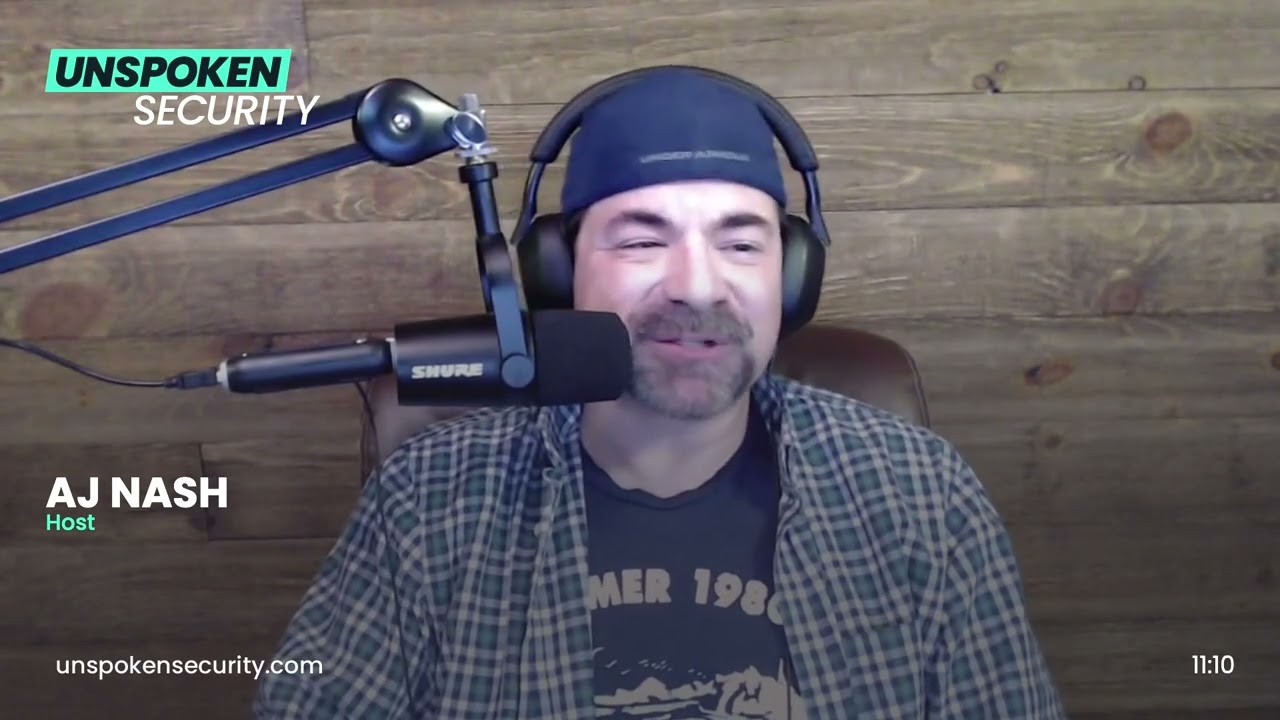
AJ Nash, a former NSA analyst with 19 years in the intelligence community, walks through the 18 agencies that make up the U.S. Intelligence Community, their collection methods, and the legal safeguards that govern them. He addresses misconceptions about surveillance, defends the community against the Snowden narrative, and argues that most intelligence work is ordinary and apolitical.
Chapters
One of the requirements in intelligence is to be objective. We are taught to be timely and insightful and objective and be relevant. We are trained on how to bring politics out of our intelligence assessments and analysis. And that isn't to say that intelligence community professionals don't have political opinions. We do. All of us. But the reality is we're trained to put those things aside and just follow the facts and follow the evidence that is put in front of us. Welcome to Unspoken Security, the raw and gritty podcast for security professionals who are looking to understand the most important issues related to making the world a safer place, including intelligence-driven security, risks and threats in the digital and physical world, and discussions related to corporate culture, leadership, and how world events impact all of us on and off our keyboards. In each episode, host AJ Nash engages with a range of industry experts to dissect current trends, share practical insights, and address the blunt truths surrounding all aspects of the security industry. Hello and welcome to another episode of Unspoken Security. I'm your host, AJ Nash. I've spent 19 years in the intelligence community, mostly in NSA,, and I've been building and maturing intelligence programs in the private sector for about 9 years now. I'm passionate about intelligence, security, public speaking, mentoring, and teaching. I also have a master's degree in organizational leadership from Gonzaga University. Go Zags! And I continue to, to be deeply committed to servant leadership. Now this podcast brings all these elements together with some incredible guests to have authentic and unfiltered conversations on a wide range of challenging topics. It's not meant to be your typical polished podcast. My dog makes the occasional appearance. She's, she's lying over here right now sleeping. It's, uh, it's actually quite early in the morning as I'm doing this, but she might show up. People argue here, we'll debate, we'll swear. I certainly do. That's all okay. I want you to think of this podcast as a conversation you'd overhear at a bar after a long day at one of the cybersecurity conferences we all go to every year. Now, these are the conversations we usually have when when nobody's listening. Now, today's show is going to be unlike any I've ever done before because today's guest is, well, me. I'm doing this show solo because, to be honest, I didn't want to ask anyone else to join me on this journey. Today's topic is demystifying the intelligence community, and I'm aware of how politicized this topic can be. I have friends and colleagues who I'm certain would have been happy to join me today. I just didn't want to ask anyone to take on all the backlash that might come with a brutally honest conversation on this topic. So you're stuck with me. Now, if you want to hear what it's like on the inside and probably some harsh truths, then let's dig in. I'm still going to treat this like the show in that I'll ask myself questions, sort of, and we'll walk through this. I also am going to try something a little bit different, and I'm going to share a screen. So for those of you who actually watch the podcast instead of listening to it, you'll also be able to, to follow along. But for those who are only listening, I'll do my best to make sure I'm still speaking to what we're showing here so you can, you can understand the concepts as we go. So listen, let's, let's dig in here. And first I want to talk about, you know, the simple question of what is the intelligence community? So the intelligence community is 17 different agencies, all under the leadership of the Director of National Intelligence out of the Office of the Director of National Intelligence. Let's see if I can figure out how to share a screen around here. I've actually never done one of these before. So let's see. All right, cool. So this is the website right here. So anybody can go here. It's www.dni.gov. That's going to take you to the Office of the Director of National Intelligence. One of the key things to understand as I'm going through all of these discussion points is that everything I'm going to talk about, uh, that I'm going to show at least, is publicly available. Uh, you know, I talked about demystifying the intelligence community. That's exactly what I mean. I think one of the challenges we have in, in society right now is that there's a lot of distrust in government, certainly a lot of distrust in the intelligence community. And I think most of that's cuz people think it's a big black box. It's a, it's a secret hole where, where people go and hide and do, do dirty things or whatever it might be. And we don't know anything about it. And the truth is that a vast majority of what you need to know about the intelligence community is publicly available information. So let's start here again. We've got the Office of Director of National Intelligence, as I said. And as I'm spanning through this document here, we can talk about the different types of intelligence we have. There's signals intelligence known as SIGINT. That's going to be, you know, radio frequencies, communications, emails included in that. There's ELINT, electronic intelligence. There's, you know, foreign instrumentation signals intelligence, FISINT. These all fall under SIGINT though. And this is predominantly NSA's territory. This is where I grew up. There's imagery, IMINT. That's pictures, maps, that kind of a thing. You've seen it, you know, satellite imagery. MASINT, measurements and signature intelligence. It's a little less known by most people, but that'll give you things like, you know, if a, if a rocket takes off, for instance, it leaves a signature that somebody can, can track and interpret. There's HUMINT, human intelligence. That's spies, for, for lack of a better term, clandestine work, a CIA, or if you're a big fan of, of any spy movie, that's HUMINT usually. OSINT, which is open source intelligence. Uh, a lot of people do that in the private sector as well. Pretty much anything you get your hands on, in the open space is considered OSINT. There's GEOINT, which is geospatial intelligence. And all of these things, by the way, are covered under what is known as the National Intelligence Strategy. So I'm showing this right now on the screen for those not watching. Again, this is on the dni.gov page. You can download the National Intelligence Strategy. They come out give or take every year. The one they're showing here is 2023, so we're a little behind on the website here. Uh, but again, you're allowed to download these things and you can see what the intelligence community is supposed to be doing, you know, what kind of intelligence is done and, and who's responsible for it. We get into the membership of the community, switching to another tab here. And as I said, there's, there's, I said 17 organizations. I'm a little behind. There's actually 18 organizations in the intelligence community. It does change over time. There's 2 independent agencies, the Office of the Director of National Intelligence and the Central Intelligence Agency. There's 9 Department of Defense elements that includes the Defense Intelligence Agency, DIA, the National Security Agency, NSA. The National Geospatial Intelligence Agency, NGA, that's satellites and imagery, the National Reconnaissance Office, that's also going to be some visual work, getting into air, airborne collection of visual elements, intelligence elements for the 5 DOD services as well, Army, Navy, Marine Corps, Air Force, and Space Force. And then the 7 other elements that most people don't even talk much about in the intelligence outside of the community, things like Department of Energy, the Department of Homeland Security's Office of Intelligence and Analysis, the Coast Guard Intelligence, Department of Justice's Federal Bureau of Investigation actually is part of the intelligence community, the Drug Enforcement Agency, or Drug Enforcement Administration, I should say, and, and more, right? So I've got them all here on the list. If you want to go to the website again, go to dni.dni.gov. And each of these organizations has specific responsibilities, which are also detailed right here. Not surprising, Air Force Intelligence focuses on Air Force issues, Army Intelligence, Army issues, Central Intelligence Agency, Central Intelligence Agency Does not spy on Americans. Let's, let's go ahead and get that one out of the way very quickly here. The Central Intelligence Agency's focus is foreign, not domestic. It would be against the law for them to focus on Americans. The Coast Guard Intelligence focuses on Coast Guard issues. Defense Intelligence Agency, it's a lot of DOD issues. Department of Energy, we already talked about. Homeland Security. Department of State, which is very interesting. The INR, which is their office, their Intelligence Research Office, Intelligence Research Bureau. Focuses on intelligence related specifically to the Department of State's mission. So it might be understanding if you're going into bilateral or trilateral discussions, it'd be great to understand what the other country's plans are, what their processes are, what they're thinking, right? Department of Treasury, Drug Enforcement Administration, as I said, FBI, the Marine Corps, NGA, the list goes on here as I'm spanning down. But the point here is there's, there's 18 different agencies. They all have specific responsibilities. And again, you can read about all of this on the website. This is all available. So another thing, as we switch onto another tab here, is we talk about the principles of intelligence, and there's 4 of them listed on the ODNI's website. Now, as I'm doing this podcast, we just had a new Director of National Intelligence sworn in. The website has yet to be updated or changed. I can't say what's going to change in the future. So these things have been around for quite a while. But the principles here are transparency, objectivity, accountability, and collaboration. And again, these are all laid out. These are the policies and principles of the intelligence community. So when people say, well, they don't tell us what's going on, it's all super secret. Actually, the intelligence community is required, uh, to be very transparent. Now that doesn't mean we're gonna walk around telling everybody in the community and everybody in our, our neighborhood top secret information. We're obviously not. That's, that would be a problem for national security. But a lot of things that we hear specifically coming from Capitol Hill and from a lot of politicians who, who act as though they don't know what's going on in the intelligence community. Listen, I wanna be really clear. They're lying. They know there's oversight on the intelligence community. They know they have clearances and they know. So when, when politicians tell us that, that the government is out to get you and, and there's a lot of secrets and there's a lot of spy work and they're violating the law, they're just not telling the truth. And I can go into a lot of details. We go through here to explain that. Uh, so the intelligence community is required to be transparent. There is a lot of oversight required that goes along with that. Uh, we have to protect information. We have to protect sources, obviously, but we have to make sure we are transparent. We have to be objective. This is another big one that one of the intelligence community analytic standards that I'm going to talk about. So Intelligence Community Directive 203 is mentioned here. I'm going to go into some more detail on the intelligence community directives here shortly, but one of the requirements in intelligence is to be objective. We are taught to be timely and insightful and objective and be relevant. We are trained on how to bring politics out of our intelligence assessments and analysis. And that isn't to say that intelligence community professionals don't have political opinions. We do, all of us. But the reality is we're trained to put those things aside and just follow the facts and follow the evidence, uh, that is put in front of us. Because sometimes we're forced to say, well, this is not something we expected. And if, if you, if you spend too much time focused on your own opinion of the world, you can miss critical components to an intelligence analysis. Your reporting can be wrong. And most of us understand in the intelligence community that if you're wrong, people might die. So that's taken very seriously. So objectivity is a very important part of the intelligence community and of the work we do. Next, you've got accountability. That includes intelligence oversight. There's a lot of oversight in the intelligence community. Again, when people talk about it, I understand that You know, the average civilian on the street doesn't know much about what goes on in the intelligence community because A, you're just too busy. We got, we got jobs, we got work to do. We don't have time to think about it. B, there's been a lot of mystique around it and people think that they can't find this information even when it's available. Uh, but in the government space, a lot of the organizations that are actually entitled to understand what's going on and have oversight, depending on who's in office and what their politics are, they'll tell the, the public that they don't know what's going on when they absolutely do, when they have clearances, when they have access, when they've seen the very information that they will then come out and tell people. They haven't seen. Uh, there's no good way to explain that. I'm not gonna get into the politics of parties. This is not what this is about. I'm trying very hard to stay, again, apolitical. I have seen people be less than forthcoming on each side, uh, of the political spectrum. It's just something to be careful about because we need to challenge our, our leaders, our po— our political leaders when they say things like that. How do you not know what's going on? You have access. We have intelligence oversight. The Congress has oversight in what's going on and clearances. There's a Presidential Intelligence Advisory Board. There's an Intelligence Oversight Board. There's Privacy and Civil Liberties Oversight Board. There's an Office of Management and Budget that can figure out where the money's going. Obviously, the legislative branch, as I said, the government— Congress oversees these things. The judicial branch and the FISA Court gets involved if there are violations of people's civil liberties. I can tell you from experience, it's really, really hard to violate people's civil liberties in the intelligence community. It isn't hard in terms of having the technical capabilities. I think that's a concern that people have as well. Now, the agency could, could listen to my phone calls or could read my emails, etc. And some of those technologies, you know, there's some technologies that exist to collect these things. There's a big difference between being capable of doing something and doing it, though, being authorized to do it. There's a huge difference between collecting something and actually analyzing it and looking at the information. Sometimes there are reasons for large amounts of content are going to be collected, but it's because there are filters in place to make sure only the content that we are legally allowed to analyze, to look at, to listen to is made available to us. I've known of a couple of cases in my entire career, and I was in the agency for longer than I care to remember. So I was in the intelligence community about 19 years altogether. I knew a couple of cases where people did in fact violate the law. They were caught remarkably fast, almost instantly. The monitoring systems are that good. And it wasn't nefarious, for what it's worth. You know, I, there was somebody many, many years ago, I recall somebody who had some jealousy issues and, and wanted to check up, I believe, on a, a spouse or a girlfriend or something like that. Stupid, illegal, punished, dealt with. But it's such a one-off. It's a story I remember because it was so rare. It's just not something that happens. There's a ton of oversight in place. And people don't randomly violate these things. This is not a common occurrence. It's not really a problem. All right. So the fourth component, and we, I talked about transparency, objective, objectivity, accountability, and the fourth component is collaboration. And that's working together. Now that changed a lot, I would say, after 9/11. Working together was a bit of an issue in the community. And that's why ODNI came around and we got into the habit of being a better job, doing a better job of sharing among agencies. Now there's still a lot of competition among agencies. It's just how it works. A lot of it has to do with budget, frankly. So there's always gonna be some of that, but overall, the intelligence agencies do work pretty well together. And they, and they focus on trying to do the best thing to protect the American people. So that's a quick overview of, you know, of who's, who's who basically in the community. You know, the next question that normally comes up is, you know, what can the intelligence community do and what can't they do? And I've already talked a little bit about this, right? But each agency does have their own responsibilities. They have legal limitations, you know, Title 10, Title 50 limitations that often come up. But in a nutshell, here's how it works for the agencies that you care about every day. CIA only focuses on foreign issues. That's, that's where they're targeted. That's where they're designed to go. There are very rare exceptions to that. When I say only, if it's a foreign intelligence interest that has then moved on to domestic soil. But it has a great deal of oversight from the U.S. government. The CIA is not targeting U.S. citizens. That's just not how it works. That's not their mission. That's not their requirement. It would do them no good. NSA, also the agency that people love to be afraid of, used to be known as No Such Agency when I first got there. NSA is tasked with foreign, uh, intelligence as well. So the NSA also not targeting U.S. citizens. I'm going to come back to that one in a second because I know people are already asking questions. I've had, I've had questions asked and people are going to jump in on some political things, I'm sure. So I'll go ahead and jump ahead of that, but gimme a moment. So the FBI, the other agency people, uh, think much about, that's your domestic, you know, it's a domestic law enforcement. There is an intelligence component to that. Uh, and they work, they work closely with DHS, also domestically focused. And now you're getting into whether it's, you know, crime, you know, criminal organizations, organized crime. Uh, it could be, uh, you know, drug issues coming across the border. You know, DHS obviously has border security as well. And that can be international, so that can tie across. You could be getting into interstate commerce issues, interstate crime issues as well, but they're focused domestically. So they're a law enforcement agency and they have to follow all the laws that go along with that and people's First Amendment rights, Fifth Amendment rights, Fourth Amendment rights, all that go with that. But let's go back to NSA for a minute. So when I said not targeting US citizens, so listen, everybody who's listening to me still, is aware that not too many years ago, we had a presidential election where one candidate has repeatedly stated that the NSA spied on his campaign. So, that didn't happen. And I'm going to explain why I'm saying that, boldly. And I'm going to explain the details as much as I think I'm capable of without getting in trouble. So, NSA is tasked with foreign collection. There's a lot of work that goes into determining what is a valid collection target. And I can't go into too much detail on that other than to say there's a lot that goes into it and they are gonna be foreign assets. There is also occasionally going to be a collection that happens that's unintended as a result of that, because if you're going to target somebody's conversations, there are two people in that conversation at least, and or otherwise they're talking to themselves, which is unusual. So when you are targeting one half of that conversation, and the other half of that conversation is going to be recorded, sometimes things are discovered that are unintended. So let me give you an example. If, if you had legal collection capability against a foreign nation, uh, foreign nation's leader, let's say, and you had access to the communications technologies they were using, and you are collecting that, that may be foreign nation leaders' conversations. It's perfectly legal. That is intelligence collection. That's foreign intelligence. Whoever they talk to is what you're going to pick up. You might pick up their wife or their girlfriend. Or their family members, or you may pick up their golf buddies, or you may pick up a foreign, you know, nation having an innocuous conversation, or you may pick up somebody talking about terrorism or starting a war, or anything else that's tied to that. You're going to pick up all those conversations, and somebody's going to have to listen and go through those. Occasionally, when that happens, you're going to pick up U.S. persons in conversation. As an intel professional, you're trained to identify when it's possible or probable or likely that that's a U.S. person, and whenever there's a doubt, We tag that. That's a US person until further notice. We have to assume they are and then work our way backwards. So it can be assumed based on geography or based on, you know, their, their tone or how they're speaking or some of the content. And so there's an assumption in place that they are US persons. And if that happens, that collection is not going to be processed. It's not going to be analyzed. It's not going to be dealt with. It has to go to a legal review. It's going to go to the Attorney General before anything happens. So while I was not there, based on, uh, all of the reporting, including reporting from that presidential campaign itself, it appears very, very likely that people in the campaign were having a conversation with somebody who was under legal collection. They were being targeted for illegal collection, and unfortunately, the person on the other end of the conversation wasn't a US person. I can only assume, since I was not there. Again, as always though, that goes to the Attorney General and the content of those conversations was determined to be of foreign intelligence value. When that happens, that becomes legal intelligence collection. And that's it in a nutshell. So if U.S. persons are being caught up in conversations with legitimate, validated foreign targets, and those conversations reveal content that is considered to be part of, uh, uh, part and parcel of foreign intelligence collection and having value as foreign intelligence collection, as would a conversation with a foreign nation about our elections, for instance, that is legal. That is not being targeted. That is not being spied on. That's legal. And by all accounts, that appears to be the case. It's always appeared to be the case. And so I'm going to leave that one as it is. I understand that that's, this is sort of the topic, part of the conversation I didn't want to drag somebody else into. And to be clear, I don't care about the politics. I just don't. I don't care what side of the aisle you're on. I don't care what side of the aisle the people in the conversations are on. If you're caught talking to foreign nationals about things that have intelligence value, foreign intelligence value, that's a legal collection. And, and don't do it. And, and you won't have a problem with that. But I promise I've never once heard of anybody having a conversation with their family members or friends or anything innocuous or anything that's non-criminal or anything with a non-legal target that's just accidentally showed up in collection. The government just doesn't do that. I don't care about your phone conversations and nobody else does. So that hopefully explains why so many people who are intelligence professionals, especially SIGINT professionals, struggle with those conversations is that we've all been there. We've all been in the room. We've all been involved in collections. We've all been involved in collections that involve U.S. persons and all the processes that go with that and how difficult it is. And we all understand those processes and it's very frustrating and hard to explain to people who don't. Who are going off of information that's being fed to them by people who have an agenda and they want to believe it. And again, I don't care about the politics. The facts are just, just going to be the facts. The, the system works the way it works. Intelligence works the way it works. And, and this is just how it goes. And we have oversight and we have processes. The US government does not target US citizens. It's just not what we do. There are billions and billions of minutes of conversations. I, I have countless numbers of emails that go around, faxes for those who might still use the fax, some of these other pieces of collection. There just would not be enough time in the day to track down all the things that people think that the US government is interested in. Another thing to consider, and this is something that, that frustrates me a bit, especially now, uh, as we see the last 10 years or so, there's been so much, uh, animosity that seems to have been ramped up against the US government and people in the US government. But it's also a discussion almost as the government being this monolithic thing, this large boogeyman, this big monster, when the reality is it's tens of thousands of people just like you and me. It's your neighbors, it's your friends, it's people who just want to do good. And some just have really mundane, boring jobs, frankly. Whether you're an accountant at a firm down the street or you're an accountant at one of the agencies, you're an accountant. It's not that different of a job, I can assure you. There are plenty of people working in agencies who have boring jobs for the most part. Even some of the most exciting jobs, you know, that you hear about, you know, I told somebody the other day, most of it is a lot of boring and then occasional moments of amazing. But it's important to remember that people working at the government, these are not manufactured humans that were, were born and bred and grown in labs someplace to become, you know, government automatons. Anybody can grow up to work in the government if they want to in any number of capacities, and that includes the intelligence community. And you don't suddenly get indoctrinated and transformed into some villain who hates your own people. It's just not how it works. The reality is I, I've worked with people for a long time, obviously in the community, and some of the best people I know were in the intelligence community, dedicated, hardworking, driven, patriotic Americans who just wanted to make the world a better place. And it's frustrating because most people in the community can't talk about what they do, uh, aren't allowed really to defend themselves publicly even. And, and if they do, most people don't want to hear it because again, you can't give enough details, you know, and the public wants to know, why can't I know everything? Well, there's some national security issues that go along with that. That's just the way it works. If you want to have a clearance, you wanna go through the process and get in the community, then you can know a lot more. And I can promise you, you're gonna find two things out if you ever do that. One, most of the things you're gonna learn are boring. And you're going to realize it wasn't all that exciting. Uh, and the handful of things you're going to learn that are amazing, you can't tell anybody anyway. And after a while, you just realize that can be a little frustrating. Yeah, it's cool. Occasionally the news comes out and you realize it's something you knew a couple of days earlier. That's fun. But I can assure you most of what you learn is either boring or in a lot of cases, horrific things you wish you didn't know about the world. So, you're not missing out on much. And the people in the community aren't hiding things from you because they're out to get you. And I wish, I wish more people understood that and were able to accept that this is not an evil empire of some sorts. There aren't massive conspiracies because quite frankly, conspiracies are hard to keep. People would leak it eventually. And the community doesn't collaborate well enough to keep enough secrets. Uh, we're just not that efficient as a government agencies to do that. So it's hard just to get the work done that needs to get done. Uh, people don't have the time, energy, or interest in, in acting in the nefarious ways that have become such a common part of conversations specifically on Capitol Hill, specifically in political conversations. The intelligence community is not being weaponized. It's not being used for political purposes against other people. Another concern in that, that, that you should understand is the intelligence community, again, it's, it's you, it's me, it's our neighbors, it's our friends, it's tens of thousands of people. They're all from all different walks of life and all different political parties. If there were these massive conspiracies, just like America is split, you know, very 50-50, 48-48, 4, whatever you wanna say the numbers are, so are the agencies. People would be screaming. You don't have a lot of that. You have a whistleblower here and a whistleblower there. Not, not many of them on either side, frankly. And that's for good reason. There isn't much to blow whistles about usually. It's just, it's just a reality. And it's frustrating to see it as a, as a career professional in this industry. And I know others like it. Because the politicization is coming from outside and it's driving political changes into some of these agencies in these communities and may well result in the very things people are afraid of. You know, typically people in that run these agencies have been apolitical. Sure, they're appointed by presidents. It's always been the case, but it's in most cases, uh, these people have gone beyond presidencies. You know, you get nominated, uh, and you're appointed to be the head of the FBI. That's not a 4-year term actually. Uh, if you're head of the FBI or head of the CIA or ODNI, these are usually longer terms that are, are meant to go beyond one presidency because these positions are intended to be apolitical positions. Uh, and that seems to be changing. And that, I'm not gonna lie, concerns me. You know, we could see ourselves in a position where all the things we do fear could start coming true because we are seeing people being put into positions who do not have the traditional backgrounds to fulfill those roles. They do not have the vetting to fill those roles. In some cases, they have open and direct hostility towards their own agencies and towards specific people and have said if given the opportunity, they would take actions that are illegal. And now we'll find out if any of that's true. Uh, and again, there's some politicization on both sides and within the media. So we'll see, you know, when people are in these positions, how things go. Uh, but we now have people that are going to be leading the office of, you know, the Director of National Intelligence and the ODNI. We have people leading the FBI and the CIA who could turn these systems against people. If they choose not to follow the law and not to follow the policies that exist, and they choose to put aside their oaths to the Constitution in favor of an oath to a president. I have some fears about that. If anybody asks or is curious about it, I do. I also hope that's not true. You know, I understand people have been afraid for a long time. It's the first time I've actually had any real fears about the agencies in the decades I've been familiar with them. But I, I'm gonna hold out hope that that's not gonna happen. Now, something else I want to mention, you know, we talked about, you know, I was talking a little bit about what can the community do and what can't they do. And I've talked a little bit about transparency. So also on the webpage here, www.dni.gov, a couple more places you can look at are the policies and directives. Again, this is publicly available information. When people ask what agencies do, these are all documents right here. It's good to make yourself familiar with some of them so you know what the intelligence community is capable of doing, what their, you know, doctrine is, what their directives are, what their legal requirements are. If you have any actual concerns, it'd be great to be able to read these things. And the IC policy library is right here. Intelligence community directives, ICDs, intelligence community policy guidance, intelligence community policy memorandums, intelligence community policy framework for commercially available information, all readily available. Now I'm not going to focus on all those, but I do want to talk about intelligence community directives. And I talk about these a lot when I teach intelligence. I talk to people about building intelligence programs, what intelligence is. I talk about the ICDs relentlessly. And for those who aren't looking at the page that I'm scanning through right now, it starts at ICD-101. There's a, there's a 1 series, a 2 series, a 300 series, a 500 series, a 600 series. There's from 101 to 906. I don't recommend reading all of these. Some of them are very loud, long and boring, but I have told people, if you really want to understand the the fundamentals of intelligence, building an intelligence program, or what intelligence analysts do, you can read ICD-203, ICD-206, and ICD-208. Again, all readily available here. They are unclassified. You want to demystify how intelligence works? Just read these. ICD-190 is also a good one too. Critical information, CRITIC. A lot of people don't know that. Or ICD-191, duty to warn, which is an important part of intelligence. You can get into ICD 204, the National Intelligence Priorities Framework. Not pictured here also, joint publications would be another place to look. JP, as most of us call them. So Joint Publication 2-0, JP 2-0. That's the doctrine on joint intelligence, basically. So joint being all the, all the different forces and components together. These again are unclassified available. Now, JP 2-0 is hundreds of pages. I will not. I will not pretend that it's going to be a short and easy read. It's interesting, in my opinion, but you're going to need some time to do it, and it can be challenging. If you want to understand human intelligence, right here, ICD-304 talks about human intelligence. Unclassified. You can see this has actually been declassified. Well, you say unclassified, that black, for anybody who's paying attention, that's probably FOUO, used to be for official use only, but it's since been released publicly. And this will tell you everything about, you know, how we do human, basically, and understanding the roles and the responsibilities, for instance, the Office of the Director of National Intelligence versus National Human management manager, you can read through all of these policies and all of these doctrines if you're interested in knowing. This does not have to be a mystical black hole. As I said, I wanna talk about demystifying the intelligence community. Now, if you don't have the time and energy to read all these things, which I fully understand, I'm okay with that. And, and you should be too, but it's important to know they exist. All right. Organizations that are trying to be scandalous, that are trying to hide things, don't put the thousands of hours that it takes to keep creating these documents and putting them out to the world. And if somebody's listening or watching and saying, well, yeah, it's all just, this is all just fake. It's all a smokescreen. You can stop listening now. Like you're not going to change your mind. I'm probably not going to fix it for you. But I can tell you that that's just, it's just not how it works. Like if a government is interested in fooling the people and attacking the people, history tells us and other nations will tell us they simply don't tell the people anything. There's no point putting time and effort into a big smokescreen. It's just not worth it. It's just easier to hide everything and not tell people stuff. And countries around the world have that problem. Countries don't have fake transparency to this level. It's just not done. Uh, it'd be a hell of a campaign over decades to create it. The reality is we're built on trying to be transparent and we want the American people to know that they're protected and that they're safe. You know, the intelligence community is not about targeting us. It's about targeting. Our adversaries. It's about keeping us safe. You know, ICD-107, civil liberties, privacy, and transparency. You can read right through it. It's right here, and it's all based on Executive Order 12333 and the National Security Act of 1947. These, these come up over and over again. Uh, but this talks about, you know, the policy that we have, roles and responsibilities. These are enforced policies. There is a great deal of Oversight, and there are consequences for people who violate policies. And one of the things that's important to note in these policies that are all readily available, as I said, is, as I mentioned, it frustrates me. This is duty to warn. I'm showing up here for anybody who's curious what that might be. It frustrates me again, when we talk about, you know, an election, we talk about a presidential candidate arguing that the government targeted him and spied on him. Now, let's be clear, that person won the election and became president. And in 4 years, changed not a single one of these policies. Didn't, didn't work on enacting any of that. Didn't work with Congress to try to do it. Made no effort to fix any of this stuff because it wasn't broken. It's really that simple. If, if the government had been spying on a presidential candidate and that candidate lost, I could see them making the argument and screaming about it, whether it was true or not. At least you can make that argument because you really don't know. Maybe somebody really believed they were spied on. They couldn't prove it, they didn't win, they didn't get access, and they believe this happened. That's not the case here. We're talking about somebody who won an election, got into office, had full access to all of these things. The president has access to all of this and the classified versions and the background and everything, everything else. And despite all the screaming and hollering, never provided any evidence because it didn't happen. Anyway, again, not trying to be political about it. It's just, as an intelligence person, it is hard. It is frustrating. To, to be built on facts and logic and research and data and evidence and have people dismiss all of that in favor of a political opinion. And, and so it's something to, to be careful about. So moving on to the third question that I, that I proposed, you know, had I had a guest, or in this case it's myself. All right, great. So I've told you about the intelligence community. I've told you about all the different agencies in the community. I've told you you can go to the dni.gov website and read all about this. And all of the doctrine and all the policies and all the oversight and all the protections. So, all right, what about all the stories about abuse of access of authority then? What about all these, you know, terrible things, right? And I've touched on some of this already. I've kind of got ahead of myself here, but I mean, here's what I'm going to say about it. Abuses happen occasionally. Like I said, it's a possibility. It is random. It is rare. It is not systemic to my knowledge, at least. The oversight is remarkable. Both in terms of the technical oversight of the systems and collections. If you put a, in intelligence and signals intelligence, we call it a selector, for instance. So if you have a collection system and you set up a, you know, different selectors, whether it's different, you know, technologies that are used to, for specific radio frequencies or, or phones or whatever it might be, every selector is, is automatically checked against databases. Like there's, there's incredible oversight that's happening in real time. Through automation and through human oversight. You can't dump collectors in there and get— I couldn't put my ex-wife's phone number in and start collecting against it. It would, it would be flagged immediately, assuming the technology even existed to do it. I doubt I would make it to lunchtime if I started doing that first thing in the morning. It just doesn't happen. It's just that, that difficult, uh, to do so. Same thing is true if you're dealing with, you know, email collection or some of these other things that are out there. The oversight is just remarkable. And then of course, you, as I said, you have legislative oversight, you have government oversight in terms of systemic abuses and things of that nature. Now I understand there's been plenty of news out there. What about, you know, massive collection? There was a story years ago about the US government and AT&T, or I believe it was AT&T, at least some of these massive collection components. And the laws did change. The Patriot Act gave the US government a lot more latitude on collection, and some of that has been peeled back. But it's, uh, it's important to understand. And listen, I, I understand why people are afraid of that one. You know, I, as I've said, there's a difference between being able to collect things and actually being able to process them. And you could debate that where that, where that line should be and how it should be done. If, you know, if they have a big, you know, vacuum essentially, and they Hoover in every single phone call that's ever been made and they just store it in cold storage someplace, and then it's a searchable database, but only with the right legal authorities and selectors and everything. People can argue you've already collected against people who shouldn't have been collected against. I will tell you as an intel professional, those can be invaluable databases to have. And as long as nobody touches it and looks for things that they shouldn't be looking for without legal authority, I think it's a good thing to have. I also understand why people would be concerned about it. And that's where legislature gets involved and the judges get involved and the law enforcement, you know, the laws make, are made and we follow those as intelligence professionals. I will tell you it's certainly been valuable in the past for counterterrorism and things like that. Sometimes you don't know when that conversation happened and you find out later on, you want to go back and find it. And if you don't have it, it's gone forever. But that's where the laws get to come into play. But one more thing goes along with this, talking about abuses of authority, et cetera. Now listen, I'm going to briefly, why not? I'm hitting all the third rails, right? I'm going to briefly talk about Edward Snowden because there's a whole lot of mystique that goes along with Edward Snowden. I was actually still in the intelligence community when the Snowden story came out and saw the outcome of that. And I can't speak, I'm always careful, or I hope I'm being careful enough not to speak too far and put myself in a jackpot on classified. But I can tell you this much, most of the story about Edward Snowden is bullshit. And I'm going to explain it in terms that hopefully will help you understand why I'm saying that for anybody who might be out there saying Snowden was a hero and he's a great guy, et cetera. So the theory is that Snowden came across things and abuses of power and abuses of collection. That violated American civil liberties, and he tried to report it to all the proper authorities and they ignored him. And he was so outraged, he just had to, to, to steal that information and share it with the world. Makes him sound like a bit of a hero. So here's, uh, here's my understanding of the truth. First of all, Edward Snowden was not an intelligence professional. Uh, he wasn't an intel analyst. He wasn't a researcher. He wasn't in IT. He had access to a lot of things, uh, because he was in IT, but he didn't have a need to know, as we talk about the intelligence community. And he didn't understand everything he had access to because he didn't have any context. That wasn't his job. But meanwhile, he had access to a lot of things. And without context and understanding, you can possibly misunderstand or misinterpret things you're seeing. So let's go with that for a second. And perhaps that was the case, is a misinterpretation. It is, from what I understand, I think there's records that made it official that he reported some things and did try to have some things, you know, checked and was basically told, we got it covered. Don't worry about it. Not your concern. You know, please, please do your job basically. And I'm paraphrasing here. If I don't have it exactly correct, if someone wants to correct that, that's fine. Just trying to get to the point of the conversation. So at some point he decided he was going to take that content and leave. And he went ahead and got himself some PTO and put himself on vacation time. So he had a head start when he took off. He did not run to the Washington Post or the New York Times or the Wall Street Journal or a major, you know, CNN, NBC, ABC, Fox, whoever you want to do. He immediately went overseas, went to China, and then ended up in Russia. And then I think there were a couple stops along the way. That's pretty unusual behavior for somebody who's trying to help American people. Now, somebody can say, well, he was afraid of the American government. He was afraid of retribution. Okay, I'll grant you that. I'm not sure those are the countries I'd have chosen to go to if I was afraid. There are other countries that don't extradite to the US that aren't hostile enemies of the United States. But we'll put that one aside and say, okay, that was the intent. And he was young and Maybe he was inexperienced, he didn't know what he was doing, and the fact that he had a Russian girlfriend, I'm sure, was coincidental. But let's assume that he didn't know anything. Here's the other issue. He stole an awful lot of intelligence that had nothing to do with collection against U.S. persons. Absolutely nothing. He stole intelligence that ended up being released in some cases, to my knowledge, but he stole intelligence on collections that were 100% directed against foreign nations. Had nothing to do with U.S. persons. Foreign nations, definitely adversaries of the United States, 100% the information had nothing to do with U.S. persons, and he stole all of it. And he gave it to foreign nations. That isn't something you do if you're dying to just try to protect American civil liberties. It's just not how it works. That's a good story, and maybe there's some truth in it, uh, but it definitely doesn't equate to what he took or, or who he gave that information to. He caused imaginable harm., to the United States intelligence community and to our capabilities, and therefore to the secret secrecy of our, of our systems and to the protection of our people. Uh, to my knowledge, he cost American lives. So perhaps there was some good intent at some point. I don't doubt that he saw something that he thought was wrong, and I don't doubt that he tried to do some good along the way early on. But I can assure you that he stole a lot of information that had nothing to do with U.S. civil liberties, nothing to do with collection against U.S. persons at all. And, and took that and left. And the word for that is espionage. Like, that's it. He's a criminal. He's a spy. He, he is. I mean, that's, that's just documented. So whatever happens in the future, I will tell you as somebody who spent time in the, in the agencies and, and got to see the, the backlash of that and how hard that was for people. When people talk about, you know, abuses and all that, be careful how much you're gonna go with the Edward Snowden case unless you want to dig in and really take a look at everything he stole and where it went. There were, there were things he took that were devastating the US intelligence community work, uh, that were specifically about foreign nation states, uh, targets and efforts that had nothing to do with us, uh, nothing to do with American citizens, nothing to do with any sort of violations of our trust or our civil liberties or our laws. So, all right. So I've talked a bit about all these things, right? So I've talked about the intelligence community, the 18 agencies in the community, all falling under the, the Office of Director of National Intelligence, the DNI. I talked a bit about what the community, you know, what intelligence agencies can and can't do. And, and a little bit about some of the stories about abuses and, and excesses of authority. I think I'm gonna stop sharing the screen at this point. I don't think I need to keep showing that. Doesn't mean you're gonna be stuck with my shiny face the rest of the way. But so I'm getting close to wrapping up this show, which is good cuz I can't imagine anybody wants to listen to me talk this much. But as with every, every episode, you know, I'm gonna end with, with the same closure question, which is, you know, the name of the show is Unspoken Security. And with that in mind, tell people something you never told anybody before. And it's weird to ask myself. Myself that question, but I'm gonna share a couple of things so you get, you get some bonus time on this one. So first, in terms of the intelligence community, I don't know if I've ever told anybody this. I probably have, you know, I was in the intelligence community for, like I said, about 19 years and I might be helping myself there when I think about it. It was really after training, everything was more like 16, probably at the agency. And what I can tell you is it was awesome and it was horrible. There were some terrible jobs. There were some great ones. I, I worked with some amazing people. I worked for some amazing people. I also worked with and for some terrible people, but at no time did I work with anybody that I thought was an adversary to the American people or a threat to the American people or for anybody like that. You know, I, I just didn't, I didn't see it and I spent enough time that I think, yeah, would've been hard to avoid. I, I worked with multiple agencies along the way. I worked with good people who cared and just wanted to work hard. And they didn't get paid a lot to do it. People aren't in the agencies to get rich. They weren't getting bribes. They didn't get kickbacks. There wasn't a bunch of conspiracy going on. They weren't stealing and selling things on the side or anything like that. They were just people who wanted to do good work and make the world a better place and make America safe. Like, it's some of the most patriotic people, true patriotism, not waving a flag and standing on a street corner and yelling at everybody driving by for whatever cause they're interested in, but pure patriotism of just getting up and being the quiet professionals that they were. And I worked with some magnificent people. And also, big chunk of the job is just boring. You know, you actually get numb to some of it. You might be writing an interesting intel report to the rest of the world about interesting topic, a terrorist or an activity or what it might be. But after a while, it feels like any other job. You're just writing stuff. It's the same content. It's, you know, I was lucky enough to work on some different targets. I worked some Middle East targets. I worked some Asia targets. I worked some, you know, Balkan targets and and, you know, in Russia. And, and so I got to work a bunch of different things, which was cool. I, you know, did some countering trafficking in persons, which is very interesting work, but it's heartbreaking as well. So I was lucky enough to do a lot of things and bounce around a little bit, maybe cuz I couldn't hold a job, take your pick. And that helped, but there's still just some things that are just mundane. It's work, you know, like any other job to a point. So yeah, most people go into the agencies, get up in the morning on Monday. They don't want to go to work just like you and I, you know, Sunday, you know, they have those Sunday scaries sometimes and they go in and they do the thing they gotta do. Some days are great, some days aren't, some days they slog through it, and some days they're excited to have a project to work on. It's work, but it is not at any time that I can ever recall seeing a concerted effort to get the American people or to be some nefarious boogeyman. So I think that's an important thing to know. I think the other one, and this is an interesting closer people won't love, I'm sure, but people have asked a lot about all these conspiracy theories. And I will tell you, in my experience, I've yet to have anybody explain a conspiracy theory to me yet and have me say, even internally, yep, they got that one right. Boy, they really got us. Yeah, boy, they're right on. People have all sorts of great wild imaginations and amazing stories about conspiracies that never happened. Now, that said, there are a handful of things in the world that have happened that the public has— does not have the right answer to. That's just how it works. So, yeah, there are things that the public doesn't know, sure. And there are things that the public thinks they know and that the story isn't the official story. That's just, sometimes that happens. I obviously am not going to go into more detail for good reason. I'm not allowed to, but I will tell you this much. I don't know of any secret that the government has kept or any story that the public has a misunderstanding of that has done anybody any harm. It's just. I just don't, I don't know, I don't know every secret. So anybody wants to discredit me, well, you don't know everything. That's true. You know, intelligence has compartmentalization. I don't know every secret about everything. I did have a top secret security clearance with a few extra caveats and holdings so I could see some other things. I certainly don't know everything, but I, I was around a while and I knew a bunch of people and I did a fair amount of things or was associated with a fair amount of very cool things. And it just wasn't, wasn't an issue. But yes, there are things that the American people thinks that aren't true, that they have inaccurate, that there's, there's slight changes to. And that's just, that's just the reality of it. Something came out publicly and it wasn't quite accurate and people bought into it and they, or, you know, it became the story and you just let it go cuz it's just not something that's needing of correction. But the conspiracies that everybody hears so much about, talks so much about, there's just nothing to it. 9/11 was 9/11. If you have a conspiracy theory on the subject, I'm sorry, you're wrong. 9/11 was a horrible day. I was working that day. I can go into some detail on the subject. It was, in retrospect, an argument you can make that it was an intelligence failure, but that's easy to say after the fact. There was a lot of warnings that we didn't understand and connect dots on because you get lots of threats all the time and you can't figure out what's credible and what isn't. And the thought of what happened on 9/11 happening probably wouldn't have been assessed as credible until it happened. So, those conspiracy theories don't hold any any weight or any water. You know, there's, there's a lot of others out there. So anyway, so I, in terms of, you know, things that have been unspoken, I would say, like I said, the, the work itself was both very exciting sometimes and very boring. And conspiracy theories, if you know of one, to my knowledge, it's all fake. I've yet to see one that's real. Now, I don't know, for anybody who wants to know, I don't know who shot Kennedy. I don't know. I was in the agencies for, you know, I was in the agency 15, 16 years, whatever it was. I have no idea. I don't have access to it. I didn't see anything about it. Don't ask me about Area 51. I can tell you the official, the official answers on Area 51. If there's a conspiracy there, I guess I don't have access to it. I'm inclined to think there's not, but for a lot of reasons, uh, but I can't give you anything on that. Uh, I don't know. But, but yeah, the, the key piece here is these are people. The intelligence community isn't this scary beast. These are people like you and me. They got up in the morning, they grew up, they went to school, they went to elementary school and junior high school and high school and, and college or the military or whatever it was. And they started work that they thought would make the world better, make Americans safer. People didn't grow up in farms and factories somewhere designed to build these scary people that are gonna work against us every day. That's just not how it is. These are, these are not, these are not the enemy. All right. That's, that's why I wanna talk about demystifying the intelligence community. These people are not the enemy. All right. These are you and me and anybody. And if you wanna work in the intelligence community, you can. Assuming you can get a clearance. It's not for everybody, obviously. But if you wanna work in the intelligence community, you can work in the intelligence community. You know, it's, if you, if you wanna reach out to me, I'll, I'll tell you how some of the avenues approach. Now granted, I got into the military and a lot of people do, uh, but there's other ways to get into the, into the intelligence community. Uh, if you want to, it doesn't have to be something that's exclusive. It doesn't have to be something that's a mystery. It certainly doesn't have to be something that's politicized, you know, and, and, and used as a weapon to scare the public, uh, into believing that there are bad people out to get them that are, that are in these agencies and have been for all these years. It's just not the case. So I'm gonna close up with one other thing. There's a lot obviously going on right now in the government and people are being removed and there's a lot of changes with administrative change, whatever. And I don't, I don't, I could have gone deeper into that discussion, but I'm not going to. But I do wanna finish with something. There's a quote from Jen Easterly who Just recently left. She was the director of CISA and she was talking about, you know, reforms within the government space. So Jen doesn't know I'm quoting her on this, but she said it publicly, so I don't think I need permission or anything. But what she had said was, you know, I'll be the first to admit that the entire federal hiring process does require systemic reform. But in my decades of experience, of experience, 20-plus years in uniform, 2 tours at the White House, 10-plus years in the intelligence community, and nearly 4 years at America's cyber defense agency, the vast majority of those I served with were selfless, courageous, honorable, and highly capable public servants tirelessly dedicated to the defense of our great nation. Let's work together to defend our defenders. Now, I understand there are people who probably like Jen Easterly or don't. I will tell you, I think she's a fantastic person, a fantastic professional in the intelligence community. If you have a difference of opinion on that subject, you are certainly welcome to it. But the fact is, 20-plus years in uniform, 2 tours of the White House, 10-plus years in the intelligence community, and 4 years leading CISA. The vast majority, she says, of those I served with were selfless, courageous, honorable, and highly capable public servants tirelessly dedicated to the defense of our great nation. That's my experience as well. All right. These are people, these are our citizens, these are our friends and neighbors trying to do good things for us. So please, no matter your political opinions, whatever, no matter what side you're on, just think about that. That the people who are making some of the greatest noise to attack our intelligence community are people who have access to all the information. They, they have oversight. They, they know what's going on and they are telling others they don't and, and making out organizations to be these monolithic monsters when in fact they're just regular everyday people like you and me and hurting and damaging people's reputations and lives right now for political gain. And to be honest, in a lot of cases, they're just lying to you. They have access, they know, they can see these things. They go into, to the SCIF, the Sensitive Compartmented Information Facility. They read intelligence and they come out and tell you things that, that aren't true because they know you can't see it. It's frustrating as an intelligence professional to see a life's worth of work politicized, not just mine, but everybody's I've, I've worked with. And we were all trained not to be political and have stayed apolitical when it comes to intelligence work. Uh, I've worked for I don't know how many presidents, 4 or 5 maybe, both sides of the aisle. And to see it all come apart is very, very frustrating. So please keep that in mind when you hear about the intelligence community and the people in the community. And keep that in mind when you hear about what's happening in the government and the downsizing and the people that are going to be let go, that these are not bad people. These are not lazy people. These are not monsters. These are not, you know, people that are stealing from the US government or they're, you know, they're just, they're not, you know, whatever it might be entitled, whatever words you're going to be told, they aren't. They're you and they're me. They're every one of us. They're good people working hard. Downsizing happens, happens in private sector, government space. But please understand that the vilification isn't necessary and it's not warranted. And I don't believe in it personally. So, all right, with that, I'm going to wrap it up. I've talked for God, almost an hour all by myself. I'm sure that's been fun for everybody. Listen, if you enjoyed this, I appreciate if you could You know, take the time to, to follow us and to like us and to, and to provide comments. If you didn't enjoy this, go ahead and provide comments. You know, let me know. If you wanna reach out to me personally and yell at me, go ahead. You can, you can DM me on LinkedIn. You can email me aj@unspokensecurity.com. Yell at me, tell me all the things you wanna tell me. You know, I'll, I'll probably not respond, but I'll read it. And if there's anything you think I can do to make the show better, aside from definitely having a guest again next time, let me know. You know, this show's about you guys, uh, and trying to make it better. I'm very appreciative, a little pat on the back that we just were announced. Somebody had us in their top 15 cyber, top 15 podcasts for cybersecurity for 2025. You know, I'm very appreciative for that kind of recognition. It's surprising. So that comes from people listening and watching and caring. So I do appreciate that. Again, if there's anything we can do to make it better, let me know. I'm interested in the feedback. Please share with other people. Let them know we're here so we can keep putting out good shows. And I promise the next show we'll definitely have a guest. Got a few really cool ones lined up. That you're gonna be excited to hear about. But anyway, let's wrap it up. So with that, this has been another episode of Unspoken Security. That's a wrap for this episode of Unspoken Security. If you enjoyed this episode, follow us wherever you listen to your favorite podcasts. See you next time.
More from AJ



Unspoken Security Ep 61: Should We Be Afraid of Artificial Intelligence (AI)?



Unspoken Security Ep 58: Stolen Credentials, Fake Hires, and the New Insider Threat




