Unspoken Security Ep 45: Security Awareness for the Connected Generation
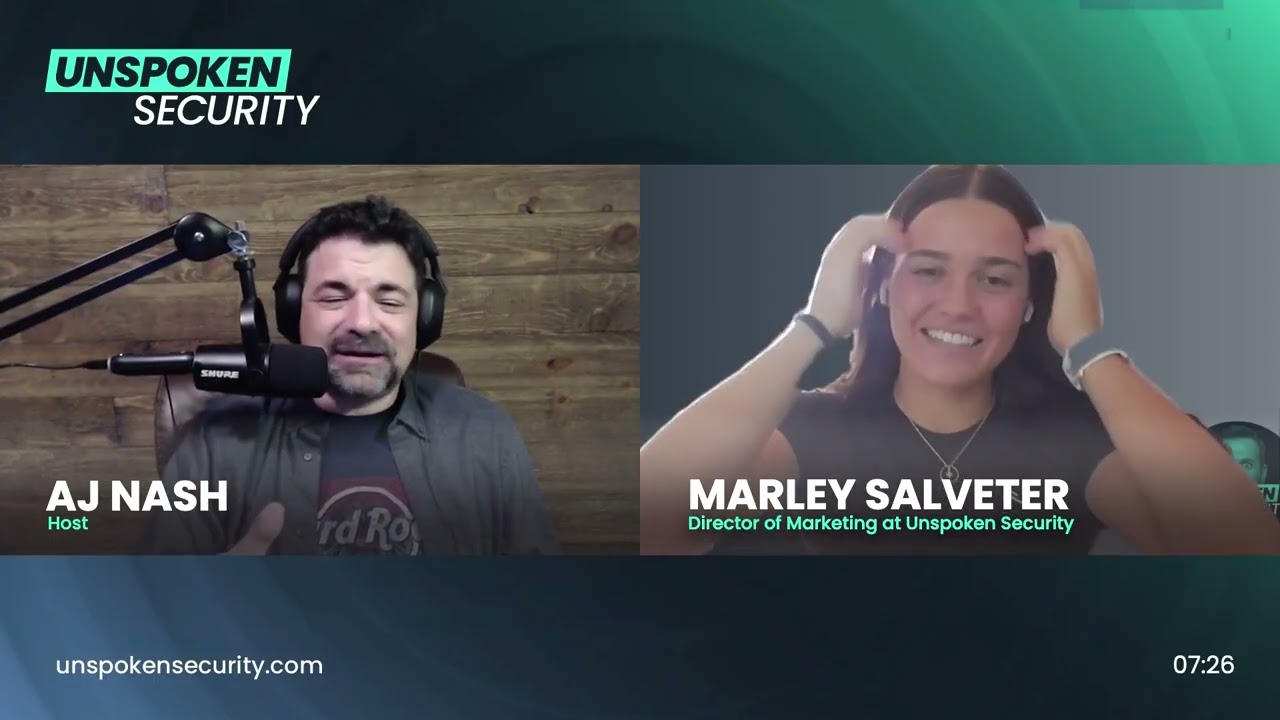
AJ Nash talks with Marui Salvador about how Gen Z sees privacy as a normal trade-off for convenience, not a risk. They discuss why traditional security training fails younger workers, the real threats like credential reuse and deepfakes, and why Gen Z responds better to memes and podcasts than compliance modules.
Chapters
It's very easy to have this illusion of safety when you're online, but the real world is still real and it's very threatening and not everyone is normal and not everyone responds to the stuff you post in the way that you want them to. So, and yeah, those YouTubers, they're crazy. There's some crazy skill behind that.
Welcome to Unspoken Security, the raw and gritty podcast for security professionals who are looking to understand the most important issues related to making the world a safer place. Including intelligence-driven security, risks and threats in the digital and physical world, and discussions related to corporate culture, leadership, and how world events impact all of us on and off our keyboards. In each episode, host AJ Nash engages with a range of industry experts to dissect current trends, share practical insights, and address the blunt truths surrounding all aspects of the security industry.
Hello and welcome to another episode of Unspoken Security. I'm your host, AJ Nash. I spent 19 years in the intelligence community, mostly at NSA, and I've been building and maturing intelligence programs in the private sector for, I don't know, about 10 years now, I suppose. I'm passionate about intelligence, security, public speaking, mentoring, and teaching. I also have a master's degree in organizational leadership from Gonzaga University. Go Zags! So I continue to be deeply committed to servant leadership. Now, this podcast brings all these elements together with some incredible guests to have authentic, unfiltered conversations on a wide range of challenging topics. This is not your typical polished podcast. My dog occasionally makes appearances. I actually have two of them now. They're in the other room. We should be safe today, but we'll see. People argue and debate. We can even swear here. I certainly do. And that's all okay. I want you to think of this podcast as the conversation you'd hear at a bar after a long day at one of the larger cybersecurity conferences. These are the conversations we usually have when nobody's listening. Now today I've got a really special guest. I'm joined by Marui Salvador. Some of you may recognize her name or face. She's not only the marketing director for Unspoken Security, but Marui is actually the executive producer of Environmental Professionals Radio and a professional soccer player for Thonon Evian Grand Genève. And for anybody who speaks French, I apologize. She earned her Master of Arts in Journalism and Media Studies from UNLV. Where she also published a podcast documentary on Lake Mead. With growing a background in podcast journalism, marketing, and storytelling, Marlee focuses on translating complex and niche topics into accessible conversations that connect with listeners. I gotta tell you folks, I'm super excited. She's not on this show today, by the way, just because she works for Unspoken Security. She's got a hell of an interesting story and I, and it's gonna be a really cool topic, but I couldn't be more pleased. I was lucky enough to meet Marlee and she, I was lucky enough she was willing to come work with me. And she makes everything around here better. So Marui, is there anything you want to add to the profile that we just read off here?
Thank you so much, AJ, for that introduction. That was wonderful.
So today we're talking about security awareness for the connected generation. And I got to say, nothing's ever made me feel older than this topic, basically. The connected generation, when I recognize that's not me and I recognize that we're not from the same generation, it makes me a little sad. But, but it's a very cool conversation. And for those who don't know, and nobody else would, This is something that came up, you know, Marlee and I were talking and, you know, we've talked for a while about a lot of things security related and how things are different generationally. And this just became a topic that made a lot of sense and you have a lot of knowledge on it. So I'm really excited to go through this. So let's jump right into it with the first question, which is, you know, when you think about personal security and privacy, how has your thinking evolved as your visibility has grown?
Yeah, I think this was like one of the questions that probably prompted the whole idea of having me hop on the show. Kind of my, my thought process on the concept of security. It's, it's been an interesting, it's been interesting in how it's evolved because I think that my generation and the upcoming generations have always been in, in an environment where our data was, it was, so it was given to companies before we didn't have a choice in it. Like there was not really that consent piece of whether or not we wanted to share. Have our information shared. And so it's not abnormal, the concept of kind of not necessarily having our secrets, but just our personal information given to these companies. It wasn't something that like we actively had to like fight against. And like the analogy that like I would compare it to is like if you go to the airport and you go through TSA, like I've never known an airport where I haven't, you know, been searched and had my luggage taken through the X-ray machine and whatnot. That was always part of what they considered to be for our safety and is. And so, but there was a time where that was not part of the process. And so it's sort of like that, you know, like companies take our data and they will reformat it back to us in the form of like marketing and, you know, pushing products at us that we might like. And I honestly think that our attitude, I'm speaking for myself, but maybe other people can resonate in my generation that it's kind of this trade-off where we didn't really have a choice to have our data, you know, taken from us and used for whatnot. But then we also get a more personalized approach on our iPhones and, and what products are, you know, pushed at us, which is a whole nother conversation in itself. But in terms of like kind of going into my rookie season as a professional athlete, my approach to how I personally brand myself also is, is becoming this factor as I grow into this kind of, this one career path of mine. And so I know I'm, I am a marketer for Unspoken Security, but, but having to step into the role of kind of self-promotion is something that's very new to me. And obviously, as you said, my background, I don't have a super in-depth cybersecurity background. I have the marketing side of things. And so while I know how to promote myself, I also want to know how to protect myself. And so being in this space, I feel very lucky because I get to know that side of things. It's not just randomizing your passwords. There's, it's so much deeper than that. And we'll get into it, but you know, the, the, the landscape of, of what's online and your online presence, it's just evolving so fast that it will make your head spin. So kind of keeping up with both trying to promote myself but also protect myself is something that I'm gonna have to keep in mind as I continue to grow because now having a brand is so important as an athlete, as a professional athlete, but then you also fall victim and are more likely to have things like your data leak. So, so yeah, it's, it's definitely a space that I need to be educating myself in more, and I feel like I'm in a great position to have access to that.
Yeah, I mean, I think you, you, listen, you made several really, really good points and, and some interesting ones in there. You know, the TSA comparison's kind of a funny one. I, I am old enough to remember pre-TSA. It's a distant memory now, but I am old enough to remember it. And, and, you know, 'cause this comes after 9/11, right? The big, a big push. And so we were all, as a society, mostly willing. Some did it unwillingly, but most of us were willing to make that trade-off, right? From a safety standpoint. But it never really occurred to me that there's a whole generation, probably two at this point, who don't know it any other way. It wasn't a trade-off. It was just, this is how we do things, right? And, you know, I think back and again, nothing, nothing makes me feel older than this conversation because, because I'm Gen X, which never seemed like old until today. But, you know, you go back and you look, you know, our generation does see things differently. You know, we, we still wanna push back, you know, against, you know, tracking cookies and against, you know, the, the forms. A lot of people just zip through and go, yep, sure. And they sign away their lives and don't even think about it. You know, our generation was, was much more protective of those things and not as much necessarily anymore. It's kind of getting away with the digital world, but, but it, it definitely feels different. You know, and, and I did some research on this a while ago actually now and wrote a small little paper on the subject of generational shift. In perceptions of privacy and security and, and talked about, you know, really walking into a post-privacy world, which not to blame anybody cuz it isn't that way, but it does contribute, I think, to how cybersecurity is changing as a whole because the motivation for companies to protect, you know, customer data is the customers, right? Hey, if we don't protect the data, we'll lose the business. Well, there's two generations coming up now who don't really care, care about the data as it turns out. And if that's the case, then why would companies bother to spend all this money trying to protect it if, if the people they're protecting don't care? And so I think we're starting to see some, some shifts there. Not quite yet because you still have boomers and Gen X that are in charge of these places, but I suspect we're gonna see some more shifts going forward. But it's interesting now to see as your career shifts, right? So, and, and listen, for those who don't know, I mean, Marwa's been somewhat public for a while. Marwa's, Marwa's a 5-year Division I soccer player. Marwa's, Marwa's got some great, great video out there. She's done some cool things. She's super fast. And so it's not like you were unknown, right? But Division I women's soccer in America is not the NFL, right? There's, there's different layers here. You're not, you're not Taylor Swift either, right? You're not at that level. But, but now you're, you're starting to walk into a different world where more people are going to know you. And, you know, it's interesting to see how that's going to impact not just you, it could be others, but a generation that came up really just fine, you know, very happy to sign away their privacy and to, to live openly on social media to, you know, to be on on TikTok and Instagram and, and Twitter and just put everything out there all the time, you can't really pull that stuff back, you know, later on. So, you know, there's— I wonder if there's some concerns. This wasn't a prepped question, but I'm curious what your concerns are there. Have you tried to scrub things back out of social media and off of the internet? Are you— is there, is there any of your words gonna pop up later on and be a problem for you? You know, it's because that's a challenge you don't think about when you're 14, 16, 18, whatever. That someday I might be in a position where things are gonna bite me, you know, if I, if I put something out I wish I hadn't, whether it's something I said or something I did, you know, it could be frivolous and innocuous, but people perceive how they want. So have you, have you gone down that path? Have you talked about trying to scrub things? Are you worried about stuff? You may not have anything out there to worry about, I suppose.
Oh, I hope not. I think everybody's got something. One thing that I think I've set myself up well for, and it was like totally an accident, was I really didn't start even fostering a legitimate online presence until really late into my, even my college career. Like I would, I would get an Instagram and it would be like, that'd be like my only platform. And then I would kind of delete it. Like honestly, I wouldn't say I was someone who was necessarily concerned with being private, but I was sort of apathetic towards being public until it started relating heavily to kind of this trajectory I started taking where I really started taking soccer seriously towards the end of my collegiate career. And then I was like, oh my gosh, there's a lot of pressure actually now to self-promote, especially with the emergence of like NIL, which was I think my 4th and 5th year of, of college soccer. And of course that was when I was playing at UNLV, which is like the city of promotion. Like that's, you know, it's a, it's a living billboard is what it is. And so you, you go there and, and that's what what it's all about. And then I actually did a marketing internship while I was in Vegas, while I was there. So I kind of got into this little pocket where I was starting to learn more about how I could promote myself, how I can promote other things, other companies. And I do think while it's an advantage that I started late in the sense of, thankfully I don't have anything out there that's like, is offensive or cancelable. I don't think I do. But also like going forward, you know, if It would've been easier if I had a bigger foundation. That being said, I think a large part of building a brand for yourself as an athlete in the age where marketing is almost just as important as being a good athlete is that you kind of have to find this balance between like authenticity and also being pro— and being private and protecting yourself. And so I wouldn't say, I wouldn't say I'm an undersharer. I think I like to be honest and I like to be open.. But then obviously I wanna make sure I'm not sharing my addresses or like giving super explicit information about my loved ones. And then also like not being really offensive because you're not just someone online representing a team, you're oftentimes representing a city or a town and other people. You can, if you, you know, grow bigger, you could be representing brands and sponsorships. And so there's this aspect of professionalism that you have to— but yeah, like, I definitely think I've considered like creating different like accounts, one specifically for soccer and one more for personal because, you know, like, maybe athletes get pushed into this one-dimensional box, but we all have our other interests and we have opinions and we have, you know, things we want to say. And so I've considered that, but given the fact that I haven't historically been a super heavy promoter, self-promoter, it's, I think I should probably work with what I've got and just have my single platform. And, yeah, hopefully, hopefully nothing comes up that, that would, that would be not good. And if it is, then—
Well, I mean, it's, I mean, I'm confident you're gonna be fine. Like, yeah, you're— Marlo and I have worked together for months now and, and I don't know anything about her, so she doesn't tell me anything. I'm just kidding.
No, I'm just kidding.
But, no, I, I'm, I'm confident there won't be anything out there. Now I will say, I feel bad cuz I'm about to say this, we didn't prep this at all, so it's totally gonna come out. Okay. And you're gonna be like, oh no. We didn't, we didn't talk about it at all, but now I'm curious what your thoughts are, if you have any yet, you know, with AI. So let's say you didn't, you didn't put anything out there, right? You, you have a pretty clean past. You started social media late. You, you kind of came and went in social media, in and out. So it wasn't passion for you. So you, you haven't had some drunken night that ended up on Instagram, or you haven't had some rant or something, whatever. But with AI, I, somebody with talent could make it look like you have. It doesn't take much now, as you're aware, you know, to, to pull some pieces together and, and. And put some pretty convincing things out there that are, you know, then attributed to you and say, well, this is, this is who Mario is. Somebody could sabotage. Yeah. No, listen, you're, you're one of the kindest, sweetest people I know, so I don't know who would wanna do this. But you know, when you're, when you're a famous athlete, you know, somebody from another team might want to or whatever. Have you, have you given any thought to this at all? What have you, have you looked into like what is AI doing? Where, where are people going with AI, the capabilities? And you know, who would you turn to if you needed help figuring out you know, what to do about something like that or how you would counter that.
Yeah, I, I think this was sort of go— goes in, ties into one of the things I did wanna talk about. You had mentioned the, the generation gap in the, this topic, but honestly, the emergence of AI and, and how, how much technology had advanced in the realm of like hacking and exposing, you know, people online, how much it's developed even in the past few years. I feel like a boomer. Like, I can't even tell you how many LinkedIn, fake LinkedIn job application responses I've gotten that I've responded to. Like, they're tricky. I've, and because, you know, I've gone through the whole job search process, I've had friends come to me and say, hey, look at this great job offer, they're, you know, with so-and-so. And I'm like, that's fake. I know that because I fell for something really similar. It is, they, it is getting so good out there. And I really do think that similar to the way that like a lot of athletes now have like, they have marketers for them, they have agents. I think there's sort of this like untapped market where we need representation and guidance for like cybersecurity personnel for protecting like professional athletes' identities. I know that like really big name celebrities and big name athletes obviously have that, but like You go on Twitter and it's awful how much stuff is leaked on there. Like, it's truly despicable. And like, it happens so frequently that you think it was something that would get— people would try to get in front of it. Maybe they are, and maybe I'm just not having to do that yet. But like, I think it's a legitimate concern. And especially I think for women it is. And I think AI is only going to take that further. So it's a real concern. I almost want to say, not a cop-out, but like, I don't even know what I don't know. And I'm scared to know, to figure out all the, all of what could happen to me and other people in similar situations. But yeah, like, I, I think be coming from someone who doesn't have like a strong cybersecurity background, if, if for me it would be like reaching out to resources, which luckily I have a few connections who I'd be like, hey, if I have this concern, you know, what should I be doing? What do you think I should be doing? I think first is just further education and then kind of making a game plan. Protecting yourself going forward, like having a protection game plan because obviously I want my career to continue going forward and with that in mind, making sure that sustainable is taking the steps now to make sure that I don't have some incident where something surfaces and it's not even really me. And I don't even know how to go about that. I think we're probably, I know because of the people you've had on your show previously, but like, people are taking the steps to counteract those types of issues that are coming up. But, but yeah, it's a, it's a growing issue and it'll be protecting it will be a growing market.
Yeah, I agree. And yeah, I, if, if it were to happen to you, like, I got you, we'll figure it out. I, I've, I've been in that position. I've, I've worked in positions where I was on teams that our job was to help protect famous, you know, celebrities, you know, images. And I'm in physical security as well and some of those things. So I, I have certainly familiarity and I know people. And you're right, it's, it's a growing market. There's a lot of need for it, and it's gonna continue to be a challenge. And it's debunking AI is not impossible yet, but it's hard sometimes. And the biggest challenge I see is that sometimes it doesn't matter. You know, the, the challenge with PR is once the word is out, whatever the thing is, the lie gets around the world. You know, what's the old story? A lie gets around the world before the truth gets its pants on, something like that. And, and it's true in the sense that people also, there's a psychological factor that people tend to believe things they see and hear more than they read, and it becomes imprinted, right? There's a way memory works in that if somebody has a really convincing AI video of you doing something you did not do, it's hard to wipe that memory from that person because I witnessed it and I experienced it as a result, and it becomes a much bigger challenge. It's not impossible, and there's ways to do it, it requires another experiential response basically. But, but it is a big challenge and it, it's very concerning. And I think we're gonna see more of this character assassination, brand, you know, personal brand assassination type things. Yeah. Some will be, we will know why, we will see, you know, a cause and effect and some we won't. You know, there's, there's challenges and these technologies are readily available and very inexpensive. You know, so it isn't hard to create something that can be used for good, Or, you know, for nefarious purposes. So yeah, it's, it's gonna be one of those challenging things and it's interesting to see how it works from your standpoint. You know, your, your perception of the world is very different, right? And your, your path is very different and it, and it continues to be, I mean, it's, when we met, I knew what you wanted to do. Like we talked about it, you, you know, you were pursuing your soccer career, which I think is super cool. I mean, I gotta tell you, you know, it was actually one of the selling points for hiring you, not the other way around. I know some people might think otherwise. Distraction or whatever. To me, it was like, here's somebody who is brave and bold and knows how to work as a team and is willing to take on challenges. And what, what more do you want in somebody who, who you're gonna work with? You know, this is somebody who's gonna get things done. And I'm super excited, you know, after playing in Florida that you're, you're going to France and you're gonna do amazing things. And for anybody who wonders, Marwee has sworn she's still gonna work with me, so she's not quitting or anything or leaving, at least not yet. Listen, once she makes the big bucks, I'm sure she'll find other things to do with her time, but Until then, I'm thankful. So as we're looking forward though, so, and, and we've touched on some of this already, but I, I still want to, you know, dig deeper in it. You, you've met some people obviously, like you said, with the show and you, you've worked in other places too. So you, you have some background at least in how corporations, you know, work through some of these things and training people for, you know, security and whatnot. What do you, what are some of the real security challenges that you face that nobody really talks about in corporate training sessions?
I think that this question, I, I kind of go back to what I said earlier where it's like, I don't feel like I don't know what I don't know. I feel like cybersecurity is really not talked about, especially when now I'm getting, I have like millennial managers and even some Gen Z managers. Like the concept itself is just not approached the same way anymore. And I honestly think because there's this aspect of we use your, you know, you press accept all cookies because they're ensuring that your user experience is perfect. Like, that's their selling point. So you're kind of, the whole attitude around it, at least in the areas that I am in outside of Unspoken Security, they don't take it nearly as seriously. I think I haven't had super adept cybersecurity training and was definitely even, you know, farther behind foundational on what I, my understanding. Before I started working with you. So I think what we're missing is probably providing the younger generation, and maybe I'm in an echo chamber, maybe everyone else thinks differently than I do, but, but for me, I think laying out the threat of data leak to us in a way that, that is of value to us and it makes sense and it feels more realistic because I do think a lot of you, when, when I think of like cybersecurity or, or issues of like security, it's like a giant security camera, like in the corner of my room staring at me, but it's much more inconspicuous than that. In fact, a lot of it goes unseen. A lot of it's behind the computer, you know? And so when you don't see something and when you do, it's framed in a way that's beneficial to the user, you don't really worry about it. And yeah, I am being tricked. And so I think, I don't know, I think even just having any sort of education on it, I haven't had a briefing, would be the first step. And also communicating in a way that resonates with the generations that haven't been the ones who are cutting their names out of phone books. We're not the generation to do that. Our numbers are online.
You don't have a phone book. You don't even have a phone book.
Our numbers are all online. You can find my number. You know, like, it's all, it's all, different. And I think just finding a way to translate that to the generations that haven't had the same experience with at one point having a lot more privacy than you do now, that's going to be bridging that gap, I think.
I think that's really interesting because I had— I really hadn't thought about it until you said it. It's— it's— if I'm hearing you correctly, and correct me if I'm not, but it sounds like, like the way we talk about cybersecurity, the way we talk about data breaches and, you know, protecting personal information, whatever, it just doesn't sound like it resonates because it doesn't feel like it's personal, right? It's just this big thing that's out there, but it— we're not doing a good enough job, from what I'm hearing at least, explaining why this matters. You know, it matters isn't good enough. Why does this matter? You know, what happens now? You know, what are the worst-case scenarios, most likely, you know, case scenarios now that this data leak has happened, right? And, and to be fair, that isn't just your generation. I think that as a society, we're becoming very numb because the breaches are never-ending. And, you know, as, as these things work, every breach becomes the world's largest breach in history because that's just how, you know, things grow like that, right? And I think a lot of people have become numb. Even people who once cared very deeply about security and, and protected their own information just eventually throw their hands up and go, well, everybody's got everything now, I guess. But it's, it is interesting to hear you say it and, and frame it in that way because there, there's probably a fundamental shift we should be looking at in how we're gonna train upcoming generations. And it's not just saying, you know, what will happen, you know, do this so this doesn't happen, but why, why does it matter? You know, what some of the impacts, you know, to, to, to do the storytelling. I talk a lot about storytelling as a way to, to communicate, you know, complex issues and, and help people, you know, internalize what we're talking about. And I think that's what you're saying really is, you know, just saying, hey, your data's gonna leak. All right, so, but if we go through some of the, the potential consequences, the likely consequences, the past things that happen, not boogeyman stuff, not trying to make it terrible. Like if you don't protect this, somebody's They show up at your house and, well, I mean, it's worst case scenario, it's possible, but it's less likely. But, you know, talking about how rapidly you can have all of your accounts hijacked and shut down and changed and, you know, how you can have all of your, you know, financial accounts raided and, you know, some of these other things. You know, when, when I talk to people about, hey, don't use the same password in multiple places, password reuse, people have talked about it forever. And sometimes they're like, all right, yeah, sure. But when you go, well, listen, the reason for that is that wherever the weakest place your password is, is now protecting the strongest things you care about as well. So if you use the same password at your local gym that you use for your financial records, and the gym has terrible cybersecurity, it doesn't matter how great the bank cybersecurity is anymore because the gym's gonna be compromised. And no matter what compromise happens, you see one on the news anywhere, what adversaries do with that information is they take that information and they try to plug it into everything else. You, they'll take every bank. It's why you'll get a, a junk mail once in a while, like, hey, your, your account's been frozen at some bank you've never banked at. I mean, they're phishing emails, but they just shotgun it to everybody. It's the same thing with credentials. If they get up a bunch of credentials, they're gonna run 'em through every financial institution and every, every place they can because people reuse so much crap. And so all of a sudden your bank account's empty. But if we don't tell people that, if we just say, hey, you should not use same password, maybe we're not doing a good enough job explaining, you know, what the second and third steps of these processes are gonna be in a way that's resonating. You know, it's not just about, hey, don't put your, personal life on Twitter. And I mean, I can, we can sort of have those discussions. Like they're, they're harsher discussions about worst case scenarios. And there are bad people in the world who, as you said, everybody's information's available. It's not hard to find somebody these days. But I think, well, actually I'm gonna ask you, I was gonna say I think, but is that an area in which your generation, and I realize you're speaking for an entire generation now, is, is that an area in which you guys are more attuned? Like that you do gather, like, listen, if my personal information gets out, bad people, creepy people show up at people's houses. Like, is that part more common than, than the other thing we were talking about? Is that something that still resonates?
I think that would resonate in that it feels more like a direct threat. I was just thinking about some, some examples of like when I've— I have had like issues of data breaches, I guess, I suppose, like my credit card information.
Sure.
But the thing now is that you can— your data can get breached and then they kind of patch it up pretty quickly. Like they cancel the credit card and refund it. And then I'm in 2 days, I have a new credit card. I also was thinking about one time where I didn't have my specific Instagram hacked, but I actually had someone make, make an Instagram of me and pretend to be me, but I reported it and it was deleted immediately. So it's okay. It's, it's like the threat is there, but it's hacks so quickly that it doesn't feel like the level of threat is not— now, if this was a fake account and they were like messaging me and harassing me every day, obviously that would feel like so different, and I would probably, you know, have been a little more motivated to like make my password even more convoluted than it was before, you know. But like, but yeah, like, I feel like so far, so far I haven't had instances where I've really had to pay the price yet. But if someone were to show up at my house, that is an immediate direct level threat that would definitely like, I knock my socks off, Garrett. So I definitely think it would resonate more with hopefully everyone, because that's not even a generational thing. That's like an instinct. It's like survival.
No, 100%. That is. I, I, I'm more thinking about helping people understand that that's a potential consequence before it happens. Like, I've, and I've seen this in business, by the way. This isn't even generational necessarily. You know, I've had conversations for years, you know, where you, you're working with a CISO or, you know, a C-level executive or whatever, and you're talking about, you know, why they need an intelligence-driven security program, for instance. And sometimes they just don't, they don't see it, right? It's just, it's hard to re— and I've had, you know, some where I've just gone, listen, I, this is not going the way I'd hoped it go— it would go. And it's, it's clear you're not hearing what I'm trying to say. I'm not doing a good enough job communicating it, you know, and I work on it. But I've also had some that are just arrogant and dismissive. And, and for them, I have said, and you can ask some salespeople because they'll tell you they were there when it happened, I'm just going to get up and leave. Like, I'm going to go back in my office. I was told you needed some help and I could help you, but you don't seem to I don't believe you need any help. And so I recommend you update your resume and buy some crypto and I'll just deal with the next you. So after you've been dismissed, it's not a first conversation, but it's the last one usually. And, but sometimes you have to have that conversation, you know, that shock from, well, listen, this is real. What I'm talking about is real. If your credit card is compromised and you know, the credit card companies, you're right, they've gotten smart. Banks have gotten really smart that what customers care about is friction. So if a card's compromised, we are very quick to shut it down, get 'em a new one and get 'em back on board. We won't lose them as a customer and they won't think about what they actually just lost. It's not the credit card number. I mean, sure, that's gone, but big deal. But your personal information's gone too. A lot of times. Not, not always. Sometimes it was just a skimmer and they just got the card number and that's, that's, you know, fraud. But when there's major data breaches, it's what we call fulls, which is, you know, the full record, your, your name and your address and your social security number and your birthday and all the things that somebody needs to impersonate you and, and start new credit card lines and all these other things. And users don't even think about that. Hey, I just got my card back. I'm good. Without going, well, wait a minute, what was the rest of the data and where did that go? And you know, talking about credit monitoring and things like that, because there's a lot more to it than just the card. But the companies have learned where the friction is. Customers just care about give me my card back. I wanna keep buying shit. You know, that's what we do. So as long as I can do that, I'm fine. And all of our information just stays out there. So, you know, it becomes a secondary discussion about, How do we mitigate that risk now? 'Cause that's happened. I mean, the reality is that that data's gone and it's out there someplace. So how do you mitigate those risks? Whether it's credit card monitoring or, you know, if you become more, you know, as you become more prominent, whether it does become a physical security component. Most criminals, by the way, have no interest in the physical stuff. They just want your money. So that's not a huge component.
But if you— And there might be Anna Marley somewhere going off the shopping spree under my name. We'll find out.
It's possible. I hope not. You should maybe check a credit score. But it, it, it has happened certainly where people don't realize it. Yeah. And they check their credit score and they're like, oh no, something's been happening. I was unaware of it. So I mean, I do advocate.
I'd love to blame my credit card for that.
Ah, I do, I do advocate for things like credit monitoring for, for people, you know, and, and if, if not through a service, then at least through themselves to keep track of things. You know, there's plenty of free apps to do that because you do want to know if suddenly your credit takes a huge drop or, or something, there's a new credit card that's opened in your name. You want to know rapidly, obviously, so you can, you know, fight it as fraud. And that starts with all these breaches. But it sounds like we're not doing a very good job at all of helping people understand these are the consequences. This is why it matters. It's not just about the inconvenience of a card. It's, it's about that. And, and that said, there's still that other component of, of living the more public life and how do you balance, you know, that, right? You, you're building, as you said, building a personal brand, which to do that well generally means being able to connect with your audience or your fans or whoever that is., but also being able to avoid, you know, mistakes that could be dangerous mistakes. You know, you talked about like not, you know, telling people where you live. Now you've got a virtual background on today. Smart. I, I hate virtual backgrounds. I'll tell anybody that, but I wouldn't have just, I would've told you to, to use one because why should anybody have an idea where you are? Yeah, you got the logo, which is always nice too, but why would you, why would you release that? Like nobody knows where I am based on this. I mean, you can look me up, but Those are important factors, like when you're out in public, if you're on, you know, if you're on social media, if you're taking pictures and videos and sharing stuff, if people are pretty good at open source research, they could track down. I do it as a hobby, not to be creepy. I don't tell people, but I'll, I'll take some of those things and go look and be like, all right, can we find out where this person is? And you can usually. And so that's another component to, to give some thought to.
Yeah, I actually, I've seen like a few YouTubers who like have made it their whole channel. Is to find like a location of some picture that's like a grainy pixelated zoomed-in photo of like a bush and it's like somewhere in like Southern Asia. Like they've like been able to pinpoint it to like an explicit location with like coordinate points. And I'm like, how is that even possible? Anyway, that is crazy that that's a skill and that people could do that. I have this cool background because I think it looks cool. It might not be the— it's a little, maybe a little glitchy.
No, it is cool. I appreciate it, but I think it's cool.
But now I have two reasons to have it. One is to not disclose my location. No, I think, I think it is really important. And I, I know that, that when you, when you regularly post on social media— I remember I took a course in my graduate program that, that touched a little on like parasocial relationships. And I know people can become really Let's preface right now, I have 600 followers on Instagram. I am not even a micro celebrity. Whatever is smaller than that, I'm aspiring, aspiring. I'm an aspiring micro celebrity. So, so, but there's people who have huge brand presence and like they have like YouTube channels, they're posting consistently, and people will get really attached and like feel genuinely such a bond to the people posting that, like, they develop this parasocial relationship and they feel it's like a psychological effect. And that can lead people to do some crazy stuff. And that's where, like, we were using the concept of, like, if someone were to show up at your house as, like, a way to resonate. But that's, like, actually happened so often. I see it all the time. I mean, it always, like, is a pretty big news story when it happened, but stalkers are everywhere. I know per personal account of people who have been stalked as a product of having a bit of even a small online presence. And so even like, yeah, like, I mean, as, as an athlete who's like affiliated with a club, obviously that gives away a few locations. But in terms of like explicitly, you know, showing details of like really where I live and like, or how to get there, or things that would give someone closer access to me in a way that would make me feel like physically unsafe definitely are things that I need to keep in mind and be safer with. And I think a lot of people need to because when you're— it's very easy to have this illusion of safety when you're online, but the real world is still real and it's very threatening and not everyone is normal and not everyone responds to the stuff you post in a— in the way that you want them to. So, and yeah, those YouTubers, they're crazy. There's some crazy skill behind that.
Yeah. It's some really good open source researchers. I, I know some of those folks, or at least have crossed paths with some. I do it sometimes as a hobby, not, not enough to have a YouTube channel cuz I'm not that good, but, but it can be a lot of fun. You know, it's, I do it sometimes with like movies or TV shows. I'm like, oh man, I wonder where that building is. And if you get a landmark or two, you can get a map and start playing. You'd be like, I found exactly where that is. You know, things also to keep outta your social media is, you know, people forget to Oh, there's a street sign or there's a license plate, you know, things in the background that people don't think can be traced back, you know, can be a lot of times, you know, traced back and, or they, they just don't realize it's in the shot. Right. And so there's a lot of effort to make sure the shot is clean and there's, you know, if there's mountains in the background, that's actually something somebody might be able to check out if they have any context at all. So, you know, it does become challenging to figure out and it's sad to have to go through that, but you know, the alternative is far worse, frankly. And you're right, the, the perisocial relationship is a really interesting point, which again reminds everybody just how damn smart you are. So I've experienced a little bit of, and not, not, not to that level. I have even less followers than you, I think. But I do find it interesting sometimes if I go to events or conferences or whatever, I've had people come up very excited to, to meet me or to talk to me who I've never met before. And I'm flattered and it, and it does, it has never been creepy. Nobody's following me around, anything like that. But But I also still get like, there's a connection there that I, it's a one-way connection. It becomes a two-way if I get a chance, cuz I like people and I wanna chat, chat with 'em. But, but you do see that sometimes, like, oh, you know, if, if they've been listening to the show or, you know, watching or whatever it is, or in your case, you know, maybe they've watched a lot of, of your, of your matches, you start, you know, developing, like I said, that connection to it. Or if they follow me on social media and they're like, oh man, I, you know, I really dig this person. And people will do it without even realizing that they've become connected to somebody, you know, and often it's not creepy, thankfully. But, but it is an interesting point that you make that there's nothing you can do about that. You know, if you're building a brand, you're gonna be out there. You wanna be out there, you wanna connect and you wanna share enough of yourself that people can connect with you. And then the trade-off is you just don't know who's gonna, who's gonna go a different direction with that. So it's an interesting point and, and how to balance between how do I share enough to be authentic and connect with people and, and be yourself and enjoy your life without crossing some invisible line that leads to problems. And there's, and that line's not a straight line, you know, it's a big zigzaggy line.
Right.
You know, there's no right answer as to, I mean, there are, I would say there are some significantly wrong answers, but there's no specific right answer, I don't think, as to, you know, what's shared and, and with whom and how. So now I'm curious, you know, with your journalism degree and all your exposure, exposure to security and intelligence professionals, you know, this show and, and I'm sure other places. I'm gonna gamble you're thinking about how information gets gathered and verified and used a great deal. And we've already talked a little bit about that, but from your perspective, what do you think most people, like especially Gen Z, 'cause you're now the spokesperson for Gen Z, congratulations. You know, what do they misunderstand about how personal information is collected and used? You know, we talked a little bit about this, but what do you think are the things that people aren't inherently going, okay, I get what happens with cookies and I get what happens with breach data. You know, what are they missing right now?
Well, that's probably a question that I should be asking you. No, no, no.
Maybe.
I think that, well, as someone who does do a lot of outreach and it requires me to get a lot of people's emails, first of all, I feel a little creepy doing that, but it's part of the job and it's also public information whether they realize it or not. Sometimes they're putting their email out there and they don't realize it. And I feel like now you log, you click on every, any website and it requires you now to like put in at least your email and the password and like your phone number. So I mean, I'm sure through like a simple few clicks, if you're even moderately savvy, you could trace pretty much any one phone number or email based off of— on any given day, if they've like logged into any website or registered on any website, I feel like those three pieces of information, a password, email, and your phone number, are like now such giveaways, but they're so significant to who you are. I mean, I don't know, there's obviously levels, like your Social Security number is something that I hope you're not using as your password or something. But I, I don't think, again, what's probably missing a lot from my psyche and also a lot of other people is the result in, in the, the level of threat that can come from kind of mindlessly accepting all to like a 100-page terms and conditions and, you know, cookies that on like a website that's like maybe not designed in a way that looks trustworthy. And you don't feel threatened until something happens to you. That's always how it goes, and that's how humans are. So again, I think going back to what we were saying in that there needs to be some way where we can translate these threats into a mode of communication that resonates. And allows my generation and anyone else who feel, who doesn't feel the immensity of the issue to just kind of feel a little bit of pressure on that. Because I do think we all could be a little safer on our computers and our phones and what kind of information we're giving. Even with like, there was that, you know, there's still an ongoing debate with like TikTok and the data we're giving to China. And again, like if you look at the discourse with a lot of my generation and many other, online that they do not want their TikTok taken away because, nope, they feel it is a service platform and they— the weight and value that they're willing to give up their data privacy to China if it means they can have their TikTok. And it's obviously not seen like that by our legislators here in the U.S. who, you know, they see it as an international threat. So it's clearly— there's a difference in the way that we're perceiving the threat for those of us who are less informed on the issues and the weighing of values on whether whether or not we are willing to give up our, our data privacy.
So that, I mean, that's an interesting point. So there's two pieces I want to dig into on that one. So the first one, I'll do it in reverse order because the Twitter piece, I will tell you, or the TikTok piece, I will tell you without divulging too much because I know, I know a bit about this one. It's not just about your data. And I think, I think maybe that's a flaw in the messaging that people have put out about, you know, TikTok's national security threat and we're worried about people losing their data. And I think maybe that's That's some incomplete messaging that probably isn't helping explain to people why TikTok may, and I will say is, cuz that's my opinion on the subject, a national threat. So for what it's worth, not that this will change anybody's opinion, people love TikTok. People become attached to their social media platforms, if not addicted. But TikTok is, our TikTok is not the same as TikTok in China. And I think that's a pretty telling point in that. In China, TikTok is limited mostly to educational pieces and, and, and things that are considered to be of social value. And in our TikTok, it's very much the opposite. It's, it is meant to be a, a time waster, you know, and, and, and somewhat frivolous. And there's, listen, we're Americans, we can do what we want and we can, you know, fritter away some of their time, et cetera. But if you can build an algorithm that is designed to keep people very engaged for long periods of time and fritter away their time, That hurts national productivity and a lot of other things, but also the more attached they are to it, then you can go ahead and fill that same feed with misdis and malinformation. So I don't think we've done a very good job as a country of explaining that that's the bigger threat. I think, I think it's easier to say, oh, it's your data because it's a simple answer and our country loves simple answers to things as opposed to the complicated ones that are more compelling. But I will tell you, I, I couldn't care less about the data threat of TikTok. It's the combination of It's this building of a platform that is so, I hate to say addictive, but so enticing. And then the ability to pump all sorts of misdis and malinformation through it to make it a, a megaphone for misinformation. In my somewhat educated opinion on the subject, I, I do think it's a national security threat. I'm not on TikTok. That said, I think, you know, the other point, you know, that you've made is one I wanna ask you a follow-up question on. So about helping communicate this better. So that, you know, younger generations are internalizing this. So I'm not expecting you to have the answer to this necessarily, but you know, we can spitball for a minute here. What, what works better? Like what kind of communication do people under 30 pay attention to and, and what resonates? You know, just saying, hey, it's, it's your data doesn't do it. Obviously just, just giving some fact of things don't seem to do much. What, what are we doing wrong as a society in communicating this kind of a thing? What would be more compelling? Should we just take over TikTok and just run a bunch of information through there telling people why they need to do this? Do we need to have songs? Is it, you know, is it, is it, is it, is it actually memes? Is it gotta be funny? Like what's, what's the, what's the secret, right? What's the trick that, that helps people see this as a, as a threat without panicking and then helps them to go, okay, I get, I get it now. I wanna, I wanna care more about this. We got like 12 seconds. You gotta solve this problem for the world.
Go for it. Okay. Okay.
Okay.
I'll get memes. You got plenty of time. You got plenty of time.
Subliminal messages through the airwaves. And convincing people.
Subliminal messages, that's what we're going with. Oh my goodness.
No, no, no, no, no. I actually think this might be a little bit like meta, not Facebook, but breaking the fourth wall. I think podcasting is such a great medium for learning, but that's, but that's also like, I don't know if I'm being biased right now. I find that if you could have a conversation where you can talk with someone who doesn't know a lot about a topic and then you're kind of communicating to them in itself in a way where they understand it, but then people who also are at the same level of understanding understand it. That in itself is a breakthrough. And I think that's why I love podcasting because it's a medium that allows you to be both casual but informative and your guests can be approached with topics they might not know about in a way that's not intimidating because usually it's a laid-back setting where you can joke around, but then you can also talk about the imminent threats of international security breaches and being unproductive as a nation. TikTok, it's like—
it all just kind of blended together, right?
It was— it all blended together. But I do think like, I mean, all my, like, a lot of my friends, and again, maybe because I live in an echo chamber, but like a lot of my friends listen to the podcast too. And it's, it's a great intersection of education and enjoyment. And so I do find that, you know, I don't, I, one thing that's great about your podcast is it is, it is a niche area in that I don't, I have not, I do, you listen to a lot of podcasts. I haven't ran across a few cybersecurity for dummies. I haven't found a cybersecurity for you, you know, episode until this might be considered one of those. So, so maybe that's a good start. I don't know.
Listen, obviously I love the idea that podcasts are the answer, of course, but I think, you You know, it's an interesting point because the, the grander scale of that point is that it's, it's about, for OnGathering, it's about personalization. It's about, you know, again, finding a way to connect with the message. Just lecturing people and just giving the, the staid, you know, standard training, you know, click the box, this is bad, et cetera. It's not very interesting. We can all admit that. Like, it hasn't been for generations and most people don't pay attention to it, which is why people don't internalize, you know, security risks and threats. They just just click, click, click and move on. Everybody has the training going on in the background. When they stop hearing noise in their headphones, they know to go find it, click the next page. Nobody watches or listens to any of it. So, but it is interesting to, to hear that, you know, in your, in your mind, this kind of thing is, is the thing like, hey, having these kinds of discussions where, you know, it's a mixture of, of casual but also informative. And I, I think you made a good point in that, you know, well, we'll find out when this goes out. But hopefully this is the kind of podcast where it's like, hey, a lot of Marlee's contemporaries, like, hey, I don't want to tell people I don't understand this stuff, but since Marlee was on, now I can listen and I can learn, but I don't have to feel like I'm on the spot or whatever it might be, right? Because there's something to be said for people don't want to tell people they don't know stuff, right? Nobody likes to feel that way.
I'll take the fall, guys. I'm the dumb one.
But you're not the dummy, but I get what you're saying. But yeah, maybe that's part of it is, is, you know, I think you might be onto something in that, hey, having these kind of conversations where you bring people in and have these comfortable chats, it resonates beyond just the two of us in, you know, in this conversation. You know, there'll be 12 or 14 people that'll probably watch this podcast at some point. So, there'll be more than that. Marley's doing—
Yeah, it's 12 or 14. Yeah. Well, it's not exactly a, like, it's an intimidating topic. It's a scary topic for people who have no background in it. Like, I'm, you know, so I do think, you know, breaking into this kind of intersection between, you know, the 12 listeners who will find it. Educational and funny, you know? And yes. So yeah.
Yeah. Well, maybe, maybe we're onto something. This, this may be, we'll, we'll investigate this more. There may, we may be doing more things like this. Maybe we gotta look for some guests and, and kind of go down that path a little bit. Maybe we're gonna end up reinventing the show. I don't know. Maybe. But I like the idea because we have, we do have to solve for this, right? Boomers are dying rapidly. Yeah. And, and they were a more secure generation. Gen X is sort of on the, on the, on the fritz, I suppose, as a generation. But, you know, that if we don't do something about it, there will be no privacy left. And maybe that's the answer. I'm not saying a post-privacy world is necessarily a bad thing. It horrifies me, but it may not be my world to care about. But it would be nice if it was not something that was forced upon people. You know, like you said, going back to the beginning, your generation never had a choice. Like, it was just how it's always been. Just, you know, everything has always been taken, you know, data-wise. And it would be nice if that wasn't the case, right? If there was a way to say, hey, listen, you don't have to give up all your data. You know, I know some parents who have been on both sides of this. I know some parents who, you know, their kids were always in the social media with them and very public, and their kids became public figures whether they liked it or not. And then there's others who were like, no, my kid's, you know, not going to. I have a friend of mine who I won't name, but I just saw she had put something on LinkedIn recently and said she was no longer going to have her kids in any of her posts. And she explained why, and I thought it was really thoughtful. She said, my kids have a right to develop their own brand and their own persona someday and not be, you know, not have this forced upon them without their permission. And which I thought was really thoughtful and you don't see enough of that. But you make a good point there that, you know, maybe there's an opportunity to, to find a different way to do this so that this doesn't continue because we're not gonna have any privacy left. And, and there's lots of danger that goes with that. It's great for the security business. You know, alarms and cameras and guns will do really well in a world where everybody can find everybody all the time. But it would be nice not to have to, to go down that path. So listen, I, we're running a little short on time. Well, not short, but we're, we're getting near the end at least. So I, I do have a closer question, as you know, but I'm gonna trick you. I got something I'm gonna ask you before the closer.
So, okay.
Yeah. Cuz I'm curious and this is purely for fun, I think, but I think people will care. So listen, your soccer career, you, cuz you won't tell the story, so I'm gonna tell it really quickly cuz I know it now. Good high school player, not recruited, walk-on. So hard. Walk-on at a Division I program. And we're very good. We are very good still. So Oregon State, so good you, you end up transferring to another program for more opportunities, right? And continue to grow that. And then not, you know, drafted by some big league. This isn't the NFL or anything. Went and played in a league that nobody's heard of almost. It wasn't a soccer fan in the US, right? In Florida. And let's just say that was an interesting experience. We'll leave it at that. But you faced some adversity. You had to, you had to work your way through and to get this opportunity to try out in France. And now you're a professional soccer player. Like, you have signed a contract. Somebody is going to pay you to kick a ball, or more importantly, keep other people from kicking a ball into your net.
How does—
I mean, how does that feel? And as you're getting ready for that next big journey to move to another country and to, to live there full-time, so at least we keep it a little bit on the show, how are you thinking about how things are gonna be in that regard in terms of your security, your physical security, your cybersecurity, you know, cuz things are gonna change, right? But, but first, I mean, how does it feel to be a pro? I mean, you may, you, you're, you've done this, you built this, right? And that's gotta be amazing. And then we, you know, I'd like to hear more about your thoughts on security and cybersecurity in your pro career now.
Okay. Yes. I feel like we got, we're so wrapped up in the cybersecurity, I almost forgot I was a professional soccer player. It's, it's actually new for me. So, you know, I, I've only been a professional soccer player for, A few weeks now, I guess, I suppose. I think, I think I've always kind of been an underdog, so to speak. I think a lot of athletes say that, but I mean, in terms of being recruited, I really was. I was never, you know, top dog of the recruitment. I tried out at Oregon State, like was committed May of my, you know, senior year of high school. It was very last minute. And then even driving took me 6 days drive down from Orlando, Florida. I was, you know, just joined this semi-professional league. It was unpaid, working while playing, and somehow landed this trial and was the only girl to be recruited. So committed to this, to this professional team in France. And I, I think what is— what I've taken away from the experience, starting even back from high school, is that I love to prove people wrong. And if someone tells me I can't do something, it's very— it becomes my like mission. And maybe that's a little spiteful, maybe that's like a little petty, but I'm competitive that way. I, I love proving people wrong. I love proving myself right. Very competitive in nature. And I, I'm learning so much about myself through the journey and being able to play professional was an aspiration that I literally wrote on paper, you know, 4 years ago, 4 or 5 years ago when I started college. And my goal for 2025 after graduating college was to receive a professional soccer contract. So I was able to cross that off my list. And that was really, really, really satisfying for me. Again, coming from someone who had no collegiate prospects or professional, it was definitely, I was an outlier. So I feel like I have a lot more confidence in myself. But there's still so much work to be done. Like, I know that's another cliché that athletes say, but there really is. But the thing is, like, I love, I like grind. It's, it's been great training and stuff. So very exciting. And then in terms of the security side of things, oh my gosh, I, it's, I think right now, honestly, a little tumultuous over in France too. So it's gonna be, I'm gonna need to be really extra safe. A part of the, the benefit of playing over in France is that I do get take French lessons, which I think understanding the language is really, is really important even from the, from the security standpoint, knowing what's happening around me. Also, like when I'm online there, like everything is in French, my computer automatically updates them, you know, you know, I'll get a VPN, but like it, it's gonna be really important. And also like being a young female, you know, being relatively new to the area and on my own is. In itself scary. So I'll definitely have to start prepping and taking some measures ahead of time to make sure that I'm safe. I need to make sure I have my passport and my ID and, and yeah, and I'll definitely be taking some advice from you. I remember you helped me prep for my trial, so now I'm—
Oh, I scared the hell outta you. That's— I, I made this document that might not have been the wisest move. It was like, here, everything's terrible. Good luck. But yeah, I'll, I'll be more sensitive the second go around, I think.
But yeah, I added another layer of anxiety with like 40.
Yeah.
No, no, no. It was actually good though because Again, coming from someone like me, like, I'm not thinking about that, but I should be though. So it's better to be scared. I'd rather be scared and prepared.
Yeah, exactly. I mean, it's, as I've told people, you know, don't be afraid of the world, but understand what it is and prepare for it. Like, that's, that's, we, we all are going to live in it. We're all going to go out. I, I wouldn't want anybody to be, you know, terrified to go places, you know, but knowledge is power and it does help us to say, okay, how do we mitigate these things? And, and ourselves in, in better positions, right? And, you know, I've said that to people for years and, and tried to help where I can, and I've done some executive protection and you're my new executive for this one, it looks like. But, but no, it's, it's very, very cool. I, I, I couldn't be happier for you. Like, I'm super excited for you and I'm super proud of you, which is kind of a weird thing probably for me to say, but I am cuz I've seen just part of your journey and I've seen what you went through and, and, you know, you're very humble to say, oh, I'm, I don't know how I got this tryout. You got the tryout cuz you're fucking good. That's how you got the tryout. Like you're the fastest woman on the, on the pitch and you're enduring and you're a good leader. And when things were tough, you stuck, you know, you, you, you were professional. That's how you get the tryout. There's not a real mystery. You're not gonna brag about yourself, but I will. And you're gonna be very successful and I'm gonna miss you when you're too good for the show. But, you know, we'll figure it out somewhere down the road. So, all right, listen, we are gonna get to the, to the wrap-up question now. So as you know, the show's named Unspoken Security. Every episode closes with the same question. Friends, family, coworkers. You don't get a pass, you get the same question. So with that in mind, tell me something you've never told anybody before, something that's been unspoken.
I would say I'd love to somehow tie this into some cybersecurity lesson, but I'm gonna take a different route and, and relate it to podcasting, cuz that's, that's the area that I work around. And also, I'm not sure this is so much a confession as it may be an epiphany, but I think it's really relevant to, to current times. I think that having conversations with people who don't fall in line with your area of work, such as cybersecurity, or are maybe in a different generation than you and just live a different life, like having conversations like this is so important. And I think I kind of realized, you know, I, in a society that is increasingly polarized and alienated, let's have communication with people who are unlike us, and let's approach it in the way that a professional podcaster would. Because I think someone like you, you make people feel comfortable, you make them laugh, and you, you are not only a professional speaker but a professional listener. And I think those are all aspects that we need more of in, in present day. And I think it would, it would be a remedy for a lot of our current current tensions. So, I think going forward in life, I think there's a lot you can take from, from listening to someone who hosts a podcast. I think communication is the key, is, is really, really crucial right now. So, maybe not a confession, but, but maybe something enlightening you can take away from it. Have a conversation with someone who doesn't know anything about cybersecurity. If we have some listeners here still.
I, I think that's, yeah, not everything's a confession, right? It is something you've never told anyone before, which is cool. I'm obviously flattered and I appreciate it. Yeah. I'll, I'll, I'll send you the extra check for, for the kind words, but they actually paid me ahead of time to say that. That's right.
Yeah.
No, I, I appreciate that. I, I, I think putting, putting, you know, that part aside, I think it's a really interesting insight, you know, that to, to try to have those kind of conversations, you know, where you, there's a, there's a, there's a different way to do it. I think you're right. You know, I, I, I like to think I'm like this all the time to a point, but I'm, I'm sure I'm a little different. On the podcast than I am in life, I suppose. But I think you make an excellent point about just, you know, finding a way to communicate, finding a way to talk about subjects where everybody doesn't know the same amount of information on it and find a way to listen when that happens instead of saying, well, you know, I, I don't know anything about this topic, but I definitely have opinions and, and we should all talk about 'em. Right. You know, I think that's, I think that's really insightful. Right. And, and, and I think you're right. I think we're at a place where we need more listening and more, just kindness and empathy and all that goes with it. But to take a moment to go, hey, how do I learn about something different? How do I learn about a different kind of person or a different kind of career or a different kind of threat or a different kind of technology or whatever it might be in a way that's not a pain in the ass, for lack of a better way of putting it, right? Hey, listen, just hang out and just have conversations. People are people for the most part still, you know, and it's a chance to sit down and go, hey, let's figure it out. I know some things that you don't know. You know, I've been exposed to some different things. You know a lot of things I don't know.. And I think that also gets lost a lot of times when people have conversations is they're so big on whatever point they wanna make or whatever topic they wanna address and, and pointing out the other person doesn't know anything about it or whatever it is. Not to go, you know, everybody knows something. We don't all know the same things. Like I've never sat down with anybody and thought to myself, this person doesn't know anything in life that I, I don't already know. I've yet to run into that person. They may know shit I don't care about. I mean, to be, to be fair, they may be really knowledgeable on farm equipment. I just don't really care. But But it doesn't make it less valuable information. It's just not valuable to me. Right. And I think it's important to, to be able to, to do that. Right. And like I said, to laugh, you know, just to, to just have a fun moment, man. Everything doesn't have to always be, you know, a battle to win somebody's opinion or to bury their opinion. So, I mean, I think you make a good point and, and, you know, for what it's worth, you make, you make the show better. So, you know, I, it's better than it was. It'll keep getting better still. I only had 9, 9. Viewers before, now we have 12. So look at, you know, that's a 25%, 33% growth.
That's the increase.
No, but no, I, you do. And I appreciate you. I appreciate you taking the time to come on cuz I know it was, it was my idea. It wasn't something you, you were like, hey, can I be on the show or anything? For anybody wondering, I was like, no, I think there's something here and I wanna have you on and talk about some of this stuff. And I appreciate you taking the time cuz I know you are busy, like you're training and you're doing all these other things. And yeah, thanks for coming on and, and talking about some of this cool stuff and, and I've got some things to take away, some think about how do, how do we improve our communication skills in terms of security and then in terms of talking to, to a generation that isn't as tuned into it, but also just how do we improve our communication skills with each other otherwise. So I think that's really a valuable lesson. All right, so we're gonna wrap up. Is there anything you want besides that? And it doesn't have to be anything else, but is there anything you wanna add before we close out for the day?
No, just to take the time to follow and look Security on LinkedIn. I see their marketer post some really excellent content, as well as an unused series that's really looking for some responses in the comments. The last post was a really good one, so tune in. And Social Security at LinkedIn.
You're always, always on the job. I appreciate it. Hey, do you have a jersey number yet? No, no, no, no, no, no.
But you will. I don't even know, like, what the heck? I don't even know what jersey number I am.
Ah, what was your jersey number?
Do the Waterboys have the jersey number?
You're not a Waterboy. What, what was the jersey? What was your jersey number in college?
I was 28 cuz I was the last recruit at Oregon State. And then I was 16 at UNLV. I like 16.
Yeah, 16's a good one.
All right. But I'll take whatever they give me. I don't, I don't know.
Okay. Well, we'll, we'll see. Let's see. So 16 in French. I know you don't know French.
I don't know anything past 10, that's for sure.
Yeah. So, so we'll see if you end up with that number. But yeah, everybody should check out Marlee and watch her career as well as checking out the show, cuz I appreciate it. So, all right, listen, with that, we'll, we'll get outta here. Thanks everybody for listening, for watching, for tuning in, for following, for subscribing, for telling people about the show, unless you don't like the show and then just shut up and stop watching. But if you do, you know, we appreciate it. And if you don't, actually, you know, ping me or ping Marlee and tell me what we're doing wrong and and we'll try to keep making it better because, you know, we want this to be a good thing. This isn't about me, it's about guests and about, you know, audiences. So again, thank everybody for taking the time. And with that, we'll close it out here. This has been another episode of Unspoken Security.
That's a wrap for this episode of Unspoken Security. If you enjoyed this episode, follow us wherever you listen to your favorite podcasts. See you next time.
More from AJ



Unspoken Security Ep 61: Should We Be Afraid of Artificial Intelligence (AI)?



Unspoken Security Ep 58: Stolen Credentials, Fake Hires, and the New Insider Threat




