Financial Empowerment in Hawaii | Alan Akina of 101 Financial
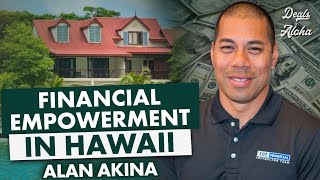
A long-form interview (YouTube podcast) with Alan Akina, CEO/founder of 101 Financial, about financial literacy and community empowerment in Hawaii. Akina recounts his upbringing in Wahiawa/Kahuku, founding 101 Financial (started with $20,000 in savings in late 2002), and building a business focused on budgeting, credit, debt reduction, and real-estate investing. He emphasizes mindset, cultural language, mentorship, and family education. He describes practical tools (cash-flow worksheets, 12‑month financial roadmaps, debt-suppression checking accounts, debt-snowball/avalanche strategies), outcomes (typical debt payoff timelines), education pilots in Hawai‘i schools (Pahoa High, Baldwin High), and a fintech spinout, Team Up (a digital bank/credit card for college athletes; raised a $2M pre-seed; pilot launched; credit scores observed ~700–741).
Questions this video answers
75%
$20,000 in savings, started in late 2002
About 21 years (founded late 2002)
$2 million (pre-seed)
Approximately 700 to 741
Chapters
How do I know I can become a homeowner? How do I know when I'm ready for my next investment property? Those are things that are very important. So whether you do anything with us or not, knowing your cash flow, your money coming in, money going out, very, very important to make financial decisions. And you don't fall into what we call the 75% bucket. 75% of people, according to CNBC, are winging it. They're guessing when it comes to making financial decisions, that's what messes people up.
Aloha, guys. Welcome to the Deals in Aloha podcast where we talk to local business owners and entrepreneurs trying to spread the message of financial education. All things mindset. We're super excited today. So if you do find value from this podcast, please follow us on all social media platforms at come OhIand Tristan.
Let's go, let's go. So today we have and are very honored to have special guest Alan Akina. He is the CEO and founder of 101 Financial. Last year, you just launched a new fintech, an all digital bank for college athletes. You were on KHON2 on the Wake Up Today show for 10 years hosting the financial fitness report. And we know so many of your students because they're in real estate and they have nothing but amazing things to say about you. So thank you so much for being here.
Thanks, guys. Thanks for having me. I appreciate that and heard a lot of great things about you as well from. From our people. So congratulations to you. Your success, phenomenal. Keep. Keep doing what you're doing for our people.
Much, much needed and, and thank you for that. But I feel like that's why we wanted you on the podcast, because you just said it. It's so needed for our people and the message and the value. Just every time I see you post on social media or anything that your students share with us, it's like, dude, so much more of our local community needs to know these foundational things and have this little mindset shift that can open up a whole new world of possibility. So how did you get into this space of financial education and financial literacy? Like, take us back to the beginning.
Yes. I think what got me here was my childhood growing up here in Hawaii. I grew up between living in Wahiawa and I'm in Kahuku in my house today. But I come from a great family. Love my family dearly. But we were poor. I mean, quite honestly, we were poor. And I was embarrassed by that when I was going to high school because I was on free Lunch, I had free breakfast. I'd have to stand. And I'm a lot older than you guys, so back then, for free lunch, you have to get the token. So I have to stand in line for the. To see the token lady. And if you didn't make it to school early, you're not eating right. And so, you know, those were tough. We grew up on food stamps, and my parents never really owned a home. We're always moving, living with people, or renting this apartment, this house, know, in different places here in Hawaii, on Oahu. And. And I think those challenges growing up really instilled in me this passion, like, this desire, like I really wanted to know, like, how money worked wasn't that I was trying to be a millionaire, you know, that didn't really cross my mind, was like, how does this. How does this work? Right? There's obviously something is we got beautiful properties, beautiful hotels. People come from all over the world to Hawaii to visit. But how do we get to do that stuff? Right? And so that motivated me. So I put a lot of time and effort after college into studying money, personal finance. And I got to a point where I felt like I learned enough to. To be able to help others. So my desire to change my financial life turned into a desire like, man, I got it. Like. Like, you just. I gotta help people. I gotta help my people, my. My family, my friends, people that are in the struggle, like I was. And so my wife and I were living here on the North Shore in a little apartment, and we. We had $20,000 in savings, and we use that $20,000 to start 101 Financial. And this was in late 2002, so. So probably before you were born, that this. So this is a long 21 years ago, and we started with $20,000, and we just started helping one family at a time, teaching them the basics of finance. The stuff that we never learned in school that we should have. How to budget, how to build credit, how to get out of debt quickly, how to save interest, how to buy your first property, right? And then become an investor, right? Those are the basic things that we should have learned. That I took my experience and started this company, started to slowly grow. So, you know, one at a time, one family time. And I got to tell you, this is kind of interesting because. And I think this happens a lot of entrepreneurs, just people in general in Hawaii, is that we don't have a lot of confidence in ourselves. I didn't when I started my company, like, I was the founder and CEO of my Own company. I didn't even want to be the CEO of my company. I was trying to hire somebody. Oh man, this is great. We're doing this. I just want to be the behind the scenes and do the biz. Dev, you know, I'll hire you, you be the front. You'd be the CEO. Right, Because I, I just had these negative thoughts about myself, right. I, I dropped out of college at the time. I, you know, I didn't have a business degree. Right. You never really been around money. And so all the negative self talk just started just coming through me. But here's what happened, right? I, I slowly I started to believe in myself. I started saying, why not me? Why not me? Why can't I do that? And then once that shifted, this was probably two or three years into my company. It took that long. Then the belief kicked into action and positive vibes and then my company grew. So from that point and by our seventh year in business, we at One One Financial had made the Inc. 500 list. So, so at the time, we were, we were the second company from the Islands to ever make Inc. 500. So we got to go to the Inc 500 conference. It was in Washington D.C. me and my two other executives from team, two local boys and myself, we had to go get a black suit and rent the top, you know, the ties to go to the gala. We were calling it the gala event. And, and we represented, we represented Hawaii and we represented in a way that, you know, we built a company that was based on helping people. And then from there it's just been a phenomenal ride. So that's kind of the early stages of how we got going and it's turned into so many other incredible opportunities.
Yeah, I love that. I think that, man, Hawaii definitely needed what you guys created. And I think you saw that there was a definite issue and a problem that needed solving. And I think sometimes that's the beauty of building a business that can facilitate that. Right. And so, I mean, there's so much to unpack there. But I want to take it back to the, to kind of the beginning and first, what do you think it was that caused you to have those kind of negative, negative beliefs or that negative self talk? Do you think it was. Because this is the thing I can relate and I think a lot of local people can relate. Is it something about the environment we grow up in? Is it a cultural thing? What do you kind of attribute that to?
Yeah, why is it so much harder for local people to think that, yes, we can.
Yeah, you know, I think it's part cultural, our culture growing up, right? It's, it's, it's realizing. And I didn't realize, I didn't figure this out till I was in college, like at the end of my college days. But words are powerful, right? The words that we say and the words that we think are very, very powerful. So now give you an example. Living in Hawaii, we say words that may not be the most positive. Like, oh, I'm from a small island. I live in a small town on the North Shore, right? Yeah. I never graduated from college. Oh, yeah, we know. More money, right? Like, we say these things. And then as kids when we're growing up and our parents, our grandparents didn't mean to this. Oh, yeah. Oh, yeah, this is my kolohe one. Yeah. This is my rascal kid. Well, this is the troublemaker. So you start saying that over and over, my goodness, it's going to affect you somehow, right? Because words are powerful. So I think it's part of our culture and I'm not saying anything bad about our culture. And I love being native Hawaiian and being from Hawaii and represent. I so prideful. And my, my daughter's kind of taking that to another level. My daughter's very, very proud to be Hawaiian and she's representing our people well at Harvard. And we'll get into that in a little bit. But it's just the way that we were raised and, and then we start thinking that, we start saying it and then we pass it on. So we, we gotta use better words. We need to. Better words. We need to think different and bigger because that's what the people on the mainland do. They know this stuff and they're teaching their kids early. Imagine if we as a people started doing that with our, our kids. We can change the generation, right? And, and, and I'm seeing them living proof right now with how that's, you know, these words that I've used and I've learned to overcome, I've changed that narrative for our kids. My wife and I have seven kids and we started teaching them and saying words. We weren't the best parents. We're still trying to figure it out, but the things that we did led them to have a different belief in themselves. And now out of our seven kids, we have three of them in college. Our oldest son goes to byu. He's going to graduate from the Marriott School of Business and he plays golf there. Our second oldest son plays basketball for New York University and he goes to the Stern School of Business. One of the best business schools in the country, majoring in finance. He's an MLK scholar there and lives right on Wall Street. His address is 45 Wall Street. Incredible. Lives right next to. Lives right next. So you walk out his door that you know there's a doorman and right to the left the stock exchange, New York size, amazing. And our third oldest, her name is Keani and she is a junior at Harvard. And. And so I think now that I can look back, I think some of the things we did work right as far as changing the mindset of the next generation. Then our fourth son is a junior in high school, but he was a number one recruit for golf. He got recruited by everybody in the country. He just committed to play golf at BYU and he'll be there in about a year and a half. But there's something to that. There's something to it. And I stayed in my own life and now I say to my kids and then I try to teach that inside of our personal finance classes when we work with people because I do think it's a big deal.
Oh man, it's such a simple concept, but at the same time it's so hard to implement into your daily life, you know what I mean? And it's that simple saying of if you think you can or you think you can't. You're absolutely correct. And having children now we have two, two little ones, a seven year old and a five year old. I am more aware of that, more so than any time before in my life that words are so powerful and what you say almost shapes their behavior and it shapes how they think about themselves and it shapes what they think their reality is. And it's the same for adults. We're living proof that. I can't imagine if back in 2018 when we decided to go into real estate, if I was like, nah, we can't do that where we would even be today. You know what I mean? But I didn't even. I was so desperate to change our financial situation that the thought of I can't never even. And it was almost like I was naive, I was almost stupid, like blindly stupid because I just was so desperate to change our financial situation that I can't wasn't even an option. And I wish that this principle of mindset and emotional well being and thoughts and all this woo woo stuff that people basically put it into this category was foundational in like, like education school system at a young age. Yeah, but it starts in the home. You're exactly correct.
Yeah, I Think. I think, number one, you have to be aware just exactly what you said. You need to be aware of what's happening, the words. And then once you're aware now, you can fix it. But. But if you don't know that you're saying it's just part of what you've been doing your whole life because that's what family has done, then it's, It's. It's a hard cycle to break. But having things like this, right, your podcast, I think this. This segment's going to influence a lot of people to reconsider the words that they're using. They're saying the words that they're saying to themselves internally, because it really. It does matter.
Yeah, it's so. It's so true. Like, you think about it, oh, well, I only went to Kalaheo or I only went to Farrington. I can't do those things. Or we're. We only come from Oahu, so you only have, like, X, Y and Z that you can do when you grow up. You know what I mean? Or, like, these are the only options you have. But what if that's not true? What if I went to this school, so I can. Or I went. I'm from this place, so I can.
Yeah, I mean, it's reframing. It's reframing the way you see the world, its perspective. You know what I mean? I think that's one of the reasons why we started doing this podcast was so we could talk to people like you. And I think so importantly, in Hawaii especially. And this is like a personal example for me. I needed somebody that looked like me, that talked like me, that came. Came from this place to show me what was possible. Right. And I think sometimes that's it. We're just limited by what we believe or see or grow up in as possible. Right. And so I think it's now, I mean, yeah, we. We strove to, like, get out of the financial situation we're in, but then it becomes very evident very quickly that there is a Kuleana, a responsibility for us to show other people what we did and how we did it. You know what I mean? I think you talked a little bit about your want in your business to help people. I mean, it's foundational. It's what your business was built off of. How did you. Have you always been that way? Like, did you grow up, like, something built in you that. That wanted to help people or. Or was it more organic than that? I mean, I. I'm trying to. Trying to Figure that out.
I think both. So I grew up very humble family. My grandfather was a fisherman on Maui in Kihei. And then. So I actually named. We named our. Our fourth child Kihei Akina. But he was known to feed the. The community. When they would bring their boats in the nets, the community would come and clean nets and everybody would take home fish. Right. He just was known as a, as a giver. And I, he, he, he passed away when I was once. I never really got to know him, but then my dad was super humble. I just seen him give everything. We had nothing. And he was giving stuff away. Right. And so I think that was part of it. And then another part of it was the organic sidelight. I just truly wanted to help people. I. One of the things was, was this, when I was growing up in my early 20s here, I. I was very motivated, right? I was hungry. I. This young local native Hawaiian guy that wanted to be successful. And I was looking for mentors, like people that could guide me and help me. Not that I was gonna ask them for money or take a lot of time. I just, you know, want a little bit of guidance. And, you know, unfortunately, I, I couldn't really find anybody in my circles or have connections too. Right. One of the biggest guys I ever met in my life at that time was your dad. Right. He was a great influence on me, the big executive at First Wine bank. And I looked up to him. But trying to find local mentors that were millionaires, multi millionaires, that could give me direction wasn't available. Now, I did eventually find. I. I consider I have five mentors. They're all very successful. Some guys are worth over 100 million to tens of millions of dollars. The only downside, they're all from the mainland. It's great. But I couldn't find anybody locally, so I wanted to change that narrative in, in my dealings on this planet. Right. I'm only going to be here for a certain amount of time. How can I impact other people? That could be generational. And the best thing I thought was try to help people solve their number one problem, money. And that could be generational in the way that it's set up if we did it through education. And so that's sort of my backstory behind why I do what I do.
Yeah, dude. We can relate in so many ways where it's like all of our mentors in real estate and all the education that we received to know the skill sets of investing that we have now. They're all from the mainland and that like almost it is what it is, but at the same time, like, it kills us because it's like, why that shouldn't be a thing, you know? And I think that was another reason why we created Dills in Aloha, because just like he said, it's so much more impactful from hearing and seeing success and knowing that it's possible from another person that's from the same place as you, that has a similar story as you or faces the same struggles as you, where our million, our house, our median household price is a million dollars. You know, like, people in the mainland don't even understand what that's like and why it's so hard for home ownership to be achieved. Like, I think we need a team up and we need to have a huge, a huge, like, educational seminar or whatever it is where like, people can come and learn the basics and they don't have to go to the mainland to get it. That's like a big goal of mine.
And I've always wanted to do that because our people, we're a small community, right. So our population size is smaller. So there's not as many out there in the public eye, right. On tv, right. Social media, where you can actually show people that others that are like us, that look like us, that are out there, there's not a lot of it. So we're seeing other people out there because their population is bigger. Now I'm sure we're just as successful as other groups in some ways, but we're, we're a little smaller in that sense as far as a population. But if we band together and we create those opportunities to show people like, look, this is what we've done, right? This is how I built this company. And, and you can do the same thing. You struggle and then people can, you know, can relate to our struggles because we, because we grew up here. Right. So I think, you know, if you guys ever decide to do so, I'd be happy to help out and be a part of it because I. It's just needed.
I agree. It's coming. It's on the goal board and it's definitely a huge passion. I think it's just alignment with the right people in the right relationships, but the community needs it. But you mentioned mentors and you mentioned people that you look up to. Who are those people for you? And, and what drew you to those people? Those.
Yeah. How'd you find them?
Yeah.
How can people find mentors?
Yeah. So one of my first ones is he became a good friend of mine. He's part of the Marriott family. He married Richard Marriott's daughter and I met him through a company and you know, we're the same religion, so a couple guys introduced us and then just over time we got to know each other and then kind of helped each other out over years that the relationship took years to develop. But now we're buddies. We call each other for anything, just we text message Christmas cards calls, you know, whenever we're in town, if, if he's in Hawaii or Utah, he'll call me and I'm in San Diego, I'll call him. And so he's been great because, you know, very successful and then his family, you know, his in laws, billionaires, right. So that's been helpful to me. Another friend I met through church, they moved from the mainland, they moved from Arizona, they moved to, to the North Shore and you know, they ended up buying like three beach houses. Right. This friend of mine, he owns steel manufacturing plants, so, so they manufacture steel all over the country. Huge business. Right. And just through relationships, I, I, I was just on a zoom with them three weeks ago, showing up my, my investor deck. And he said, well Alan, you should do this with the financial, his stuff helped me to adjust my pitch deck. And this morning I had an investor pitch, 8 o' clock this morning with one of the largest VC firms in sports tech. And I added these slides and it was just phenomenal. Right. So he took, he took an hour of his time this past, you know, a little bit to help me out and gosh, it paid off. I mean that was, it was a, it was a home run this morning. So those guys just through relationships, right? Just people you meet and just being good, good to other people and, and not necessarily just interested in their money, but just curious about how they did it. And then what I found is a great way to build relationships. Just do more for them than they do for you. Like give them way more, way more help and support than they ever give you without expecting anything. Because then one day you need to call like, hey, I call it buddies. Hey, I need you to review my pitch deck with me. No problem, Alan. Right. We did all these things, so that's just, you know, sometimes if we don't know, we try to take advantage and ask too much early on, then you, you blow the relationship before you even give it a chance to develop.
Yeah, so true. Lead with value from the beginning and expect nothing in return. And majority of the time it's reciprocated.
Yeah, no 100%. And I think Too. It's, it's one of those things that we talk about all the time. Mentorships and being around the people that are doing what you are looking to do or are successful in your eyes. Right? Success leaves clues. We hear that all the time. It's just important to be surrounded by those types of people. And I think it's. Sometimes it's scary, especially when you're just getting started. But if you do lead with value, right, and you're adding more than you're expecting back, most times there's a lot of people out there that are willing to lend that hand. I mean, you're looking at three of us right here on screen, you know what I mean? And I know it can be intimidating, but that's part of it too, right? We have to learn how to become uncomfortable. I think our society today doesn't want to be uncomfortable. We want to be very comfortable and safe and not take risks. But that's a, that's a whole nother conversation we can get into. My question to you right now is, is more a technical one about one on one financial. Say we have a local family here that's like, oh my gosh, this is resonating with me. This is me right now. I am that person that's striving to be better. How can one on one financial help that person? Or what is the first kind of steps to start to break that mold?
Yeah, great question. So the start is being self aware. Like, okay, look, I need help. If I keep doing what I'm doing, I'm going to get nowhere. Right? And here's our philosophy at 101 Financial. You're going to use money every day for the rest of your life. So doesn't it pay to try to learn as much as you can as early as you can in life? So you set yourself up. So it's all about making less mistakes, having more wins, little wins, then losses. And those little wins add up and they compound. But if we do nothing, the little losses add up and compound just as much. So our whole philosophy is like, if you're wanting to make a change in your financial life, learn about money. How do I set a budget? How do I do cash flow projection? Right. That's one thing we, for all of our students, we build them a 12 month financial roadmap so they can scroll on our app. They can see for the next year, every day that something is happening in their financial life. Whether it's a payment, a debt payment, an expense, an income. And then we show them Their cash flow. Every month we break out their cash flow. That to me is knowing your starting line, your financial starting line, your numbers so you can make better decisions. Because how do people know if they can go on the next vacation? I'm going to go to Alaska on a cruise. It's going to cost ten grand. Well, how do I know you can afford it if you don't know your cash flow? You don't know your numbers. Right. How do I know I can become a homeowner? How do I know when I'm ready for my next investment property? Those are things that, that are very important. So whether you do anything with us or not, knowing your cash flow, your money coming in, money going out, very, very important to make financial decisions that you don't fall into what we call the 75% bucket. 75% of people according to CNBC are winging it. They're guessing when it comes to making financial decisions. That's what messes people up. So for us we have a beginners course that works on cash flow projections and credit which is the Foundation. It's $199. It's a one time payment. We include your spouse for free and you get private coaching, you get access to our app and all the video is, it's probably one of the best deals out there. And, and if they, you know, email me, they can just email me and I'll forward them over to are people that can help. But my email is really. Alan. Alan1:01 Financial calm. We'll, we'll take care of them. Yeah, that's probably the easiest way that.
I mean it's so true. If you have no idea what your finances even look like, how can you make informed decisions to get you out of or achieve whatever you're trying to achieve? And it's true because majority of, I don't know the statistic but I know that majority of people live paycheck to paychecks and have no savings. You know what I mean? And we were those people. We, and we were entrepreneurs, we were business owners. He ran his own retail company. I owned and operated a 501C3 and we were struggling living paycheck to paycheck. But it wasn't until we, you know, invested in more education and started understanding how we could actually grow money passively and all these other things that like just a little flip of a lens just opened up a whole new world of opportunity. And I feel like that's the one thing that people need more access to. But in our culture and I Just think in the, in the world, money isn't talked about. It's almost taboo. Or if you do talk about your financial situation, you're high. Muck a muck. Or your, your. What is the word I'm looking for? But it's like people look at you differently when you start to talk about money. And what are your thoughts about that?
I think that's a problem in our, in our culture, our community, Right. Growing up, you never talked about, oh, dad, how much you make?
Yeah, right.
Yeah, I make. Couple cracks is what I make, right? That's it. Do you want a couple. You don't talk about money, right? And like, oh, yeah, how much is this? Or how much is this house? Don't worry about it, Right? Just you. You're here, right? So, gosh, again, hearing that as a kid growing up, from the time you're 5 to 10 to 15, you already started to develop these negative habit, negative thoughts about money. So I just think, you know, everybody listening here, like, should reconsider how we talk to people, to especially our family and our kids about money. Be open. You don't have to tell them everything, but discuss it. Like, I talk to my kids about the deals that I'm doing, my investments, and as they were growing up, I even put them in the deals we. I think I've done probably 27 to 30 flips. I built houses and flip them, remodel, flipped them. I would put their money in. It was like 400 bucks. I'm like, hey, your money is going to go buy the paint, right? Okay. Your money, all these light fixtures, and then to give them their check back was like, the greatest thing. My son Kalika, he's now at Stern, the Stern School of Business in New York. He got his first check back. He looked at his check, his eyes just got so big, and he's like, wow, I can buy more gumballs, right? He's like 6 years old and he wants to buy gumballs, right? So I taught him that stuff. I, you know, try to instill in them as best as I could. Knowing what I knew then, now I, you know, a little different. But we tried our best. And don't be afraid to talk to your kids about money because they know they're smart and they're going to learn it. They're going to learn it from somebody, and someplace might as well be you.
Yeah, I love that. I, I can, I can relate in many ways, I think, especially with my. My father who grew up. My dad actually grew up very, very, very poor, right? Like he had 11 brothers and sisters, you probably heard his story, but in a 900 square foot, one bedroom house in Kailua, right? And he was out recycling cans at like 5, 6, 7 years old just to get food to eat, right? And he was in an environment that didn't foster abundance or success or had anybody to look to really. But there was something in him that, that just, he had that drive, the drive that you talked about. It's the same, the same, that same drive, that yearning for more. And he built his way up to where he was today. But one of the things he did instill in us was that, yes, we talk about money, right? We have to, we talk about investments, we understand that kind of thing. So when for me growing up, I had a leg up, you know what I mean? Like, I already understood a lot of it, you know, and I. So it's just so important that you can be that one person that changes the trajectory of your entire generations to come, right? And, and who wouldn't want to be that person? You know what I mean?
Yeah, I, I said that last night. I was speaking in, in Kapolei last night when I flew in, and, and I said that. I said it just takes one person, one person from your family to make the decision that says enough is enough. I'm changing the course of our family's financial future with me putting the stake in the ground, saying I'm stopping it right now and taking the time to learn and take action. It could be scary for some, but what's even more scary is doing nothing and just living out life struggling. That's even more scary to me. So, yeah, I, I really appreciate your words. And again, big shout out to your dad. Huge inspiration. I respect him.
We're gonna talk about, I'll, I'll tell him that we had this today. He'll be super stoked. So.
Yeah, for sure.
Yeah.
So let's get into like more business side for 101 Financial. What has been like the biggest struggle for you in growing that company? I mean, you guys have had 20, 20 plus years, right? Like, what has been something that you've had to ever overcome or the biggest struggle kind of growing that?
I think it's exactly what we were just speaking about. People don't like to talk about money, so it's really hard to bring that subject up. And now we're teaching them. And so when we, when we go to teach them, we need to know their current financial situation. So it's really hard for people to open up and say well, here's my debt, here's my credit, here's how. It's very embarrassing. So the, the actual business. That's why it's, it's harder to scale a financial education company because of that natural barrier to opening up about personal finance. Right. It's different than the investing side. Right. Investing to say, let's, let's go make money. But personal finance and finance is, hey, let's go fix what we don't know. And we got to start here. So I think that's been a struggle. We've had to learn to overcome and adapt to that. And we have. And I think having a great team, I have some incredible people at One On One Financial that all come from the same place that I do the same heart. Like, we're here to help people first and then businesses second. And so that, that really is the key to lasting 21 years. I mean, to be in business for 21 years, that's really difficult. And we've been through, we've been through a couple of different economic cycles now. We've been around that long. So, yeah, I'm very proud of what we've done and, and, and continue to do.
What do you, what's the most common thing you see of people coming to One On One Financial for help? Is it debt? Is it wanting to invest? Is it wanting to buy a house? Like, what's the most common thing that you come across with local people coming into One On One Financial?
Yeah. So everybody wants to invest. Everybody wants to, you know, own real estate. They want to, you know, invest for the retirement and do these different things. But that first step of your budget, your projections, and then once we get those numbers in place, our next objective is, hey, let's get you out of debt or get knocked down that debt. You don't have to pay it off all the way, but let's, let's get it under control because that, to me, in my humble opinion, is the number one deterrent from people building wealth is the debt. Because they spend the majority of their income on debt service, on interest costs. And it's, and it's significant that it, it just takes them away from the ability to do what you do. But if their debt was down, they paid it off, paid it down. Now they can open up and do all these other wonderful things. Yep.
What's the biggest tip without giving away all of your secrets of, of tackling debt? Like, what is something somebody could leave this podcast with and like, implement to help them get one step closer to being out of debt.
Yeah. So first thing is get the positive cash flow, right? So I always tell people, analyze your current situation. Get a sheet of paper. I just, just get a sheet of paper and write down all of your income for the month, all your income sources. Then write down all of your living expenses. So that's fixed and variable expenses. And then lastly monthly debt payments. Just, just those three numbers, income expenses and debt payments. And then we want to see on paper what bucket you fall into. Am I positive cash from and making more than I spent? Am I breaking even or am I negative cash flow? That's the first place you got to start, right. The objective is to get the positive cash flow. Obviously we want to get there as soon as we can. If we're not at positive cash, we got to go look at the budget and see where we can go back or make more money and then get deposit. Now once, once we're there, now we can strategically attack debt, right? And, and there's several methods. There's the debt snowball, debt avalanche. And we use those two things and we use debt checking accounts at 101 Financial to suppress the balance on people's debt to save them interest. So we combine all three of those debt avalanche. So, you know, paying off the highest interest first or debt snowball, paying off the smallest balance and then rolling that in. And then we use debt checking accounts to help people take the power of their paycheck. Right? The power of their paycheck is, is sitting in a checking account, making them zero percent interest. And we could take their paycheck and put it against their debt, suppress the balance for a day, a week, a month and save them way more interest than they would make in a checking account. So we use a combination of debt avalanche, debt snowball, debt checking accounts to accelerate the debt pay down. And typically we can have people out of debt completely in about seven to nine years, including their home, which frees up equity to go invest in more deals. And that's how, that's how they can continue to do more deals. And then once they get it, then it just starts to take off. You just got to get the first one.
Yeah. Oh, man, that's so many more questions. But I know that if you wanted to learn more about that, you need to hit up one on financial and start changing your life with all that debt avalanche.
I mean, yeah, all of this is like, so needed and like there's so much value in just what you just said. I think what it's very important for people especially like right now is I think a lot of people think that they need to do something else before they can do that. Like they don't in their current situation right now. That won't apply to me. I don't make enough money for that. What would you say to those people?
Yeah, you know, the secret to the financial success is not really rocket science. It's super simple. In fact, I just posted on my, on my Instagram yesterday. I was speaking in Waikiki at our company event last weekend and, and I talked about the fundamentals. And I said, look, I played college basketball and every day, every before, every practice, before every game, we would start with right hand layups and left hand layups. I did that from when I was in little league basketball, high school basketball, college basketball. I never made it to NBA, but I look at the NBA, I watch the game. They start out every game, right hand, layup, left hand. It's doing the same thing over. And I was listening to Kobe, Kobe Bryant. I love Kobe watching all of his old videos, but he's like, it's just working on the fundamentals every day for years and doing the same thing over and over again. So people get bored because they think they should be doing something else or they try to skip steps. You can't skip steps in success. You can't skip steps about doing the fundamentals every day consistently. And, and I told this story, I, I recapped the story last weekend of this family that I've been working with on Maui, the Inoue, for 20 years now. The dad was. Works electric at the electric utility company there. The mom was a hairdresser. They just followed the basics and they give us a timeline report last weekend. They now have 10 houses. Took them 17 years to get there. They were able to retire. Their daughters have a couple houses each, two or three houses each on Maui. And it, it's, it's boring. It's just doing the same thing over and over again over and over. But when you look back 10, 20 years later, like, whoa, look at what I've done. That's. That's what it is. It's not something like, whoa, right? Wow, look at this. Right? That's, that's why I love the book, the Millionaire Next Door. It's just regular people doing simple things over and over again.
My dad has mentioned that book so many times in my life, I can't even tell you.
You need to read it, Tristan. I. There's a quote that I. There's a quote in there that I love from the book about guys In Texas, they say most fake millionaires have big hats, no tattle. Yeah, right. Big hat, no cattle. Right. Fancy hat, but no assets. Right. That's, that's what most people do.
But those boring basic principles that they just repetitively did year over year broke a generational, I'm sure a generational curse for the family before them and created generational wealth for, for years and years and years and years to come. And so I kind of want to get into. Because you mentioned that they all have real estate. What, what is the power of real estate? And why is owning a home the. One of the basics of wealth for families?
Yeah. When people ask me like Alan, what's what, what should I do? Like, what should I tell my kids? Or if I was to go back and tell my 20 year old self something, what would I tell? I, I tell myself, buy a house as early as possible. As early as I can get my financial life in order, meaning my credit and my cash flow good early on in my life so I can buy my first house. Because real estate, as you know, there's so many benefits, right? First off, being a homeowner, it's a forced savings for you, right. You got to pay that, right. Renting is going to get you nowhere. Just money is just gone, right. You're building up that equity, you're paying down your debt, so you create an availability. And so that availability could be leveraged in a very smart way to accelerate your investing activities in the future. But if you don't get that first house, then it, it's gonna, it's going to be a slow roll, right? And then real estate has the ability to produce cash flow, tremendous cash flow. I have, I have all different kinds of real estate. So I kind of diversified my portfolio. I did all those flips. I have section 8, I have vacation rental office, you know, now there's a resort thing that we're doing on, on the mainland and I try to diversify it and kind of like stocks, right? In your stock portfolio, diversify large cap, small cap, international bonds. I try to do that as my portfolio is growing and I teach people to do the same thing. So get into real estate early as you can, pay it off, then you can smartly leverage it to acquire more assets at an accelerated pace. Because we call that the velocity of money, where you get your money moving. Right? The velocity of money creates momentum. Right. And once you have financial momentum's real. Just like in sports. It's, it's, it's real. You've seen it in the super bowl, right? Kansas City got momentum. I mean, the 49ers had it early and it looked pretty bleak, but things can change. The mental side of things changed at halftime. And then Kansas City came out and caught them up. And then you know that the momentum is real. So you can have financial momentum and start to create wealth faster through velocity, but it's doing the same thing over and over and over again. And then every once in a while, a great opportunity will pop up, like for you guys, right? Opportunities for you to be on the national stage because you were doing the same thing over. When I was doing one on one, I was doing the same thing over and over and over. Then kho n came years, right? Doing the same thing over and over again. Then a book came, a best line, bullet came, right? And then opportunity to open up on the mainland and doing the same thing over and over again allow me to open up, start a new company, all digital bank for college athletes, right? It's because I did the same thing over and I started to learn. And then, I mean, we have our own bank. I got, you know, that's so cool.
We have to talk about that credit.
Builder card for college kids, right? Because my kids are going through that and I solve problems. How do I fix that for them right now? It turned into this huge opportunity, right, that can just. This thing could absolutely expose. So. But that came because I just kept doing the same thing over and over again. And then, boom, you got a pop. You got single, single, singles, triple, single, single, home run, single, single, double. But people quit because they. They're tired of the single. Oh, I just, I. I got on base because I got walked. I walked in base or I just had a bunt, but you're on base. Don't stop. Keep going, don't quit. Stay focused.
It's that whole concept of I rather be in the game than sitting on the sidelines, right?
Absolutely. I tell my kids. I tell my kids all the time, look, there's. There's several ways you can go to game. One, you can buy a ticket and sit your butt in the bleachers and watch. Number two, you could be on the team and sit on the bench and watch. Or number three, you can work your butt off and you can be on the field playing and watching the game up close and personal. Which one do you want? And all that is is a matter of work. How much do you want to work to get those three different levels? It's not complicated at all.
I love that.
Okay, so before we talk about your Banking for college kids, which is absolutely crazy.
Yeah.
I want to talk about the very controversial statement that I. We discussed previously and got a lot of feedback, which was this price out of paradise notion. That. And it's very real. It's very expensive to live here. And we hate that. That statement because we know that it doesn't have to be. And I think that you share the same viewpoint as us. And so what are. What would you say to people about being priced out of paradise?
Yeah, I. I say two things. Number one, it's real, but it doesn't have to be real to you. It's. It's mindset, right? It's like mine's okay, well, if you accept that as reality, that's going to be your reality. But if you say, you know what, that's just one hurdle, then fine. What do we need to do to overcome that? Right? It's like I tell people all the time, look, the one thing I can guarantee you is you're going to run into obstacles, and you're gonna have. You might have obstacles every day, every month, or just one a year, right? But you have to come into the game knowing how you're going to attack those obstacles. So the way I say it is, look, you come across an obstacle like price out of paradise, okay? Look at that obstacle and figure out, is there a way around it? Just take the easy way, okay? There's no way around it. All right, can I go over it? Okay, I can't go over it. Then the last option is, okay, how do I go right through it? I'm going to smash through it and do whatever I got to do. So we're obviously not going to change the price point of a house in Hawaii. That's going to be very difficult to do. That's market, you know, big market. So how can we, as an individual or a family, take care of our personal economy? Not the world economy, not the state economy, the national economy, our personal economy. To participate in the market, in the game, Once you start thinking like this, right, you start feeding yourself. And it's hard at the beginning, but you start to feed yourself all these positive things. That's why it's important to listen to podcasts like this, to uplift you. It's important to surround yourself with positive people because you will end up being, like Brian Tracy said, you're going to average the top five people you hang out with as far as income is concerned. So be aware of that. Now, let's go participate. Let's go figure out a way. Now if you got to work harder and, and take on more hours, you got to start a side hustle. You got to cut back on stuff for now, do it. You, you just gotta do it. There's nothing to, there's no way around that. I, I bought my first condo. 758 square feet here in, in Kahuku. And it was little, there were seven of us in there, my wife and we ended up having five kids. It was tight and I was feeling pressure from everywhere. The market was booming. Everybody's buying house. My mother in law was like, Leanne needs a new kitchen, she needs a new house. We need a place for everything. And she, I totally got it. But I was, I paid that house off in just over two years and I was quietly acquiring other properties. I was buying more properties, more rentals, and just grinding it out, living in this small, small unit and working my butt off. I was going to bed at 12 in the morning. I was coming home, all the lights are off, I'm coming home at midnight, want to call everybody else's sleep. I'm grinding, right. And I did that for years, 10 years. And then later I was able to buy this lot. I have, I bought a 17 acre lot here in KU and I built a house on it. It's the only house on this lot. It's an old plantation style home that looked like the home that my, my, my parents used to rent for $50 a month in Wahiawa back in the day. Green light trim, red roof. I took a picture and posted on my Instagram. I, I didn't know how that came, but I drove by it, I the old house and then put it to my next, my new house. Now this new house is much bigger. It's on a huge piece of land. But we grinded for, for years. Well, everybody else was tempted. Buying new cars, buying bigger houses, having bigger mortgages. We stayed focused on the task at hand. And it's just simple, simple, simple stuff. And then the pot, that's it. This, it is what it is. So I, and people may say, well, Alan, you're crazy. How am I going to do that? If there's a will, there's a way. And, and when you're committed to it mentally, your creative mind starts to open up. You start to find other ways to, to, to do this because you're open to your, in a positive state as opposed to a negative state. Does that make sense?
No, no, no, no, no. It's perfect.
Absolutely. You're speaking our language. But it goes back to how we first started the podcast of, of the words that you're telling yourself matter. You know what I mean? If there's a will, there's a way. If, if you believe that you can do this and stay and thrive in Hawaii, then you absolutely can.
Yeah. My, my kids, my. I teach my kids this thing. My, my daughter, she's eight. So I think you have an eight year old son or.
We have a seven year old. Yeah, seven year old daughter.
Seven year old daughter. Okay. So they would probably get along. So I was like, okay. Her name is. Her nickname's Baby. I said, baby, how many times are things created? She said, things are created twice. First in your mind, then in reality. Right. So she's seeing it again and I go, what are the three keys to success? See it, believe it, achieve it. And then we start singing it. See it, achieve it. Louder. See it, believe it, achieve it. Okay, baby, what is see it, see it means you have to imagine, okay. Then when you imagine, then you start to believe it. When you start to believe it, you have a greater chance of achieving it. Right. So those are fun things that we do with the kids. My wife and I love that.
I love that.
Yeah, that's so cool.
I'm gonna put that on her wall. My daughter is very theatrical, she's very creative. So she would make her own song and add on to that, I'm sure.
Get them together. Yeah, I would love that.
I would love that.
So let's talk about this new venture that you had just started. Yeah, last year. Can you talk a little bit about it? Where it came from, what it is?
Yeah. So I've always wanted to start a bank just because, you know, I, I've been in the game for a while, but banking, as your dad would know, is very difficult. So it's a very tough business to get into. But right around the pandemic time, when the pandemic hit, I wasn't traveling as much, so I had time to focus on it. And. And there was a thing that started to. Came from the UK and then started to infiltrate into the US called open banking and fintech, you know, started to rapidly grow. So I started connecting with people in the industry and going to different things, call Zooms a lot, to learn as much as I can. So I started to put the pieces together. And then that's when, during the pandemic, my kids were going to college and I was watching. When my kids were going to college, I was watching two things that. These are major universities, right? Byu, New York University, Harvard How. And there were two things that I was looking at. Number one is how do I get my kids their own card so they don't use my card, right? I want them to use their own card, build their own credit value. Number two was how are they handling per diem? So when you're playing sports and you're traveling, the coaches give you travel per diem. That might be $40 a day, depending on what city. And they're using cash. I just, I just could not believe it. So I started calling my friends that were coaches, athletic directors, other players, like, hey, how do you guys do? How do you guys do per diem? I Duke, how do you do this over here? This, you know? And like, come to find out, the majority of schools were still using cash. So I, again, my brain was, okay, how do I fix this problem for my kids? Right? And so I started working on a bank for, for college athletes. And we built it. I raised a $2 million pre seed round, we built the product. I built a really good team, got Dr. Stamp to come lead our product team and got some really good guys and we built this product, built a credit card, built a platform for the universities and we launched it last year for in, in pilot mode. And now after the testing period, the credit scores are coming back into 707. 700 to 741 is our highest credit score in like six to eight months. And then we built this card, worked with MasterCard and some other tech guys to build a card for. This is for byu. We got other bunch of other people. But really I built, and the company is called Team Up, Team Up, Team Up Money. And I built it to solve a problem that I was seeing for myself, for my kids. I built, I built 101 to solve my own problem. That became a big thing. And then now I'm building, building team up. And it's, it's sort of like hand in hand. It's the same thing that I've been doing for adults, working adults. Now I'm bringing the same thing, but using tech to build that for the younger generation, building financial education platforms, building credit cards and dashboards for the athletic departments to use. So I, I just think it's going to be huge. And it's a, it's a, an extension of what I was already doing with one on one, Just, just helping people.
That's so powerful. I mean it needs to trickle down to start at younger and younger ages. You know what I mean? It sounds like this is just an extension of what you're doing. To help younger and younger people. And I love that.
Yeah, one on one. We never really helped college kids because they needed a job, really. They needed cash flow and income. I've always wanted to do it and my kids got the cosmic man. I need to accelerate that. And so we've been doing that and then one on one, we've been piloting. We built curriculum. During the pandemic, I, I did this free program called the ABCs of Money with Uncle Allen. And I did a free thing on social media every week. All the kids were at home and I was teaching them basic lessons. So I, I wrote that whole thing in like two weeks, these lessons. And now today we have used ABCs of money and our, our app from 101 with a couple schools. So we're at Paho High School on the Big Island. This is our first year there. And then we're in our third year at Baldwin High School in Maui piloting the financial education program for kids. It's been, it's been great. So trying to, trying to push the education downwards as, you know, to go help out the younger kids so there's less problems coming into the working world.
Right, right, right.
I love that so much. I feel like we could talk to you for hours. I know, like, there's so much talked about. We might have to have you as like a part 2 too. But where can people find you?
Love to have, love to do it.
Where can people find you? Where can people connect with you if they just want to know more about what you have to offer? What 101 Financial is all that good stuff.
Yeah. So 101 Financial.com is probably the easiest 11101 Financial.com and then I gave everyone my email earlier, if you. I'm happy to be a resource, but I'm more active on Instagram than anything. So if, you know, you go to my Instagram. Alan Al underscore Akina. I post two different things. I post family and finances. So you kind of see what my family is doing at all these different colleges and sports they play and tracking that. And then I'll mix it in with financial tips. So if that sounds interesting to you, then connect with me on Instagram. And yeah, like I said, happy to be a resource and very proud of the both of you for what you're doing. I heard so much good things. That's why great things are happening for you. Right. I. I just hope your show takes off because people need to see, you know, what, what we can do. And we got talent in Hawaii. Right. We got. We're not just the. The bounty hunter stuff, chasing all the criminals around, but we're actually going business. Nothing wrong with that show. I don't want the dog to come and arrest me. Like, great show. But let's go showcase like Hawaii entrepreneurs and doing deals and the skills that we have here and the beauty of our islands. Right. So people can see that. So I'm so proud of you guys and, you know, keep. Keep going and leading our people.
Thank you so much and thank you for paving the way, I think, for people like us, the younger generation, that are following in your footsteps, steps and. And I think this is just the beginning of something.
It's just the tip. This is the tip.
I mean, we're gonna do some really cool stuff together. I can already.
I think so. I think there's. I mean, I've never really met you guys in person. Just heard a lot about you. That's why I felt like. So I. I look forward to doing some things with you together as well. That's cool.
I. I just know of the seeds that you planted and your heart because of the people that we've met that talk about you. Richie, one of our really good friends, like I said, they got us into a mentorship that. That just taught us so much about what we do every single day. And shout out to Marissa because she connected us.
Oh, absolutely. Sauce. Thank you. She was thinking about it. I was just with Richie last night till like midnight, and then we left our meeting and then we call each other on the phone, drive it back to Kahuku, and you drive back, we're talking. Because I. I mean, he. He was. He started out as a client and now we're like best friends.
It's so cool.
And he's such a good human being.
Love, Richie.
And that's how I know your heart already is. Because of the people, like, once removed from you that we know their heart and we love them. So it's like, it's so cool that we finally get to meet and share your story because I know you're going to continue to do cool things and I would love to provide value to your community and just do really cool stuff to help the local community thrive here. Because it's possible. People 100.
It is possible. Don't quit. Just keep focus.
Yes, exactly. Well, thank you so much for your time.
Yeah. Thank you so much, man. I love this. This is awesome.
Yeah, this was fun.
Thank you. Yeah. Yeah. God bless you guys. Thank you so much. Appreciate it.
All right, guys, till next time.
Aloha.
More from Alan




MBS622- Secrets of #Fail: Unlocking Financial Freedom: A Journey with Visionary Alan Akina

