Western Union launched USDPT, a dollar-backed stablecoin on Solana, connecting its 200-country network to crypto infrastructure. The partnership with Anchorage Digital, Fireblocks, and Bybit could speed up remittance settlements and turn stablecoins into working capital for money transfer corridors.
Chapters
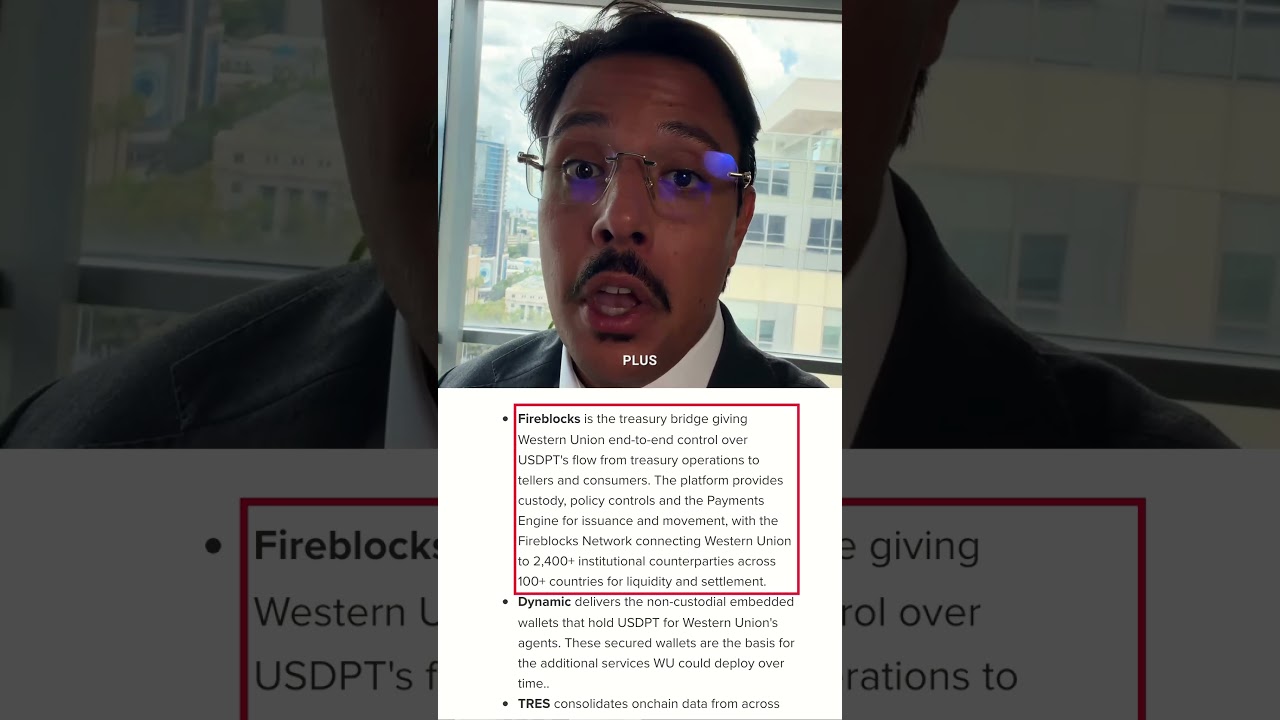
So Western Union is not just adding crypto as a feature, it's putting Solana stablecoins inside of a money transfer network that already reaches more than 200 countries and territories with access to billions in liquidity. That is the type of scale that crypto is missing. The flood is coming. And a lot of people have been asking me, Alex, how do you make money off this? We do it with automated trading, specifically with Fable 5. Claude code's used to make trades automatically and recommend research and all these things. The intersection between AI efficiencies and the adoption of crypto is the most lucrative path right now in the world. And I'm teaching everybody how to do it. The link is in my bio. We only charge a dollar. So on May 4th, 2026, Western Union launched USDPT, a US dollar payment stablecoin built on Solana and issued by Anchorage Digital Bank, which Western Union describes as a federally regulated US crypto bank. This is not a small crypto app trying to prove stablecoins work. Western Union already reaches over 130 currencies, billions of bank accounts, millions of wallets and cards, and hundreds of thousands of retail locations. So when Western Union launches a stablecoin, the real question is, do Can crypto people use it? The real question is, what happens when stablecoins plug into the last-mile cash network, known to be redeemable one-to-one for US dollars and backed by reserves like bank deposits, Treasury bills, and cash equivalents? Solana gives the settlement speed it needs. Anchorage gives the regulated issuance. Western Union gives the compliance, Treasury risk, and distribution network. Then Western Union added another layer. It actually selected Fireblocks for wallet settlement and financial operation infrastructure. Fireblocks says its network connects 2,400+ institutional counterparties across 100+ countries, and it has secured more than $14 trillion in digital asset transactions. The stack even includes tools that can translate on-chain activity into traditional treasury formats like SWIFT MT940 and MT942. The translation is Western Union is making a stablecoin readable to the old financial back office. Then on June 4th, Bybit became the first major crypto exchange to integrate USDT. Bybit says users in selected Latin American markets can buy and sell USDT through fiat channels And the flow can cut purchase-to-fiat off-ramp timing from days to minutes. This is the real bridge, not crypto replacing cash, but crypto settlement connecting to the places where people already cash out, pay families, and move dollars across the borders. Here's the caveats, okay? Selected markets only. No public USDT volume yet. Bybit says it's not proving remittance, FX, or cash transfer services, but the adoption signal is undeniable. And we saw JP Morgan launch their stablecoin on public blockchains. So they might follow them. Western Union brings the last mile. Bybit brings the liquidity. Anchorage brings the regulated issuance. Fireblocks brings the institutional operations. Solana brings settlement speed. If this works, stablecoins stop being an exchange balance and start becoming operating capital for the remittance corridors, agents, wallets, and local fiat access. This is not a partnership. That is the stablecoin supply chain. And it's all being adopted on crypto blockchains that we can trade with AI.