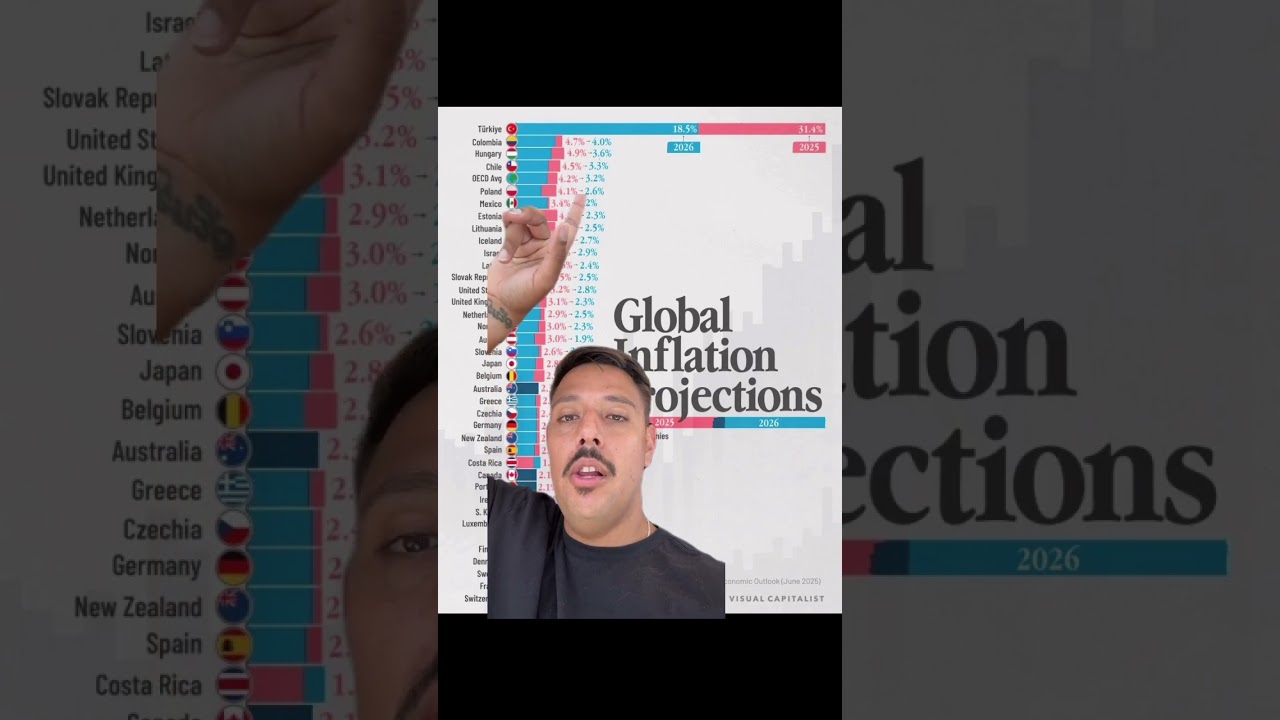
In this monologue, the speaker argues that Bitcoin’s fixed supply makes it a powerful hedge against fiat currency inflation, drawing a parallel to Germany’s hyperinflation in 1923 when massive money printing devalued the mark and drove gold prices sky‑high. The speaker explains how modern governments, especially amid war‑related spending, continue to print money, eroding purchasing power—a hidden tax on citizens. He highlights global inflation spikes in countries like Colombia, positioning Bitcoin as a world‑wide, easily accessible store of value compared to gold. The narrative cites the 2022 Iranian crypto‑exchange hack, where the Iranian government shut down the internet after a $100 million theft, underscoring crypto’s perceived strategic importance. Finally, the speaker claims that as governments lose credibility, they are increasingly integrating Bitcoin into sovereign funds to combat inflation, effectively buying the very asset they are devaluing through printing. The overall message is a persuasive endorsement of Bitcoin as a scarce, reliable asset in an era of rampant fiat expansion.
Chapters
This is where Bitcoin goes absolutely insane. This is a chart from Germany, and basically when they went into hyperinflation in 1923, they specifically lost World War I and they were forced to print their government-backed fiat, and the price of gold went insane. Now, this is Bitcoin's price. This chart right here is a really good explanation of why Bitcoin is so valuable right now. In the future, so here's the timeline of events. And basically, Germany printed money after World War One to pay for war reparations. They lost the war. They're like, okay, we have to like pay for a lot of stuff. And then also, obviously, they prepared for World War Two. So they printed money to make all of this happen. So the government has this power to be able to control their fiat currency. A fiat currency is basically a government-backed currency, and what they do. Is they print money for government things. And the problem with that is that your purchasing power gets diluted, meaning your dollar is not worth a dollar anymore. So if you're making $60K a year, well, because of their printing, it could be worth really $50K a year. It dilutes the value of the dollar. This is a hidden tax that countries do. And obviously with all this war talk and everything that's going on, well, There's a lot of printing going on in other countries, not just in America, other countries, a lot of printing going on. And this is set up perfectly for assets like Bitcoin because Bitcoin only has 21 million coins that will ever be created. It has a scarcity element where you cannot print it. It has pretty much this government printing mechanism automatically coded into Bitcoin So that everybody knows exactly how much Bitcoin comes out of the system and that never changes. Here's the current global inflation. As you can see, Colombia and other countries, there's a lot of inflation going on in the world and Bitcoin's a world asset. Not only that, but it's a lot easier to get than gold. So gold's price went through the roof, but you could just click one button and get Bitcoin. It's interesting because we had obviously this whole back and forth with Iran and Iran, one of their biggest cryptocurrency exchanges got hacked. And they shut off the entire internet in Iran. I'm like, bro, why did they do that? Why were they so aggressive? They shut off everything. It was only $100 million that got hacked. And I think it's obvious the reason why is because the cryptocurrency was that valuable to them that they shut off the entire internet of the entire country. So when we see a lot of printing like this and people really trying to protect their crypto, there's something going on. As governments lose credibility, crypto increases in credibility. And not only that, but they're integrating crypto into governments' strategic funds to basically combat inflation, and the government itself is adopting it to combat inflation. So they're printing the money and then they're buying Bitcoin with it. And yeah, this is a very important lesson to learn.