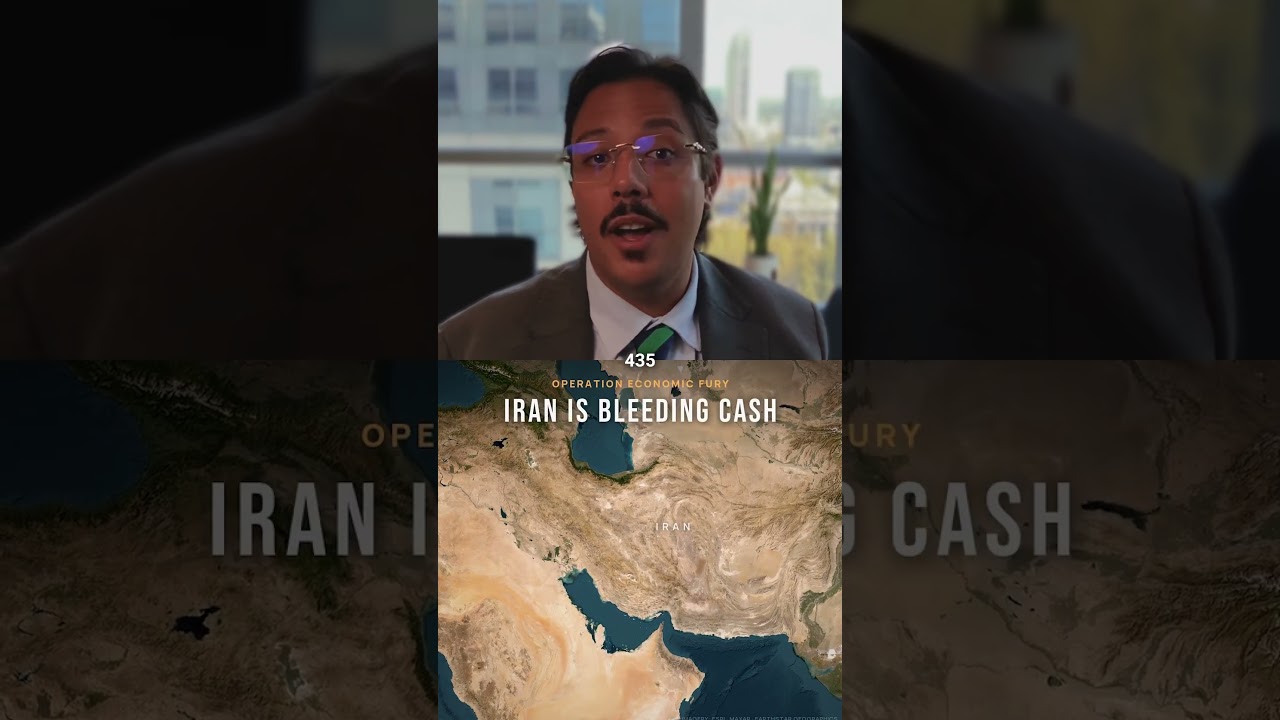
In a two‑speaker commentary, the speakers argue that Iran’s perceived control over the Strait of Hormuz does not threaten U.S. energy security because the United States imports only a tiny fraction of its oil through the chokepoint, while Asian markets depend heavily on it. They claim President Trump has shifted the conflict from a military to an economic battlefield by re‑activating a sanctions campaign dubbed “Operation Economic Fury,” targeting Iran’s cash flow. The commentary cites Business Insider and AP data: the U.S.‑led blockade costs Iran roughly $435 million per day, oil exports have fallen 70%, GDP is projected to contract 5.4 % in 2026 (the worst since 1988), inflation is near 69 %, and the rial has slid to about 190,000 per dollar. Iran’s demands—sanctions lifted, frozen assets released, blockade ended, and war compensation—are presented as signs of weakness, with the speakers concluding that U.S. economic pressure is effective and Iran’s leverage will soon evaporate.
Iran has the US exactly where it wants it, or so they think. Trump just pulled back from new strikes on Iran.
We're all set to go, but when the allies asked to call it off—
And Iran is calling it weakness, but the numbers tell a completely different story. The fight is not about missiles anymore, it's economic, and it's all about the Strait of Hormuz, which is basically a narrow waterway that moves 20 million barrels of oil per day in 2024 that Iran has been using as leverage because they have complete control over it. Iran thinks that it has a chokehold on America, but again, let's look at our business president. America is not the country most dependent on Hormuz. The EIA says that 84% of all the crude oil moving through the Strait of Hormuz went to Asian markets. We're talking about China, India, Japan, and South Korea alone accounted for 69%. The United States imported about 500,000 barrels per day through that route, equal to only 2% of U.S. petroleum liquid consumption. So of course, yes, Iran can spike oil prices, it can make gas more expensive, but it cannot shut off America's energy lifeline at all. What it really does is squeeze Asia, scare markets, and force every major buyer of Gulf oil to ask one question: how long can Iran keep this up? Now this is where all of U.S. leverage comes into play. So AP reports Trump is pivoting back to sanctions and economic pressure under Operation Economic Fury. Trump is purposely choosing an economic fight where he is strongest and where Iran is weakest, which is cash. Let's take a look at the numbers. Business Insider reports the blockade is estimated to cost Iran $435 million per day. Iran's oil exports, the lifeline of the regime themselves, have been cut by 70%. Its GDP is projected to shrink 5.4% in 2026, the worst contraction since 1988. Inflation is forecasted near 69%, and their currency has hit lows around 190,000 to the dollar. This is why they were holding a whole bunch of US crypto, and they got those wallets frozen as well. Now let's take a look at Iran's demand. So Tehran wants sanctions lifted, frozen assets released, And the blockade ended, and war compensation before Hamas fully reopens. That is not a country dictating terms from strength. That is the regime trying to get paid because the pressure that America is putting is completely working. There's a lot of people that want this framed as America showing weakness for political reasons because they maybe don't like Trump or something like that, but the deeper story is harsher. The U.S. is using allies, shipping lanes, sanctions, energy math, and time. Iran is trying to hold a chokepoint hostage that affects them more than America. America is asking how long Iran can survive without the money that the chokepoint used to bring in. This is going to be over very soon.