354 Dan Barrett Video: Real Estate Investors Get More Leads And Deals Online
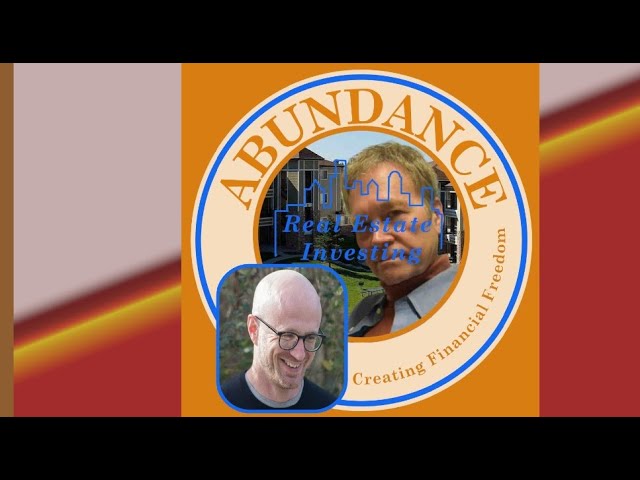
In this episode of the Real Estate Investing Abundance podcast, host Dr. Allen interviews Dan Barrett, founder of AdWords Nerds, the largest Google‑partner agency dedicated to real‑estate investors. Dan shares his personal backstory—from a nerdy kid who learned to build confidence through reading Dale Carnegie—to the development of a "meta‑skill" of aggregating, processing, and synthesizing massive information streams, which he deems essential for modern investors. He emphasizes that consistency, not a perfect strategy, drives results, illustrating this with the success of Express Homebuyers’s long‑term SEO effort. Dan then breaks down the two primary online‑marketing avenues: paid traffic (PPC) and organic SEO, outlining their pros, cons, typical budget ranges, and how investors should choose based on time versus money. He advises marketers to focus on the channels they enjoy, deepen expertise there, and automate distribution to other platforms. Dan describes AdWords Nerds’ value‑driven model—limited client roster, growth measured by expertise, free educational resources, and a rigorous client‑fit process. Finally, he recounts his biggest marketing debacle: losing half his clients after neglecting operational details during a personal life transition, which taught him to obsess over cash‑flow, cost‑per‑lead, and client health. The conversation ends with actionable take‑aways for listeners on starting small, staying consistent, and building the right meta‑skill set for sustainable real‑estate marketing.
Chapters
This is the Real Estate Investing Abundance Podcast. I'm your host, Dr. Allen. I know you're excited to get into today's show, but I have a very exciting announcement to share with you before moving to the show. We've just launched a complimentary and comprehensive webinar that, among other things, shows you how to legally use passive real estate investing to reduce your taxes, recession-proof your nest egg, and take the sting out of inflation. If you are curious to learn more, go to stevetucker.com/webinar. It is complimentary and only takes a couple of minutes of your time. Once again, that is stevetucker.com/webinar. I'll see you in the webinar. Enjoy today's show.
Hello, enlightened investors. Welcome back to Real Estate Investing Abundance. I'm your host, Dr. Allen Delighted to be back with you again today, and we're going to take a deep dive into marketing for real estate investors. With us is an expert in the field, Dan Barrett, and he is the head nerd at AdWords Nerds, the world's largest Google partner agency working only with real estate investors. He's managed over $5 million a year And client ad spend, found hundreds of real estate deals online for his clients, and been behind extensive industry experimentation and original research. He's worked with investors and companies like Joe McCall, Alex Youngblood, Tom Kroll, 1-800-Fair-Offer, Investor Carrot, and many, many more. So Dan, share with us an experience that helped you to be the person you are today.
Yeah, thank you. Thank you for the intro. I appreciate that. Yeah, that's a really interesting question, man. It kind of— I could take it in a couple different directions. The one that immediately jumps out at me, because I spend so much of my time today talking to people, going on podcasts, or, you know, running my own podcast, or even just breaking down concepts for clients and trying to explain things in a way that I think people will understand The thing that jumped out at me immediately when you kind of asked that question was, you know, growing up I was a pretty nerdy kid. You know, my company's called AdWords Nerds, you could probably guess that like my interests lie more on the nerdy end of the spectrum or whatever. And I was always super, super focused on what I liked, really fascinated by learning about certain things and not other things. And I kind of always felt like I stuck out or didn't fit in.
Right.
It was a very, very common experience, right? Kids all over the world are having every single day. And I kind of took that with me all the way through high school. I mean, I was playing in bands and, you know, performing in drama club and like all that stuff, but I just really had trouble with kind of regular conversation, you know, like I could go on stage, that'd be fine. But I just wasn't the kind of kid that was like going to parties or anything. It always just felt like a skillset I didn't have and I, I just wouldn't be able to get. And I remember very specifically being a freshman at college. I went to UMass Amherst.
Oh, nice.
And getting out of the library How to Win Friends and Influence People by Dale Carnegie and reading that book is really probably the first like quote-unquote self-help book I'd ever read. And I remember reading it, finishing it, like closing it, putting it down on my desk, and just kind of leaning back and saying like, oh, this is something you can actually learn to be good at. Like, it's not a thing that you're born with, although you might be born with that, right? Certain people are born with the gift of gab or whatever you want to call it. But it was really the first time I realized, like, oh, I can build my own skill set past what I'm naturally gifted at and, you know, sort of shave down some of those rough edges. And that really changed my life in a profound way. Like, I was always a reader, always somebody that was in the library all the time, but It really drove me to start reading specifically to leverage my strengths and minimize my weaknesses. And most of where I'm at today, whether it's professionally or creatively or intellectually or whatever, comes from the process that started there, right? I'm— I always say like my primary skill set in life is that I read, I write, and I take notes. That's primarily what I do. And it all started with that book. It was really the first time that I was like, oh, I can get get better by reading a book and trying to implement the things in it. And that was a really profound experience. So that's a good one to kick things off with.
Interesting. I mean, that certainly is a good skill to develop. I'm still working on it. I still do not have the gift of gab. It's one of the most terrifying things for me in the world. I can go on stage just like you can, But being in a party environment, a cocktail party, a real estate mixer environment is terrifying.
I mean, it's tough, man. That's a tough—
scares me to death.
Yeah, it's a tough situation to be in, right? You got to have just the amount, just the right level of connection. You got to be doing this thing. I recently took a class that was called Relating Between the Lines, which was really quite good. It's kind of about that kind of thing. And got a ton out of it. So it's it's a skill set that I'm always working on, right? I will say not to give the wrong impression. I'm still primarily an introvert by nature, right? So it's like oh um I can turn it on. I can be great, and then I'm Irish exiting out three hours early.
You know what I mean?
Like that's what I got to do. That's what I got to do. At least I can show up and be there, right? But I do think that kind of meta skill. You know, we were talking about online marketing, we're talking about marketing for real estate in general.
The—
I really feel like— and I have 2 kids, I've got a 7-year-old and a 9-year-old, and my primary goal for them is that they— you know, I don't really care what they do, I don't really care, I almost don't care what they learn, except that they need to learn the meta skill. And the meta skill that I think is so critical just to making your way in any context where Definitely for business, definitely for real estate today. The meta skill is how do I aggregate, process, and synthesize the massive amounts of information that are available to me, right? Like if I am interested in— my son's really interested in sharks. Like he went through a period where he's just fascinated about sharks, and we were talking about it and I was like, you can go on Google and type in sharks and you're gonna get More information than you could possibly process in ten lifetimes. So what do you do? Like from there, how do you decide where to go? How do you decide what to pull from it? How do you get it into your head in a way that you can pull it out again? That's the meta skill, and that's the skill that I feel like comes into play in my business more than anything. Online marketing constantly constantly changing. Real estate's constantly changing, right? These are two variables that are always shifting. And so it's really a process of who can learn, who can iterate the fastest, who can experiment, see what works, incorporate that information into their business. I mean, that's, that's the game, right? That's the game at a higher level when you're talking about, hey, my whole business. That's the game at a micro level when you're talking about, hey, I'm running Google Ads or something and I want to see which one is doing well. It's always about aggregate the data, Figure out what it means, synthesize it so you can use it. And so, you know, it comes in handy, man, just whether it's books or internet or whatever. That's what we're all doing at some level, whether people see it that way or not.
Absolutely. And that is a meta skill that I think particularly applies to the marketing environment. There's so many options out there, and most of us as real estate investors, that certainly is not our gifted skill set. And so we're left wondering, where is it, do we even begin in this aspect of marketing? So take us down that road.
Sure.
I think so. To give you kind of the quick high-level overview, and then we'll get really specific, right? The high-level takeaway that I want most people to get from this, whether you're technical or not, Right? Whether you've been doing this a while or not, the high-level takeaway is nothing matters more than consistency. It doesn't matter what channel you're using, what strategy you're using. It is primarily about the consistent effort put into what you're doing that makes the difference. If you look at the vast majority of real estate investing companies, I always use— I've got a really good friend, this guy Brad Chandler, wonderful coach, wonderful human being. Led for a long time this company Express Homebuyers, really successful real estate investing company. And one of the primary ways that they became so successful, you know, they started in Maryland and sort of spread all over the country, was by doing Google organic marketing. They did search engine optimization to make their website show up in Google, and they showed up all over the country, and they got a lot of deals and leads that way, right? So it's great. So how did they do that? I actually, before I actually knew Brad, I went back and I did a bunch of research on their progress. I pulled data on where their website was ranked historically and kind of watched it climb and then said, what did they do? What did they do? What did they do? And if you go back far enough, you don't see anything particularly sophisticated. You see the same thing that you see for every other investing company, which is they bought a bunch of links and it worked or it didn't work out, right? They hired someone and then they fired someone and that didn't work out, or they did a bunch of blogs and they stop for a while or whatever, right? It's just all the same stuff that everybody does. But the differentiator in my mind was that they didn't ever stop doing something. They were always doing something for years and years and years and years. And the sort of aggregated impact of that effort was far more important and far more effective than any particular tactic you're going to pull out of that 10-year period. And so I think people tend to not get started because they're waiting for the perfect strategy. I got to figure everything out. I got to figure out exactly what I'm going to do and where my market's going to be.
What am I going to do?
And it's too many variables and they kind of just don't get started. And same principle right now. I've got some money in savings and I want to invest it. Well, where are we going to, you know, do I have to do a This account or that account, there's taxes and blah, blah, blah. It's not my specialty. And so there's so many things I don't know, I kind of keep putting it off and putting it off and putting it off, right? Same thing when people get into online marketing, they keep putting it off. But as my father used to say, the best time to plant a tree is 10 years ago and today, right? So, you know, it's best if you started 10 years ago. If you didn't, you just need to get started now. And I don't even care what you do. It could just be making a Facebook page and making a post. Could be going on Twitter, making Instagram, make a post, go on TikTok, make a weird awkward video of your face, and then post it, right? Whatever it is, doesn't matter. But view it as, hey, this is a thing I'm going to be investing in for the next decade or so. Because I think the other takeaway that I really want people to get is this is where the majority of real estate transactions either occur or begin. It's online. This is where those things are happening. This has been the case for a long time for investing. It is becoming an even greater percentage of the market for what we might call retail deals, right? This is just where all these things are happening. Look at anybody below the age of 40. I'm 43, right? Anyone my age or below, and a vast majority of the people above my age too, but anybody my age or below who are the people buying houses, selling houses, whatever. We do most of our stuff online. It's just the way that it is. And so you really got to be in that universe in order to partake of that part of the market. So for me, it's a survival thing, right? If you want to be in business 10 years from now, you got to do something. You might as well start doing anything, just getting your feet wet. Now, to, to make that into specifics, say, okay, Dan, I get it. I want to do online marketing, but like What do I even do? There's 2 base— there's like one basic division between the— in the online marketing world, and you can kind of pick a realm and move into it, and they have different pros and cons, you know, benefits and drawbacks, right? Now what I primarily do is called paid traffic, or sometimes you'll hear it called PPC, which stands for pay-per-click marketing, and the basic idea is I'm running ads So if you type in sell my house in Google, the first 4 things you see at the top, those are ads, right? You go on Facebook, you see a bunch of posts, and then you see an ad. You're on Instagram. And, you know, I've been— I've been lately, I've been scrolling my Instagram and I'm getting a lot of ads for like chinos because I searched for chinos a week ago. And Instagram's like, we know you want chinos, like buy chinos, right? So those are all ads. And basically what people are doing is paying money to be in front of me. And generally with those platforms, what happens is the advertiser only pays when you click the ad. And same thing for real estate investors. The primary channel for real estate investors is Google Ads. And essentially the way it works is you give Google a big list of keywords you want to show up in front of. So anytime someone in my market types in sell my house fast, I want to show up. Anytime they type in we buy houses, I want to show up. Anytime they type in like Sell my house without a realtor. I want to show up. And when they type that stuff into Google, your ad shows up. If they click, you pay. All right, so that's pay-per-click, PPC. The advantage is it's super fast. You could get started tomorrow, right? Set up a thing, ads are running, people are clicking, you get a lot of data. It's very objective, fast. All that's great, but you're paying every time someone clicks. You pay. And so if you're very early, you don't have a lot of cash flow, you don't have a big marketing budget, pay-per-click marketing can be challenging. And we're in an era of this industry where competition is pretty high. And so generally, I would say you want to think about, you know, if you're really trying to do significant numbers of deals on something like, for example, Google, and you want to use ads to do it, you're generally looking in the ballpark of $2,000 to $3,000 a month in ad spend. To sort of get into that market. Don't need to spend that, but that's if you want to make that a major part of your business. Now, that's world number 1, pay-per-click, paid traffic, running ads. World number 2 is organic marketing. That's a lot of times called SEO or search engine optimization. It's basically anything you do to your website to make your website show up higher in Google when someone types in something you want. So, I go on Google, I type in someone else fast. I'm not going to run an ad, but I want to show up first below the ads. That's SEO. And SEO has a lot of advantages. For one, total potential, like, lead volume, market size, whatever you want to call it, generally about 4 times the size of what's available to ads. And that's because most people just don't click ads. Most searches, people click on the organic stuff. They don't type— they don't click on the ads. And so there's a lot more organic leads available in any given market. Second thing that's great about it is you're not paying. If I click your ad, or I click your website rather, in Google and you just showed up organically, you don't pay me anything. But if you ran an ad, you got to pay Google to do that, right? So lead flow can be incredibly cheap. There's a lot of it. So it's a really amazing marketing channel. The downside is it's labor intensive. And so you are blogging and you're doing social media and you're generating links to your website and you're making your Google My Business profile all snazzy, right? And you're getting reviews, and there's just a lot of different things you gotta do. A lot of those things take a fair amount of effort, and it takes some time to really kick in. So if you've got a lot of competitors doing really good SEO, it might take you time to break into that market. And so you can see these 2 basic divisions, organic marketing, which is free but labor-intensive, paid marketing, which is not free but is fast, And you can kind of plot them on the spectrum and say, all right, how do I decide what is right for my business as a general approach? Ideally, you do both, right? But most people are going to choose one or the other, particularly in the beginning. What I always say is, if you've got more time than money, you usually do SEO, right? You go organic because it's free. You got the time to put into the site. If you've got some more money than you got free time, you're generally going to go ads because ads are fast, they're instantaneous. You're going to put some money into it, but that's— that might be worth it for you. Most investors who really invest in the online marketing world end up doing both in one way or another, but that is the basic division, the basic kind of strategic division that you can use in your head as a mental model to kind of understand what's going on. Channels are either going to be organic or they're going to be paid. Does that make sense as a kind of a sort of a bicameral division of the online marketing world?
Yeah, that, that does make sense. Nice clarification there in terms of the 2 different universes that are really of an option there. In a moment, let's go into a little bit more depth here in terms of paid ads here. But before we go into that, Dan, tell us about your company, what it is you have to offer investors and how they can get in touch with you.
Yeah, so my company is called AdWords Nerds, and you can find us at adwordsnerds.com or just Google AdWords Nerds and you'll find it. And we are, we are a marketing agency that works only with investors. So you would come to us, basically hire us to do all your online marketing for you. So we would run your Google Ads, we would run your Facebook Ads, your Microsoft Ads, we would do your SEO if that's what you want to do. You can pick and choose, you don't have to do everything. And generally the way that we work with folks is we're actually a— we are— well, let me put it this way. One of our primary company values, and we are very definitely a value-driven company, one of our company values is growth. But we are not interested in growing revenue necessarily, right? Like, we have a hard cap on the number of clients we will take at any given time. I do not have any great interest in expanding my team past the 8 or 9 folks that we have right now. I love my team. I love what we do. We are primarily interested in growing in expertise. Like, our goal as people is to get better and better at what we do and do it for a small but incredibly tight-knit group of clients. That's the goal. And so if people are interested in working with us, Uh, usually what they'll do is they'll sign up for a strategy session with someone on my team where we go over potential online marketing strategies, kind of talk through your market, talk through your constraints, your risk tolerance, all that stuff, and say, okay, hey, you know, based on what is going on with you, based on our diagnosis of what you probably need, here's what we'd recommend. But the vast majority of people that we talk to, we don't end up working with. Mostly because we won't work with anyone that we don't think we're the best fit for. We're more than happy to refer people out to other companies if we think, you know, the fee is not going to work out or whatever. And 2, if we don't think you're going to make significantly more money than you're going to spend, we won't take you as a client, right? That's just— that's part of our ethical obligation. So that's kind of the way that people get in touch with us. But we have a ton of free stuff. I mentioned a podcast to do, podcast called the REI Marketing Nerds Podcast every week. It's totally free. I've got a bunch of videos on YouTube. I've got a 40,000-word guide to setting up your own Google ad campaign for motivated sellers on the site. It's better than most paid programs, to be honest. So we do a ton of free material to educate the market. So regardless of whether you want to work with us or not, adwordsnerds.com is a great place to go. Just check out what we have up there, and it's a good place to learn the, uh, the skill set as well.
Enlightened Investors, if you haven't done so already, Be sure and click that like button and also click that share so others can take advantage of the content. And finally, be sure to subscribe so you don't miss a single one of our upcoming episodes. And all that information will be in the show notes.
Awesome.
Well, you had talked about being consistent, and a lot of times people when they start out, they are— I guess they're somewhat consistent, but they are posting in Facebook, on LinkedIn, on Twitter, on TikTok, and Instagram and any other thing they can think of. Is that a good strategy or should they be more focused?
Is a good strategy posting on a bunch of different channels or kind of social media specifically?
Well, the whole thing. Some, you know, YouTube is included in that, email. They're just doing everything.
Yeah, it's— that's an interesting question and I think it can— I will tell you what I do. The way that I think about it, and I will say that this is going to be more of a knowledge of self kind of question, right? Because I'm sure there are people that are really good at doing a ton of different things at once, and that might be your thing, right? If you love social media, you love posting on social media, fantastic, right? Don't don't limit yourself. I particularly don't love posting on social media, right? There's a few channels that I really love. Like I write. A long-form blog every other week. I love doing that. I like doing the podcast. I will like doing videos, and I like doing courses. And so there's materials that I like, sort of methods of communicating that I enjoy. And posting on Instagram, posting on TikTok, that kind of thing, I don't particularly like it, right?
Right.
So my overall strategy is kind of twofold. One, lean into the stuff you like doing. Um, so Tiago Forte is a great kind of blogger and a course maker and stuff, has a saying where he always says it's really hard to beat someone who's having a good time. And that is very much the case. If you don't enjoy it, you're probably not going to stick with it. And like I said, consistency is king. And so pick something you enjoy doing. There's always going to be a, a sort of method of communicating that's going to be more natural to you. That's probably where you want to go. The second thing I would say is that social media platforms very much follow a power law distribution, by which I mean that social networks in general, but particularly any social network that relies on any kind of algorithm to recommend people's profiles to other people, is going to show this distribution where a very tiny percentage of the people that are at the top of that platform are going to generate the vast majority of the traffic and wealth From that platform, and that is the case for the platform as a whole. You'll look at YouTube, right? There's like a list of like five YouTubers at the top who make eighty percent of the revenue or whatever, right? But it's also true within industries. If you look at, for example, within real estate investing, and then you pick a channel, let's say on Twitter, there's going to be a very small percentage of real estate investors on Twitter who are really killing it in terms of generating leads, generating traffic, generating revenue. It's just the way that it goes, right? The more followers that you get, the easier it is to get followers, and that flywheel effect kind of spirals off into the clouds. So for me, when I'm looking at my kind of the way I spend my time, I am probably going to start by picking the thing that I like, right? So hey, I like long-form blogging, I like podcasting, right? So those are going to be the things I'm going to focus on, and then I'm going to try to go deep as much as possible on how to make those things as compelling and useful and awesome as I possibly can. Like, I'm going to learn everything I can learn about podcasting and really make my podcast awesome. I'm going to learn everything I can about long-form writing and really try to lean into whether that's SEO or it's just generating a newsletter or whatever. I'm going to really learn it, lean into that. Go deep on it. And then for everything else, you do kind of want to be everywhere because there's going to be people that find you, for example, on TikTok. That's just people on TikTok that aren't on Twitter, and there are people on Twitter that aren't on Instagram, right? There's, there's kind of a difference in the audiences. So my strategy at that point is to focus on those few things that I'm really going deep on and then automate everything else. So use tools like Zapier or any kind of social media sharing tool or whatever and just say If I put a blog up, promote the blog on Twitter. If I put a blog— if a podcast goes up, put the podcast on YouTube, right? Put the podcast on Instagram. Like, just make it automatic because that way you're focused on the things that make the most sense. You're getting posted everywhere else, but primarily what that stuff is there to do is redirect them to your core channels. So my goal is like, hey, my podcast is where I get You know, it's not, but let's say my podcast is where I get most of my revenue. I'm gonna post it everywhere, but everywhere that's not my podcast, the primary call to action is gonna be sign up for my podcast, sign up, subscribe to my podcast, go listen to my podcast, and that's where the action's gonna happen. So just to review, pick the thing that you're most comfortable with, that you like the most, so you're consistent with it. Go as deep as possible on a small number of those things, and then automate everything else so that you get posted everywhere But just drive them back to your core thing. And that kind of system has worked the best for me and generally for my clients.
Excellent advice. Just one last question.
Sure.
Dan, and that is, what was your biggest marketing debacle and how did you deal with it? And what did you learn from that?
Oh man, my biggest marketing debacle. So I will tell you the story. I brought up this story to my employees, I think like last week. So it's fresh in my mind. But this was maybe a year after I had first decided to focus purely on investors. So when I first started working for myself, I was freelancing. I was doing like web design and SEO and stuff for just any local business. And after a while, I decided, you know, I was like, I really want to be really good at something. And I think I need to focus in order to really understand an industry. I had had some clients that were real estate investors. Through a bunch of kind of chance happenings, I was like, okay, real estate investing—that's the thing. And this was early in that, early for online marketing for investors. So I was really the only person specializing in this right now. There are a lot of us, but at the time it was just me. And so I came out and I said, okay, I'm just doing investors. And over the first year, I probably doubled my client load. I did really well. I got all these clients. People were like, wow, you focus just on investing. Wow, you understand the business model. You know, you don't have to tell me what wholesale means. You know, in the beginning people did, but after a while you're like, I get the lingo, right? I know what subject to means. I know what a lease option is, right? I know what a motivated seller is and what makes them motivated and all this stuff. So I was doing really well for myself and I was pretty happy, right? I was like kind of killing it. I had like, I think it was, it was like 12 clients. It was like more clients than I'd ever had. It was just me and My wife and I— well, my wife got pregnant with our first son. Amazing, right? So it's like all these things are happening and it's so busy and things are amazing. And I kind of started to slip a little bit in terms of paying attention to my clients' accounts, right? I had all these accounts, they're doing pretty well. I'm like, cool, I could take my eye off the ball for a little bit. My wife is pregnant and a lot of things are happening and things are moving and I would come back and things would be okay. And I'd take my eye off the ball for a little bit longer, and I'll come back and things would be okay. And as my friend Nick would later, much later, would tell me, right, the, the lesson you want to take away from this is, um, if you're playing Russian roulette, to use a sort of morbid example, you're playing Russian roulette and the gun hasn't gone off yet, doesn't mean the bullet's not in the chamber. And so, what I was learning was, hey, I keep taking my eye off the ball and coming back and everything's fine. And subconsciously, I'm making the connection. It's not a big deal for me to take my eye off the ball. That's what I'm learning. And so, we have the baby. Baby is happy and healthy. Oh, everything's awesome. I'm with my wife for a while, you know, take a little bit of time off, come back to the business. First week back, 2 things happen. One, I lose half of my clients in a single day. So I had 12 clients total, 6 of them quit on the exact same day.
Hmm.
And at that day, I'm looking at my checking account, things are tight. I know I just lost half my clients. We just had this baby. I go home and I get a bill from the hospital for the birth. So it's like a birth, whatever. I don't know what was with our insurance at the time, but didn't cover. It was like a bill for like $600. For giving birth to my amazing first son, beautiful first son, and I realize I can't pay it. I don't have enough money to pay this bill, and not only do I not have enough money in the bank right now to pay this bill, I just lost half my clients. And the sense of pure dread that sank into me because before I started doing this, I was training to be a teacher. It was going to be a secure thing, right? Like I had made this. Jump to this thing that felt very risky at the time. It doesn't feel risky to me now, but at the time it felt very risky. And this feeling of, oh, I took my eye off the ball, everybody noticed over time, they left because that's what you do, and now I have this other person that's dependent on me and I can't pay for bringing them into the world. That was a truly Life-changing moment, because at that moment you could see this, like I have actually on my— it's stuck on my wall. I have a sticky note. I refresh this every year. I don't know if you can see this. It says, work the details. Work the details. That's a reminder to myself because I am kind of a big picture guy by nature. I like to think about the sort of big ideas and all this stuff, but what I learned was None of that matters if no one's paying attention to the details. If you don't know what your cash flow is, you don't know what your profit margin is, you don't know how your clients are doing, you don't know what their cost per lead is, you don't know how that's changing over time— none of the big stuff matters unless you work the details. And that's where I learned that. And that's by far my biggest marketing debacle. I have not repeated that mistake, but every now and then— again, I mentioned it, I had this conversation last week We've been growing, things have been going really well, and I just said we have to be really careful. We have to be really, really careful that we don't grow too fast and we can't take care of our existing clients, right? So I'm like, how do we tap the brake? Let's just tap the brake. Growth of revenue is not the goal. Growth of expertise is the goal, right? So in any case, that was my biggest marketing debacle. I still think about it all the time. But it made me a much better business owner. And for that, I'm very grateful.
Dan, it's just been delightful. Wonderful information. Thanks for being with us.
Thank you so much for having me, man. I really appreciate it.
Enlightened Investors. Wait, wait, don't go just yet. I just want to remind you about our recently launched webinar that you will not want to miss. If you're at all curious and would like to learn more about how real estate investing can diversify your investment portfolio, alleviate the anxiety associated with Wall Street swings, leverage your 401s and IRAs to substantially increase the return on your investment, and do all of this with turnkey, hands-off, passive real estate investments, then you'll want to immediately go to stevetucker.com/webinar. In the webinar, we'll also address the common dubious investment schemes, that you want to avoid. To access the webinar, go to stevetalker.com/webinar. I look forward to seeing you in the webinar.
Thank you for tuning in to Real Estate Investing Abundance, brought to you by Steve Talker Capital, a company working for passionate professionals like you to develop financial independence built on solid passive real estate investments. As part of As part of our efforts to make the world a better place, Steve Talker Capital contributes to activities and organizations committed to better understand the equine. These endeavors attempt to enhance the human treatment of horses worldwide. Steve Talker Capital, working for a world where all creatures, great and small, flourish abundantly. For resources to develop your financial independence, connect with us at stevetalker.com.
More from Allen



Stop Worrying About Retirement: Build a Better Plan with Patrick Negado - Ep-580

Hard Assets, Hard Money, and Building Real Wealth in Uncertain Times with Ben Reinberg - Ep- 579

Partner at Blockchain Coinvestors (1,500+ Startup Portfolio) with Mitch Mechigian - Ep- 578

Thrive in Any Market: The Wicked Smart Blueprint with Chris Prefontaine - Ep- 577

Train Your Money: How Purpose-Driven Finance Builds Lasting Wealth and Impact with Hillary Seiler
