Navigating the Realms of Real Estate and Emotional Prosperity with Nadine Wilches REIA - 446
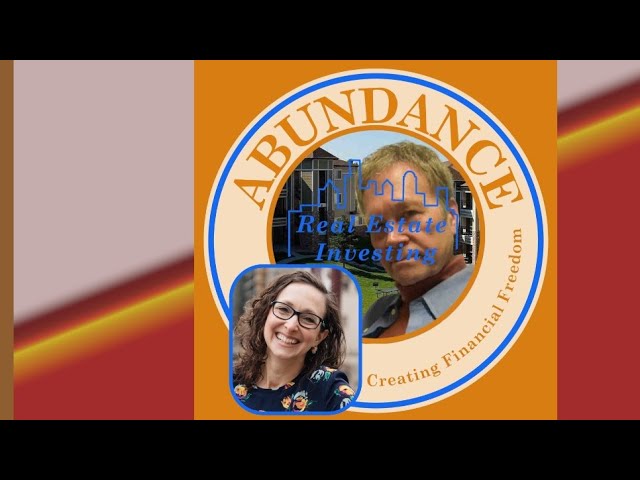
In this episode of Real Estate Investing Abundance, host Dr. Allen interviews Nadine Wilches, a licensed clinical social worker and CEO of MindArc Health, to explore the concept of "emotional currency" and how it parallels passive real‑estate investing. The conversation begins with a promotion for the online Multifamily Live event (May 9‑11), positioned as a gateway for investors to learn about cash‑flow‑ready apartment buildings. Nadine introduces the emotional‑currency metaphor, describing an emotional bank account that can be depleted or replenished through specific behaviors. She outlines six protective factors that build emotional reserves: meaningful impact, feedback (positive and constructive), interest, time, quality relationships, and cohesion. Practical tips are offered for daily self‑monitoring, treating emotional investments like financial ones (high‑risk vs. low‑risk), and recognizing “fear traps.” The dialogue delves into the challenges of toxic or demanding relationships, emphasizing self‑investment, boundary‑setting, and balancing emotional drains with replenishing activities. Nadine connects emotional well‑being to real‑estate outcomes, noting that community safety and revitalized properties serve as both financial and emotional assets. The episode concludes with multiple calls to action: visiting mindarchealth.com, joining Multifamily Live, and attending Steve Talker’s webinar on passive real‑estate strategies.
Chapters
Enlightened investors, I have some exciting news for those looking to dive into the world of passive real estate investing. Many have asked how I got my start in commercial real estate investing. Well, it all began with an event close to my heart. Multifamily Live is back, and this time it's online. This event holds a special place for me because it's where I got my start in commercial real estate investing. Imagine a virtual gathering where you can gain invaluable insights into how cash flow-ready apartment buildings are the key to your passive income journey. Take the mystery out of passive real estate investing and step into the active side of the equation to gain a comprehensive understanding so you can invest passively with confidence. Whether you're a newbie or a seasoned investor, Multifamily Live is designed to cover everything from acquisition to asset management. You can be confident that you'll leave this event with a comprehensive understanding of commercial investing. Mark your calendars for May 9th to May 11th. Trust me, this is an event you won't want to miss. Ready to enhance those passive streams of income? Get your ticket now, and together, let's take the next step to enhance our financial well-being, to live abundantly and flourish in all areas of life. I'll see you in Multifamily Live. Hello, enlightened investors, and welcome back to Real Estate Investing Abundance.
I'm your host, Dr. Allen. So glad to have you with us today, and I know you're going to love today's show as we are talking about real estate investing abundance. And today we're really focusing on the abundance that goes well beyond financial well-being and into all the other aspects of well-being. And I was talking with Rich Fettke a few days ago, and he was talking to me about how we can look at assets and liabilities differently and much more broadly outside of the spreadsheet. Because assets are not just things that give us more money, but assets are assets that bring us more happiness, that bring us more fulfillment, that bring us more joy, that bring us more time freedom. And liabilities, on the other hand, are things that take our money, that take our time, that take our joy, and that take our health. And so with us today is Nadine Wilczek. Did I say that right?
Yes.
Okay, Nadine Wilczek, and we are going to look at emotional prosperity and how to invest our emotional currency. Nadine is a licensed clinical social worker and the CEO of MindArc Health and the owner of NeuroCycle. After over 18 years in crisis intervention with psychiatrically vulnerable populations, Nadine has developed the award-winning EQUIP model and 5 Elements systemic well-being framework to strengthen protective factors that reduce stress and promote well-being and fulfillment, and so, Nadine, I'm so glad to have you with us today and looking forward to an enlightening and encouraging conversation, so start us off, Nadine, with just what is emotional currency?
Well, first, thanks so much for having me. When I started diving into the topic of, okay, how can we find the root cause of well-being instead of the root cause of mental illness and defining that 5 elements framework. One of those elements we labeled as value. And the way that I describe it is emotional currency. If you have— just like you have a bank account, most of us have a bank account, and we put investments in that in different ways. We have an emotional bank account, and it gets drained when we spend it all, and it gets filled when we have some benefit. And so when we defined those benefits through the research that we examined— and so really, we found that people need to strengthen their emotional currency through certain behaviors, situations, relationships, and things like that that give some return on their emotional investment and build back those reserves versus when we sacrifice too much where we overinvest and over our emotional energy in places that don't give us a return and don't, at the end of the day, feel very good. And so I think what we tend to then do is we then quick— we make those quick emotional investments. And just the same way we wouldn't do that financially, you know, on that sort of gut impulse, we don't want to do that emotionally when it comes to our health too. And some— and I I tend to see people will then fill those accounts very quickly with comfort over meaning. And so when we seek comfort over meaning, we can sort of get this sort of quick reserve back and we really don't rebalance in a healthy sort of long-term investment way. So that's the gist of it and we can go into more of the details.
Yeah, that's very interesting. You know, with finances, I mean, it's easy to see what we're putting into our bank and easy to see what's going out of it. It's not necessarily always easy to control that. But I think with our emotional currency, it's not a tangible kind of thing. And so I don't think it's really always obvious to us, certainly not always obvious to me, when I'm depleting. that emotional energy. And so what are some tips and clues as to how we can become more consciously aware of how we are actually expending our emotional currency?
Yeah, so I mean, I think it's just like learning anything new. It takes an increased focus on it. And so even just spending half an hour a day saying, okay, I'm going to be really conscious right now about how I feel after investing my energy. And, and that's essentially your, you know, time, effort. We— I, I call them time, effort, mindset, attitude, um, and intention. And those are the things that we control in our, in our behavior. And if we can spend, you know, half an hour a day kind of looking meaningfully at how did I expend this energy and time, and how did I feel about it? We'll know. We'll start to know and be able to emotionally regulate a little bit better. And we can use the research, too, to leverage because it gave us a very clear pathway for what we should be investing in. And so we can test those things out a little bit easier. Some of them, it's just like high-risk and low-risk investments, right? We know that if we go to brunch every other week with our friend, and we know that we've had this friendship for, you know, 20 years, it's a pretty low-risk investment. If we go to brunch and we, you know, we expect to, you know, this brunch to go fairly well, despite, you know, the things that can come up in life versus like, oh, I just met this person, we're gonna fly to Amsterdam next week. And we're gonna spend a weekend together in Amsterdam, that'd be a little bit— we're sort of testing the waters. And so what I like to say is like, if you have— if you generally feel depleted, and you need to start taking more risks to see where you can increase that, um, those emotional reserves and get a better return on your emotional investment, then we should look at the research. And there's just 6 really, really clear things. And I'd say at this, you know, in a podcast format, you, you can't really retain these things, you know, when you make a list, but you can think about them a little bit, um, and reflect on them. And so it's, it's meaningful impact. So the things that we feel are meaningful impact on our world, on the relationships, we get some meaning from doing those things and feel like we've made an impact. Along with that is feedback. And we found it's not just positive feedback on those things that you do well, which everyone reminds us we need to hear when we're doing well. But it's also receiving feedback so we can get better at things because that holds value. So if we have no way of knowing how we're doing, we don't know— We don't have— we spend a lot of that emotional energy and we don't really get anything from it. And then we have the 2 obvious ones are interest and time. If we do things that are of interest to us, we get a great feeling from that. We get that emotional energy. And if we spend our time in ways that we feel are beneficial. Relationships are the complex one, right? Where those relationships change and morph and flex day to day. And so you can have that great conversation with your boss one day and the next day you're like, I don't think things are going so well. So, so, you know, we build on those relationships. And the last one is cohesion, which is probably the trickiest one. But I really like to say it's just another way of saying this is your low-risk emotional investments when you know that you're going to have this, like symbiotic kind of equilibrium relationship, where you're— there's not going to be a lot of criticism, harsh criticism, there's not going to be a lot of conflict. Um, while conflict is really healthy in some ways, um, cohesion provides us a lot of value. So if we can at least get to cohesion through conflict, that's really important. It provides a nice emotional boost.
Well, we're going to have to delve into these 6 things just a tad bit better here, but we are talking with Nadine Wilczek, and you can find Nadine at mindarc.com. Health.com, and that's MindArch, that's A-R-C-H, and health, H-E-A-L-T-H, .com. Nadine, you mentioned that relationships can be kind of the sticky wicket, and they certainly can because, well, there's, there's just no doubt that relationships are critical to us as human beings and, well, to other species as well, but They can also be a trap, and in fact I think I— there seems to be a whole lot of toxic relationships in most people's lives, and it's very difficult to remove ourselves from those toxic relationships. Any suggestions for spotting the toxicity and then either extracting ourselves from them or making changes to those relationships?
It's a loaded topic. There's— because from a socioecological perspective, right, so all the things that go into the reasons that you even have those relationships make it very difficult for us to make choices to change our relationship structure. So you have an ill parent that you're taking care of that has now some psychiatric issues and can be very hard to be around. and very volatile, but you have a history of 60 years with this person or whatever it is. And you feel a responsibility. Oftentimes I hear from my clinical work that there's an obligation and a responsibility that's hard to let go of in those situations. Or you have a child at home who has special needs and can be very challenging. Or you have a job that you love. And And I've had this many times in my life where I'm investing heart and soul, and I'm very passionate about the work. But some of the people that you work with make it very difficult to do your job every day and challenge you emotionally. And so I don't think there's an easy answer to that, except for it's like investing. If you don't invest in yourself first and primarily and learn to understand that emotional regulation and balance that out and get those needs met and diversify that so that you're not absorbed by this, then you can't really well set those boundaries that you need to, um, in order to have those relationships, um, the way that you want them to be. So, so it's not necessary that we have to eliminate challenging relationships all the time, but we do need to find ways to balance that out with things that replenish and rebuild and reenergize us in ways that we can then cope effectively with those relationships. I think that there's too quick of a mentality to dismiss and move on and avoid, again, going towards that comfort, investing in— overinvesting in comfort and underinvesting in meaning. And meaning takes a lot more effort and tolerance for really challenging things, including challenging relationships. But it's worth it because you get that return. So I think we sometimes have to telescope a little bit and see the bigger picture and be willing to tolerate a little bit of emotional stress But that's only if we're really good at finding those other ways to balance and recharge.
Enlightened Investors, if you haven't done so already, be sure and click that like button and also click that share so others can take advantage of the content. And finally, be sure to subscribe so you don't miss a single one of our upcoming episodes. Well, yeah, in terms of Seligman's 5 areas of well-being, there's the positive emotions, engagement, relationships, meaning, and achievement. So relationships and meaning are 2 of the certainly primary aspects of our well-being.
Mm-hmm.
Both of those take considerable amounts of effort. It isn't— neither one of those are— I guess that you have to put a lot of your emotional currency into those to get the investment out of that, and they don't necessarily come immediately.
Yeah.
Whereas positive emotions, we get— we can have that immediate feedback, but these other areas of life It takes, uh, takes emotional investment.
Yeah, it's kind of like real estate investing, right? There's, um, it's a little bit of a delayed gratification most of the time, right? And, and the expectation is a bit vague sometimes about what, what really will that return look like. Um, we can, we can calculate, we can, you know, project, we can have, you know, all this great forecasting. And same in our relationships, right? We think we're not investing in relationships We don't tend to invest in relationships that we think are going to go badly. We invest in the relationships that we think we can improve. We think we can get better or we think we can maintain. But, but we don't exactly know. And sometimes that uncertainty is, is what sort of threatens or scares us. And then when we, when we get into that fear zone, I find we do those things that, you know, I call them fear traps, but we either avoid. So we're like, okay, I'm not going to deal with that relationship.
We worry. Right.
This is, this is very common. We, we become perfectionistic, like obsessed with making it better. We become dependent. So we might be dependent on other people to solve that problem. We may become dependent on certain devices or things, or we're pleasure-seeking. So then we go back to that quick fix, that comfort, and we're like you instead of investing in working on that relationship. We're like in bed scrolling next to that person but not talking. Talking to them, right? And so it can be being really aware when we're falling into that fear trap of, you know, we're uncertain of how we can make things better and do better. And because we're feeling challenged by it, that is a really good place for reflection and then sort of recommitting to that longer-term investment and resetting those expectations that there is no quick return on that investment and that That it's okay that we spend time and work through these things because that's what relationships are.
For sure. And I think, you know, certainly looking at my life, I would love to have had a better relationship with my child. And I can see that just, you know, just fell into habits that were just easy. I guess they weren't easy. They were pretty, you know, particularly uncomfortable, but just Didn't address the issues, just pushed everything under the carpet and just let things go on and on and on. And so because of that, we just have this kind of, you know, we're on speaking terms and we talk with one another, but it's not really a very deep relationship. And I wonder if a lot of other parents don't experience that.
Yeah, yeah, I, I would, I would imagine. And, and in my work, my clinical work, you know, um, I've seen, seen a lot of that. And then also seen that, you know, at, at any age, and, and particularly, um, later in life when we do have a little bit more clarity on some of these things, we, we forget that, that we're well positioned then to to actually still set that goal and address that. And sometimes that's where some of the best value comes.
Yeah. Well, I mean, my, my child is 41 years old now and doesn't live that far from me, but doesn't live with me. And so we don't, don't see each other on a regular basis.
Yeah.
So But those opportunities are certainly there, and it's on me to make those changes there. I think it's always on the parent, I think, and not necessarily the child. In fact, you know, I think it's really inappropriate when the child takes on the parent role, and a lot of parents try to push that off on children as well. So Mm-hmm. Yeah. Well, we are talking with Nadine Wilches, and you can find Nadine at mindarchhealth.com. And that is mind, and arch is A-R-C-H, and health, H-E-A-L-T-H, dot com. So we are talking about, uh, assets and liabilities, and particularly we are talking about our emotional assets and how we can increase those assets and how we can also, through our emotional liabilities, deplete those assets. So if you've got the 5 methods there, if you could go over once again, you did tell us those at the beginning of the show, but what are the 5 efforts that we need to put into relation, I mean, into our emotional well-being?
Yeah. So from a value standpoint, when we talk about emotional currency, we found 6 protective factors. And those are meaningful impact. So being able to have that feedback and impact on the world or on the things that we do and some way feel like we're making a difference. Interests. So things we're interested in, time spent, quality relationships, cohesion, meaning that we're able to resolve conflicts and get to that equilibrium with folks and feedback, both positive and constructive in the sense that we know we have a checkpoint for how we're doing so that we can continually improve. And that provides a lot of value for us to feel like we are in control, have that sense of control over our value.
So meaningful impact. Let's go into that just a tad bit more. And how do we increase our emotional currency through meaningful impact? And then how do we deplete that?
Sure. So, you know, for me, I find a lot of meaning and value in shaping and changing people's lives. I've always worked you know, with people and the actual change that we make, that, that gives me a lot of meaning. But that doesn't come overnight. That takes a lot of effort on both sides and commitment. And now that we're working with education institutions, we're talking about a lot of players and a lot of systems and a lot of bureaucracies and a lot of policies involved that require our attention before we can really shape change. And so There's always that meaningful impact. For me, that's sort of light at the end of the tunnel. And so what I have to remind myself of, and I try to use this staircase analogy, is that, you know, I see the next floor of this. I'm building this house and I'm seeing this next floor of the house that I want to build. And I can, I can, I have a vision of what that impact will look like. And that's my intention. But every stair along the way, and even a misstep, is a step up the staircase because I'm learning, I'm iterating, I'm changing, I'm making, making that, those decisions that are going to shape the path to creating this next floor. And so I think for a lot of us, when it comes to wanting to make a difference in the world, these are, there are a lot of stairs. that we need to build one by one, and remembering that those things are the value and not the outcome itself, that, that is just the, just the outcome of all the things that you've already done, just like all the small investments that you make build your retirement fund, not one action that you took. And so I think, I think that helps shape Meaning a little bit more, because I think we can kind of misstep in wanting— again, it goes back to kind of wanting that instant make a difference. And you can do that at the soup kitchen, right? If you feed one person today, you feel like you've made a difference. Or if you clean up your park, or, you know, we do a beach cleanup every year, it feels really good. So I think that there are quick ways to do that too. But I think some of those really more meaningful things take take that investment of our time and energy.
Well, I appreciate you sharing that because that really feeds into really our goal with Stetacher Capital in terms of we talk a lot about meaningful investment and that the investments we engage in, certainly we expect, you know, good cash flow and good returns on investment, but we intentionally invest in projects that are projects to revitalize the properties that we have invested in. And we, for instance, one property we took over was, it was really a crack house property. And It was no place for children, and within 6 months we had turned that property around where little children were outside playing in the playgrounds unsupervised. It was a totally different community. And so there is meaningful impact for— from that investment for all of our investors who are sharing in the improvement of those—
Mm-hmm.
And certainly, you know, the, the overall goal is, you know, preservation of capital and cash-on-cash returns and overall returns on the investments. But we also want it to be an emotional experience that is feeding their emotional currency as well.
Yeah, because I think just like financially, when we have a lot of reserves, we have a lot more choice in our investments financially, and we have a lot more control. We get— just certainly can get a lot more returns. But I think that there are assets that help us do that emotionally. And one of them we talk about is community safety. So if our community does not feel safe, my emotional priorities are really different than yours if your community is really safe. And what I can invest in emotionally is really different because I'm not going to the park and leaving my kids, you know, running around if I don't feel that my community is safe. And so they don't get that value. And so where do I need to go? And so there, there's a lot more, um, time and effort and process to, to keep, you know, people safe when there are all these external threats.
Mm-hmm.
Um, so that's certainly an asset. And so you're building assets for other people to be able to both, you know, gain emotional currency, but also financial currency, because of course you're stabilizing the community in that way.
So that is certainly what we attempt to do. Well, Nadine, it's been a wonderful conversation. Thank you for being with us and enlightening us about emotional currency. And Nadine can be found at mindarchhealth.com. Enlightened Investors, thank you so much for being with us today. We are so grateful when you join us, but please take a moment to like, share, and subscribe and go to your favorite podcast app. And we would be most grateful if you would leave us a rating and a review. Until next time, live abundantly in all areas of life, and we will see you in the next episode.
Enlightened Investors. Wait, wait, don't go just yet. I just want to remind you about our recently launched webinar. That you will not want to miss. If you're at all curious and would like to learn more about how real estate investing can diversify your investment portfolio, alleviate the anxiety associated with Wall Street swings, leverage your 401s and IRAs to substantially increase the return on your investment, and do all of this with turnkey, hands-off, passive real estate investments, then you'll want to immediately go to— stevetalker.com/webinar. In the webinar, we'll also address the common dubious investment schemes that you want to avoid. To access the webinar, go to stevetalker.com/webinar. I look forward to seeing you in the webinar.
Thank you for tuning in to Real Estate Investing Abundance, brought to you by Steve Talker Capital, a company working for passionate professionals like you to develop financial independence built on solid passive real estate investments. As part of our efforts to make the world a better place, Steve Talker Capital contributes to activities and organizations committed to better understand the equine. These endeavors attempt to enhance the human treatment of horses worldwide. Steve Talker Capital, working for a world where all creatures great and small flourish abundantly. For resources to develop your financial independence, Connect with us at stevetucker.com.
More from Allen



Stop Worrying About Retirement: Build a Better Plan with Patrick Negado - Ep-580

Hard Assets, Hard Money, and Building Real Wealth in Uncertain Times with Ben Reinberg - Ep- 579

Partner at Blockchain Coinvestors (1,500+ Startup Portfolio) with Mitch Mechigian - Ep- 578

Thrive in Any Market: The Wicked Smart Blueprint with Chris Prefontaine - Ep- 577

Train Your Money: How Purpose-Driven Finance Builds Lasting Wealth and Impact with Hillary Seiler
