REIA 132 Sridhar Sannidhi: transition from a salaried employee to a financially independent
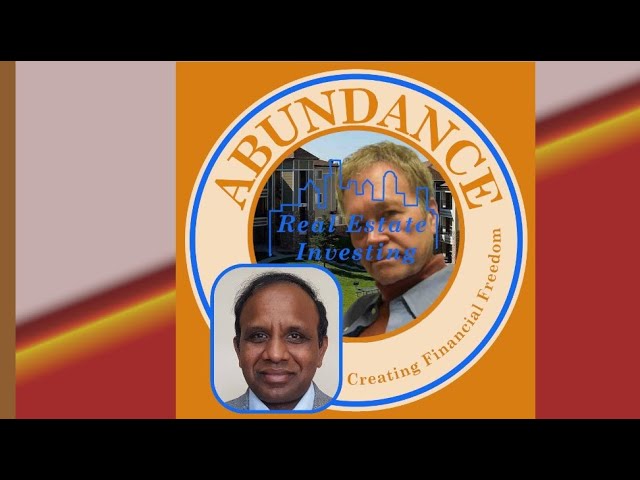
In this REIA podcast episode, host Dr. Allen Lomax interviews Sridhar Sannidhi, an IT professional turned commercial multifamily real‑estate syndicator. Sridhar recounts his early fascination with Silicon Valley, the pivotal realization that cash‑flow‑generating assets are essential, and how a series of setbacks in single‑family purchases led him to multifamily syndication by accident. He describes his first 96‑unit acquisition, raising 80% of the capital from 20 close friends, and partnering with an experienced investor met at an IRA‑custodian event. Sridhar explains how leveraging non‑recourse loans from banks and agencies (Fannie Mae, Freddie Mac) enabled him to scale to over 2,500 units across 8 syndications, primarily in Texas with plans to expand across Sunbelt states. He emphasizes the necessity of multifamily as a demand‑driven asset class, outlines essential skills (financial modeling, project management, networking), and stresses that “your network is your net worth.” The conversation also covers his major setbacks—being passed over for promotion, missed entrepreneurial ideas, and the importance of choosing the right partners. Contact information (growwealth2retire.com, shridhar@growwealth2retire.com) is provided for listeners interested in learning more.
Chapters
Welcome to Real Estate Investing Abundance, the show for busy, fulfilled professionals like you to learn how to develop financial independence built on solid passive real estate investments. Now here is your host, Dr. Allen Lomax.
Hello, enlightened investors. Thank you for being with us today. I'm your host, Dr. Allen, and I am thrilled to explore how we can transition From a salaried employee to a financially independent commercial real estate investor. And there is no better person to lead us to this path of financial independence than our guest, Sridhar Sainidi. Sridhar is an IT professional, graduate in computers and information management, an entrepreneur, and a nature lover. Through real estate syndication, Sridhar helps investors progress to financial freedom. So Sridhar, before we get into real estate, share a memorable experience from your formative years that helped you to be the person you are today.
Thanks, Allen. Thanks for hosting me. Hi listeners, my name is Sridhar Saneedi. The very first experience I had was like when I was growing up, I got into IT, information technology, and I was working with a steel plant in computerizing all the branch offices of marketing. And then I decided to explore bigger and better, and I came to United States. When I came to United States, I landed in Silicon Valley. The moment I landed in Silicon Valley, I saw all these big firms, which I was learning about all those technologies, and I saw their headquarters. And I was so thrilled to work in that Silicon Valley area and see the vibe there with people, like how active they are in doing new things, exploring new stuff. And also the whole environment was so beautiful. California was so beautiful then. Of course, now it has some setbacks, but it was so beautiful that that was like a dream come true experience for me when I landed in Silicon Valley. And particularly Santa Clara, Sunnyvale area.
Yeah, California gets kind of a bad rap these days, but it's a beautiful state. I mean, in terms of climate, I think it's one of the most beautiful places in the country. And it still has a whole lot to offer in spite of what people say about the state. Well, Sridhar, we're so glad you're here today. And I'm really looking forward to exploring your journey here from W-2 to financial independence. So start us off here with this aspect of cash flow in conjunction to real estate investing and tell us why that is an important component to the investment process.
That's a very good question. So initially I was not aware of the importance of cash flow. I was thinking that invest in something And then wait for a period of time to get the returns. And even in the stock market also, I was looking to invest and then say, oh, I need to wait for 2 years. And later I realized that after a couple of investments, my money is gone. So I said, okay, this is not the way to do. I need to get some money to invest again. So that is when I learned the importance of cash flow. So any asset you invest in, it should generate some cash. So that I can start reinvesting and then start growing my wealth or start building my portfolio of investments. So I did more research on which sectors give more cash flow and started focusing on them.
Yeah, it is such an important component, particularly in real estate. And oftentimes as neophytes, we often overlook that really important component. We think, oh wow, we've got a piece of property here. And oh, it's going to appreciate and it's going to bring us so much cash. And that's wonderful if that happens. It doesn't necessarily though. Well, why commercial real estate in particular? And why are you focusing on, in that commercial segment, why multifamily?
Entry into multifamily happened by an accident, I can say. I was working in Wall Street. I worked there for 18 years, and I always wanted to invest or do some entrepreneurial things, but Wall Street demands a lot of time and energy. So finally, I relocated to Texas after staying there for 18 years, and then I freed up some time. So I started looking into doing small real estate activities, like buying single-family homes or townhomes type of thing. I almost tried for a year and I could not buy a single property. Everywhere I went, like 20 people outbid me on the property.
Wow.
Being new to this area, I was not sure what price level I should go in and all that. So I was being a little conservative. I think maybe that is why I didn't get any property. One way it is a blessing. So then I started exploring, if there are so many people challenging me in this market, what should I do so that I will have a little bit less competition, yet a better success rate? So I started looking into motels, hotels, retail space, et cetera. But people are asking for large investments there, half a million dollars, a million dollars. So being new to that industry, I was not comfortable. So in the process, I attended one custodian, like IRA custodian meet, and I came across a mentor, and then he talked about the multifamily. So I felt it's very interesting. So very important thing is it does the cash flow, which I always wanted. And second thing is I can buy bigger property rather than what I was originally aiming for. Those are the two things really fascinated me and to jump into multifamily. Immediately I invested in two deals passively. And after seeing the first check, I said, oh, this is working. Let me jump into an active role and then start buying. So I found a partner and started buying apartment complexes and no looking back.
Well, let's fill our viewers and listeners here a little bit on the details of that journey. Certainly multifamily properties are going to be in the multimillion-dollar range. And so how did you do that as an individual? Just take us through the nitty-gritty of that first acquisition.
When I jumped into the multifamily foray, I didn't have experience. So I found another partner. who might get 6 syndications. So we decided that we should go for bigger and more real value add. So we pursued a 96-unit apartment complex in a tier 2 market. And initial thing was, since I don't have experience in the industry, my biggest contribution would be to raise funds. So I reached out to 20 close friends and said, hey, I'm getting into this market, this particular business, would you like to invest with me? So they know me, they know how sincerely I work on this project, so they trusted me. So they gave me the funding for the first project, which we are going to full cycle this year. It's really, really big motivator for me. After getting that funding, I Originally, I was not sure. So I was able to raise the funds for the whole project, literally, maybe 80+% of it. So that gave me the confidence to get into more and more deals. And here I am right now.
Fascinating. So in this first endeavor, you partnered with another individual who actually had had experience in terms of apartment investing and in the syndication process. And so you divided up the work and he was apparently on the acquisition side of that primarily and was putting the deal together and being the, I guess, the boots on the ground, you could say. And you were the person who was raising the funds for that.
Is—
am I getting that correctly?
Yeah. Up to that acquisition part is correct. After that, I wanted to learn the business and I wanted to learn what challenges it poses. So I continuously go there and I continuously monitor the activities of the asset management and property management to that property. So I go frequently and see what can I contribute in the whole deal, even though I was instrumental in raising the funds. But I'm very involved in the whole cycle.
We'll be right back after a brief announcement. Are you a busy professional passionate about the work of your calling, yet realize that even though you love what you are doing, you're exchanging your time for money? You know that if you were to lose the ability to exchange time for money, your financial wellbeing will be in jeopardy. If you can relate, I have great news. Steve Tucker Capital is an investment company designed for professionals to develop financial independence built on solid passive real estate investments. Remove the anxiety of an uncertain financial future and go to steetalker.com. Get your free one-page, 10-step guide to passive real estate investing. Okay. So you took it as an opportunity to not only get into the investment, but you have remained an active investor so that you could learn on the job and be able to actually go through the entire process on your own if you had to do that. Okay. So that helps us to understand the situation here and how it all began there. And so since that time, that was your first acquisition and you have gone full cycle with that acquisition and you have turned, and you have, I think you said 5 other complexes that you have invested in, something like that?
No, with that partner, I did 5 other syndications, but I completed 8 other syndications after that.
8 other syndications. Okay. So you are in the full swing of it now, and quite a journey from being a neophyte investor to having invested in 8 different complexes. So you have a lot to share with us. Well, share with us a little bit about How leverage helps to accelerate wealth growth.
Sure. So my original thought process of going to single-family would have allowed me to buy maybe at the most 10 units. After that, I think getting a loan would be a real challenge unless I paid the units again and then recycle the money into the next one. Here, there is no such restriction. So the leverage is always there, like 80% or 75% of the money comes from either a bank or agency. When I say agency, Fannie Mae, Freddie Mac Corporation. So we can get a loan and then we can continue the process. There is no restriction on number of loans we can take. So also the amount of loan also is not a big challenge because the asset is collateral. We go for non-recourse loans. Non-recourse means there is no personal liability mostly. It is all the asset is the collateral. for those types of loans. So that allowed me to grow faster. So in 8 syndications together, roughly, I'm in 2,300+ units as a general partner, and then 200 units as a construction deal I'm closing. So with that, it would be around 2,500+ units as a general partner, and still acquiring assets at a faster pace. So COVID kind of impacted a little bit. So we were able to close only one deal that year, We still closed one deal. After that, I started ramping up acquisitions again. So in a nutshell, the leverage really helped me to scale up my business, scale up my activities, and go for bigger and better opportunities.
Are most of your acquisitions in the Texas area, or?
Most of them are in Texas. One is in Tennessee. So I'm slowly leaping into other areas. So slowly want to see other Sunbelt state opportunities. Learning other markets. Eventually I want to be in all Sunbelt states.
That's some interesting trajectory there. And what has this been? What, 5 years, 5, 6 years? Is this what we're talking about from the first acquisition?
40 years.
40 years.
Okay.
Amazing work there. Well, you focus on multifamily. There are certainly other assets out there that a lot of investors are interested in, interested in, from mobile home parks to storage units to office space, so on and so forth, but you focus on multifamily. Why is that?
It's just a necessity segment, right? So when people need it, they will buy it irrespective of market condition, whether it is in a depression or whether it is in a real rally, it doesn't matter. So people need a place to stay. So that's why that segment has a strong potential to grow continuously. Population is growing, and the number of apartment complexes that are built are growing, but sometimes it's not catching up with the demand. And also, there's so much immigration going on. So if we consider all that, the demand is going to stay there for a while. And also, the new generation population, right, youngsters, mostly they're preferring to stay in apartments and explore different cities travel to different areas and then experience different lifestyles. So considering that, I think this segment is going to do well. So that's why I focused on multifamily. I explored storage also. One day I will get into storage business too. But as of now, I want to grow in this business substantially and then slowly leap in, slowly jump into other segments.
You know, it sounds like a reasonable strategy, one that you can do at your own pace and without a tremendous risk to your investment portfolio. Stepping from one spot where you're very comfortable into another segment can be challenging, but if you do it incrementally like you're planning to do, it makes for good advice there. So what kind of educational requirements are there and what Do you as an investor need to know before stepping into your first commercial multifamily real estate investment?
A lot of people say that you don't need any experience to get into the business, but I don't agree 100%. Definitely some education in the area will definitely help on skills like working with Excel or Google Sheets, right? Playing with the numbers and see how the things work, right? That is very, very important in the business. Yes, of course you can hire somebody to look all that, but when you want to take the decisions, quick decisions, right, knowledge about all this is really good. And also project management. You don't need to be an expert or you don't need to be very certified in the project management, but you should know how to prioritize your tasks and how to address certain issues. That is also a very good skill to have to start with. Learn how to do networking. A lot of people don't want to talk to others and they want to stay with themselves. But in this business, your network is your net worth. So you need to reach out to other people. So the social skills are important. So even when one is an introvert, I think slowly he or she should start developing the social skills of communicating with others and being able to explain to them what your business is and then how we can help that individual. to achieve this financial freedom is also crucial. So you may not need all the skills on day one, but the better skillset you have, the better equipped you are with, the faster your growth would be. So there's so many sources to learn these skillsets because you don't need to go to a college or anything like that nowadays. Most of these skills are available online for free, so they can learn and jump in and start attending the meetups, local meetups, real estate meetups, And start listening to all these people talk about. So that gives you a little bit of an edge in speeding up the activities towards multifamily business.
So Sridhar, you did mention networking, and I guess every investor I talked to in the commercial real estate segment is always bringing up that aspect of networking and how important that is, and that I hear it over and over again. Your network is your net worth. Well, you gave us this example of your first investment was with a partner. Just share us the background story on that. How did you meet your partner? How did you all come to the realization that you would make a good team, that you could actually put things together as a partnership?
That's a very good question for most of the day-to-day activities, you need to have the right partner to do the business. Otherwise, it will have different consequences in the business. In our case, we both attended that event, that custodian IRA event. So we sat next to each other and we were talking, and then we kind of felt the same type of feeling towards multifamily. So he was also fascinated. By then, he already did a few deals, but he was doing smaller. Like 30 units, 40 units like that. I challenged him, why do you need to do 30? If this is true, why can't we go bigger and do faster, bigger and faster? So he kind of liked that idea. Then I said, when you want to do bigger and faster, obviously since you are doing solo, you are only doing 40, 30 units. Let's team up together and then go for big. Then immediately we looked at 96. After that, the next deal is 200 units. After that, again, 200, then 400, 400, like that. So from '96, within a year, year and a half, we started acquiring 400+ units. No hesitation, I would say, we could scale up. Now, he got bigger confidence. Now he's going solo, and then he started doing 1,000 units on his own. And now I'm still continuing at 400 level, but very soon I would also want to go at that level, 1,000-unit acquisition.
That's very interesting how just incidentally you just happened to meet at an event. You just happened to sit next to one another. And from that very informal connection grew a very profitable relationship that has been beneficial to both of you. And, and you both had something to give to that relationship. He'd had a little bit of multifamily experience. But he didn't have the big vision to take his knowledge and skills to that next level. And it took your vision to actually bring that partnership together, to actually bring down those bigger and, and more productive deals. Interesting story there, Sridhar. So Sridhar, tell our viewers and listeners how they can get in touch with you. You certainly have some very good things to offer. So how can we get in touch with you?
Yeah, definitely. They can get onto my website. That is easiest nowadays, right? First thing people search is the website. My website is www.growwealth2retire.com. Growwealth2retire.com. That's my website. They can reach out to me via email. My first name, shridhar@growwealth2retire.com.
Well, excellent. Well, Shridhar, just one last question here, and that is, Share with us one of your most difficult setbacks in life and how'd you come through that time and what was the major lesson you learned from that experience?
Yeah, in the corporate world, the most common thing is we look for the growth and look for promotions and all that, right? So I worked really hard. I put like 18 hours, 16 hours a day type work activity. But end of the day, I didn't get promoted because they have some obligation to give promotion to a certain segment. So they got— the other gentleman got the promotion. That really pissed me off. So then I quit the company immediately. And then I started thinking, do I need to work like this? So if I continue this, everywhere I go, I will have the same challenge. I do put my effort, but when it comes to promotion, something will push me back.
Promotions are in somebody else's hands always.
Always. So that was a setback in the sense like I worked hard, but didn't get it. So I took it as a challenge. Then I left that organization, joined a different organization. And then from there, started thinking about different business opportunities because at the same time I need to pay the bills. So I continued in the corporate world like that and started working on a couple of ventures. And then those ventures were really good ideas, But people were not ready to work with me. And in every instance, right after working for a couple of months, people would start dropping off because they didn't feel the same passion what I felt. And had I completed those missions, I would've been billionaire. So some of those is like, very first idea was like around 25 years back, peer-to-peer lending idea was there. We developed a peer-to-peer lending concept, but people who are like, who People were questioning the whole ideas. I started questioning after a while, saying that who is going to guarantee all these things and all that? I kind of explained to them that we can figure it out, but we can first form the business and we can see how and what we can do and learn throughout the business. That was a setback at that time that I didn't pick the right partners. But today it's a multibillion-dollar business. Like that, I lost 3, 4 big ideas and all those ideas really, really making billions of dollars to the entrepreneurs. So lessons learned, like that I need to pick the right partner when I have the new idea. So this multifamily is my launchpad to grow wealth. And then eventually I want to pursue some of those passions that I still want to be a big entrepreneur and then go big on some of those ideas.
I think a lot of visionaries like yourself, those are hard lessons to learn because Visionaries can see so clearly what is out there and what is possible. But, you know, visionaries are such a small group of people and it's— and finding those people to help execute it is always a challenge for visionaries. But you're gonna get there and you're on that right track. So that's exciting to hear those things. Well, it has been very interesting, Sridhar, visiting with you today. Thank you. And we're going to have to stay in touch. I want to watch those visionary ideas of yours come to fruition. So thanks for being with us today, and thanks for being a part of our show.
Thanks, Ellen, for hosting me. It was a real pleasure talking to you and talking to your listeners.
Thank you for tuning in to Real Estate Investing Abundance, brought to you by Seed Talker. Capital, a company working for passionate professionals like you to develop financial independence built on solid passive real estate investments. As part of our efforts to make the world a better place, Steed Talker Capital contributes to activities and organizations committed to better understand the equine. These endeavors attempt to enhance the human treatment of horses worldwide. Steed Talker Capital, working for a world where all creatures great and small flourish abundantly. For resources to develop your financial independence, connect with us at At stevetucker.com.
More from Allen



Stop Worrying About Retirement: Build a Better Plan with Patrick Negado - Ep-580

Hard Assets, Hard Money, and Building Real Wealth in Uncertain Times with Ben Reinberg - Ep- 579

Partner at Blockchain Coinvestors (1,500+ Startup Portfolio) with Mitch Mechigian - Ep- 578

Thrive in Any Market: The Wicked Smart Blueprint with Chris Prefontaine - Ep- 577

Train Your Money: How Purpose-Driven Finance Builds Lasting Wealth and Impact with Hillary Seiler
