REIA 208 Jeffrey Donis: Investing in apartments in your 20s
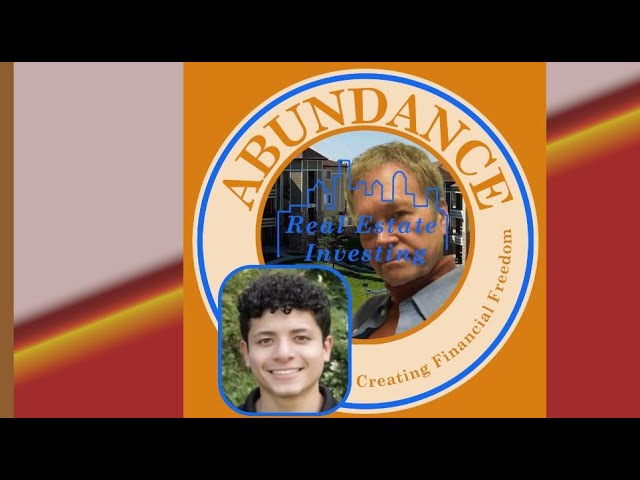
In this episode of Real Estate Investing Abundance, host Dr. Allen Lomax interviews Jeffrey Donis, a young real‑estate investor and syndicator. Jeffrey shares how his single‑mother upbringing and trips to Guatemala forged a personal mission to retire his mother and help families in low‑income countries. He explains apartment syndication—pooling capital from passive investors to acquire 100+ unit multifamily properties—while detailing the markets they target (Georgia, Florida, Texas, North Carolina) and the focus on B‑ and C‑class value‑add assets. The conversation traces his path from college‑age wholesaling, intensive cold‑calling (up to 1,000 calls per week), and mentorships that taught creative financing, to the pivotal shift from single‑family deals to multifamily syndication after studying Joe Fairless’s “Best Ever Apartment Syndication Book.” Jeffrey discusses overcoming limiting beliefs, the importance of mindset, and the role of mastermind groups in accelerating his learning curve. He emphasizes the advantages of starting early—low liabilities, time to fail, and the ability to secure financial, time, and location freedom for himself and others. Setbacks such as repeated rejection from school soccer teams taught him personal responsibility. Finally, he outlines his long‑term vision of financial independence, helping others achieve the same freedoms, and giving back through education, while providing listeners with resources: the Donis Investment Group playbook website and the Real Estate Monopoly Podcast.
Chapters
Welcome to Real Estate Investing Abundance, the show for busy, fulfilled professionals like you to learn how to develop financial independence built on solid passive real estate investments. Now here is your host, Dr. Allen Lomax.
Hello, enlightened investors. Delighted to be back with you today as we take a look at How you can invest in your 20s. Jeffrey Donis is a real estate investor and syndicator. His goal, in conjunction with his brothers who are his partner, is to empower others to achieve their financial goals through apartment investing. The Donis brothers' passion for helping people began at an early age and has bonded them as the brothers through their business and partnership. At the Donis Investment Group, Jeffrey is responsible for investor relations and raising capital. So Jeffrey, so glad you could be with us today and start us off by sharing a memorable experience that helped you to be who you are today.
Oh, definitely. And I appreciate you having me on, Alan. The first thing that comes to mind when you ask me what a memorable experience was, um, I grew up playing soccer. So I grew up playing travel soccer, which I say growing up, but it literally wasn't that long ago, maybe a handful of years ago. And I have a single mother, so when I was growing up, she would take me to practice and then my older brother to practice. And keep in mind, she'd work all day every day of the week. So right when she'd get home, she would then pick us up with really out without eating. She'd like ask us to bring some snacks. She then would drop him off. And then take me to my practice and then go back to get him. We'd be at different fields. So she would literally be doing this since I was little, and she wouldn't get home until 8 o'clock just to repeat the same thing the next day. And what that taught me was, one, I'd see all the other kids getting picked up by either one of their parents or both their parents, and I never really questioned it until it kept happening. I mean, I was a little bit embarrassed at first, but it showed me that, one, my family may be a little bit different, but also I should be very appreciative of the mother that I have. So that kind of sparked my brothers and I, our similar why, which is to retire our single mother. That's why we got into real estate in the first place. And that's the first thing that came to mind when you asked me that question.
Well, interesting experience. And those early experiences always do impact us, even though we may not consciously think about it. So thank you, Jeffrey, for sharing that with us.
For sure.
Jeffrey, you have started out investing at a very young age. I wished I'd known you when I was in my 20s. I didn't get started until much later. Well, talk to us about syndicating apartments in conjunction with your brothers and why it is you and your brothers have gotten into real estate investing.
Yeah, what syndication is, if your audience isn't familiar with it, we pretty much pull together a group of investors' money. Typically, these could be working professionals, other real estate investors, just people that have some type of interest in real estate and are looking for passive investment opportunities. So we'll then go and buy a property. You can syndicate anything, but we focus on 100+ unit apartment complexes. And I live in North Carolina, which is one of the markets that we look in, but we currently only own in Georgia, Florida, And then on one market in Texas, but we're looking for B, C-class properties that value-add opportunities, as a lot of people like to say. But that's what we did now. But the reason we got into it, and we got into it through single-family, was to first and foremost retire our single mother. And once we haven't achieved it yet, but once we do, after that, it's for us to help other people live a life by design as well as ourselves. as well as eventually start helping people. My mom is from Guatemala, so we do have a lot of family that still live there. We wanna help them and people like them in third world countries that don't have the opportunities that we have. So that's really, I think, just why we started this.
Jeffrey, tell us how it is that you got started. Is it just you and one brother or are there several brothers involved?
Yeah, so I have 2 brothers, a twin brother, And an older brother. The way that we all got started, I was a college freshman a few years ago, and my brother found wholesaling real estate on YouTube. And once we went to Guatemala for the first time, before then, we kind of kept kicking the can down the road saying we had time, we can do it during the summer when we're not in school. But it was halfway through my freshman year when we actually went to Guatemala and lived there for like 3 weeks with my family. And they're very, very happy and grateful people and have lots of love, but they just— it's not the same in regards to the environment that they live in. It's an impoverished condition compared to what we have. And growing up, we were considered low income, but compared to what other people have in those third world countries, it's like night and day. So we knew we were— immediately, that was the first thing that we realized. We had opportunities that they don't have. Building a business in America is a lot easier than it is in country like Guatemala. So when we got back, we decided to not continue doing what we were doing, and we were going to start taking action. So my brother had already learned about wholesaling. He'd been listening to podcasts. I started reading books, started listening to more podcasts, watching YouTube videos. And that's kind of what set the sail for real estate in general. But we started with wholesaling, did some cold calling. Eventually, the pandemic hit and we were sent home from school. So now we had less distractions because at first we were just putting in a few hours a day each cold calling. But now we were all in the same house full-time. Obviously school was still there, but we were kind of putting that on the back burner. I eventually ended up leaving school once I closed on my first deal. We were cold calling from 9:00 AM to 8:00 PM all day, just getting as many leads as we could. And that helped us kind of progress faster so that way We ended up closing a fair amount of deals that first year in wholesaling. And we also joined some mentorships to learn different strategies like creative financing. And I can stop there, but that's how we got to the point where we broke into real estate.
Wow. That's a lot of cold calling. And so how did you deal with that? I mean, cold calling is rejection after rejection after rejection. How did you deal with that rejection?
Yeah, no, that's a great question. I think it's, it's Interesting, because I started when I was in a dorm room and I had a roommate who wasn't doing what I was doing. He was just doing school, right? So he'd see me cold calling and he'd hear it because I wouldn't have headphones in. So he'd hear them cursing at me sometimes, which is reality of it. Cold calling's a hard reality. But I could see, for me, eventually you kind of just build this thick skin and you get so used to being rejected. Also, I was educating myself while I was doing it. I was either reading, listening to a podcast, Which obviously it makes it something that turns something that can be seen as negative into a positive, which makes it more bearable. But I was also learning more about what I was doing. So I knew this was like, one, it's a numbers game. So the more people I talk to, the more nos I get, the closer I'll get to a yes. So I already understood that. So every no I got, I wasn't going to take it personally. I was just going to get to the next person. All of this kind of helped me overcome that fear. And after doing it so many times, there was a saying that if you do like 1,000 cold calls, you become a master at it. I was probably doing like 1,000 a week. So the first week, I mean, I crushed that number and just kept going. So eventually it just becomes really normal and really easy, honestly. And that's a skill that I've now transitioned and applied into my new business as well, because honestly, I hadn't done many things harder than cold calling, or at least scarier than cold calling.
For sure. And I mean, there had to have been tremendous motivation and, and of course, a hope that at the end of the tunnel, there was some light. The podcast and things you were learning and, and listening to certainly helped to bring that motivation to bear. Well, Jeffrey, you mentioned slightly mentorship. Tell us about the importance of mentorship and how did you develop your first mentorships?
Yeah, great question. So just, I think anyone that's new to real estate or new to anything, there's either some type of like For me, I was obviously new and I was young, and I'm still young, but I knew that there's people out there doing what I want to do and I don't necessarily have to reinvent the wheel. And I heard that in all the books and podcasts I was reading and listening to. So I understood, okay, well, if I can just find someone that is in alignment with my values, my goals, and then at the same time makes sense for both of us to kind of work together, then I'm willing to give some type of value in exchange for that mentorship. For For me, I wanted to get to my goals fast, and I didn't necessarily want to have to fail and do it all by myself. I was okay with spending some money. So once we closed on our first deal, which ended up being the biggest wholesale deal we did, we already were watching YouTube videos of an individual who was putting a lot of content out there. He was putting so much value for free that I could only imagine what he'd do if I actually joined his mentorship, which ended up being very worth it because we paid a certain amount of money, and then we were able to get 2 rentals on creative financing. One of them was a seller finance deal. One of them was a subject-to deal. And those are properties that we honestly got for almost— it was almost no money down, not including closing costs, and it cash flowed. So we made our money back on that mentorship and we 30x our money just based on that one investment. And I continued to invest in mentorship. I'm now in 3 to 4 different mastermind groups at the moment. Kind of hard to keep track of them, but as you different things. I see people that are doing things very well. I didn't necessarily go the traditional route for education in regards to going to school, but I'm now paying more money than I would've spent in school on real estate courses and joining different mastermind groups because I just want to surround myself with people that are doing things that I want to do at a high level. And I've noticed that's how my, I guess, my learning curve has been cut by a lot, but just by surrounding myself with people that are doing it.
Well, Jeffrey, you got into this initial mentorship and then into a couple of single-family or at least small apartment units. How did you move from that single-family category into the multifamily category?
Yeah, I'm happy you asked. So always it was like we were doing wholesaling, we were pumping out marketing, we had some VAs doing cold calling. And Single-family is awesome. It was going well for us, but we just knew that it was one, it was very transactional. I didn't like putting out all these fires for just one closing. And also I was listening to— I'm always educating, so I kept hearing people say, I wish I would've gone bigger, faster. And the only thing holding them back were things like limiting beliefs, which we all are guilty of, especially myself and my brothers. that's the one thing we had to overcome. So once we realized the end goal for us is to get into multifamily and/or commercial real estate, we asked ourselves, what's holding us back? And it was these things. It was not having enough money, not being old enough, not being experienced enough, and/or not being educated enough. And all of those, at the end of the day, were limiting beliefs in our opinion. Maybe they're all true, but at the end of the day, it was a limiting belief. So we realized, okay, Let's start educating ourselves because we want to end up here. So we ended up just stopping full-fledged all the marketing we were doing in single-family. We took those profits, which wasn't a substantial amount, but it was enough to at least keep us alive for the next few months without knowing if we were going to make any income. We then found a book. It was called The Best Ever Apartment Syndication Book by Joe Fairless. We listened to it on Audible. We treated it like a textbook, took We took some notes and understood, okay, this is the game plan of how we break into apartment syndication. Because we knew that we didn't have the money to go buy them ourselves, but you can raise money to then go and buy the apartments. We quickly realized we were trying to do it by ourselves, but we realized that you're going to need a track record to be able to be taken seriously by the gatekeepers of most of their commercial real estate deals, which are real estate brokers. They're typically not going to work with you Unless you have a track record in that space, because what do brokers want? They want their commission. And the way they get that is if you close. Now, if they don't think you can close, they're not going to send you a deal. And the way they base that, I guess, the conception of you is on your track record. So if you don't have one, it may be hard for them to take you seriously, which we didn't have at the time. So I then joined one mastermind group that gave me a lot of education. I'd say the majority and the foundation of the education I got. was from that first one in the multifamily space. But the second one I joined was a lot more expensive, but that one gave me access to an individual who would be willing to partner with me on deals, be willing to leverage his track record because we would be partnering on the deals together. So that's how I got into it. That's exactly what we did.
Jeffrey, interesting trajectory there. It's not an unusual trajectory. It is somewhat unusual with someone from your background who is as young as you are, who, who didn't have any family members, didn't have any friends in the real estate investing business. So it took a lot of overcoming a lot of limiting beliefs, obviously, that are so easy for all of us to develop. You talked a little bit about your why. Tell us a little bit more about your why and how that keeps you going.
Yeah, so my mom, she still works. What she does is she cleans houses. That's the reason we got into real estate was to retire her because it's a very hard job to do. I mean, she's paid the bills and been able to take care of my brothers and I for our entire lives. But now we want to not only let her retire, but also kind of pay her back in a way. And she's an awesome person, so we think she deserves it. That's the first why, but we know that's going to be accomplished soon. So the next step after that is, okay, once we do that, what's going to keep us going? There's a few different things. The first one is living a life by design for ourselves. I like to think of the 3 freedoms, the time freedom, being able to do what I want with my time, location freedom, being able to spend my time where I want, doesn't matter where it is. I want to be like a traveling nomad when I'm young, so I want to experience the world, and then financial freedom. And I can only do that, in my opinion, is if I'm able to build my business to a point where I'm able to do all those things. So I want to help other people do that as well. I see a lot of people, whether that's financial freedom, location freedom, or time freedom, that's something I want to do. And then I read a book when I was in Guatemala for the first time called Leaving Microsoft to Change the World by a guy named John Wood. And in the book, he explained that he left a highly— he was a highly paid executive at Microsoft and he ended up leaving his job to go start a nonprofit that had no real way of knowing it was going to work. And a lot of people in his life kind of left him once he made that decision. Because they were like, you're crazy. Like, we have this lifestyle. Why are you leaving this? He ended up— the nonprofit was based on was going to third world countries like Nepal, Guatemala, and creating libraries and schools. Because if you're able to educate a young lady in an impoverished society, based on the book, he explained that you're able to pull that family out of poverty. You're more likely to if the woman is educated.
Mm-hmm.
Because she'll have offspring and she's more likely to teach her kids how to read. So that, that kind of sparked my mind. Like, I know what reading and self-education did for me in a short span of time. If I can provide other people that kind of access to information, I can only imagine what it would do. So that's, that's like the long-term goal.
Fabulous goals, Jeffrey. You have a lot to offer. Tell our viewers and listeners what it is that you actually have to offer, how they can get in touch with you to take advantage of that.
Yeah. If you're interested in learning more about passively investing in real estate, feel free to visit this link, www.donisinvestmentgroup.com. That's donisinvestmentgroup.com/playbook. We also have a podcast, The Real Estate Monopoly Podcast, where you can hear our stories and us talking to other multifamily professionals. And then you can find us on social media. all platforms at Donis, D-O-N-I-S, Brothers.
I was just hearing or read something just a couple of days ago, and the average income in Colombia— this isn't Guatemala, but in Colombia, it's about $84 a day. And I'm assuming it's somewhere close to that, or maybe even less in Guatemala. How did your mother get to the United States? I know it's not an easy trek.
No, it wasn't. To be completely transparent, she came here when she was 18 illegally. She traveled illegally. She is legal now. She's gone through like the process, but most of her family members are still there because it's not easy to come over here. And when I was there for the first time, I talked to all of them and I kind of ignorantly asked them like, how come you guys don't come to the US? Uh, what's the process like? It's almost like winning the lottery for anyone that is even able to get like a visa or to apply for citizenship here, it's almost like people don't even try because it's almost impossible based on what they were telling me. Now, I have done my research, but that's something that I think, like, I'm blessed to be here. There's a reason that I'm here. I don't believe in coincidences. And I was one of the only ones in her family to even be born here. So to have the ability to go back and forth and be in the United States and have the opportunities here, I don't want to take it for granted.
Well, and obviously you do not. Jeffrey, Tell us why it's important to start early and to be consistent.
Yeah, I would say everyone's going to start where I guess where they're supposed to and where they're in their own journey. But for me, the benefit of starting early was one, I don't have that many liabilities right now. I don't have a family. I don't have kids, right? I don't have like that many expenses. So it's not like I'm supporting anyone but myself. And then I also have a lot of time and energy to put towards what I want. So I think, and also I think if I can fail hundreds of times by the time that I'm 25 or 30, I'll still have a lot more time to be able to succeed. And the quicker you can fail, the quicker you can succeed. So that's why I think it's important to start early. Also, I want to be able to enjoy life and do things when I do have a family. I don't want to be at the point where I have the family and I'm then trying to become financially free or to build a business while I have kids. I do want to spend time with the kids when I, once I have them. So I think there's a time and place for everything. Um, and right now I definitely don't want to have kids. Uh, so like in the future, that once that time comes, I know I'll be financially free. I know I'll have the ability to give them my undivided attention and time. Um, and hopefully be able to spend a lot more time with them.
Jeffrey, tell us about one of your greatest setbacks in life and how you dealt with that. And what did you learn from that?
So I've had a lot of setbacks, But as a kid, I would always try out for the soccer team and I never made it. Every year, never made it. And I used to blame other people. I used to think like it wasn't my fault. I'd always kind of come up with some weird reasoning as to why I wasn't chosen. But now looking back, and I honestly wish I was reading all these books that I'm reading now as an athlete because all the principles apply. But I started to realize that one, the quicker you can realize that you're responsible for everything that happens in your life, even if you're technically not, Just take responsibility for it because then people say like, power is— definition of power is having control of your own life. And I want to be in control of my life. So taking responsibility for everything that happens to me, that's something that I wasn't doing back then and I had to learn that the hard way. And now it doesn't matter what happens. It could be like a car accident or something. It's my fault. I could have left 5 minutes before or something. Don't just blame it on someone else. So I'd say that's probably one of the biggest setbacks because it used to really eat at me. And now, at least I'm like, understanding that it's my fault, whatever happens.
Enlightened Investors, it has been a delight being with you once again. And I look forward to being with you next time. Jeffrey, thank you for being with us today. It's been a pleasure.
Thank you, Alan. I appreciate your time.
Thank you for tuning in to Real Estate Investing Abundance, brought to you by Steve Talker Capital, a company working for passionate professionals like you to develop financial independence built on solid passive real estate investments. As part of our efforts to make the world a better place, Steve Talker Capital contributes to activities and organizations committed to better understand the equine. These endeavors attempt to enhance the human treatment of horses worldwide. Steve Talker Capital, working for a world where all creatures great and small flourish abundantly. For resources to develop your financial independence, connect with us at stevetalker.com.
More from Allen



Stop Worrying About Retirement: Build a Better Plan with Patrick Negado - Ep-580

Hard Assets, Hard Money, and Building Real Wealth in Uncertain Times with Ben Reinberg - Ep- 579

Partner at Blockchain Coinvestors (1,500+ Startup Portfolio) with Mitch Mechigian - Ep- 578

Thrive in Any Market: The Wicked Smart Blueprint with Chris Prefontaine - Ep- 577

Train Your Money: How Purpose-Driven Finance Builds Lasting Wealth and Impact with Hillary Seiler
