Evan Carmichael's Mission: To Change 1 Billion Lives
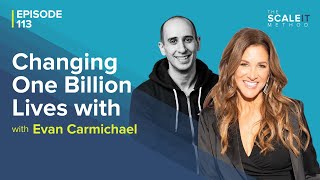
Evan Carmichael talks about building a YouTube channel and scaling a business while staying true to your mission. He discusses overcoming fear and failure, and how aligning what you do with what matters to you changes everything.
Hi, everyone. Welcome to the Scale Up Method, where we teach you to reach the next level in business, build your dream team and scale beyond eight figures. Too many business owners are stuck trying to do everything themselves, and their businesses are suffering as a result. And I don't want you to be one of those people. I'm Alison Maslin, and my company, Pinnacle Global Network, has helped thousands of business owners scale their companies using my framework, the Scale it method. All business owners face similar challenges when it comes to growth. So on this podcast, we are delivering the tactics you need to finally reach that next level in business. Build your dream team and scale beyond eight figures. Today, I am so excited to talk to a dear friend, Evan Carmichael, social media influencer and founder of Evan Carmichael Communications Group. Evan is a renowned entrepreneurial coach and unlike many other entrepreneurial coaches, though, most of Evan's content is posted posted for free on YouTube now, he started his YouTube channel in 2008 and now has over 3.4 million subscribers. And I actually heard him today on a video as well on YouTube. And Evan has been named one of Forbes Top 40 Marketing Talents and one of INK's Top 100 Greatest Leadership Speakers. He's written four books, speaks at conferences and events all over the world. And I wanted to bring Evan on the show because his journey is so closely tied with his mission. His life mission is to help 1 billion entrepreneurs, and he's built a successful, satisfying career that aligns with him and that mission. So as an entrepreneur, you gotta love your company. You've got to be passionate about your products, your services, and your mission. And this is everything that Evan is about. So many entrepreneurs struggle to scale their businesses because they truly don't resonate with their company's goals. And I can't wait to hear what Evan has to say about how to build a company that you're passionate about and that serves you financially. So with all that said, Evan, welcome to the Scale it method.
We're here. It's happening. Thanks for having me, Allison. It's an honor and excited to dive in.
Yeah. So let's go back to the beginning of your entrepreneurial journey because it's so inspiring. You joined a software startup when you got to college, but it really struggled towards the beginning. What was keeping you at that time if you could go back there for a moment from reaching the success you wanted at that company?
Most of it was just feeling like couldn't do it. You know, it's just all. It's all mindset stuff. I wish I knew you, you know, it would have been unlocked and it would have achieved success a lot faster. But I was 19 and I thought nobody would want to talk to a 19 year old kid about their, their problems. And we had software that worked, but I was too embarrassed and ashamed and just afraid of, afraid of letting people down and thought that, you know, we're selling to scientists. It was scientific software. We're selling to scientists who were two, three times my age, had all these PhDs and I felt like they wouldn't want to talk to me. And so I did everything remote. Like I did everything over email because I was afraid to get on the phone and talk to them because my voice sounded really young. I thought they would judge me and all that, that was just all made up. Right. All they really cared about is can I solve their problem. But all the stories that we make up as to why we can't win stay with us. And it wasn't until I started to break those down that we started to have some success.
Yeah, it's so interesting. You know, I started my first business at 19 also, so that's the magic number. And I remember because I was first of all, I didn't see young women at all. And at that time there weren't that many young people running companies like there are today. And I just remember putting a lot of makeup on Evan so I would try to look older when I was talking to these men, you know, with my ad agency. So I totally get that fear. What do you think eventually turned that, you know, turn that insecurity around for you and ultimately turn that company around.
Me quitting on my business partner, you know, we were just struggling for so long and it wasn't working. And when things are going great, it's easy to get along and agree. But when things are not going well, you have different thoughts on what direction the company should take. And yeah, it was, I quit at my business partners. Like worst day of my life was I told my business partner I quit. I just needed to feel like I was a valuable human again and just waking up every day and not getting results. And I got back up the next day and went back to work, you know, so I didn't quit for that long. But I realized I just can't keep going this way. I can't go. I have to find another way to stand. I have to. I didn't want to quit because I thought I would regret it if I quit at this moment. But what I was doing now didn't work. I wish I had a framework to follow and that's what I ended up doing, was I asked myself, it seems silly now, but I asked myself, who's done this before? Because I was trying to figure out everything by myself. So who's built a software company before? And I looked at Bill Gates and how he started Microsoft. It was the first software guy I could think of. And I looked at how he got from 0 to 1, applied some of those strategies, and started to make a little bit of money in my business. That's what ended up, like, by having the model and the systems to follow, I was able to start to accomplish success. When I tried to do everything myself, that's when I was struggling and failed.
Yeah. So interesting. And, you know, obviously that's why we have our scale it method, so you can have something to hold on to. And I know you believe in mentorship as much as I do, that it's just, why would we struggle? But when you're young, you don't know and you think, oh, I have to have all the answers or something's wrong with me, you know, So I was.
Too embarrassed and ashamed to ask for help. I thought I should be smarter than this. It sounds so silly looking back, but that was what was in my head. I should be smart enough to figure this out. And I didn't want people to know that I wasn't being successful. And so I just ended up isolating myself even more. And entrepreneurship is a lonely enough game when you decide to isolate yourself even more just makes it that much more difficult. And it got to the point where I just snapped and said, I quit and then realized something had to change. And, yeah, I wish I had your method back then.
I wasn't at eight figures back then. So there you go. We were both spinning. But I will tell you that many, not just, you know, people at 19, many at 40, 50, 60, business owners are afraid to ask for help. Still, I think it's, you know, in our DNA sometimes that we feel like there is something wrong with us, like we should know this, you know, but how would you know it, you know, if you haven't. If you haven't taken it to that next level. That's why, you know, athletes, even the best athletes, the most talented athletes are, can be lost without a coach. So. But anyway, you obviously figured it out now. You saw you sold that company, correct?
Yep. Sold it when I was 22, then went into venture capital to learn how to. How to raise money, because I never had to raise money. We're at the point of, do we to scale do we raise money and build out a team and acquire a bunch of companies, do a roll up strategy or do we sell? And that was a hard choice, but we decided to sell. A big reason why was my partners wanted to get to the US and that was the easiest way for them. We're in Canada, they wanted to live there. So that was the easiest way to do it. And then I went to venture capital for a couple years just learning the ropes of how to raise money and then started creating content. And it started with my website, but then transitioned to YouTube in 2009 I think was the first video that I put up. And yeah, done a little bit since then.
Just a little. Just a little. And I want to get to that. But I want to talk about kind of a deeper why for you with this content, Because I know for you it's not just putting up content. Like you really live and breathe what this is all about. Your entire career has been based upon your desire to help and believe in others. When did you fully understand this mission?
Wow. I was trying to find a mission statement for my company, a tagline from my website. So maybe I was in my late 20s. I was just trying to figure out what's my company motto. I didn't like what my company motto was. I forget what I had. It was a bunch of stupid stuff. But trying to find out what does my company stand for. And the more I looked into it, the more I realized this shouldn't be just what my company stands for. It should be what I stand for. Me as a human that I bring to my company. And that was a big mindset shift because then like, oh, well, what do I stand for? It's like, we're going down this giant can of worms. Yeah. It's like it wasn't, wasn't ready for that. And then I came down to believe. And it's the thing that I struggled the most with and the thing that I want to still the thing I struggled the most with and what I wanted to try to share and help the world through. And when I, when I found it, I didn't go all in and know that this was the thing. You know, it sounded crazy, like who am I to be the believe guy? You know, know again, the limiting voice and mindset. It's not even our friends or family. It's like us telling ourselves that we can't do something. And I started with just a video. I made a single video and that video ended up being the best video on my channel. Then I did a newsletter and it ended up being the best newsletter that I sent out in terms of response rate. And then I realized this belief thing has something to it. Not because it's the magic word, but it's the right one for me. And I think your purpose comes from your pain. So whatever you struggle the most with is what you want to do to serve others. And as entrepreneurs, we want to then turn it into a business so we can scale and build and impact more people and make a lot of money. But, you know, it's always impact first, at least for me. And, you know, I'm still just making content. For 19 year old Evan, who's struggling to believe in himself and get his company off the ground.
Yeah, that is so powerful. And it's true. It's exactly what I'm doing. My pain was totally burning out, running myself into the ground, running my first company back, you know, in the early 20s. And now I help people create a company so that it can run without them. Isn't it interesting? I think that we wouldn't choose it to go through that pain. We wouldn't say, hey, bring it on, because I really want to struggle. But we just, we grow so much from that and then we're able to take that and pay it forward and prevent others from going through it or at least making the road easier. So I think that's awesome. How do you encourage your audience to align themselves with their mission, their passion to believe? You know, what do you feel? Is that secret sauce?
Yeah. So it starts with figuring out what was the most painful moment in your life. And a lot of entrepreneurs that you have a hard time going backwards and thinking about it, because we don't, we're optimistic, we're positive. Like, why are you sending me back? I don't think about the negative. I want to go build something better. But the point isn't to think back and stay there, to think, hey, you know, you struggled through something to your point, you probably didn't choose it, but you ended up there. And there are millions of people right now who are struggling with that same thing that you struggled with. And the entrepreneurs in us, like, let's go solve that problem. You know, let's go build a better world. Let's make a company and help. And not just help by volunteering, but let's help by building a business that can solve that problem, make more money, build a team, solve it on an even bigger scale. And so what was that most painful moment in your life? And then realizing in that is a seed of the purpose that will never get old. Like, I will want to be helping people believe in themselves till forever. You know, it's like a lifelong mission, purpose, human for me that then I will bring to whatever companies I end up creating. For me, the execution of it becomes changing the environment. So why make videos? Well, because every day you can have Oprah Winfrey or Steve Jobs or Alison coming into your living room, injecting you with a message where you may not ever get to meet those people, but you can learn from them to have success. And the more you're around it, the more you'll be inspired to wake up again and keep going and believe in yourself a little bit more. And I think, as you know, you could have the greatest day of all time yesterday and then wake up. It's like you're kind of starting over. So the habits and the routines and the mindset that you take on a daily basis can make a huge, huge difference.
Yeah, well, I. I love it too, that it just. It. You naturally exude it. Evan. You know, we talk about your genius zone. You know, Gay Hendricks talks about the genius zone. And it is just you're. You're, like, lit up when you do it. And I think that's the key in figuring out, because I think a lot of people, like, well, I just don't know what that is. You know, why do you think, Evan, most people hold themselves back from, let's say, building a business or even in the business they already have, focusing on what they're truly passionate about.
It's just fear. Fear that it's not going to work out. Fear that. Fear that they will be seen, and fear that they won't be seen. People think about making YouTube videos. Like, what if people watch the videos and they get afraid, but they're also afraid that people won't watch the videos. It's like, well, what do you want? We're just living in fear all the time. And I'm introverted and shy. And you may not believe that in a session like this. And a lot of people don't believe it, but I am. So how do you get in front of the camera? Every time I go on stage, I'm nervous to do it. It's service when you can focus on, I'm doing this for other people. I'm doing this that. Hopefully if one person sees this video, watches a speech that I make, that that becomes a meaningful shift for them. And whenever you can align your business around what you're doing today is going to mean something to somebody else. It gives You, I think more courage to show up where if you're only doing it for selfish reasons, you're probably going to quit at some point. So anytime I'm afraid to do something, I just try to figure out, okay, who is this going to help? And if I actually believe that this might help, maybe not the world. We may not believe at that point that it's going to help a billion people. But one person, If I make this video, will I help one person? I can get behind that. And so it gives you the courage to get out there and do it.
Yeah, that's. That is fantastic. And. And really, you know, when we do get into that place to ask ourselves, you know, what if it really isn't about us anyway? You know, what if it's just focusing on them and what they need to hear, you know, and then we can shift that energy. Right. Now, I think some people ignore their true calling, favor of making money. Now, I personally believe you should have both. But why, why is it, do you think, Evan, people confuse this sort of, you know, I'm following my passion or I'm. I'm going to make money. How do you feel like that that might actually hurt people down the road?
Well, think about who our mentors are. Yeah. Like, where do we learn about mentors? Career advice. It's from our teachers and our parents growing up. And did they go and live the life that they want? You know, probably not. It's different, though, now in that I'm 42. The opportunities available to me at 42 compared to my parents at 42 are vastly different. Right. Like, now it's actually possible to go off and build the company and live the life that you want to live, where you had to be just insanely visionary and crazy to do it. When my parents were my age, and so we're still held up a lot by our community and our environment. Who are. They're not living their life that they're proud of, and so their thinking keeps you small. But now we have an opportunity to learn from people like you and people from the people that I model on the channel and say, hey, no, no, you know, it actually is possible. You can do it, but you have to start. You have to take the steps, and you have to overcome those fears. And you're gonna suck at the beginning. Right. Like, we expect to be great out of the gate. Why do you expect to be great out of the gate? Like, expect to suck at the start. You don't get on a snowboard and just nail it down the hill. You're gonna fall 80 times down the hill.
Cool.
It doesn't mean you suck as a human. This is what we as entrepreneurs really struggle with at the beginning when there's a failure. And I did too. Like, why did I quit on my business partner? Because the fact that I suck. Sucked in my company made me internalize it as I suck as a human, and I didn't want to feel like I suck anymore. That's why I said I quit. But just because you failed at the beginning doesn't mean that you will fail as a person. You just have to keep going. You learn from it, and you keep going. All of your heroes, like, everybody watching, whoever your heroes are, they started off with less than what you already have right now, and they just kept going. The difference with me is I just kept going. And eventually you figure it out because you get the skills to make that thing happen.
Wow. Such powerful advice. And I think that's such a good point. And I haven't heard it described that way in that I do think when we fail at something, instead of separating it and going, oh, I just really sucked at that, it doesn't mean that I suck as a human being, you know? Right. It's just an experience you had. It's not your identity of who you are that is. That's really a shift.
I think it comes from expectations. So if somebody's gonna start a podcast like this, they're gonna do an interview show. Cool. You know what a good interview show looks like. You look at Tim Ferriss or Joe Rogan or whoever you look up to, and, like, that's what a good podcast looks like. Cool. I may not be able to do that, but I can be like a B minus version for now. Right. So you don't expect to be A, but you expect to be kind of B. And then you. You do it, and it's not a B minus. It's. It's an F. Like, it's a total. You blank out in front of the camera. You're stumbling all over the place. You're nervous, wreck. You forgot to hit the record on the buttons. Like, it's just a disaster. And because you thought you'd be a B and you end up being an F or a D, you feel like you suck as a human and you don't want to do it anymore or just go in. Expect everything to be a disaster on the first one. Just expect it to totally suck at the beginning and praise yourself for starting. Because the biggest thing most people are missing is just the momentum to keep going because episode three won't suck as much as one and 10 won't suck as much as three and you just slowly get better. And if you can just remember that, that you're going to suck at the beginning, it's going to be terrible. Don't have any expectations. But if you love it and keep going, you'll get the skill set to go off and win.
Evan, I wish I still had the video clips from my first, you know, videotaping years ago. I was so bad. I was so bad. The director would say, okay, I need you to say that. And I go, okay, got it. And then the camera would start and I would just freeze. I would remember and I would forget it. And this went on all day long. It was so painful. But it really just has been doing it over and over and over for so many years. You're. You're exactly right. Thank goodness I didn't stop then. So. But anyway, switching gears a little bit on the, the business side and how you have scaled your company, how do you do it when most of your content is free? How do you generate the bulk of your revenue?
Yeah, I mean, I know we're already bumping up against the clock, so maybe we do a round two to dive deeper too. But think about whatever you're selling. For anybody listening, watching, you want to build a huge business. Whatever you're selling, just put information in front of it. So if you are a coach, if you're a construction company, if you're a manufacturing company, like if you're selling B2B or B2C, there's always a education in front of the sale. Most people are just selling one to one. Somebody calls and you close them or you're at a trade show and you're closing people one at a time. What content allows you to do is sell one to many. So that entire education process, not in a salesy way, information, right? Like people are curious about your thing and you're going to educate them before they'll buy from you. And so treatment YouTube. But any content you're making as education in front of the sale. So the more people watch you, like you know, you trust you, especially for entrepreneurs, your secret ingredient is your stories. Your humanity is the reason why you started this business. You don't even have to be that. You don't need a professional setup like this. You don't have to have, you know, the highest end camera and gear and lights. What matters is your story like you showing up as you people buy from you because they love you and feel like you care about them and as opposed to some giant corporation who's gonna treat them like a number. And so your biggest competitive advantage is your story and your heart. And getting that out with information leads to a flood of people coming in to discover you and end up wanting to work with your company.
Yeah, that's so powerful. And you know, with over 3 million subscribers on YouTube and as we wrap this up, can you just. If there was, there were two things, Evan, that you, you would say, and I know there's many things that you've done to, to scale that channel up so powerfully, what would you narrow down? Like two things. If you were going to be giving tips to those listening that really want to scale up their own YouTube.
Whatever you want to sell, show me the process of you doing it. So if you want, if you are a business coach, show me you coaching. If you are making a specific process, show me you using the product. A lot of people feel like they have to do direct to camera stuff like this by themselves in their office. Not even with, you know, a partner or co host like I need. I hate the idea of sitting in front of the camera and just talking. Cool. Don't do that. Show me you doing the thing coaches should be doing, coaching on camera. It's a lot more fun to do when there's somebody else involved and it actually leads to more sales and engagement for what you're doing. And then second is don't worry so much about the subscribers. For most people, if you're building the business, the goal should be to build the business and so be much more focused on getting the right subscribers to the channel who care about the content you're focused on as opposed to having to have a million subscribers of people who know you. If you focus on the right people, we've got people who are making six figures a month off of the sales from their YouTube channel and they have 300 subscribers. Right. So you can. There you go. Now you got a seven figure business off of 300 subscribers because you're making the right content for the right people and not obsessing over the wrong metrics of just gaining subscribers.
Yeah, it's definitely the quality, not quantity in business. Right. Otherwise those people aren't going to hear you anyway. And so, and just quickly, just quickly.
I know we gotta go, but quality of thought, not quality of production. Most people think, oh, it's got to be highly produced and that's a quality video. It doesn't have to be unless your business is video. If you're in the video production business, your stuff better look fire because that's the industry you're in. But for most entrepreneurs, it's much more about quality of thought. Teach me what you're thinking. Way more important than the quality of production of the video.
Yeah. That is so incredibly powerful. How can people connect with you, Evan?
I'm Evan Carmichael. Most places come look me up.
Okay. Fantastic. This has been amazing and we would love to hear from you on what you think of this episode. What really landed for you most. Evan, thank you so much for being with us today and sharing your insight.
Thank you for having me.
Always.
Great.
All right, take care, Evan. And we will be seeing you all on the next episode of the Scale Up Method. Hi, everyone. Thanks for listening to another episode of the Scale Up Method. A quick reminder about our free masterclass. If you want to build a scalable company that can thrive without you and you're ready to get the support you need to do it, sign up for my masterclass today. And during our time together, I'll teach you the five critical phases you must know in order to scale to eight figures and beyond. Head over to scalemasterclass.com podcast to secure your seat and I'll see you there.
More from Allison

There are 90,000 marketing agencies in the U.S. but 99% aren't worth your money.

Would you leave your comfort zone for the sake of your business? #businessgrowth #scalingbusiness

Are you willing to trust the process to grow your business? #businessgrowth #scalingstrategies

He Built a $150M Company Without Taking a Single Dollar of Outside Capital | Erik Huberman




Wing Lam has run Wahoo's Fish Tacos for 38 years and his hiring rule is simple.


