Founder of UGG Australia Explains How He Created a Global Brand
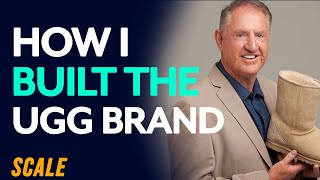
Brian Smith, founder of UGG Australia, talks with entrepreneur Allison Maslan about building the brand from scratch. He covers the early challenges, how the business grew, what worked in marketing, and what success actually means to him.
Welcome to Ally and you, the Business, Success and Lifestyle Show. I'm Alison Maslin. My friends call me Ally. I am a serial entrepreneur and I am a business and life mentor. I help entrepreneurs grow their business and create an extraordinary life. Now, let me ask you, how do you get to the next level in your business, in your life, when you don't always see a clear path ahead? Well, you tune into this show, Ally, and you, because we're going to feature the most amazing entrepreneurs, artists, champions that have refused to back down even when the going got tough. And for you, that means you're going to have the inside track on the winning strategies. You're going to get the answers of what they use to break through. And today is an extra special day because our guest has a story that will astound you. Before we start, I'm just going to ask you to take 30 minutes to yourself. Shut up. All distractions, so you can be present right now. All right, so let's get to our amazing guest. I am going to introduce to you Brian Smith, who is the founder of the world famous Ugg Australian brand. Your Ugg boots. Right. Those fuzzy, amazing boots that keep your feet warm. I love Uggs, so I'm so excited. Brian Smith has graduated in 1978. He was an accountant, for goodness sakes. And he came to California looking for the next big opportunity to bring back to Australia. So he was studying at UCLA management graduate school, and he realized there was no sheepskin boots here in the U.S. my goodness. So with $500 in his pocket to his name, he imported these boot samples and over the next 17 years, built the Ugg brand. He turned it into a multi million international corporation. So incredible. He sold it in 1995, and the company has continued to grow to exceed a billion dollars. Okay. In annual sales in the last three years. And Brian has now come out with this incredible book. We're going to hear all about it. The birth of a brand launching your entrepreneurial passion and soul. What a story. And Brian, welcome to Ali and you'd.
G', day, Allison. Thanks for having me.
Oh, I'm excited you're here. And you know, just the name Uggs, everybody knows what it is. It's not even just a brand. It's like an institution.
It really is a feeling. There's a phenomenal following just because of the quality of the product and the marketing. It's been a phenomenon. Yeah.
Yeah. Well, this has been quite a turn that you took some years back. And I know that you have this rags to riches Story which inspires so many people. Can you share a little bit with us?
Sure. Rags to riches was not quick. Rags to riches is a long process.
Rags, rags, rags, rags, rags.
Yes. But as you said, I started as an accountant in Australia. I hated it. And when I graduated after 10 years, it was the day I quit. And I was always wanted to be an entrepreneur of some sort, so was sort of meditating. I just discovered yoga all that time ago and meditating. And I thought, you know, all the best products in Australia have all come from California. So I decided I would come to California and look for the next big thing to bring back to Australia. And I was here for, you know, one month, two months in Santa Monica, three months, and my buddy was down from the valley to go surfing at Malibu with me. And while I was waiting for him to get packed and ready, I was flicking through the magazine that he brought, which was Surfer magazine, and I stopped dead on one photograph, and I got goosebumps all over me. And it was a photograph of these feet up in front of a fireplace wearing sheepskin boots. And I went, oh, my God, there are no sheepskin boots in America. And at that time, it seemed one in two people in Australia had some sort of sheepskin footwear, just because it's part of the culture down there. And so I looked at Doug and said, hey, buddy, we're going into business. You know, we're going to be instant millionaires, right? But that's. That's not the way things happen.
But you had the intention. You had the intention.
That was the fire. And that was, like, the passion that began that, that instant. And so we called up the manufacturer in Australia and got. Got, you know, an agreement to distribute for him in America. And so we. We had $500 between us, so we sent that down and bought six pairs of samples, thinking that would be, like, an amazingly quick business. But what I didn't count on is that Americans do not get sheepskin. Australians, you're born with the knowledge, like, it's rugged, you can't sweat in it, it wicks moisture. So it's, you know, healthy. But Americans was, oh, it's hot, it's prickly, it's delicate. We have mud and slush here. You can't get it wet, can't wear it in the snow. And so had I known that, I probably would never have started. But the beauty of being an entrepreneur is one of the requirements for a good entrepreneur is that you have to have a certain amount of ignorance, because otherwise you would. You'd Never start.
Yeah. If you knew the pain looking back.
You would never start. So, you know, for the viewers, if you have an idea, don't wait for things to be perfect. It'll never be perfect. Just start.
Yeah, just put it, Put it out there. Put it out there. Well, that's awesome. And we're going to hear more of the story as we go along. But how did you know when you first took that step that you're going to invest that $500, what was inside of you that you felt that you were built to be an entrepreneur, to create this entity?
Well, I don't know that anybody knows they're an entrepreneur until they decide they don't like what they're doing in their regular job. And they feel that there's like, I'm so, so powerfully in belief that there's a spirit inside every one of us, and it. It sort of knows what we want, you know, to be happy. And my inner calling at that time was to get out of Australia, find something and bring it back. You know, it didn't matter where it was. I just wanted to go into business for myself.
So.
So was I a born entrepreneur? Well, it took me a long time to figure it out if I was right.
Well, I think that there are some people that. Well, I think everybody has that spirit inside, but some of them of us have a fuel that says, you know, I've got to forge my own path. And other people are very okay not doing that, which is absolutely great. But I think when you can't not do it, that's the time to do it. Do you know what I mean?
Yeah. When you can't not do it, that's the time to do it. Because we all have the dream. Everybody has the dream. I mean, I know, you know, housewives who the kids have left, and they say, now I can finally get into that photography business I always wanted to do, or I can start that cookbook I always wanted to do, you know, so everybody has it inside, and it just means the circumstances have to be right or you have to make the circumstances right to take the step and have the resilience. Well, the resilience. If you have the. If you start out and you have passion, you don't even know it's resilience. You're just following your dream. And other people see resilience, but in yourself it's not. It's just doing what you love.
Well, you know, this firsthand. So there must have been a lot of this, you know, over the years, building this Brand, Right. And so, you know, what do you, what can you share now with the entrepreneur we have here at all different levels in their business? When you're going through this, what is it that kept you going?
Okay, it's a great story that will illustrate this. I thought I would be an instant millionaire and Americans didn't get sheepskin. So that would have been a good time to give up. But we bought 500 pairs in, we'd raised a little bit of money and we'd done a trade show in New York and nobody got it. Know most of the Californians didn't get it, but all the surfers who had been to Australia in the 50s and 60s and 70s had brought back sheepskin boots for their buddies. So in the surf community, it was really well known. So we went and started spending our time going after the surf shops. The sales for the first year was 28 pairs, exactly a thousand dollars. But the thing is, there is not a billion dollar company in the planet that didn't start with a thousand dollars. So everyone has to start there. And we started selling to the surf shops and the sales for the first year were $30,000. After that, 30,000. And I was selling out of the back of my van at Malibu and, you know, doing swap meets in the weekends and next year, $30,000. So we advertised in the surfer magazine with these beautiful models with perfect hair and perfect clothes and perfect boots and perfect sunset and ran the ads in next, next year, $30,000. And so we got better looking models and more expensive photographers. $30,000. And I couldn't understand what was going wrong. And I was having a beer with one of my surf shop, you know, customers, the retailer. And I was explaining this problem and he just called out back, hey you kids. And all these little 12, 13 year old grommets came out and he says, what do you guys think of Uggs? And they just went, those Uggs, man, they're so fake. Have you seen their ads? Those models, they can't surf. And like the penny dropped. And I went, oh my God, I'm sending the wrong message to my target market.
You want to be more authentic.
Yeah. And like the next day I called up a buddy of mine who was, he ran the Scholastic Surfing association up in Orange County. And I said, pete, do you know any young kids want to, you know, I can sponsor? And he gave me two Mike Parsons and Ted Robinson. So I just followed them with my own little cannon, you know, sure shot and photographed him going to Black's beach and Trestles. And all these famous, famous surf walks, you know, so everybody who surfed knew these walks. And so we started running those ads. And within October, November, December sales hit $400,000.
Oh, my gosh.
It was purely through figuring out that the message I was sending was to the wrong side.
Right. And you know what this is? I want to just stop there for one second because this is so important. This is like business 101. And it's not easy to figure out either, because we don't always know, number one, who is our exact target market. You had kind of dialed that down to the surface. But how do we speak their language? How do we get to them? And just by making that shift, which wasn't that complicated all of a sudden.
It was absurdly simple. But what that told me, like, there were all of those years I could have given up, right? But I just had this belief that, no, these products, fantastic. Everybody who buys a pair just loves them. They refer it back. So I was getting tremendous feedback that the product was good. So it meant that something I was doing was wrong. But what I realized is that there's a pattern to every business. And in my book, the whole theme of the book, chapter by chapter, goes through this theme that you can't give birth to adults. Every business starts out with someone conceiving it, and then the first action is taken. In my case, it was buying samples from Australia. But then the business just goes into this horrible infancy, and it just lies there. And there's no amount of feeding it or overfeeding or jiggling the cradle or urging it. The infant cannot get up. It cannot get up and go to college. It has to be an infant. But then it'll start toddling, which is a really cool stage for a business because you've got your first customers buying product, and people are writing blogs about it, and it's getting noticed. Fabulous time. And then it'll just naturally move into the youth. And that's the best phase for every business. You got consistent sales, consistent production, shipping and handling is perfect administration. That's the best stage of every business, right? But if it's like Ugg and it's a really hot product or a service, it's gonna be like a teenager. And it wants to be at every party all across the country. Everybody wants a piece of it. They want to come here, come here. And that's a really dangerous phase. And I almost lost control of our three different times during that period. But then the administrators come and put the rules in and then becomes a Mature business. And that's when I sort of lose interest after that point.
Well, so let's back up a little because you just touched on so many incredible points that first of all, you cannot run before you walk. So you've got to go through the natural phases of growth in business. And oftentimes entrepreneurs get frustrated because they want to go, you want to go from the baby to the adult all the time. And it's always like that overnight 20 year success story because you've got to put that time in. And then I also loved what you said about you were kind of all over the place like the wild teenager. And there have been a lot of companies that have been very successful. You know, even like Dell Computer all of a sudden started taking every opportunity that they could out there and almost lost their business, that's for sure. So you have to pull back and get clear.
You have to be clear. Yeah. And another point I'd like to make for the viewers is that when you're going through this infancy toddling stage, there's always this feel, if I only had the money, I could make this bigger and better. Well, I'll tell you, if I had had a million dollars those first three years and spent it doing the advertising I did, I wouldn't have got any further along. So there's almost a safety valve or a safety net in going slow and putting the roots down and making it work on its own merits rather than just throwing millions of dollars at it.
I so agree and I'm so happy you said that, Brian, because there's so many people out there trying to get angel investing and funding and really you just got to go out there and get sales, you know, go out there and get customers, because, number one, you have to pay that money back.
Yep.
Right. And I do think when you have your back against the wall, it does push you, it really does, much further.
And then there are the times when it'll move from that phase into the fact where you do have tons of sales, then you need the capital for financing production, but having it up front is not always a good thing.
Right. Well, you. It's amazing what you've been able to do. So let me ask you, you know, you've been able to endure a lot and you always have a goal, but how do you define success for you? What does that mean?
For me, it's being happy because I've, you know, you could say I was super successful in the UGG business, but there were more failures in UGG than there was that one Big success of selling out. And even since the company that's taken it over, they've taken it to the billion dollars, they've had a lot of failures in getting to that point. So your real life is living day to day and the business is something you do during that life to bring money in. Pretty much that's what it is. But if you are looking to your business to make you be successful, it could be a very long wait and you may never, never get there.
Right.
So you got to be, you have to be just happy in your own skin, living, you know, doing what you do every day and looking for what energizes you and inspires you. They're the two words that I have now as my mantra. Does it energize me? Does it inspire me? And if it doesn't either of those things, I just sort of find something else to do.
So really being in the moment, you know, because we, to get where we want to go also we need to be in a place of joy, I believe as well, to attract that into your life.
It makes life easier.
Yeah, yeah. So speaking of inspiration, where do you go now for inspiration? What inspires you?
I love exercise because I always feel good afterwards. I do yoga several times a week. I still surf. You know, I go to the gym now and again when I feel a little bit sluggish. So exercising always makes me feel better. But as far as mental inspiration goes, I love reading a lot of sports spiritual stuff because there is some energy in us that we all have. We're all connected by it. And so I'm trying to understand more how to communicate with others on a level that is more heart centered rather than money oriented or business oriented or being on someone's LinkedIn list. In fact, the whole UGG business, when I look back at it, survived because of the personal contacts that I made with all of my customers. There were times when I should have lost the business, but they stuck with me so tenaciously because they were my buddies and my friends.
Yes.
And I had competitors come in and one supplier sort of went behind my back and tried to get a different distributor. And that's the time I almost went out of business. In fact, I had made up my mind on the Monday, next Monday to call everybody and say I'm out of business. But my suppliers wouldn't buy from that knockoff company and waited for me to get other production done. So, I mean, the personal, personal relationship with everybody on the planet is probably the highest goal we can have.
Yeah, well, you know, to me, relationships. Business is relationships totally is. And it's the most enjoyable, most rewarding part of a business is the connections that we make. Like you and I meeting here today, you know, and I love my clients, too. So I think that the social media and all of our online life is so important because we can connect with so many people we wouldn't have the opportunity to meet. But the real enduring connection of those in person relationships, nothing replaces that.
It's got to be face to face. Yeah.
Yeah. Well, great. So what are you most proud of when you look back at all of this?
Okay, well, I got a really interesting. Because I've thought about this quite a bit. Okay. I've done a lot of great things, like with my physical body. You know, I played rugby against England and I played rugby against New Zealand All Blacks. And I've came in fourth International Sailing Championship. And I've studied UG and built that up. And so they're all sort of material, physical things. But what. What would make me most proud when I die is all of the things that I've done for service without getting anything back. And right now I'm spending a lot of time helping entrepreneurs because I just love the process and. And I don't do it a lot for money. In fact, most of the time I'm giving free advice, but that makes me feel good inside. And if I died tomorrow and said, what's the most meaningful thing you've done? It would be when I coached the San Diego State rugby team as a volunteer when I first came to America. And then like last fall, I was up at Lakefield, up the road here, and there was three. It was a big, you know, recreation area. And there were four rugby fields marked out, and they had the under 10s, under 12s, under 14s, under 16s, over a thousand kids on this field. And the coaches were all guys I coached at State, the referees I coached at State, the managers of the team I coached at state. And to see here 30 years later, these dads coaching their kids.
Yeah.
And you. And I looked at that and I went, oh, my God, I never ever thought that when I was coaching that team that all this would come out of it. And they're the types of things that I'll die proud of. And sure, ugg's nice, but it was just a phase of my life.
Right.
You know, I've been in other businesses since.
Yeah.
So, yeah, it's the things you do for people that when they come back and say, oh, Brian, God, remember that 30 years ago, you changed my life.
Right.
That, that to me is.
And you don't even realize how much impact in. At the time you're making. Well, let's just quickly tell us about the book.
Okay.
And somebody reading it, what do you feel that they're gonna get most out of?
Well, it's extremely inspirational. And if you're in fear, I've got lots of ways to overcome the fear, the uncertainty. There's things in business that are just normal things in business that if you're an entrepreneur going in, you don't see it. So I lay out a roadmap of how business works. Uncertainty and disappointment. You know, one of the great things in there is. And we don't have time to talk about the situation that gave rise to this, but what I learned is most often your most disappointing disappointments become your greatest blessings. And I can't tell you how many times things have happened at the moment you go, oh my God, it's the end, you know, and six months later you look back and say, wow, that was the best thing that ever happened to me.
Isn't that amazing?
Because if that hadn't happened, I wouldn't have done this and I would have been stuck on that. And now here I am and I look back and go, thank God that happened.
Yes.
So the book is full of those types of illustrations on. On how to get up and bounce back and just enjoy the life of being an entrepreneur.
Fantastic. Well, in the moment, we don't really see the gem in the pain, but I totally get what you're talking about. Happens all the time where you're like, oh my God, now what are we going to do? And then you're so thankful because it introduced you to a different person or you shut something down that wasn't working.
So many different things happen.
Yeah. Well, this is fantastic. So how can people connect with you? How do they get the book?
Sure. Well, the book's available two places, Amazon and also on my website, which is briansmithspeaker.com that's B R I A N smithspeaker.com and if they sign in through there, there's a way to get a free chapter of the book to check it out.
Oh, fantastic.
And also we have a series of little weekly videos that are two minute videos which are just business tips that I give out. And. Yeah, so either of those places Amazon or my website.
Well, good. Well, thank you. Thanks for the inspiration. I'm inspired.
Good, good.
And I will never look at my ugg boots the same because every time I look at them, I'm going to be thinking of the journey that Brian has gone through and shared with you today. Thank you for tuning in to Allie and you. And until next time, step out there and shine. Elevate as the amazing individual that you are. And we will talk to you very soon. Bye. Bye.
More from Allison

There are 90,000 marketing agencies in the U.S. but 99% aren't worth your money.

Would you leave your comfort zone for the sake of your business? #businessgrowth #scalingbusiness

Are you willing to trust the process to grow your business? #businessgrowth #scalingstrategies

He Built a $150M Company Without Taking a Single Dollar of Outside Capital | Erik Huberman




Wing Lam has run Wahoo's Fish Tacos for 38 years and his hiring rule is simple.


