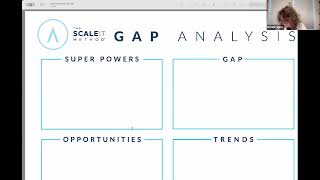
A single-speaker YouTube presentation introducing a four-quadrant gap analysis tool (Superpowers, Gaps, Opportunities, Trends) for companies. The speaker explains how to run it as a team workshop—breaking into small groups, whiteboarding results, voting on priorities—and stresses evaluating initiatives for profit potential, values alignment, brand impact, and client retention, with clear ownership assigned to team members (not just the CEO).
This is, this is such a great tool because it gets their team involved. And I know we're starting to use this in the Scale team. So really, the purpose of the, the gap analysis is that it gives an opportunity to double down on what makes the company great. That's the superpowers. Right. And then also helps to close the gaps that are slowing the company down and then to spot opportunities and trends before competitors do. And so the kind of power of using this with the team is that everybody will see different pieces to the puzzle from their different perspectives. So it's diagnostic, but it's also alignment creation. Okay, so first with the superpowers, what is it that we do better than anyone else? Unique strengths and differentiators. And if they have time, they can go around and share what they feel their own superpowers are. I think this is a great team building. And then another thing is you can have somebody else on the team share what they see in them as their superpower, because we don't often see it in ourselves in most cases. So. And this is, you know, as far as superpowers, you can use some of this even in the branding of the company. And this is something that really the company can stand on. The gaps are the weaknesses, the blind spots, the bottlenecks, the breakdowns. And yeah, those are usually pretty easy to find. Then the opportunities are like untapped markets, new potential products. Where can they turn their gap into a gain? And then trends are industry shifts, of course, AI, which is not really a trend, but, you know, a whole new world. Anything, those are things that they could take advantage of if they act. So there's many ways to do this, but one of great, great way to do it is to break, have them break into small groups and for each, like, maybe each department of the company, depending on how many people. And then they each together fill out each, each box here, and they ask them to please be honest, encourage creativity. No wrong answers, because I think some of them are afraid to speak up. So really encourage that. And then when they come back, you know, you whiteboard it. And I know with Scale Team, we've got the big sticker poster things. And so then you go through, you let each group present their ideas, and you will start to see themes across the groups. And then you would vote, give each person a set of what you know, you just have people vote, and then you would check off the ones that you need because you're gonna have so many things, you're never gonna be able to get to them all. Some of them will go to the parking lot and, you know, you determine what. And I would say some things that are important in determining if something is a viable focus. You would want to look at profit potential. You know, is this going to help the profitability of the company? Is this, Are we aligned with our values? Does this reflect who we are? And I, I think the values alignment, that's a whole other conversation we can talk about at some point. But I would just say, I think sometimes our clients go against their values because they think it's what they're supposed to do or they're afraid of whatever. And I'm just so proud that we've held to our values all these years based on integrity. I mean, I will lose money, walk away from things if it just doesn't sit right with me. So I think those are. It's probably one of the most important things. So is it a value alignment? Does it impact the brand? Will it strengthen the reputation of the brand and will it improve the client experience retention? So if you look at those four things as you ask, if you go, as you go through these squares and then you tally the votes and decide who's going to be focusing on what, what we would do at the end of these is then do the mini feats, you know, milesteps, mini feats, and then see who's going to own them. Right. So it shouldn't be the business owner that is focused on getting this stuff done. And that's, you know, what a big power of scale team. It's so awesome for the CEO when they see the team really owning these things.