How Business Owners Are Sabotaging Their Health
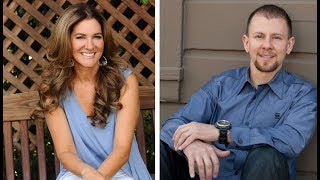
Allison Maslan and Shane Young, CEO of Ascend Body, discuss why business owners neglect their health and how fitness, nutrition, and mindset work together to boost energy and performance.
Hi, everyone. Welcome to Ally and you, the Business Success and lifestyle show. My name is Allison Maslin. My friends call me Allie. And I am a serial entrepreneur, a business growth mentor, and I'm all things business and life. And today I am super excited because I am a big fan of anything that is holistic. And even as a business, when you're running a business, you have to take care of you because if you don't feel strong, you don't feel healthy and vibrant, how are you going to have the energy and the inspiration to get out there and make things happen? So today I have a very special guest, and his name is Shane Young. And Shane is the CEO of Ascend Body. And I've had the honor of working with Shane as a client in our Pinnacle Global network for business owners for the last four years. And I'll tell you, I have never seen someone that approaches fitness in the way that Shane does and health. And several of our clients and our coaches have actually worked with Shane and, like, transformed their bodies. So I said, Shane, you have to come on and share your secrets. So Shane's gym is in San Francisco, and he's just such an expert. So, Shane, welcome.
Thank you. Thank you very much. Thanks for having me.
Yeah, so it's about time that I got you on here. So we can't keep you a secret. So why don't we just back up a little bit? So if you could just share your story and how you came to love fitness and how long have you been in the fitness industry?
Oh, gosh, 20 years.
Wow, that's awesome. So tell us the backstory.
Backstory? Well, I grew up as a jock. I did athletics my entire, you know, since I was little, running, basketball, soccer. I really loved being active. I've always been very physical person, so that piece has always been with me. But the back background story is when I was about 17, I started to develop some pretty serious health problems, some digestive issues. And year after year, I kept going to western medical doctors. Let me put a little caveat in here. I'm not against Western medicine at all. I think it definitely has its place. But after seeing a lot of western medical physicians and no one could help me, I started going to an acupuncturist. And lo and behold, all of my symptoms started to clear up. And it was really a combination of diet and lifestyle and these treatments and really a blend of the east, west approach. And my life started to get better and I went back to work and dedicated myself to helping others.
That's fantastic. I really believe when you have experienced it yourself, you know, you can really be in the trenches with your clients and your customers because you know what they go through and you know the pain of that. So. Well, you know, people spend a fortune, as we know, on their fitness, on their health. In fact, I don't know how many billion dollar, multi billion dollar industry the diet, the diet industry is, you know, weight loss and all of that, yet people still get stuck. I mean, what do you think it is, Shane? That it's like in some sense we know what to do, but we don't do it?
Yeah, there's several things that I'm thinking about in that regard. And one, I think it's about accountability and actually receiving help. And two, I think it's about really committing yourself and making a decision just like we're doing in our businesses every day. It's like you have to make that decision to actually want to change. And there's a million different exercise and fitness programs online and you could sign up for one today. But will you actually stick with it? I think depends on receiving a lot. You have to have a lot of support because making change is difficult. And that's, you know, that's why I hire you, because change, change can. You have to really stick with it and be dedicated to the process. And you have to, like I say, it takes a village for all of us.
Right. It is so easy to fall back into those habits. Sorry, go ahead.
Yeah, it's all about creating sustainable habits. So I think that's the other thing I'd like to mention is there's a lot of people who come to me have not exercised or been eating properly for quite some time and this momentum has built up and finally something snaps and they're ready to come, which is great, but they want to do it all at once. And that sometimes can set people up for failure because they exercise really hard and do a great job for two or three weeks and then they head down the rabbit hole again. But it's like, I think if people can make small course corrections, like if we are on a ship and we course correct 2 degrees within the course of a year, we're going to be clear over here. But if we get on this path and do it all at once and then fall off and then we end up where we are or even worse, that's when people get on the yo yo. So if we can get off the yoyo. Yes. Right, yeah. Yes. So if you can make these small incremental changes and I think that's what's super important is you don't have to do it all at once. You make little building blocks and you keep doing those little building blocks and those get stronger and stronger and then you start to feel better and better. But we sometimes overwhelm ourselves.
Yeah. You know, that's such a good point because I do think we put so much pressure on ourselves that we have to do it all right now. It's like getting out and running a marathon and you've never trained for it. And so maybe the thought is, well, if I only do a little bit, then I'm not going to get very far. But what we know is that that little bit just adds up and adds up. Right. Over time for big results.
Yeah. And I don't want to take away anyone's momentum because that momentum is super important. But you have to grab it and really commit to a few small things and, like, gusto. And then once you get those done, then take those off and then you can make it harder and, you know, more and more complex.
Right now you have more. You have a very unique process. Oftentimes you'll go and you focus on the fitness part and then you might go to someone else and focus on the nutrition and someone else that's focusing on the. The mindset, and you really pull it all together, which I think is so powerful. Can you tell us about that?
Yeah. So the four cornerstones of Ascend are exercise, nutrition, restoration, which is energy building, because we put out so much, and positive thinking, which is our thoughts. So together, I feel like those make a very, very, like, wonderful, complex whole. For instance, if someone is exercising but not eating right, then something is going to go amiss.
Right.
If your mindset isn't in the right place, this is, I feel, super important. If someone's mindset is in the right place when they start. Exercise can be, you know, it's tricky for people. It can be used as a weapon or a way of, like, actually beating ourselves up or being really hard on ourselves. And like, this, I have to do this because of X, Y and Z versus this thing that, like, yay, I get to do this. And I feel, you know, like it's getting your mindset in the right place before you start to take action on these things. So if I had to choose which cornerstone to start to implement first, it would be the mindset piece.
Yeah. Isn't that so interesting? It's such a big part of everything and all the decisions that we make and sticking to something. So I, yeah, I definitely well, you know, I'm a huge believer in mindset. I think it's a big part of the success in business. Business as well.
Yes. And they all meld together. It's like their business and your fitness life and your nutrition, that's. They're all interwoven. You can't pull them apart.
Can you give me an example maybe, of a client that you worked with that you really looked at all those pieces and how that came together for them?
Sure. You know, my personal clients, a lot of times I work with people with back pain, and that's my personal specialty, though I like to do it all. And so we'll get someone on the plumb line because we do very complete orthopedic assessments. But if I do just the structural piece, but I'm not adjusting someone's nutrition and digestion. Those things are hand in hand with someone's ability to have. Everyone's heard of the word core, right? Core, core, core. I'm working my core. But do they actually know what core means and how important that the digestive system with your actual core is? Because they're laying right on top of each other. And if your nutrition is not on board, your core activation is not actually going to happen. And other muscle groups will pick themselves up and compensate. And you just might not know. Then I'll take people and do. And then we'll go into the massage room and do soft tissue work because they've got structural imbalances. Maybe their SCM is too tight or their pecs are too tight because we've all been sitting in front of the computer doing our work and whatnot. And so these issues need to be addressed. And then we'll do some lifestyle coaching in order to address some of, like, what's actually holding someone back from reaching their pinnacle, if you will. Right. So all the pieces start to fold together and they all really matter.
Yeah. I mean, you know, thinking about that and hearing you explain it, that's so powerful. I mean, you're really looking at them as their being as a whole person. As a whole person and everything that's going on, because all of those things, it's not like we're parts of a car. Everything we do impacts everything else.
Exactly.
Right, Right. Yeah.
It's fun to think about it that way.
Yeah. You just don't see that out there, Shane. I mean, you really don't. So and so how does the food we eat impact our energy and our brain power? I mean, obviously, if you're going to go out and eat a Bunch of Big Macs you're going to feel. Ugh. But can you give us a little bit more information on how maybe certain foods impact how we think or how our energy, how it fuels us?
Yeah, we could go down a big rabbit hole with this, but I'm going to keep this one simple.
Okay.
We have basically two types of fuel, right? And we want to get the right fuel on board. So carbohydrates are fuel and fat is fuel. And neither one of them are right or wrong, but we need to think about the impact on the body. So carbohydrates, especially processed carbohydrates, can be like rocket fuel. So we eat them. They kind of feel fun. They are like a rocket ship. They send us up, but the further they send us up, the more we crash right back down to the ground.
Yes.
Versus fats, which I kind of, for some reason we're going with the car analogy today, which is fine. I liken fats to like putting your body into a diesel Mercedes. It's like you're on cruise control. It's a beautiful smooth ride, everything's good and you get longer lasting, sustainable energy. So a quick example for people who might be wondering what that is, say coconut oil or avocado, healthy nuts, seeds, things like this, Those are good, healthy fats. And we want to get good healthy fats on board so that we have longer sustained energy versus the quick fix of Starbucks and coffee. And then we rock it up and we're on an adrenaline high and then we grasp back down.
Right. What about chips and salt? Chips and guac?
Well, you know, that's we. We call them in my program, optimal decisions, suboptimal decisions, and then indifferent decisions. And the indifferent decisions are the ones that are the most harmful. So if I'm going to say, well, I could have a Snickers bar or chips and guacamole, you know, the guac. Chips and guacamole are a huge step up. Right. So throw a party for yourself that you're having chips and guacamole. So everything is incremental, depends on where someone's coming from and what their background is.
Well, that's good. I did give up the Snickers bar, so. So we're good on that. But yeah, I think we've been raised, though. No fat. No fat. I think that's harmful, right?
Oh, yeah. I mean, there was a. I can't remember his first name. Keys is the last name. But it was proven that this guy, medical doctor, was paid off in order to Create the low fat scam. And you know, people are having Alzheimer's, serious issues with their cholesterol, all kinds of dementia, all kinds of things are coming out of this low fat craze that they're proving led back to this guy who was paid off to implement all of the low fat craze.
I did not know that. How did I not hear that? That's incredible.
We have to deconstruct these things and start to.
Oh, my God. So the non fat latte is bad.
It's the worst. If you think about milk and what the components of milk are, what they do is spray it through a screen at a very high psi and it explodes the fat molecules and all that's left is what it's sugar water. Like, because you've taken all the fat away, you've taken the good stuff away and you're left with sugar water. And what does sugar water do to you?
Yeah, well, it's up and the down and right. Well, it's so bad to the immune system.
So if you're gonna drink a lot, drink, drink the full fat. Okay, sorry, gonna go on a little tangent then. People wonder about the color.
I think it's good because a lot of people. My husband does that, Mike. So I got talk to him about that. Knock it off. But I do think, you know, you're. You're like, you get programmed into thinking that way to avoid the fat. What are some other nutrition tips that you can recommend, Shane, that like, don't take massive, you know, transforming your life to do it. That for someone that's busy, like me or the business owners that are watching this, that they could implement, make a big difference.
So I would say batch cooking is the number one thing that you can implement. And I like to encourage my clients to eat the same thing for breakfast as they did for dinner. And that for Americans, that can be a little funny. And it's just getting over the thought that we're the only culture that really does that. Like the pancakes and eggs and that whole nine muffins and all that. It's just a. It's just a mental construct. Like if you can have you had some sort of chicken dish with roasted potatoes and avocado and some greens for dinner, have that same thing for breakfast. Or just use the chicken part and throw in a few eggs. So you gotta be able to batch cook and fold them into your next meal and that makes it simple and easier. You put it in glassware, not Tupperware, because that plastic can leach into your food. And you've got your next meal. So you just got to think ahead, wow, extra and fold it right into your next meal.
I had not. That's a new one on me. And you know I've been in the health industry for 20 years. I had not heard of eat your dinner what you had for breakfast.
Right?
Yeah.
Folds into a deeper process that we look at. It's called a check four day rotation which is eating the same protein. Like let's say Monday is beef, Tuesday is chicken, Wednesday is pork and Thursday is fish. You do that and you rotate eat the same protein for all three meals so that you can really tell how your body's reacting to a certain food.
Oh, interesting.
Because someone will be like oh I have a headache. But you're not sure if it was from the bacon that you ate or the tuna salad you had for lunch or the fish you had for dinner but you know, kind of getting the slingering headache. But then if you rotate them out you can really see how does my body feel. So it puts you in charge of your own health versus listening to a diet that's out there. How do I really feel when I eat the certain food?
Yeah. Wow, that's fascinating. So interesting. You are a wealth of knowledge, Shane. Truly.
Thanks.
So well that will cut trying to figure out what you're going to have for dinner. Right. So I know I don't cook that.
Much but if you're someone who doesn't like just can't get around that idea. Have a protein shake with, with a balanced macronutrient ratio. So that means you've got your fat, your protein and your carbohydrates. That's it. Eat a well balanced shake for breakfast and then get your engine started.
Yeah, yeah, yeah. Oh wow. That's fantastic. Thank you. Thank you. So what about what do you think drives the physical changes Shane? Do you feel like. Because some people say, well it's, I mean it's probably both but if you're exercising and you're not doing your nutrition or you're doing your nutrition and you're not exercising, like what are you seeing is causing is actually going to be the real catalyst for physical change.
Sure. One of the principles that I teach a steps process and the second process is balance. It's the masculine and the feminine, the yin and the yang, the energy and the rebuilding. So I think it's about self assessment and actually being honest with yourself. Which one of these pieces do I need to focus on more? Am I exercising hard but my nutrition needs some help or is my nutrition number, but I actually need to get off the couch. So for instance, I think about self assessing because everybody is in a different place. So self assess. But then I think a lot of people who come to my studio are over exercising and not seeing results. And a lot of times it's because they have gotten addicted to cardio and they, they're not balancing their hormones with the right nutrition and the right kind of exercise. So sometimes it's about switching the kind of exercise that you're doing, getting the proper nutrients on board and healing the hormones. Or it could be the other way around. Someone who needs to get off the couch and get their butt in the gym and let's get moving and also tidy up their diets. It's both. And it's about a self assessment around what you need the most.
Yeah, I think too, if you're doing the same thing over and over. Right. Does your body kind of just get used to it and so it's not working as hard?
Yes, that and I also think that it's a bit again like the low fat craze. It's, you know, people hear certain things on the Internet about what they think they should be doing and they, they get addicted to high intensity cardio and like these like soul cycle classes and just doing this high repetition cardio burnout and then they add, you know, coffee and lots of carbohydrates and it just spins your wheels out and then the hormones start to break down. So pulling back and starting to look at the bigger picture.
Yeah, yeah. That's so fascinating. And what about cleanses? Are you a fan of doing cleanses?
I am, I am. If done properly, I teach them four times a year online and also here at the studio. You know, people have been doing cleanses for thousands of years and because there's a definite benefit, because it gives the body a chance to rest, I would say that I'm not a fan, unless you know what you're doing of going to Costa Rica and having a juice cleanse. And while people lose a lot of weight, they come back and they don't implement proper nutrition back on board and they've just had a ton of sugar and then they end up yo yoing again. So you have to be careful with how you do it and like really assess where your body is at. That's why kind of, even though I do them in groups, I hand tailor them for each person so that we can look at what you're struggling with and how best to utilize the cleanse.
Yeah, because I think if you go, if you do a cleanse, it's probably just as important for the period that you adjust back into regular eating. Right. If otherwise it's going to. It's going to be extreme on the body.
It can be extreme on the body when hydration is the most important key here. But yes, the tailoring back out. I trick my people, and I'll just say this out loud before we go into the process. I don't tell them this, but basically it's a lifestyle change. We're not going back, baby. We may add in a few of these things here, but we're not going to add back in that process. This and this going out all the time. And it's like we're going to learn a new lifestyle happen. And the important piece is to really keep a few of those changes and not go back. Like, if I decide to eliminate gluten, maybe it's that you don't go back to gluten because you understand at that point how it makes the body feel.
Right.
Eliminate dairy. And then you experiment gently as you come back out to see how does it actually affect my body. And then you may choose to not do it anymore, or you may say, oh, I feel great, but clear the container and clear your body out so that you can actually feel what's happening.
And I think that's just the most important thing you've said, really, is this is a way of life. Like, this is a new way of being healthy rather than, oh, this is a diet or a temporary cleanse.
Yeah, it's not a temporary fix. There are no quick fixes. There's just small incremental changes that you build.
Yeah, really, it is a way of life on all levels. But gosh, how rewarding. You know, I mean, I've been exercising my entire life. In fact, I was at the gym today, and I'm a big fan of physical fitness. And I can't say every time, Shane, I go, woohoo. I get to, I get to work out today and I get to, you know, like, be begging my trainer to bring down the treadmill and all that good stuff. But I'll tell you afterwards, I feel fantastic.
I don't think anyone has ever regretted a good workout.
Yeah, no, it's. It is. And you know, I've done it for so long, I don't really, I don't think about it. I'm not going. Well, should I go? Should I not go? And I think, you know, that's how your clients are with you is that they just, they're with you, they stick with you for years. And I love the fact that you're able to also work with people all over the map in the work that you do. So that's fantastic.
If I might say a little something about them, the way that you teach us to look at our why and that bigger picture vision, it's the same thing with your health and nutrition. It's like the short term rewards are short term rewards. But if you see the big picture of your why about where you want to go, you won't miss your workout. You just do it even though, well, your mind is getting fussy and you don't feel like doing it. You just quiet the mind and you do it anyway.
Yeah. Focused on your bigger why that drives everything. Right. You know, what is it that is your deeper motivation? Is it your family, is it your children? You know, is it that you want to go travel the world? I mean there's just, you really have to get in touch with that. So you have this really cool Ascend Eat on purpose nutrition success manual. And can you tell us about that?
Well, I would say that it's a very simple guide to get a lot of information out of that's broken down in little segmented chunks, bite sized chunks, if you will, to really help you get the most important key points. So it's not complex, it's not hard, it's just bullet points basically of like how to get the best out of your nutrition and your lifestyle.
Oh, I love is it's all really good advice, super simple. And so if any of you would like to get a copy of this, go pick it up on our Library, which is AllisonMaslin.comLibrary. and you'll also be able to get the link to Shane's website, AscendBody. You can go to AscendBody.com and this is, all of this is just so important and you know, it's great to be motivated at the beginning of the year, everybody comes out in January. Yes, I'm on fire. I'm gonna lose this weight. And then, you know, as the year starts progressing, people really slip back into their old habits. So I love what you talk about Shane, and just really making this a way of life.
Correct. It's a way of life. And again, the accountability and the support I think is important for all of us. Like you've had a trainer for 20 years and it shows that you're a very successful person and that all things interrelate, that your fitness level feeds right into your business.
Life, yeah, it's. It's that discipline, I think. And I'll tell you, I don't. I couldn't do it otherwise because it takes so much energy for what I do that, that really, you know, is what helps. And I bet you see something, you experience some incredible rewarding stories, seeing people, their life changes.
Just like what you said, it takes energy to make energy. It's one of my favorite sayings. So if you get up and you start to get the process going, you start to exercise, you start the flywheel moving, all of a sudden you have more energy in order to do everything else, but it's just getting that little bit going, a little bit going, and then it feeds into everything.
Yeah, I think that's really a good point, Shane, because I think a lot of times people say, well, when I get motivated, I'm going to get to the gym, or when I start getting more energy and what doing you're saying is just do it. And then that motivation will come.
Right. Even if it's, you know, literally. I was listening to your podcast with Dr. Hannah.
Hi, Hannah.
Because she was talking about the what do you think about in the first five minutes of your day? And I just taught a workshop on that myself. And it's about small incremental changes and noticing your thoughts and then maybe doing a seven, you know, five to seven minutes of exercise. And that will get the process started and then everything just gets better.
Yeah, yeah. It's intentional, right? Instead of grabbing your phone and checking emails, actually write about things you're grateful. Get up, move your body. It doesn't take very long.
It doesn't take very long. And I think that that's what scares people off a lot, is that they think it's going to take a lot more time. It doesn't.
It doesn't. So. Well, fantastic, Shane, thank you so much for sharing your wisdom. And remember to go to alisonmasin.com library and you're gonna get this Eat on purpose awesome booklet from Shane and Ascend Bodi and you can check out his website as well@ascendbody.com keep in touch with Shane. And you know, if you want to work with him, I'm sure you guys, you know, can have a great conversation about that. So anyway, until next time, May, you can listen to this again on itunes. All you have to do is go to alisonmaslon.com iTunes and you can see the video podcast. If you want to just listen to it on audio, you can listen to all our shows at Forward slash audio. All right. Until next time. Get out there and elevate yourself because you are worth it.
Thanks.
Thanks, Shane.
Thanks, Shane.
Bye, everybody.
Bye. Bye.
More from Allison

There are 90,000 marketing agencies in the U.S. but 99% aren't worth your money.

Would you leave your comfort zone for the sake of your business? #businessgrowth #scalingbusiness

Are you willing to trust the process to grow your business? #businessgrowth #scalingstrategies

He Built a $150M Company Without Taking a Single Dollar of Outside Capital | Erik Huberman




Wing Lam has run Wahoo's Fish Tacos for 38 years and his hiring rule is simple.


