How This High-Level Publicist Generates Leads and Sales for Her Clients
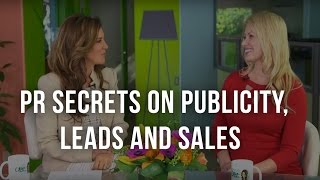
Esther Kiss, a PR expert, talks with Allison Maslan about turning media coverage into actual sales. She covers how to pitch journalists, build relationships that matter, and position your business so reporters want to write about you instead of your competitors.
How do you get your brand out into the world to be seen and heard everywhere or at least from the people that want to buy from you? Well, today on Ally and you'd, you're going to hear all things public relations and how to make it happen right here on Ally and you'd. Welcome to Ali and you the business success and lifestyle show. My name is Alison. My friends call me Allie. And today I'm super excited because I have one of my favorite people here talking about public relations. She is the expert. Esther Kiss is the founder of Born to Influence, a boutique publicity firm specializing in helping experts and personal brands get more publicity, leads and sales. Her clients have been featured on tv, newspaper magazines, some of the top podcasts in the world, which we're going to talk all about that and how that applies to you. And, and this can result in millions of dollars in additional sales. So you might think it's complicated, but we're going to simplify the process for you. But through Esther's coaching program, she teaches a unique methodical process for developing influential personal brands designed for exponential long term growth. So welcome Esther.
Thank you so much for having me. Having me.
I'm excited you're here. And you know, I met Esther, you and I met because we were on the film Inspired by Eleven and you know, I know we were all kind of came upon that in different ways, but when Tamara Thompson reached out to me by email, you know, you get all kinds of requests and that one just seemed to stand out. And so it, if you haven't seen the documentary yet, check it out. It's called inspired by 11. And Esther and I were featured in that and it's about a journey of 11 entrepreneurs and it was so much fun. And so we met at the premiere, right? Yeah. And so I didn't know Esther and then I learned about her and her background and her skill and how many people that she's helped through public relations. And I was so intrigued by you and so impressed. And then I see you on social media and all the people that you're helping, I thought, oh my gosh, I've got to get you on Ally and you because I want you to share. Thank you.
I'm happy, so happy to be here. And there's just so many things that entrepreneurs don't really think about when it comes to publicity. So I'm really excited to dive in here.
Yeah. Well, great. So, you know, I actually, I told you this before that I had a PR firm and so this was many years ago and I actually Fell into it. I knew nothing about pr. I was more the advertising side. And I partnered. My agency had grown and I decided to take on a partner. I met this other woman, so I was the Ali and she was the Barbara. So it's the Borali Group. She was the PR expert, and I learned everything about PR through her. But I was blown away because it's not easy. It's so powerful, but you really need to know what you're doing. So how did you get into pr?
I wish I could say that it was a very straight from A to B kind of thing, but it really wasn't. My journey was very much like a treasure hunt, going from Q to Q. And my background is similar to yours, marketing and business development. For the last six years. Years and three years ago, we launched a podcast with my friend Meta Miller called Born to Influence. And the idea was to interview very successful entrepreneurs and experts, New York Times bestselling authors, to talk with them, have a chat with them, and start building relationships. And I didn't know what the business model was. I just really wanted to help them to start developing my network and start developing those connections. And every time we would do an interview after it ended, and I would say, hey, I know you have this book coming out or this new coaching program, this event. Would you like to be on other shows as well? And they would always say yes. So then I would start introducing them to other podcasters, booking them, and eventually turn into a business.
Yeah, well, you know, that's really how I started too. Like, just keep saying yes and you will learn along the way. Which I think that's a great example for the business owners that are listening too, because I think a lot of times people can get caught in planning mode. Planning mode instead of just jumping in and doing it and tweak it along the way.
You know what? Publicity seems so scary when you haven't done it before. Like, I don't know anyone in the media. I don't know what to say. How do I get a yes? And so it can seem really paralyzing. And we sometimes even have that internal voice, who am I really to do this? There is imposter syndrome. And you got to get over yourself and just get your name out there.
Yeah. Your head gets in the way of what's really happening. So how does. So with marketing as we know it is about being seen and heard everywhere, of course, within your specific target market that you're trying to reach. How do you feel PR plays into this?
PR is a part of the puzzle. It's a piece of the puzzle. It's not the whole thing. And I say this, being a publicist, it's really, really important that you have your sales and market in place first, that you have a great offer that, you know, converts before you start going after publicity. I actually have this quite often that new authors come to me and they say, hey, I just wrote a book, now I just need the publicity. Can you help me?
Yeah, I hear that.
That just is like, you know, let's see, what do you have behind the book? Do you have a funnel? Do you have an upsell offer? Because most authors don't really realize that just the book in and of itself is not going to make you money. You have to have something that the book leads into, whether it's a coaching program or a software that you're selling, anything like that. So you want to make sure that those are in place first and then go after publicity.
Right. That's what I always will tell our clients, our business owner client. What's the goal of this? Just to do it is great. It's great for confidence in the experience, but you need it to lead to something.
That's right. Unless there is one exception. If you're only going for credibility, if you're looking to have some of those logos that you've been in Entrepreneur magazine or Forbes, or the Huffington Post or cnn, abc, all those things, you can do the one time thing and not really focus on leads and sales. But why would you.
Right, exactly. So you need it to turn into revenue for your client, for your business. Because that ROI is always super important, as we know. So how do you know what kind of media to go after? And I'm sure you get asked this question all the time, should I do YouTube, should I do television? Should I do magazine articles? Should I do podcasts? So how do you help people figure that out?
So number one is to get really clear on your goals. Are you looking for publicity, for credibility building like what we talked about with being associated with these big brands, or are you looking for leads and sales or maybe you want both? Now, once you're clear on that, who is your target audience and where do they hang out? So the way I define media is not so much by the platform like radio and TV and newspapers, but more about where are the influencers, who your target audience is attracted to, and who are the people who they follow. And now then we find those communities and those groups, whether it's certain TV shows or radio shows or magazines. It could be private Facebook groups that are part of a paid mastermind program, or it might be a YouTube channel, it might be podcasts. So we really have an in depth conversation about who is your ideal target market, what do they need to hear and believe in order to want to take the next step with you. And then break down where do we find those people?
Right, right, exactly. Because that's the whole point. I mean, to just get PR out there. And these are never going to be people that are going to be reading your book or buying your products. That doesn't make sense.
And there is three major differences between traditional media and online media. So most people, when they think of publicity, they are thinking tv, radio, newspapers, magazines, the big four. That's traditional media. But between that and online media, like for example, podcasts and YouTube shows, one of the biggest differences is the target market size. So for example, if you were on tv, you will reach thousands or maybe even millions of people depending on the show. And if you have a mainstream offer, like let's say, for example, you're a nutritionist or a fitness expert, something where your offer actually is interesting for the average person on the street, it makes sense to do TV and major media, even from the perspective of lead generation and publicity, because it will be interesting for everyone.
I totally get that for all the.
Niche experts and coaches, it's really just for credibility building. So you gotta be clear on that. And then with podcasts, for example, or any online media outlet that might have very, very small audiences, but they're so dialed in and they're so interested in what you have to say, they're much more likely to be in the position to buy from you. So looking at that target market, what is the size of it? And also what is the amount of time that you're allowed to share your content in? So for example, if you do a TV interview, you might have a minute and a half to two minutes, including the questions, it goes really fast. Whereas on a podcast interview or on a YouTube show like this one, you have an hour, two hours to really go into detail and it gets edited. So it's a very different environment and you gotta be prepared for that, right?
Yes. It's obviously sound bites getting to the point. And interestingly enough, I actually turned down a television interview on Monday. And the reason was is that they. The theme of the talk was reinvention, but it was more about career and finding the right job and so forth. And so I referred that to somebody else because it just doesn't make sense. I can talk about it I'm happy to talk about it, but you know, it didn't make sense for the value of my time, you know what I mean? So just because it's television or whatever, you want to make sure it's the right messaging.
Absolutely.
For your business.
And then the other thing too is when you are looking to do publicity for business purposes, you want to make sure that you are able to offer something in mainstream media. You can't. I mean, they will show your book, or if you have a physical product, they will show that or mention the homepage of your website, which is hopefully set up with some kind of a lead manual often. But they do not say that here is my downloadable cheat sheet or my four part video series. You can't do that. And you can in online media. And in fact, very often it's expected. So that's a very big consideration as well.
Oh, definitely. I mean, you definitely have a lot more freedom. And honestly, if you're on the right blogs or the right podcasts, you probably will target more people that are going to be open to what you're doing. You know, for me, if I'm on CNBC or CNN or something like that, it makes a lot more sense. Right, yes. So that's a good point. So what you're saying is just getting really clear on where their audience is and what the goals are. Right. So. And you know, it's interesting because I had Arielle Ford. Do you know who she is?
Yes.
Yeah, so she's been on my show several times and a good friend of mine, and she's placed several people on Oprah. This is years ago when Oprah had her station. And she said, I never forgot this. And she said, when they said no, I never took it as a no. I just knew that I needed to come up with a different angle. So explain to everybody what that means, an angle, because truly that's what's going to perk somebody's interest to have you on. Right.
So when you're pitching yourself to something like Oprah's show, when it was available, or even any platform, really, keep in mind, what is their audience looking for? No one, no producer or journalist or editor likes to be a mouthpiece for someone else's promotion. So you gotta come from a place of wanting to help that audience, really leading with the spirit of generosity and giving and contributing value. So when you're looking for your hook or what is your angle? And how can I find something that I have expertise around that loosely relates to something that they're already talking about this is especially important for mainstream media like TV because they have certain things that they cover in the news and you know, like for example, Donald Trump, they're going to talk about him all the time for the next bit, right?
Yes.
So now if you can find something that has to do with his recent actions or something that he's consistently doing and it can be loosely related to what you have expertise around, you have a pitch that has a timely newsy hook and also it's something that's related to a celebrity. So the more you can find something that's either timely or local, like for example, you're a local expert for a local TV show, they love that. Or it's related to something that is really, really newsy or has, for example, statistics. If you can find surveys that are relevant and make the story feel newsworthy, that's also really helpful.
So really looking at what is going on out in the world and if you can tie in what you are talking about with those current topics, they're going to be more likely and more open to have you on.
That's right. And if you can't find data that will support that, you create your own. There is a really, really cool tip that I love doing and it's using Google Consumer Surveys, which is a tool from Google. They allow you to ask any questions and they will put it in all types of websites, almost like a pay per click campaign for ads. So this is what I did for a recent TV interview that we got for Valentine's Day because I wanted to know what's on going most important for people for Valentine's Day. Is it spending time with your sweetheart? Is it getting an amazing gift? Like what would it be? So I ran a survey and now when we pitched a TV station, we were able to link to that survey. And because it's Google's data, they know everything. They know where the respondents live, what is their income level, what is their demographics. So you can lead and link to something that is a legitimate survey.
So you showed the producer those statistics, correct?
Yeah, it was in the pitch and he just linked to it that this is the situation and this is why we need to talk about it. And then you put your talking points there.
That's very clever. That's very clever. You're just so creative. Can you share an interesting angle or something that you did to get somebody either on the news or podcast or where you had to kind of think out of the box?
Definitely. So podcasts are more evergreen. Usually they want to know about your story as an entrepreneur about your journey or your unique methodology or transformations. So those don't really necessarily need to have that kind of a strong hook for mainstream media. You want to know that there is something that is interesting and newsworthy for them. So one example would be we did a, you know, Donald Trump was tweeting about how cars are being manufactured in Mexico and then they're being sold here. But it was actually factually inaccurate because only a very small percentage of those cars are being sold here, and mostly they're for international distribution. So that was one of the things that we did and then pitched me as a communications expert. And how can you use social media in a way that is effective? And the leading story was Trump's tweets, right?
Yeah. Well, that's a great idea. I mean, you might as well capitalize on it because it's happening, right? Yes, for sure. Well, so how would you. So there is the angle, and that's one thing that's like the hook, the story, and then there's the positioning. So can you describe the difference?
So the angle is what will grab a producer's attention or an editor's attention. And positioning is where you show yourself as a credible expert, someone who is really worth talking to because you have experience with this subject. And it doesn't mean that you have to be the top of the top consultant in the world. You just have to show that either you have education in that area or you have a book maybe that you authored, or you, you have a business that serves that market. The problem that you're solving that you mentioned in your headline, something that would set you up as a credible person, or if you have any media mentions, it's a nice thing to link to that as well. So you can say that this person was quoted as the top 50 women to follow in 2017. Things like that, they will click through to that. There's a third party validation. Oh, yeah, this is a Huffington Post article. We should talk to this person.
And probably also they look at followers too.
That's part of it. It's not as important as you would maybe at first think. Yeah. For me, for example, I have not that many. I mean, 15,000 people, but across different social media platforms. It's not that big. It's not like 2 million. Right, right. And still I've been able to get media attention consistently because the hook was there, it was strong enough. And then everything that we put in the credibility piece and in its talking points seems to be something that is fresh. It's Not a done before we've done this kind of story.
So then really, for those of you that are saying, gosh, I really want to get out there, I want to get on some podcasts. I want to get publicity. Don't feel like if you don't have already a community around you online, that that's in any way needs to stop you.
Absolutely. And you know Ryan, right? Ryan Levesque, the author of Ask. He is one of my clients. Like, Ryan is not huge on social media. He's done a lot of interviews when we promoted his book. But if you look at how strategically his marketing was put together with a publicity campaign, doing Facebook ads, doing giveaways, doing retargeting, as well as a lot of podcasts, he ended up adding over $1.8 million to his business because of the backend sales behind the book.
That's great.
And, you know, it really goes to show that small things add up. It's almost like a snowball where you just started, and then it adds a little bit, a little bit of time. It really, really grows exponentially.
It's incredible. I mean, when my book Blast off came out, it was 2000. Well, when it was first came out and then released in January 2010. It's just social media has changed so much since then. And I had been on, I think, since like, 2008, maybe 2007. So I had started building kind of a following. But now I'm working on my second book. And so it will be a completely different approach than you did the first and probably will be completely different another five years from now. We'll talk about that afterwards. So I'm excited about it. So what do you think? Okay, let's say you get the interview, and then I'll have clients go, oh, my God, Allison, I'm going to be on the news, or I'm going to be on this podcast. And, you know, I had to. I had to learn. I used to be very nervous in front of the camera. I would, like, do like a Ralph Kramden, if, you know the Honeymooners, you would just go blank completely. I remember when I showed one of my TV interviews to a friend of mine, Sam Zion, who's Sam the cooking guy, who has his own show. And he said, he goes, you know, I'm like, looking around. What were you looking at? Like, look at the guest, you know, so there's. There's all these little things that I didn't know in the beginning that I had to learn along the way. So can you share some Tips that once you get the interview, to actually put on a great interview, the most.
Important thing is to be confident, know what you're talking about. Hopefully you pitched a topic that you have expertise around, but deliver it in a way that understand that it's new to the person who is interviewing you, it's new to the audience, even if it's a very niche. And they talk about those types of topics all the time, they're hearing it from you for the first time. This is actually, I used to be an actor. This is something that we learned in acting as well. Because sometimes you do the same scene all the time. You know, you have to deliver it every single time as if you're saying it for the first time. It's the same thing in interviews. As an expert, you're talking about the same stuff to your clients, to your prospects, through your marketing. All the time, you're saying the same thing. But when you're doing an interview, you. It has to stand fresh.
Right?
That's the most important thing. And number two is to really understand what is that audience looking for? What do they need to hear and believe in order to want to take the next step with you? What is the conversation in their head? What kind of questions do they have? Frustrations, dreams, anything, and speak to that, find those emotional triggers, think about it ahead of time, and then find stories and examples and case studies that relate to that.
Right. I think the case studies are super important because we learn through story. We remember a lot, a lot more through story. And then when you hear. So let's say if you're doing an interview and you're teaching something or sharing something, if you can tell a story about a past client or your own experience, it is a way to. It's a way to share your success. It's a way to build trust and for people to relate and go, oh, if that person did it, I could do it too.
I'm so glad you brought this up, because it's so easy to fall into the trap of wanting to follow the interviewer and just answering questions. But you have to really always do the yes, and you answer the questions. You don't want to dodge anything, but then add your own content. And particularly with online interviews with podcasts and YouTube shows, very often the hosts are like, you have a background in marketing and in publicity. You are really, really good with what kind of questions should I be asking? Right. And you really prepare. Most podcasters are not trained journalists, so the questions that they will be asking is just something that they picked up along the way. And it's not necessarily something that, you know, the audience needs to hear to really get actionable advice.
Yes.
So most podcasts seem to be either very story driven. They want to know your journey as an entrepreneur, or they want to know the how to the nitty gritty, tell me exactly what to do. And so your job as a guest is to do both. You will give them the story and then give an actionable tip. If this is a great takeaway, this is something that you can do right now to take action on this. Or if they're asking you how to questions, then you would lead it into a story and say, that's something that we did with one of my clients, for example.
Yeah, I love that. So be prepared on what it is you want to get across. And if they're leading you into another direction, you. You say something like, you know what? That is such a good question. And that's why I want to share this with you.
Yes.
Right. Get it out. So. Well, that's great. And I even had. I had a client of mine who's a speech therapist, and this is when I was doing radio. She goes, I listened to your interview, and she said, alison, I almost fell asleep. This is a long time ago. Because my voice, like in your ear, you hear your voice in a different way. And I thought I had enthusiasm in my voice, but she said that the tone sounded the same. So I did a little training with her, and I learned that you needed to end sentences in different tones. So sometimes you'll be up here and sometimes you'll be down here, and it's just a little bit more interesting for the ear to grab onto that because there is variety.
If you look at any TV clip, whether it's a show or a sitcom or anything, they will change the scene every 10 to 15 seconds. They will cut away and do something because they want to keep the attention. And it's tricky with radio or with podcasts because it's audio only. So it's really up to you as the guest and your voice and your intentions, how you deliver your content.
Right.
Yeah.
So you don't want to have a hypnotic voice. You might think that's a compliment, but it's not in this situation. So now how can you. You're there, you're giving content, you're connecting with the audience. What are some secrets of converting these into sales?
The number one secret is to talk to the actual issues that, you know, that they have as questions or as frustrations before they come to You. So the way to do that is you think through in your sales situations, in your marketing messaging. What are some of the things that you have to say over and over again? What are those pre framings, those objections that you need to handle? And those were topics that you'll be talking about in your interview. So if we go back to our weight loss example, let's say if you're a weight loss expert and you know that the biggest problem is not so much that they don't eat right or the exercise, it's their mindset. If you talk about mindset but they are thinking about calorie counting, there is a mismatch. They're not going to listen. So you have to talk to what they think is the problem, talk them through that, let them have their fun and enjoy the content because they see it as valuable. And then, by the way, did you know this? And you add what you know they need to hear, right. And then have something that is the next logical step, like a freebie giveaway, for example, a free plus shipping offer on a book or a downloadable cheat sheet or a video series or a webinar, whatever it may be that you know, works because you tested it through your marketing. And so whatever you shared in your interview, the next logical step will be to take you up on that freebie.
Right? Right. Yeah. Because the thing is, is that you're only able to give so much advice in that short period of time. And so if you get your clients to connect with you further, you can nurture that relationship and then you can, you know, make some offers and things. That's exactly beyond that. And even if you know that the mindset is the piece behind the wait, you give people what they need or feel they need and then you can help them further with that mindset once you've built the relationship.
That's exactly right. They have to trust you. The purpose of the interview is to position yourself as the go to expert in that particular niche. And you want people to like you and you have to talk to them with compassion, with understanding those problems. This is so, so important. I forget I'm blanking on the name of the person, but there is a really famous speaking coach who speaks about the through line. Oh, Victoria labaume. She speaks about the through line. You know, having something where you're not there to show off your expertise and look at me, how much I know. Rather you are there with a noble intent and wanting to help the other.
Person and people will feel that that will definitely come through. Well, I'VE had. You know, many times our business owner clients will ask me, they'll say, well, you know, Alison, I want to get publicity. Do I need to hire a PR agency? Do I hire a publicist to work full time? Do I do this myself? So what is your answer to that?
It depends on where you're at in your business. Most people who are just starting out, maybe they're up to 2, $300,000 in revenue. That's probably a little bit too early to hire someone, whether it's an agency or a publicist in house, because you actually get better results at that point, building those relationships with members of the media and getting the publicity for yourself. Once you're beyond that point, you really need to focus on scaling and growing your business and you have the cash flow. That justifies actually hiring someone who already has those relationships. And they can just do it really quickly for you.
Right. And that's the key is the relationships really. When you're hiring a PR firm, what you're buying is, well, obviously they're working and their enthusiasm for you and their wisdom, but it's also the connections. Right. Because you might try to reach out to these people and they don't respond.
That's right. And these people have spent years and years cultivating those relationships, sending gifts, going to events, sending them great resources, great other stories. So there is a level of trust between those journalists, those producers and the publicist, if it's a good one. So for someone who is just starting out, they can spend the time developing those relationships, cultivating them for themselves. The one thing that I see sometimes as a mistake, people like to hire a va, a virtual assistant and oh, let them just do the pitching. And sometimes I get for my show also pitches like that. It's just really not doing you any favors. It's not good to. So either hire a professional or do it yourself.
Right. And it is, it's a lot of persistence and a lot of follow up and you have to be able to have the guts to call and talk to anybody. And you're in sales too. I mean, you have to sell the idea. You're selling that guest or that story.
Yes.
You know, so the persistence is key. So where do you think that PR is going? Because it has changed. I mean, it's changed very much. When I had the PR agency, I mean, it was back in the dark ages, before even the Internet. So I'm totally dating myself right now. It's changed a lot. And so. And it's changed a lot even over the Next few years where we didn't really see, when you thought of traditionally pr, it was like social media was separate, but now everything is together. What do you say? See where things are going for pr.
It'S more and more about the relationships. It's more and more about building a sense of community with your followers, with your audience, people who like and share your content on social media. And so your publicity will be actually repurposed as content through your marketing. So one thing that you can do is simply post it to Facebook and tweet about it. That's great. But then use it over and over again and put it into your funnels. Like, for example, for some of our business owners here, they might be doing something where they are doing Facebook ads. It leads to a webinar, right? There is a few days between when somebody opts in and when they come to see that webinar. There is a series of automatic emails that go out to remind people. Now, if you can supplement that with interviews that you've done from the perspective of the person who just opted in and saw you for the first time, it's like, oh my gosh, this lady is everywhere. They really must know their stuff because they're being interviewed all the time. Time. And then, you know, you can use it with more advanced marketing strategies as well, Facebook ads and retargeting to combine it so that you get a lot more mileage out of each of those publicity appearances. Not just the one time thing, really bring it full circle.
It really is about those deep relationships. I mean, that's how you and I met, right? I mean, it was kind of odd. You're not in a documentary every day. But we met. It was like, oh, yes, I had seen you, but we hadn't met yet. And that's just a cool thing how life works when you get to meet those people. But to me, it's the most enjoyable part of business is the building of relationships. It's so much fun.
That's how I ended up being in this documentary, because I didn't know Tamara, the director producer before. I just saw a little clip that she posted from the movie, even though it wasn't fully shot yet. But she posted about one of the podcasters who I really respect and I liked it. And I reached out to her and I said, here, if I can help you promote in any way, let me know. And then she wanted to talk to me. And by the way, can we do an interview with you? That wasn't my intention at all. But sometimes when you just Want to help people, just really look out for them. It will bring you opportunities.
Yeah. Wow. Well, that was definitely. It's true. I tell my clients that all the time. And I think in business, the sense is it's like, oh, I have to get clients, I have to get business. And you come from that place of desperation and people feel it. So if you are coming from a place of value and giving, I'm telling you, it opens more doors than anything else because people naturally want to give back.
There is that sense of reciprocity. If you help someone, they kind of want to help you back. And it doesn't always come from the same person, but as long as you're consistent with it and you lead with giving, it will come back to you tenfold.
Yeah, definitely. Definitely. Well, this is fantastic. So you have something that you're going to give our viewers. Can you tell us about that?
Happy to. I have a free media positioning checklist that will actually help you with the positioning that we talked about so that media people actually want to interview you. How to put together a compelling bio, getting your headshots done so they're effective. And even the lead magnets, the freebies that we talked about, it gives you ideas on how to put that together so that interviews will convert. And you can get that@borntoinfluence.com gift.
We will put that down there as well. And I actually took a peek at it and it looks really cool. I'm going to download that myself, so I appreciate that. So what's on the horizon for you? What are some exciting things?
I'm really excited about the coaching that I've been expanding my business into because I love doing the done for you services. But there was only one of me. I'm looking to help more people who are looking to learn these skills for themselves. So I launched a course called Publicity Crash Course last month and we are putting it up now where it will be available online for. Oh, good.
Oh, good. Well, a lot of you need that, right? And you know, it always comes back when you invest in yourself and your business. So thank you so much, Esther. I really appreciate it. This is a lot of fun. And now we're gonna go just go grab a happy hour and hang out together. This is gonna be fun. All right, well, this was great. So remember to be back here Next Wednesday at 4:00 clock Pacific for more Ally and you and get out there, elevate because you are worth it. Bye, everybody.
More from Allison

He Built a $150M Company Without Taking a Single Dollar of Outside Capital | Erik Huberman




Wing Lam has run Wahoo's Fish Tacos for 38 years and his hiring rule is simple.




The Guerrilla Marketing Genius Behind One of California's Most Beloved Brands | Wing Lam
