How This Retail CEO Raised $1,000,000 - In One Year
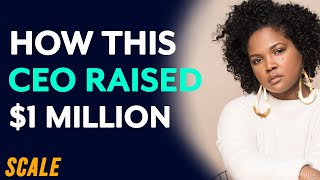
Beatrice Dixon, founder of the Honeypot Company, talks about raising $1,000,000 for her plant-based feminine hygiene brand in one year. She covers venture capital, retail distribution, and scaling strategies with CEO Allison Maslan.
My name is Alison Maslin. I am the CEO and founder of Pinnacle Global Network and the author of Scale or Fail. And I'm excited to introduce to you a business superpower today. Her name is Beatrice Dixon and in 2014, she launched the Honeypot Company, a plant based feminine hygiene line created with a goal to provide women with a healthy alternative to to traditional feminine care. Six years later, the Honeypot Company's products can be found online and in stores nationwide at Target, Walmart, Urban Outfitters, Walgreens, Bed Bath and Beyond, Whole Foods, and more. An empowering African American female entrepreneur, Dixon has been a recipient of Sundial and the Unilever's multimillion dollar New Voices fund. She was one of the first 40 women of color to raise 1 million in venture capital and has been featured in T. Paine School of Business, Buzzfeed's ladylike series, the Today show, the New York Times, Entrepreneur Magazine, Elle, Essence, and Forbes, just to name a few. Bea, we are so happy that you're here on the show. Welcome.
Thank you. I'm happy to be here.
Yeah, man. You have such a great story on how you've taken your business from the idea to out in the marketplace. Can you tell us a little bit about the journey that you took to get Honeypot started?
Well, Honeypot got started really out of necessity for me. I had an almost year long bout with bacterial vaginosis. Terrible thing. It was reoccurring. I would go to the doctor, I would take medicine. I was doing every natural thing that you can Google. It was awful.
Oh, man.
But one morning, my grandmother, who transitioned when my mother was very young, she came and met me in a dream. And in the dream, we were just sitting at a table talking and she handed me a piece of paper and she told me that this was what was going to solve my problem because she had been seeing me struggle because she said she had been walking with me and seeing me struggle. So on the paper was basically a formula. And she told me in the dream I needed to remember it because you have to think I've never really truly met my grandmother in real life.
Right?
Like she transitioned when my mother was young. So I'm trying to talk to her and she's like, don't. That's not what I'm here for. I'm here because, you know, you need to, you need to memorize this. So I just want you to keep memorizing it. So when I woke up, I was literally saying the ingredients that was on the paper because in the dream, it Was so real. It was like, I'm just sitting here talking to you, you know? So when I woke up, I was waking up saying, lavender, coconut oil, water, apple cider, vintage. Like, I was waking up saying that. Oh, my God. So I wrote it down because I must have. Dreams seem like they're forever, even though they're probably really quick. But it seemed like I was dreaming that dream for a while because it seemed like I had, like, memorized it, like, 10 times. It seemed, you know, that's the greatest.
Startup, like, inspiration, idea story that I've ever heard.
Thank you. Seriously. And I wrote it down and I made it within a couple of days because I figured, what the hell, All I could do is not work. And it worked. And that's how we got started.
Wow. It's truly from the heavens. Like, that is amazing. What a gift. What a gift. And so. And so from there. So it worked for you, and then you said, okay, I've got to get this out in the market. Can you talk about that a little bit?
That literally straight away, like, when I was. Like, when I look, because I. I was having a BV infection at that time. So when I. When. So when I realized that it worked, which was like, maybe four or five days after I was using the product that I had just made from what my grandmother told me to do.
Immediately.
I was like, oh, I have to make this into a business.
Right.
And I don't want to. I don't want to say all this to say that Honey pot is here to diagnose, treat, you know, or cure anything, because that's not what it is. This is just my personal story. This is what happened.
Yeah.
So, yeah, so I literally, literally in the same moment was like, I want to make this into a company. And that's what I did. But I didn't start the business straight away. I basically gave it away for a year and a half. So this is like 2000, 2012, when all this first starts. 2011 to 2012 is when I was going through what I was going through. 2012 is when I realized I want to make this into a company when all this. When the dream and everything happens. By 2000, this is probably like mid to late 2012. By 2014, 14 is when is the time that we actually want to go to market, publicly state that we're doing this. But before that, I was giving it away and people were ordering through email, basically. Yeah.
So you're just helping them and they were getting great results.
And yeah, it was helping them, but I Also had to make sure that it didn't only just work for me.
Right, right.
And at the time, I didn't have the money to go and get a clinical trial.
Right.
Because clinical trials are me and you both know, are expensive.
Yes.
My brother, who's my co founder, had came in and he was helping. You know, he was still doing his accounting. Accounting practice, but he was still helping to fund me and give me, you know, give me any kind of anything I needed, basically, if it was advice, if it was money, if it was whatever, just to support me while I was testing on the market. But what I found is that most of the women that used it, if they had an issue, because it's not. It's not for. If you have an issue. This is just like proactive skincare.
Right.
It's just clean skin care. But what I found is that most of the women were having the same results that I were having, that I was having. And so that's when, you know, it was. And then a lot of those women, even if they weren't having any issues, they just wanted to use something clean.
Right.
They were all ordering through email, and they were just like, look, I can't just accept this anymore. You know, I need to start paying you. And then that's how, you know, things just grew from there. But we went to the Bronner Brothers hair show in Atlanta, and that's where we launched our product.
Wow, that's so exciting. And so where was the breakthrough moment for you that you were like, okay, this is. We're going to take this much bigger. And, you know, then you started getting it on the shelves and, like Whole Foods and Target, so share a little bit, because we have a lot of business owners listening, going, yeah, I have this great idea, or I've been trying to get my product out there for years, and it's. It's not happening. So what was the shift for you?
I mean, the shift for me was, okay, so when we went to the Bronner Brothers hair show, I basically got on my hands and knees and begged my brother because he's like, b, I don't know anything about the product business. I don't know anything about feminine care products.
Right.
So he just did not feel comfortable doing it. And I got on my hands and knees and I told him, if we go to this show, which is basically an expo and we don't do well.
Right.
I will never ask you for anything ever again. But if we do well, then I'm doing this right, And I'm like, and I'm gonna need you to be here to help me do this. And he agreed. Obviously, it went really well. We sold 600 bottles in just a weekend.
Wow.
So we were averaging 200 or so bottles a day over a three day period. And for me, it was that moment. That was the moment that I decided, this is what I'm doing. Like, this is my life's work.
And what did you feel inside, Bea? Because that must have been, you know, to hear have this dream and then it worked for you and then some friends and then it's like, whoa. Like, what did you feel inside that you said, oh, this has to happen?
Sure, I felt sure. And I felt confident.
Yeah.
And I. I just felt. Yeah, I just felt like I just knew that this is what I needed to be doing. Mm. I don't know how to put it into words, but.
Yeah, no, I know. I know what you're. What you mean. And I wanted you to share that because those of you that are listening right now, when you get that moment, like, really own that, you know, because that's. Right. That's the thing that's going to push you to do the hard work.
Oh, yeah. And. And you. Your belief in being able to do it has to be religious in a way. It has. In the same way that you believe in if you're religious.
Right.
Or if you're not, whatever it is, whatever it is, the way that you are sure about that belief system, you have to be. It almost has to be religious how much you believe in yourself and how much you believe in your product.
Right.
Because without that, because you have to have. You have to have faith when nobody does, when in fact the world thinks you shouldn't. You have to know that it's gonna work out. Even when everybody's telling you no.
Right.
Like when you're raising money. And like when we were raising money, we were raising money, especially our first raise, we were raising money to pay bills that were due. You understand what I'm saying?
Yeah.
You know, and. And when you are the pressure on that, it's like being inside of a pressure cooker, you know, because there's no other way. It has to work, you know?
Yeah.
There's.
There's no alternative. And that's that conviction, you know, it's like, it's gonna happen, you know? Yeah. Yeah. I love that. I love that. And so with that conviction, you were able to get it into these stores. What was that experience like for you? What do you think was the secret for you to get into Whole Foods, Target, and so forth.
You know what's crazy? Like, when I think back to that dream, and my grandmother told me that she was walking with me and saw me struggling and basically came. Came in the dream, like, let me just help her out, because she obviously doesn't know what she's doing. You know, Everything that I've ever done in my life has prepared me for this moment. I was a pharmacy technician for 10 years. The last job I ever had in pharmacy, I worked at Piedmont Hospital at an oncology lab in their IV rooms. So. And I've worked in all different types of pharmacy. So when you're filling an IV before it goes up to the floor in a hospital, it's the pharmacy technician that's putting that equation together, doing all that, putting the syringe, the medicine, and the bag, the IV bag in front of the pharmacist for them to sign off and say, yes, I was a certified pharmacy technician for years. What that did is that helped me understand the math on how do you formulate something.
Right.
Yeah.
I left that, and then I went. I got tired of being in that kind of environment. It just didn't feel right for me. I wanted to go to school to be a doctor, but then I realized that I didn't really. I didn't want to practice that kind of healing medicine. I wanted to practice a different type of healing medicine, in a way. And I guess in a way, I do.
Yes.
So when I left there, I started a cleaning business that taught me how to be an entrepreneur.
Okay.
Got tired of cleaning people's houses because I didn't make money unless I cleaned.
Right.
That's what the service business. You got to do a service before you get your money. I didn't want to do that anymore because I just didn't want to have to make money that way. It felt a bit like slavery for me. I just didn't love it. You know, I left that and I went to work at Whole Foods. This is like. This is when Whole Foods was like. It was like one of the. It may still be, but I can only speak to. When I was there, it was just one of the best places to work. They sent us on health immersions. They sent. They taught you about food, about diet, about eating. I mean, I went to the Dr. McDougall's health immersion in, like, San Diego for, like, almost a week, and they taught me how to eat and how to prepare. You know, it was crazy.
That's.
But the other. But the other thing that it taught me, working At Whole Foods.
Right.
Was it taught me how to take care of customers.
Right.
From there I went to be a broker that taught me how to talk to a buyer.
Wow.
From there, all of the education that was leading you to this and your grandmother and everything. That's amazing.
It's crazy. And then I went to be an area sales manager for a startup that taught me how to work at a startup. And that's because from Whole Foods on, you have to realize I was still doing Honey Pot. I just also had a job.
Right.
So, you know, so, so, yeah, like, it was, I guess for me, I had just learned it. I was in training, you know, I was, I was just. I had, I had done it, you know, so getting into it, going and talking and sitting down to a buyer, it had been my job for years. So it wasn't. You know what I mean?
Yeah. It wasn't intimidating to you. You'd been on the other side of it. You knew the language.
Yep. I knew how to talk to them. I knew how to get like one of the tricks to getting a product on a retailer on the shelf at a retailer, especially if it's not a huge one, where you can actually walk into the store and put it on a shelf.
Right.
In a natural food store, one of the hacks is just to tell them, I'm going to give it to you for free. So I would give them three bottles or six bottles for free. And I would tell them, if it sells, then that's when you reorder from me. If it doesn't, then you didn't lose anything.
Yeah. That is great. Thank you for that tip. Yeah, I love that. That is such a great idea. Anything else? Any other tips or something that approaching retailers, maybe something like do not do.
This never if it's a small retailer.
Right.
If this is where you're starting off, I'll tell you a big retailer in a second. But if it's a small retailer, never just walk into the store. Always call the store and say, hey, store, whatever. This is my name. This is the company that I do. If you make skincare, then you want to say, I want to talk to the body care department. And then you get on the phone and you ask for the buyer and then you ask them, can you make an appointment to talk to them?
Right.
And then you go in and talk. Don't ever just show up.
Right.
It's better to call and make an appointment. And then. And then the other thing with big retailers, if it's almost important, depending on what you're doing for. First off, don't think that you need to just go right into volume retail. You kind of want to be ready for that. You need to have some. You need to have access to some cash, Right. You need to understand your operations. So I don't think that you should go into retail until your business has made it to over a quarter of a million dollars.
Yeah, that's a great tip. You really need to have your systems down because nothing would be worse if you got an order and you can't fulfill it.
Yeah. And you need to understand how to deal with it. You have to. Before going into volume retail, it's really important some people have their own manufacturing and they do that.
Right.
And I'm not telling you not to do that. The only thing is, if volume retail is your play, right. And if you have a brand, it's really important for you to be able to grow your brand. If you have a brand and you do your own manufacturing, you have two businesses, you have a brand that you gotta grow and you have a manufacturing facility that you have to run, right?
Yeah, good point, Good point.
Yeah. Like for me, what I would recommend that you do is you find contract manufacturers to make your product for you, give you a really great price. That's their business. That's all they do. They're not trying to be you, they are trying to be what they do. A lot of people get afraid of contract manufacturers because they don't want to sell their formula because they think the CM is going to take it from them. But that's what contracts are for and NDAs are for, right. And not only that, manufacturing is their business model. That's how they make their money. If they wanted to do to be a brand, they would just go out and do it, right? So, you know, so it's, I think that it's important to at least have made a quarter of a million because you really need to understand how to manage a supply chain before you go into retail. You got it? You got to know, okay, this is the threshold when I need to order more product, right. These are my manufacturers, these are my lead times. These are the trucking companies that I'm using.
Right.
You have to have an internal operations team. Your operations and your finances are of major importance when you're thinking about going into retail. Your finance and your ops team, really, and your sales team, which can be, just, can be one person, but those are the most pivotal parts of your business. When you want to scale in retail.
This is just great. Such great. Now do you think it's better to have while you're sharing this great advice? And I know these are the questions that a lot of listeners have. Is it better to have an in house salesperson or sales team or an outside distributor that the retailers are used to working with?
You need both. So our vice president of sales, Kelly Bottenfield, she's been doing this, she's like a 20 year veteran. Her and I actually used to work together at the company before I stopped my last job, like the company that I worked at. She was my boss at my last job and I always told her, I want you, like I want to bring you with me. But I, but I could never do it until I could pay her what she was worth.
Right.
The reason why it's important to have an internal vice president of sales when you're ready.
Right.
Because that's a, even if it starts off on the lower side, it's still a six figure salary.
Right.
There's just no way around it. You may can get it for high five figures.
Right.
But that is a salaried position and if the person's good, good meaning they, they have experience working with Target, with Walmart, with Walgreens, with cvs, with all the big guys. Which is why you pay somebody to be in that position is because they have experience in sales and they know how to manage a broker network. That is massively important. You need somebody on your team that understands how to manage a broker network, which is what you were just talking about, because they are going to know how to set those brokers up for success. They're going to know how to sell them our product, they're going to have our best interest at heart. While the broker may be working for 100 brands.
Right.
Yeah.
So I think that you need both.
Yeah.
That's such great advice.
Because I think a lot of business.
Owners, especially when they're starting out or even well into the six figures, they're still trying to be the brand man, manage the sales too. And that means there's hardly any sales because there's only so much time in the day.
Yeah.
To bring in somebody who, you know, once you were able to, somebody that already had the experience, the network you.
Have, that's what you, that's what you pay them for. You know, you, you don't hire, you don't hire a salesperson who's never done sales before.
Yeah, no.
Right.
And sometimes we get in that trap when you're first starting out because you just need people to help. You just need hands and people are willing to help.
Right, Right.
But the thing that'll catch you up is if the person that you've hired does not know how to do the job, you're just paying them money and it's just going down the drain.
Right.
You're not. You don't pay somebody that type of a salary to learn on the job. You pay somebody that type of salary because they can teach you what they know on the job and they can do. They can execute that job properly.
Yeah.
Well, there's a saying is, you know, the goal is to be the dumbest one in the room. And what that means is hire experts, you know, their staff. So I love that. So what were some of the biggest challenges for you in scaling your company from, you know, startup to a bigger enterprise?
I mean, you know, I get asked this question all the time, you know, and I know everything that we do is a challenge.
Right.
I mean, we literally pull things out.
Of thin air every day.
Every day and make them a reality.
Right.
So, sure, I could list out a list of things that were challenging and difficult, but the fact of the matter is, I'm up for the challenge.
Oh, I love it.
Whatever it is, I'm here for it.
Right.
Like, bring it, you know, Bring it. Yeah. Because when you decide to take this path, you gotta be a little crazy, you know, you gotta be. You gotta. You can't think like everybody else. You have to have this higher level of thinking and navigating, and you have to be able to see things 20 steps ahead. You know, you don't have to be the expert at it, but somehow you become an expert at things that you don't even know that you knew because your head is so in the game. Right. When your head is in the game and you're giving this everything you've got, whatever the challenge is, you're going to be up for it, you know?
Yeah. You know, I always say, once you decide.
Yep.
Once you decide, it's just going to happen. And you will find a way. If you're convicted, like you talked about earlier, there's always an answer. There's always, always an answer. I think a lot of times people get hit with, well, they said no, or they said, I'm like, well, no just means that means another way around. Right.
Exactly. No just means I need to find another way around or I just need to go talk to somebody else.
Right.
If it's a no for you, and it's like a real no. Cool. Next.
Right?
Next.
Yep.
Exactly. Exactly. Now, you were work as you said, you were working another job while you were getting this business. So what is your advice to people that are there? They want to take that leap. Do you. How long do you continue on the side hustle? Do you think that you should have left your job sooner? Like, what would you say to somebody that's in that position?
I don't think that you should leave your job to work your business full time until your business can run without being affected and pay you the salary that you're making a better. Because one thing's for sure. Whatever can happen that is completely unplanned. You make plans, but the plan never goes to plan. Not never, ever, ever, ever. So your business has to be, for six months or more, able to take care of itself.
Right.
And if you added your salary on top of it, your business would still be fine. Yeah, I don't think that. Because I think if you start. If you start taking money out of your business for you, you're taking food out of your business's mouth that it needs. Businesses need capital, man. That's for sure.
Yeah.
And so we. We, me and my crew especially, like me, Simon, Linda, Antoine, we did not. We did not. Well, Antoine had a salary. She was the only one that got paid. But we did not start getting paid me till late 2017. The rest of the team from 2018 on. So me and my brother had been working since 2012, never taken any money from Honeypot all the way up to 2017, because that's how. Yeah, that's how long it takes, man.
Yeah. Yeah, it does. And so you just. While you're working your job, you're doing this late at night, early in the morning, and if you are committed, you just make it happen.
Yeah. While I'm working on my other stuff. I was lucky because once I had left Whole Foods, I was really working on my own schedule because I was a broker and I was just a traveling salesperson. That's what I did.
Right.
I represented brands, and I traveled in the Southeast to go sell those brands into Whole Foods or sell them into, like, small natural grocers or co ops, you know, and things like that. So I was able to fit. I was able to work and still do my. Do my honey pot work because I didn't have anybody breathing down my neck. So I could just kind of bounce between both of them. So I was doing. I mean, I remember the most the day where I felt so much desperation and so much pressure. Me and Simon were raising money to get into Target. An investor had gotten Back that we had pitched to and said no. I think a couple of them had said no. We were. I was training the person that was going to replace me, who happened to be my friend, and I was pitching to another investor in the car. And at the time, I was working on immigration paperwork, you know, for a family member. So I was. I was literally doing like 10 things at one time. But that's just what. That was just the example of what my life looked like.
Yeah.
You know, it was hard. It was hard. I wouldn't wish that shit on my worst enemy.
But you were committed.
You were committed. So I want to switch gears a little bit. So you. Have. You already had a plan to sell your company? Is that. Is that true?
Yes.
And so how has knowing that you want to exit at some point affected the way that you have been growing your business? So I want to switch gears a little bit. So you have. You already had a plan to sell your company? Is that. Is that true?
Yes.
And so how has knowing that you want to exit at some point affected the way that you have been growing your business?
Well, you just have to. You have to look at your business for the type of business that it is.
Right.
My type of business, people still go to the store, Right. People buy it online, but for the most part, people still. People go to Target and Walmart and Walgreens and the grocery store to get their feminine hygiene products. So for us, volume retail has got to be a play.
Right.
It has to be a big part of what we do. And then really just understanding and navigating our innovation strategy, that's another thing as well, because we're not like any other feminine care brand. I mean, we are and we're not.
Right.
Because the way that we've decided to do it, we've decided to look globally at being a vagina company instead of just being like a menstrual company or a wash and wipe company, you know, we're putting everything under one brand, you know, so, yes, we absolutely have to be strategic and intelligent and paying attention to what's working in the market and what's not.
Which you would do anyway.
Right.
You would do that anyway. But you really, you know, okay, this is our end game.
Right.
And I want to reverse engineer that.
And because we've got. And because we have venture capital and money in the brand.
Right.
Venture capital and private equity, you've got to have an exit strategy. Yeah. Because how are they going to get their money back?
What was your key? Because this is a big one. Okay. And I want to hear, what do you think was the key for you to raise that first million?
Well, it was over. It was. Yeah, you're right. We got into Target and there was just no other way. Like before we got into Target, we were making our wash, we were bottling it, capping it, shrink wrapping it, boxing it, shipping it. We were doing everything right. There was no way we were going to get into 1100 doors of Target and be making that product. It was almost impossible.
Right.
So we had to raise the money because we had to hire contract manufacturers as our partners to make the product for us so that we could focus on growing our business. So for us, the reason why we raised that first family and friends round was because we didn't really have a choice. We had to get into Target. And when you hire a manufacturer, a contract manufacturer to make your products for you, you can't go to that manufacturer. And if you're going into 1100 doors, your order is 20,000, 30,000, 50,000 units, right?
Yeah.
Because you also have to get it to a certain price so that you can make money on it, you know?
Yeah.
So that helped, Right. Getting that first that big order from Target, then you could go investors and say, hey, we have proof of concept here.
Well, you. I don't want to give any misinformation. When you get into any retailer, right. You don't get an order, you'll get an email from the buyer giving you your award. For what award of what? Of how many doors you're going to go into and the fact that they're choosing to partner with you.
Right.
You're going to get that award, but you don't get an order from any retailer until six weeks before it's gonna go on the shelf. Maybe eight.
Right.
So we weren't raising on an order, we were raising on an award email.
Right. And then you get that notice and you've got a hustle.
And you gotta hustle because it's a. It's, it's a. There is a deadline, you know that if your product is going to go on the shelf in April, they're going to tell you that they're launching it in April. But what that really means is that they're ordering it by the end of February or early March. So you have to have your stuff together.
Yeah.
By February, because you don't want to be running up against when it. When they're going to order it. It needs to be you. And the other thing is, you work with distributors. Normally, when you've never worked with the retailer before for.
Right.
You work with a broker who's the person that communicates with the buyer, and then you work with a distributor who understands how the retailer wants to receive their products.
Right.
How they want to get it into their distribution centers and then put it on the shelf.
Right.
So that means that you got to have it into the manufacturer even three or four weeks before, before the store is going to order it. Because. Because the store, the manufacturer or not the manufacturer, distributor, needs to have it on their shelf and ready when, whenever the retailer is going to order it. So you have to be ready three months before anything is even going to happen. That is an enormous amount of pressure.
That is. And even a little bit more just to. Just for the end case, just in case, you know, stuff happens, something breaks down in their delay.
Right.
So, yeah. So, you know, as we round this, this has just been so great, Beatrice. I mean, really, really helpful to so many business owners. And your knowledge is just so, so valuable. What are some of the mistakes that you see business owners making when they're trying to get the investors or they're trying to raise capital to grow their business?
The biggest thing, I think, is doing it too soon. You know, we're in this new age where being in business is popular.
Right.
Having your own company is popular. And then, and then you think straight away, well, I need to find some money. That is a mistake. Raising money too soon can be a mistake because you may be successful and you may raise that money.
Right.
But you probably sold way, way, way, way, way more than what you needed to sell in equity to an investor. The biggest reason why. Yeah, the biggest reason why is because it's really important for you to understand your business. It's really important for. Just like your book is called Scale or Fail, it's important for you to fail in order to scale because in order for you have to fail a lot to understand what works and what doesn't work.
Right.
Yeah.
It's not really a good idea, in my opinion, to raise money in a business where you don't even understand it yet.
You haven't even worked it.
You don't even know how the market is going to, you know.
Yeah, this is so you're preaching to the choir here. Like, this is. So I say this all the time because what happens is, and tell me if you see this, is that business owners get, you know, they get a bunch of money, they don't know how.
To run their business, make all kinds.
Of mistakes, and then the money's gone.
Yeah.
And they haven't even gotten off the ground yet because they didn't have their systems or their people, their processes.
Yeah. And not only are you going to feel bad because your business isn't doing good, but you're also going to have to figure out how to sleep at night. Because sure, every investor knows it's a gamble.
Right.
Nothing is etched in stone. However, if you raise money and you didn't even understand how to do your business, that means you just wasted somebody's hard earned money.
Mm.
This money doesn't just grow on trees. This money comes from, like, high net worth individuals who may have had to work their ass off to make that money.
Yeah.
You understand what I'm saying?
Yeah. Thank you for saying that because I.
Think there's this idea of, oh, it's.
Just no big deal. No, it is because.
Because the moment you bring in somebody's money. Look, sure, I want Honeypot to be absurdly successful for my benefit, but my benefit is not. I'm like last in line. I got to make sure my. I got. My investors come. Their interests come before mine do.
Right?
Yeah.
The people that have worked here from the start who didn't make any money for years.
Yeah.
I don't take that lightly.
Right.
Yeah. No, I mean, thank you for sharing that. Not many people talk about that and I think that's. That's so important. So thanks for sharing that. So We Bank. And that's. That's what this, this podcast is brought to you by WeBank. How has we bank supported having that certification? Supported your business growth?
It has supported us in retail a lot. I mean, having that we bank certification can really mean like thousands and thousands of dollars in slotting fees or, you know, or they may have like diversity programs where they have to set aside a certain amount of business for women who are in wbenc.
Right.
For women, business owners, for humans of color, whatever the situation is. These types of organizations are really beautiful because they make it so when you are in a minority position, especially being women in business, which I think is becoming the majority actually. But when you are in the position where you are a minority and you don't have access to a lot of things and it's harder for you to raise money or do or. Or whatever the situation is, we bank just, just say just having that certification can really just get you through a.
Door, you know, and that's time is money.
Right.
So yes.
And money is money because it saves us a lot of money. You know that, you know that it would be really hard for us to figure out how to come up with hundreds of thousands of dollars of slotting. Because that's the thing that can happen, you know.
Yeah. Beatrice, this has been so valuable. I went longer than our normal interviews just because you were just laying these brilliant knowledge bombs, you know, every few seconds. So I just wanted to get as much as we could here from all of your years of experience and congratulations for what you've created and you're helping so many women out in the world, and I'm sure.
And you, too.
Yeah. Yeah. This has been so great.
More from Allison

He Built a $150M Company Without Taking a Single Dollar of Outside Capital | Erik Huberman




Wing Lam has run Wahoo's Fish Tacos for 38 years and his hiring rule is simple.




The Guerrilla Marketing Genius Behind One of California's Most Beloved Brands | Wing Lam
