How To Bring in Millions (or Billions) With Your Next Product Launch
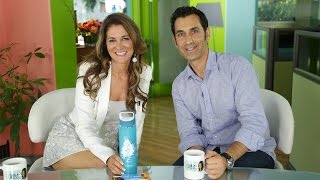
Ash Gandahari left corporate beverage consulting to launch Hiburst, his hydration product. A seven-time Ironman athlete, he discusses the mindset and marketing strategies behind turning a product idea into millions in revenue.
Welcome to Ali and you'd the business success and lifestyle show I am Alison and today I'm going to open up the curtain so that you can find out how do those beverages in the supermarket, how do they get on the shelf and how do the ones that get super successful really make it and how do the ones that don't survive, what are their big mistakes? The clues to this can help you in any business that you're running. So today on Ally and you'd well, we are so excited to have you here today and you are in for a special treat. Whether you are in the early stages of your business, it's just a concept, a dream in your head or you've been in business for years, you're going to walk away today with some real clear cut strategies and understanding to take your business to the next level. My guest today is Ash Gandahari and Ash is a seven time ironman and Kona fisherman. I mean enough said already, okay? He is a, I'm trying to read this here. Lifetime athlete and athlete and family man. And Ash has recently created a hydration company that we're going to talk about today that will eliminate the conventional way of consuming beverages with plastic bottles while providing amazing nutrients for your body and incredible products that for all of you. And he also is an expert in this industry and works with people in product development and consulting. In the beverage world, Ash is truly the expert. He's also a very heart centered thought leader and he is with us today and changing the world one person at a time. So Ash, thanks for joining me today.
Thank you Alison. It's really an honor to be here. Thanks for thinking of me and thank you for wanting to have us here and share our story.
Well, you and I have connected, right? We're friends. And your wife Shanda. Yes. And you know, I've been seeing you develop this new product. But then also we've had amazing conversations about all of your experience in this industry and I was so inspired. So that's why I have you here today because I know that everybody else will be as well. So you have an interesting past.
Yes.
And you've had a successful past and you're making a major change and you're launching this incredible product. So why don't you share a little bit of your journey?
Yeah. So you know my career in corporate America, you know, it's 10 years in corporate America. The last 10 years I've spent in the beverage industry really consulting food, beverage manufacturer, some of the leading brands that your audience most likely consumes two to three times a week at a minimum. And about two years ago, really came to me that it's time for a shift. It's like when I look at the most successful entrepreneurs, when I look at the most successful businesses in the world, I think the common thing I see and common thread that I see is they ask themselves what's next? And so that's a question that came in my head about three years ago. And really, I think if you talk about people that are looking to make a shift in their business or in their life or in their profession, two things happen. One is you're either forced to make a change or you're ahead of that and you make that choice in advance. And so I would say for myself, I really made that choice in advance. Then last year I said, hey, I'm going to make that change. And the product that we've developed is really about that as well. It's about, are we going to be forced to make a change as humanity, as a society, for this world, or are we going to be ahead of that shift, ahead of that change? And so that's really what this is all about, right?
Well, I love that forward way of thinking because our tendency as a society is to wait until we're in desperation that we're forced to. So I really like that idea of thinking ahead, you know what I mean? And being preventative. And obviously you took your life into your own hands. So then what ended? So then what happened?
So what happened was had to put myself out there. You know, anytime you want to make a change, you really have to take a chance, take a risk, and really put yourself forth in a way that, okay, what are the potential outcomes? And either way, I'm gonna go for it. And so I actually was sitting in a boardroom of a very large food and beverage manufacturer and I was there with the CEO and vice chairman of the board. Can't share the name of the company just because of confidentiality agreements. And they're a five billion dollar company, publicly traded, one of the best performing stocks on a NASDAQ for the last 10 years. And we were negotiating my contract that had come up after seven years. And really what it came down to was this is great. Love the company, love what's happened, love where they're going. Not really aligned with who I am per se, but really made the change and said, I'm ready to move on to that next journey and have my own brand in the marketplace in conjunction with supporting brands that are not, you know, in conflict in Any way.
Right, right. So that was. So here you are, you're sitting there, they're ready to offer you a lot of money.
Right, right.
That people dream of getting to that point. And then you're looking over here saying, well, I could do this, I've got to invest in this. And I don't know what the outcome is going to be.
Right.
And so what did you go through?
It wasn't an easy choice. It really wasn't. In fact, to. To get into that, you know, to be in front of that meeting wasn't like, okay, this is it. Decisive point. It was actually weeks of conversations. And when they gave me everything I was literally asking for, it was a moment of truth, like my personal truth coming in and saying, what? What is it inside me that's continuing to want to negotiate and really getting intimate with that and saying, it has nothing to do with the money, it has nothing to do with the contract, it has nothing to do with the benefits and all those things. It really has to do with where I want to be in the world. And so it's either way, the outcome will be the same. Whether this contract's renewed or not, the outcome will be the same. I will end up doing something else. And for me, life is literally now. And so I'm not going to waste a minute of it doing anything else than what really my vision is. That's come to me. And so for me, that's what came out of it was okay. Really, this is your vision. What's going on here? Let's get aligned and let's move forward. Because if you're that connected to your vision, it's going to be a reality.
Right. And so you obviously turned down the offer. I'm sure they were like, what?
Yes, that came up and it was actually had a number of calls, like within 48 hours. I had some really big players reach out to me. And since I was so clear, I was able to an extent, work in the industry with others and turn down these other really lucrative offers and be still true to what I'm going to create in the world. What's amazing about that story, I think, and I think maybe your audience could walk away with this as well, is we all, as entrepreneurs, we have that key customer in the food and beverage industry. It may be the Walmart or the Whole Foods, the Costco, the world that we all have that, whether you're an employee, whether you're a business owner, you have that key cash flow driver. And often entrepreneurs, business owners, we start focusing on that One client, that one customer. So we no longer become diversified. You're just focused on that one business. And so your marriage becomes with that one business. It becomes so honed in on that one business that it ties you up from, like, really investing for growth and really continuing to evolve as a company and become a leader in the category. So for me, that relationship with was one company.
Right.
And what's amazing is when you take just a step away from that, what opens up is really a miracle. And so what I realized in that moment was like, wow, knowing my value is not just like knowing my value, it's really believing and knowing it so deeply that I'm okay with stepping back, seeing what other opportunities really open up. And so that's true whether you're an entrepreneur or not today.
Right.
If you're even an employee, if you're willing to just step back, I bet you so many opportunities will just wide open for you. If you're a business owner, you're really honed in on one area of your business or one customer, taking a step back will highly likely open up a number of avenues that you never saw. Yeah, so that was a huge takeaway for me in that moment, actually.
And, you know, I think you said some really important points here. One is to just recognize your value, because we often don't do that. We don't really ask for what we're worth in the marketplace.
Yes.
Or we just don't take that step at all. Right. And that's where a lot of people get stuck.
Yeah, I see that often. I mean, even when we talk about consumer goods, you know, like food and beverage products, you know, commodities even, you know, people think, oh, I have to be. I have to have this product differentiation point. I can't. Yes, you do have to have that. That's true. But if you really have value, that's that as that customer service. These other ways that you could add value, you could ask for what you're worth. In the world of coaching and entrepreneurship, that's also exists just because there's a number of coaches. I see many people that don't ask what their value is. And if they just take a step back and look at, like, what am I providing really, what's. What's authentic, what's real to me, and charge what you're worth, you'll be shocked at what happens.
And looking at the value that you. The result that happens from your product or service. So that's incredible advice. So thank you for sharing that and kudos to you for honing Your courage and going for this. And you know, it's, you know, a lot of times when people go to start a business and you, you've got years of experience. So it's not like you're getting into this as a novice. The only shift that you're making here is now you're doing it for yourself, right?
Yeah. Going from consulting major brands on flavor systems, unique ingredients, developing unique concepts, to really saying, hey, you know what, we're gonna have our own branded product. And that comes from a number of areas. You know, one is I think there are a number of major businesses that I've worked with that weren't willing to really put a product like this out in the marketplace. So I really wanted to be the catalyst for the change.
Well, let's talk about the product. So I'm super excited about this. It's called hiburst and this is a branded piece out here. And I love the hashtag liveout there. That's awesome. And so we've got these little pieces and I guess you put this in.
Yeah, these little stick packs. Yeah, these little stick packs. So we have a unique product. So you know, there's a lot of consumers out there that drink Gatorade. They drink Crystal Light, for example, is a powder product based drink that you could add to 19 ounces of water or 16 ounces of water. And so our product is really something you add to 16 to 20 ounces of water. But what we're doing different is we're not just Crystal Light. You know, those other companies that develop products, they're not doing it based on real food concept, they're not organic. You know, we have an organic based product, we have a real food based concept. And the way we do our real food or fruits that are in our products, they're actually cold pressed juices that we take in. And we use a unique drying method that doesn't add heat in the process. Because typically when you have fruits and vegetables that are dry, they are either gone through a heat process of some sort where you lose nutrients.
Right.
So our intention in our products, which is what the consumers mean, all they need to know is this, we retain the nutrients in our products so as if it was a cold pressed juice.
Right.
In fact, we have studied, let's say, between blueberry that is cold pressed to a blueberry that is dried in our unique methodology and we don't use any, you know, lose any phenolics. We don't have that, anything like that.
Because a lot of times with them you have to throw them out if you don't drink them within a few days.
Yeah, yeah. So our product is unique. It's a unique drying method. It really retains the nutrients. Now if you put it in your car, and a lot of people don't notice if you put vitamins and your, let's say, drinks in the car, you're actually degrading the nutrients in the product because the heat and time is the two factors that make that happen.
Right, right. And so while I cannot wait to drink this because I go full speed all the time, my husband calls me energizer bunny. So I need all the nutrients that I can get. And plus this makes it super easy. I can throw them in my purse.
Totally easy. Easy to carry around. It's a great product. Again, you just add it to 16, 20 ounces of water. And what's great about our product, it's only 2 grams of sugar. So if you compare that to a leading beverage company out there that is an electrolyte based company, our product is an electrolyte company. The product that you're looking at right now, it's only 2 grams of sugar. So it's only 15 calories.
Right.
So we're not packed with 180 calories or, you know, 36 grams of sugar or anything like that.
Like a lot of the products in this market are.
Yeah, a lot of these. And we don't use any artificial sweeteners. It actually tastes good. You don't, you don't get the taste. No purple dyes. All of our coloring is done through fruits and vegetables. Yeah.
Well, this is so cool. So, and so you're, you know, the product is just coming out on the marketplace.
Yep. We built out a facility. It's been in my mind for, for over a year. And when I made my choice, you know, we built out a facility of our own. So we do all our, all of our own packing. We brought a lot of the work in house versus trying to subcontract it because we want to keep our system proprietary.
Fantastic. Well, I'm so excited. And so, you know, for those that are watching the show and they're launching their own business or a new product, can you share some, you know, some of the creativity that you're going to implement in some of your marketing?
Yeah, so for us, marketing is a huge part. And you know, I've been in the business long enough to know I've worked with a lot of emerging brands and also highly successful brands. And for us, from a, you know, targeting towards grocery, our Strategy really is an online strategy. We have a plan and I have the context to get us into retail. However, off the gate, we're really going after an online strategy because our product, the way I've strategized our line extension, you know, I began with the end in mind. So we, we have, as the late Stephen Covey says, so we really have the end in mind. Yes, we will be in retail, we will be available everywhere. We will be a convenient product. However, we really focused on one niche strategy, one niche channel, and that's the online channel to start. We have a full program from affiliate programs, also an online retail program that we're launching with Facebook advertising campaigns, Instagram campaigns, et cetera. So really we want to get that channel down very well. So instead of trying to push it into retail and hope that someone picks it off the shelf, we really have a strategy to create demand so that we get the retailer demand coming to us.
Right? Yeah, I love that. I love that strategy. Because you're creating buzz first and instead of really trying to go into the retail first.
Yes.
And you're getting. People are seeing it all over and then they begin to see it in the stores.
Exactly.
Then it's kind of like you're seeing it everywhere.
Yeah, we're creating a pent up demand. You know, the reality of it is for us to go out there realistically to compete with the leading brands in both powdered beverages and you know, let's say the leading electrolyte beverage in the marketplace, it's unrealistic. We can't compete with their marketing dollars. This is just a reality. We can. If I want to go and dilute myself out of the business, we certainly can do that. That's just not an option for me. You know, I choose not to do that. Number two, to get the sell through that's required in Whole Foods and both at a regional level and national level, to get that sell through demand up to a point where it makes sense for us. It just didn't add up. Now, for some of the folks in your audience that may have that strategy already nailed down, that may add up based on my experience and seeing a lot of emerging brands, it doesn't add it up for me. So what we're doing is taking a step back from that. Create pent up demand and then go through that channel. Because what many people that develop food beverage products don't recognize is one thing, and that is you become literally the slave to your distributors and your retailers, so your margins get slimmed down to nothing. Just to get it into a distributor. And that distributor then is representing massive line skus and you're expecting to get a share of voice enough to get it into a retailer. And the reality of it is, if you're not giving them the promotions, you're not giving them dollars to really promote the brand, the product and get them the commissions that they're looking for, your product ends up like last in line. Our intention is to have so much demand that they can't afford not to have us as part of their line strategy.
They're coming to you saying, wow, people are asking us, we carry this. And I know that's true. I mean, so many people get into the retail space and they're working with this tiny, tiny margin and they're struggling to get paid because sometimes from the bigger retailers, they're, you know, they're longer.
It's longer. Yeah. They're managing their cash flows and their business is selling you real estate, basically.
Yes, exactly. So if people. And plus you have a much. A bigger margin, obviously, if you're going direct to consumer.
Yeah, we certainly have a bigger margin. With that bigger margin also comes, you know, we want to slim it down to what it would look like just in retail anyways. And we use that additional margin just for our ad dollars.
Marketing. Yeah. So, I mean, this is something that I always tell my clients. Let's say if you're going to open a new business, even if it's brick and mortar, get the buzz going online, get people excited about it. Right, right. And then they, you know, are wanting to knock the doors down.
That's our strategy.
Yeah.
And we're committed to that strategy. And I've worked with other brands that have had similar strategies. Of course, this is not something that comes totally from my concept. It's a blend of concepts that we bring together.
Yeah. Well, we'll definitely support you.
Thank you.
I'll be drinking it. You guys will too. Right. So we'll tell you all about where you can find it and all of that. So, you know, you've worked with a lot of companies even in your. In the corporate life and getting into this industry. And I know it's super competitive and it's one of those things where people invest a lot and then they. They struggle. What do you think are some of the biggest mistakes that people make?
I think growing too fast, going. Trying to grow too fast, being the, you know, so I see, like, let's say there, I work with several companies that had had very successful few skus that are extremely Successful even in retail. They get a nationwide distribution. All of a sudden a distributor or a retailer says, oh, well, we wanted to extend it to six lines. And so they go ahead and say, yeah, we'll go ahead and do it. And what happens is they spread their cash flows too thin. And what. And they just collapse. They get, you know, they'll get massive. You know, they take on more from an overhead standpoint. They take on more SKUs, they take on more responsibilities, they expand their facilities and they just go too big too fast. And if you look at most of the lines, they have, you know, their premium SKUs that they're really making the money on, and the remainder of the stuff is barely breaking even or just making it. So my biggest suggestion to brands is don't grow too fast. Don't take on everything that every distributor, every retailer or every customer is asking of you. Being in the driver's seat of your brand, be in the driver's seat of your product line.
Yeah, that is fantastic advice. And, you know, we're always hearing online, you know, grow, multiply your revenue in three months and all that kind of stuff, but truly, if you got that busy, could you really handle it? If you don't have the foundation underneath you? People don't realize you actually can grow too quickly before you have everything solidified.
Yes.
Right. And it's not just more revenue, it's profits.
Yep. And cash flow. Yeah, and cash flow. You manage that cash flow. You know, I think I speak with a lot of entrepreneurs, and one of the things I see often is they understand revenue. They may be revenue drivers. They could generate a ton of revenue. But then if you look at their cash flow, it's totally mismanaged. You know, pushing back, just, just doing this one tip that I'm going to share could really have massive impact for your business owner.
Okay, you ready?
And that is like, what would it look like if you were to just pass, you know, push back your, you know, your accounts payables and pushed up your receivables? What would that do for your business? How could you take that, you know, that revenue and reinvest while you're pushing back the receivables, which is what these major brands do, major companies do. You look at Whole Foods, they don't make any apologies by saying, hey, you know what we want net 60, net 90 or net 120. You know, you work, you know, I've worked with.
You have time to make money on your money.
That's right.
Right. By the time that you pay Exactly.
And that one little thing, how does that shift the business in a growth strategy? Right, right. So I would say some of those basic principles, looking at those and also don't be afraid. And the other tip I'll give is this, is that I often see businesses want to make more money with little to no investment. That's just not realistic. That's just not realistic. So as an entrepreneur, you know, for example, when we launched our product line, we invested in equipment, we invested in the space, we invested in employees. There's. And when I say we, it's really me. There is no, there was no revenue. There was zero revenue. There was just a concept and there was a plan. So there's no revenue. Well, I see many entrepreneurs forget that investment. So what would it look like if you set aside 30% of your revenue just towards advertising alone? That alone. If you're getting a one for one return, you're gonna grow your business.
Yeah.
If you're getting a two for one return, you're gonna really grow your business.
Well, I think what, you know, I coaching business owners all the time, and I've seen this over the years, that people say I want zero debt in my business. And I say you need to reframe that word because it's not debt, it's investing. When you're investing in the stock market, it's. That's not debt. Right. You're. You're going to get a return and nothing's going to get a bigger return. If you're taking the right side steps and you're getting the right support, nothing's going to give you a bigger return than your business. Right. You know, so yeah, you've got to, if you're going to plant a seed, you got to water it, right?
Absolutely. And often I don't see that. And that investment could look in many ways, right?
Yes.
It could be a new operations facility. If you're looking, you're making 100 widgets with one operation facility. You need to go to 200 to grow your business. You gotta make an investment. To go to 200, it requires an investment. If you can cater to, let's say a hundred clients today as a coaching business and you need to bring on a trainer. Well, you can't just go to 150 by yourself. And I see often people try to do that and they just fall apart, they crumble.
Because there's only so many hours in the day and there's only so many people that you can.
And the best way I can really serve that is this if you're going in for a surgery, do you want to go in front of a surgeon that's exhausted, has already done maximum number of surgeries, can't handle another surgery, or would you rather that surgeon to have a partner that can handle the surgery and has plenty of time?
Yeah, yeah. That's why I have a team of coaches that work with me and it's as if I'm with the client because it's all of my teachings and we're totally aligned. But, you know, they're out there sharing that. And I think that's, you know, there came a point for me where I was maxed out and I said, okay, what is going to take us to really expand and reach more people?
So, yeah, definitely. I think that's the number one thing I would say is that really put an investment towards growing your business.
Yeah.
You know, entrepreneurs get that when they start. They tend to sometimes forget that.
Yeah. And that slows their growth or chokes their growth.
Totally chokes their growth completely.
So this is really, really good advice. I love this. So, you know, what do you think some of, like, in all of this and all that you're going through and, you know, we should have you back in a year once this is out there and because you're going to learn some even more, I'm sure. But looking back, what do you think have been the biggest life lessons for you?
Well, you know, so this is not the first entrepreneurial venture I've done. I've had a consulting business for the last 15 years working with clients, and I still do that because it keeps me sharp. I think, you know, the biggest advice I think is what I shared at the beginning, and that is be, make the change. Don't. Don't wait for the change. You could take that lesson from. It's really prevalent in business today and I think we miss it. Look at the newspaper industry. Did they change or do they find themselves in a force of change? You look at the auto industry, did they change or are they finding themselves in a force of change? Look at the real estate industry right now. Did they change or are they finding themselves in the force of change with what's happening with Redfin, with what's happening with Tesla, with what's happening with, you know, Google and the newspaper industry and the way that news and information is gathered and also shared now with like Twitter and all these other ways? So are you changing or are you waiting for a force to change? So my biggest advice and what I've learned over time is I Want to be the force of change, not to be reacting to the change.
Yeah, well, so many industries are getting disrupted.
A big time disruption is the number one thing that forces change.
Yeah. So, and I mean you're thinking about even with automobiles, you know, in the next 10 years you're gonna have people being the cars are gonna drive ourselves.
Yeah. And so that's the taxi industry. Right. Look at the taxi business. Taxi business. Talk about it. Force of change. Uber left. And these drivers are temporary drivers that we see. Like, like you're saying.
Yeah.
Pretty soon these self driving vehicles, car ownership is going to go away and taxi drivers are going to slowly find themselves going obsolete too. Because self driving vehicle. I pick up my iPhone, I don't need someone to come pick me up. It's a car that comes to pick me up.
I know. Isn't that trippy?
It is. It is a little trippy. Yeah. It's a little creepy.
Like, hope you got this talk about trust and literally letting go of the wheel, which we can all do better at. Now I'm going to wrap things up but I really want to just touch on this because 7ironman 7ironman 7 so tell us about that. Like what was your inspiration to do that and why keep going back? What was that like?
Yeah, for me again it's this constant, it's like really resonating with me right now. It's this like change thing for me. And I think I've been truly blessed with like being able to adopt change. And at 35 years old I actually saw it the other day on Facebook. It had like, you know, my six year mark or whatever, you know, history that pops up. And it had my first triathlon pop up as my first picture. And it was Monday morning and it was really cool because it got me really focused for going into my office. And so six years ago I was like, okay, there's no more flag football, there is no softball teams and you know, tennis groups. It kind of like a lot of my network of friends that we used to do sports with slowly like dwindled away and everyone started having their families, you know. And I was 35 years old and what I immediately thought to myself, I said I gotta change something because my diet's not the same, my fitness level, I'm a lifetime athlete and I'm not really staying up with my athletic behaviors. I'm just a gym rat. And I was just sick of being a gym rat. And so I said I gotta change because this is gonna lead towards the wrong direction for Me, I can see what's gonna come up next. And so that change was signing up for a small triathlon. It was a small sprint triathlon in Manhattan Beach. And as I was prepping for that in a way of giving back, and I was like, you know, I said, for every 50 cents I raise towards the team in training, which is the Society for Lymphoma, and for every 50 cents I raised for this event, I'll donate my own 50 cents. And it was a way to make it fun to contribute and, and to also stay fit and in that process. And I guess this is one other tip that I'll share in that process. One of the coaches had done at Ironman and I was afraid to swim like two laps. I literally was sinking on the first lap. I was out of breath, swimming across the pool. And he had told me he did an ironman that was 2.4 miles of swimming. And I said, that's amazing, that's awesome, Congratulations. I don't want to do that. So two weeks later I was swimming like 16 laps, like no big deal. So that got me thinking, I'm like, I could do 2.4 miles. That's like 70 something laps. I could do that. And I asked him, I said, what do you think? Do you think you do it Ironman? And the guy said yes. He believed in me even when I didn't believe in it myself.
That's a good coach.
That is a great coach. That is a great coach. He believed in me. And I saw it as an impossible thing for me because I hadn't even thought about the 112 mile bike or a marathon, which I'd never run a marathon in my life. So that night I went home and I said, this is it, Ash. He thinks you can do it and you get to figure out that you can do it. I signed up for my first race that was six months from that day.
Wow.
And I signed up because I knew.
So it just started with a decision. Really.
It's a choice. It was a choice decision. It was a choice moment. And I was like, I'm gonna do this. It wasn't like, I'm gonna try it, I'm gonna do this and I'm gonna do it on this day and this time. And then immediately what I did after that is I shared it with everybody I could because I knew that there would be no backdoors. Like I shared on Facebook. I signed up for this Ironman. I got these messages. You're crazy. You've never ran a marathon. You What? Do you know how long that is? 140.6 miles. I'm like, yes, I know. And I had never ran even a 5k. I had never swam in an ocean, nor have I ever biked. I had not even got on a bike really at that moment and came to sprint race. And I remember how I felt on the day the sprint was finished. I'm like, how am I going to do that? I had this question in my mind, and I had that question up until about two weeks before the race started. I'm like, there's no doubt in my mind I'm going to do this, by far the most emotional experience of my life. And it is parallel to what an Ironman is. Business is a parallel to what an Ironman is. Starting a business going down that journey is parallel to what an Ironman is. It's parallel to what a marathon is. It's parallel to anything you've never done before.
In those moments, too, where you're having to dig deep. Right. Like, it's beyond any type of logical sense.
Yeah.
It's the same thing in business. In those moments where it looks like there's no way gonna work, but you just dig deep into that passion, that will, and that's what kicks in.
Yeah, it's the will. It's grounding in yourself. Grounding yourself in, like what's possible versus what's not possible. Really connecting to the choices you have in life and in the world. It really, for me, it solidified that anything is possible. I mean, Ironman says, you know, anything is possible. That's their tagline. And the truth is, that is the fact. Whether you look at it from the standpoint of business, whether you look at it from standpoint of relationship, they're all marathons. They're all Ironmans. It's about hunkering down and saying it's possible. And I can make it whatever it is, this experience, I can make it miserable. I can make it fun. I can make it outrageous. I can make it whatever I want to make it.
Yeah. Oh, my gosh. I'm inspired. I'm going to do an Iron Man.
Yes, you are.
Oh, my gosh. All right. You heard it here. So anyway, well, this has been so fantastic and inspiring and hi verse is the product. And so how do people. How. How do people get it? Where do they find it?
Yeah. Actually, we want to do something special for your audience.
Okay.
So we'll give you a code. Maybe we can share with. With your audience.
Okay.
But you can get it@drinkhybris.com and we'll give a special code to Allison to share with you guys.
We'll do that. We'll have that.
You get 25% off. And you know, I just so grateful for you and your audience and bringing us on to share this, which is really cool.
Yeah. And we want to hear what you think. I know you're gonna love it. I can't wait to put this into my every single day.
Absolutely.
So this was super inspiring. Thank you for joining us.
And you know what else I'm going to do? Just totally off the cuff. And I'm sure my team is going to be like, I want to give your audience a pack of five for free.
Oh my gosh. Look at that generosity. Wow. Okay, that's cool. Then you guys share it. Tell everybody about it. All right. Tell everybody about. Hi, Burst. All right. And Ash. So thank you for being here today.
Thank you.
It's great. So we are going to be wrapping up today until next week, but you can join even more of the fun. Join us where all the fun is happening at the CEO Success Network online community. And so check that out below. And we're actually going to do a private lightning round with Ash there and get even a little bit deeper and learn some more success tips. All right. Until next time on Allie. And you'd get out there, elevate yourself because you are worth it. Bye everybody. Join Alison Maslin CEO Success Network online community. The CEO Success Network for connection, focus, motivation and solutions to your biggest business challenges. Get strategies, tools and inspiration to drive your business forward. Get access to insider interviews with business world influencers only for community members. Get the latest tips and strategies on revenue streams, marketing, sales, team building, time management systems and more. Enjoy monthly group hot seat calls with Alison Private weekly video success tips from top business leaders to members only. Access the CEO Success Network Facebook group where people are connecting and sharing and supporting one another's growth. Share resources, tips, strategies, networking with other business owners. Allison is phenomenal. She's just a fearless leader who continuously gives us everything we ask for. We've gone from $2,000 months to $130,000 months. I've learned so much through the past three years working with Alison and I just can't see myself like stopping. I think everybody needs to continue to have a mentor and to work with, you know, side by side or, you know, constantly be accountable to somebody and take direction from somebody and I don't see it ending.
You know, people always talk about they want to be part of seven figure companies I'm now part of seven, eight and nine figure companies. I've been introduced to some of the largest corporations, Fortune 500 companies. And it's with Alison's help. She's kind of expanded my horizons and my capabilities. And I think that's the most important thing. Where she expands, she makes, you know, what you can do and be successful then.
More from Allison

He Built a $150M Company Without Taking a Single Dollar of Outside Capital | Erik Huberman




Wing Lam has run Wahoo's Fish Tacos for 38 years and his hiring rule is simple.




The Guerrilla Marketing Genius Behind One of California's Most Beloved Brands | Wing Lam
