How to Create a Massively Profitable Podcast (PAUL COLLIGAN)
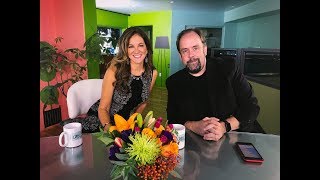
Allison Maslan interviews podcasting expert Paul Culligan on building a profitable podcast. They cover why podcasting beats other media, the technical setup, monetization strategies, and why clarity on your message and market matters most.
Welcome to Ally and you'd the Business Success and Lifestyle show. And I am so excited to share with you all things podcasting. If you are ready to hit the airwaves and hit them big, then you need to listen and watch this episode today. Welcome to Ally and you'd the Business Success and Lifestyle Show. I am Alison Maslin. My friends call me Ally. And I am a business growth mentor and run the Pinnacle Global Network. So we work with business owners all over the world to break through their boundaries and reach their dreams and in their business. And today I am so excited because really on this show I am honored because I get to interview experts, people that are making things happen in the world. And today I'm going to introduce you to Paul Culligan, who is just one of the top experts in Internet marketing in everything technology and podcasting. And I don't know about you, but I am so fascinated with everything podcasting. So Paul Culligan helps others leverage technology to improve themselves themselves and broaden their audience and reach their target market and in a way that you actually reduce stress and drama. I don't know about you, but that sounds fantastic to me. He's a husband and father and he is the CEO of culligan.com he has played a key role in the launch of dozens of successful web businesses, Internet products, creating tens of millions of dollars profits for his clients and many of the projects he's worked on. Some of them you've known Traffic Geyser, Rubicon International, Piranha Marketing, Microsoft, and so on. And he is, he's at all of the big social media and tech conferences, speaking at Blog World, New Media Expo, European Business Podcasting Summit, Google Tech Talks, Map World, and on and on and on social media. So without further ado, let me introduce you, Paul Culligan.
Thank you for the intro. I'll take it.
Yeah.
I said Eclipse to mom.
Yes, you help people be seen and heard everywhere. And you are seen and heard everywhere. So you kind of try not to be a hypocrite. You kind of walk your talk and I think that's important. And you know, I want to just start out to say that Paul and I met. We met at a mastermind that we're in together and you help me help get Allie and you out everywhere. So I have personal experience working with Paul and you are just top of my list. And so I wanted you to come on and share some knowledge about podcasting and the changes that are happening in the marketing world. But first of all, can you just share with us. I always like the backstory. How did you get into this. This marketing world and into podcasting? You know, what's your story?
Okay. It goes way back. I grew up in Germany. My folks worked for the U.S. military.
Okay. I didn't know that.
We lived off base, so I didn't have television.
Okay.
And we don't have television. You have a lot more time as a kid. So I read a lot. I was a big science fiction fan. And, you know, science fiction is all about these. These toys, these computers that are gonna change the world. And you know what? They started coming. I got my first home computer, and it was neat. I mean, yes, I played the video games. I did all the nerd things, but I remember my dad telling me about college and about how he would write a paper on his typewriter, and he'd go 10 pages, realize there was a mistake, and he'd have to retype his typewriter or retype his paper. But then the word processor changed that, you know? And from the very early days, I'm like, wait a minute. Tech can make our lives easier. Whereas my dad stood up, you know, stayed up all night at college making sure his margins were correct, I stayed up all night at college making sure my content was good. Let the printer worry about the margins. So every day, I always saw tech as something that made our lives better. The Internet pops up instantly. I'm like, wait a minute. Now, instead of having to print brochures and hand them out to everybody, we can be on the web available 24 by 7. Truly in our sleep. You know, we can get clients from anywhere in the world if they just knew where we exist. So these technologies pop up, pop up, pop up. Internet radio. Internet radio is interesting. Wow. I can listen to a station a thousand miles away. I can listen to a station in another country. Okay. Then podcasting pops up. And see, I didn't see it as the nerd thing. I saw it as Internet radio for all of us. And it's not just Internet radio, because if you were on Tuesday at 10, I still have to listen Tuesday at 10. Now, it's cool that I can listen anywhere in the world, and I can listen to pretty much any device I want, but podcasting changed it from Tuesday to 10 to whenever you want.
Right.
Change the game.
Yeah. And, you know, I am dating myself here, but I actually took typewriter. So did I. I learned how to. I remember my typewriter teacher, Mr. Smith in school. And so, yeah, it's definitely great to go from.
From making the damn machine Work to actually getting content coming out of the machine.
Yeah.
It's a paradigm shift of tremendous. And if we can't make money on that, shame on us.
Yeah. Well, it is, and it's changed so fast, and it's fun to see where it is and absolutely where it's going and what you do. What I love is that you're always on the pulse of what is next. Like, you're always filling us in what is on the pipeline. And I just feel, as a business owner, you have to stay innovative, you have to stay fresh. Right. So what do you think in this evolution that you've been through? And I think, you know, I always tell my daughter, I think being nerds is actually the probably the coolest thing you could be. Not saying that you are a nerd, but you definitely, okay, you were nerd.
You need to be a nerd or work for one. Those are the two choices.
What have been just in your own business journey, because we have business owners that are watching this. You know, the ups and downs, the entrepreneurial roller coaster. What have been your biggest challenges over the years?
My biggest challenge has always been a communication issue. I see four or five years ahead. Helping the client see four or five years ahead has always been difficult. I started. I just came out of an event, and I realized that I started podcasting when George W. Bush was president, and I kept telling people, it's gonna be huge. It's gonna be huge. Yeah, yeah, sure it is, kid. One day. One day. So my biggest challenge has been communicating the tech, communicating what the change is going to be.
Right. When did it actually podcasting start?
Well, it depends who you talk to. You know, its history is fascinating, but 2004, really?
Oh, wow. Okay. Like, I didn't realize that I have a book.
So my first podcast came out before itunes actually had podcasting in it. And my first book came out before the iPhone, and the book still. And the iPhone just celebrated its 10th anniversary.
Right.
So, you know, and the book's still out. The publisher still runs it. I don't know why, but that's what happens when you sign a bad contract. And anyway, there isn't a week that goes by where I don't get an email from somebody who says, paul, I read the book. Love your vision. I get it. But you never talk about the iPhone. How come? Well, it could be the 2005 copyright date on the front cover of the book. That's what it could be.
Well, you know, Ali and you started actually in 2011, this show, but we didn't really consider ourselves a podcast then, because we were just doing live stream television through, you know, through the Internet. Oh, my God, A lot.
Yes.
I mean, we were in a television studio. Now we have our own studio and we had crazy things happen. You know, I had John Aseroff on the show. I'll never forget this. We did the whole show. It was fantastic. And then like 10 minutes after we were off and we're like, great show. We get a call and said, you guys never came on the air. And then come to find out that the crew forgot to hit record. So not only did no one see it, it wasn't even.
I could tell you stories. Yeah.
Yeah. So. But I didn't, I guess. Yeah. I wasn't in tune with the whole podcasting thing then.
Well, and back then, let's be honest, back then, the world wasn't necessarily as into it as they are now.
Yeah.
Maybe it would have been nice for you to have a first mover advantage, but you wouldn't get the numbers and wouldn't get the attention you're getting right now.
Yeah.
So it's okay.
Yeah. No, I mean, it was. It was great for me, just the practice of doing it was a big breakthrough to sit in front of the camera and talk and talk and talk. That helps you get over your nerves and so that you can just be yourself, you know? But podcasting, generally, podcasting, it's audio. We should talk about that a little bit because there are some video podcasts. Like, we do a video podcast. You could be watching this now or you could be listening to it.
Yep. Podcast can be video or audio, and there's different reasons for each. The audio. The reason the audio is so exciting is 47 million Americans. And this is Department of Transportation numbers. This isn't some marketing thing. 47 million Americans drive by themselves in a commute to work each day with an average of 30 minutes.
Yeah.
Okay. 47 million Americans, 30 minutes in the car. And all you have to do is be better than drive time.
Okay.
It's not that hard, you know? And so audio you can listen to in the car on the drive to work, you can listen to on the treadmill, you can listen to it on the plane, you can listen to it, or you're making, you know, dinner, whatever you want to do. There's a lot of ways to consume audio. Video, you still have to be in front of a screen.
Right.
And so video podcasting is there. And your show is available as a video podcast, and we are getting downloads and there are Subscribers who grab it on a regular basis. But the smart thing that you've done is you're also on Facebook Live. We're also on YouTube and we're anywhere that will take it. They can go to the blog, they can click play. You really are being smart because you're making yourself available everywhere. But then what you're doing is you're making a show that does work on audio only. And every time you put something on the bottom screen, we speak it out for anybody who's listening on the road. And a good chunk of people are coming from the audio because they' listing in the car.
Right.
You know, they're listing at the gym, they're listing at work.
Well, you can be cooking, you can be doing anything. Definitely. I mean, we love doing the video because we'd like to be able to see face to face what we're doing. And we have fun doing it here. But I love that it can be convert to both. Now, what do you think makes podcasting different than, you know, just doing a Facebook Live or other types of social media or other types of marketing for that matter?
Two things. Accessibility, intimacy. Okay, when you're in your car, okay, not much you can do.
Yes.
You're not checking your emails, or you better not be. You know, you're not doing Facebook, you're not doing a bunch of things so that 30 minutes every day got your hands the wheel, you're doing this. And computers aren't reading your emails yet. Nobody's giving you your Facebook updates yet. So you got that time in the gym. You know, if you're on the treadmill or you're running or you're exercising, you know, the way the hands are going when the body goes, you're not going to hold a device to watch a video. You know, you put in the earbuds and you go from there. So the accessibility is tremendous. You know, the phone rings, you stop. If you're actually listening. On most mobile phones, most mobile phones, all phones are mobile now. Most smartphones, when the phone rings, the podcast actually stops. You know, you don't even have to click stop anymore. You answer the phone call, you go back to that thing. It might take you a week to finish an episode, if it's a long one, but you can do that. So the accessibility is tremendous. Part of the growth of podcasting lately is just that. 47 million Americans in their car by themselves with a smartphone. More Americans now have a smartphone than don't have a smartphone. You know, unlimited data is pretty much everywhere, and podcasts are small, you know, and so, you know, the amount that it really counts towards your data isn't that big of a deal. And so now you know, well, I spent good chunk of change on this thing and it can make me better in business. This can help me be a better person. You know, now it starts to become really, really powerful. And yeah, I can get an audiobook or I can listen to Pandora music or something like that. But you know, we want to make ourselves better. That's why they're listening to the show, that's why they're watching this show. And so the podcast makes that possible. It's really easy. So that's the accessibility. Very, very powerful. Now the other thing, and this doesn't get spoken to enough is the intimacy.
Okay, so tell me if I listen to you. Yeah.
Every day, every week for a 30 minute commute. You're almost like a car pulling partner now, you know, if I go for a jog and I'm listening to you, just the earbuds, just you and me, it's extremely intimate, you know, and, and what happens is if you read an email, most of us now have two monitors. There's like a little screen over here. While this video is going and these ads are popping up and Twitter's doing this, we're completely and totally distracted. What's a podcast? Most of the time it's in the ears. Maybe we're just chopping some onions to make dinner or something like that. But it's extremely intimate, right? And that is absolutely fantastic. So if you had a marketing option that people could consume anytime, any place, anywhere that was more accessible than any other marketing option out there, why in the heck wouldn't you?
Why wouldn't you?
Exactly.
It's so smart. It's so smart, right? And it's like, you know, people are wanting to consume this information. And in fact, we had an event this week and I said, how many people are, how many of you are listening to the show? And almost everybody raised their hand.
Bingo. Bingo. And that's part of why. See, the thing is, that's part of why they were at the event. See, you run high class, high ticket, fantastic events, but nobody's going to, you know, drive by your office and go, oh, I want to go to one of our events. They're going to spend some time with Alison and they're going to realize that I want to invest in spending more time with Alison. That's why they come to your events. So the fact that everybody in the room had listened to the Podcast. These are the smart ones. These are the ones who had spent time with you and intimate time. They're busy. The people you deal with are not the ones with a lot of free time.
No. And it's also smart because it gives people a chance to listen to what you have to say. And if they don't resonate with it, you don't want those people to be reaching out to you. Right. You want people that connect with you. The other piece to that with the podcasting is you can then advertise on other people's podcast. I don't think that this is a marketing vehicle that people are really thinking about much.
Yeah. And you can advertise on people's podcasts. You can.
But one of the reasons I started this show all these years ago was so that I can meet amazing people like Paul. Right. That I've had on as a guest. It's been a real opener to build those wonderful relationships, fun friendships that have evolved to so many other things.
Yes. And because podcasts are so powerful right now, you know, if you ask someone, you know, can I have 30 minutes of your time? I don't know. Can I have an hour? Your time? I don't know. Want to come on my show? Yes, I do. You know, and so people will come on your show, and sometimes they will give you big, amazing business advice that you couldn't necessarily pay for because they want to reach your audience. And so it's, it's a fantastic way to build your base. You know, our mutual friend Joe Polish has made, you know, he is who he is today because the people that he said, may I interview you? You know, and Joe started, may I interview you for my cassette series. Yay. That's exciting. You know, but now you could take an interview for my Ali and you, which is on YouTube, which is on Facebook, which is a video podcast, which is an audio podcast. Hopefully, we're gonna get you on the connected speakers soon, and we're doing those types of things. And now that Ali's everywhere coming into your kitchen.
Yes.
Why wouldn't I want to be on your show?
So it's so much fun. So I wanted Paul to come on here today to encourage you if you, if you thought about doing a podcast, I, I, I really encourage you to just start it now, getting into the technical stuff. Do you have to be a techie to have a podcast? What are your thoughts on that?
Well, no, we're going to change. What are your thoughts on this? Are you a techie?
I am so not a Techie.
So you have an audio podcast, you have an audio podcast, you have a video podcast, you have a YouTube video series, you have a Facebook Live video series. How techie are you? Okay, so now what does that mean? I don't have a studio at home, you know, I can. I can hear the thoughts. Mutual friend Joe Polish. Joe does a show I love marketing, over 5 million downloads. Okay? The majority of his episodes, he does picks up a phone, calls a conference line. He interviews someone on the conference line. When the conference is over, he hangs up the conference line, automatically records the conversation, and then sends my team a copy of it and we edit it up and we make it a show. Okay, so, yes, he's a techie. If phone users. If phone users, you know, constitute a techie. Yeah, you know, and it's funny because some would say. Some would say, you know, well, what kind of phone, you know, does it sound like a phone call? Yes, sounds exact like a phone call. But here's the thing. It's a phone call, but it's a phone call. Well, no, we're going to change. What are your thoughts on this? Are you a techie?
I am so not a techie.
So you have an audio podcast, you have an audio podcast, you have a video podcast, you have a YouTube video series, you have a Facebook Live video series. How techie are you? Okay, so now what does that mean? I don't have a studio at home, you know, I can. I can hear the thoughts. Mutual friend Joe Polish. Joe does a show I love marketing, over 5 million downloads, okay? The majority of his episodes, he does picks up a phone, calls a conference line. He interviews someone on the conference line. When the conference is over, he hangs up the conference line, automatically records the conversation, and then sends my team a copy of it, and we edit it up and we make it a show. Okay, so, yes, he's a techie. If phone users. Yeah, if phone users, you know, constitute a techie.
Yeah.
You know, and it's funny because some would say. Some would say, you know, well, what kind of phone, you know, does it sound like a phone call? Yes, sounds exactly like a phone call. But here's the thing. It's a phone call, but it's a phone call between two, three brilliant marketers, and you get the chance to listen in. It's very, very intimate, you know, like we said. And boy, I mean, who wouldn't want the chance to, you know, Joe called Tony Robbins on, you know, off at his home in Fiji, and Tony is on Skype. And you can Hear the waves crashing in the background. How much fun to be there when all that happened. So extremely low tech, but extremely functional. That episode's hundreds of thousands of downloads.
I mean, you learn things on these podcasts, too, that are so fascinating. I'm not sitting here going, you know, it sounds a little tinny sound. No, I'm into what they're saying. In fact, Joe had somebody on that was talking about how he healed his back. Do you remember that interview? And I was having all kinds of back pain, and I ended up contacting this guy. Zero back pain since then. That was a year ago. So, I mean, there's so access to so much incredible information. Okay, so they don't have to be a techie.
Well, and thus making a phone call means you're a techie.
Yeah, well, for some millennials, don't take this the wrong way, but I can't get my daughter to make a phone call. Can't get mine either, but. So what's the difference between podcasting and then putting something on YouTube? Uploading.
Yes. Well, one of the great things about podcasting is there's the on demand nature. Now the on demand nature is becoming easier and easier because we have these connected phones that are on the data network all the time. But the problem is when you're in the airplane, you cannot connect to YouTube. You know, when you're driving cross country, you can't connect to the Internet. So one of the things about podcasting is that you can download it. That's one of the things that's really, really cool. The other thing that's really cool, and this is huge, and this is missed by some of the biggest people out there. And we're going to do a little pitch for your show here in a second is the subscription. What happens when you subscribe to a show the second the next episode comes out, it goes to your device. Now it goes to your device, which is awesome, but it does it spam free. It does it instantly. So the second someone subscribes to your show, you release another one. They get it. A lot of times they get a notification right on their phone. You know, I was dealing with a. I don't know if I'm authorized to say his name, but a very, very big Internet marketer that you and I both tremendously appreciate and trust and have spent a lot of money on some of his training. We were looking at stats, and he said, hey, I'm just curious what kind of impact my email has. Because he'd release a show, do an email, release A show, do an email, and he released an episode and he didn't do the email. And you know what not doing the email did for his downloads? Nothing. Because everyone was already subscribed. Yeah, you know, he said, so wait a minute. I'm getting listeners and I don't have to tell them to listen. See, YouTube. You got to go, hey, my videos up at YouTube go here, right? Facebook. I got a Facebook Live event Wednesday at 3. Go here. But the podcast comes to them, and so if someone subscribes to the show, it comes automatically. Now, how could someone subscribe to Ali and you?
Yeah. So speaking of, have you just subscribed to the show? Then you don't have to worry about ever missing an episode, and you don't.
Have to listen every episode. If there's something that doesn't get your, you know, just swipe to delete it. But have it come to you automatically. Your favorite magazines come to you automatically. Your favorite newsletters come to you automatically. Let your favorite shows come to you automatically. So need to get in the car and go, oh, look, I can pick from this, this, this to this. I want to listen to this one. Click play. You don't have to worry about the data connectivity. You don't have to worry about these things. It's the subscription that's absolutely huge.
So are you a subscriber? Let me tell you how to make that happen. If you want to listen to the podcast, the audio version, go to subscribetoally.com and that's a L L I E. Subscribetoalli.com.
Perfect.
If you want to watch the video podcast so that you can see, see how beautiful Paul is and be able to, like, look directly and be here with us, go to alisonmaslin.com iTunes and whichever way works best for you.
Absolutely. And see, now every time a new episode comes out, they're gonna get it automatically. And it's an intimate time with the brilliant people that you know, other than me, the brilliant people that you know and spend time with. And it's absolutely fabulous. And it comes automatically. And it's spam free. If you've done anything. Internet marketing, spam's huge. What's your open rate on emails these days? About 20%?
Yeah, about 20%? Yeah.
About one out of every five. When you send an email, they open it up. And a lot of times, you know, people who want your stuff, it ends up in spam box. Podcasting spam free. Beautiful.
Yeah. Well, that's so fantastic. I mean, and we love it, you know, I've been doing this show all these years. I mean, this is six years now. It's so much fun. I love it. So what's the difference between. Well, I've heard you say message, not microphone. What do you mean by that?
Well, that's part of what we talked about earlier. What microphone should I buy to podcast? No.
Okay.
No. What's your message then? We'll talk about the microphone later. Part of Joe's message is there's genius all around. Let me connect you to it. So it would be almost arrogant for Joe to say, come to Phoenix. Come to my studio, put on some makeup, let's do a live four camera shoot. Joe will get genius however he can. Let's get on the phone. Joan has. We set him up with a phone number that it's just for him. He's the only one who knows the phone number. Whoever he calls and they call, they do the interview. He's done. Hey, Paul, I talked to so and so. Make sure the podcast gets up and the team does that. So it's the message, not the microphone. I mean, you got the studio, you got the lights, you got the team, and it's absolutely fantastic. But it isn't necessarily where you need to start, right?
No, and it really is. If someone's going to connect with you and come on your show and they have to feel a connection, they have to understand what your passion is, what your purpose, what is the reason that you're doing the show and the message that you want to get out there.
I have a new client. Absolutely funny. He's in our mastermind. He called and said, hey, Paul, you're kind of the guy. Can you log on to my Libsyn account, which is a hosting company, and tell me what you think? So I logged in 1.6 million downloads the previous month. 250,000 downloads. Exactly my response as well, so. And it was funny because what is he doing? Right? Everything, you know, but then I looked at his process, and whoever put together the podcast almost felt like they had done it from almost, you know, in Flight magazine two page article. I mean, everything was. Was wrong. But 1.6 million downloads is so right. And what it was was he understood his message, he understood his market. And then I just came in to clean up everything else, you know, and. But it wouldn't have gotten there if he had called me and said, hey, Paul, you're kind of the go to guy. What microphone should I buy?
Right.
You know, he was talking to his audience on the microphone that he had, and We've since had the microphone conversation. The quality is going to go up. But message first, not microphone.
Yeah, that's what's going to make something go viral for sure. So get clear on what your message is, your purpose, your passion behind the show. So, okay, let's. I want to shift just a little bit and thinking about. Because, you know, you've been in this business career for some time, right?
Yes.
You've got some wisdom now. Not that you'll never make a mistake. Well, actually, I don't want to. I don't want to. Do we want to talk about this a little bit? Because I want to get into this. But the big question is.
The big question is, how do I monetize my podcast? Paul, it's great. It's wonderful. I want to be in a mint. I want to have my people. How do I do it? Okay, we've got a giveaway for you here. And we're going to do two things with this giveaway, and I don't know which camera I'm putting it in, but I'm going to put it in both. This is the four M's of podcasting. Now, a little technique. You want to know how to make money with your podcast?
Yes.
You build an email list. You know how you build an email list by giving away something?
Yes.
Like a beautiful color document called the Forums of podcasting. Now, if someone wants to get this document, Allison, where do they go?
They go to allisonmaslin.com library. And so what you're going to get here is all this great information from Paul. So you will find out how to monetize your podcast. But not only that, this is our library. So all the experts that I've had on this show, they are sharing free gifts, free downloads. So you definitely want to go there. And I'm sure it's going to be right on the bottom of the screen.
But for anybody who's listening to the audio only version.
Oh, yes.
Can't view the bottom of the screen. Say that web address one more time.
Thank you so much for reminding me. And that's why I hire the experts. Right. Allisonmaslin.com library beautiful.
So podcasting is four steps. It's four M's. Okay, first M. And this is on the worksheet. And it's nice because you take the worksheet, you tack it up to your wall and. And this becomes your mantra for a little while. Maybe that's your fifth M. The first thing is your market. Who's your market? Now, one thing I love about You. You know exactly who your market is. I'm the businesswoman for everyone. No, no. Who's your market?
I am. Our company works directly with established business owners that want to scale their company.
Perfect. So you know exactly who your market is. That's the first step. I'll tell you. The tighter your market is, the better your podcast is to be going.
Absolutely.
Okay. The second thing is your message. What's the message to people who want to scale?
The message is that you cannot operate your business like you did in the early days as an entrepreneur. If you want to leap to enterprise, you have to rebuild a bigger house so that you can break through.
So you got a market, you got a message.
Yep.
Bam, we got a show. So now how do you make money from that? It's not that hard. We have events, don't we? We have events, and that's called foreshadowing. We'll be talking about that a little bit later. But you've got events, you've got training, you've got your books, you've got a whole bunch of ways where revenue comes in. Then, and only then, the media comes into play. And in your situation, YouTube makes sense. Facebook makes sense. The video podcast makes sense. The audio podcast makes sense. We keep talking about Joe. So, you know, a video of Joe on the phone talking to someone, not that good of a video podcast, you know. So in your particular case, being everywhere makes a tremendous amount of sense. So that's the four M's, the market, the message, the money, and the media. Once you figure out those four things, that's how you monetize the show.
And you need to have all these four.
Yes.
Like, if you have four legs on a table, if you're missing one, you know your table is going to fall.
I've had. Well, I've had clients, and I've had people want to be clients. I had a guy call me eight years ago, Paul. Millions of downloads. Great. You know, what's your topic? I teach people how to speak Spanish. Fantastic. Where are you making the money? That's the problem. Well, what do you mean you got millions of downloads? People are in Spanish. Yeah, well, I made a show. I wanted to sell it to Berlitz, the company who charges you to learn how to speak a language you would think was going to advertise on your show that teaches you how to speak a language for free?
Yeah.
Oh, bad idea. You know, so it's all for. So what is your market? And people can be. I'm going to do a podcast for Dudes no, that's not a market. Okay. You know, business, people. People is an entrepreneur. Yeah. So market, message, money, media. If you have all four, you got a plan. It's going to work.
Right. But you can work with me, and we will help you figure out how to make money with your podcast. That's the whole point. But it's why I like working with.
Business owners like you, because you already have the market. You already have the message. So. So the podcast is the logical next step. There's a lot of people who wake up in the morning, go, I should do a show. And that's all fine and dandy, but who's your market message? And the smart business owner already has that. So the show's the next logical step.
Right. But if you do already have millions of dollars of. Millions of downloads. Excuse me, you have an audience and now you can sell to them.
Sure.
I was just. And I don't remember the woman's name, but this has happened many times where people will build an audience, like on YouTube. They haven't sold anything.
Yeah, I know where you're going.
And then all of a sudden, they create a product. Like, this woman has a makeup line, and people went crazy over it. So you definitely have to. To come up with the products so that you can monetize it. So anyway, you're going to want to go to allisonmaslin.com library so you can get Paul's 4M cheat sheet. All right. And so being this wise master that you are.
Oh, well, thank you.
That would be you, Paul. What would you. Is there anything that you wish you knew back then that you know now?
It's kind of embarrassing, but if you were to log onto my podcast connect account at Apple, that's where. When you submit a podcast to the iTunes directory, that's the website that you do that at. If you go there, there are several dead shows. What I did was I did a show about this for a little while, and then I made it a show about this for a while. So I started a new show, and so then a show about this for a while, and there's like six or seven. I'm what they call a starter. There are six or seven shows.
It's the shiny object.
It's the shiny object syndrome. Yeah. And so there are six or seven shows where I built six or seven audiences that I killed. I effectively killed, you know.
But you hung in there, though.
I hung in there with. I hung in there with my skill set, and I hung in there with the. With the technology and I hung in there with the industry. But when I started, my current show is called the Podcast Report. When I started with the Podcast report, even though I had been in the industry for over 10 years, I had to start fresh with a new audience, and that was ridiculous. I could have just taken an old show and just changed the name to the Podcast Report. Duh. And everything would have been better. But longevity is really, really important. And one thing that's neat here is you notice we're not doing anything on this episode where that's time sensitive. We're not talking about the current political status or what might be happening in the weather or that type of thing. So we might have someone who listens to this show in two or three years. I have shows that are four years old on the Podcast report that are still getting comments on Twitter because I built the type of show that could withstand for four years.
Yeah.
So now. Now that I finally figured out the longevity part of it, I recommend that everyone take their show and go along. There's a term in the industry called pod fading.
Pod fading. Okay. Haven't heard that.
That's where you do a podcast and it kind of fades out.
Okay.
You know, and that. That's not the strategy. That's not the plan. Go. Go for the long. Go for the long term.
Yeah. Keep the name like investing and riding the wave and staying with it. And I do. I've had people that have listened to some of our shows from three, four years ago and contact us and end up joining our business Mastermind.
Yeah. And how fantastic is that? Something you did three or four years ago is just sitting out there for whoever wants it, whenever they want it, however they want it, and it leads to business.
Yeah.
Emails don't do that.
I like that.
Emails don't do that. Websites don't do that. This is a very unique situation. And people can go to itunes and they can search for what your message is. They might not even know who you are. So you've got all these great people on your show. They might search for Asraf. He's fantastic. John is one of the best. And so if they want more John, they get introduced to Ally. Maybe they search for information about podcasts and they get introduced to Ally. So it's this great group of like little mini army soldiers out there just working for you. 24 by 7. I have a buddy with Nat with a show. He's got over 650 episodes and there is a week goes by where he doesn't get more than he doesn't get less than 10 people who went back to episode one.
Wow. Yeah. No, I love it. It's just one of the favorite things that I do all week long in the work that I do. And I get to meet wonderful people like you. I hope that you're all going to get out there and just check it out. And even if you're scared, that means you should do it. Now, I know we talked about not dating anything, but there is an important date coming up.
Well, we went up this far.
Yes, there is something. So if you're listening to this four years from now, well, that's okay. But let's set this up though, because.
They will be listening to this in four years. You've got some longevity with you. So if they want to know, maybe if there's recordings or what you're doing in the future, how would they contact you? See how we're setting this up?
Yeah. You mean how are they contact in the future?
What we're about to talk about. Oh, isn't this teasing? What we're about to talk about has already happened.
Yes.
And they want to contact you in the future. How would they contact you?
Oh, well, they're going to contact me@alisonmaslin.com Beautiful.
Keep going.
For everything that's going on in our world, our mastermind and events and so forth. However, we do have a big event that we do every January. This will be our seventh year.
Like how big? Like Vegas big?
Vegas big. And oh my goodness, it happens to be in Vegas.
Ta DA.
And over 500 business owners that fly in from all over the world. This is truly the business owner event of the year. And we are going to have Paul Culligan as one of our big superstar guests and share a little bit about what you're going to be talking about.
We're talking about podcasting. Going to be talking about the whole picture of podcasting. Where I came from, how I got there, what's happening. There's some fascinating stuff that's happening in the cars. I talked about the commute. There's some really fascinating stuff that's happening in tech. We're going to talk about the portable devices, the Amazon Alexa, the Google home. You want to stat. Took 14 years, okay? 14 years for podcasting to become a term that the majority of the country was familiar with. Okay. And I was there from the beginning. Trust me. They say, one step ahead, you're a visionary. Two steps ahead, you're a martyr. I was like five steps ahead. So there were some dark years, but 14 years in one year, the Amazon Alexa and the Google Home got to that penetration. Now, this is what happens when you have a multimillion dollar marketing campaign behind you. Well, what if your show was on the Amazon Alexa? What if your show was on the Google Home? What if your show was on Microsoft.
Cortana and you want to learn how to do all of this, Then you need to come to Blast off. Right? And we're going to have an absolute blast in Vegas. It's January 26th to the 28th. And the whole idea of this event, what we do is we actually build out the blueprint for these business owners that attend for the entire year of 2018. So your marketing, your revenue streams, your sales strategies, your team building, your systems, your leadership, your time management. And they literally leave with a roadmap, step by step, what to do, how to do it for the entire year. And that's why, Paul, people come to this event year after year after year.
Who doesn't want to go home with a road map?
I know.
Do you want a road map?
I want a roadmap.
Note to self, pay attention.
Yes, I know. Well, it saves you a heck of a lot of time and money and energy when you know the next steps to take. So you definitely want to go to blastoff event.com and grab your seat quickly because it, it sells out every single year. That's Blast Off Event and you will get to meet me. And also Mr. Paul Culligan.
Fantastic. I'm looking forward to it.
I know it is going to be so much fun. And so this has just been great. Thank you for coming here, being in my studio and you're about to head to the airport and go back home to Portland. To Portland. That's right.
Not quite the weather it is here in sunny San Diego, down in Portland, up in Portland, whatever the right term is. Yeah.
But it's an absolutely beautiful.
Oh, I love it. I love.
So well, thank you for coming. This has just been wonderful. I hope you've enjoyed this episode of Allie and you until next time. We will see you soon. So get out there, elevate yourself because you deserve it. Bye, everybody.
More from Allison

There are 90,000 marketing agencies in the U.S. but 99% aren't worth your money.

Would you leave your comfort zone for the sake of your business? #businessgrowth #scalingbusiness

Are you willing to trust the process to grow your business? #businessgrowth #scalingstrategies

He Built a $150M Company Without Taking a Single Dollar of Outside Capital | Erik Huberman




Wing Lam has run Wahoo's Fish Tacos for 38 years and his hiring rule is simple.


