How to get a 30,000% ROI with Facebook Ads (NICHOLAS KUSMICH)
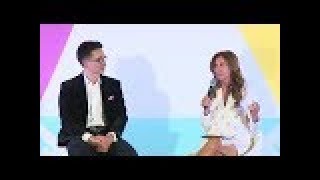
Allison Maslan and Nicholas Kusmich walk through Facebook ad strategies for business growth. They cover targeting, ad testing, and measuring ROI, with live Q&A from participants including how to stay compliant with Facebook's terms.
All right, thank you. So. Wow, that was intense. And, you know, I appreciate you sharing your heart, because the thing is, on Facebook or on social media, I mean, it's really just about being real. And I think the change that has happened in business in the last few years, it's the person behind the business. Right. I mean, we. We remember just the big brands. Coca Cola. You know, I can't even think of a brand right now. My brain. But you didn't. You weren't thinking of who's the president of Coca Cola. Right. So. But now you see the brands that you recognize, you know, the people that are behind. Right, right. So my question to you, what inspired you to get into this type of work? I mean, Facebook advertising hasn't been around that long, right?
Yeah, I wish I could say I planned it. I almost stumbled across it by accident. So what I mean by that is I came late to the entrepreneurial Internet marketing game. At that time, the only kind of advertising platform was Google. And I just kept hearing about Google slaps and penguins and pandas and all these animals that came out of Google. And it just scared me. I'm like, I'm not gonna play in that game. But simultaneously, Facebook had just came out with beta ads, and I was looking for a way on how can I get my message and my products and my services out to more people. So call it first movers advantage. But Facebook started to go like this, and. And we people. Right, or you're not working the medium properly, Right? Yeah, I think. And you'll notice even about, you know, I'm known as a Facebook advertising strategist, and it's the platform that we choose to play on. But even in the talk that I shared today, a very small percentage of it was actually Facebook, if you notice. That's because Facebook is simply the platform that we can choose to distribute the bigger picture of advertising. I believe that, you know, like you. I find there's find, attract, capture, and convert. That's kind of a model that we use. First you find your target, then you attract them, then you capture the lead and you convert them as a. Or you enroll them into your business, and you do that with four M's. So I say message, market magnet mechanism. And so what I mean by that, it's like, again, and we talked about it today, before you even think about running a Facebook ad, you should know what your message is and how it's different from everybody else's. And then even before that, you want to make sure that you have a magnet that you can throw out to your industry that's going to serve your industry in order to attract the right people to you, then you need to capture them by putting them out on Facebook and there's an entire process. So I want people to think about this as Facebook is not black magic. It's not the end all, be all that solves all problem. It's a one part to play in this large but simple, beautiful kind of conversation that we are having with our ideal prospects. And again, it just happens to be a fantastic platform that anyone can use really to reach their ideal prospect.
It was interesting, somewhere on my feed someone did a poll and they asked what was the social media platform that they felt they could reach their clients most or that they. And every single one of them said Facebook. Now, because we have, I mean, obviously there's LinkedIn, which we also do quite a bit of business with on LinkedIn and there's Twitter and all of these other. But I do feel like people are using the other platforms, but they're all also using Facebook.
Yeah. So what I tend to say about that, I don't think it's one or the other. I think it's Facebook first and then whatever's relevant second. So we were talking about this at the VIP lunch even. I think no matter what business you're in and who your ideal prospect or customer is, that that person is on Facebook. But they could also be on another platform. So if you're going after C level executives, those guys could be on LinkedIn. If you're going after high fashion young women, for example, in the fitness space, they're oftentimes on Instagram. If you're looking for soccer moms who like things to make in the house and Etsy type things, they're on Pinterest. And so they're all on Facebook, but they're also on these other platforms. And I'm the first to say I don't think that you should be a purist about any of it. I think you should use what works for you and go where your people are at and communicate to them in a way that they're used to being communicated in.
Right. And so when people are saying that their ads are not working, your answer.
To that is you're not working your ads properly.
Right. So darn it, we have to take the blame. But I mean, so just kind of back to that sunglass thing because I think it's a really good example. When do you. So you're trying one market, it's not yielding you the roi. You want, Then you look at another market. How long are you giving it before you make that shift?
So here's the beautiful thing about Facebook. Facebook is so agile that it can spit you data in a matter of hours. So if I set up an ad and I'm going after a particular audience, and just for the sake of the argument, we'll say a day. It is hours, but we'll say a day. We'll set up an ad, we'll run it for a day. At the end of the day, we'll take a look and saying, did this work or did it not? If the answer is no, what do you do? Yeah, turn it off. Don't get emotional. Be like, I really want this to work. If you really want to lose money, fine. But it either works or it doesn't after 24 hours. And then we have this kind of scale or bail mentality. If it works, we scale. If it doesn't, we bail and we move on to the next one. So it's very easy to be agile, and that's the beautiful thing about it is it's very hard to actually lose money that way. Because if you're agile enough to say, hey, this is not working, let's turn it off, you're never at risk of losing your shirt in the process.
How many of you found me on Facebook initially? There's a lot. Yeah. Yeah. I mean, it's definitely extremely powerful. And when you are testing, in exchange.
For a name and an email address, in other words, hey, I'm kind of interested in you. Are you interested in me? What's your number? And let's see where this goes. That makes sense.
Yeah, totally.
Awesome.
Thanks, Diane. Yes.
Hi, my name is Yvonne.
Hey, Yvonne.
And Facebook hates me.
No.
Yes, Facebook hates me. I've tried to put ads up and it continually says, we're sorry, Facebook will not accept that ad. Yeah, tell us about that. Because there are things that you have to do.
Yeah. That means you are violating terms and conditions. So you're coming onto a platform and you're not playing by the rules.
So where do I learn the rules? I'm still trying to figure out.
There's an amazing document called Terms and Services, which is the most boring read you will ever face. So maybe Barry or Alison, you can make a note of this. Another gift that I can give everybody is I have the foremost leading content out there that talks about how to avoid that kind of situation. We can give it to everybody. Is that okay? Okay. So we'll make sure you get that, because you can't get great ROIs if you're banned off Facebook.
So. It's a good point. It's true. They don't really tell you things until you find out.
That's true. The responsibility is definitely on you to dig. So.
Yeah.
Yes, thanks, Yvonne.
Oh, yes, go ahead. Hi.
Facebook has been amazing connections for me and I really work it very well. But I never worked for advertising. Now, how do you figure out, how do they figure out your audience?
So they don't figure it out. You figure it out.
I figure it out.
Yeah.
Where do I go to find.
Well, just like I was saying there with the targeting trifecta, if you just do. Yeah. If you do just a little bit of research to figure out where your ideal prospect is.
We're gonna do that tomorrow. Yeah, we're gonna do that tomorrow.
Usually my audience is young and cool.
Then they're on Facebook down Facebook. Yeah, all the young, cool people are on Facebook.
Yeah. Yeah, that's why we're on Facebook.
That's why we're on Facebook.
We're cool. We're gonna just, we're gonna get narrow that down tomorrow. So you'll have all those answers. Yes.
Hi, my name is Colleen.
Hi, Colleen.
Hi.
And the first person asked the question, but I'm still confused about the answer. If we're giving away something and we're running the ad for 24 hours. Because I've totally done the giveaway, the free book, and of course nobody reads it and I totally know that because I track it. And so if we're giving away then the PDF and we run it for 24 hours with the opt in, is it then that we're tracking it by how many people opt in in 24 hours? Is that our thing, our marker to see that it worked?
Yeah, that's a great question. So there's one of two ways to look at it. If you're making an immediate offer after you capture the opt in, then you can track it by the dollar amount. Because you're making an offer and you're going to see if someone buys it. Right. But if you don't. Yeah. If you're looking at it strictly from the giveaway standpoint, the question that has to be answered then, what is the 30 day value of a lead to you? So once you capture a lead, what is that lead worth to you 30 days from now? That's basic math. Because if you spent $100 and you got 10 leads. Sorry, if you spend $100, you get 10 leads and those 10 leads equal $1,000, then you know that those 10 leads each represent a hundred dollars. So that way, you know, now, as long as I generate a lead for under $100, you. It's most likely going to be worth $100 to me. So that's how you factor it in. You factor it in on the cost of the lead based on the value of that lead over 30 days.
Okay.
Makes sense. Yes.
Great. We have time for one more.
Oh, well, sorry about that. Gets to choose who that one is.
Well, standing there. I'm sorry. I'm sorry. I'm the bad lady.
He was there longer than me. If I'm going to be a good human.
Sorry.
Thank you. Okay. Thank you.
And I told.
We'll bring you up next time. Mom, we're.
We're after this. I was told there's some drinks out back. I'm going to be out there.
He's going to be at the party. You can ask him directly.
Okay, absolutely.
Yes. Hi, I'm Bruce.
Hey, Bruce. It's good to see a man in the house.
Thank you.
My company has the first weight loss supplement that works. Which is better, Facebook or Instagram? Facebook owns Instagram. They're one and the same thing. But don't you put it into one or the other? You can put it into one or the other or both. The answer is. In that case, I would do both. But I would pre warn you. As what? I believe it was Yvonne who was saying, if you say that we have the only weight loss supplement that works, Facebook will say, nuh, that's not gonna work. But what if it's true? You still gotta figure out another way to say it. Okay. But yes, Facebook. The true answer is Facebook and Instagram. Facebook first, Instagram secondary. But essentially because they are the same platform, you can do it at the same time. Thank you. Yes.
Great. Awesome. Now you. Did you already give them a link or anything of how are we gonna do that?
We will email through you. Everybody here. What we're gonna give away is the ten stage ad template that I showed everybody. I showed things. We'll give you 10.
Okay.
And then I'll also throw in the how to not lose your ad account and be on Facebook's good side.
Okay, we'll get that to everybody. Does that sound great? Awesome. Thank you so much.
Thank you.
See you at the party.
At the party.
More from Allison

He Built a $150M Company Without Taking a Single Dollar of Outside Capital | Erik Huberman




Wing Lam has run Wahoo's Fish Tacos for 38 years and his hiring rule is simple.




The Guerrilla Marketing Genius Behind One of California's Most Beloved Brands | Wing Lam
