How to Immediately Connect With Any Audience Through Video
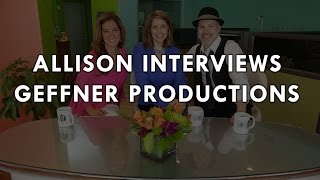
Steve and Jamie Geffner, a husband-and-wife TV and film production team, share how entrepreneurs can use video to connect with audiences and grow their business. They discuss practical strategies for creating effective videos that actually work for business growth.
Well, what is a medium that is over 100 years old that has even gained more traction in the last few years? Well you know film in the 1800s. Right. But now we have evolved over the years technology to digital video. And so at your fingertips you can create video. And since YouTube we've got millions, probably billions of videos on online. Why is this so popular? How can you use it to grow your business? Today on Ally and you'd welcome to Ali and you'd the business success and lifestyle show. I am Alison Maslin, my friends call me Ally. I'm a business growth expert and we help business owners grow their business. And speaking of business growth, I am super excited because today I am going to introduce to you some incredible video experts. And we are definitely living in the age of video. And so Steve and Jamie Geffner, this is a husband and wife team, extremely talented. They use their TV and film background now to help entrepreneurs accelerate the growth of their business. They produce very high quality, extremely creative, cutting edge videos for websites, for blogs and all kinds of things to brand your business and help you become more visible. So since 2010 the Geffner's have filmed over 2000 online videos. So they know their stuff, believe me. Now before starting Geffner Productions, Jamie Geffner was a spent five years as the producer for the Dr. Phil Show. Five years. You know there's, there's definitely a story there. And Steve was also has a film degree from Northwestern University, great school. And he also was did his production, started his production career on the show Frasier Frasier, one of my favorite all time shows. So I'm really excited. So welcome. Thank you Jamie and Steve. And so we definitely are living in the age of video and statistics show that. I was just reading that that people are 80% more likely to watch something if it's video.
It's amazing people if you think about your own behaviors when you're online. Yeah, the statistic is that people are 80% more likely to watch a video on a page than actually read all the text. 20% of people will read all the text. 80% will watch a video on, on your website page. So it's a great way to connect with your audience to either tell your story, to sell your products and services, to educate. It's got incredible power.
Right. And you've seen such an evolution over the years, I mean for your business. But let's back up a little bit. So in your past lives and you know Dr. Phil and Fraser and all that. So can you share a little bit of the story there.
Yeah, it was an incredible experience. Both of us were fortunate to work in TV production, and I started after graduating from Northwestern, like you said, working my first show was Frasier, which was such an incredible experience, and had the chance to work on a bunch of other shows and sitcoms as well. But just being in that environment, going to work at Paramount Studios, being around people who are winning Emmy awards every year, it made me really think about how I want it to be and up leveling my game. And now as a business owner, I think still about wanting to really raise the bar and be working with the best of the best, and we try to bring that to our business. Just like I had the experience to work back then.
Well, I think that's great when you're younger, to be around people that are making things happen. I mean, what a great impression on a young person for you to see. Wow. I bet that really motivated you to go after your dreams, right?
And she had the Same experience with Dr. Phil.
Incredible experience. Such an incredible learning opportunity. I mean, I feel like I owe everything that I'm doing today to that sort of foundation that I built as a producer working for the Dr. Phil show. But I think the biggest lesson that I learned is really about my own strength and resilience as a person. And there's no better example of this than the story of how I actually got the job working for the Dr. Phil show.
I want to hear. Yes, yes, yes.
So it was around 2001, and I was working as a casting director in the world of voiceover, and I had been doing that for about three years, and I really loved that job, But I knew that there was more for me, and I knew that that wasn't what I wanted to do forever. And. And I'd always had this really big fascination with TV production. So I knew I wanted to get into TV production, but I couldn't think of a show that I really wanted to work for that I knew, like, that's the show I want to work for. With the exception of the Oprah show.
Yes.
And Oprah was in Chicago, and I was in Los Angeles, so that really wasn't practical or feasible for me. But I was following Oprah, and I had known about Dr. Phil. Dr. Phil was on Oprah before he started his own show as, like, America's Resident Therapist. Every Tuesday with Dr. Phil.
I remember.
And so I had known about him, and I was fascinated by him. And I also really loved psychology. So when I found out that Dr. Phil was going to be having his own show. And it was going to be filmed in Los Angeles at Paramount Studios. I kid you not. I had this, like, instinctive, guttural feeling, like, that is my next job. So then it became, well, how do I get this job? Right.
So you had the end in mind first.
I had the end in mind first. I knew I wanted to get this job, but I had no idea how I was going to go about it. So I started with the basic things everyone would do. I sent in my resume with a cover letter that said, you know, why I wanted to work on the show. No call, of course. There's so many people who want that job. Right. So then I was like, okay, who do I know in the entertainment industry that can help me possibly get hired? So I started contacting every single person, you know, entertainment industry related to see if somebody knew somebody who knew somebody who knew somebody who worked on the show.
Right. Good move. Good move.
Didn't work.
Okay, okay.
So a couple months went by. I'm like, what am I going to do? I got to take my faith. I mean, my. You know, I have to take my own life back into my own hands. So how can I actually physically meet somebody? So we found out that Dr. Phil was having this live performance at the Universal Amphitheater. So we decided we're going to buy tickets, we're going to go to the performance, and we're going to try to meet somebody so that I can just make a connection, hopefully meet a producer or someone who could potentially hire me. So I show up to this performance. I'm armed with a stack of resumes. It's like my resume, my cover letter explaining why I wanted this job so badly. And then I had printed out business cards, like, fake business cards on my home computer that said my name, and it said, future producer for the Dr. Phil show.
Oh, I love that.
So.
So I went around, like, I don't even remember what the performance was about because I was so, like, nervous about going and trying to meet people during intermission.
And you two did not know each other?
No, we were. He was with me.
Oh, you were? Okay. Yeah.
So we went together.
Oh, you did? Okay.
Yeah. So I went, you know, intermission and afterwards, and I was, like, trying to find people with the red shirt on that said staff on the back. Just to meet anybody and everyone and say, like, you know, hey, this is who I am. I want to work on the show. I'm the future person. Who do I get this to? So I tried that didn't work. And I did Follow up with the people afterwards that I had met. I got their business card, followed up with them, left voicemails, emailed, whatever, no call. So I'm like, okay, I really know this is my job. How do I get this job? This is not working. So I decided that I had to do whatever I had to do. So I found out that they were taking unpaid interns. Now, keep in mind, at this time, I was working as a casting director full time. I had a full time paid position. I was doing that for three years. I already graduated college. But I decided, okay, I'm going to do whatever it takes. So I go in for an interview, and the lady tells me, you know, you're overqualified for this position. You can totally have this job. But here's the thing. You have to be a student. I'm like, you don't understand. I already have my bachelor's degree. Like, I don't need to be in school. I've been working. I can do this. She's like, no, you don't understand. We can't give you an internship without getting school credit. So I said, fine. So I went and enrolled myself back in a class at my local community college. Oh, my gosh, a broadcasting class. Literally just one class, just so that I could take this unpaid internship. And so I finally. And then, of course, I had to quit the paid position as a casting director. So I, completely on faith, quit my paid job.
This is dedication, let me tell you.
So then I had this whole thing in mind. So I went in there and, you know, I started work, and I decided that it was my mission to meet every person on the staff, to introduce myself, to tell them who I was, why I was there, put me to work, teach me everything you know, I'm here to stay. I'm gonna be a producer on this show, whatever it takes. I worked for about three months, 50 hours a week for free. Met every person on the staff, even Dr. Phil when he was in the office, went up, shook his hand, introduced myself. The executive producer happened to be standing right next to him at the time. So that was the first time she met me. And I just worked my butt off for three months for free until finally a position opened up for a production assistant. And at that time, I really even wasn't the most qualified person for the job because I didn't have real production experience except for the internship. But I knew everybody on staff, like 100 people who could give me their references.
Right? And you were enthusiastic and you were driven. I mean, that's what you're looking for, right when you're looking to hire somebody.
So I basically went into the executive producer office. I, like, begged her. I was like, look, I'm gonna do a great job. I promise I'm gonna be here. She's like, okay. She gave me the chance and I started work. And then I worked my way up for five years from production assistant to associate producer to senior associate producer. It was an incredible experience, such a great learning lesson. But I mean, that, you know, first experience of, like, you know, doing whatever it takes, like, that was a huge learning lesson for me, that you really want something, you have to go after it and you cannot take no for an answer. And you have to keep going, find another way and another way and another way, what you want.
I absolutely love that story. And the theme is whatever it takes. Right? And you were so persistent. So persistent. Because most people send the resume and they don't get an answer, and then that's it. So when you're talking about being a business owner, you have to apply that same fortitude and stubbornness until you get what you want. Don't take no for an answer. I love it. So now you shifted and you know, from kind of behind the scenes production, and now you're doing production, but you're working with business owners. So why the shift? What was the motivation for that?
We started our company about eight years or so ago, right around the time when online video was really starting to take off. And we just saw this incredible opportunity that it was such a powerful way to get yourself out there, to reach more people, to educate people. And so we kind of started to think, how can we use our skills, me more on the technical side, Jamie more on the producing side, and come together in a way that's going to allow us to have a business? And online video was the answer. We just saw this opportunity that it was such a great way specifically for entrepreneurs to get out there to educate their audience, to sell their products and services, to tell their story. And it just sort of started there and has grown now over the last six or eight years as we've continued to do more and more.
Yeah, and we actually really love working with entrepreneurs because, well, one, we're entrepreneurs ourselves, so we really get it. We really understand what it takes to run a business. We understand the unique problems and challenges that entrepreneurs have. So we feel like we have a lot to offer to really help them through that. But also, entrepreneurs are the people who are really evolving this planet. They're the people who are on the Leading edge. Who are the people who can't fit in the box, who can't go work for someone else because they have some idea or some calling or some message inside of them. They really need to get it out there in a bigger way and share their message and reach more people so that they can make a difference in the world. So. So we feel like if we're helping those people, then we're helping to make the world a better place to live. I know that sounds corny and cliche.
But it's that ripple effect, and that's something to think about. As a business owner. Sometimes you think of you're just helping your one client, but you're not, because then that helps their family and all of the other people that you're impacting. So that's really great. And being a husband and wife team, I think that's awesome. Now, some business owners could. Our husband and wife, even though they love each other, they'd have a hard time working in business together. But for you two, it works.
It works. Of all the questions we get asked on a regular basis, that's probably number one is how do you make it work? And people always say, it must be the greatest thing in the world. Or they say, like you just said, I could never do it. I would kill my spouse, My husband would kill. It's something that we sought out. We wanted to do it. We have the kind of relationship where we love being around each other 24 7. And so to be married, happily married, and to work together, we wanted to find a way to make it happen. And it's. There's nothing better.
I think it's great and it's awesome because you have this skill. It's not like you both decided to, you know, start a hot dog stand. And, you know, you actually have this expertise in video, which is rather unique, I think. So now, we've talked about video is just kind of going wild now. I mean, you got it. You got into video at the right time. You've had time to really grow your business, have the traction. You obviously have the skill behind you. But what do you attribute to this trend in video? All of a sudden even, you know, we've. I've been on social media for many years now, but we're seeing more and more video happening, don't you think?
Definitely. And video is definitely here to stay. It's not going anywhere because video is the number one best way to make an emotional connection with your viewers. Now, if you're in person with someone and you can look at them and talk to them face to face. Obviously this is the number one best way in the world to connect emotionally with someone. Or if you're speaking from stage and you can look at people in the eye and shake their hand and talk to them afterwards, that's great. But in the online world, the number one best way to make that emotional connection with your viewers is to do video. Because when you do video, you can see the person, you can hear them, you can hear what they have to say. You get an immediate sense of who they are by the answers they give, by what they're talking about, by the background, by what they're wearing.
Their energy, their energy, their essence comes through.
So if you're trying to, you know, help people, get to know you and get to see whether they want to work with you or not. And you're an entrepreneur and you're, you know, in this online space, which you should be, because everybody is, and you need to be, to be able to really make an impact. But that's the best way to connect with people. So it is definitely not going anywhere. And if you're not doing video, you need to be doing video, you need.
To be doing video. And that's probably why it's really starting because people are seeing, they're connecting with it. And as you said, that emotion and people buy through their emotions.
People buy from people they know, like and trust. So video is a great way to get people to know, like and trust you.
Right.
You mentioned social media too. It's every time you're scrolling through your Facebook feed or anything, you see video after video after video. And it's, it's the number one most shared type of content on social media is video, just ahead of photos. But it's the kind of thing where when people are connected to it, they want to share it, they want to watch it, they want to learn more about you. And it's got such incredible power.
Yeah.
Well, let's give some tips. So some people, they're not quite in a place ready to hire a team yet. Although I really believe as you all that your brand is everything, especially these days. So many people have a personal brand and so you want to have that carry through in everything you do. But just on everyday videos, what are some tips that you can share for people to be more successful with those videos?
Yeah, it boils down to there's things you can do technical to make your videos stand out a little more and then on the producing side. So I'll talk a little technical if you Want to talk producing, but you know, technical people forget, they pay attention to what camera am I going to use and. And think that that's number one. Pay attention to your lighting and your audio. Things that people don't necessarily think about first, but you want to make sure that your audience can see you and hear you. And it doesn't have to be expensive. You can use natural light if you have a big window in your house and you want to record things that way microphone wise. Think about getting a lavalier mic that can even clip directly into your iPhone if you're using your phone for videos. So it doesn't have to be expensive.
That's a good idea. And is it with lighting, are you supposed to be staring into the light, the light behind you? Because I did a video this weekend from home and when I thought it looked okay and then I looked at it on video, I go, oh, my God, that looks awful.
Yeah, ideally, the goal with lighting, you want to eliminate shadows on people's faces or on your face if you're doing it by yourself. And so having a light on either side of the camera would be the ideal setup. You definitely don't want a light behind you or you don't want to be standing in front of a huge window that's really bright and blown out behind you because then we won't be able to see your face. But yeah, ideally, nice, natural, even lighting. It doesn't have to be high quality studio lights. If all you have access to is a couple of lamps in your house to start with until you want to get out and get some more professional equipment, then do that. Or like I said, sit where you're facing a window where you're having the natural light coming in. Because there's no. I love using natural light when I can in video because it's such a great look.
Okay, so lighting. So what else?
Lighting. And pay attention to audio, for sure. Making sure people can hear you. Don't rely on the camera microphone. That's going to sound terrible. You want to sound a little bit more professional. So use even a simple, like I said, a clip on lavalier mic that can plug directly into your phone or your camera and then pay attention. I mentioned the background. Don't stand in front of a window. Think about what's in your shot. You know, we have a beautiful setting here and it's inviting. Your audience is inspired by it. So think about that. If you're doing something that's in the nutrition or the health and wellness area, maybe you're in Front of a kitchen. If you're a doctor or a professional, you might be in a more office Y type setting. But think about where are you doing your video and what are you wearing? Is what you're wearing representing your brand? Are you inspiring? Is it, is it sharing with your audience? You know, this is who I am and here's the quality of what I do in the world. So some of those things technical wise, I think can really make a huge difference in just immediately upping the production quality.
Yeah, I think the sound is important. I mean we've definitely had even some issues here when we've done live stream where people are. I can't hear you.
Yeah, people will forgive bad quality looking video. They won't forgive bad sound.
Yeah, it's frustrating when you can't hear.
And then on the content side, there's a couple of key things. One, we get asked so much, how long should my videos be? And so that's a good tip with regards to content. For online content, typically videos should be like less than five minutes long. But the general rule of thumb is it should be long enough to share what you have to say in a powerful way, but short enough to keep your viewers attention. So for most online videos that's gonna be less than five minutes. But there's certain types of videos like tips videos that you're using on your social media to drive traffic back to your website. People have a very short attention span on social media. So you wanna keep your tips videos in the 2 minute range is great. Definitely less than 3. So long enough to have some good content and good meet, but short enough to make sure that they're gonna watch it. And then one more great tip I like to give people when they're doing their own videos, especially when they're doing direct to camera videos, is that people often get afraid to be on video because they feel like, oh my gosh, I'm talking to like 100 people or a thousand people or a million people. But the truth is when you're doing video, especially when you're talking directly to the camera, you really want to focus on just talking to one single person. And if you're an entrepreneur and you're doing marketing videos, then you want to be thinking about who is my target audience and kind of create like a client avatar. Like you know, male or female, how old are they? Do they have kids? What do they do for a living and what are their main problems or challenges that they're focused on that you're going to be able to help Them with. And if you can really think about that person and deliver just to that one person, even just pick like if.
They'Re sitting in front of you and you're talking to that one person.
So you're keeping it conversational. But the other thing that will eliminate your fear being on camera is you're not focused on yourself. How do I look? What am I saying? You're literally just focused on helping and serving one person. And that really helps to eliminate, you know, people's nerves in front of the camera.
I love that. These are great tips. This is super helpful. Now let's say that they are ready to uplevel and they're ready to hire a team and do some professional videos. What is it that people need to look for when they're hiring their video team?
I love this question. Number one thing is if you're going to hire somebody to do your videos, make sure you watch sample videos of their work before you hire them. I cannot tell you how many times I've met people who like hired a videographer and didn't see any samples of their work. And every videographer has a different style, you know, a different way that they shoot.
It makes so much sense. Why wouldn't you look at it?
I don't know. I wish I did. But that's what I want to say to everybody. Make sure you, you know, you look at samples of their work because you just want to make sure that the quality of their work is good and that the style they film in, that.
You like that style. Because everyone has a different style, right?
Exactly. They totally do. And then the other thing is that with regards to money, like don't just make cost be your number one thing thing. Because, you know, we all know you get in like what you pay for, right. So if you're gonna, if you're a high level business owner and you're trying to sell something that's thousands of dollars, you need high quality video and that you're gonna have to make an investment in your business in order to get that.
Yes.
So you don't just want to look at price and say, oh, you know, I'm gonna hire this person as opposed to this person just because it's cheaper, you know, because people say all the time, oh, video is really expensive. But the truth of the matter is, is that it's only really expensive if you do it wrong the first time and you have to you scrap that video or you have to hire somebody to do again. Because when you do video right the first time, it's going to make you money for your business. So it is an investment, but it's.
Going to be back or you're going to lose money because you didn't do a good video. And people came to your site and said, you know what? I'm not going to get the real value here of what I'm looking for. I want somebody that's much more professional. So a lot of times our business owner, because we coach business owners. In fact, Jamie and Steve are in our Pinnacle Global Network, our mastermind. And oftentimes we'll say, you know what you've gotta, you know, we'll tell clients you need to, you need to talk to the Geffners because you need to upgrade your video. And it makes. And you know, we've seen the videos that you've done for several of our clients and they're absolutely beautiful.
Thank you.
And I've seen how some of the videos were before and the change is just dramatic. And the other thing that what you're both so good at in the work that I've seen and not just the quality of it, but you tell a story. I haven't seen that before. It's really interesting. I think you're really good at helping the business owner tell the story and also talk about the type of person that they are going to be helping and what that person is going to get as a result of working with them. Right. And that's an art. I mean, and you do it in a way that doesn't look salesy. It actually seems like a mini story. It's just very interesting and completely keeps your attention.
And the thing behind that is it all starts with the intention of the video. We don't consider ourselves videographers, so to speak. We don't just show up with a camera and say action. And hand you raw footage and say good luck with it. You know, our job is to hold our clients hands throughout the process. And that starts with the strategy behind why are we doing a video? Is it to tell your story and connect with your audience? Is it to educate and share tips and how to's? Is it to sell products and services or online courses? And so before we get into any creating content or show up with a camera on set, it starts with the intention and the strategy. What are your business goals? What are you trying to accomplish? Who's your target audience and what's the right first step? And for some it's gonna be that, like you mentioned, the brand story video, which is that main centerpiece video that shares Your story and really shares with your audience how you're gonna help them and what's in it for them and what makes you unique or different. For others who wanna start off educating, it could be a series of videos that they put out on social media once a week to educate their audience and build their list. So it really starts with the intention and the strategy piece. And then we get into obviously the producing of high quality videos.
Right? Yeah. I mean, you could pretty much do videos everywhere.
Yeah.
I mean on the blog, of course, on social media. You could even do video for a sales letter.
Absolutely.
You're trying to make an impression which exactly what you did. Right. You want to stand out. What a better way to have a video that would go along with your resume or proposal to get into that corporation that you're wanting to close that big deal.
We're in the process, thanks to you, of actually hiring now our first assistant. And one of the things that we had them do was to submit a short video so that we could get to know them and see what do they like, what's their personality, why do they want to work for us, what's unique about them. And it was actually a very interesting experience. And another use of video is as a business owner in that hiring process that we hadn't even thought about, but did it ourselves.
I love it.
It's been great.
I love it. So for those people that are sitting there and they go, I want to do video, but I'm really nervous to do it. I think a lot of people, I mean, I asked when we had our event, raise your hand if you're nervous about doing that. And almost everybody raised their hand because I think we can get so self conscious. Oh, it has to be perfect. So what do you say to that?
About being self conscious?
No, just about. For people that are like, I really want to do this, but I'm just too afraid.
Yeah. So that's why we're here to really, you know, like Steve was saying, hold your hand throughout the entire process from start to finish. Because we know people are overwhelmed. We know that when it comes to the video production process, people don't know what to say. They don't know where to start, they don't know what to wear, they don't know how long their video should be. What type of video should I do? There's so many questions that come up. So working with producers like us, we really hold people's hand through the process to make it as easy as possible, tell them step by step what they need to do and make sure that they feel comfortable and confident. And not only do they know what to do, but also in their delivery, delivering in such a way that's going to make people really resonate and connect with their message so that they know that they want to hire that person as opposed to somebody else.
And I would add, too, that it gets easier over time. When you first start out doing video, you're nervous and you're scared and you're sweating and you're worried about what you're gonna say, every word. And thanks to editing, we can fix some of that. But the more you do it and the more you connect with your audience, the easier it gets. And you just. It just starts to become a regular part of your routine in your business, for your marketing, for your sales, for your storytelling. And it's. If you're online these days and you're not using video, your competition is. And most likely they're the ones that your audience is going to.
Yes. And, you know, I was telling you all a little bit earlier, when I first started doing video many years ago, I was horrible, and I was so nervous. And I think there was just this element, like, I just couldn't be myself. I couldn't relax. And so the video producer was like, okay. So he was trying to make it so simple for me. I'll never forget this poor guy. I mean, he was just. I'm sure inside he was going to God, lady, get it. I'm sure he wasn't. But he would just say this one line, okay, I got it. And then he would start shooting, and I would forget everything that I was going to say. And it was a painful process, but I think it's absolutely true. The more you do it, when you can get to a point that you could just be yourself and kind of forget that the camera's there and that you're just talking directly to who your potential customer is.
And, you know, we're entrepreneurs. We're not on camera talent. We're not movie stars or actors. And so it's not natural. You think first when you're an entrepreneur that you're good at what you do and you want to start a business about it. And then you learn that, okay, well, it's not just being good at what you do. You also have to figure out how to market and meet clients and package all your products and services. And this is part of the marketing effort. It's not natural. But again, the more you do it, the easier it gets and it just becomes a part of your Regular routine.
I love that. Yeah. So when you. You do, you have a passion and you're good at baking pies or whatever, and, you know, if you need help growing your business, you come to us. We need to get some video. You come to the Geffners, and how are. How can people find you? What do you recommend next steps for people that they're just wanting to test the waters and. And learn more to see if this is a good fit for them?
Yeah, Well, I mean, the best thing to do is go to our website@gapfraductions.com, see sample videos, read a little bit about us, find out more about what we do. And then we love to set up calls with people to talk to them. You know, we take on a client, we talk to them, we get to know them, we get to know what are some of their business goals so that we can make a recommendation on what are the right types of videos for them to start with, to do first, second, and third. So, like Steve was saying earlier, it's all about the strategy. You know, you don't just put one video up and say, okay, I'm in the game of video. This is my video strategy video. If you're really using it to the best possible way that you can to grow your business, you're doing multiple videos, you're doing them on a consistent basis, and you really have a plan and a strategy about it. So the best thing to do if people are interested in working with us, is to set up a call with us, and they can go to gaffnerproductions.com freecall to just schedule a call. Or if people don't like to schedule stuff online, which I understand, then they can just email me. You can email me at jamiegaffnerproductions.com and I will take care of you.
Jamieeffnerproductions.com and I'm sure our video editor will put all that stuff down there so people can make sure and get in touch with you. Well, this is fantastic. And I learned some really good things here today. So I love your energy. I love what you're doing. Get out there, do more video. Just put. Put up your iPhone, make sure that your lighting is right, listen to Steve and be focused and talk to that avatar and get the sound right, and you're good to go. And then when you want to uplevel, reach out to the Geffners. All right, thank you both. Thank you both for coming on the show. This is awesome. This is so much fun. I love my job. All right? So until next time on Alley youy, thank you for spending time with us today. And get out there, elevate yourself, because you are absolutely worth it. Until next time, everybody. Bye.
More from Allison

He Built a $150M Company Without Taking a Single Dollar of Outside Capital | Erik Huberman




Wing Lam has run Wahoo's Fish Tacos for 38 years and his hiring rule is simple.




The Guerrilla Marketing Genius Behind One of California's Most Beloved Brands | Wing Lam
