How to Know You Have a $1 Million Idea (MELINDA WITTSTOCK)
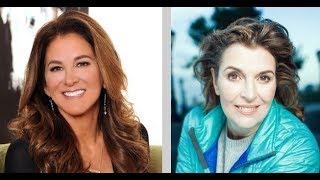
Melinda Wittstock, a journalist and entrepreneur, talks about recognizing a million-dollar idea, scaling businesses, and why she invests in female-founded companies. She discusses the mindset shifts entrepreneurs need and the particular challenges women face in tech.
Welcome to Ali and you, the business success and lifestyle show. And we highlight business leaders that share their skills. Skinny on success. What was the journey? What got them there to inspire you to do the same. And today, talk about inspiration. I have such a powerhouse woman on Allie and you that is going to share her journey of being a visionary entrepreneur and innovator. So many businesses and also 30 years experience as an award winning TV host journalist across some of the world's top brands. So welcome everybody. Melinda Wittstock. Hi, Melinda.
Hey, Alison. So good to see you. Thank you for having me on.
Well, I just, you know, I was just on your show and so I feel like this has been fun. I get to talk to you a couple weeks in a row.
Absolutely. And it was so wonderful to have you on. I enjoyed our interview so much.
I did too. And so we're just going to carry the conversation forward and we're going to flip it around because I want everybody to know all about you because there's so many words of wisdom there. So all of you make sure and stay for this entire interview because it truly will be a breakthrough for you. So Melinda, tell us about this. I mean, 25 years, that experience as a host, journalist and some of the brands, BBC, London Times, on abc, cnbc. Tell us some of the backstory. How did you get into this sort of broadcasting career?
Well, you know, the honest truth is the coolest kids at McGill University when I went to college were all on this daily student newspaper and, and I ended up joining that. It was almost like joining a cult, but it was like super entrepreneurial as well because apart from writing stories and just getting into the mix in journalism, I also created the ad department for the student newspaper. And I was always really entrepreneurial. My first little business was at age 5 when I kind of walked around with my black lab, door to door, knocking on doors and demanding that people prepay for my show. So this kind of carried on.
You got the presale thing down early?
I got the presale thing down. I don't know where it came from, but I remember saying to my dad like, hey, so dad, we need like 100 seats. Because I sold 100 seats for like a buck, you know, which was amazing. But like my, I think my black lab was kind of an enforcer, you know, we're a little intimidated maybe by him, I don't know. But they paid up, right?
Yeah. Did you get bonus treats?
I hope that's right. Yes. Oh yeah, yeah. He ate a lot, so. Yeah. So fast forward, I Had this really interesting time, almost like amazing incubator on this student newspaper because I was doing the business side, like selling ads, you know, creating the ad department to begin with while doing these hard news stories and like breaking big stories. Like I actually discovered a patent fraud that was going on amongst a bunch of microbiology professors and ultimately ended up in the Wall Street Journal. Right. So all this stuff was going on. So I decided that I was going to go to London and be a journalist there to avoid journalism school. And I understand that you went to journalism school. And I decided no, I just, I just wanted to skip that step. And the only way I could do it was to go to England.
Way more fun.
Yeah, right. So why not go and live in London? And I end up like I went. I thought I was going to be there for a couple of years and I was there for, God, almost 12 years. And I got a job within about a year and a half on the Times of London. I was 22 years old and I was writing about business. I was writing about mergers and acquisitions at a really interesting time. I started to write about the media and intellectual property and all of these things that have really informed my entrepreneurship. I was writing about it and I was meeting all these amazing business leaders and I actually got to interview Steve Jobs and. Which was amazing. He was next at the time and learned so much from all of these people and then became the media correspondent of a Rupert Murdoch newspaper. And my job was to be really independent, which is tough when you're writing about the proprietors business interests. And it was at a really interesting time. With the advent, cable TV was really getting going, satellite tv, the UK was way behind the United States and all of that. And then there was this new thing called the Internet. And I remember writing the story about how it was like the new big thing and Rupert standing next to me saying, no, I don't really think it'll amount to anything.
Yeah, I remember that time too. And I remember people were like, ah, should we get involved with this thing or not?
Yeah, like, what is it? I don't know if it'll work. It's kind of like how people talk about things like driverless cars now and, you know, Internet of things and even a little while ago how fast this technology is really moving. And so I just had a really interesting ringside seat at all things Business and all things Media and increasingly technology as a correspondent. And I ended up in television just because I broke so many stories. I got interviewed on tv. So I became a pundit and then I kind of thought like, this is the classic entrepreneur attitude. How hard can it be to be a TV anchor? God, that can't be that hard. Just like read Prompter, I'm just gonna go do that. And all my friends would say, what makes you think you can do that? Like, who? What, what? And I guess I just didn't see what the barrier would be. And I ended up at NBC in Europe. I created three daily shows for the Financial Times newspaper in television with the distributor of CNBC in Europe and Asia, grew that and then went to the BBC. And then I got tired of London, moved to New York. Anyways, long story. Ended up anchoring a show on ABC News with Anderson Cooper in 1998 called World News now on ABC, which was a blast. It was this overnight show that was crazy. We had so much fun.
Wow. Oh my gosh. Well, first of all, just thinking about that is way better than any college education. I mean, talk about just the topics that you were writing about and interviewing people about what an education. Right on it is.
You know, I mean, I think there were two things that I've become really good at in my life and one is entrepreneurship and one is journalism. And I wasn't really educated in either of those. And in academically, like I avoided having to get an mba. I avoided journalism school. Like my degree is actually like in political science. So, you know.
Well, you know, I got my journalism degree and then as the, I was working for a paper and all of the stories I was writing about were people getting killed. And I thought, this is the most depressing thing ever. I want, I do not want to do this, but it really helped me be a better writer. But you know, I'm of the same mindset as you. The way you learn is to jump in and then figure it out.
Yes, absolutely. That kind of experiential learning, it's sort of immersive and wonderful and fun.
Yeah. And then you jumped into building. You have built four technology companies. So tell us about that.
Well, the first one after I, you know, I think it was the Monica Lewinsky thing that finally ended it for me. Journalism. I thought if I have to report on this story one more time, like I can't handle it and I can't handle this. This is just so soul destroying. So I had this idea, first of all, I went back informed, I guess by the politics degree to start a news agency on Capitol Hill called Capitol News Connection. And I had this thesis that nobody was really voting or really participating in our democracy because the News coverage wasn't relevant to them. Like, it just didn't make any. It was, like, reported like a boxing match. So you might as well watch the real thing, like watch the boxing match. And so I settled on this idea that all politics is local. And what that actually meant was a really innovative business model to personalize. Actually starting out with localized content, but ultimately personalize it at scale. And this idea has informed all my businesses, this idea that content is conversation and is connection. And whether it's in a legacy model. We started out with public radio stations as our clients and then moved into television and then moved from there into, like, being the correspondent for print newspapers who couldn't afford to have their own correspondent on the Hill anymore, all doing really relevant local, local for a fraction of what it would cost to have your own correspondent on the Hill. And along this time, I got really fascinated by this news service in South Korea, of all places. It was called oh My News. And oh, My News was one of the first crowdsourcing platforms where ordinary citizens were contributing to the news in massive numbers. And this was all being curated technologically. And I thought, my God, why does this not exist here? And so I became captivated with ideas of crowdsourcing and what would ultimately become social networking. Facebook, Twitter, Instagram, none of these things existed yet. And so around that time, we started building some of these really interactive. They were widgets, I guess, back in the day. Right. Because there wasn't even an iPhone yet. Just thinking about how far. Anyway, so. So it was pretty ahead of the game. And created an app called Ask youk Lawmaker that anybody could ask any question of their correspondent, any question story of their lawmaker on Capitol Hill. And our correspondence would go, wow, I love that. Questions answered. So it was kind of like this, Alison. It was like, hey, you know, speaker, this question comes from 938 people in 28 states. And then you'd be like, holding a microphone to them. And it's like, I don't think you answered Betty's question.
You were really polling people and getting. Yeah, I love that. I could see that is that was the precursor to crowdsourcing.
Yeah, absolutely. And what was really interesting is we found just from a business model perspective that the stories that came from questions that came from real citizens, that those questions were more authentic and they resulted in better stories. They got the politicians off their scripts, and those stories were more sellable. I mean, we could sell them for more money. And so that was like, okay, this is it. This is like the future of news. And so from Capital News Connection, which was that company, that company. And we won all kinds of Emmys and Murrows and like crazy grew that to God, we had 300 stations at one point, you know, really massive thing. And went from there to going all in on technology by actually creating what was the first iPhone news collaboration app. It was called Newsit 2010, way ahead of its time. And here's what it was doing. It was crowdsourcing original content. The algorithms in behind it were ranking that content for reliability and relevance. Like, I was actually. We were getting to the point where we could discern fake news. But here's the problem about innovation. If you're too far ahead, then there's a big cost to that. Which I wear personally, which is if you solve a problem before anyone else is even aware of the problem, that does not make a good business.
That's where timing is everything, like, definitely is relevant. So, yeah, ouch. I get it. I was a homeopathic physician for almost 20 years. 20 years. And I do believe homeopathy was before its time.
Yes.
200 years ago, you know, even 100 years before traditional medicine, so. Or allopathic medicine came on the scene. And I really do think it struggled so much because it came on so early. So I get it.
Timing is everything. And the tricky thing for an entrepreneur is it's really difficult when you're in it. It's really difficult to know. So fast forward all these years, 2018, and I got a call from a VC in Silicon Valley the other day saying, hey, are you still doing news It? Because.
I think it's time to bring that baby back.
Yeah, like I have time. But anyway, it's interesting because when you look back at all these things in your life, I'm old enough, Right. To see these patterns emerging where things that didn't necessarily seem to connect at the time all seem to be converging right now. So everything from Capital News Connection, everything from newsit, also the social analytics business that I built for social media conversations, all of that is kind of. Yeah, it's converging.
Yeah.
And it makes me think. It makes me think that all of our lives, really, as entrepreneurs is just like a laboratory.
Yeah. Oh, it is. But then, you know, as you look back and all of the pieces connect, so it's awesome. And then you have this big mission. So we're gonna talk about your podcast. We're gonna kind of dive into that deeper. But I want to talk about your mission because it's, you know, it's a Big mission. But I also think that it's when we can have a mission attached to, to what we're doing in the entrepreneurial space, it completely changes the game. And yours is a big one, which you said you want to invest $10 million in. 100 female founded companies in the next 10 years, have women supporting each other, which is so powerful. So tell us about that.
Yeah, so I guess like all big ideas or any kind of entrepreneurial idea, they sometimes come from a challenge or a LAC or some sort of gap. And as a technology entrepreneur, I struggled and gosh, it was soul destroying at times to raise capital. Very, very difficult. Women right now, and these are women that run companies that actually qualify for venture capital, still get between 2 to 3% of the available funds. And I've seen so many women in tech really suffer that. Right. And you know, it's frustrating. So I think I came about this mission by just saying, God, I rather, I don't want to stand around and complain about it. I want to do something about it. And moreover, I want to be able to create an ecosystem that I wish that I had had when I was starting out so that how much more powerful would we all be in an abundant universe if we all showed up and helped each other, if women were throwing business to each other, if women were mentoring each other and women were investing in each other. And the Wings podcast really started out with that in mind. It was this little side hustle. I thought, oh, you know, it'd be really kind of cool. I'm writing a book, right, about female entrepreneurship and like, what, what is the formula for success for that? And I started doing a whole bunch of interviews and, and people said, melinda, my God, you're this like award winning, like radio and TV host. Like, why are you not doing a podcast? I'm like, oh, duh. So like you really need to create your market. So like go do a podcast. That's the fastest way to do it.
Yeah.
And so that all made sense. And so I launched last November with 20 episodes. And it was started out daily, like over delivering at like six episodes a week. And I cut it back to about four because people were saying that it's too much, I can't keep up. But we're 140 episodes as of today. And it really is all about acclaiming and affirming the journey of the female entrepreneur. Changing the face. Right. We're not in garages wearing hoodies, eating ramen noodles.
Right?
Right. We're not necessarily dropouts of Harvard, Stanford or mit.
Right.
Most of us come to entrepreneurship a little bit later in life. We've been in corporate, you know, we've hired, we've fired, we've done things. We have, like, actual expertise.
Yeah. We can create big success wearing leggings, you know.
Right. And so I really, literally wanted to change the face of entrepreneurship because I saw so many women succeeding in silence, like no one knew who they were. And it's like, how can that be so true?
It's just so true. We were talking about that when I was on your show because I highlight women speakers at my events and I find these women, you know, built hundred million, $200 million companies that I hadn't heard of before. So I get it.
Yeah, I know. Well, we're so busy with our heads down. Right. And one of the things that comes up on the Wings podcast is that women are very reticent to really seize their personal brand. That's hard for a lot of women. They confuse it with personal bragging instead of personal branding. And so there's a couple. There are just all these patterns that I've seen emerge. And as that's happened, it led me to think, well, what could I really do to change the game? And I'm a big believer in putting big intentions out into the universe and somehow if you're in alignment with them, things start to align and set up in such a way that you will be able to do all the things. So I set an intention of, I want to invest $10 million over 10 years. Because with that higher intention and imagining doing what Natalie Ledwell does with my movies and really visualizing it and really immersing myself in it, all the other pieces of the puzzle line up. Allow me the funds to be able to do that.
And that is so powerful. If that's all you hear on this show today, by having that big mission and vision and not being afraid to claim it and not stopping yourself because you don't know the how. I mean, most of us don't know the how. And even if you do, it's going to change tomorrow anyway.
Oh, it's going to change. Like I think, you know, my ego tries to take over. Right. And tell me, like, what the how should be. And I, I'm learning now to get out of my own way, like just even laugh at it or just let it go. Hahaha. That's so funny. That little left brain, little voice thing, like shut up, you know?
Yeah, exactly. Well, I think it's phenomenal and I encourage all of you that are Watching today to think about, like, if you were going to put your big stake out in the world, your big mission, and there was no ceiling, what is it that you would do? Because you cannot dream big enough. So that's awesome. So speaking of going after the big dreams, there's the business side, there's the financial side, the wealth side, and then there's the personal side and there's the lifestyle. So there's a point where I had to learn, Melinda, that I wanted to create a business that also fit my lifestyle. So I had a life. And as we are, you know, just found out recently about Kate Spade and her suicide, which was so incredibly tragic and shocking and sad to feel that, to know that she had such profound depression and so many people out there, this is no big surprise, right? It's looming. But I bring this up because.
I'm.
The same age she is. We're out there building businesses as well. And as we're elevating women out there.
It is so important.
I want your thoughts about this, about making sure we're taking care of the inside. And it's not just about the end goal of growing a business to X number of dollars, but also the part of our personal happiness.
What are your thoughts? Oh, my goodness. I couldn't agree with you more. I was so sad and so shocked to see this news because I think when we look at other people as outsiders and their lives look so perfect, it's so hard to understand that gap. And I think there's a lot of.
You know what I mean, it was probably hard pressure for her living up to that.
Oh, absolutely. And I think we really come into our own power as women and as human beings when we're really authentic and vulnerable. I mean, everyone knows, you know, Brene Brown, but that power of the vulnerability and just an acceptance. There's a wonderful book called Radical Acceptance by Tara Brack, and I recommend everybody go read that because it's really how to accept both your strengths and perceived weaknesses. Whatever. There was this day I remember when I was really down at one point where just the business wasn't going well or I was just kind of out of alignment. And one day my daughter just wrote a note to me and she just said, you are enough. And it was just the most moving, amazing thing. And I was uncanny. I mean, it was exactly what I needed to hear. And we all, as women, I think, would be doing each other a tremendous service by just reminding ourselves of that. I mean, I think there's part of it, too, with women, if we get into kind of scarcity thinking where women tend to compete. This idea, like if you came up in the kind of 80s and not when there weren't very many women, there wasn't enough oxygen at the top and we were all trained, I think our generation in particular was trained that like only a couple can succeed. So you have to be perfect and you have to do it all. And you're like all this kind of stuff and it's not true. We live in an abundant universe and that kind of scarcity of competing. So nah, it's, it really can lead to a depression because we're comparing ourselves to other people and we should not be doing that. Like what's right for you isn't for me. It doesn't make one better than another. They're just different.
And every time you do that, you're putting yourself down. Oh gosh, yeah, you're comparing and you know, it's, you know, and you and I mastermind together with other very successful women and some of them are like, quote unquote, my competitors. But we all, we share with one another what we're doing and how we're doing it and we help each other out, which is actually pretty radical. You don't see that much in business. But the interesting thing is, is that then we all rise together.
Yes, it works for women. I think when women do that, it works for us. I think that's where we're community oriented. Right. Our brains are like, we've been socialized over millennia to be like that. But I think I want to pick up on something you said a little bit earlier, which is just that the, you know, when you designed a business around your life, around kind of knowing what it is. And to add on that, I mean, I think if you set success as being external to you, like if it's only about money or material things, then you're never going to have enough. It's never going to be enough because no matter how much you have, it won't be enough, if that's how you define happiness. And so I just see that the biggest businesses, like if you look at $100 million, $500 million billion dollar unicorns and you talk to women who've built those, they weren't doing it for the money. They were doing it because they had a mission. They had like a real social, like a passion that they cared about and that whenever they talked about it, other people would also buy into that. Why? And it was a community and it was connected. Like it wasn't like they were taking anything from anybody or. Right? It was.
It's so true. It just comes out of them like breath and just their magnetic energy. You're just attracted to them and they're. Because they're excited about what they're doing. And that's what I've done with all my businesses too. You don't really have to sell anything. You're just so excited about what you do that people are attracted to it. But you can't manufacture that if it's not there.
If it's not there. Yeah, it's interesting. I did a little coaching call with someone the other day, someone who bought. Recently I did the Wings of Success summit where I brought together 55amazing entrepreneurs, all women with seven, eight and nine figure businesses, and many of them with New York Times best sellers and like just unbelievable followings and really successful women, to talk about three things. Mindset, mojo, and money. Because we've started to see what the patterns of success are. And it was this amazing event and a number, you know, you know, of other women bought it. Right. Seeking to learn from these incredible women. Talk about an entrepreneurial MBA in a week. I mean, that's pretty much it. So. But you know, when I do these one on one coaching calls, I'm always stunned by how much it's really the. It's always comes back to the mindset when any problem that anyone is having, any kind of business challenge, you can trace it back every time to like limiting belief there. What's the. It's always about what's going on in here.
Yeah, it's so true. It's so true. I mean, we spend, you know, so much money on our marketing and all of these things and we, you know, why isn't working, and it usually is the mindset behind it, you know, so that's so, so true.
Now let's tell me a little bit.
More about the Wings podcast and how can people, you know, where do they find you and, you know, when are you on and what's the deal with that?
Okay, awesome. So it's called Wings of Inspired Business. And Wings stands for women innovating, networking, growing, scaling. And I know you love the S word, right? The scaling word, because that's where so many women fall down and very few make it to a million dollars. So many get stuck on the startup sticky floor, can't hire fast enough or are in isolation or whatever. And so really helping women to get beyond that is a passion that I share with you in terms of all of that, like how we get out of our own way and, you know, and figure out how to scale. So anyway, the podcast is four days a week. We're Tuesday, Wednesday, Thursday, and Friday. On Friday, we have a little minisode. It's only about five, seven minutes long. It's really popular. People come on and talk about what's inspiring them, what they're challenging them, and like three bits of really, really great, practical, implementable advice. And then the other three episodes get really into the mix. Kind of like what we're doing here right now, where it's like really getting to know the woman, like her journey, what she learned along the way, as well as advice across this mindset. Mojo, Money theme. And we're everywhere. We're on itunes, Stitcher, Google Play, Spotify, all of that. And you can also go to wingspodcast.com and get it that way too.
Very cool. Well, I loved being on your show and what, like, who have been 140 interviews? Like, who have been some of your.
Oh, man. Okay, so I've got so many. So. But I'll try and keep it to my, like, all time faves.
So.
Ping Fu. I don't know if you've ever heard of Ping.
I have.
She's amazing. She invented 3D printing. Yeah, before that. I mean, she invented Netscape. I mean, she actually hired Marc Andreessen from Andreessen Horowitz. It's on her development team at Netscape. So she arrived in the country at age 18 with $88 in her bank account and not a word of English. And she had been raped in a Chinese prison at like a young age. I mean, I just. Oh, my goodness. Unbelievable. And she gives one of the most inspiring interviews that I, honestly, I've ever heard. I feel so privileged to have had her.
Wow. I've got to go back and listen to that.
She is amazing. Amazing, amazing, amazing. And then a lot of people that we know. So JJ Virgin was on and I think it was so her story. A lot of people know her story about her son and how she came through that and built this business and got the best selling book at her son's, you know, the side of his bed as he was near death. Right. And like. But this theme about overcoming adversity is a continuing theme on the podcast where so many women who have, who are successful have been through, including me, these heart wrenching things and we all have them and it's, it's how we react in those moments. And so she. It was just so inspiring and practical at the same time as being Inspiring. And I remember a particular quote of hers which was just that if she feels too comfortable, she's not innovating enough.
Yeah, jj, I think.
Right.
Well, the right things happen when you're on the edge. You know, it really does when you can push yourself to that edge.
Exactly. Okay, so here's another one. I'll give you one more. There's so many in the 140, but I couldn't not talk about the vagipreneur.
Oh, my God.
Yes.
Okay. I figured that was a really interesting episode.
It was. So Rachel Braun Shirl invented the zestra arousal oils or essential oils. It was like she built the company Sempre and she sold that for like a nine figure exit. She raised all the money on Sand Hill Road. Can you imagine her on Sand Hill Road in Silicon Valley, like, getting these VCs, all these dudes to invest? So she tells a great story about how she got the money, and it was pretty amazing. But what she does now is she helps women in the femtech space, which is a really fast growing space around women's health and technology, applied life sciences companies, but yet specifically to women. And she's doing these amazing, amazing things. And so there's so many more besides. Yeah.
Wow. Well, everybody, you definitely want to check this out. I'm going to go back and listen to those interviews myself. That sounds awesome. So as we wrap it up here, what would you say, Melinda? And there's so much more adventure out there for you. This is just the beginning. But for those women and men that are watching this show today, and they're out there and they're working on scaling their business and reaching their big mission, what is some advice that you have for them?
Oh, my goodness. The most important advice is get the right people around you. And there's a number of different ways to do this, right? I mean, if you have toxic people in your life, I mean, they could be family, they could be friends, you got to get them. I mean, they could be well meaning, but if they're saying things to you like, oh, are you sure? Isn't that a bit too hard? Or anything that's getting you off your game, you got to really be mindful of that, because I can really pull you down. But also just get the right type of mentors, and there's different type of mentors for different things. I mean, you've got strategic mentors, you know, for your business, You've got operational mentors, like friend mentors. You have, like, a whole bunch of different types. Get Courses and masterminds do all that. Invest in yourself. So that's so important, I would say too, that women in particular are too slow to hire. Hire. Like, even if the first person you hire is someone who takes all your domestic stuff off you, I always think, what's the. What's the value, say, in your. Or what's your hourly rate if you are creating new IP or closing a strategic partnership, that it will add a whole new channel onto your business or whatever. What is it? Is it 1,000 bucks an hour? 10,000 bucks an hour? What is it? Or you could be doing your QuickBooks, right, vacuuming, right? And so, like, actually, I'm just going to say it really blunt out you're stealing from your company if you're doing that right. Because you should be paying someone only like 30 bucks an hour, even 20 bucks an hour for that kind of thing. So get help for those things. Double down on the things that only you can do and hire the rest. Figure out a way. One of the things about an entrepreneur that is a real predictor of success. And if you have a real why we talked about that passion, you can persuade people to come and help you out initially for free or for deferred compensation or for equity or for whatever it is. Right. Don't give away all your equity.
No, don't do that. Richard Branson did that. And the CEO of Pandora is a great story for around that where he had to keep them on for two years without pay.
Yeah, I know.
Getting them excited about the mission and those that stayed on, you know, it definitely paid off.
They're the right people, but like your team. So really it comes down to relationship. It's like. And when I say relationships, the relationship with yourself. So do the inner work. And that, that. Because the success, external success will manifest if you do the inner work. Invest in that inner work, because that's the thing that's going to ensure that you have good relationship, relationship with yourself, with everybody, your team, you're going to attract the right people, you're going to be in alignment with that, the right clients, the right investors, whatever it is. Because at the end of the day, that's what success comes down to.
Absolutely. Well, I love it. And this has just been a dream and so much fun. Thank you for coming on here, sharing your wisdom, your life journey. And so everybody get out there, figure out your big mission and, you know, claim it. Claim it and do the work. Do the inner work.
Absolutely.
All right, well, we're going to have you on again soon for sure.
Yes, please. Anytime. And you got to come back on mine as well. I know you are. You're already coming back on mine when your book launches. I'm so excited.
I know. I can't wait. It's going to be here very soon, so. All right, everybody, thank you you for listening to us at Ali. And you, you know, you can subscribe to the show@subscribetoalli.com and find us on itunes and many of the other platforms out there. And get out there and elevate yourself because you are absolutely worth it. Until next time. Bye, everybody.
More from Allison

He Built a $150M Company Without Taking a Single Dollar of Outside Capital | Erik Huberman




Wing Lam has run Wahoo's Fish Tacos for 38 years and his hiring rule is simple.




The Guerrilla Marketing Genius Behind One of California's Most Beloved Brands | Wing Lam
