How to Reinvent a Business at Any Stage
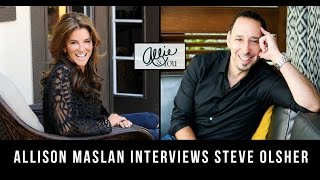
Allison Maslan talks with Steve Olsher, a New York Times bestselling author, about reinventing your business through finding your core gift and building online ventures. They cover marketing strategies and why persistence matters when pivoting at any stage.
Welcome to Ally and you'd. Today we are talking about liquor, finding your passion and being explosively successful online all at once right here on Ally and you'd. Welcome to Ally and you, the Business Success and lifestyle show. My name is Allison Maslin. My friends call me Ali. And I help business owners grow their business. And today we are talking about all things business. Speaking of, we have my dear friend Steve Ulsher and he is back on the show after like he was on holiday for like six years and no, actually he is a number one New York Times best selling author of what Is yous what. He is the world's leading expert on everything online, how to profit online. He founded the website liquor.com and he has a number one show called Reinvention Radio which I had the blessing to be on. So welcome, Steve.
Well, thank you so much for having me.
Yeah. So, yeah, because I know you've done nothing since you were on our show like in 2011.
Right.
It's hard to believe.
It's been five years too, right?
I know.
It's been now. Crazy.
I know. That's when Allie and you was first born. We, the first iteration of this show, if you remember, we were back in a television studio. Technology has changed so much.
It has.
And you were living in Chicago and you're like, I'm over the winter. I'm moving to San Diego.
I think it was, I think it was a trip to see you that like, put me over the edge. Oh, yeah, yeah. Okay. That's, that's.
I'm sure your wife was thrilled. Like, yeah, hey, we're uprooting and moving because so we have so much to talk about today. Because you are just like the eclectic entrepreneur, right?
That is true.
I think that would be a good title for you. You, you know, the liquor dot com. You're an, you're a speaker, you're an Internet expert now. You have this radio show that's huge hit. So let's kind of go back to the beginning a little bit. What was the first business that you had? How did you become an entrepreneur? What's the history there?
You know, it's interesting and you could probably speak to this too. I think that like, you're either an entrepreneur or you're not. Right. It's like either in your DNA or it isn't. I think it's just in my DNA. And we could actually debate that at some point. Like, can you learn how to be an entrepreneur or entrepreneurs bored. Right?
Just like, yeah, definitely. I kind of think that you definitely have Entrepreneurial tendencies or you don't. You know, I think that there's, you know, as a coach of business owners, there are some people that are just not meant to have a business. And there's not this. That's not a criticism at all. Yeah, you know, so. So what do you think that. What is that about you that you feel like I had to be a business owner or. Forget it.
Yeah, it's interesting because I feel like at some point the light switch just kind of went on and I realized that if I was to work for someone else, then I would basically be fulfilling their agenda. Right. And not that there's anything wrong with that, but I'm too pig headed and just like, I'm like a bull in a china shop. Like, I'm just. I don't know that I would do a very good job of just kind of sitting back and saying, okay, you just tell me what to do and I'll do it. I'm just, I'm always like, you know, if you see something and it's like, you know, these flowers, I'm like, it might look a little bit better just, if we. Can we just move this far. Like, I just know. I just can't, like, I can't just leave things alone. So that started at a very young age where like literally it started with music and I would hear music playing in the clubs and all, and I was thinking, like, I wouldn't play that song, I would play a different song. And So I started DJing. And that's where it started and sort of that entrepreneurial path of having my own DJ company, which led to opening my own nightclub, which then led to catalogs and launching online. Very early in 1993, actually, we launched on CompuServe electronic mall and. And then that led to Liquor.com and real estate and so on. And I just, I think I'm the poster child for Reinvention, which is why I appropriately named the show Reinvention Radio. Because I just, I don't know, there's just something that's so fun about continually becoming clear on who you are and sort of like shedding the shackles of all the outfits and expectations that people throw at you and just getting closer and closer to who you truly are.
I love that. And do you think that you're really reinventing yourself or as an entrepreneur is just. I think some, some business owners are great at the idea and getting the idea to a certain level and then moving on and letting someone else take it and grow it. And then there Are other entrepreneurs that are really okay with that, carry through and like, to build the team and all of that?
Sure.
So is that reinventing or is that like, oh, I've taken this to a certain point, and. And this is just another extension of me and my creativity.
And the answer is yes and yes and yes. I think that the reality is that as you get older. I mean, I'm older now. You see the gray hairs? I actually shaved. I had more gray in my. In my beard, but I shaved, so I look just a tad bit.
You look very handsome.
Well, thank you for that. And so I think reality is that as you get older, you just become less tolerant, I think, of the things that you don't enjoy doing. And that's just trial and error.
Right.
I mean, you just have to do enough things until you realize, like, this is just not where I excel. And so for me, I have the. I'm like, I'm the idea person. Like, that's where I excel on the implementation side of the equation. I'm good at it, and I can do it, but I'm much better at that inception piece and seeing the big vision and then assembling the right people to help bring that to fruition again under my guidance.
Right.
But it's definitely, you know, there's. There's skills, and that's the whole what is your what? Thing is, we all have a natural gift. One gift. I mean, we might sort of teeter on other types of gifts, but there's one gift that's dominant, even if it's just 51% to 49%. Yeah, there is one gift that's dominant. And I think a lot of people live their lives really in denial about what that core gift truly is. And then as you look at the vehicle and the people, which are the other parts of the what is your what? Equation. Those are more fluid, more organic. Those change over time, right?
Yeah, I don't know. I mean, I know I have gifts, but I think that's a good question, because I've never thought of it as just like one. Not that I'm saying, oh, I've just got so many gifts, but kind of really narrowing it down to that what is what? Which is what your book is about. So what are some of the steps that someone could take, such as myself? 3. You say you have three steps that you take people through. Can you share that?
Yeah. And so the three steps are really being clear on what that core gift is, the vehicle that you use to share that gift, and then the people that you're most compelled to serve. Now, most people won't ever figure out one part of the equation, let alone all three. So if you're able to get to one of those three steps, you're way ahead of the game. So reality is that some people actually find it easier to start with the people who are the people that they're most compelled to serve, and then they back into how they'll serve them. Through what vehicle? Like coaching or teaching or, you know, whatever it might be, athletics. I mean, whatever your vehicle is, then how does that play back into your gift, your core gift? Some people find the vehicle as the easiest place to start, and then they figure out who the people are, and then they back into their gift and so on. But it's really like a tripod. I mean, when you think about the equation, you can know what your gift is and you can know what your vehicle is. But if you don't know who the people are, then that doesn't work. Right. Or you can know the people.
So give me an example.
Sure. So, like, a perfect example of the gifts of vehicle. And the people is like somebody who may be healing. So maybe healing is their core gift.
Right.
And there's about. I think we came up with around 30, 35, whatever the current number is of those gifts, but they usually fall into one of those 30 odd categories. Right.
And healing could be, you know, that you are. Because I was in. In the homeopathic profession or. Or a nurse.
Exactly.
That's the vehicle. Right. Okay.
Yeah. So healing would be the gift. And then maybe massage.
Right.
Or nursing would be an example of a vehicle. Let me play this out for you, because one of the ways that it becomes so interesting when you look at the third piece of the puzzle is you can be close, but if it's not dead on, it feels good, but it doesn't feel great. So there was a woman who I worked with a number of years ago. Her gift was healing. No doubt about that, because she was a nurse. And she was a nurse for like, 30 something years or so when we met, and she was working in a general hospital. So the people that she was serving, we're sort of these general, you know, types of patients. And as we went through the process, it became clear that the people she's most compelled to serve are the disadvantaged elderly. So you can see how when you plug that into the equation. So now she's still a healer and she's still doing nursing, but she's doing it now for the disadvantaged elderly working in a VA Hospital, actually at this point. And that's when everything shifted for her. And. And so that's a perfect example of how the three work together without the third piece. She's, you know, she's okay. She's doing her nursing thing, but now she really wakes up with a fire in her soul because she's serving the disadvantaged elderly who she is most compelled to serve.
And it's also kind of like in business when you're finding that.
Right.
Target market, for sure. So it's not just the target market of people that will buy your stuff, but also that really appreciate you and get you, and it's this mutually rewarding experience.
It is, yeah. And because you can tell when someone is doing something that they can do as opposed to something that they're really just wired and naturally wired to excel at.
Right.
You could do a lot of things, of course.
Right.
But there are certain things that are just like, you know, really in that there's a million different terms where. But, you know, zone of genius, whatever you want to call it. So most people are capable of doing a lot of different things.
Right.
Like, I could cook, but as my husband.
Water. Oatmeal. Breakfast done.
Yeah, pretty much.
My poor husband.
So. Well, this is great. And I think this is really valuable to kind of think through that process and which kind of leads to the whole Internet and the explosion online over the last, whatever, 20 years. And it's changing all of the time.
We're all.
We're always trying to keep up. But if, you know, I think so many times people get into these online businesses because they're just like, I'm gonna make a ton of money. And as you know, it takes time and effort, and it's really a marathon, not a sprint.
Yeah.
And we've been at this for a very long time.
Sure.
So if it's your what, you're gonna be much more likely to stay with it and give it the time, the energy, and the effort that it needs to succeed, wouldn't you say?
Y. And, you know, reality is that I think that we're doing a lot of people a huge disservice with the way that it looks so easy now to create these, you know, these billion dollar unicorns and, you know, these. These examples of exit here for 40 million and exit here for 120 million, and people are like, oh, I could just build something and I'll sell it. And it's like, I think reality is that people don't recognize how much work.
Oh, my gosh.
Into that behind the scenes. And, yeah, did Snapchat. Sure, they could have sold for a billion dollars after, you know, two years or whatever it was. But reality is that there was a lot that went into getting to that point of even being able to sell at that point. Was it a little bit of luck? Was it good timing? Of course. But the truth is that when you are clear on what your. What is right, and you're clear on those people you really are compelled to serve, then you're going to keep dancing around it until you find the right iteration. Most of the time, you're not going to find the right iteration the first time, the second time, the third time, the 10th time. But if you keep with it, like you're saying, you'll find the iteration that serves you and serves them, definitely.
I was watching an interview with the CEO of Pandora, and he. I mean, the business pretty much tanked in the beginning. They lost, you know, went through all of their money. And he had. For two years, his employees stayed on for no money.
Wow.
Like, I mean, so every week he had to get up there and do that locker room talk. And what he did was he was able to help them see the vision, and that was the what?
Right.
And so luckily, they stayed on, or those that didn't are probably kicking themselves right now.
Yeah, yeah. It's a process, you know, I mean, again, it is one of those things where in life we just have to give ourselves permission to say, okay, let's cut the rope here and move on to something else. And it could be a completely different something else, which is that whole concept of reinvention. And that's why I love doing the show, because the majority of the people that we have on haven't been doing the same thing their whole career. They've done X and then they've done Y, and they've done Z, and now they're where they are. And so I love following that. That journey, that path, and seeing how people got to where they are now. Because when you interview enough of those people and you read enough of those books and you meet enough people like that, you realize, okay, I'm not crazy. I'm not alone in this. I'm not just, like, I'm not an utter and complete failure. Like, okay, they went through these same sort of struggles. And I think there's, you know, there's obviously something to be said about, you know, misery loves company, right?
Yes.
But it's not necessarily misery. It's that, like, going back to the entrepreneurial thing. At some point, you either Say, okay, I'm gonna get a job, or you just keep down that path. And if you stay the course, not everybody's going to have this unicorn worth a billion dollars, but you'll probably have enough that fulfills you.
Yeah. I think being in a room with a bunch of entrepreneurs and feeling that entrepreneurial spirit when you're with your tribe of people that get you, because most people, when they go after their dreams, have had many people say, that'll never work. You're absolutely crazy. I mean, I can't tell you how many times I've heard that and still hear that today sometimes. And you have to learn to just turn that off, you know, I mean.
I'm 18 years in to liquor.com right now. I picked up that domain in 1998.
Wow.
So, I mean, it's like, are we doing okay now? Yeah, we're doing pretty good right now. But it's been 18 years and, and several iterations and downtime and, and losing the domain and getting the domain back.
And it's like, you know, and it's.
This whole trek, this whole journey and, and so eventually, fairly soon, we will exit and it will be a great exit. But that was 18 to 20 years in the making, believe it or not. And that's part of the story that.
People don't look at. That's a 10 year overnight success story.
Talking about 10,000 hours. Just add like another zero, I think, onto the back of that.
Yeah, I had those moments going into Starbucks and looking at the barista and thinking, you know, I could do that.
I put in my application earlier today, actually.
I don't think that they would hire me. I would be absolutely miserable making a latte. I would burn myself and everybody else in there.
I took my son to Target the other night and there's this big billboard outside, whatever, hanging on the side of the building. It's like, apply now@target.com careers. Okay, maybe, you know, like that might not be a bad gig. Just wear my red shirt, my khaki pants, and you know, just, just go and get my paycheck and call it a day.
There's, there's something to stepping into a structure. And I get that because running a business you have to create your own structure. And so you go from the. For you as reinvention. So I mean, from liquor.com 18 years, being in the Internet, the whole space for so long, you obviously learn a thing or two about building business online. So I want to give some good tips today if we can. Kind of. Let's move, make that shift in there. Because there's. I think there's two distinct parts. First, you've got to be able to. Or three, you build the community.
Right.
Then you have to attract the people from prospect to leads, and then you got to take those people and convert them into customers.
Right.
So there's that whole process. You can't really shortcut it. Can you just give us some good tips, some value here to help people to understand how to simplify that process?
Yeah. Well, why don't we start with the traffic side of the equation?
Okay.
Because without traffic, nothing happens online. Right. So what are some of the ways that you can drive traffic that people aren't necessarily thinking about? Well, I can tell you that there are a lot of sort of hidden gems out there that people aren't taking advantage of. Are you familiar with the. With the term native advertising? You know, okay, so, yeah, share that, and I'll share exactly what that is. So native advertising is basically, if you go onto a site and you see one of those ads, it's not even an ad. It almost looks like an article where it's like, you know, five things you never knew about lemonade, but it just kind of blends into the site. Or even in the middle of an article, you'll see, you know, something like it'll take you to somewhere that's kind of.
Oh, yeah.
Yes, that's one. There's a couple of different. But that's in this context. That's what we're talking about with native advertising. Those platforms like Zergnet and Taboola, and there are other native advertising platforms. Basically, if you can create decent content, which means original content that captivates interest and it focuses around your area of expertise, you can drive a lot of traffic there for literally pennies. Like on liquor.com, we'll get 3, 400,000 uniques to the site every single month just through, like, Zergnet. By creating these, you know, five things you never knew you could do with tequila and the best Father's Day cocktail and these sort of things.
The best margarita ever.
Exactly. And so people love that. They click on it.
Are you good at making margaritas? I'm getting there slowly but surely.
I'm now moving beyond just the mix and the tequila.
Oh, really? I'm pretty okay with the mix and the tequila, but.
So that's a perfect example of, like, people say traffic is really, really expensive. It can be if you're going traditional routes, but, you know, there's other things that I love, like Are you familiar with, like, SlideShare?
Yes.
Okay, so that's a perfect example of a way to repurposing, because there's a lot of folks out there who have great content, and they feel like they have to continually create and create and create new content. And of course, you have to do that some of the time.
Right.
But most people really miss out on repurposing their existing content. And so when you talk about traffic, maybe you put something on Facebook. Okay, that's one source for traffic. What else can you do with that? Like, you talked about, you know, having podcasts and having videos and that sort of thing. A lot of people don't realize that YouTube is still a huge channel for traffic.
Right.
You can take a podcast and turn it into a video. How do you do that? Well, all you have to do is have a picture of whatever it is that plays along the whole track, upload that as a video, and now you've got a video. So it's.
And you could take the YouTube and put it on your blog.
Sure.
Right.
Yeah, yeah.
And then run ads from the. To the blog.
Yeah. And it's. It's almost like it's. It's such like these Lego interchangeable pieces where there's pretty much nothing that is out there. Where if you created on one medium, that you can't adapt it for another medium. And I have found, and this is. I'm sure what you found as well, with your clients is that most people create really good content, and then do they just, like, they get in this mindset of, like, content is king, which it is to some extent.
Right.
But they don't do nearly enough with it.
Right.
And so from a traffic standpoint, there's a lot of ways to drive traffic with the same piece of content over and over.
That could save a lot of time for sure.
Right.
Probably a lot easier to do it that way. Okay. So you're driving traffic, and then you've got to be able to capture those leads.
Right.
So that they're not gone forever.
Yeah, yeah, There's.
I mean, it's kind of like getting someone. They drive by. Let's say someone drives by here. And because we have a kind of like a storefront.
Right.
So we've actually have people come in, walk in the door. And so it's just the same thing is how do we get that person to drive and come into your location? It's the same thing. Yeah, as a.
It is for sure. And what happens, though, when they come to that site, liquor.com for a long time we were hovering around a half a percent in terms of conversion. So if there were 10 people that would come to the site, let's use basically, as opposed to having one person which would be 10% or 1/10, let's use bigger numbers, a thousand people. We'd end up with one person that would convert. You know, that was about where we were at. I mean it was an insanely known low number. And over time by using different things like, like Bounce Exchange is a really good program. Not sure if you guys are familiar with that, but check out Bounce Exchange or like Unbounce. Yeah, is another platform that you can use. We've been able to take those same numbers and get them up to now 6 odd percent. So that's a monumental increase based on the traffic that we have. And so now let's just use whole numbers again. 100 people instead of less than one person opting in. Now we've got six, seven people opting in. And that makes a dramatic difference. So what do you do with people when they come to the site? How do you capture them? How do you begin?
How are they opting in on liquor.com? i mean what I need to get on there. But what are you giving away? Like cocktail recipes?
Sure, it can be recipes, it can be. Sign up for our newsletter. It can be. A lot of the ways that we do it too is through contests. Like right, if you get a few people together that are like in your vertical, right. So people who are in your vertical that aren't direct competitors, but basically like so in the coaching or consulting space there are certain things that you do that others don't do, but it's complementary like video services or you know, web design or those sort of thing. You know, people that are serving your clients right, but they aren't direct competitors. So lots of people in that vertical, you can partner with them, create some sort of giveaway. Like that's what we do for like the Kentucky Derby, right. So we'll do a giveaway to the Kentucky Derby. Two nights at a hotel, something by Old Forester, you know, ring side seats or whatever they're called there. And people will just provide their name and email to enter into that contest. We'll mail our list, our partners mail their list and then when the person hits okay to enter into that drawing, what they're okaying is I agree to receive information from this company, that company, this company and that company. So it's basically like a co registration option, right? Works really, really well and not a lot of people are doing that.
Right.
So it's. It's creating that affiliate community, basically. And that is where you're able to expand your reach.
Right. To.
To so many more beyond the list that you have.
Sure.
Right.
And then. So now. Okay, they're part of your list. So we've got the second part now. How do you convert them into customers?
That's where it gets really interesting. I mean, most of the time, people are afraid to ask their customers, and that's technically what they are. I mean, they're customers until they say we're not customers. That's how I look at it. Most people look at the people on their list, say they're not yet customers. I look at it as their customers until they say they're not customers.
Till they unsubscribe.
Until they unsubscribe. So it just means they haven't bought something yet. But they will if you keep pushing and pushing and pushing in a subtle serving way, not an obnoxious way, which a lot of people do.
But not buy my drink.
But a lot of people don't ask.
Yeah.
You know, you have people on the list and a lot of people don't ask them to do anything.
Right.
And so you're not serving them if you have something that can help them and you're not saying, here it is.
Well, they would be on your list if they weren't interested in something. And I always tell people, too, if. If someone asks you how much your product or service is, that means they're really interested for sure. And that's where a lot of times business owners kind of, you know, they choke up.
Yeah. And I get it. But at the same token, you're in business to generate revenue to create the lifestyle you want for yourself. And if you're not asking people to buy a product or a service, then what are you doing? Why do you even have a list?
Right, right.
And so what you're saying is, so what's the strategy with that, though? So you're emailing them, and obviously you've got to give some content in there for them to stay on the list. It's not all about buying.
It's not. There's obviously a balance between content and value and then saying, here's something you might be interested in. But if you get people in the mindset of, I'm not going to offer you anything, they're not going to respond when you offer them something. So one of the things that I highly recommend that people do is right out of the gate, offer them something. So if they opt in for something for free, like a recipe book or whatever it is, immediately offer them something to buy so they know. And you condition them. Because most people condition their list to just expect things for free. If you condition them right out of the gate and say, hey, we have something for sale and we want you to buy it now, then there's not going to be the same reaction when you hit them later and say, hey, by the way, here's something you can buy. And they won't be as offended because it's about conditioning. And most people don't condition their list to be buyers.
Right.
Yeah, no, I totally get that. And I think too that if you. Sometimes people are afraid to email too frequently, but I think there's something about training your list too, because if people are used to getting things, I know for myself, I've had emails or newsletters that I've received for years. Doesn't mean I'm going to read every single one of them. And it doesn't bother me that they're coming in. But I don't want to unsubscribe because I know I really like it and it is of value to me. And when I do have the time, I'll go back through them.
Yeah, and that's the thing too is you have to make sure that there is enough meat on the bone for people to want to stay on the list. And there may come a time where even though you're thinking, I'm never going to buy from them, I'm never going to buy from them, and it's like, whoa, that's pretty interesting.
Yes.
I never thought I would, but I am interested in that.
Right.
And so that's part of where keeping them on the line long enough.
Right.
That's an art. And that's something a lot of people don't do well because they're conditioning their list to do certain things. And it's a mix and it's a balance. And very few companies get that balance right.
Right.
Yeah. No, I think you're absolutely right. I think that's great, great advice. And so what do you think? Where do you think entrepreneurs mess up? I mean, we're talking about, you know, starting out the entrepreneurial journey kind of hanging in there over the years, cultivating the list, building a business, and you're in touch with entrepreneurs all the time. And you've had, you've interviewed all of these successful business owners. Where do you think that they get stuck?
You know, most of the time, what I feel is that the entrepreneurs don't ask for help. They don't ask for help often enough and they don't ask for help all the time. It's like they don't ask for help. It's like they feel as though they're in it alone. They feel as though I got into this because I said I could do it, because I said I knew how to do it.
Right.
And so they get stuck in that pattern of trying to figure it all out themselves. Now, whether it's through a mentor or through it, someone they hire or whomever that is, far too often they keep making mistakes. They keep, you know, these trials and tribulations and they're not willing to say, okay, if I spend, you know, 20 grand now, I can get to this hundred grand much faster, as opposed to, you know, basically going through it and going through it. And by the time they're all said and done, it took them twice as long to make 40 grand.
Right.
You know, and it's just, it's really interesting to me.
That's the business owner mind that you have, though. And so. And I get that because I've had mentors since day one. I've invested and still do in my own training and I run a coaching company and I coach business owners all over the world. And it's absolutely true. It's like that return on investment. If you're going to spend money on Google Ads, let's say you spend, you know, $500, but it brings back 5,000. It's the same thing in coaching.
Sure.
Or getting that support. Why wouldn't you spend the money to get the help to get, you know, that fast track, not only get there faster, but in a lot less pain, a lot, you know, less loss, much more gain.
And I also think that there comes a time where you have to say, this isn't working, no matter what it is. And even if you've gone for help and there's like the good money after bad, and I think that with a lot of business owners or entrepreneurs or whatever we're using, you know, as that terminology now, I think that both make a lot of mistakes in terms of keep throwing good money after bad. And at some point you have to say, this isn't going to work.
Well, how do you know? How do you. I think that's tough for business owners because it's a lot of times it's your baby.
Yeah.
You know, and is it that you just throw the baby out with bath water or do you just tweak it and maybe find A new market or, you know, get a new zipper on the dang product. So it works.
Yeah. And that's the thing is, it's like when I say, this isn't going to work, I'm not saying close the doors, you know, throw the key away. I'm saying that what they are trying to do, it could be the wrong message, it could be the wrong market. And I think that oftentimes we don't get clarity as business owners and entrepreneurs as to if we're serving the right market with the right message or vice versa. And often we can have the exact perfect market for us, but if the message is wrong, it doesn't matter. And you can have the.
Because they can't hear you.
Yeah, exactly. And vice versa. And so far, too often people have one or the other. They have great messaging, but they're trying to reach the wrong people or they've got the right people and they're offering them the wrong thing.
Right.
Very seldom do people. And so that's one of those times where you kind of go, this shouldn't be as hard as it is. So I'm not saying you close the doors, but at least you have to say, okay, maybe I've met. You know, I've hit the ceiling of my abilities here, and I need to bring someone else in to help me see what I can't.
Right.
I totally agree. And it's like finding. It's like putting a puzzle together. You have to have all the right pieces. And that's what I think does take so much time to get that traction and figure those things out. But when you hit that sweet spot and you have the right message and you're talking to the right market, it's like, oh, my God, this is so much easier. And it's so exciting because they get it.
Yeah. One of the things that I really. I really encourage you to think about if you have customers. So let's just. Let's not pretend you're sort of that starting point here. If you have existing customers, one of the things that I highly encourage people to do is before you release something new, you release it to your existing customers. So you're doing one of two things. You're either releasing something that you know is proven to a broader market or you're releasing something that you're testing to your existing customer base. You never take something new and put it out to the broad market because you have this built in. It's like you've got. You've got this pool to work from, and a Lot of folks forget about the fact that I got these people right here who have already raised their hand and said, I like what you're doing.
Yeah. And I like you.
And I like you. Right. So put it in front of them first, test it, tweak it, and even, you know, sell it before you create it, which a lot of people don't do. They just create it and they try to sell it. But a lot of people go to market with something new before hitting their own people first and getting the feedback that they need. And to me, that's something that I see far, far too often. And they spend a lot of time, energy, and resources creating this stuff. And they go out to this broad market when they've got this. This pool of people right there who are literally raising their hands, saying, whatever you've got, I'm interested. Send it to me. And, you know, it's like, so do a beta group or something like that, but test it. And that's the thing I don't see a lot of entrepreneurs doing is testing. And you need more data.
Right.
Or running surveys. And, you know, if I were to do this, what would you think and what are your ideas?
Absolutely.
You know, I've had clients with me over 20 years through several businesses. Like, I have one company when I had my ad agency in the 90s and, you know, kind of dating myself. But who had. They had Lance. So I did their logo, and then he became a homeopathic client. And then his wife attended my, you know, business coaching events. And, you know, it's just. It's cool. I think. I think it's important to stay in touch over the years. I mean, you, I'm sure, have so many connections that you've made, and a lot of times we don't think of those people to reach back to them. So I think that's a really good point that you made. So, gosh. Well, you know, this is like, we could, like, talk for days and days and days, right? How do you stay inspired? How do you stay inspired through all the iterations, through all the reinventions? What keeps you going, you know, after that next big thing?
Yeah, you know, it's interesting. I. I gotta tell you, to me, it's always a matter of. I'm like, in authorland. They say you write the book that you most need. Right. So that whole what is your. What? Discover the one amazing thing you were born to do is, like, I wrote it for myself because I'm always in that mindset of, like, maybe this isn't it, maybe there's more. I mean, as much as it seems like, okay, well, he's got it down. No, I don't have it down at all. Like, I'm literally at the point now where I'm, I'm facing a new blank slate, trying to figure out exactly what to do. And I look at what I'm doing now that inspires me, where I find the most joy. And as of right now, at this particular point in time, the one thing I look forward to week in and week out is my radio show. And I know that if I could do something more with that, turn it into a full time gig, whatever it might be, that's where I find the most fun. So where do I find my inspiration? I look at the things that I'm doing and out of all those things that I'm doing, you know, what am I fired up to do? That's where I focus my efforts moving forward.
I think that's such a good point. Think about what it is you do during your week that fires you up the most. And then take that one thing. How can you take that and dive deeper with it? Yeah, how can you take that and expand over time?
I mean, you may, at one point, you may have really loved working one on one with, you know, your clients. Now you may really be fired up by the bigger events.
Right, right.
And being on stage and having, you know, and so it, it's not one of those things where it stays, it's organic, it's fluid, it changes.
Right.
So you've got to give yourself permission to change and be willing to say, okay, I did that and now I'm going to do this.
Right.
And that's the blessing, Right. Of being an entrepreneur. You get to change the roles, which is so much fun.
Yeah.
And I, you know, it's interesting because I do, you know, we have our mastermind program, the Pinnacle now for six years, and we get entrepreneurs together and we brainstorm and we do private coaching and all of that. And I still really love working with clients one on one, you know what I mean? So I think, you know, just because you grow, it doesn't mean that you can't really stay in touch with those, those early things that inspired, you know.
And a lot of people similar to you who have built organizations, they want to get, you know, as far away from that as possible.
Right.
But you know, that that's something that still inspires you. You still feel like when I'm one on one with somebody and I can see that fire in their eyes, you know, kind of light up that. That fires you up. And so you reckon. And there's a lot of people push you. Oh, Allison, don't. Don't work with the client. You know, you've got to be. You know, you've got to be here, and they've got to be here. Don't. Don't make yourself so accessible. Right.
Yeah. You got to listen to your heart.
Yeah. I'm sure there are people who have told you that, you know, don't offer one on one. You know, you've got da, da, da, scale it and all that, but you still find that to be.
I can't do it all the time, and we have a big team here, and I love growing the team, but I do. I just think that relationship with the client is so valuable.
Yeah.
So, you know, I'd say, well, first of all, how can people find you? Tell them about your show, your book, all these good things.
Yeah. So the first place for people to go would be. Whatisyourwhat.com free. So grab a free copy of the book there. Listen to the show Reinvention radio.
Great show.
Thank you.
I got to be on the show.
You did. You did. So itunes or stitcher for that. And if you survived the show and you still like me and you still like what I'm all about, then steveoalsher.com is probably the next best place to go.
And just following Steve what his next reinvention is going to be, because we.
Don'T know, nor do I.
Stay tuned for the adventure. So thank you.
Thank you.
This has been so much fun.
It has.
I really.
I love it. So he has a wealth of information. So please stay in touch with Steve and all that he is doing and join us next time on Allie. And you'd remember to put yourself out there, elevate yourself, because you're worth it. And you will also be able to find us on itunes, find us on YouTube, make sure that you subscribe to our channel, and find us@alisonmaslin.com all right, bye, everybody.
More from Allison

There are 90,000 marketing agencies in the U.S. but 99% aren't worth your money.

Would you leave your comfort zone for the sake of your business? #businessgrowth #scalingbusiness

Are you willing to trust the process to grow your business? #businessgrowth #scalingstrategies

He Built a $150M Company Without Taking a Single Dollar of Outside Capital | Erik Huberman




Wing Lam has run Wahoo's Fish Tacos for 38 years and his hiring rule is simple.


