How to Run Your Business When Things Get Really Tough
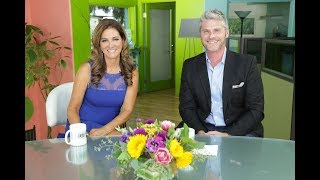
Allison Maslan interviews Steven Cox, founder of takelessons.com, about running a business through hard times. Cox discusses scaling his company, managing risk, and the mindset shifts that kept him going when things fell apart.
Hi, it's Alison. And did you know that that hobby, that one thing that you've been wanting to learn forever, you can start right now. And we're going to show you how today on Allie. And you'd. Welcome to Allie and you'd. The business success and lifestyle show. My name is Alison Maslin. My friends call me Ally. And I'm a personal and business growth mentor, serial entrepreneur. And on this show, I get so excited because my passion, my mission is to inspire you and give you the tools and the strategies you need to take your business to the next level.
And.
And I do that by highlighting successful business owners and artists and individuals who have really broken through to create some amazing successes. And today you are going to be so excited because my guest is Steven Cox, who is the founder and CEO of takelessons.com and you're going to be so blown away by this platform that he's created and. And also the incredible businessman that he is. So takelessons operates an E commerce platform that enables instructors. So if you have something that you teach and you're an expert at, this is a platform for you to organize and offer your services for sale and for customers if you want to take lessons, to find and purchase these lessons in classes, you can virtually anytime, anywhere. It is just state of the art. And there are over 20 million people a year that are using takelessons. So Stephen, who's with me today, has been building Internet startups since 1996, and the companies he's been part of have raised over 150 million million in funding and including one IPO and one acquisition. So he's also invested in several. In several technology and real estate businesses. So we are going to welcome Stephen Cox.
Holly, good to be with you.
I'm excited that you're here.
Glad to be here.
Yeah.
Beautiful day. I get to drive out by the ocean on the way in. It never gets. Never gets old.
I know. This is fun. I love doing this show and so I'm really excited to have you on. And you and I met at a Mastermind, Correct? We did. And I'm such a believer in Mastermind. And I run a mastermind called the Pinnacle Global Network. And I don't know about you, but my guess is it's probably the same. What I realized in the past, in the recent years that one of the biggest ways to grow my business and one of the most fun ways is relationship building.
Absolutely. And I'm sure, well, for me, I always try to be the dumbest guy in the room. And surround myself with people who are talented in other areas than what perhaps where I can add value and where I can also extract some value. And so I've been a part of several different masterminds for several different years. In fact, we were just talking about some of the folks who've been on your show, good friends with and I met them and a mastermind, and this was one where I'm in a totally separate business than what they're in, what they're involved with some public speakers and we don't do that on our side. But the general concepts of business roles are applicable no matter what sort of business you're in. So what you find out is that everyone has the same sort of problems and everyone chipping in and helping each other, we all seem to get there a little bit quicker.
I actually think that. And I doubt you're the dumbest in the room. I just had to say that. But I do like that it's so true because it lifts you up. A lot of times people say to me when they're considering our mastermind that, well, I need to be masterminding with other people in the pet industry or just people in the financial industry. And I say, no, you actually don't want to do that because then you're going to be operating just like they are.
Yeah. You get in this mode of group think. And so we're a venture backed education technology company. That's this general industry that we're in. And I find when I talk with other CEOs very similar problems, that that's fine, but it, but, but it's so tightly concentric that there's not a lot of outside thinking.
Right.
Whereas some of my other friends that are in industries that are completely unrelated, some are in real estate, some are in construction and robotics, they have a different way of looking at things. And sometimes you can take whatever they're thinking and apply it to your business in such a way that you would have never thought about if you hadn't talked to them in the first place. Very beneficial, I agree.
I think it inspires so much more creative thinking. Now you are an entrepreneur. You're an explorer in every sense of the world. You've started businesses, you've sold companies. Did you always know? I always like to know this. I mean, did you always know you wanted to be a business owner? What was that earlier path for you?
Good question. So I grew up in Dayton, Ohio, which is a industrial kind of blue collar town. And we were really poor, so I grew up super poor. Family of six and definitely below the poverty line. And, you know, I remember, but we had a great family and a lot of love in the family. I remember I'd meet some friends and these folks were doing really well, and I would say, wow, how do they have, like two cars instead of one? Or, wow, they live in a nice brick house. This is unbelievable. And there's no rain coming through the roof. This is something. This is really cool. How can you guys do this? And. And there was a couple cases where I remember, and I talked with my friends, dads, I said, what do you do? Stupid kids. You're not supposed to ask people what they do, but I would at that age. And every single one of them would own businesses. One owned a restaurant, the other one sold Christmas trees and made their money during the Christmas season. Another one owned a moving company. And the thing that I kept remembering was that they all own their own business. And I remember this from seven or eight, nine years old.
And the fact that you were inquisitive, was it that inquisitive at that age? Because a lot of kids. Well, inquisitive, but then have the courage to ask, which is great.
So I have an old psychology friend who told me, a psychologist, that said, what you don't have as a child becomes the obsession as the adult. And so where we struggled financially led me to, I think, some of those questions, well, how do I not have to struggle? How are these folks doing? Well, and all of them own their own business. And I said, well, I'll just own my own business then. That makes sense to me. Why not? I think the very first thought I could remember of just this idea of being now what's called an entrepreneur was strictly because I didn't want to be poor. I guess I wanted to not struggle.
Yeah, that's so inspiring because I think a lot of people think, oh, you start out and you just have all this money and that's how you were able to start your business. I didn't have. I was a single mom and I had nothing. So I totally get it. Because you came from that background of not having. Did you have to work? Have you had to work on your mindset, your money mindset, to overcome the fear of not having again, or even the thought of, wow, I'm actually going to take this money and invest.
I grew up with a, for some reason, with a very, now looking back, healthy view of what money could do. I understood the value of that. I worked at a very young age. I think my first job was as A dishwasher at a local bakery when I was 13 or 14 might have been against the law. Now that I'm thinking about it, who knows? But I always had this healthy thought towards if you want some success, if you want something, then you work for that. And there's there, and you learn that balance. And so I never had this fear of money or this bad karma of getting money or this sort of thing. I always thought that it was needed and necessary. And then over time, in through college and beyond, and you start making a little, you realize that then it becomes the responsibility of not just making it, but also using it wisely to build security, to continue to build into the business. So it's been a healthy relationship.
Yeah, that's good. That helps a lot. But what do you love most about business? I mean, you've been. How long have you been running kick lessons?
This is our 11th year.
Wow.
Yeah.
That's fantastic. And so this is. You stayed with this for a while. What is it about business that you love?
Well, I've worked for other people, and I found out that I'm not that good at that. So I'm much better at being creative, working, building something of my own. And that's what I love about entrepreneurism and about business in general is that, first of all, as an entrepreneur, there is more that's in your hands. And I'm the type of person where, you know, it's fourth quarter, 15 seconds on the clock, I'm like, throw me the ball. Like, let's go. That's something that I. It's my personality, and I enjoy that. So being an entrepreneur gives you that ability for independence. It gives you that ability to grow. There can be financial security at the end as well. But more than all of those things, Ali, I think the idea, the concept that I enjoy the most about being an entrepreneur is that it allows me to impact. And in our business, as well as just in my personal life, I have a philosophy that I'm here to make a positive, lasting impact on millions of people. That's what I'm here to do. And business allows me to do that. It's given me the opportunity to affect. Affect people in a very positive manner and help change people's lives and give them an opportunity to do something that they love to do as well. So I don't know of any other sort of industry or any sort of opportunity where you can impact so many other people. It is one of the most noble professions, I think, on the entire planet that you are literally, there's nothing here.
Yes.
And because of your creativity and your belief in yourself and what you can do and surrounding yourself with other people, you create something out of nothing. It's a beautiful thing.
It is.
I'm amazed. I'm like, wow, that's super cool.
Right? I mean, it's there. Like you're born with these gifts and then you use your mind to turn it and your creativity to turn it into something. But I believe a business owner has that capacity to see the unseen because you have to see the possibilities, you know, and when I talk to business owners that they go to their accountant or their bookkeeper to ask them if they should do something and I say, well, they might not be seeing the unseen or the possibilities. Right.
It's the vision.
It is.
I think it was John Wooden or maybe it's John Astroff. I'm not sure which one. It could be John.
One of the John.
One of the John, but one of Johns. But they said everything is always created twice. The first thing, the first place that everything is created is here. And only after you have a very clear vision of what you're looking to create or this idea, this belief, can it then be created in the physical world. So I think that being an entrepreneur and that gift of being able to envision something that's not there is super, super cool. And to see it actually come to life is even cooler.
And you are, I mean, you are, you've got 20 million people using your platform that you're impacting and they're learning something new and they're growing, right? And that, I mean, you are, you are impacting millions of people around the world. And the ripple effect of that, that's.
What'S the best thing. I talked to my we do all hands meetings at least once a month. And I talk to my employees and I say, so it's not just the people who are either taking lessons right now or the people who are giving the instructors, but when you're learning and you are growing, how you feel when you're growing?
Oh, you just feel alive, feel better, right?
It's like, oh yeah, I feel better about myself. That sort of self confidence that you get, I believe then as you said, ripples and spills over into other areas of your life. So it's an exponential effect towards the amount of positive impact that you can have.
Right? And if you're a mom, you're going to be happier, you're going to be a better mom, you're going to have a better relationship. So it has that as Well, I mean, and we work with business owners to help them grow. And that excites me because I know the work they're doing because they're growing and it impacts other people, right? So it's a beautiful thing. So now with business comes risk, and it's being able to have that resilience to handle risk. And I think that why a lot of people would say, yeah, Steven, that sounds great. I'd love to have my own business or I'd love to grow it to the level that you have. But I think that, you know, what do you think that is that you have that, that you can take those big leaps and other people struggle with it.
So let me pose a different sort of view. How I think about risk a bit. And I look at it from the lens of not only just for myself, but for my employees and for everyone that's using my platform. Even when we were very small, just like a little nugget, I looked at it this way. I'm not a risk taker for the sake of taking risks. I'm a risk taker when it comes to calculating probabilities and then making wise decisions based on that. So there, there may be some folks who will say, you just gotta go out there and risk it all and just swing the fences and hope. And I personally don't believe that at all. I'm very much in the. Sometimes what I call the Tarzan theory, and that is you have a rope, you don't just sit there like you start swinging and grab that other fine, but you don't grab that. You don't let go of this one until you get that one. There's some sort of way that you can get from one step to the other. It's kind of like the Tarzan theory is what I call it. So I'm a big believer in calculating out risks. Life is a risk, business is a risk. No doubt about it. If you're looking for something risk free, as you know, business is not for you. But I think all of your viewers do have some sort of tolerance towards risk or they wouldn't even be considering starting a business in the first place or growing their business. But I think that the key comes in risk mitigation. How do you go about finding, finding the right avenues and you have just a certain amount of time, so how do you utilize that time in such a way to where the risk is as mitigated as possible and you can.
Have the best outcome, Right? So it's a, it's a calculated risk, meaning it's A smart risk. You really looked at all angles in making the right decision. You never really know for sure that's correct though, how it's going to outcome. But you're giving yourself the best chance to win.
So Colin Powell says that in one of his memoirs. He said that if you wait until you have 100% of the information, you've already lost the war. You can't win the war that way. That being said, if you make moves with 10% of the information, you are hamstringing yourself. So there's some balance in between where you continually get more information. In our company, we have a thesis that we utilize. It's called Seed Select, Amplify. And what we do is we plant little seeds. You think about, you're growing a garden, so you have seeds that you're planting because you have ideas, things that you think will work. You watch and see how you how they do. Right. Some will naturally start germinating, others have fallen on bad rock, in bad soil and should die.
We've had a few of those.
Yeah, we all have, absolutely. So the key is to let them die, figure out which ones are doing well, select those and amplify your efforts towards those. And that is kind of just this methodology that we utilize in order to test many, many different opportunities and then find ones that we should pursue.
And that's also learning to analyze too. Your numbers, your metrics, your data key, so important key, right?
Absolutely. We would not be here today, our business would not be here if we didn't, if we didn't. If we weren't data animals, frankly. Right, we know. I know my metrics, like I can live and breathe them. I know exactly what they are.
Yeah. And that helps you because then you'll see, wow, this is where traffic's coming from. We can put more energy there and all that good stuff. So how did you get started in take lessons? What was the inspiration behind this business?
I had done a couple other Internet startups and had one successful exit and was able to sock away a couple dollars. And I decided $2. A couple dollars? Yeah, two or three. And I decided, well, you know, one thing that was missing in my life at that point was my love for music. And I come from a very musically oriented family. All of my brothers play and all my parents played, grandparents all played music in churches and were gospel singers. So I was kind of the least musically oriented out of all of them. But I had kind of a list, little bit of the gene. So I decided to take some time off and join A rock band.
Okay, why not? Why not? I love it.
29 years old and I'm like, yeah, it's a great time to join a rock band. So we started playing here and I did that for four years where that was kind of like my gig. That's what I did.
Yeah. So fun.
Played music for four years. And during that time I was thinking about what I wanted to do next. E Commerce was really taking off at that time. There was a lot of good things happening on the web. And what I believed is that at some point people would get very comfortable buying other people over the Internet services would eventually move onto the web as well. So during this time, again, I'm playing with my band and we weren't that good, frankly. We were terrible. I was the lead singer.
Okay, I'm gonna have to hear some of this music.
It's on itunes, actually. Spotted by one of the two.
Okay.
Across the room, you can hear it. Some like 90s rock music. But. So we were. We were in this band and playing. And I remember we were a four piece, then the three piece, then a tube. So it was me and. Me and my drummer, Enrique, and we were playing a gig here at Saints. So right down the street at the E Street Cafe.
Okay, I totally place.
We played a gig afterwards. And afterwards, Enrique, who was an unbelievable musician, master's degree in music performance, and just a wonderful human being. Great, great guy. And he said, hey, Stephen, I need to quit the band. I'm thinking, well, you're the only one any good, and if you quit the band, the band's gonna. Obviously there's just no band. And I said, well, why, what are you. What's the issue? He said, well, I'm, you know, I got this degree and I'm trying to make a living playing music. And I don't know if you've heard, but playing music's not the best way to make a living financially. But he was really struggling and he said, so I talked it over with my wife and I can't make ends meet. So we're trying to buy a house and I've got to quit the band. I've got this job lined up. I'm going to go be a cook at Chili's Restaurant. And I'm thinking, wait a second, you love playing music? He said, I do, but I can't do it anymore. And I saw this look of just complete. He had been beaten. Like he'd been beaten and he'd given up. And I just got really pissed off. I'm like, no, we gotta keep Enrique out of Chili's. This is ridiculous.
And I started talking to him, he'd do a protest. He put Enrique out of Chile.
And so I started talking to him and I said, hey, are you teaching? He said, I've got my flyer. It's up at the local drugstore. But you know the little tabs that people tear.
Yeah.
He said, no one's calling me. And I said, well, why don't you use the Internet? He said, well, I don't really know much about that. I'm a musician, I'm not really good with technology. And I said, well, that's. My startup was a tech company. I happen to know a lot about that. And we came up with this idea, blending services where people would buy services over the Internet and that people wanted to learn. And there were a ton of these independent, wonderful artists out there who were trying to make a living doing what they love and just didn't know how to get the business side of it right. So we started a site to help Enrique and lo and behold, there were tens of thousands of other people out there that had the same problem that Enrique had.
Yeah.
So we built it here in San Diego and then just kept building from there until now we're in every single major metropolitan area across the country.
So it was take lessons back then.
I think we started a click for lessons so we got a better domain name later.
Yeah.
But the same idea, same concept.
So it was all for Enrique. And then look at you here.
So Enrique, Enrique, by the way, never took the job at Chili's and still teaches with us today. And he is a full time artist making a living teaching and playing his music, which is.
That is such a great story. That is such a great story. That is actually one of the most. The best stories I've heard of someone starting a business.
Yeah, he lives right in Nancy.
Oh, he does. That's great.
Wonderful human being.
Yeah, that's really a beautiful story. So he was stuck and he could not think how to get. His solution was. And this is where a lot of people go, there is, I'm afraid, and I need to just do the easiest route, which really wasn't the easiest route because he was giving up his dream. Where do you think just from your experience and being in the business world and talking to so many business owners over the years, where do you think business owners get started, Stack? What do you think keeps them from moving forward?
I see and I talk with a lot of folks who are kind of in different phases of their business. I See a big drop off at the beginning, right?
Yeah.
So it's folks who, they have an idea, but they're not quite sure about it and they are hopeful, but they don't take enough action in order to get to the next level. What I tell folks who are in that position, I said if you imagine the space shuttle. Space shuttle has something like 750 tons, 750,000 tons of fuel and it will go hundreds of thousands of miles and it burns 70% of the fuel. Getting off the first two miles of the ground and starting a business is very, very similar. You will use up an incredible amount of time and effort just getting off the ground, but that is what it takes. Occasionally you get the hit where it just explodes. But that's the anomaly. The story is for take lessons. We struggled and struggled and struggled, tried to find a business model and you know, we lived on 750 bucks a month for salaries until, for years until we figured it out. But only through putting in that time, we were able to figure out and get the product market fit, which is truly what you're looking for. So the beginning phase and again, the idea there is you just have to get through it. You have to put in. There is no easy way. I'm not going to sugarcoat it, it sucks, but it's beautiful.
It is because it's so rewarding when you do finally break through. And you know, we work with so many business owners and I think there's a lot of hype on the Internet where it's make a million dollars in 30 days and it's just baloney. I mean, that's so, so rare. That's like the overnight success story that took 20 years to get there. But you know, you are, even though you might not be seeing it in revenue, you're seeing it in all of the foundations that you're putting down. And once you do that, which takes some time, then it starts really just exploding.
So yeah, then you go very early is just don't die, don't die and things will get better. And sometimes that's the case. And once you're through that phase, the next phase that I see people stumble on is the building phase, the scaling phase. There is a one of my advisors, his name's Jordan Greenhalgh, he was the founder of DivX and took that public. And we were talking and I come up with this thing called Jordan's Law, named after Jordan. And because we were sitting here talking like this and I was going through this issue of scaling my business we had doubled and doubled in size. And I said, man, I can't believe it. Just this person that I hired to do finance just isn't working out. And you know, this person isn't working out. And we built this product and now people don't like it, even though they liked it back then and everything. I said, he was like, yeah, yeah, that's right. I said, jordan, what do you mean, yeah, that's right. You got to help me out here. You're not helping me out. He said, well, there's a very simple rule. Every time you double everything that you have built in the past with respect to your product, your infrastructure, even some of the people will break. And if you start to calculate and you can figure out, I know that I'm going to double in a year, that means things are going to start breaking in six months, which means at the three month mark, you've got to work towards rebuilding whatever you think is going to break. So part of the role of the CEO and the entrepreneur in a scaling business is to get very, very clear not only on just what's happening today, but to be able to decipher and understand in a year from now, two years from now, what is going to break that I need to be working on today and start fixing that today.
I love that. I love that. So then you're not so dumbfounded. And really, when you think about it from an engineering perspective, if something doubled in size, then your foundation has to change, it has to grow with it. And that might be me knocking some things down and starting over again to be able to handle that growth in infrastructure.
Absolutely. Yep.
Yeah, I love that. Thank you for sharing that. And so question back, because I want to ask you, when you were living on $750 a month, when you all were taking that, how did you keep going then? Because that's where I think a lot of people or a spouse is like, that's it, we can't do this anymore. Right. So what was it that kept you going during that time?
Well, first, I didn't want to work for anyone else, so that was a motivating factor. Second, I had had an exit, so I was able to take a reduced salary. That was something that I believed I should do along with my people. But there was a third factor that motivated me more than anything else. So I was the funder of my business when we started. I put in the money myself in order to get, get things going. And so I wore these two hats. One is the dreaming founder. Anything is possible. Gotta Run, run, run, run. And then I also had wore the hat of the investor who was suspect and, you know, would rub his chin and say, well, I'm not sure, let's see what's going on with this thing. And I would take the CEO hat off and I would put the investor hat on and I would say, okay, so the company is going to need more money. These are the milestones I need to see as your investor where I'm not putting any more money in. And I told my team that as well. And so it gave us very specific goals and milestones that we had to get to. And that sort of drive and the effort allowed us to see progress. And when you see progress, the entire company changes. Right. You continue to see more of the belief in. And all this really boils down to getting your mind right. It boils down to not only you as a CEO, but also your entire team, training them to have their mind right towards growth and to consistently see milestones being checked off. That's truly what help us.
And when you presented that to your team and say, look, we either are going to have to reach this or this isn't going to work, how did they respond to that? I mean, did that inspire them or did that get some people like, wow, this is too risky for me.
That's a great question. And this comes back to. So let me start with why it's important in your first three or four hires. Your first three or four hires need to be the type of people who are willing to take the risk with you and when faced with those sorts of challenges where the back's up against the wall, what my co founder, Chuck Smith, I told him, and I said, chuck, we have till this date and this is what we need to prove. And he kind of thought to himself for a minute, he's like, well, we better cut this meeting short and get back to work then.
Yeah, I love that.
That is the sort of attitude that you need. And the first group of co founders around, you need to be able to digest that risk and move forward no matter what.
Right. I love that too, because then you've made it a team effort. It's not like, oh, it's all on your shoulders to make this happen.
Absolutely. I'm a big believer that, again, I don't want to do this alone. I have buddies. They can't like, they're like, oh, employees, ah, I can't stand it. And that's cool for them. But me, I am a team guy. Like, I love my team. I love building Things with people. I want to share the wealth, I want to, I want to receive and give. That's the, this type of energy I like in the place. So I think it comes down to knowing the type of company and the type of culture that you want and to kind of be true to whatever that might be.
You know what, I'm the exact same way. I love the team, I love the community. I mean, I've had businesses in the past where I was more solo and I was like lonely. I remember going into the post office once and going, people, wow, this is not good. So I like that when you're getting.
Your social fix at the post office, you're like, yeah, you're ready to add something.
Yeah. You know that there's a problem that we have to have to change. So. And so I like also what you talked about, scaling the business. So one is just getting through that blast off, right, that first 70% of the fuel and then scaling and coming through, looking at it at a whole new perspective. And sounds like that's where you are in your company now, where you're really scaling.
Yes, scaling presents a different set of challenges. Neither good nor bad or harder, or perhaps harder than kind of at the beginning stages. But I've kind of got this concept with respect to our scaling folks. Talk to me about scaling and what do you think about it and how do you go about that? And I said it's very. For us, all we focus on is pcp. Not the drug pcp, but the people capital process. And if you think about scaling a business first, getting your people right, having your systems in place. So as you step back from, for instance, doing all the hiring yourself and you're putting the team in place, you want systems that you can replicate. The correct way to hire your team needs to know the type of person that can fit within the company, the type of person who will not be there long. Systems have to be built around culture and how you reward the ecosystem for developing the right way. So all of this has to be thought in advance as you begin to scale all that's around your people capital. Obviously you have to have enough capital to get where you need to go. I've also found that too much capital might make one lazy.
And I definitely believe that.
So there's a balance between capital and getting the right number. And the process, which I think is the key component, how do you take yourself as the CEO, founder of the business and remove yourself in such a way to where if you were gone for whatever reason, the business would do just as good, if not better. Yeah, that's my goal. That if I am removed or if the board thinks that someone else is better suited or I am ready to leave it at some point, which I'm not. But I've set up the infrastructure in such a way the process is in place to where, like, this ship is going to keep sailing.
Right.
No matter what. And I think that's the goal for scale that you have to get to.
Yeah, yeah. As a girlfriend of mine, Gita, who's.
Buying classes every single month for a ridiculously low price, and we just started this, this new product last year, it's going gangbusters. People are signing up for. It's a subscription product.
Love that.
You can come in and one day take Spanish and the next day take French, the next day learn guitar, next day go do whatever you'd like to learn. So super cool. And they're all live instructors.
I love that. So, I mean, what is that? I mean, do you have in your bucket list that you've been dying to learn? You want to learn French, you know, you want to play the flute, whatever. Basket weaving. Right. Or something for your children?
I'm taking magic lessons next week.
Are you really?
Yeah. On my side, it's super cool. There's one of our instructors in Chicago, and I'm taking magic lessons online.
Oh, good. Well, I'll have you come and do magic tricks at one of our events. So. I love magic. We just saw Criss angel in Vegas. Did you. So fun. Well, so take lessons live and you can get all the information on this and I urge you to do it by going to alisonmaslin.comlibrary where you'll get all the information with Stephen Cox business. Take lessons live. And you'll also get the whole library of other guests that we've had on the show, downloads and guests from them as well. Well, this has just been fantastic and I always learn so much. And you're very inspiring and so excited for your business. And here's to the next 11 years.
Well, I appreciate. Appreciate you having me on and super excited for what you're working on. I appreciate you having me here.
Yeah, this was great. So I hope you enjoyed it and we would love to hear from you. And you can also, you can come back every Wednesday. We air live on Facebook Live, 4 o' clock Pacific, 7 o' clock Eastern. And then you can also subscribe on itunes.
You can.
More from Allison

There are 90,000 marketing agencies in the U.S. but 99% aren't worth your money.

Would you leave your comfort zone for the sake of your business? #businessgrowth #scalingbusiness

Are you willing to trust the process to grow your business? #businessgrowth #scalingstrategies

He Built a $150M Company Without Taking a Single Dollar of Outside Capital | Erik Huberman




Wing Lam has run Wahoo's Fish Tacos for 38 years and his hiring rule is simple.


