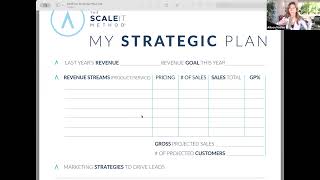
Allison Maslan walks through a one-page strategic planning tool that starts with your revenue and profit target, breaks it into streams, then identifies the top 2-3 levers in sales, marketing, and team to hit those numbers. It's built to spot unprofitable products and pricing gaps fast.
So we're going to start with the my strategic plan today. And let me pull up my notes here. You all know this tool. You use it all the time. You see it. Okay, so just some background on this tool came from many, many VIP days that I led over the years. And that's how the tool was developed because of this process that I took clients through for a VIP day. This is, this is the framework for a VIP day is this tool. So if you ever do a VIP day, you could just use this tool and have an entire day. And so what my strategic plan really is is it is a, it is a reverse engineering tool. It is, you know, if you think of a business plan, they're always long, nobody ever reads them. So this one is short. It's designed to actually guide their day to day decisions. And it starts with the end in mind, which is the revenue and the profits. And then it works backwards to identify what their revenue streams are, what this, what strategies and what actions are going to be necessary to get them there. And so it really is about, number one, they have to anchor their big goal, right? So it's just getting really clear, what did they do last year, what do they want to do this next year? And so helping them, you know, what is the number that they want for that bottom line? And then you're going to reverse engineer this into the revenue stream. So when I would do a VIP day, first I would get clear on, okay, ideally, where do you want to be, where do you want to land? And the metrics are the best way to do that. And then when we reverse engineer, I'm like, okay, so what do you got? What's going to get us there? And this, you could spend hours just on this top part because you're really thinking through what's working and what's not. And through this process you might find that they have revenue streams that just are not profitable anymore or they just, they don't have much of a margin. And, or you might find that they need to raise their prices. If they're going to hit this number, they've got to raise their prices. And then they can see, you know, we don't have to sell as many as we thought. And then you can look at the gaps and say, well, you know, let's create this new revenue stream or this higher touch revenue stream or this multiplier, this subscription model or this whatever, right? And so this is where so much you, you know, you're just kind of, you're running the numbers here and you're looking at things from a lot of different perspectives and it's so powerful for the client because they're like, wow, I never thought of it this way. It's usually jumbled in their head and feel so overwhelming. And so when you break it out like this, it's, it's, you know, it can help make some big decisions for them and, and really just narrow their focus, I would say. And then, you know, determine what is the realistic revenue contribution that each of these are going to make to hit that number. And so then the, once you've done all that, then we have to figure out what are the levers for the sales, the marketing and the team. So what are the top two to three strategies for each of those areas of the company that are going to be driving those sales? So for instance, with the sales, what are their, what's their sales process? What's the scripts they have? Is there training that's needed? You know, is what, what is needed for the actual sales process? What are, for marketing? What are two to three strategies that are going to be driving leads? And for some of a lot of them, all they do is, is referrals. So you know, which is great, but it's not, unless it's a system, it's not really scalable. So maybe it's strategic partnerships, maybe it's webinars, maybe it's events, maybe it's, you know, organic search SEO. I mean there's, there's an umpteen ways. Pull out that marketing methods tool and look at lots of different ways and, but not too many. Right? And, and maybe they need to drop some things that just aren't really working anymore. And then they've got to figure out who's going to own each initiative, what are the gaps that need to be filled. And so it's just the power of having all this on one page, everything summarized visually on one sheet that they can revisit and adjust along the way. So it really is like a one page scale it plan. It's like a reverse engineering revenue, reverse engineering tool. And so again, you know, if you're doing a VIP day, I would just follow this. And it's so wild because at the end of the VIP day, you kind of come full circle and you've got this complete, you know, you've got this complete circle from the beginning, from the revenue of exactly how that is going to happen and how it's going to be filled all the way back up to the top again.